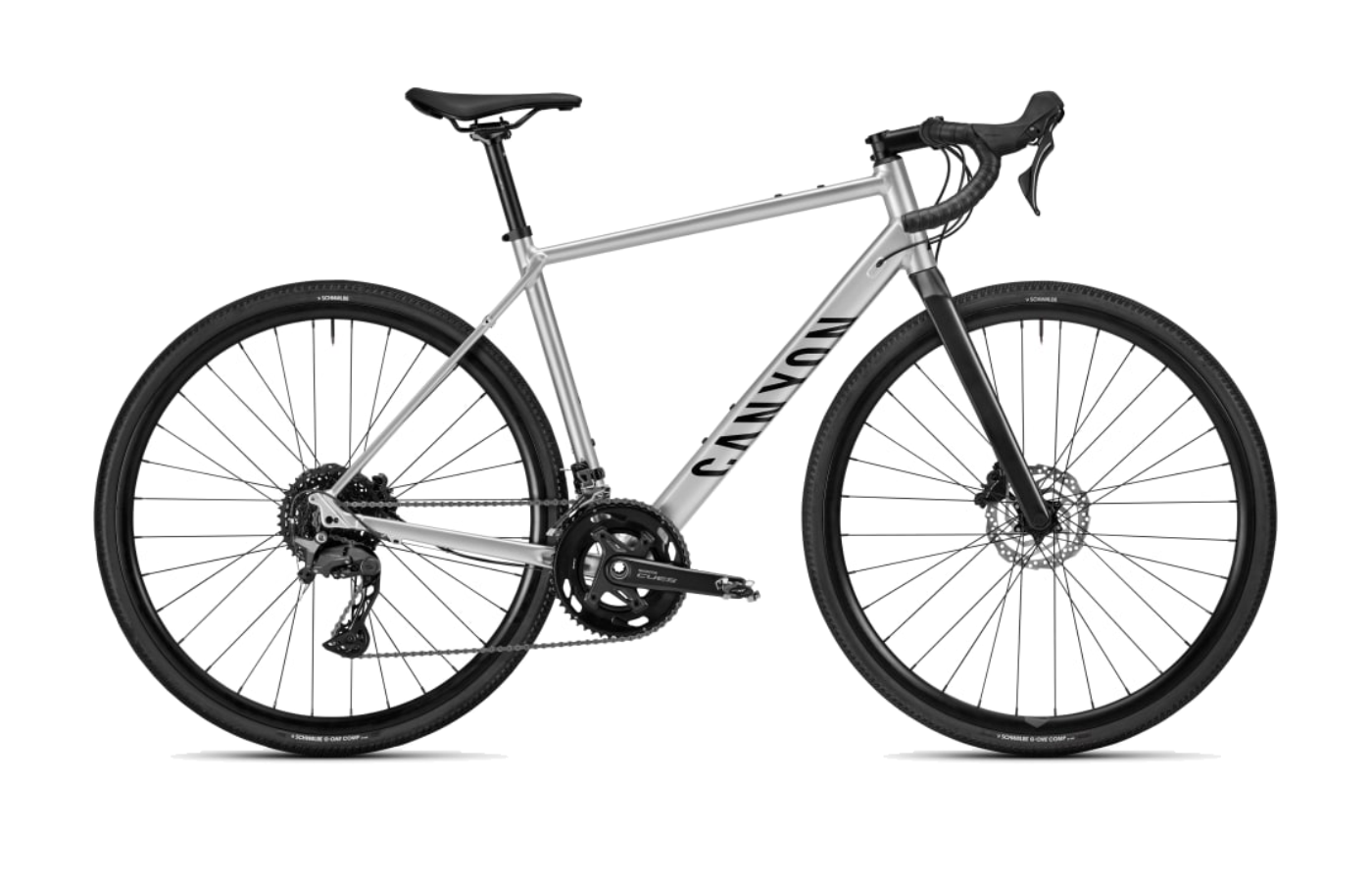
765 Optimum
vs785 Huez
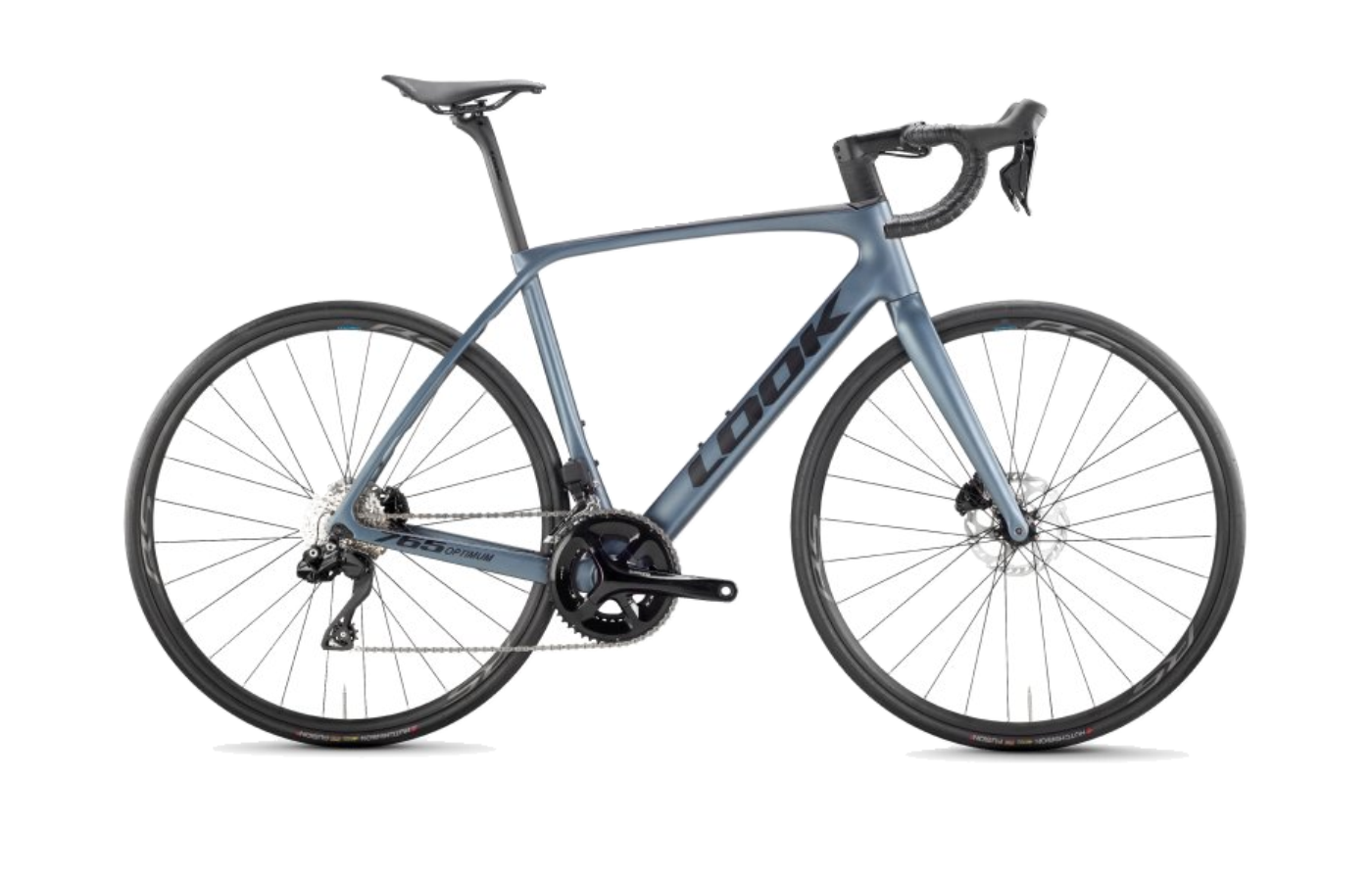
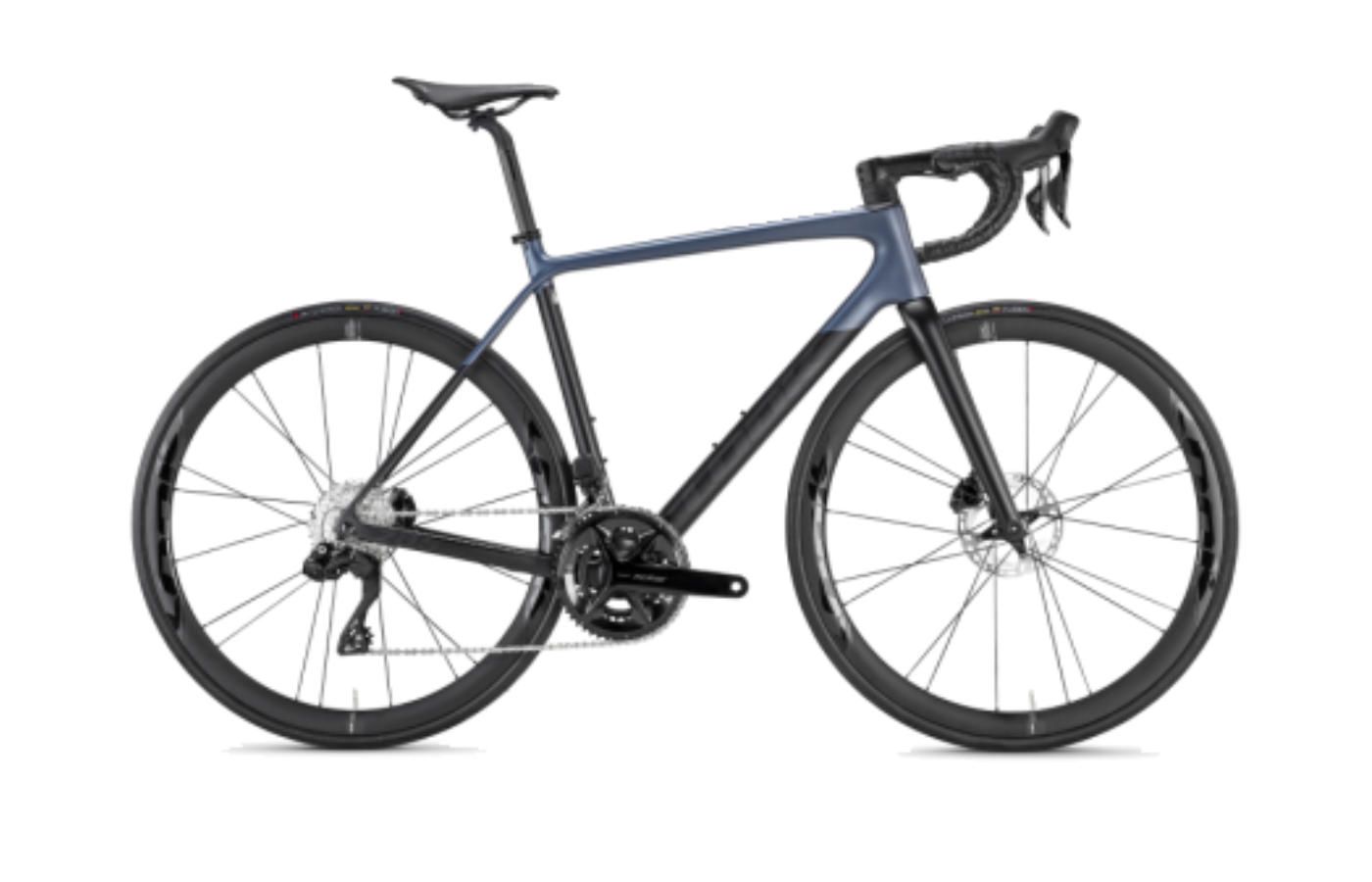
Same brand, two different missions.
The 765 Optimum is Look's GT car for endless miles. The 785 Huez is the climber that turned out to be a quietly capable all-rounder.
765 Optimum
- Class-leading comfort — compliant frame, 30 mm Hutchinson stock tires, and 34 mm clearance for going wider.
- Confidence-inspiring stability — 70.8° HTA, 67 mm trail, and 415 mm chainstays make it unflappable in crosswinds and on technical descents.
- Cheaper entry tier — mechanical Shimano 105 starts at $4,000, $200 above the Huez floor but with wider tires.
- Heavier and slower to accelerate than the Huez — not the bike for short, sharp climbing efforts.
- Slack front end understeers in tight corners; needs a slower line in than a race bike.
785 Huez
- Responsive, talkative handling — 73° HTA, 59.3 mm trail, and 410 mm chainstays add up to immediate steering and a planted feel.
- Surprising long-distance comfort — Cycling Weekly rode 1,000 miles across France with no joint pain despite the race geometry.
- Lighter at the top end — the Ultegra Di2 / R50D build comes in at 7.70 kg, well under the Optimum's quoted 9.3 kg.
- Narrower 32 mm tire clearance — less margin for rough chip-seal or light gravel.
- More aggressive position — the lower stack and longer reach won't suit riders who need an upright cockpit.
Editor’s analysis
Look builds two carbon road bikes that look like cousins on a spec sheet — and feel like entirely different machines the first time you turn the bars.
Both the 765 Optimum and 785 Huez share a brand, a T47 bottom bracket, and the LS3 alloy cockpit. From there, they diverge sharply. The Optimum chases stability and compliance for big-mileage days; the Huez chases response and a planted, communicative chassis you'd take racing. Same factory, very different intent.
The geometry numbers tell the story before any ride feel does. At size M, the 765 Optimum runs a 70.8-degree head angle with 67 mm of trail — slack and long, more like a touring or cross bike at the front end. The 785 Huez goes the other way: a 73-degree head angle, 59.3 mm of trail, and 5 mm shorter chainstays. The Optimum is 14.7 mm taller in the stack and 6.6 mm shorter in the reach, a noticeably more upright cockpit before you've added a single spacer.
On the road, the Optimum reads as Mapdec called it — a stable locomotive on rails, the bike you point down a wet, chossed-up descent and trust to track. It understeers a touch, demands a slower entry into corners, and will not snap to attention out of the saddle. That's the deal. The Huez reverses every one of those traits: Road.cc rated it 9/10 for high-speed stability with what they called a talkative front end, and Cycling Weekly logged 1,000 miles across France on it without an aching joint. It corners eagerly, surges forward when you stamp, and still soaks up road buzz better than its racing geometry has any right to.
Pick the Optimum if your rides are long, your roads are bumpy, and you want to finish fresh. Pick the Huez if you want a bike that responds the moment you ask, and trust Look's carbon layup to keep your wrists happy anyway.
Where the builds differ.
Comparing our editor's-pick builds side-by-side. Winners highlighted row-by-row — lower price and weight, and the better-spec component, each mark a point.
Build variants & pricing
The Huez range runs $3,800–$6,500; the Optimum runs $4,000–$7,500. Identical drivetrain tiers across both lineups make this a clean apples-to-apples spec read.
Prices are current US MSRP. Editor's picks are the 105 Di2 builds on each side — same drivetrain tier, same shifting paradigm, $900 apart. The Optimum's pick gets alloy Shimano RS 171 wheels; the Huez's pick gets LOOK's R 38 D carbon wheels at the same component tier, which is where most of the price gap goes.
How they fit, how they steer.
Both at size M. The Optimum sits 14.7 mm taller in the stack and 6.6 mm shorter in the reach — a meaningfully more upright cockpit. The Huez has 2.2° more head tube angle, 7.7 mm less trail, and 5 mm shorter chainstays: every number points at sharper steering.
Which size should I buy?
Both ranges share the same XS–XL labels but the Optimum's stack runs ~15 mm taller at every size. If you're between sizes, the Optimum forgives a smaller pick more easily.
→These are starting points. Flexibility, riding style, and preferred position all shift the answer — if you’re between sizes, a professional fit beats a chart.
What the magazines said.
Published reviews from trusted cycling outlets. Click through for the full write-up.
Which one should you buy?
If long, comfortable miles are the goal, get the 765 Optimum. If you want a bike that responds the second you turn the bar, get the 785 Huez.
765 Optimum
If your weekends are centuries on imperfect pavement, group rides where you'd rather hold a stable line than dive every corner, and the occasional gravel shortcut on 30 mm tires — the 765 Optimum is the easier bike to live with all day. Comfort, stability, and a forgiving cockpit are the whole point.
785 Huez
If you climb hard, descend harder, and want a bike that talks back through the bars on a fast chip-seal corner, the 785 Huez is the sharper tool. The race geometry doesn't punish you on long days the way you'd expect — reviewers logged 1,000 miles on it without complaint.
Questions buyers actually ask.
Short answers to the things we get emailed about most often.
01Which is more comfortable on long rides?
The 765 Optimum, but the gap is smaller than the geometry suggests. The Optimum's 14.7 mm taller stack at size M takes pressure off the lower back, and its 30 mm stock Hutchinson Fusion 5 tires roll with more compliance than the Huez's 25 mm or 28 mm rubber.
That said, Cycling Weekly rode the Huez 1,000 miles across France with "no back ache, shoulder pain, knee pain" — Look's carbon layup is unusually compliant for a climbing bike. If you can handle the more aggressive position, the Huez is closer than the spec sheet implies.
02Which climbs better?
The 785 Huez, by a clear margin. The top-tier Huez Ultegra Di2 / R50D weighs a quoted 7.70 kg; the Optimum at the equivalent build sits closer to 9 kg in the reviewed Shimano 105 trim. That's roughly 1–1.5 kg of system weight on a 70 kg rider — noticeable on any sustained climb and obvious on short, sharp efforts.
The Huez also has a stiffer, more responsive front end (73° HTA, 59.3 mm trail) that rewards out-of-saddle attacks. The Optimum is a steady seated climber, not a snappy one — Mapdec specifically called out that it "definitely doesn't handle like a climbing bike" on steep efforts.
03What's the maximum tire clearance?
765 Optimum: 34 mm officially — wider than most endurance bikes in this bracket and consistent with the bike's all-day, all-surface ambitions. Most riders fit a true 32 mm tire with comfortable mud clearance.
785 Huez: 32 mm officially. That's enough for the chip-seal and rough tar reviewers encountered in France, but the Optimum has a real margin for going wider on chunky rural roads or light gravel.
04How different are the riding positions?
Significantly. At size M, the Optimum runs a 582 mm stack with a 379 mm reach. The Huez at the same size goes 567.3 mm stack and 385.6 mm reach — 14.7 mm lower at the bars and 6.6 mm further out. That's roughly a 20 mm difference in how stretched and how low you sit.
If you currently ride a race bike and want similar drop, the Huez is the natural pick. If you find race positions punishing on long rides, the Optimum gives you most of an endurance setup before you start adding spacers.
05Which has more lively handling?
The 785 Huez, decisively. Its 73° head tube angle, 59.3 mm trail figure, and 410 mm chainstays make for quick, communicative steering. Road.cc rated its high-speed stability 9/10 and praised the "talkative" front end through technical corners.
The 765 Optimum is the opposite: 70.8° HTA, 67 mm trail, and 415 mm chainstays. Reviewers describe it as a "stable locomotive on rails" that understeers slightly and demands a slower entry into tight corners. That's a feature for endurance riders, a bug for racers.
06Are the framesets sold separately?
Yes, both. The 785 Huez frameset has been listed at around £2,490, and reviewers (Mapdec on the Optimum, road.cc commenters on the Huez) flag the frameset route as a strong way to get a higher-spec build for less than the equivalent complete bike. If you have wheels and a groupset already, this is the cheapest way into either platform.
07Are these compatible with mechanical groupsets?
Yes — both are sold with mechanical Shimano 105 builds at the entry tier ($4,000 on the Optimum, $3,800 on the Huez). The frames support both mechanical and electronic 12-speed Shimano. Both also use the T47 threaded bottom bracket standard, which simplifies long-term maintenance and groupset swaps.
08Which is better value at the equivalent build tier?
The 765 Optimum 105 Di2 is $5,400; the 785 Huez 105 Di2 is $6,300 — a $900 gap at the same drivetrain tier. The Huez justifies its premium with carbon LOOK R 38 D wheels at that build (vs. alloy Shimano RS 171 on the Optimum) and a lighter frame.
If you weight wheel quality and frame weight, the Huez is the better spec-for-dollar buy. If you weight tire clearance, comfort, and a more upright cockpit, the Optimum's package is harder to fault.
Similar bikes
If your priorities don’t map cleanly onto either of these, one of these adjacent bikes probably fits better.