Rift Zone
vsSan Quentin
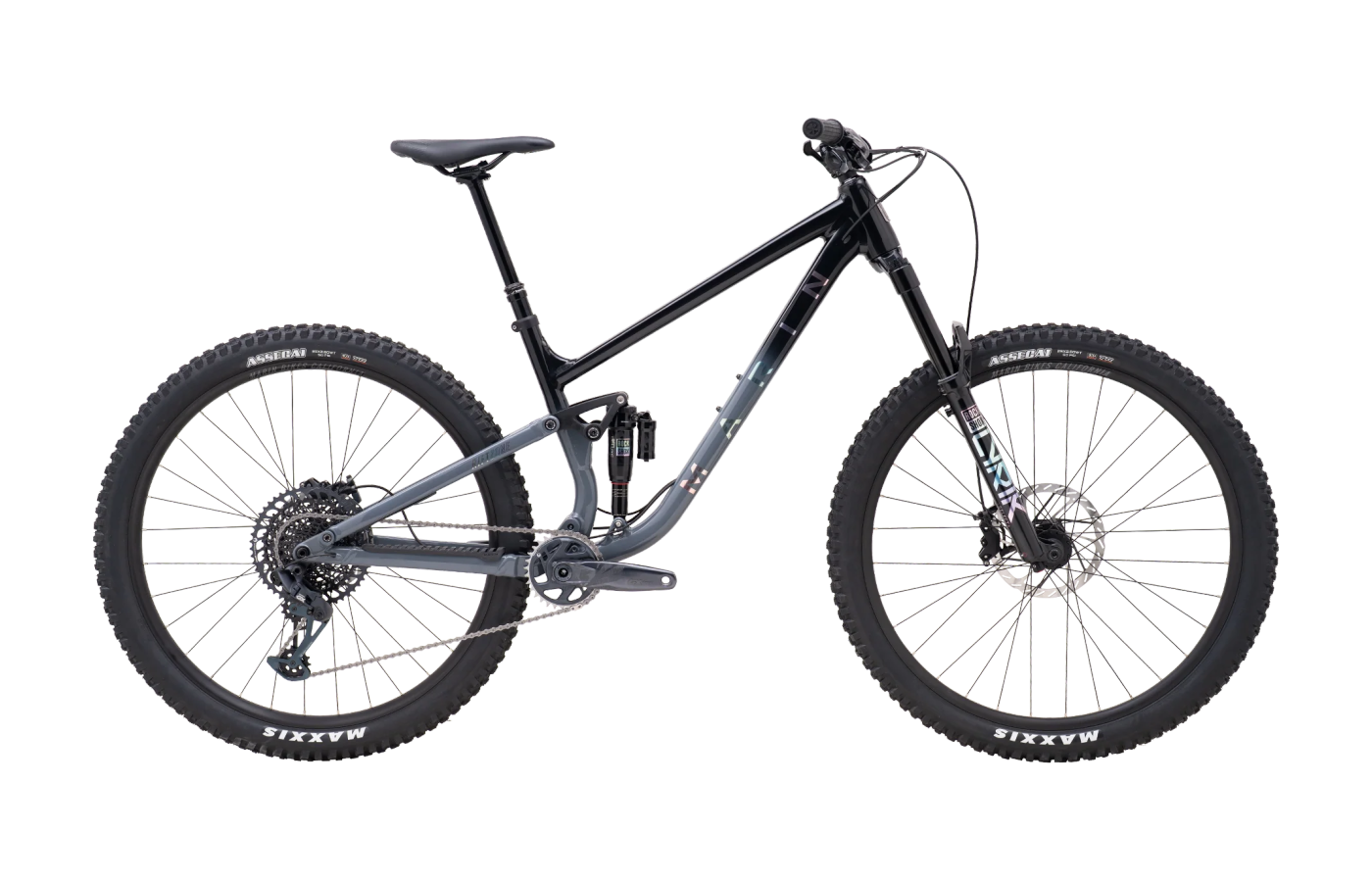
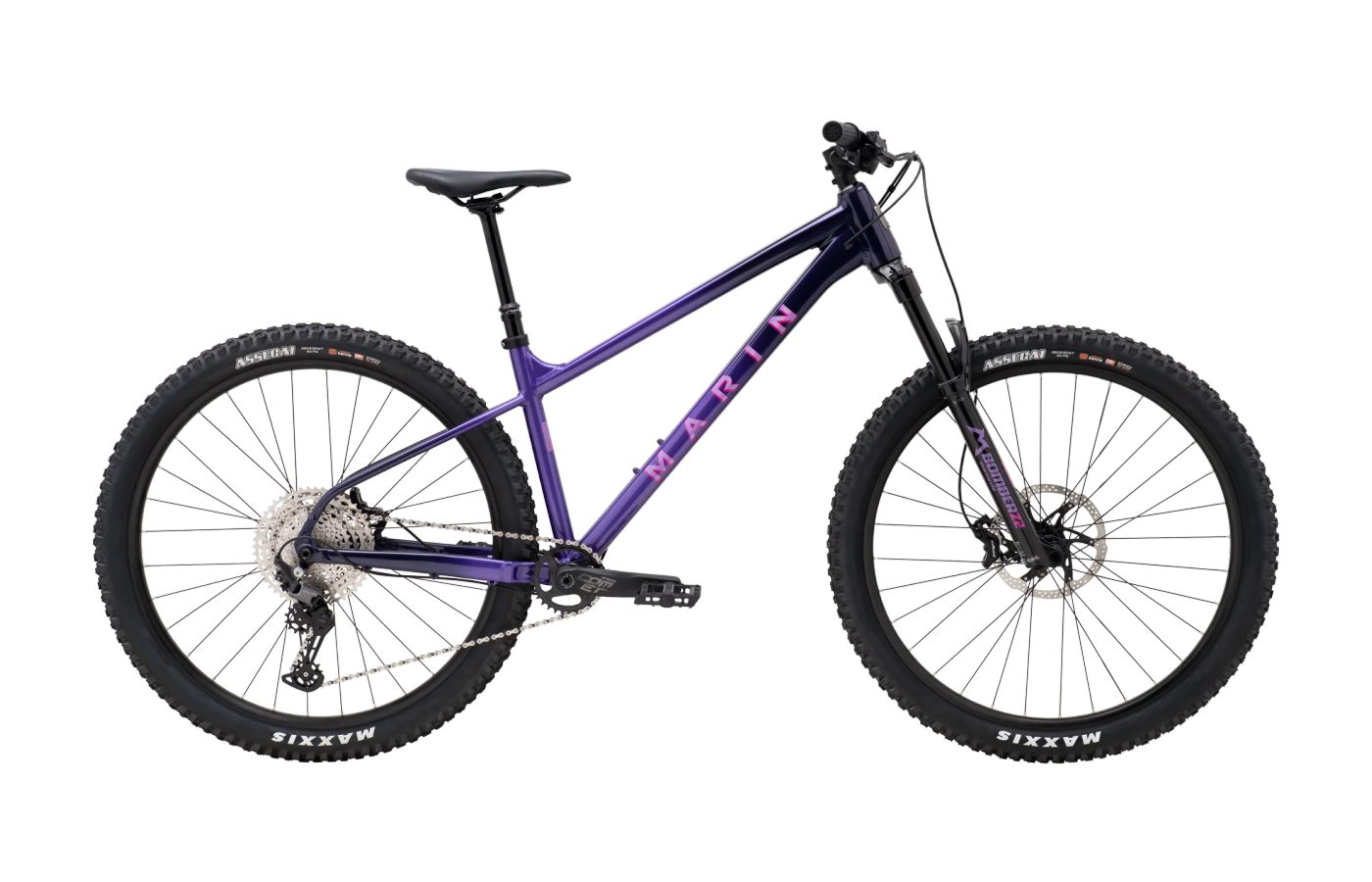
Same brand, same attitude, half the suspension.
The Rift Zone is a 130 mm full-sus trail bike that wants to feel like an enduro sled. The San Quentin is a hardtail with dirt-jump DNA and a 64-degree head angle.
Rift Zone
- Punches above 130 mm — reviewers consistently call it a 'mini-enduro' bike on descents, with a progressive MultiTrac platform that resists bottoming out.
- Confident, planted geometry with a 65.1-degree head angle, 460 mm reach (M), and 800 mm bars stock on XR builds.
- Strong frame upgrade platform — UDH, threaded BB, ISCG05 tabs, custom-tuned suspension across the lineup.
- Heavy and draggy out of the box — 15.8 kg with stock Assegai 2.5 tires that reviewers flag as the first thing to swap.
- Cheaper builds (Rift Zone 1, 2) come with 2-piston Shimano MT200 brakes that reviewers call underpowered for the terrain the frame handles.
San Quentin
- Shockingly compliant for alloy — PinkBike and MTB Party compared the rear-end feel to high-end steel and the Banshee Paradox.
- Slackest head angle in its class at 64 degrees, paired with a 77-degree seat angle that keeps it nimble on tight climbs.
- Best-in-class value — the SQ3 at $1,999 hangs with bikes 'double its price,' per PinkBike's Value Field Test.
- It's still a hardtail — square-edged hits demand active line choice and tire pressure tuning.
- The entry-level SQ1 ($1,049) makes deep compromises (square-taper cranks, MicroShift 9-speed, SR Suntour XCM34 coil fork) that hold the frame back.
Editor’s analysis
Two Marin trail bikes, two ways to get rowdy — one smooths your mistakes, the other sharpens your skills.
Both bikes wear the same Series 3 6061 alloy frame language and Marin's house geometry brief: slack up front, steep at the seat, short out back, low-slung top tube. They're built for the same kind of rider — someone who wants to point downhill and party. Where they split is what's between the rear wheel and the saddle.
The Rift Zone runs 130 mm of MultiTrac rear travel paired with a 140–150 mm fork, all hung off a frame that reviewers across PinkBike, BikeRadar, and Flow Mountain Bike kept comparing to a short-travel enduro rig rather than a typical 130 mm trail bike. PinkBike measured the XR build at 15.8 kg / 34.8 lb and called it a bike that 'delivers a ride feel well in excess of its numbers.' The catch: that feel comes from a heavy, draggy spec — Maxxis Assegai 2.5s front and rear, burly fork, sticky tires — that asks more of you on the climbs than the geometry alone would suggest.
The Marin San Quentin throws away the rear shock and leans harder into the dirt-jump character. Slacker head angle (64 vs 65.1 degrees), 5 mm shorter chainstays at size M (425 vs 430), and a frame Marin engineered with thin seat stays for compliance — multiple reviewers compared the ride to high-end steel hardtails. It's lighter on its feet, easier to pop, more demanding on rough chunder. And it starts at $1,049 — the entire San Quentin range tops out below where the Rift Zone's mid-build sits.
Put another way: the Rift Zone is the bike you buy when you want one trail bike that handles bigger terrain than its travel suggests. The San Quentin is the bike you buy when you want to learn line choice, sharpen your handling, or have a cheap second bike that still parties at the bike park.
Where the builds differ.
Comparing our editor's-pick builds side-by-side. Winners highlighted row-by-row — lower price and weight, and the better-spec component, each mark a point.
Build variants & pricing
Both lineups are alloy-only and value-focused. The Rift Zone runs $1,899 to $4,699 across four trims; the San Quentin tops out at $1,999 across three.
Prices are current US MSRP. The two lineups don't overlap in price — the cheapest Rift Zone (1, $1,899) costs nearly as much as the top San Quentin (3, $1,999). Cross-shop by suspension philosophy first, budget second.
How they fit, how they steer.
Both at size M — the fit-picked size for a 5'8" rider on each. The San Quentin sits 1.1 degrees slacker up front (64 vs 65.1), 5 mm shorter in the chainstays (425 vs 430), and 10 mm shorter in reach (450 vs 460) — even more dirt-jump-flavored than the Rift Zone.
Which size should I buy?
Size recommendations based on stack, reach, and effective top tube. The Rift Zone runs longer in reach across the range; the San Quentin pairs a steeper seat tube with a shorter top tube for a more upright cockpit.
→These are starting points. Flexibility, riding style, and preferred position all shift the answer — if you’re between sizes, a professional fit beats a chart.
What the magazines said.
Published reviews from trusted cycling outlets. Click through for the full write-up.
Which one should you buy?
If you want one bike that handles everything from flow trails to chunky descents, get the Rift Zone. If you want to sharpen your skills (or your wallet), get the San Quentin.
Rift Zone
If you want a single bike that can handle bike park laps, rocky descents, and flow trails without beating you up, the Rift Zone XR delivers enduro-bike confidence at trail-bike weight. Plan on swapping the rear tire for something faster-rolling if you climb a lot.
San Quentin
If you want a bike that rewards precise line choice, hops and manuals on command, and costs half what the Rift Zone does, the San Quentin 3 is the pick. The frame punches well above its price — just know you're trading rear suspension for raw feedback.
Questions buyers actually ask.
Short answers to the things we get emailed about most often.
01Which is better for technical descents?
The Rift Zone, on rough or sustained descents. The 130 mm of MultiTrac rear travel and 140–150 mm fork (depending on build) absorb impacts that the San Quentin's rigid rear simply transmits to the rider. PinkBike, BikeRadar, and Flow Mountain Bike all describe the Rift Zone as feeling like a 'mini-enduro' bike.
That said, the San Quentin 3 has a slacker head angle (64 vs 65.1 degrees) and is described as 'surprisingly planted at speed.' On smoother, flowier descents, it's competitive — and arguably more fun. The Rift Zone wins when the trail gets chunky and braking bumps stack up.
02Which climbs better?
It depends on the climb. On steep, technical climbs, both have nearly identical seat tube angles (76.5 vs 77 degrees) that keep the rider forward over the bottom bracket. On smooth fire-road climbs, the San Quentin has the edge — it's lighter and the absence of a rear shock means zero pedal-bob.
On either bike, the stock Maxxis Assegai 2.5 tires drag on hardpack — multiple reviewers swap the rear for a faster-rolling tire as a first upgrade. Neither bike is built for KOM hunting; both are climb-to-descend trail tools.
03Is the San Quentin really comfortable for a hardtail?
Reviewers consistently say yes. Marin used thin seat stays and tube selection that PinkBike compared to the Banshee Paradox, and MTB Party said Marin 'nailed it' on this aluminum frame. It's not as forgiving as a full-suspension bike, of course — but it's notably less harsh than typical alloy hardtails like the Haro Saguaro.
That compliance only goes so far. On square-edged rock or sustained chunk, you'll still feel every hit. Tire pressure tuning matters more here than on the Rift Zone.
04Which build is the right place to start on each?
On the Rift Zone, the XR ($3,699) is the sweet spot — RockShox Lyrik Select+ fork, Super Deluxe Select+ shock, GX Eagle 12-speed, and 4-piston brakes. The cheaper builds (Rift Zone 1, 2) come with 2-piston Shimano MT200 brakes that reviewers consistently flag as the first thing to upgrade.
On the San Quentin, the 3 ($1,999) is the build to get. Reviewers across the board say it 'doesn't need any upgrades out of the box' — Marzocchi Z2 fork, Deore 12-speed, TRP Slate 4-piston brakes, Maxxis Assegai tires. The SQ1 ($1,049) is tempting but compromises hard — square-taper cranks, MicroShift 9-speed, SR Suntour coil fork.
05How short are the chainstays really, and does it matter?
Short. The Rift Zone runs 430 mm chainstays across all sizes. The San Quentin runs 425 mm at S/M and 430 mm at L/XL.
In practice, both feel playful and easy to manual — reviewers consistently call out that 'back-wheel-loving' character on both bikes. The trade-off is high-speed stability: BikeRadar noted the Rift Zone could use 'a little more rearward length' for outright stability at speed. If you ride mostly flat, fast trails, a longer-chainstay enduro bike will feel more planted.
06Are these the same frame?
No. The Rift Zone is a full-suspension Series 3 alloy frame with MultiTrac linkage and 130 mm of rear travel. The San Quentin is a Series 3 alloy hardtail (Series 2 on the SQ1) with no rear suspension. They share a design language and geometry philosophy, but they're built around fundamentally different frame architectures.
Both use 148x12mm Boost rear spacing, threaded BSA bottom brackets, and SRAM UDH-compatible derailleur hangers — so wheels, bottom brackets, and derailleurs cross-shop directly.
07Which is the better long-term investment?
Both are positioned as upgrade platforms. The Rift Zone frame justifies higher-end suspension and drivetrain swaps over time — Mountain Bike Action explicitly notes the Rift Zone 1 frame is identical to the XR's, so you can build up.
The San Quentin has a similar story — the SQ1 frame is the same platform as the SQ3, and the SQ3 itself is one a reviewer said they 'could ride for two years without swapping out a part.' If you're buying once and riding it for a while, the SQ3 needs the least work; the Rift Zone XR is the most polished out of the box.
08What are the biggest weak points to know about?
Rift Zone: the cheaper builds' Shimano MT200 2-piston brakes are the most-flagged issue — reviewers across MBA, BikeRadar, and Flow describe them as underpowered for the terrain the frame handles. Some PinkBike user comments also reported chainstay breakages on previous-generation Rift Zones near the drive-side yoke; Marin's warranty process was reportedly excellent.
San Quentin: the SQ1's drivetrain (MicroShift 9-speed) and fork (SR Suntour XCM34 coil) drew sharp criticism from MBR for slipped gears and a 'clunky' feel. The SQ3 avoids all of these issues. Both bikes have minimal stock chainstay protection — expect paint chips.
Similar bikes
If your priorities don’t map cleanly onto either of these, one of these adjacent bikes probably fits better.
Fluid FS
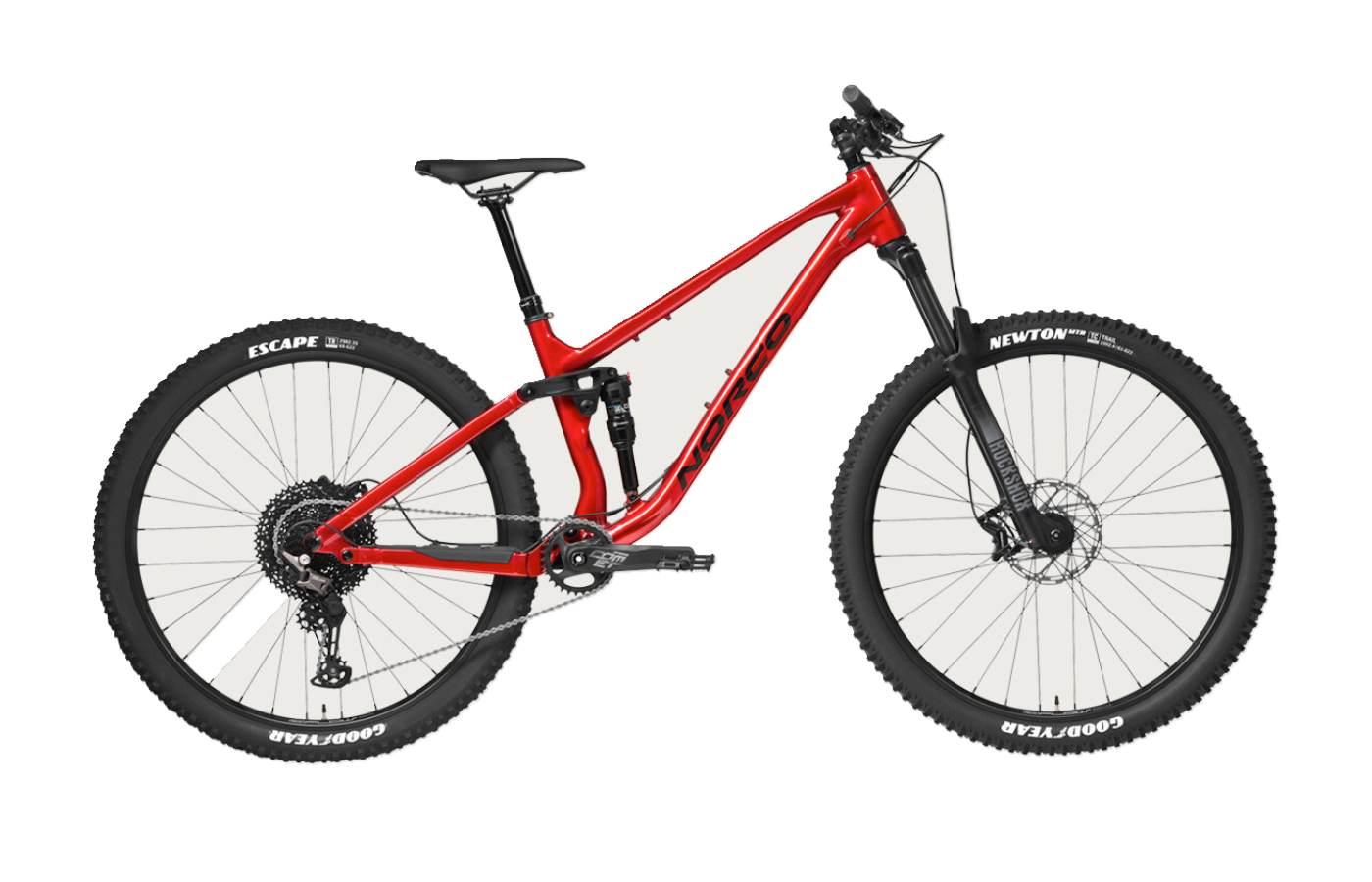
The closest Rift Zone rival — also 130 mm of travel, also value-priced, also pitched at the aggressive trail rider. Rides slightly more planted and less poppy than the Marin, with a less progressive suspension feel.
Compare →Roscoe
Trek's hardcore-hardtail answer to the San Quentin. More mainstream trail feel and a 140 mm fork across more of its build levels — a touch less dirt-jump in its DNA, a touch more conventional trail bike.
Compare →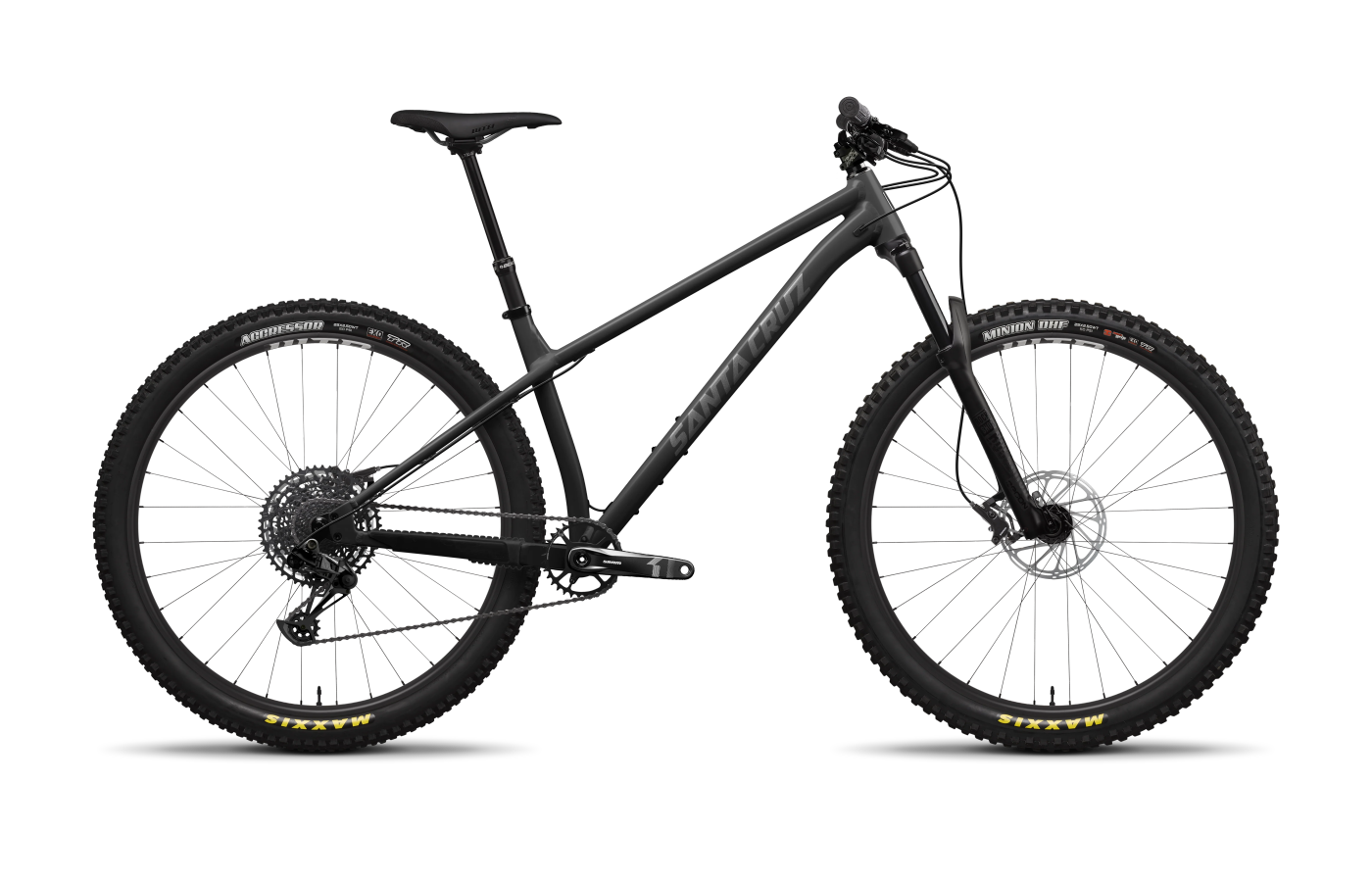
Chameleon
A premium hardtail for riders who like the San Quentin's versatility but want a more refined frame. Adjustable dropouts open the door to singlespeed setups and mullet conversions the San Quentin can't match.
Compare →