San Quentin
vsTorrent
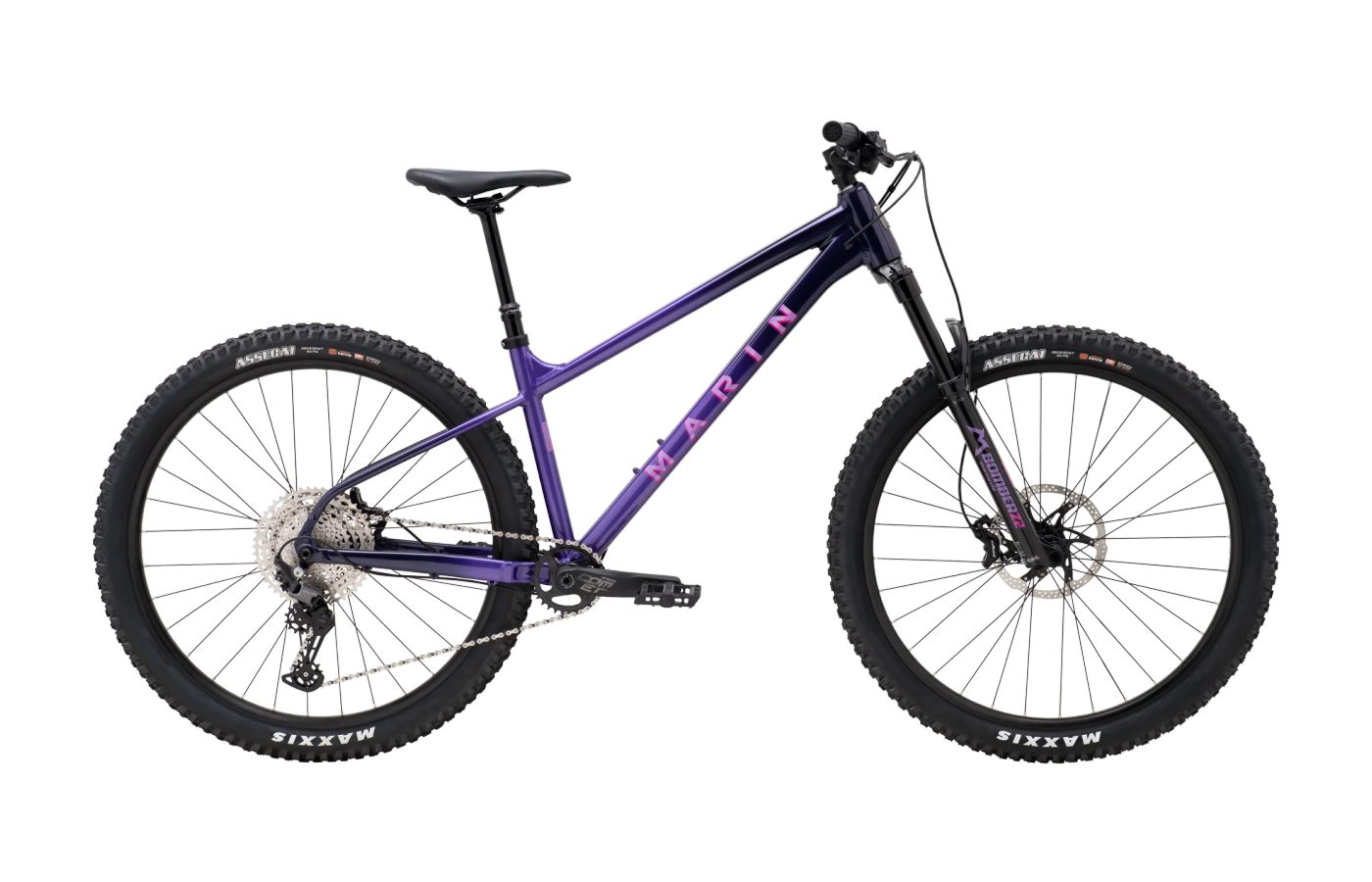
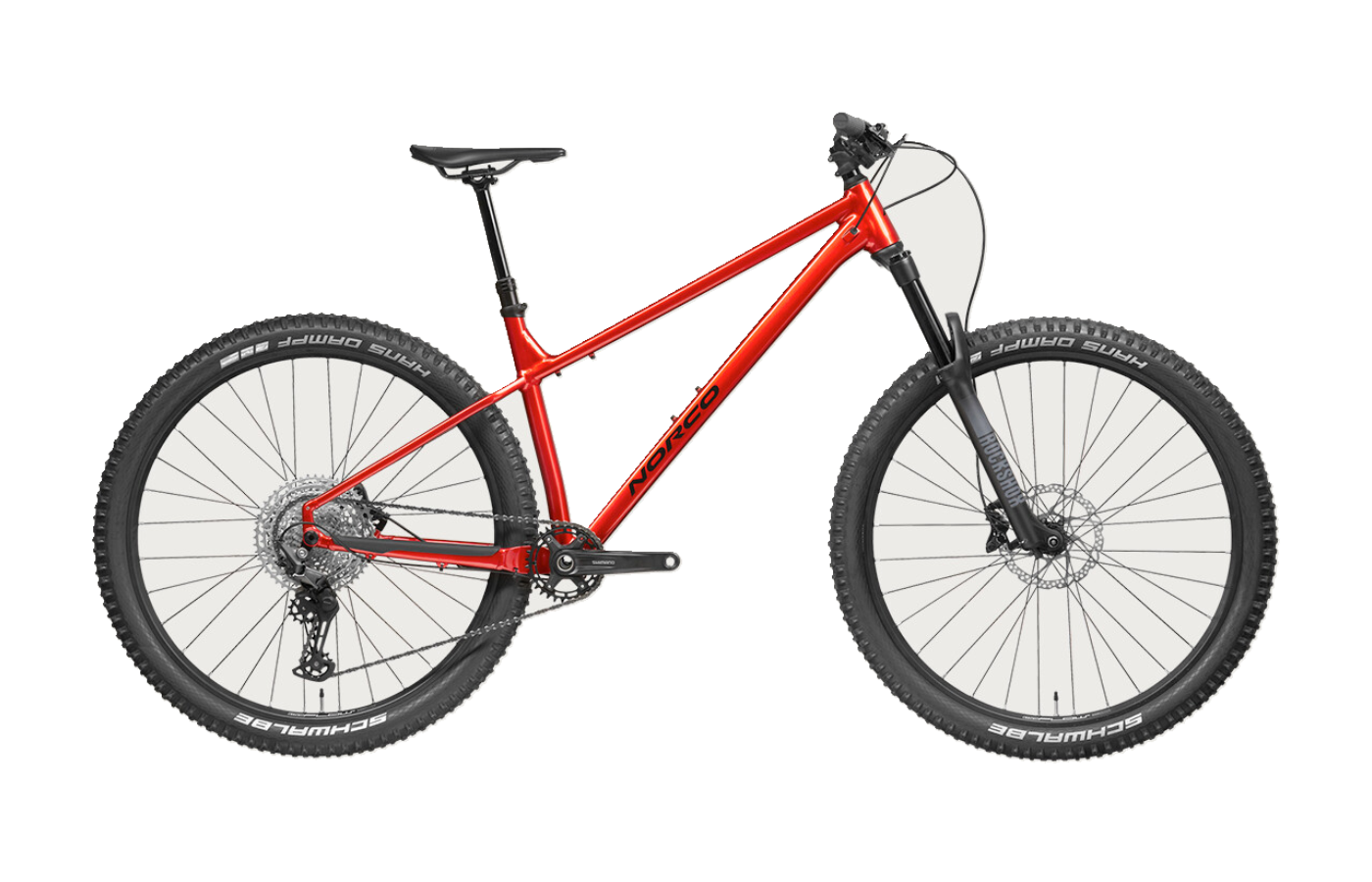
Two hardcore hardtails, two personalities.
The Marin San Quentin is the playful dirt-jumper that climbs better than it should. The Norco Torrent is the planted, ground-hugging bruiser built to bomb.
San Quentin
- Surprisingly compliant frame — thin seat stays make the alloy ride 'much, much less harsh' than rivals, per Pinkbike.
- Marzocchi Z2 air fork — 140 mm of well-damped travel that reviewers found 'feels great' out of the box.
- Playful dirt-jumper character — easy to manual, hop, and flick through tight terrain.
- Maxxis Assegai 2.5 tires are draggy on flatter trails — great grip, slow rolling.
- Less reach (450 mm in size M) than the Torrent — feels smaller at speed.
Torrent
- Longer, more planted geometry — 150 mm fork and reach-focused sizing inspire confidence on steep, chunky descents.
- Faster-rolling Schwalbe Hans Dampf tires — versatile, lighter rolling than aggressive Maxxis on the Marin.
- Slightly higher BB and shorter chainstays (420 mm) make it carve corners well despite its overall length.
- RockShox 35 Gold RL fork is widely panned — 'unrefined,' dive-prone, holds the frame back.
- Stiffer aluminum ride feels 'jarring' on rough seated climbs — less compliant than the Marin.
Editor’s analysis
Both run a slack 64-degree head angle and short chainstays — but spend any real time on either one and they pull in opposite directions.
On paper, the Marin San Quentin and Norco Torrent are siblings: aluminum hardtails, 64-degree head angles, 425-ish-mm chainstays, 29-inch wheels, sub-$2k price tags, Shimano Deore 12-speed drivetrains. Both come from brands with strong aggressive-hardtail DNA, and both are positioned as the bike you take to the gnarly stuff when your full-suspension friends start asking why you bothered.
The Marin San Quentin leans dirt-jumper. Marin spec'd a 140 mm Marzocchi Bomber Z2 air fork on the SQ3, kept the chainstays at 425 mm, and tuned thin seat stays so the alloy frame rides — by reviewer consensus — far smoother than aluminum has any right to. Pinkbike compared its compliance to the Banshee Paradox, which is rare praise for a $2k bike. The result is a hardtail that manuals easily, hops between rollers, and pulls off the kind of playful trail riding most aggressive hardtails feel too leaden for.
The Norco Torrent is the bigger weapon. A 150 mm RockShox 35 Gold RL fork up front, a stiffer aluminum frame, a longer 480 mm reach (size L vs. the Marin's 470), a touch shorter chainstay at 420 mm, and Schwalbe Hans Dampf 2.35 tires that roll faster than the Marin's plug-of-the-trail Maxxis Assegais. Reviewers describe it as 'planted,' 'ground-hugging,' a 'speed demon' — and also, repeatedly, as 'too much bike' on mellower trails. The 35 Gold fork is the Torrent's well-known weak link; multiple outlets called it 'poorly damped' and prone to diving.
Put another way: the Marin is the hardtail you choose when you want to play with the trail. The Norco is the hardtail you choose when you want to point and shoot down it. The Marin's better fork makes it the more polished package straight from the box; the Norco's longer reach and 10 mm more travel make it more capable when the gradient turns vertical.
Where the builds differ.
Comparing our editor's-pick builds side-by-side. Winners highlighted row-by-row — lower price and weight, and the better-spec component, each mark a point.
Build variants & pricing
Both lineups land within $1k of each other — two builds for the Norco, three for the Marin. The Torrent skips the sub-$1.5k entry that the San Quentin offers.
Prices are current US MSRP. The editor's-pick comparison pairs the Marin San Quentin 3 ($1,999) against the Norco Torrent A1 HT ($1,879) — both Shimano Deore 12-speed, both aluminum, separated by $120. Norco also offers steel Torrent S-series builds at higher prices not represented in this lineup.
How they fit, how they steer.
Both at size M, the fit-pick for a typical 5'8" rider. The Norco runs 5.5 mm taller stack with identical reach (450 mm), a degree slacker seat tube (76 vs. 77), and 5 mm shorter chainstays — its 150 mm fork stretches the front end further than the Marin's 140 mm.
Which size should I buy?
Sizing recommendations based on stack, reach, and effective top tube. Both ranges run S–XL with closely overlapping reach numbers; the Marin's steeper seat angle puts you slightly further forward at any given size.
→These are starting points. Flexibility, riding style, and preferred position all shift the answer — if you’re between sizes, a professional fit beats a chart.
What the magazines said.
Published reviews from trusted cycling outlets. Click through for the full write-up.
Which one should you buy?
If you want to play with the trail, get the Marin. If you want to charge straight down it, get the Norco.
San Quentin
If your local riding mixes flow trails, jumps, and the occasional black descent — and you'd rather pop, manual, and carve than just point-and-shoot — the San Quentin 3 is the more complete package out of the box. Its Marzocchi fork doesn't need replacing, the frame's surprising compliance makes longer days less brutal, and it climbs better than its slack head angle suggests.
Torrent
If most of your riding is steep, chunky, and gravity-fed — and you're willing to budget for a fork upgrade down the line — the Torrent A1 HT's longer reach and 150 mm of travel give it more headroom when the trail turns ugly. It demands an active rider and rewards aggression. Just don't expect it to feel zippy on green or blue trails.
Questions buyers actually ask.
Short answers to the things we get emailed about most often.
01Which one descends better?
The Norco Torrent, on paper and in practice. Its 150 mm fork (10 mm more than the Marin's 140 mm), longer reach (480 mm vs. 470 mm in size L), and more 'planted' frame stiffness give it more headroom when the terrain gets steep and chunky. Reviewers consistently describe it as 'ground-hugging,' a 'speed demon,' and 'impressively stable when up to speed.'
That said, the Norco's stock RockShox 35 Gold RL fork is widely criticized — 'unrefined,' 'poorly damped,' prone to diving. To get the full descending advantage, you'll likely want a fork upgrade. The Marin's Marzocchi Bomber Z2, by contrast, is praised as-is.
02Which one climbs better?
The Marin San Quentin 3, by a small margin. It pairs a steeper 77-degree seat tube angle (vs. the Norco's 76) with a more compliant alloy frame, putting the rider in a more upright, efficient seated climbing position. Reviewers describe the Marin as 'agile and zippy on the climbs.'
The Norco isn't a bad climber — its steep seat tube also helps — but the stiffer aluminum frame feels 'jarring' on rough seated climbs, and the bike's longer, slacker front end can feel 'wander-y on super steep climbs.' Both run aggressive Shimano Deore 12-speed drivetrains and similar-weight tires; the geometry tilts the win to Marin.
03Are these really hardcore hardtails or just trail bikes with no rear shock?
Both are firmly in the hardcore hardtail category — 64-degree head angles, 140–150 mm forks, short chainstays, and aggressive sizing. Compared to a typical trail hardtail (66–67 degree HTA, 100–120 mm fork), both are designed for terrain a lot of riders default to a full-suspension bike for: steep descents, jumps, technical features.
The Norco leans further into the bike-park / enduro end of the spectrum. The Marin is the more versatile of the two — still aggressive, but with more playful instincts and better climbing manners.
04What about the steel Norco Torrent S1 — should I consider that instead?
If your budget reaches further, the steel Torrent S1 is the platform reviewers actually love — RockShox Lyrik Ultimate fork, GX Eagle drivetrain, SRAM Code R brakes, Maxxis Assegai EXO+ tires. Pinkbike said 'there's no room to upgrade that would make a difference in any way.'
It's not in this comparison because price-tier matching put it well above either editor's pick. But if you're cross-shopping the aluminum A1 HT and have flexibility on price, the S1 is a markedly better-specced bike.
05Which one is more compliant?
The Marin San Quentin 3, decisively — and unusually for an aluminum hardtail. Multiple reviewers (Pinkbike, MTB Party) singled out Marin's thin seat stays and tube selection for delivering a ride that feels 'almost as smooth as the Banshee Paradox' — high praise that's rarely given to alloy frames.
The aluminum Norco Torrent A1 HT, by contrast, is described as 'stiff' and 'jarring' on rough climbs. Norco's steel S1/S2 frames are the compliant ones in their lineup; the alloy A1 trades that compliance for a lower price point.
06What tires come stock and how do they affect the ride?
Marin San Quentin 3: Maxxis Assegai 29x2.5 in MaxxTerra/EXO. Phenomenal grip, especially in wet or loose conditions — but slow rolling. Reviewers compared the drag to 'tar on the tires.'
Norco Torrent A1 HT: Schwalbe Hans Dampf 2.35 in TwinSkin/TLR. Faster rolling and more versatile, but lighter sidewalls and a less aggressive tread. Better for varied trail riding, less ideal for steep wet stuff or repeated bike-park laps.
The tire choice partly explains why the Marin feels playful but slow on flat ground, while the Norco feels faster on smoother terrain but less locked-in when it gets greasy.
07Do either come with a dropper post?
Yes — both editor's-pick builds (Marin SQ3 and Norco A1 HT) ship with a dropper. Marin's frame is designed around a 200 mm dropper on the XL thanks to its very short seat tubes, which is unusual at this price point. Norco includes a TranzX dropper, sized to frame size.
08Which is more upgradeable?
Both have modern Boost spacing (148 mm rear, 110 mm front), tapered head tubes, threaded BSA bottom brackets, and ISCG mounts — meaning future fork, wheel, and chainguide upgrades are straightforward.
The Torrent A1 HT begs more loudly for an upgrade — specifically, its fork. Swapping the RockShox 35 Gold for something better (a Lyrik, Marzocchi Z1, Fox 36) would close most of the gap to the much pricier Torrent S1.
The Marin SQ3 is a more complete platform from the factory and doesn't need anything immediately. Both have plenty of headroom for component upgrades over time.
Similar bikes
If your priorities don’t map cleanly onto either of these, one of these adjacent bikes probably fits better.
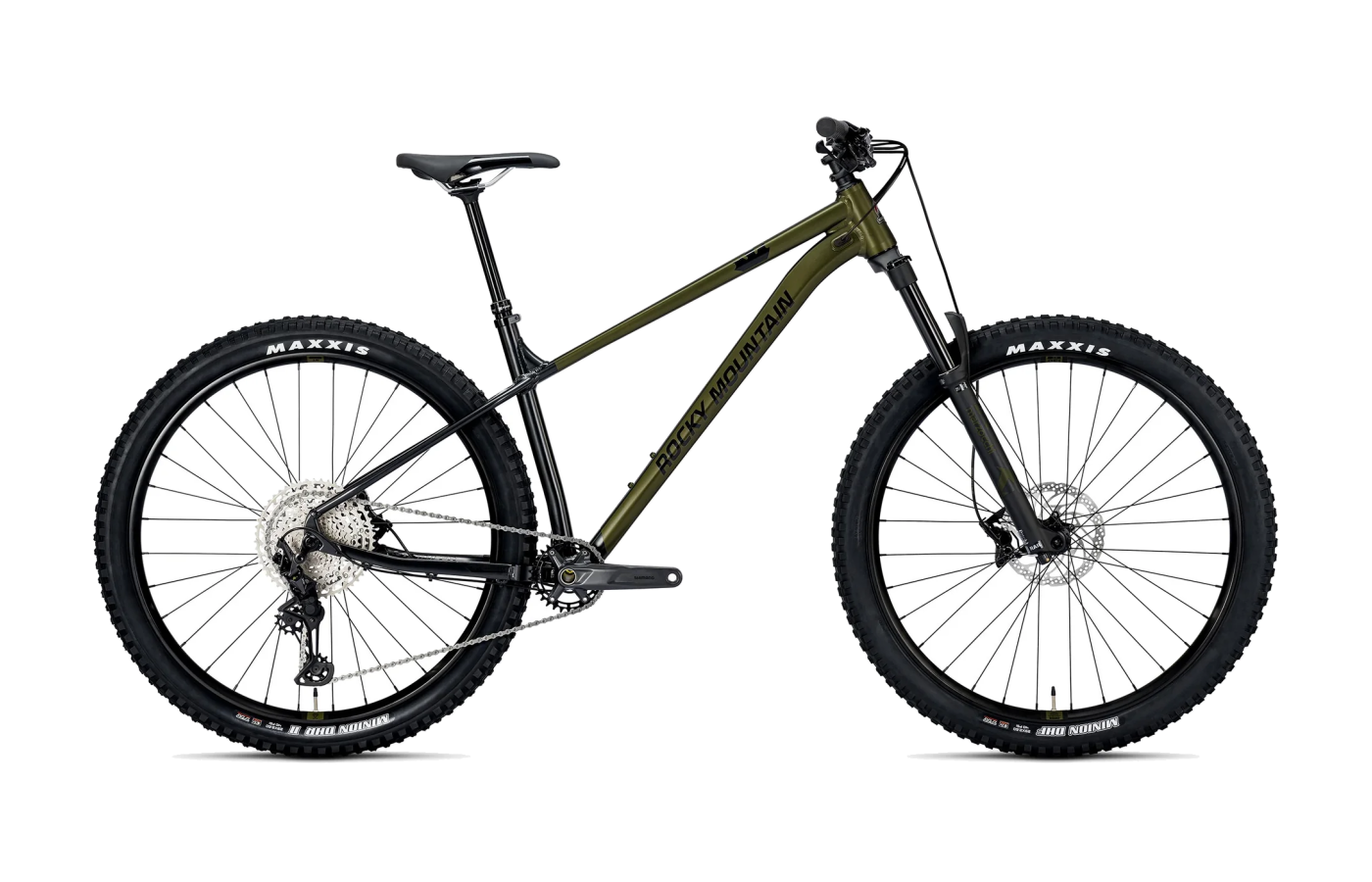
Growler
The third member of the trio that always shows up in these reviews — long, low, slack, and similarly priced. The Growler is the closest direct cross-shop to the Torrent's planted, ground-hugging character.
Compare →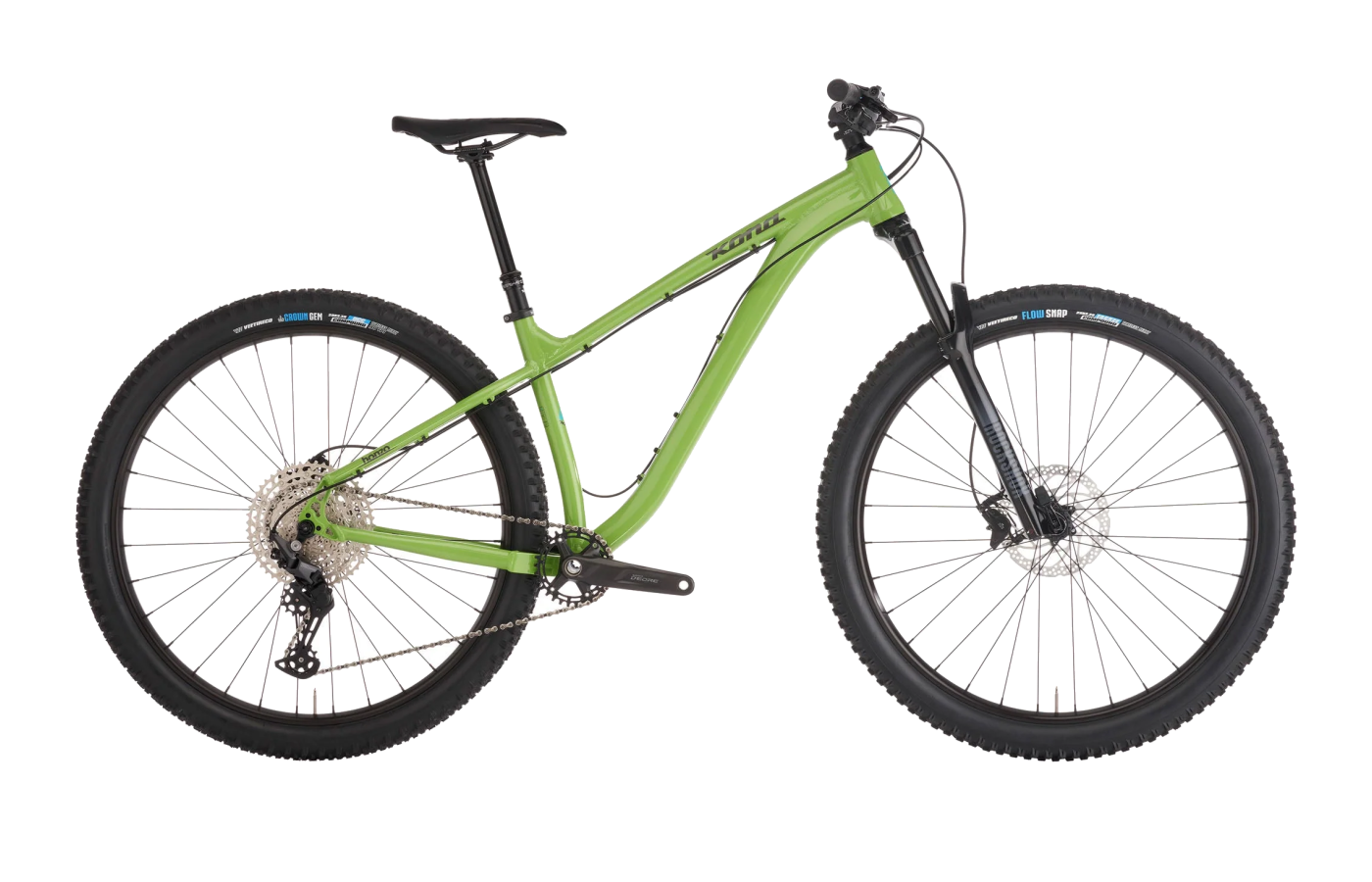
Honzo
The original aggressive hardtail that made this category cool. Available in steel or alloy, the Honzo splits the difference between the Marin's playfulness and the Torrent's brawler stance — the most flexible platform of the three.
Compare →Roscoe
Trek's take on the aggressive trail hardtail at a directly competitive price. The Roscoe is the safe-pick alternative — solid spec, big-brand dealer network, and a slightly more conservative geometry than either the Marin or Norco.
Compare →