San Quentin
vsChameleon
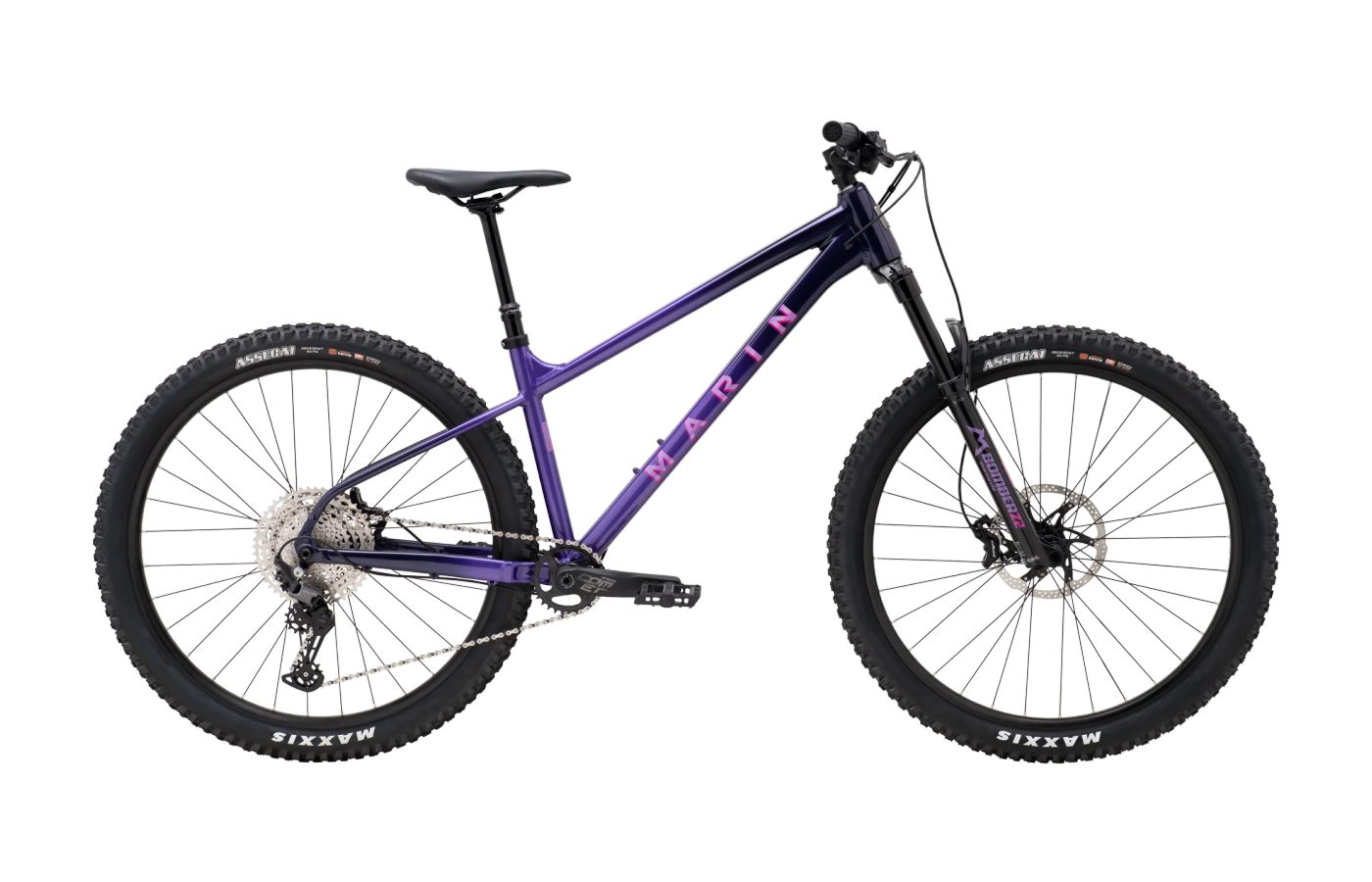
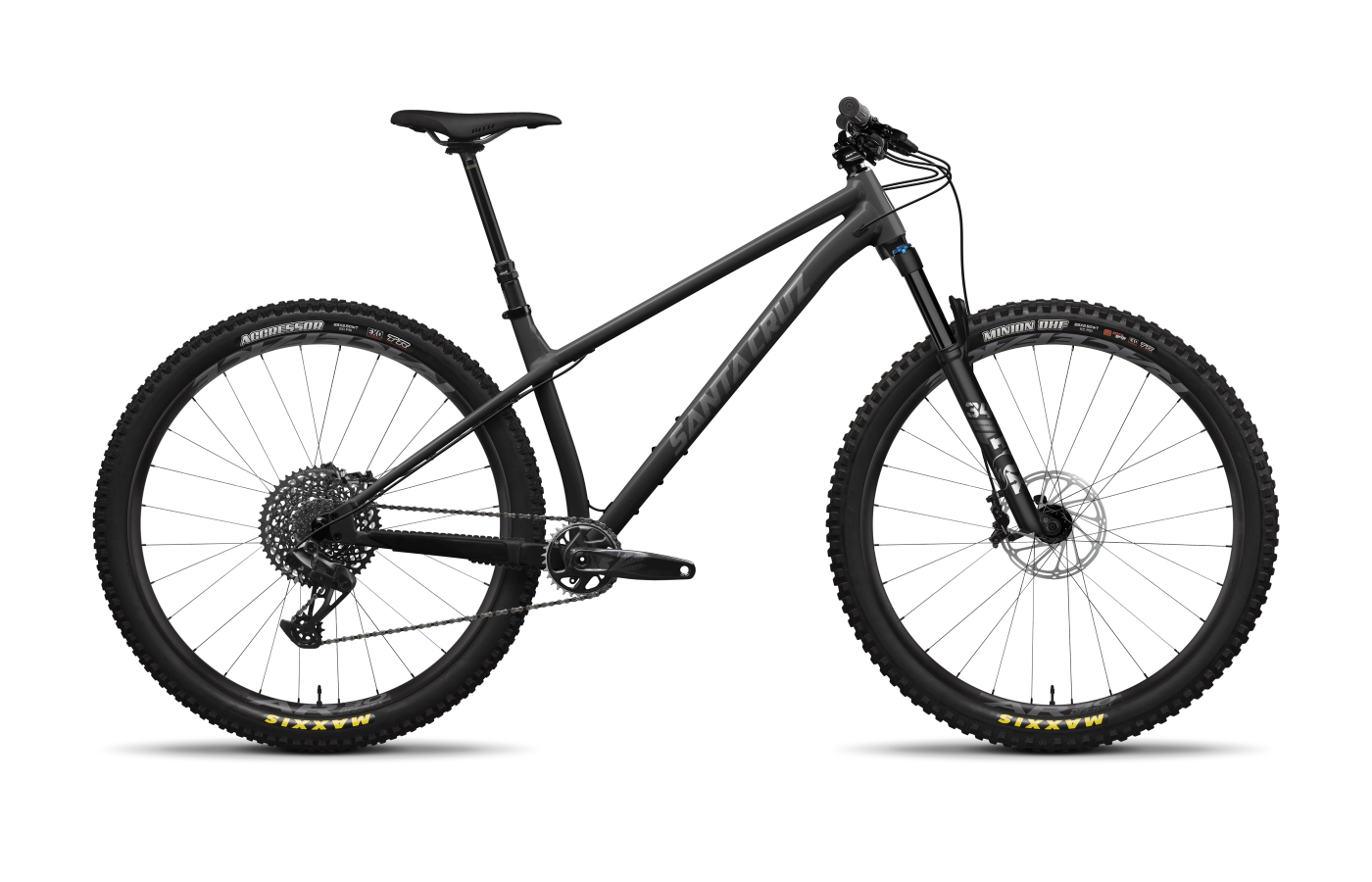
Two hardcore hardtails, two price tiers.
The Marin San Quentin maxes out aggressive-hardtail value at $2k. The Santa Cruz Chameleon charges a premium for a do-it-all frame and a lifetime warranty.
San Quentin
- Outrageous spec for the money — $1,999 buys a Marzocchi Z2 140 mm air fork, Deore 12-speed, and TRP 4-pots.
- More aggressive geometry — a degree slacker head angle and 2.7 degrees steeper seat tube vs the Chameleon.
- Surprisingly compliant alloy frame — thin seat stays that reviewers compared to a Banshee Paradox.
- No drivetrain or chainstay-length adjustability — what ships is what you ride.
- Frame warranty is standard, not Santa Cruz's lifetime program.
Chameleon
- Sliding dropouts — 425–437 mm chainstays plus 29er, MX (mullet), or singlespeed conversions from one frame.
- Lifetime frame and bearing warranty — Santa Cruz's 'Bike for Life' program covers the original owner indefinitely.
- More forgiving 74-degree seat tube — better for long-distance and bikepacking miles than Marin's steep 77.
- Stock SRAM MTH hub's 17-degree engagement is widely panned — reviewers call a high-engagement upgrade essential.
- Spec-for-dollar is weak — competitors offer more parts at the same price.
Editor’s analysis
Both bikes chase the same hardcore-hardtail brief — slack, low, playful. They just disagree about what you're paying for.
The Marin San Quentin and Santa Cruz Chameleon are the same kind of bike on paper: 6061 alloy hardtails, 130–140 mm forks, 64–65-degree head angles, 425 mm chainstays, 29-inch wheels (or mullet), built to be flicked, popped, and sent. Both have credible review pedigrees as 'dirt-jumper-DNA' trail rippers. Both refuse to be put in an XC or enduro box.
The Marin is the value play, and it's a serious one. The San Quentin 3 lands at $1,999 with a Marzocchi Bomber Z2 140 mm air fork, Shimano Deore 12-speed, TRP 4-piston brakes, and Maxxis Assegai tires — a kit that reviewers (Pinkbike, MTB Party) repeatedly say 'doesn't need any upgrades out of the box.' Geometry is the more aggressive of the two: a degree slacker head angle (64 vs 65), a noticeably steeper 77-degree seat tube, and a frame that punches well above $2k.
The Santa Cruz costs more — and asks you to know why. The Chameleon S at $2,999 brings SRAM GX Eagle and a Fox 34 Float Performance fork, but that's a $1k jump for components that aren't categorically better than what Marin ships at $2k. What you're actually buying is the frame: redesigned sliding dropouts that flip between 425 and 437 mm chainstays and let you run 29er, mullet, or singlespeed; a UDH hanger; and Santa Cruz's lifetime frame and bearing warranty. Reviewers (NSMB, Bikepacking.com) frame it as an MB-1 bike — one frame that swallows multiple bikes' worth of jobs.
Put another way: the Marin is the bike you buy when you want maximum aggressive hardtail per dollar today. The Santa Cruz is the bike you buy when you want one frame to grow with you for a decade — and you're willing to pay 50% more, plus a hub upgrade, to get there.
Where the builds differ.
Comparing our editor's-pick builds side-by-side. Winners highlighted row-by-row — lower price and weight, and the better-spec component, each mark a point.
Build variants & pricing
The Marin spans $1,049–$1,999 across three builds; the Chameleon runs $2,099–$2,999. Even the cheapest Chameleon costs more than the priciest San Quentin.
Prices are current US MSRP. The Chameleon is also available frame-only at roughly $949 — many reviewers (NSMB, Singletrackworld) recommend that route given the stock build kits' weak component value.
How they fit, how they steer.
Both at size M — the fit-picked size for a 5'8" rider. The San Quentin runs 1 degree slacker at the head (64 vs 65), 2.7 degrees steeper at the seat (77 vs 74.3), and stretches the wheelbase 20 mm longer (1203.6 vs 1183.6). Both share an identical 425 mm chainstay.
Which size should I buy?
Size recommendations based on stack, reach, and effective top tube. Both bikes offer S, M, L, and XL; the Chameleon's slightly taller stack tends to push borderline riders down a size.
→These are starting points. Flexibility, riding style, and preferred position all shift the answer — if you’re between sizes, a professional fit beats a chart.
What the magazines said.
Published reviews from trusted cycling outlets. Click through for the full write-up.
Which one should you buy?
If you want maximum aggressive hardtail per dollar, get the San Quentin. If you want one frame for a decade of changing setups, get the Chameleon.
San Quentin
If $2,000 is your hardtail budget and you want a bike you can ride hard tomorrow without an upgrade list, the San Quentin 3 is the answer. The geometry is the most aggressive in this comparison, and the spec is the highest you'll see at this price.
Chameleon
If you want a single frame that flips between trail bike, mullet shred-sled, bikepacking rig, and singlespeed — and you'll keep it for a decade — the Chameleon is built for that. Just budget for a hub upgrade and accept the Santa Cruz tax.
Questions buyers actually ask.
Short answers to the things we get emailed about most often.
01Which is the better value?
The Marin San Quentin, by a wide margin on paper. The SQ3 at $1,999 ships with a 140 mm Marzocchi Z2 air fork, Shimano Deore 12-speed, TRP 4-piston brakes, and Maxxis Assegai tires. Reviewers (Pinkbike, MTB Party) consistently say it 'doesn't need any upgrades out of the box.'
The Chameleon S at $2,999 is a $1,000 jump for SRAM GX Eagle and a Fox 34 Float Performance fork — better-known names, but not categorically better performance. What the extra money buys is the frame, the sliding dropouts, and the lifetime warranty, not the build kit.
02Which has more aggressive geometry?
The San Quentin, on every meaningful number. It runs a 64-degree head tube angle (vs 65 on the Chameleon), a 77-degree seat tube (vs 74.3), and a 20 mm longer wheelbase at size M (1203.6 vs 1183.6 mm). On paper it's the more downhill-biased and more efficient-climbing bike of the two.
Both share an identical 425 mm chainstay length. The Chameleon can extend that to 437 mm via its sliding dropouts when you want more stability or run a mullet — adjustability the Marin doesn't offer.
03Can the Chameleon really be set up as a singlespeed or mullet?
Yes. The redesigned V9 sliding dropouts let you run a singlespeed (no derailleur required), a full 29er, or an MX/mullet setup with a 27.5-inch rear wheel. Reviewers (NSMB, MTB Party) have published back-to-back tests of the same frame in different configurations.
The San Quentin has fixed dropouts and ships as either full 27.5 (SQ1, SQ2) or full 29 (SQ3) depending on the model — no in-frame conversion.
04How does the warranty compare?
Santa Cruz offers a lifetime warranty on the frame and pivot bearings to the original owner, plus the 'Bike for Life' rider-care program — widely cited by reviewers as part of the Chameleon's value proposition.
Marin's warranty on the San Quentin frame is the standard original-owner program (typically 5 years on alloy frames; check current terms with the dealer). For long-term ownership, the Santa Cruz program is the stronger of the two.
05What's the deal with the Chameleon's rear hub?
It's the Chameleon's most-criticized spec choice. The stock SRAM MTH hub uses a 17-degree engagement, which multiple reviewers (NSMB, MTB Party) called 'clunky' and a 'barrier to enjoying the bike' on technical climbs that require ratcheting through obstacles.
A high-engagement aftermarket hub (Industry Nine, Project 321, etc.) is the most-recommended upgrade — budget roughly $300+ on top of the bike. The Marin's Shimano MT410B hub isn't fast-engaging either, but it's not flagged as a problem at the price.
06Which climbs better?
The San Quentin has the more efficient climbing geometry — a 77-degree seat tube angle puts the rider noticeably more forward than the Chameleon's 74.3, which reviewers (Pinkbike) say feels more like a modern enduro bike on steep pitches.
The trade-off is comfort over long, flatter days. Mountain Bike Rider noted that the steep seat angle puts more weight through the hands and sit bones on gradual climbs and flat tracks. The Chameleon's slacker seat tube is more relaxed for traversing miles, especially loaded with bikepacking kit.
07What about the Maxxis tires — is grip vs rolling speed an issue?
Yes, on the San Quentin 3. Its Maxxis Assegai 2.5 front-and-rear setup is grippy in the wet and on loose terrain, but reviewers (Riding With Josh, MTB Party) repeatedly described them as feeling like 'tar' and 'hard to maintain speed' on flow trails and pump tracks. A faster-rolling rear tire is a common swap.
The Chameleon ships a Maxxis Minion DHF up front and a faster Aggressor in the rear — a more conventional trail-bike pairing that gives up some rear grip for noticeably less rolling drag.
08Is either the right choice for bikepacking?
The Chameleon, clearly. It has a triple-bolt cargo cage mount on the underside of the downtube, a bottle-cage mount in the front triangle, and the sliding dropouts let you run a singlespeed for ultra-low maintenance on long trips. Bikepacking.com specifically praised it as a loaded-up adventure rig and noted the frame's harshness 'subdued' under gear weight.
The San Quentin is mounting-sparse and has no equivalent adjustability. It's a trail bike that happens to have luggage. If overnight trips are a regular use case, the Chameleon is built for it; the Marin isn't.
Similar bikes
If your priorities don’t map cleanly onto either of these, one of these adjacent bikes probably fits better.
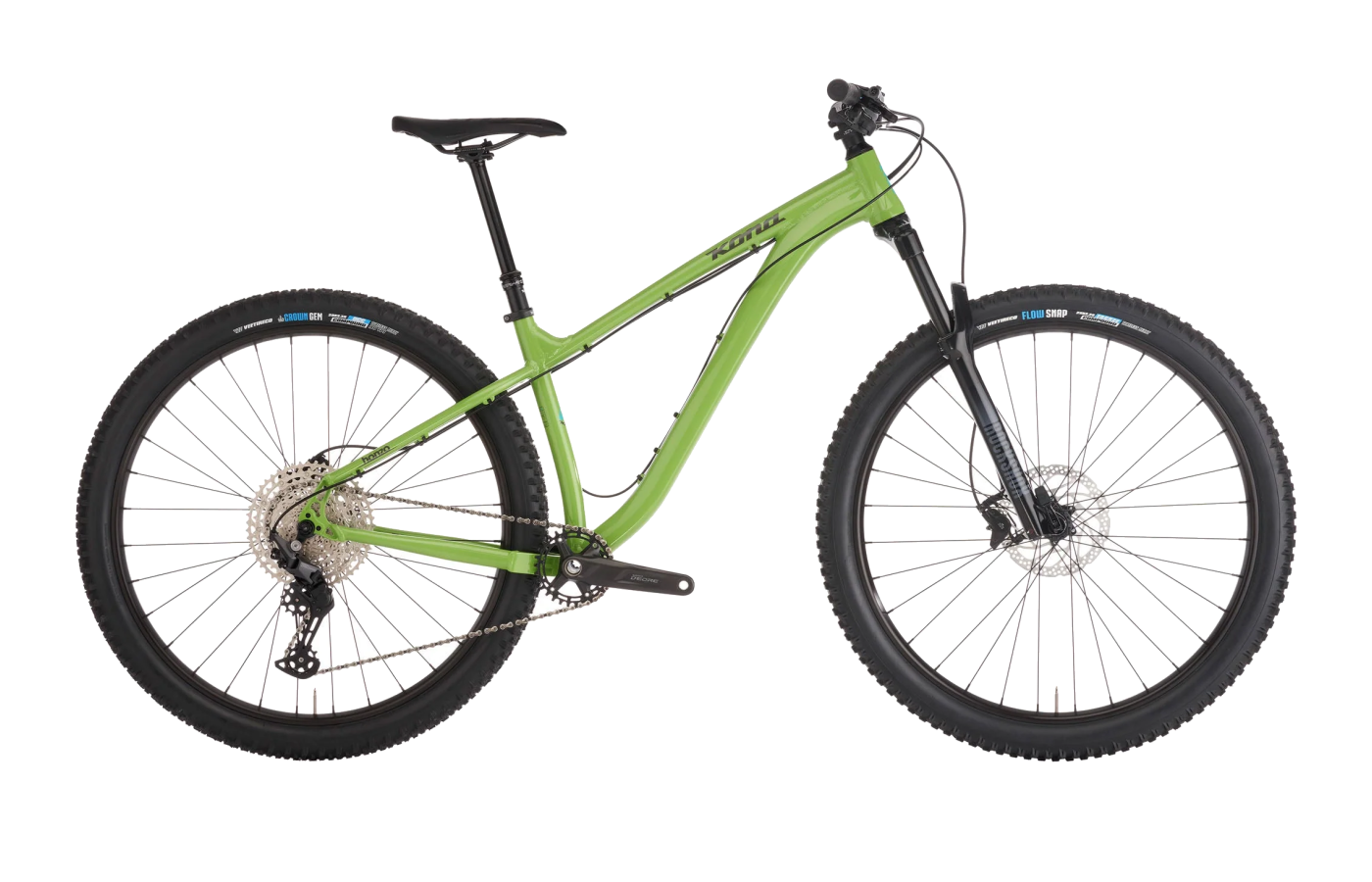
Honzo
The most-cross-shopped third option in this segment — Kona's hardcore hardtail with a similar slack-and-low geometry and a long history of being recommended against both of these bikes. Honest middle ground on price and spec.
Compare →Roscoe
Trek's aggressive trail hardtail, often spec'd one tier above the Marin at a similar price thanks to dealer scale. Worth a look if you want the bike-shop service network behind you.
Compare →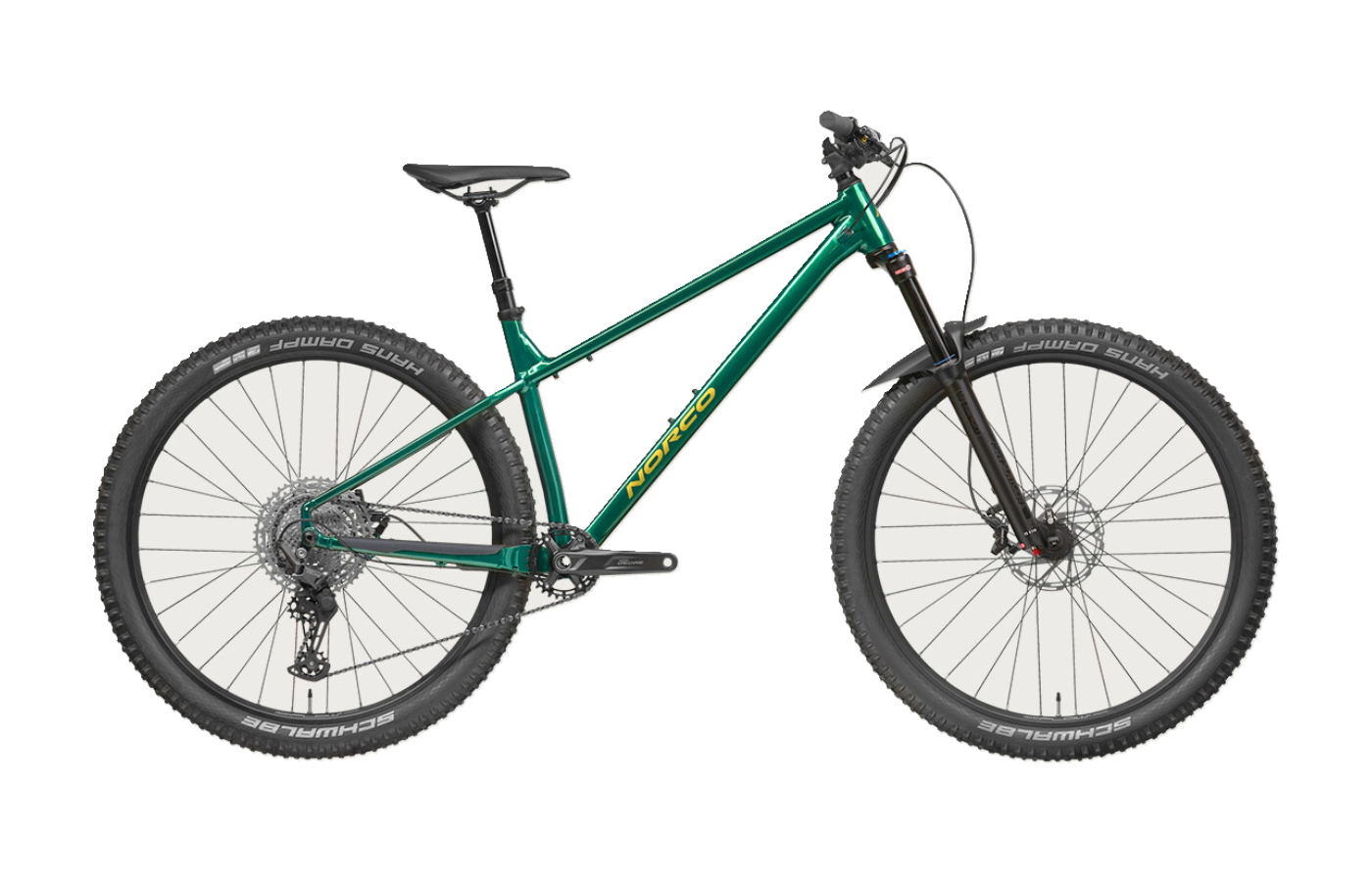
Torrent
Norco's hardcore hardtail, available in steel — a more muted, supple ride feel for riders who'd rather have steel compliance than alloy stiffness. Reviewed alongside the San Quentin as a slacker, more planted alternative.
Compare →