Fluid FS
vsOptic
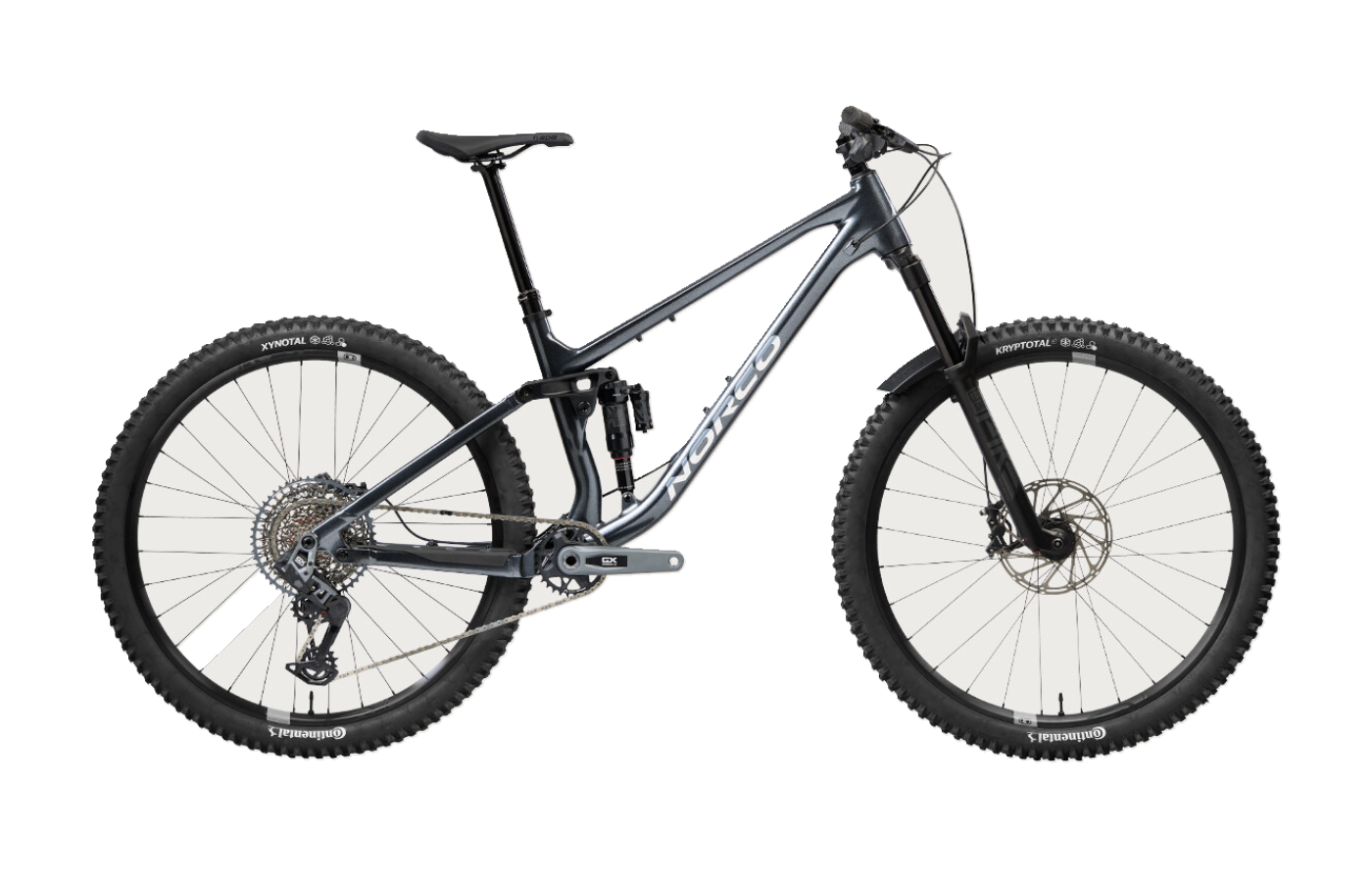
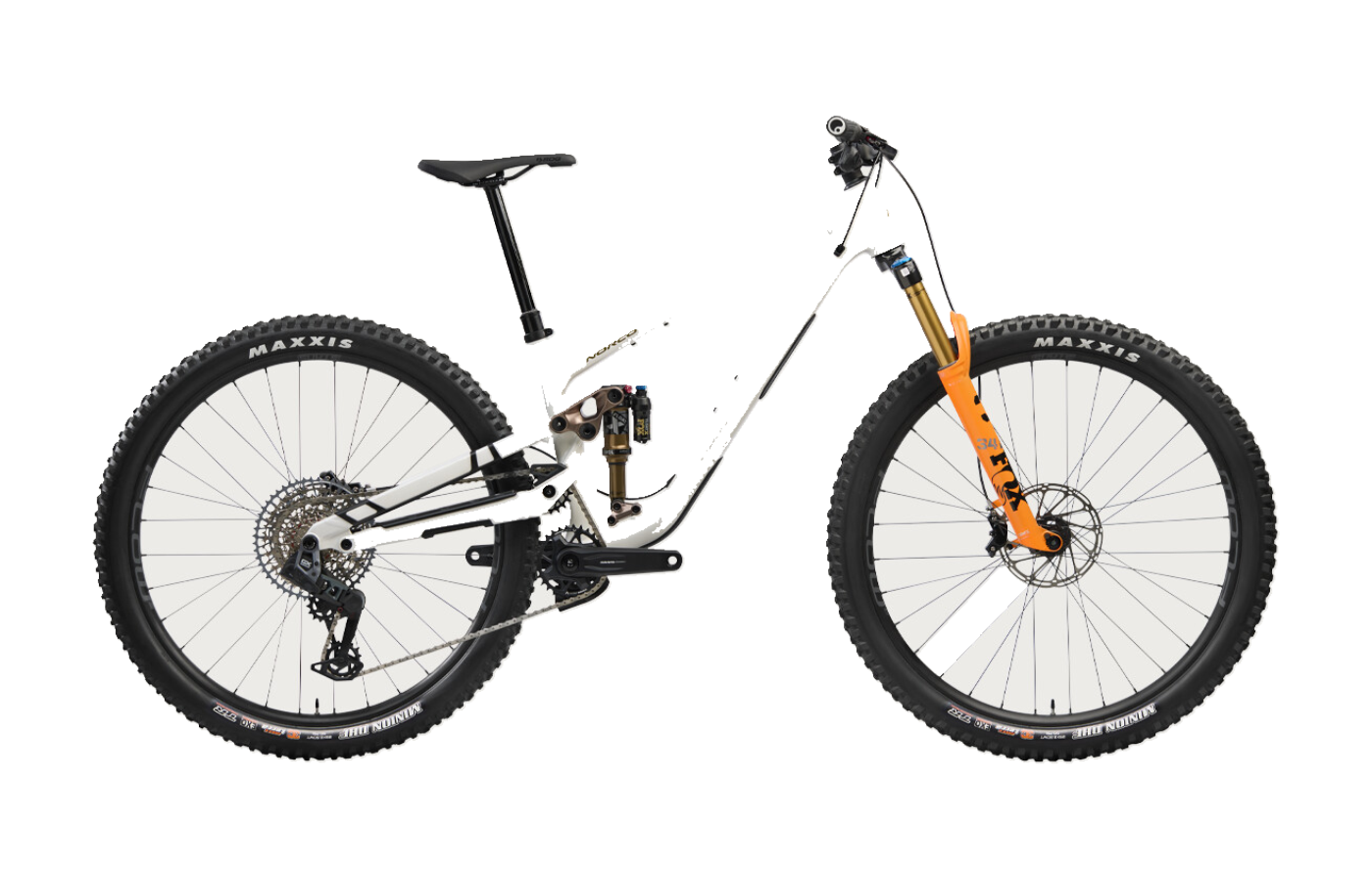
Two Norco trail bikes, two suspension philosophies.
The Fluid FS is the budget Horst-link all-rounder. The Optic uses a high-pivot idler to chase downhill composure in a short-travel package.
Fluid FS
- Best-in-class value — Vital MTB and OutdoorGearLab both gave the platform top-of-class awards at this price point.
- Custom-tuned suspension across the range — even the $1,799 A4 ships with a Norco-tuned X-Fusion shock.
- Five sizes (S–XXL) with Ride Aligned geometry — size-specific chainstays and seat angles, no one-size-fits-all compromise.
- Alloy only — no carbon option, and the platform is heavy at 32–36 lb.
- Stock Continental tire casings are thin; aggressive riders should plan to upgrade.
Optic
- High-pivot composure — rides like a 150 mm bike on chunky descents, reviewers consistently say.
- 29er or mixed wheels — the Missing Link kit ($179) swaps between full 29 and MX without breaking geometry.
- Carbon or alloy frameset options ($2,099 alloy / $3,849 carbon) — rare for a brand at this tier.
- Idler pulley adds drag and noise; some reviewers reported chain retention issues in rough conditions.
- Floor price is nearly double the Fluid FS — no sub-$3,000 builds exist.
Editor’s analysis
Same brand, same head angle, same fork travel — and almost nothing else in common once the trail tilts down.
On paper the Fluid FS and the Optic look like siblings: both Norco, both 65-degree head angles, both 140 mm forks, both built around 29-inch wheels with Norco's Ride Aligned size-specific chainstays and seat angles. The Fluid runs 130 mm of Horst-link travel out back; the Optic runs 125 mm through a high-pivot VPSHP layout with an idler pulley. Five millimeters apart on the spec sheet, an entirely different suspension philosophy on the trail.
The Fluid FS is the more accessible bike by a wide margin. It's alloy-only, starts at $1,799, and tops out at $3,899 — the entire range fits inside what a single mid-tier Optic costs. Reviewers consistently call it an alloy antidote to costly carbon, with custom-tuned shocks across the lineup, a 65-degree head angle, and a 1,245 mm wheelbase in size large that makes it feel calmer than its 130 mm of travel suggests. Vital MTB gave the prior generation Bike of the Year on the strength of that value-per-dollar pitch, and the current bike inherits the same frame DNA.
The Optic picks a narrower lane and goes deep. The high-pivot's rearward axle path is designed to slice square-edge hits down to a fraction of their size, and reviewers across the board (Theradavist, BikeRadar, Mountain Bike Action) describe it as feeling like it has 30 mm more travel than the spec admits on chunky descents. The cost is real: an idler pulley adds drag and noise, prices start at $3,399 and run to $6,799, and OutdoorGearLab flagged chain-retention issues that don't exist on conventional layouts. Climb efficiency depends on which reviewer you ask — most call it surprisingly composed, a vocal minority (BikePerfect, OutdoorGearLab) found pedal bob worse than expected.
Put another way: the Fluid FS is the bike you buy when you want one capable trail bike for everything and don't want to spend more than $4k. The Optic is the bike you buy when downhill capability per millimeter of travel is what you're optimizing for, and you're ready to pay (and wrench) for it.
Where the builds differ.
Comparing our editor's-pick builds side-by-side. Winners highlighted row-by-row — lower price and weight, and the better-spec component, each mark a point.
Build variants & pricing
The Fluid FS spans $1,799–$3,899, all alloy. The Optic spans $3,399–$6,799 across alloy and carbon — its floor sits roughly where the Fluid's ceiling does.
Editor's picks above are tier-matched: both run SRAM GX Eagle AXS T-Type on aluminum frames. Prices are current US MSRP — the $1,700 gap reflects the Optic's high-pivot hardware, Fox Factory suspension, and Code Silver Stealth brakes vs. the Fluid's RockShox Select+ and SRAM DB8 spec at the same drivetrain tier.
How they fit, how they steer.
Both share a 65-degree head angle and 128 mm of trail. The Optic stretches reach about 22 mm longer per equivalent size while the Fluid runs slightly longer chainstays for its wheelbase — the Fluid plants, the Optic encourages a more aggressive, stretched-out position.
Which size should I buy?
Size recommendations based on stack, reach, and effective top tube. Both use modern, generous reach numbers — confirm dropper insertion before committing on the Optic's longer-seat-tube sizes.
→These are starting points. Flexibility, riding style, and preferred position all shift the answer — if you’re between sizes, a professional fit beats a chart.
What the magazines said.
Published reviews from trusted cycling outlets. Click through for the full write-up.
Which one should you buy?
If you want one capable trail bike for everything under $4k, get the Fluid FS. If short-travel downhill composure is what you're chasing and the budget supports it, get the Optic.
Fluid FS
If you want a do-it-all trail bike that punches above its weight without breaking $4k, the Fluid FS is the benchmark. Its Horst-link rear stays composed on bigger hits, climbs better than the scale suggests, and the whole alloy lineup spans where most brands' single carbon flagship lives.
Optic
If you want short-travel agility on the climbs and long-travel composure on the descents — and you'll pay (and tinker) for it — the Optic is one of very few production bikes built around that idea. The high-pivot does what it claims; just budget for an attentive drivetrain and accept the price floor.
Questions buyers actually ask.
Short answers to the things we get emailed about most often.
01Which has more travel?
The Fluid FS by a hair — 130 mm rear vs. 125 mm on the Optic. Both run 140 mm forks. On the trail, though, multiple reviewers (Theradavist, BikeRadar, Mountain Bike Action) say the Optic's high-pivot makes it feel like it has 30 mm more rear travel than its number suggests, while the Fluid feels appropriate to its 130 mm spec.
If you're looking at the spec sheets to predict descending capability, the high-pivot suspension type matters more here than the 5 mm travel difference.
02What is the high-pivot/VPSHP system on the Optic actually doing?
The main suspension pivot is mounted high on the frame, and the chain runs over an idler pulley before reaching the chainring. The geometry of this layout means the rear axle moves backwards and up through travel rather than just up — so when the wheel hits a square-edged rock, it can move out of the way more effectively rather than slamming straight into it.
The payoff: noticeably better bump absorption on chunky terrain. The cost: the idler adds chain drag (small), drivetrain noise (variable), and another wear part to maintain. The Fluid FS uses a conventional Horst-link layout — simpler, lighter, less complex, but doesn't get the same axle-path benefit.
03Which climbs better?
Both are praised as efficient climbers given the category, but for different reasons. The Fluid FS has an active Horst-link rear that BikeRadar and others called a "traction monster" on technical, rocky climbs — there's noticeable pedal bob on smooth fire roads (use the climb switch), but the suspension stays planted on steep, rough ascents.
The Optic divides reviewers more sharply. Theradavist and Mountain Bike Action call it impressively composed under power thanks to the high-pivot's anti-squat behavior. BikePerfect and OutdoorGearLab found pedal bob worse than expected and one called the platform "continually out of reach." Rider weight, pedal style (clipped vs. flat), and drivetrain cleanliness all seem to influence which camp you'll land in.
04What's the price gap, and what does it buy?
The Fluid FS runs $1,799 – $3,899. The Optic runs $3,399 – $6,799. The Optic's floor is roughly the Fluid's ceiling.
The extra money buys: the high-pivot frame design, a carbon-frame option (Optic only — the Fluid is alloy across the board), Fox Factory suspension at the alloy A1 tier, OneUp cockpit components, Stan's Flow S2 wheels on DT Swiss 350 hubs, and SRAM Code Silver Stealth brakes. The Fluid's equivalent A1 SRAM build sticks with RockShox Select+ suspension, WTB ST Light wheels, and SRAM DB8 brakes — perfectly capable, just one tier down.
05Which is better for an aggressive rider pushing a short-travel bike?
The Optic, by design. Multiple reviewers describe it as feeling like a longer-travel bike on descents thanks to the high-pivot's bump-eating axle path — Theradavist explicitly called it the "un-high pivot" because it manages to stay nimble.
The Fluid FS is no slouch — Outdoorgearlab said it "rides a little like a small enduro bike" — but its conventional Horst-link will reach the limits of the rear shock sooner on repeated big hits. If most of your riding is rowdy enduro-adjacent terrain, the Optic earns its premium. If your terrain is mixed trail-and-climbing, the Fluid covers the same ground for less.
06Are there reliability concerns to know about?
Fluid FS: reviewers consistently flag the stock Continental Kryptotal/Xynotal Trail tires as having thin casings — plan to upgrade for aggressive riding. A few early reports of pivot dryness and Bear Pawls hub noise; warranty service has been responsive. Frame itself is widely described as bomb-proof, backed by a 5-year frame warranty.
Optic: the idler pulley is the recurring concern. BikePerfect reported persistent noise and drag without diligent lubrication; OutdoorGearLab experienced repeat chain drops from the idler in rough terrain. Mountain Bike Action's long-term test had no such issues. The system demands more drivetrain attention than a conventional bike — meticulous riders will likely be fine, set-and-forget riders may not.
07Carbon vs. alloy — does it matter here?
Only on the Optic, since the Fluid FS is alloy-only. The Optic offers both carbon and aluminum frames, but Vital MTB measured the carbon Fluid prototype's weight savings vs. alloy at just 0.3 lb — "negligible" was their word — and the Optic's carbon-vs-alloy spread is similar.
On the Optic specifically, the alloy A1 ($5,499) gets the same Fox 34 Factory fork and Float X Factory shock as the carbon C1 ($6,799) along with GX AXS T-Type vs. X0 — most of the performance for $1,300 less. The carbon premium buys nicer wheels (We Are One Faction vs. Stan's Flow S2) and the X0 drivetrain, not a transformative ride difference.
08What about size and fit?
The Fluid FS is offered in S, M, L, XL, XXL — five sizes, traditional labels. Reach numbers run 420 / 450 / 480 / 510 / 540 mm.
The Optic is offered in S1, S2, S3, S4, S5 — Norco's number-based sizing with reach 422.5 / 447.5 / 472.5 / 497.5 / 522.5 mm. The Optic runs roughly 22 mm longer reach per equivalent size and uses shorter seat tubes that allow longer dropper posts (up to 240 mm on the S5).
Both use Norco's Ride Aligned size-specific chainstays, so the bike's balance scales with the rider rather than staying static across sizes.
Similar bikes
If your priorities don’t map cleanly onto either of these, one of these adjacent bikes probably fits better.
Sight
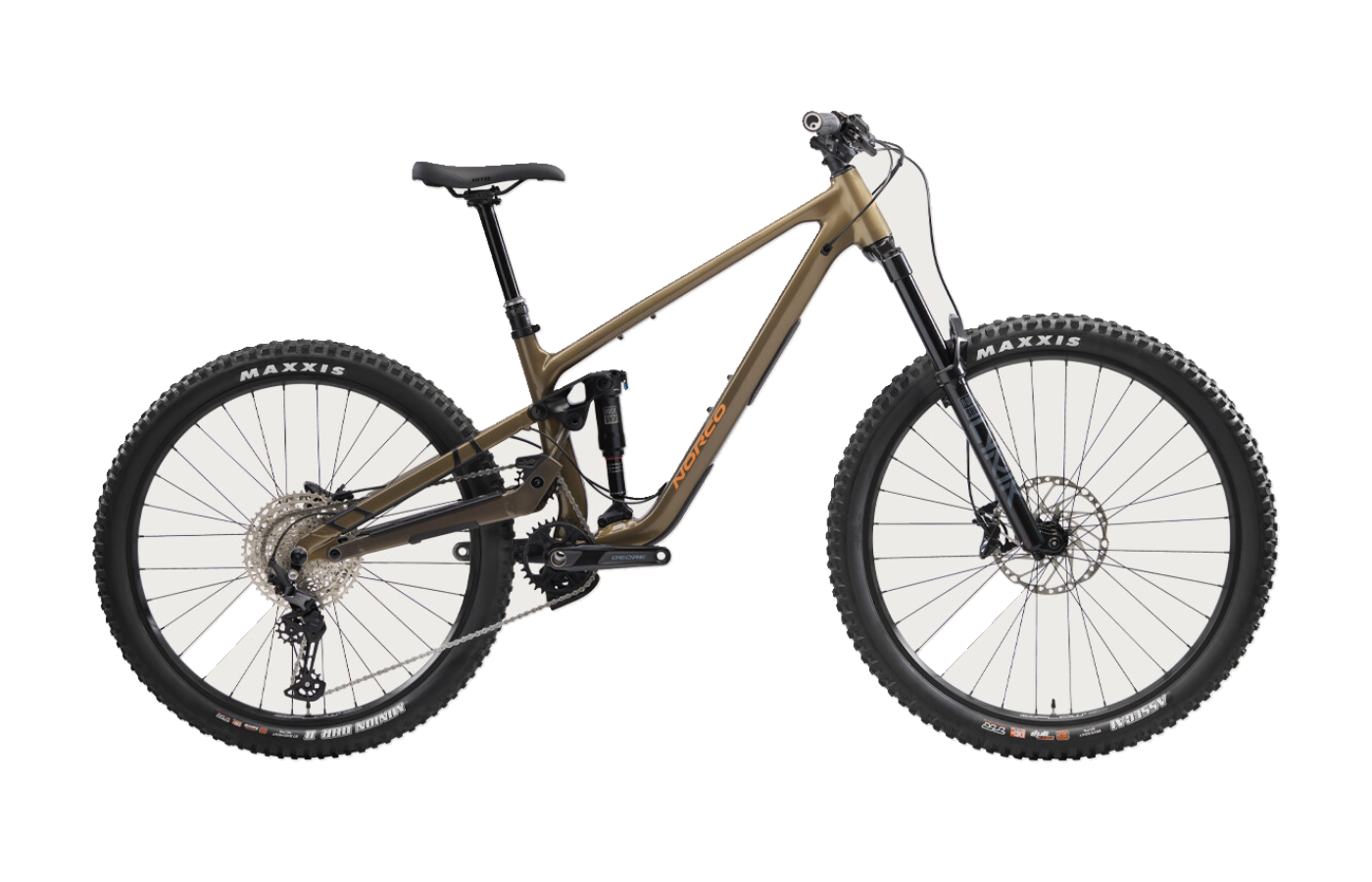
If you like the Optic's high-pivot pitch but want more travel for genuinely rowdy terrain, the Norco Sight is the longer-travel sibling — same family DNA, more rear-wheel travel, more aggressive intent.
Compare →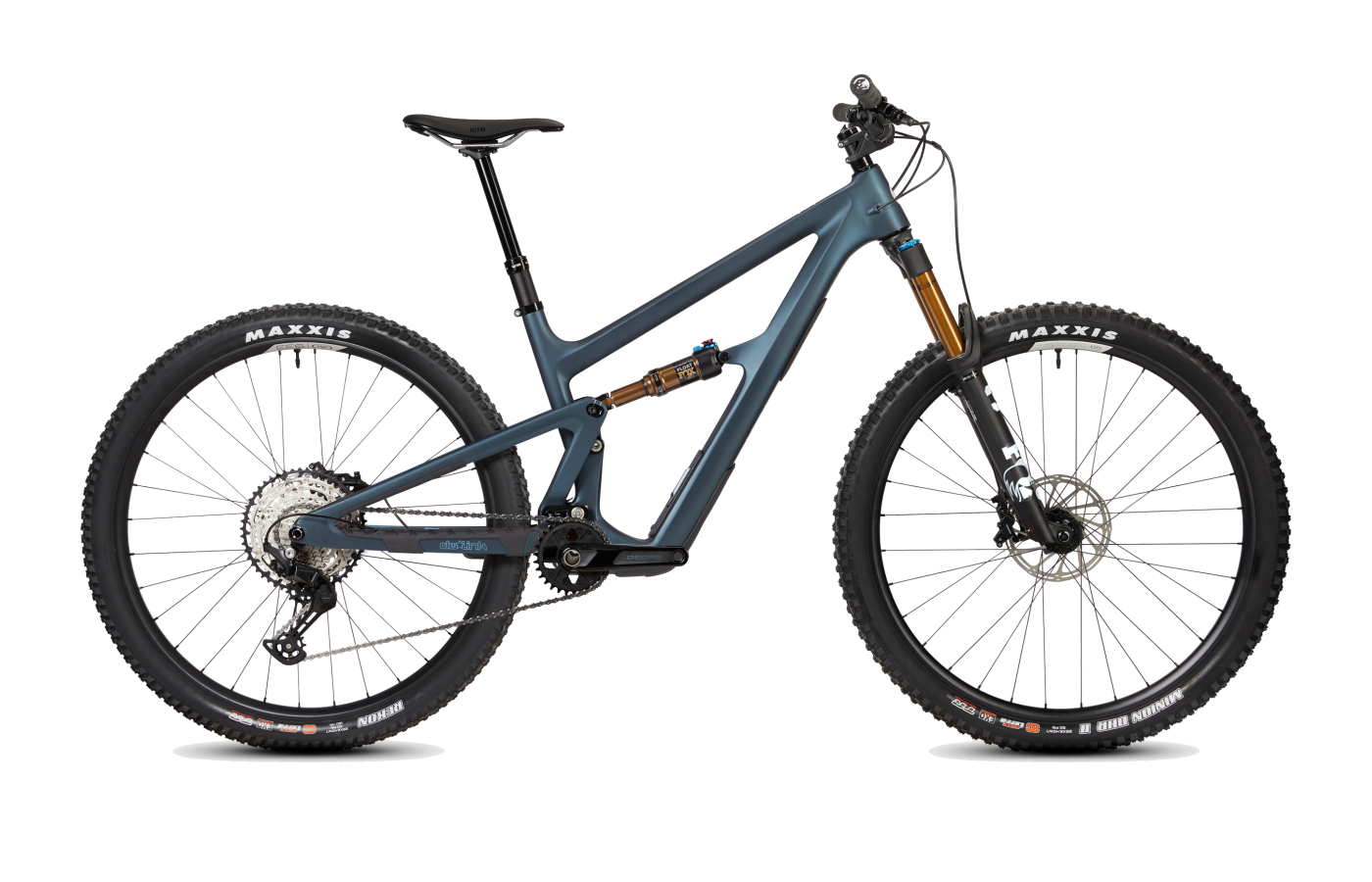
Ripley
Cross-shopping the Optic on its climbing prowess? The Ibis Ripley is the benchmark for short-travel pedaling efficiency with conventional DW-link suspension — lighter and simpler, without the idler-pulley overhead.
Compare →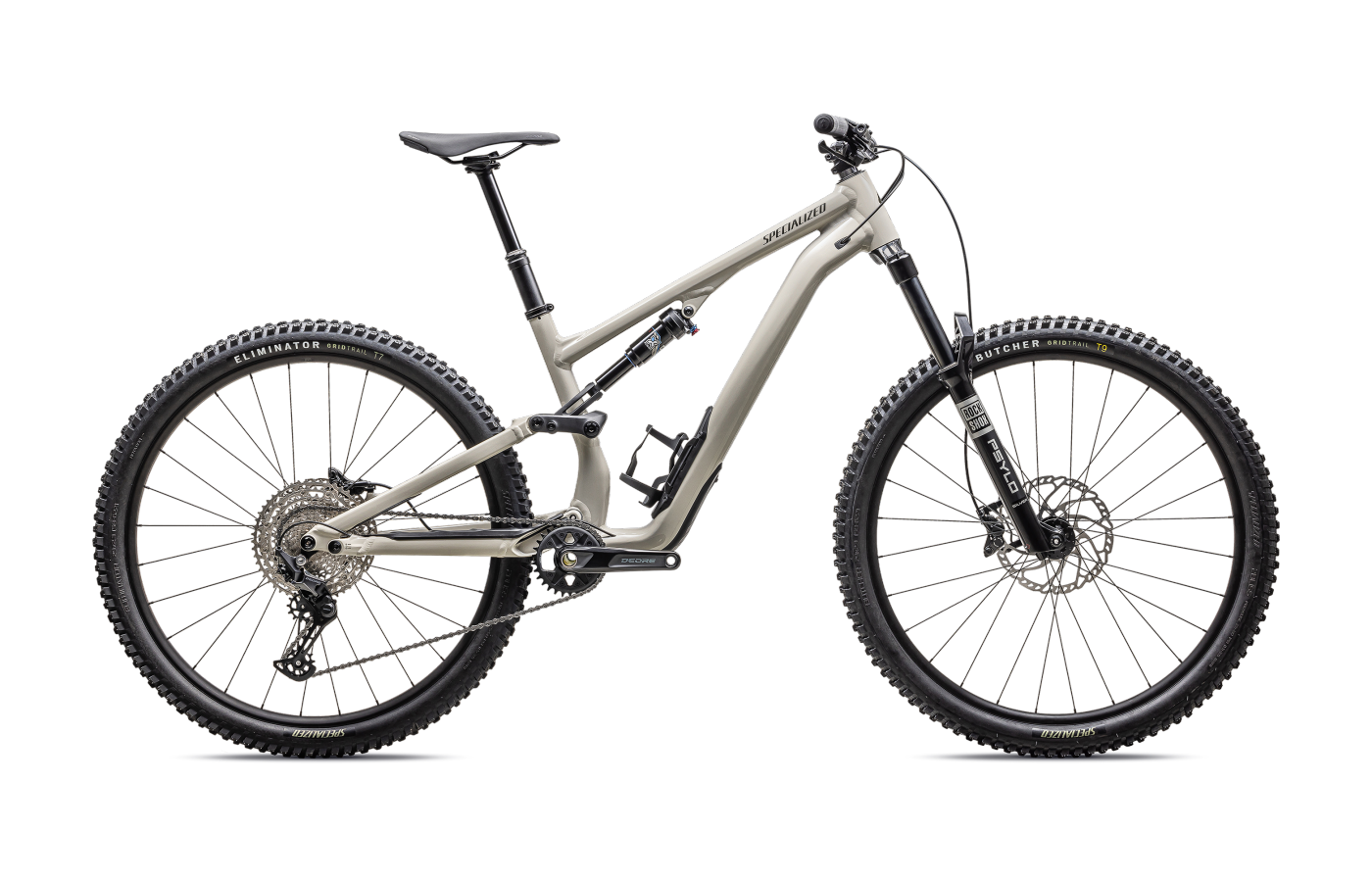
Stumpjumper
If the Fluid FS's value pitch lands but you want broader brand support and more carbon options, the Specialized Stumpjumper is the perennial 130-mm trail-bike benchmark — comparable travel, wider build range.
Compare →