Optic
vsTallboy
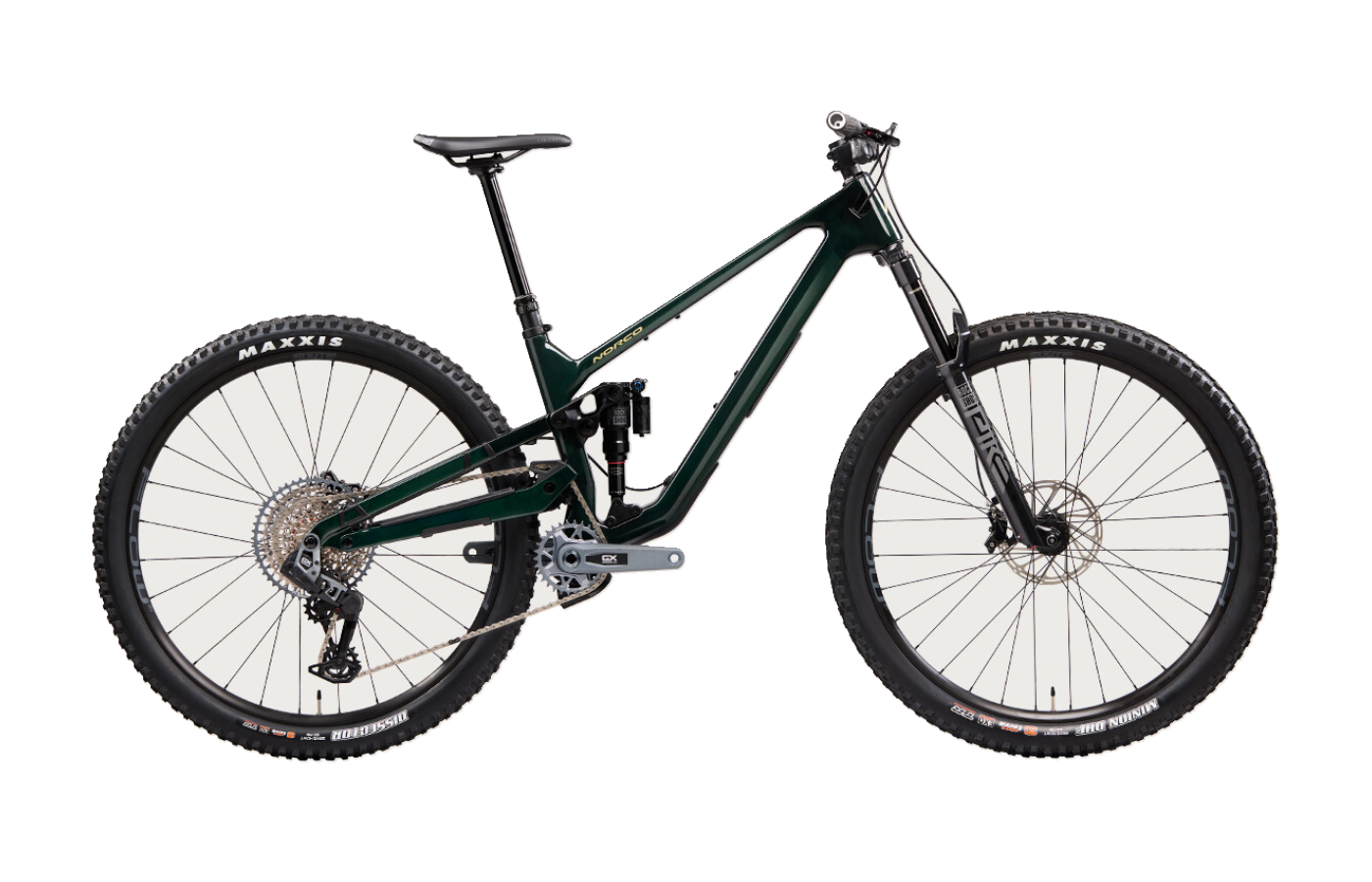
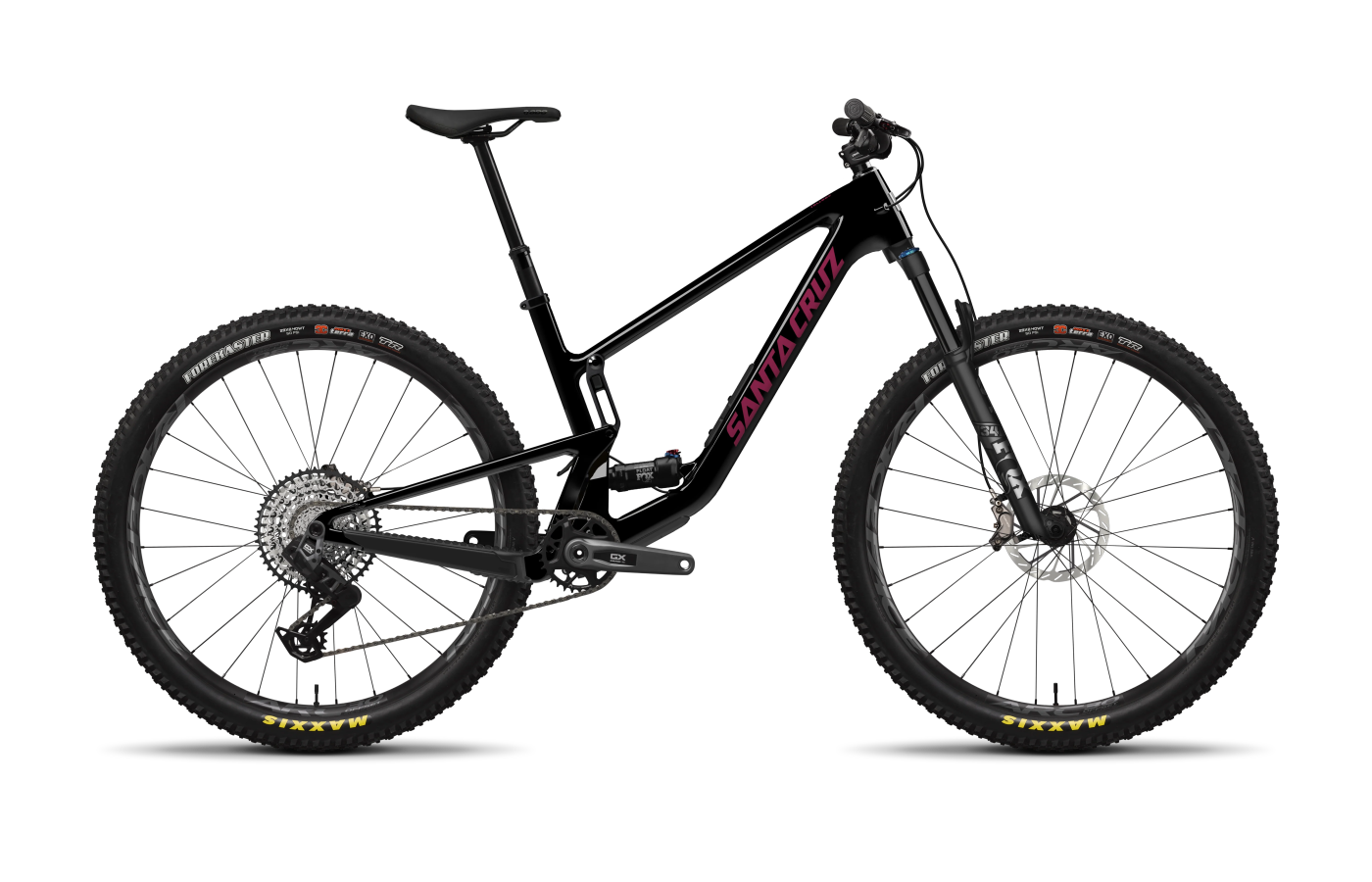
Two short-travel bikes, two definitions of capable.
The Norco Optic uses a high-pivot to punch above 125 mm. The Santa Cruz Tallboy refines a proven VPP layout into a do-it-all 120 mm trail bike.
Optic
- High-pivot composure — the rearward axle path makes 125 mm feel meaningfully bigger on square-edge hits and rough descents.
- Aluminum and carbon options — starts at $3,399 for the alloy A2, a rare entry point for a high-pivot trail bike.
- Aggressive geometry — 65-degree HTA, long reach, and steep 76.5-77.5° seat tube angles built for steep terrain at speed.
- Idler adds drag, noise, and maintenance — opinions split, but it's never a non-issue.
- Heavier than the Tallboy at every comparable trim (C2 at 15 kg vs Tallboy GX AXS at 13.7 kg).
Tallboy
- Cleaner pedaling — VPP with no idler, low bob, strong seated efficiency on long climbs.
- Sharper, lighter platform — 13.7 kg on the GX AXS build vs 15 kg on the equivalent Norco.
- Lifetime support — frame, Reserve wheels, and pivot bearings all carry lifetime coverage from Santa Cruz.
- Carbon-only — no alloy build, and the entry R model still starts at $4,799.
- Reaches its limits earlier than the Optic on steep, fast, rough descents — 120 mm is 120 mm.
Editor’s analysis
Same travel bracket, opposite engineering bets — one chases enduro composure on a short-travel frame, the other chases all-day balance.
On paper the Norco Optic and Santa Cruz Tallboy look like neighbors: both 29ers, both around 120-125 mm of rear travel, both 130-140 mm forks, both built for the kind of rider who wants one trail bike instead of two. Spend any time in the spec sheet and the philosophies pull apart fast.
The Norco Optic runs a high-pivot VPSHP layout with an idler pulley — 125 mm of rear travel, 140 mm fork, a slack 65-degree head angle, and a rearward axle path that reviewers describe as making the bike feel like it has 30 mm more travel than the number on the spec sheet. The Tallboy stays with Santa Cruz's well-developed VPP dual-link, 120 mm out back and a 130 mm fork, with a 65.7-degree head angle (high setting) and size-specific chainstays from 430 to 443 mm. One bike is engineered to swallow square-edge hits; the other is engineered to reward power and stay efficient.
On the trail the Norco Optic is the descender. Reviewers consistently flag a calm, bump-devouring feel at speed and an aggressive front end that wants to be pointed at chunky terrain. The trade-off shows on the climbs and in slow, tight corners — the idler drag and chain noise divide testers, and the long wheelbase asks for more rider input than the Tallboy in switchbacks. The Santa Cruz Tallboy is the sharper all-rounder. It pedals cleanly with little bob, climbs technical terrain with traction to spare, and pumps and slingshots through flow trails — but at 120 mm with a 130 mm fork, it asks for a more precise hand on truly fast, rough descents.
Put another way: the Norco Optic is the bike you buy when your local trails are gnarlier than your travel number suggests they should be. The Santa Cruz Tallboy is the bike you buy when you want one short-travel bike that climbs, descends, and races without complaint.
Where the builds differ.
Comparing our editor's-pick builds side-by-side. Winners highlighted row-by-row — lower price and weight, and the better-spec component, each mark a point.
Build variants & pricing
The Norco Optic spans $3,399 to $6,799 across alloy and carbon. The Santa Cruz Tallboy is carbon-only and runs $4,799 to $11,399.
Prices are current US MSRP. The mid-tier GX AXS Transmission builds are the apples-to-apples pairing — both carbon, both GX AXS T-Type wireless, both around the same place in their respective lineups. Note that several Norco builds and most Tallboy builds ship with SRAM Level brakes that reviewers across the board call underpowered for the bike's descending capability — budget for an upgrade to Codes if you ride aggressively.
How they fit, how they steer.
The Tallboy at size M and the Optic at size S2 (29") are the fit-picked sizes for a 5'8" rider. The Optic also ships in a mullet (MX) configuration — same front triangle, shorter rear-center. Across the range, the Optic runs a slacker 65° head angle and longer wheelbase; the Tallboy runs 65.7° and a sharper, shorter rear end.
Which size should I buy?
Both bikes use modern long-low-slack geometry. The Optic runs five sizes (S1-S5) with size-specific chainstays from 421 to 437 mm; the Tallboy runs six (XS-XXL) with chainstays from 430 to 443 mm.
→These are starting points. Flexibility, riding style, and preferred position all shift the answer — if you’re between sizes, a professional fit beats a chart.
What the magazines said.
Published reviews from trusted cycling outlets. Click through for the full write-up.
Which one should you buy?
If you want to ride your short-travel bike like an enduro bike, get the Norco Optic. If you want one bike that climbs, races, and descends without complaint, get the Santa Cruz Tallboy.
Optic
If your local trails reward composure over efficiency — steep, chunky, fast — the Norco Optic delivers descending capability that genuinely punches above its 125 mm. Accept the idler maintenance, the extra weight, and the alloy/carbon options give you a real shot at a modern high-pivot bike for under $5,500.
Tallboy
If you want one short-travel bike that pedals cleanly, climbs efficiently, and still descends with confidence on most trails — the Santa Cruz Tallboy is the more balanced tool. Lighter, simpler, and backed by Santa Cruz's lifetime warranty on frame, wheels, and bearings.
Questions buyers actually ask.
Short answers to the things we get emailed about most often.
01Which descends better?
The Norco Optic, fairly clearly. The high-pivot VPSHP layout with its rearward axle path is the headline feature, and reviewers across the board — Theradavist, Mountain Bike Action, Bike Perfect, OutdoorGearLab — describe it as feeling like it has substantially more travel than the 125 mm spec suggests. Combined with a 140 mm fork, a slack 65° head angle, and a long wheelbase, the Optic stays composed on terrain where the Tallboy is starting to feel its 120 mm limit.
The Tallboy is no slouch on descents — it's a confident short-travel bike with enduro-bike geometry numbers — but reviewers consistently note it requires "a precise hand" on fast, rough descents and lacks the safety-blanket feel of the Optic.
02Which climbs better?
The Santa Cruz Tallboy. It's lighter (13.7 kg on the GX AXS build vs 15 kg on the comparable Norco Optic C2), uses a simpler dual-link VPP suspension with no idler drag, and reviewers consistently praise its low pedal bob and active traction on technical climbs. The 76.7° seat tube angle keeps the rider centered.
The Optic is a competent technical climber thanks to the rearward axle path keeping the rear wheel out of the way of obstacles, but pedaling efficiency is divisive — some testers love it, others (notably Bike Perfect and OutdoorGearLab) report a soft pedaling platform and idler noise/drag, especially when the chain isn't perfectly clean.
03How much travel does each have?
Norco Optic: 125 mm rear / 140 mm fork. Santa Cruz Tallboy: 120 mm rear / 130 mm fork.
The numbers are close, but the rides aren't. The Optic's high-pivot layout makes its 125 mm feel notably bigger on square-edge hits and high-speed chop. The Tallboy uses its 120 mm in a more conventional way — supportive, sensitive, but more obviously short-travel when the trail gets rough.
04What's the maximum tire clearance?
Norco Optic: 61 mm (~2.4") clearance. Stock builds run 29x2.5" Maxxis Minion DHF up front and 29x2.4" Dissector out back.
Santa Cruz Tallboy: 63.5 mm (~2.5") clearance. Stock builds run 29x2.4" Maxxis Forekasters front and rear — a faster-rolling tire choice that many reviewers recommend swapping for something meatier (Dissector or Assegai) to fully exploit the chassis on aggressive descents.
05Which has the better warranty?
The Santa Cruz Tallboy, by a clear margin. Santa Cruz offers a lifetime warranty on the frame, lifetime coverage on Reserve wheels, and free pivot bearing replacements for the life of the bike. Reviewers cite this as a major reason the brand commands a premium price.
Norco offers a standard manufacturing-defect warranty on the frame, but no equivalent bearing-for-life or wheel-for-life program. For a bike you plan to keep five-plus years, the Tallboy's long-tail support is a real value-add.
06Can I run a mixed-wheel (mullet) setup?
Norco Optic: Yes. Norco sells a $179 "Missing Link" kit that swaps the lower link and shock mount to convert between full 29" and mixed-wheel (29" front, 27.5" rear) configurations while preserving geometry and kinematics. The C2 MX build ships with the mullet setup from the factory.
Santa Cruz Tallboy: No — the Tallboy V5 is 29"-only. If you want a mullet from Santa Cruz, you're looking at the 5010 or Bronson instead.
07How serviceable are they long-term?
Both use threaded BSA bottom brackets and fully guided internal cable routing — no headset routing on either. The Tallboy adds two thoughtful touches: grease ports on the lower VPP linkage for easy bearing maintenance, and the "Glovebox" downtube storage compartment (some long-term reviewers report the Glovebox door creaking under load with a bottle mounted).
The Optic's high-pivot drivetrain is the wrinkle. The idler pulley demands diligent chain lubrication to stay quiet, and OutdoorGearLab reported chain-drop issues on the C2 in rough terrain that they considered a deal-breaker. Most other testers found maintenance manageable but real.
08What about the brakes?
Worth budgeting an upgrade on both, depending on the build. The Norco Optic's C1 ships with SRAM Level Stealth four-piston brakes that reviewers across the board (Singletracks, Bike Perfect, Enduro MTB, Theloamwolf) describe as "underpowered" or "laughably weak" for the bike's descending capability — the C2 thankfully comes with the more capable Code R brakes. The Tallboy ships SRAM Level on most mid-tier builds with the same complaint.
If you ride aggressively on either bike, plan for a SRAM Code or equivalent four-piston upgrade on day one.
Similar bikes
If your priorities don’t map cleanly onto either of these, one of these adjacent bikes probably fits better.
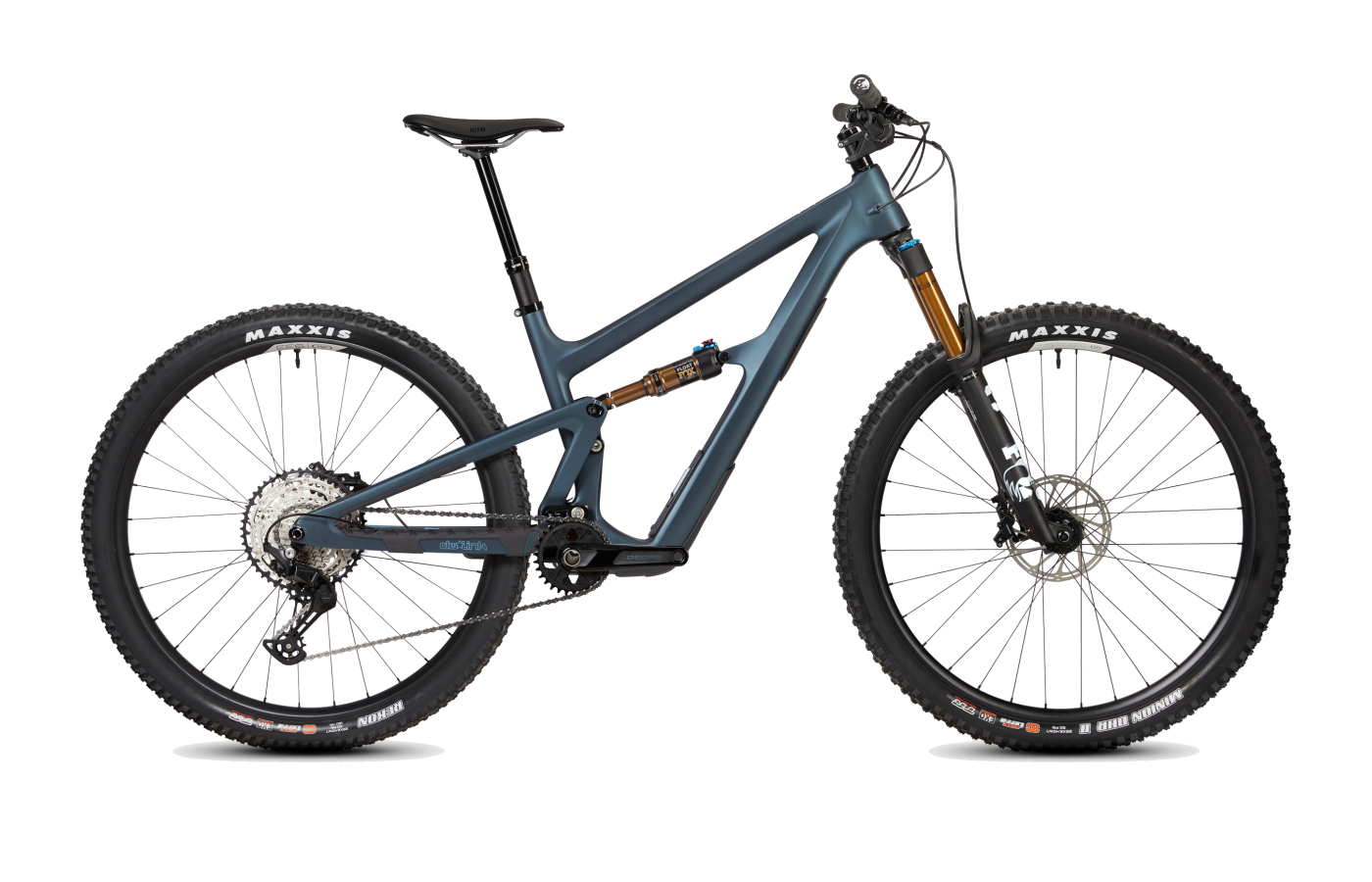
Ripley
The classic short-travel poppy climber — lighter and more XC-leaning than the Tallboy, with a reputation for getting up the hill quickly and rewarding finesse on the way down. The right pick if the Tallboy reads too aggressive.
Compare →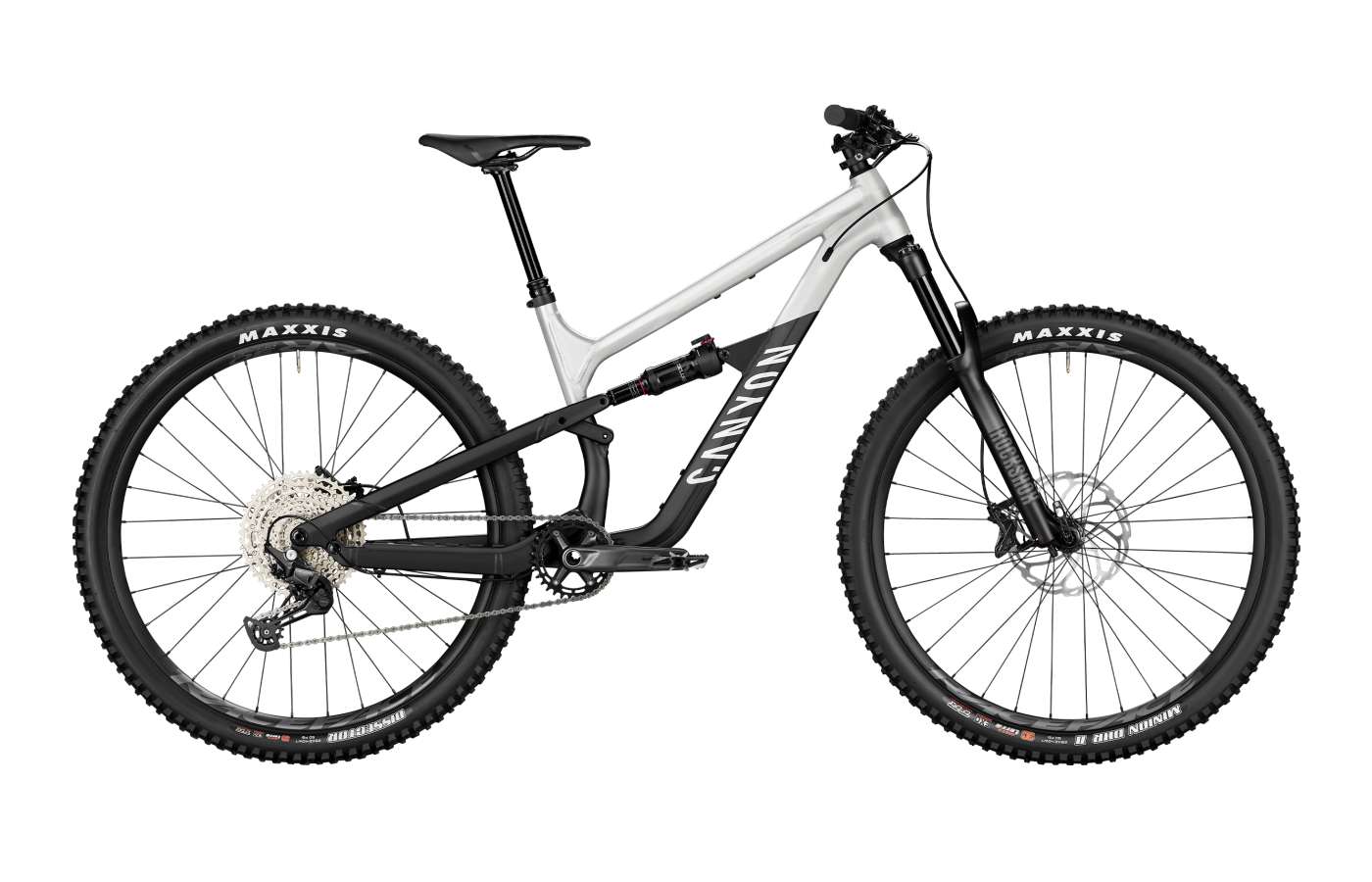
Spectral 125
Canyon's aggressive 125 mm trail bike — similar gravity-leaning character to the Optic but at direct-to-consumer pricing. The catch is the no-dealer model: no demos, no in-shop fit, you commit on geometry numbers.
Compare →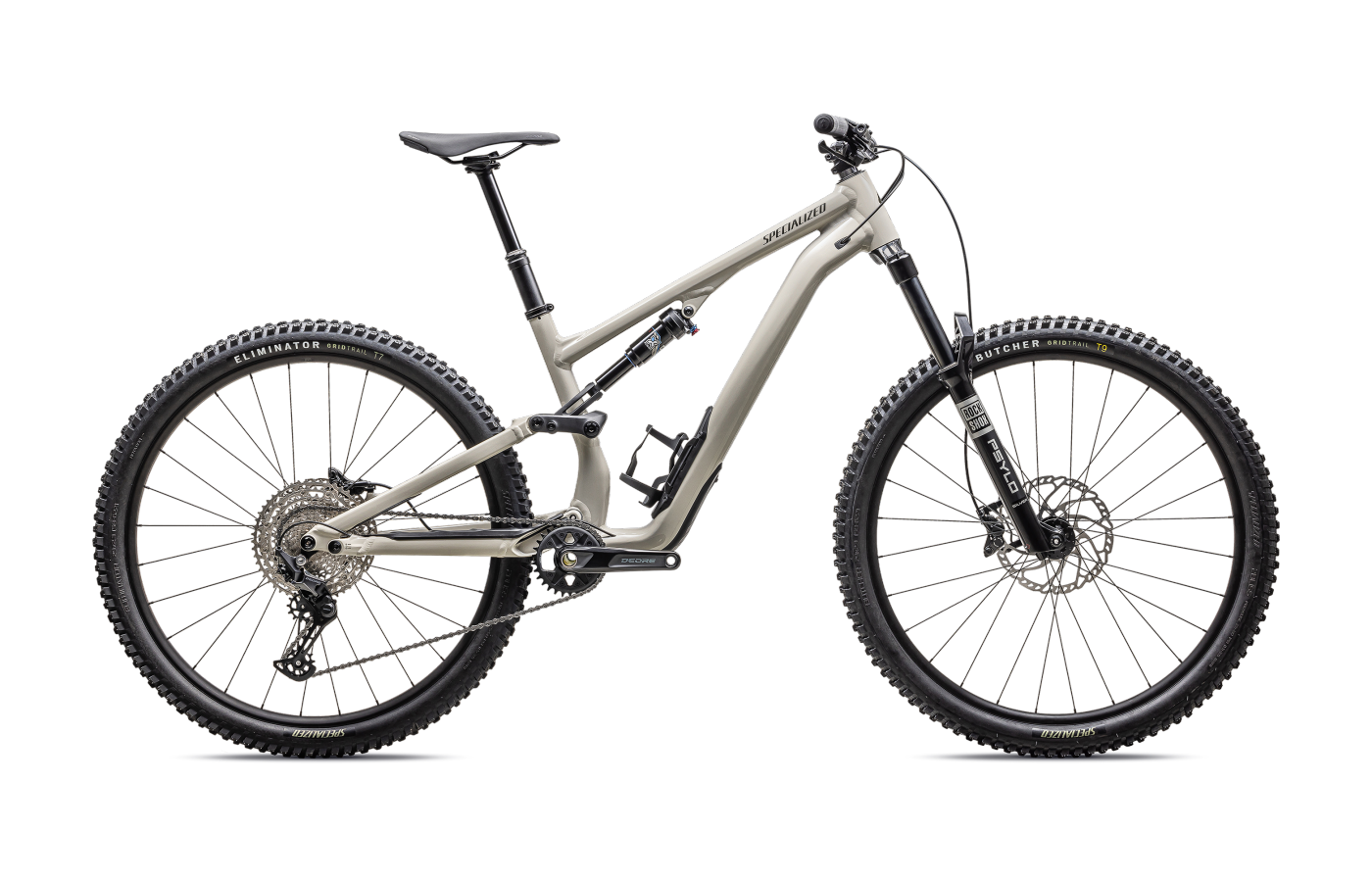
Stumpjumper
The benchmark trail bike — Specialized's FSR-suspended all-rounder sits squarely between the Optic's gravity bias and the Tallboy's all-day balance, with the deepest dealer network of any bike on this page.
Compare →