Range
vsShore
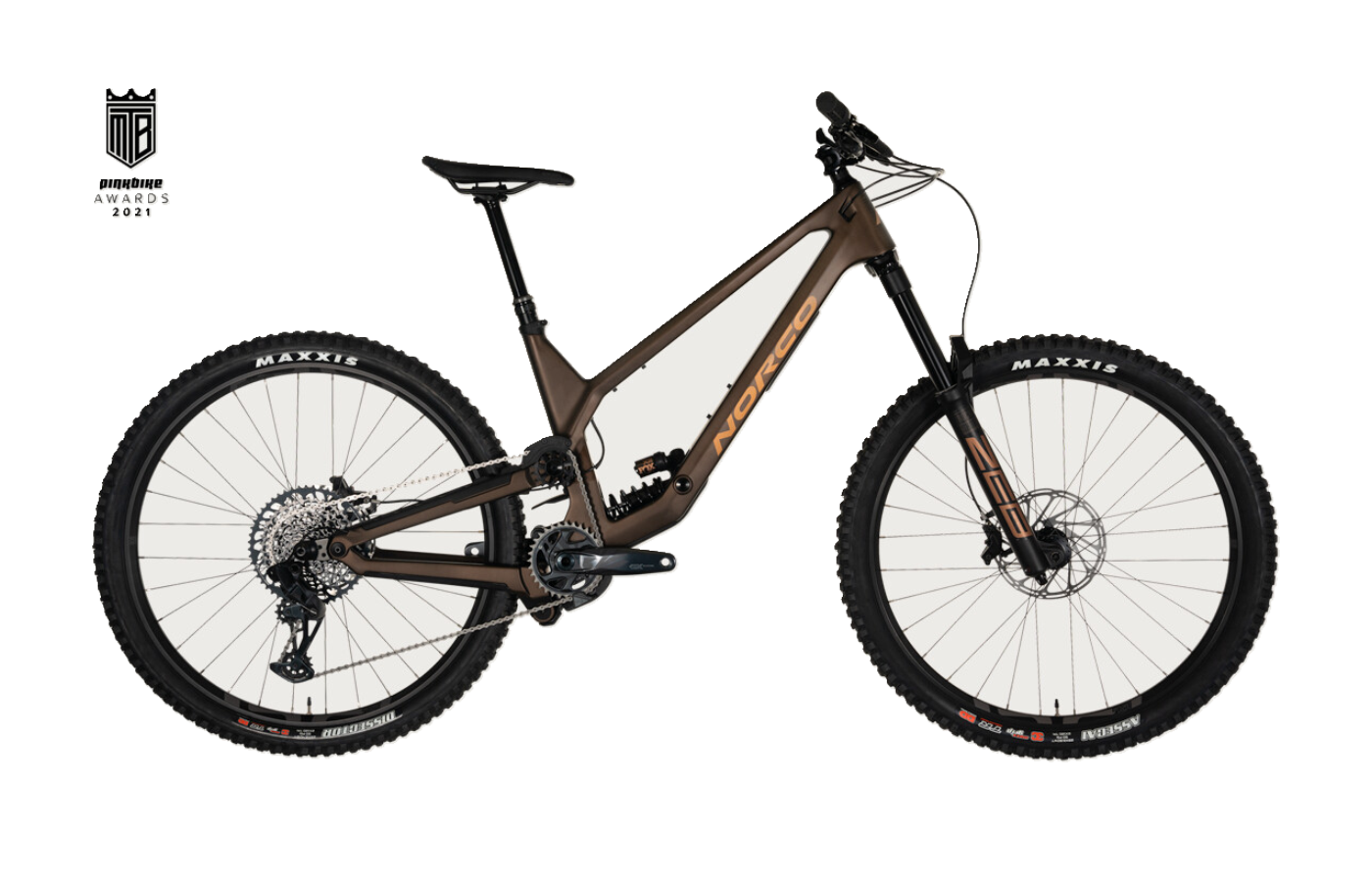
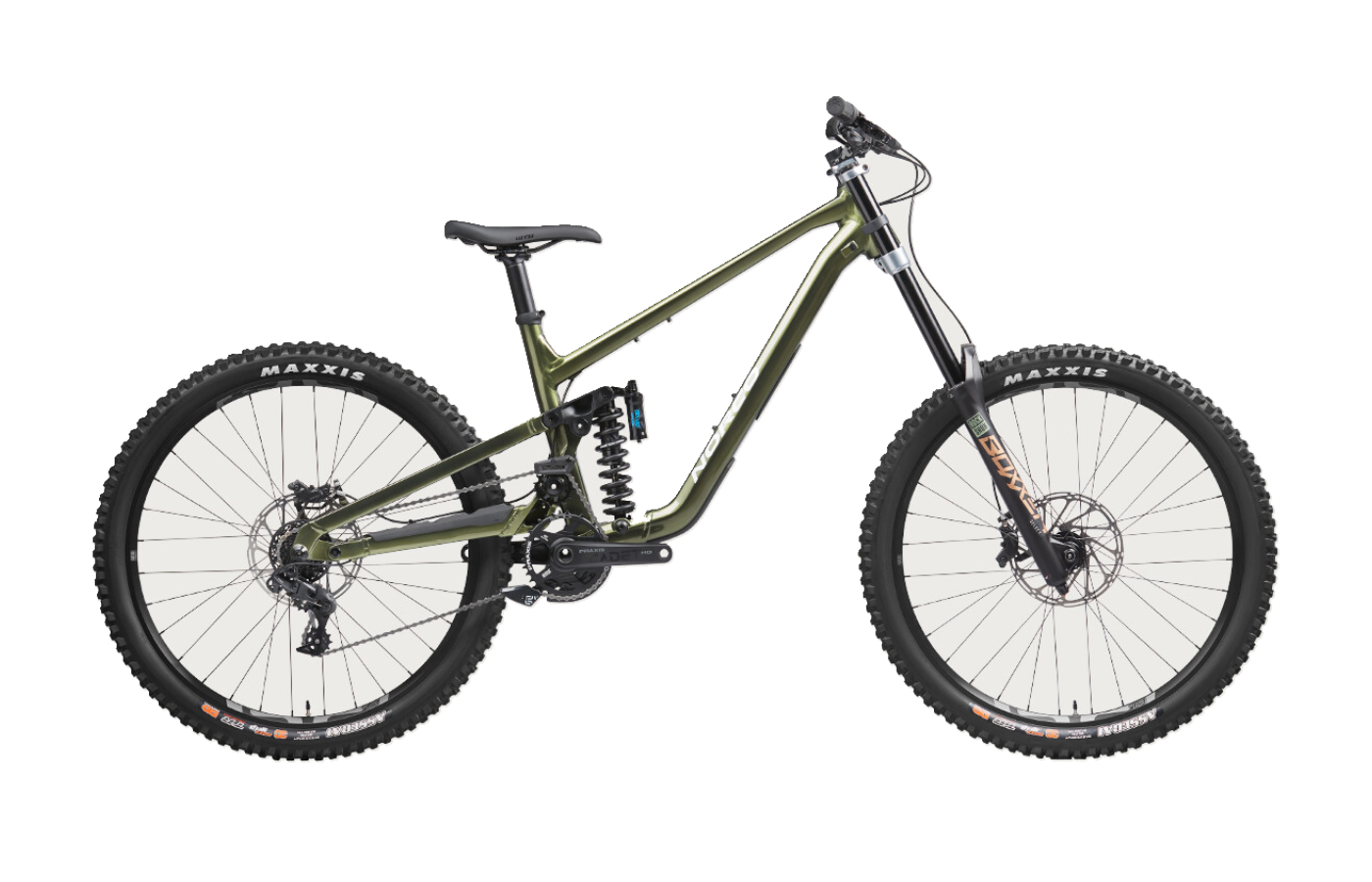
Two high-pivot Norcos, two very different jobs.
The Range is a carbon 29er built to race enduro. The Shore is an aluminum 27.5 freeride tank built to survive the bike park.
Range
- Full-carbon 170 mm enduro chassis — 29-inch wheels, Ride Aligned per-size geometry, built around EWS-level descending speed.
- Pedalable gravity bike — steep 76.75-degree seat angle (M) and a 12-speed GX Eagle drivetrain let you actually climb to your descents.
- Top-tier suspension on every build — even the C2 gets a RockShox ZEB Ultimate fork and Fox DHX2 Factory coil shock.
- Heavy for a bike you pedal — reviewers weigh it at ~37–38 lb depending on build.
- Lengthening wheelbase feels gangly in tight, slow turns — this is not a nimble trail bike.
Shore
- Bombproof aluminum freeride frame — bulky tube profiles, full frame protection, 5-year warranty, built to outlast repeated bike-park abuse.
- 190 mm rear travel with coil-specific kinematics — progressive, supportive, and built to land huge drops and compressions without blowing through stroke.
- True DH spec on the Park builds — 200 mm RockShox BoXXer dual-crown up front, Super Deluxe Coil Ultimate DH out back, 27.5-inch wheels for maneuverability in the air.
- Not really a pedal bike — the Park builds ship with a 7-speed DH drivetrain and a rigid seatpost.
- e*thirteen LG1 DH rims are a known weak point; aggressive riders often budget for a wheel upgrade.
Editor’s analysis
Same suspension philosophy, same factory — but one is a stopwatch weapon and the other is a finish-line-optional freeride rig.
On paper, the Norco Range and Norco Shore look like cousins. Both use a high-pivot, idler-pulley suspension layout with a rearward axle path. Both are built around a coil shock and thick Maxxis DoubleDown rubber. Both come with slack geometry and steep seat tubes. But spend a minute on the spec sheets and the split is obvious — these bikes exist for different days.
The Norco Range is the carbon enduro race bike. 170 mm of travel front and rear, 29-inch wheels, a 63.5-degree head angle in size M, and a Ride Aligned geometry that tweaks head angle and chainstay length per size. It's the bike Norco's EWS team actually races. At $4,749 for the lone C2 build — RockShox ZEB Ultimate up front, Fox DHX2 Factory coil out back, SRAM GX Eagle — it's priced as a serious gravity machine that can still be pedaled to the top of the trail.
The Norco Shore is the aluminum freeride reboot. 180 mm rear / 180–200 mm front, 27.5-inch wheels, a flat 63-degree head angle across every size, and 445 mm chainstays on the L. The Park builds we're comparing here ship with a 200 mm RockShox BoXXer dual-crown fork and a SRAM GX DH 7-speed drivetrain — no dropper, no big cassette. It's a mini-DH bike with pedals bolted on, sized and specced for uplift days, shuttles, and progression sessions on features most riders walk around.
The honest read: the Range is the only one of the two you'd buy as your everyday big-travel bike. The Shore is what you buy when you already own a trail bike and want a dedicated park/freeride weapon that'll outlast years of abuse. Picking between them is less about which is better and more about whether you pedal to your descents or upload to them.
Where the builds differ.
Comparing our editor's-pick builds side-by-side. Winners highlighted row-by-row — lower price and weight, and the better-spec component, each mark a point.
Build variants & pricing
The Range is sold as a single carbon C2 build. The Shore comes in three aluminum Park variants, two with dual-crown BoXXer forks and one with a single-crown ZEB.
Prices are current US MSRP. The Range C2 and the Shore A Park Boxxer aren't tier-matched in the traditional sense — the Shore uses a 7-speed DH drivetrain by design, not as a downgrade. Treat this as enduro-vs-freeride, not one component tier against another.
How they fit, how they steer.
Both at size M. The Range (M) sits 18 mm taller in stack (630 vs 612) with the same 450 mm reach; the Shore is 0.5 degrees slacker at the head (63.0 vs 63.5), has a steeper seat angle (77.3 vs 76.75), and a 5 mm longer wheelbase (1248 vs 1243) on smaller 27.5-inch wheels.
Which size should I buy?
Size recommendations based on stack, reach, and effective top tube length. Both ranges overlap in the middle — the Shore sits a touch lower in stack at every size.
→These are starting points. Flexibility, riding style, and preferred position all shift the answer — if you’re between sizes, a professional fit beats a chart.
What the magazines said.
Published reviews from trusted cycling outlets. Click through for the full write-up.
Which one should you buy?
If you pedal to your descents and race the clock, get the Range. If your days end in a lift line or a shuttle, get the Shore.
Range
If you want a bike that can win an EWS stage and still pedal itself back up the hill, this is it. The Range is built to charge at DH-adjacent speeds on 29-inch wheels, but it keeps just enough seat-tube angle and drivetrain range to handle the climb between runs.
Shore
If you spend your weekends on chairlifts and shuttles dropping features most trail riders walk around, the Shore is the honest answer. It's built around durability rather than weight, with a DH-grade fork, coil shock, and the kind of frame that survives seasons of abuse.
Questions buyers actually ask.
Short answers to the things we get emailed about most often.
01Can you pedal the Norco Shore like a regular trail bike?
Not really — at least not the Park builds. The A Park Boxxer and Park Boxxer ship with a 200 mm RockShox BoXXer dual-crown fork and a SRAM GX DH 7-speed drivetrain with a narrow 11-25T cassette. That's a downhill-bike gear range, not a trail-bike one. There's also no dropper — the spec includes a rigid alloy seatpost.
The A Park Zeb build is closer to pedal-friendly, swapping in a 180 mm single-crown RockShox ZEB fork, but it still runs the same 7-speed DH drivetrain. Reviewers of the original (non-Park) Shore 1 and 2 — which used a 12-speed wide-range cassette — still called them slow climbers at 37–38 lb. The current Park-only lineup drops even that pretense.
02Which is faster on rough, high-speed descents?
It's close, and it depends on the trail. The Range is the faster enduro-race tool on long, mixed descents — 29-inch wheels carry speed through chunk better, and Ride Aligned geometry is explicitly tuned to EWS pace. Reviewers describe it as a 'trophy truck' that 'glides' through rock gardens.
The Shore is arguably faster on steep, feature-dense bike-park tracks where the 200 mm dual-crown fork, 190 mm of rear travel, and smaller 27.5-inch wheels help you reset between hits. It's described as a 'heavyweight monster truck' that prefers to be ridden aggressively or not at all. At racing speed on natural terrain, the Range wins. In the park, the Shore stays fresher.
03Why does the Shore use 27.5-inch wheels while the Range uses 29ers?
Deliberate design choice. The Range is built around 29-inch wheels because they carry speed and roll over chunder better — the priorities of an enduro race bike. The Shore runs 27.5-inch wheels because the freeride/park use case rewards maneuverability in the air and tighter reset moves between features over outright rollover speed.
Norco built the Shore explicitly around 27.5 and a coil shock from the start. It's not a carryover platform — it's a purpose-built freeride bike on smaller wheels.
04How do the geometries compare in the size I'd ride?
At size M — the fit-picked size for a 5'8" rider on both — they're surprisingly close in the numbers but different in feel. Reach is identical at 450 mm. Stack is 18 mm taller on the Range (630 vs 612). Head tube angle is 0.5 degrees slacker on the Shore (63.0 vs 63.5). Seat tube angle is 0.55 degrees steeper on the Shore (77.3 vs 76.75). Chainstays are equal at 440 mm in size M, and the wheelbase is only 5 mm longer on the Shore (1248 vs 1243).
The feel is dominated by wheel size and fork length, not frame numbers. The Shore's 200 mm dual-crown fork on 27.5-inch wheels sits you behind the front axle in a way the Range's 170 mm single-crown on 29ers doesn't.
05Which is better for the bike park?
The Shore, without much debate — it's what it was designed for. The 190 mm rear travel, 200 mm dual-crown BoXXer, 27.5-inch wheels, alloy frame, and coil-specific kinematics all point directly at park use. Reviewers call it a 'freeride tank' built for 'rampage-level' features.
The Range is a capable park bike too, and Norco's own DH prototypes share its carbon frame, but the C2's 170 mm single-crown fork and 12-speed drivetrain are overkill for any climb you'd do and underkill for sustained dual-crown park abuse. If you're doing 50+ park days a year, the Shore is the right tool.
06What's the weight penalty on each?
Neither is light. Reviewer-measured weights put the Range C2 around 37–38 lb (~17 kg) in size L. The Shore 1/2 — the previous non-Park builds — were reported at around 37.4–38.4 lb (~17.0–17.4 kg) in size L. The current Park builds with dual-crown forks will weigh more than that.
If outright weight matters to you, neither of these is the answer. The Range at least trades its weight for pedal efficiency through a 12-speed drivetrain and dropper; the Shore spends its weight on frame durability and DH-grade suspension.
07Is the e*thirteen rim issue still a concern on current builds?
Worth knowing about, not necessarily a dealbreaker. Reviews of earlier Range C2 builds noted the **e*thirteen LG1 EN alloy rims as 'quite soft' and prone to denting. The current Range C2 build we're comparing here ships with Stan's Flow S2 rims on Race Face Trace hubs — so the rim concern has been addressed on the Range.
The Shore Park builds still roll on e*thirteen LG1 DH 27.5 rims**, which have been a consistent critique across Shore reviews. e*thirteen has acknowledged earlier OEM issues and claimed extrusion improvements. Either way, aggressive park riders should plan on budgeting for a wheel rebuild or upgrade as a likely long-term expense.
08What warranty does each come with?
Norco offers a 5-year frame warranty on both the Range and the Shore, as confirmed across multiple recent reviews of both platforms. That's a longer default term than most of the majors offer on their aluminum frames, and it signals reasonable confidence in the chassis — particularly relevant for the alloy Shore, where earlier production runs had documented issues that Norco subsequently addressed with updated parts and processes.
Similar bikes
If your priorities don’t map cleanly onto either of these, one of these adjacent bikes probably fits better.
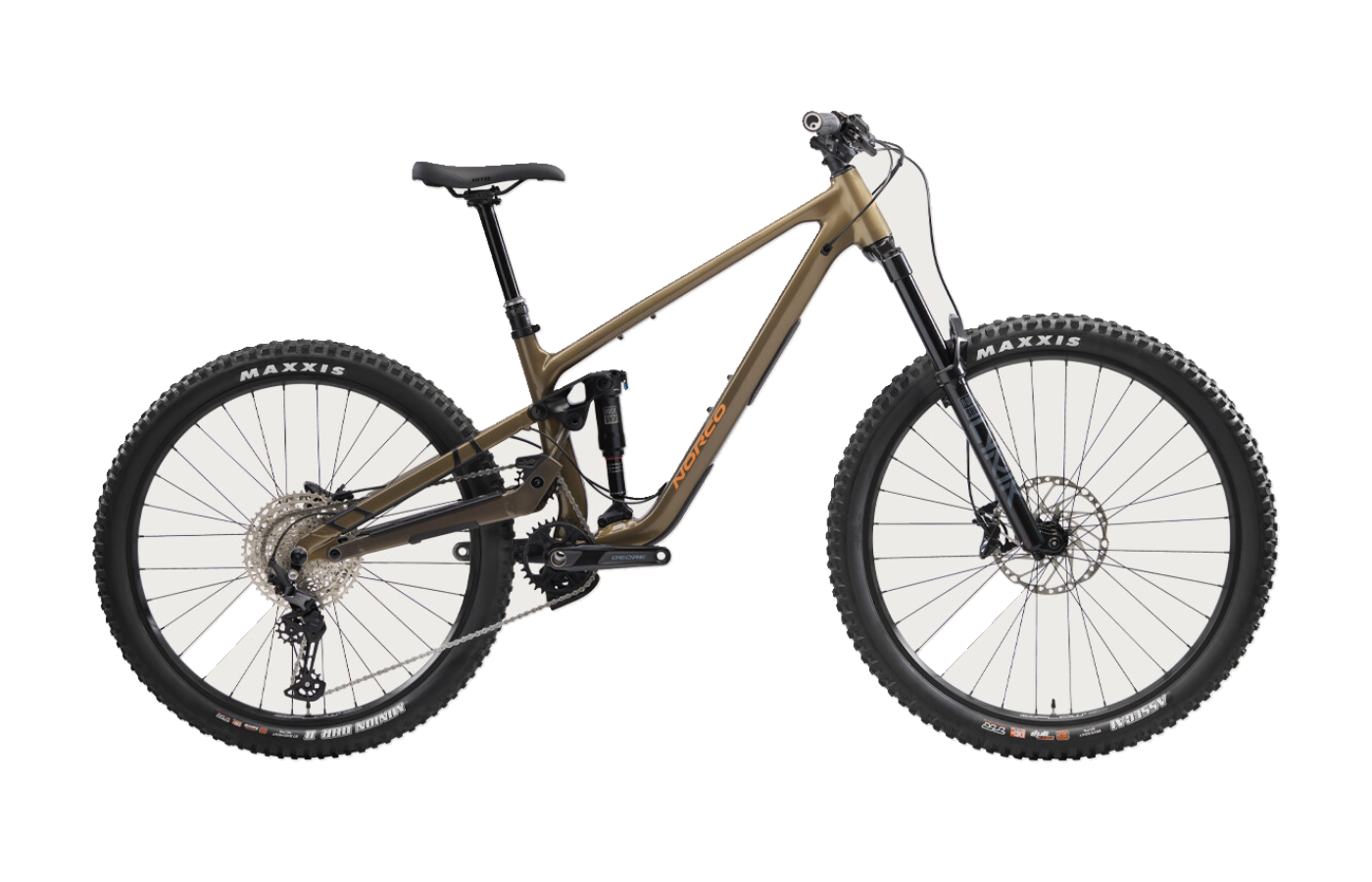
Sight
Norco's own middle ground — 150/160 mm of travel, 29-inch wheels, and a more trail-oriented geometry that climbs better than either the Range or the Shore. The call if the Range sounds like too much bike for your everyday riding.
Compare →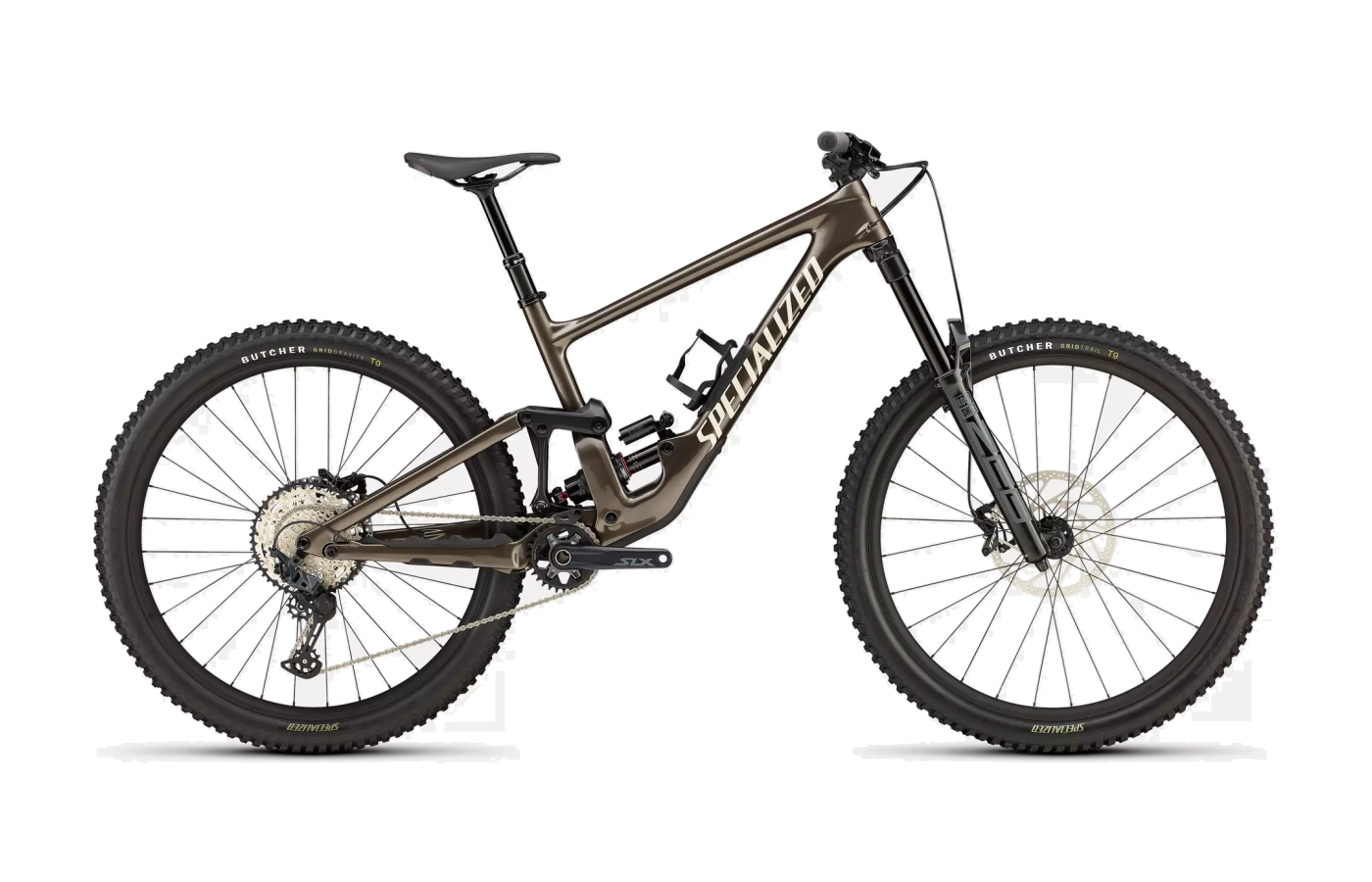
Enduro
The clearest direct competitor to the Range — 170 mm of 29er travel, EWS pedigree, and a more conventional low-pivot suspension layout. A useful benchmark for anyone weighing whether the high-pivot story actually pays off.
Compare →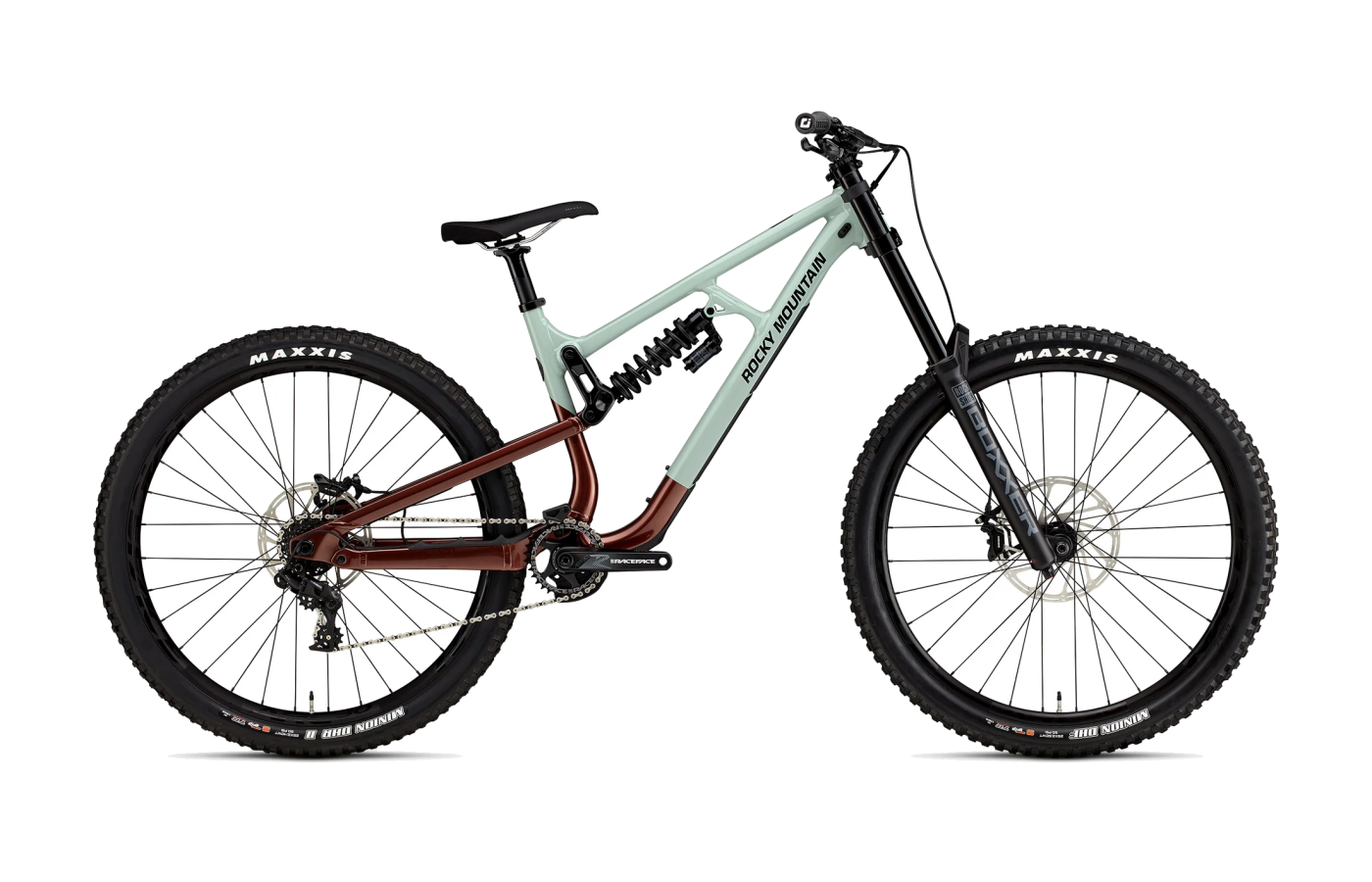
Slayer
For the Shore buyer who's open to 29-inch or mullet wheels — Rocky's Slayer offers similar 180 mm freeride-leaning travel with a different suspension take, and a broader build-spec range from trail-friendly to full park.
Compare →