Shore
vsSlayer
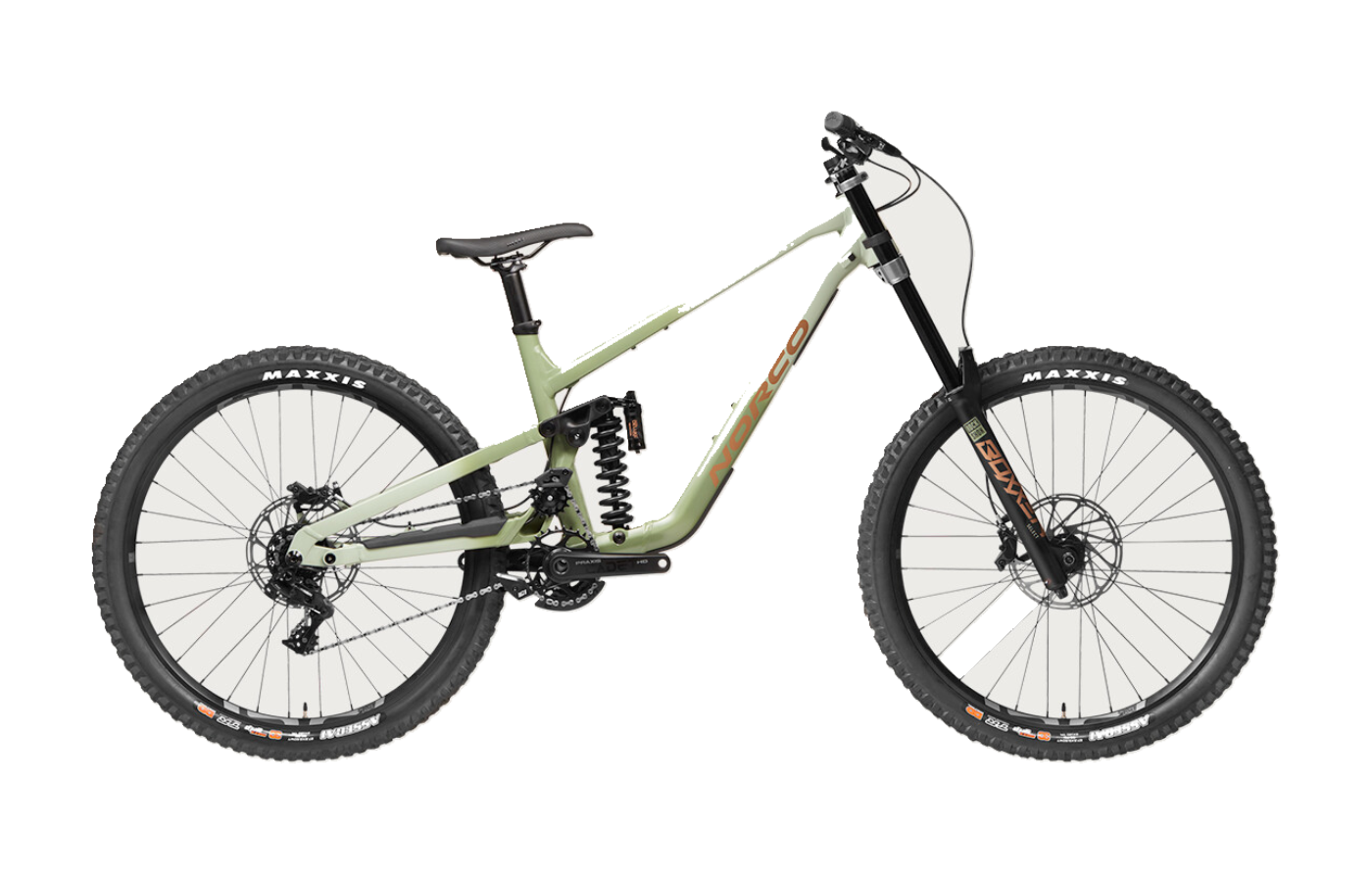
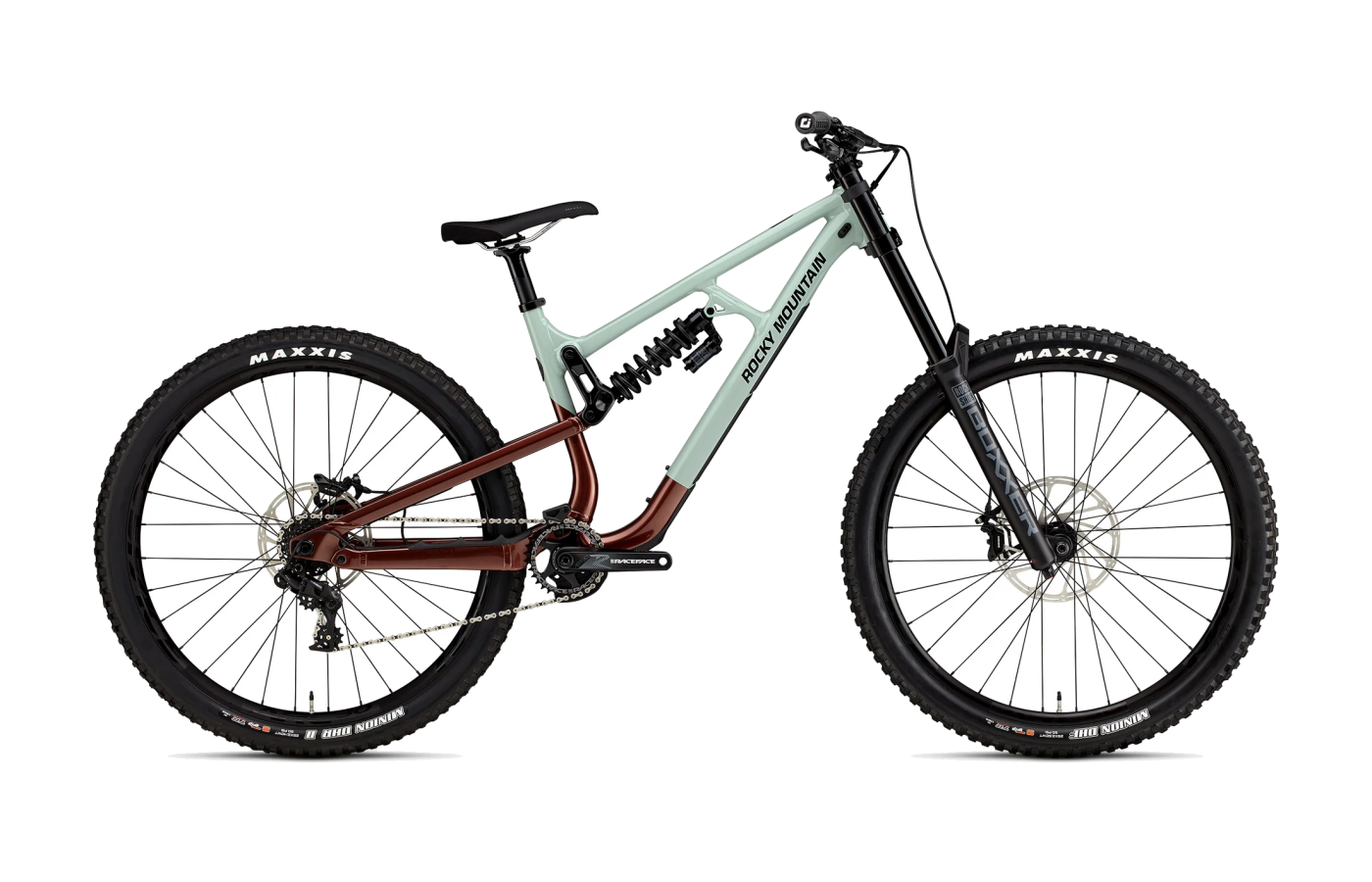
Two freeride tanks, two ways to send it.
The Norco Shore is a 27.5" alloy bruiser built as a single-purpose park weapon. The Rocky Mountain Slayer is a 29er-or-mullet platform with adjustable geometry that scales from park to big-mountain.
Shore
- Coil-specific high-pivot rear with idler pulley — rearward axle path that genuinely shrugs off square edges.
- Bombproof alloy frame with shuttle guard, threaded BB, ISCG-05 tabs, and 5-year warranty — built for park abuse.
- Dual-crown park build at $3,999 — BoXXer Select RC, GX DH, Maxxis Assegai DD MaxxGrip front and rear, ready to lap day one.
- 27.5" only — no 29er or mullet option for riders who want bigger wheels.
- No geometry adjustability — you get one head angle and one chainstay length.
- Stock e*thirteen LG1 DH rims have a long-running reputation for denting under hard riding.
Slayer
- RIDE-4 + chainstay flip chips swing HTA 62.5–63.3° and chainstays 439–449 mm — same frame, four meaningfully different bikes.
- Wheel-size flexibility — 29" or mullet on any frame, dual-crown compatible up to 200 mm fork.
- Carbon option exists — Slayer scales from a $4,599 alloy park bike to a $10,299 XTR/Fox Factory carbon flagship.
- Stock Performance Elite suspension is widely criticized as under-tuned for the bike's intent — most riders re-spring or upgrade.
- Penalty Box storage lid and internal cables generate persistent rattling complaints in long-term reviews.
Editor’s analysis
Same job description — send the gnar — but two very different tools. One is a fixed-geometry sledgehammer; the other a tunable Swiss Army chainsaw.
On paper the Norco Shore and Rocky Mountain Slayer share the freeride headline: 180 mm of rear travel, slack 62.5–63° head angles, coil shocks, DoubleDown Maxxis rubber, and weights pushing 37–38 lb. Both brands explicitly position these bikes as freeride machines, not enduro race weapons. Spend an afternoon on each, though, and the design philosophies pull apart immediately.
The Norco Shore is the simpler animal. Aluminum-only, 27.5" wheels across every size, no flip chips, no wheel-size options — just a high-pivot Horst-link with an idler pulley, tuned coil-specific from the factory. Reviewers call it a "freight train," "freeride tank," and one of the slowest-climbing bikes Pinkbike has tested at 17 kg. The reward is a rear end that's been described as "buttery smooth" and "bottomless" — square edges disappear, and the rearward axle path means the bike carries speed where lighter platforms get hung up.
The Rocky Mountain Slayer offers more dials. Carbon or alloy, full 29" on L/XL or mullet on S/M (and aftermarket-convertible), a four-position RIDE-4 flip chip that swings the head angle 62.5–63.3°, and a chainstay flip chip giving 439 or 449 mm. The Smoothlink four-bar suspension is plush but, per multiple reviewers (Pinkbike, MBA, Enduro MTB), tends to live deep in its travel on the Performance Elite shock — most aggressive riders end up swapping spring rate or upgrading the damper. The Park edition with a 200 mm dual-crown BoXXer is the most direct Shore competitor.
Put another way: the Shore is the bike you buy when you've already decided the answer is "more sled." The Slayer is the bike you buy when you want one frame that can be a downhill bike with a dual crown, a mullet park bike with a flip-chip tweak, or a 29er big-mountain rig — depending on the day.
Where the builds differ.
Comparing our editor's-pick builds side-by-side. Winners highlighted row-by-row — lower price and weight, and the better-spec component, each mark a point.
Build variants & pricing
Both lineups include a dual-crown park build under $5k. The Shore tops out there; the Slayer scales up to a $10,299 Fox Factory carbon flagship.
Prices are current US MSRP. The Shore is alloy-only and sits in a tight $3,379–$3,999 band — there's no carbon or higher-end option. The Slayer's range is wider, but the carbon builds carry a meaningful price premium and several reviewers feel the Carbon 50 spec doesn't fully justify its tag.
How they fit, how they steer.
Comparing Shore in M (450 mm reach, 63° HTA, 1248 mm wheelbase) against Slayer in lg (474 mm reach, 62.5° HTA, 1281 mm wheelbase). The Slayer is longer and slacker on bigger wheels; the Shore is shorter, steeper-ish, and runs 27.5" — a more compact, more flickable footprint.
Which size should I buy?
Size recommendations based on stack, reach, and effective top tube. The Shore offers four sizes (S–XL); the Slayer is shown here in lg/xl — small/medium frames ship as mullet.
→These are starting points. Flexibility, riding style, and preferred position all shift the answer — if you’re between sizes, a professional fit beats a chart.
What the magazines said.
Published reviews from trusted cycling outlets. Click through for the full write-up.
Which one should you buy?
If you want a dedicated 27.5" park sled with no decisions to make, get the Shore. If you want one freeride frame that can morph between dual-crown park bike, mullet shredder, and 29er big-mountain rig, get the Slayer.
Shore
If your ride day looks like a chairlift, a shuttle truck, or a steep North Shore descent — and you want a bike you can hurl at features without thinking — the Shore is the answer. Set-and-forget geometry, a coil rear that makes square edges vanish, and an alloy frame that's built to outlast you.
Slayer
If you want one freeride frame that can be tuned for the day — slacker for the bike park, steeper for big-mountain pedals, mullet for tight stuff, full 29er for plowing — the Slayer's RIDE-4 and chainstay flip chips deliver real range. Plan to dial in the suspension after purchase.
Questions buyers actually ask.
Short answers to the things we get emailed about most often.
01Which is better in the bike park?
Both are excellent park bikes — that's the bullseye for both designs. The Norco Shore Park Boxxer comes ready out of the box: 200 mm dual-crown BoXXer, GX DH 7-speed, MaxxGrip DoubleDown rubber front and rear, and a coil-specific high-pivot rear that's been described as "buttery smooth."
The Slayer Alloy 30 Park matches the recipe — same 200 mm BoXXer, same GX DH drivetrain, DH-casing tires — but on a 29er frame with adjustable geometry. If you want maximum stability and 29" rollover, the Slayer Park edges it. If you want the more playful 27.5 feel, the Shore.
Neither is the wrong answer.
02Can I actually pedal these bikes uphill?
Yes, but neither is fast. Both weigh somewhere in the 37–38 lb range in their park trims, and both rely on coil shocks with no climb switch on the Shore (Norco intentionally omits one — a choice that drew criticism from NSMB).
The Shore has a steep 77.7° seat tube angle that keeps you balanced over the bottom bracket. The Slayer's RIDE-4 flip chip can steepen its seat angle to 77.8° in the climbing position, which MBA called "much more valuable for climbing than descending." Either way, plan on a slow grind. These are bikes you ride uphill to get back to the descent.
0327.5 vs 29 — which wheel size is right for me?
The Norco Shore is 27.5" only, in every size. Norco's bet is that smaller wheels are more playful in the air and easier to throw around — the classic freeride pitch.
The Slayer offers both. Sizes small and medium ship mullet (29 front / 27.5 rear); large and XL ship full 29". Aftermarket links let you flip any size to mullet. Pinkbike, Freehub, and others consistently note the mullet setup adds "pep" and makes the Slayer "less like a lumbering beast" in tight terrain.
If you ride mostly steep, technical, jumpy stuff and like the look of a 27.5 bike — Shore. If you want the option to plow on 29s and switch to mullet for park days — Slayer.
04How adjustable is the Slayer's geometry?
More than most bikes in the segment. The RIDE-4 flip chip in the rear linkage offers four positions, swinging the head angle from 62.5° to 63.3° and the seat tube angle from 77° to 77.8°, while also changing BB height and shock progression. A separate chainstay flip chip gives a 10 mm range (439 or 449 mm).
MBA called the geometry shift "more noticeable than most other flip chip systems." The Shore, by contrast, offers no geometry adjustment at all — what you see on the chart is what you ride.
05Do I need to upgrade the suspension on the Slayer?
It depends on the build. The Carbon 50 ($6,299) and Alloy 50 ($4,999) ship with the Fox 38 Performance fork and DHX2 Performance Elite shock. Pinkbike, MBA, and Enduro MTB all noted the stock tune sits deep in its travel and feels under-supportive — most aggressive riders ended up swapping the coil spring rate or upgrading the damper.
The Carbon 90 ($10,299) and Carbon 70 ($7,799) ship with Factory and Performance Elite GRIP2 setups that don't have this complaint. The Shore mostly avoids the discussion — it's coil-specific from the factory and reviewers haven't flagged the suspension tune as a major issue.
06What about the wheelsets?
Both bikes have stock wheel concerns at their entry-level builds.
Shore: the ethirteen LG1 DH rims have a long-running reputation for denting and failing under hard riding — referred to in comments as "warm butter" or "cheese wheels." ethirteen has acknowledged early-production issues and updated the extrusion, but reports persist. The DT Swiss 350 hubs (on Shore 1, not on this Park build) are a solid foundation for an eventual rim swap.
Slayer (Carbon 50, Alloy 50): the WTB ST i30 alloy rims drew similar criticism, with Enduro MTB calling them "flimsy." The Alloy 30 Park moves to Race Face ARC HD 30 rims, which are noticeably tougher and don't draw the same complaints.
07Which has more in-frame storage and frame protection?
The Slayer's carbon models include a Penalty Box in-frame storage compartment under a magnetic hatch, big enough for a tube and tools — a nice touch on a freeride bike. Reviews are mixed on the latch (Freehub praised it, Enduro MTB lost theirs), but it's a real feature when it works. The alloy Slayers (including the Park edition) skip the Penalty Box.
The Shore has no in-frame storage but does ship with a downtube shuttle guard, a chainring bash guard, and bolts on the underside of the top tube for a tube/tool strap.
Both bikes get serious frame protection at the chainstay and downtube. Both use threaded bottom brackets — a small but appreciated detail for long-term maintenance.
08What's the warranty story?
Both brands offer a 5-year frame warranty on these generations. Rocky Mountain explicitly reinforced the Slayer's frame and pivots after a previous-generation failure, and Pinkbike noted the new design is "claimed to be stronger." Norco's warranty was historically 3 years on earlier Shore frames but moved to 5 years on the current generation, with the brand having proactively responded to early production issues on the 2021 model (replacing frames and updating manufacturing).
For a category of bike that's expected to take genuine abuse, both warranty terms are appropriate.
Similar bikes
If your priorities don’t map cleanly onto either of these, one of these adjacent bikes probably fits better.
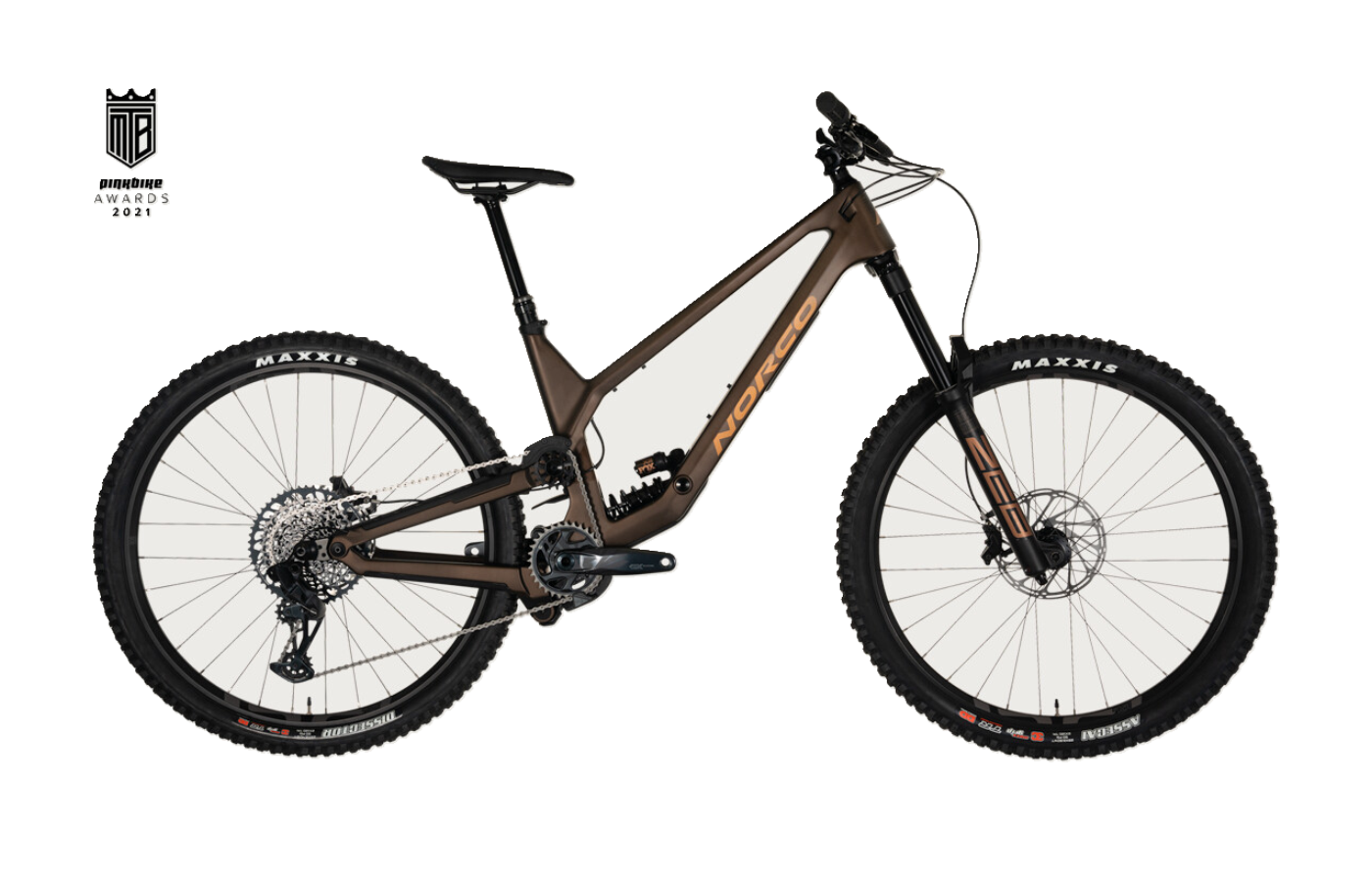
Range
Norco's other long-travel weapon — 170 mm and 29" wheels with the same high-pivot idler-pulley design as the Shore, but tuned for enduro racing rather than park laps. If you want the Shore's suspension philosophy with bigger wheels and a faster pedal, this is it.
Compare →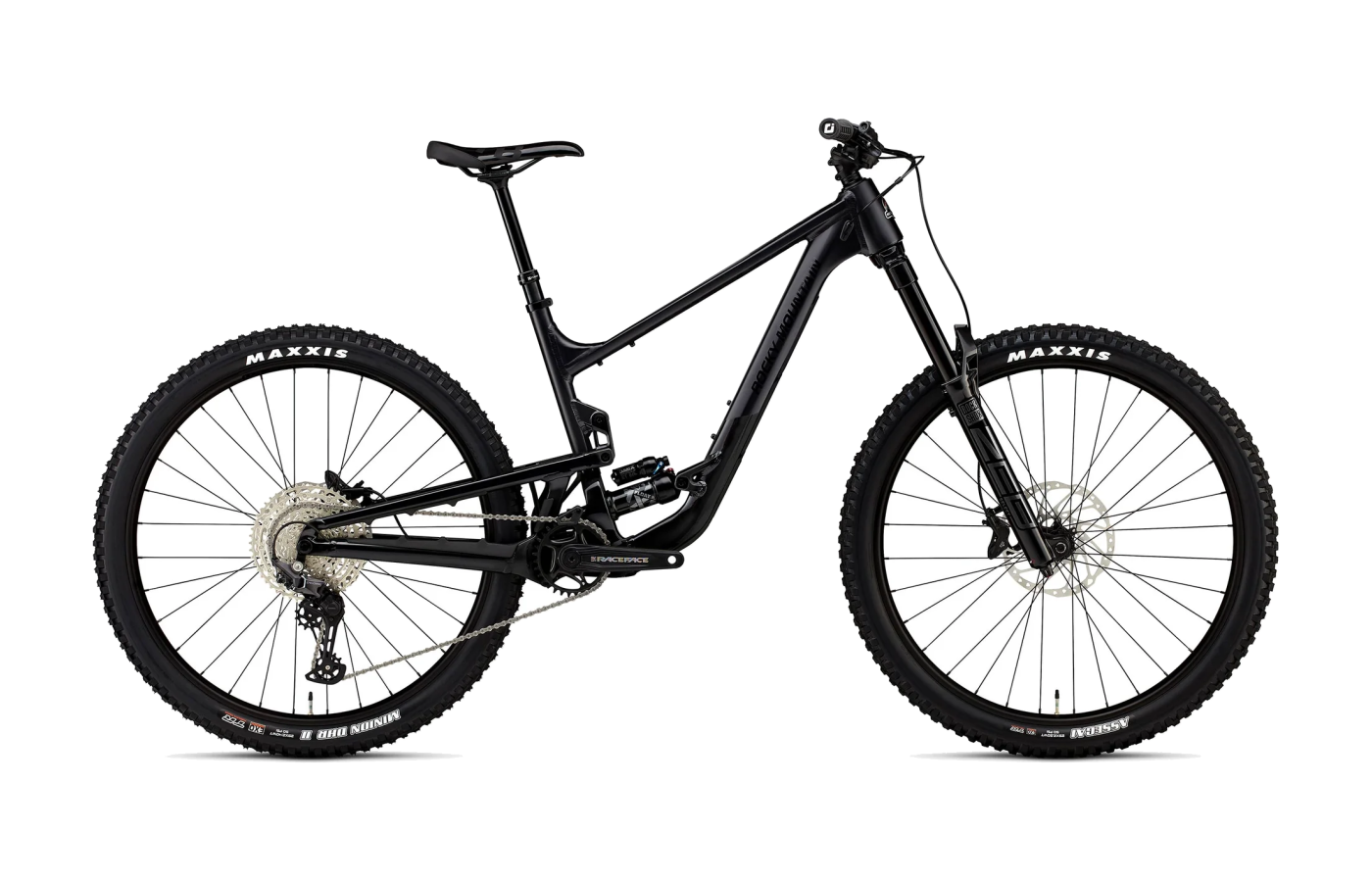
Altitude
Rocky Mountain's 160 mm enduro race bike, sharing the Slayer's Smoothlink suspension and RIDE-4 geometry adjustment. NSMB explicitly preferred its newer LC2R platform's mid-stroke support over the Slayer on enduro courses — a sharper, more pedal-friendly take on the same family.
Compare →Capra
Direct-to-consumer freeride value play — generous 170/180 mm travel in 27.5 or 29 with an aggressive spec for the money. The Capra is the YT take on the Shore/Slayer brief, with the catch being no local dealer support.
Compare →