Torrent
vsGrowler
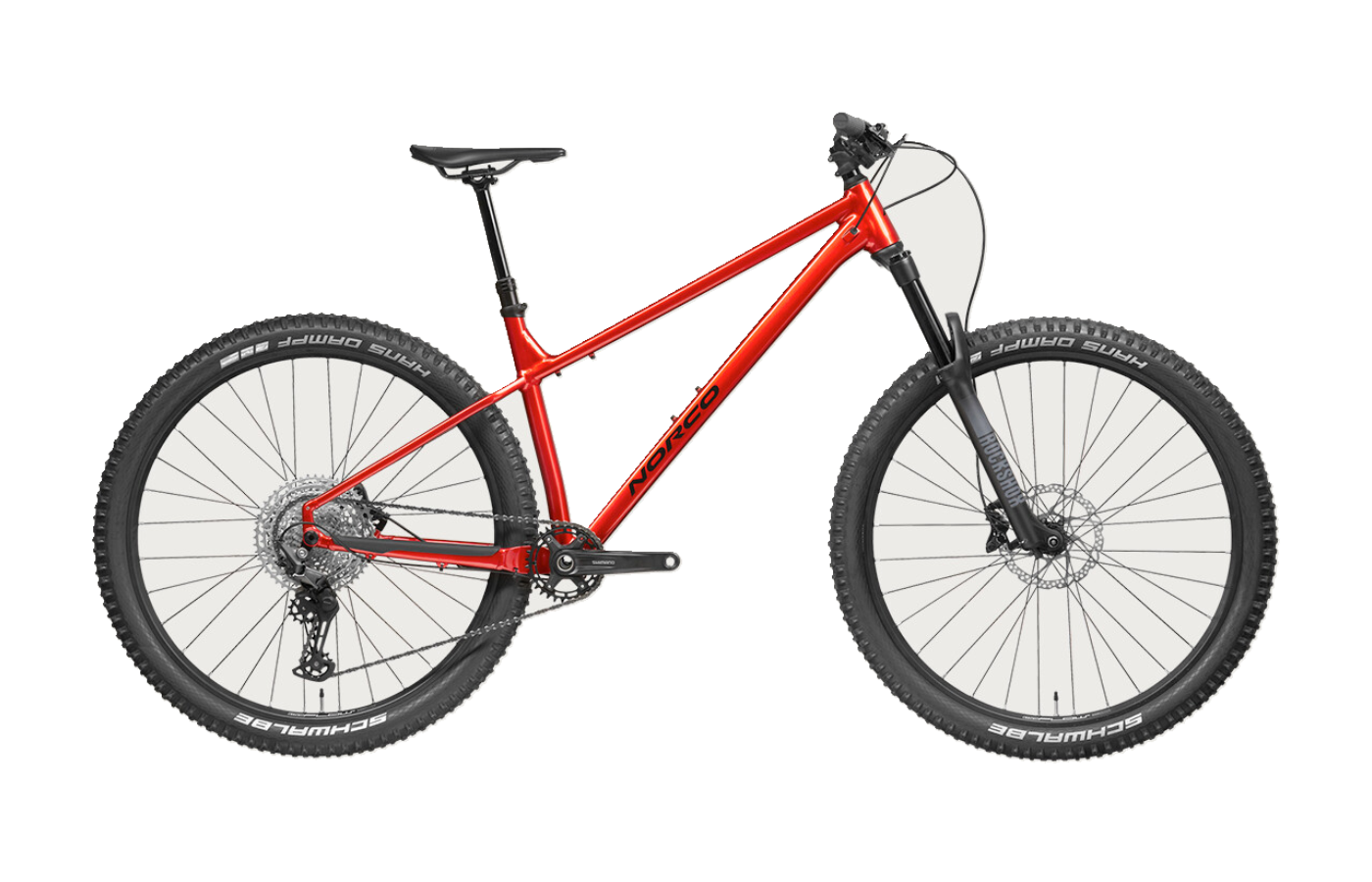
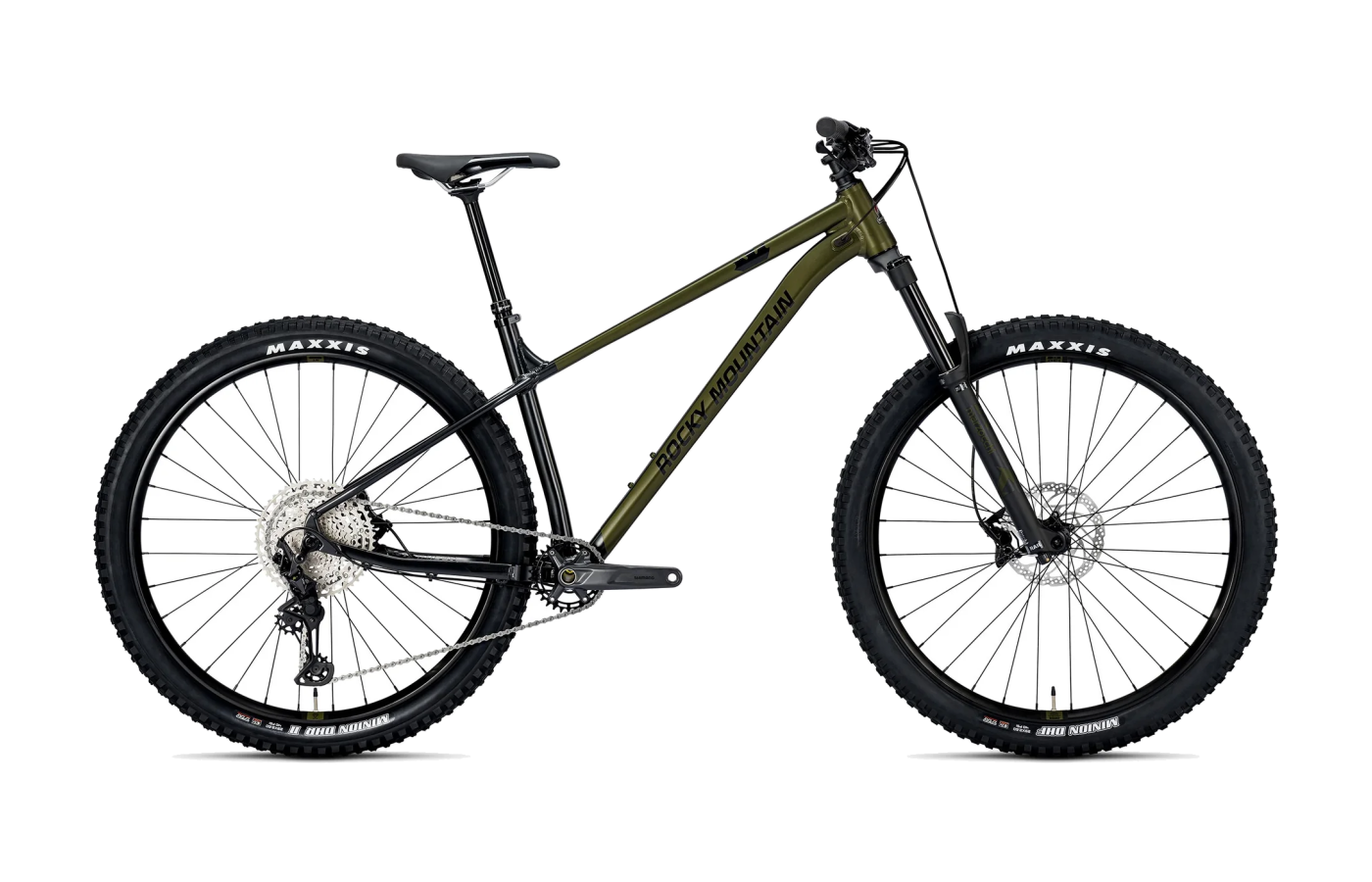
Two hardcore hardtails, two ways to get rowdy.
Both run a 64-degree head angle and a 150 mm fork under $2k. The Torrent is the carver; the Growler is the cruise ship.
Torrent
- Short 420 mm chainstays make it the more playful, carve-friendly of the two — easy to manual, easy to slash corners.
- TRP 4-piston brakes front and rear give predictable, balanced stopping power on long descents.
- Cheapest entry point at $1,879 — the lowest-cost way into modern hardcore-hardtail geometry.
- The RockShox 35 Gold RL fork is the bike's weak link — reviewers consistently call it dive-prone and under-damped.
- Stiff aluminum frame plus narrower 2.35-inch Schwalbe tires means a harsher ride than the Growler on rough chatter.
Growler
- Marzocchi Z2 Float EVOL fork punches well above its price — supportive, well-damped, no immediate upgrade needed.
- 2.6-inch Maxxis Minion tires do double duty as suspension — reviewers run them at 18–23 PSI to soften the hardtail blow.
- Long 1,210 mm wheelbase and slack front end deliver freight-train stability on chunky descents.
- Long 435 mm chainstays plus that wheelbase make it noticeably less nimble in tight switchbacks and at low speeds.
- Mixed 2-piston rear / 4-piston front brakes are a known weak spot — most reviewers recommend pad and rotor upgrades.
Editor’s analysis
This isn't a value-bike fight — it's a handling fight, settled by 15 mm of chainstay and a fork-brand swap.
On the spec sheet, the Norco Torrent A1 and Rocky Mountain Growler 50 read like twins. Both are 6061 alloy hardtails, both run 29-inch wheels, both share a 64-degree head tube angle, both ship with 150 mm of front travel, and both land within $120 of each other ($1,879 vs $1,999). They're the two bikes Bike Magazine had in mind when it wrote that the Canadians had finally given mass-market hardtails the slack-head-angle treatment full-suspension bikes got years ago.
Where they part ways is the rear triangle. The Norco Torrent runs a tight 420 mm chainstay on the size M; the Rocky Mountain Growler is 15 mm longer at 435 mm. That sounds tiny on paper. On the trail it's the difference between a bike that pivots, manuals, and slashes corners — and a bike that tracks like a freight train and rewards the rider who just lets it run. Pinkbike and OutdoorGearLab both flagged the Torrent's short rear as the source of its surprising playfulness. Bigbluetire's headline knock on the Growler is the same wheelbase being a handful in tight switchbacks.
The forks make the second split. Norco specs a RockShox 35 Gold RL on the Torrent A1, and almost every reviewer who's ridden it — OutdoorGearLab, AMBMag, BikeRadar — calls it the bike's biggest weakness: dive-prone, poorly damped, the part you'd upgrade first. The Rocky Mountain Growler 50 ships a Marzocchi Z2 Float EVOL of the same travel, a meaningfully better damper that reviewers say performs above its price class. Same fork travel, very different fork.
Put another way: the Norco Torrent is the bike for the rider who wants to attack the trail and finesse a line through it. The Rocky Mountain Growler is the bike for the rider who wants to point it straight at the mess and let geometry plus 2.6-inch Minions sort it out.
Where the builds differ.
Comparing our editor's-pick builds side-by-side. Winners highlighted row-by-row — lower price and weight, and the better-spec component, each mark a point.
Build variants & pricing
Both lineups are tightly scoped. The Torrent offers two alloy builds; the Growler 50 is a one-trim affair.
Prices are current US MSRP. Norco also sells a steel S-series Torrent in some markets — that's a different frame and not in this comparison. The Growler is offered as a single $1,999 build in the US.
How they fit, how they steer.
M Torrent vs md Growler — the fit-picked sizes for a 5'8" rider on each. Reach is identical at 450 mm and the head angle matches at 64 degrees. The Growler sits 15 mm taller at the bars (643 vs 628 mm stack), runs 15 mm longer chainstays (435 vs 420 mm), and adds an 11 mm longer wheelbase — a flatter, more stable platform.
Which size should I buy?
Both ranges run S–XL with similar reach progressions; pick by reach and stack to match your usual cockpit length.
→These are starting points. Flexibility, riding style, and preferred position all shift the answer — if you’re between sizes, a professional fit beats a chart.
What the magazines said.
Published reviews from trusted cycling outlets. Click through for the full write-up.
Which one should you buy?
If you want to carve, manual, and finesse lines, get the Torrent. If you want to point it and let it run, get the Growler.
Torrent
If you ride a mix of black-diamond descents and tight technical features, and you want a bike that pivots and pops as much as it plows, the short-stay Torrent rewards an active rider. Just budget for a fork upgrade once you start really sending it.
Growler
If most of your fun comes on fast, chattered-out descents and you'd rather let geometry and tire volume do the work than wrestle a bike through tight stuff, the Growler is the more confidence-inspiring of the two out of the box. The fork won't hold you back.
Questions buyers actually ask.
Short answers to the things we get emailed about most often.
01Which is faster on rough descents?
The Rocky Mountain Growler, by a small but real margin. Its 11 mm longer wheelbase, 15 mm longer chainstays, and noticeably better Marzocchi Z2 fork combine to lift the speed limit on rough, chattered-out descents. Reviewers across PinkBike, Bike Magazine, and Bigbluetire describe charging through chunk on the Growler at full-suspension lines and full-suspension speeds.
The Norco Torrent is also extremely capable downhill, but its under-damped RockShox 35 Gold RL fork is the limiting factor at the A1 trim — it dives and bottoms more readily than the Z2.
02Which is more playful and easier to maneuver?
The Norco Torrent. Its 420 mm chainstays — 15 mm shorter than the Growler's 435 mm — let the rear end follow the front through tight corners and pop into manuals more readily. Reviewers consistently flag this as the Torrent's signature trait: a long, slack front mated to a snappy short rear.
The Growler's longer wheelbase is a high-speed asset and a low-speed liability. Bigbluetire and Pinkbike both note it can feel sluggish in tight switchbacks.
03Which has the better fork out of the box?
The Rocky Mountain Growler 50, clearly. Both bikes run 150 mm forks at 44 mm offset, but the Growler's Marzocchi Z2 Float EVOL is consistently described as supportive and well-damped, with most reviewers saying it doesn't need an upgrade.
The Torrent A1's RockShox 35 Gold RL has been criticized in nearly every published review — OutdoorGearLab, AMBMag, BikeRadar — for being unrefined, dive-prone, and the first thing they'd swap. If fork performance matters to you out of the box, this is a real tiebreaker.
04Which has better brakes?
The Norco Torrent has the more balanced setup, with 4-piston TRP Slate EVO brakes front and rear. The Rocky Mountain Growler 50 runs a mullet setup — a 4-piston caliper up front for stopping power, a 2-piston in the rear to keep the price down.
Reviewers haven't flagged the Torrent's TRPs as a weakness. Multiple Growler reviewers recommend swapping pads and going to larger rotors for aggressive riding.
05How do the tires compare?
The Growler ships 2.6-inch Maxxis Minion DHF/DHR II tires — high-volume rubber that does double duty as suspension. Reviewers run them as low as 18–23 PSI to soften the hardtail's blow, and consistently call them the bike's secret weapon.
The Torrent A1 runs narrower 2.35-inch Schwalbe Hans Dampf tires with a Performance/TwinSkin casing. They're more precise on hardpack but less forgiving in rocks and roots, and reviewers (OutdoorGearLab, AMBMag) have flagged the casings as feeling thin for hardcore use.
06Are these realistic XC or all-day bikes?
No, and neither tries to be. Both bikes weigh in around 31–34 lbs depending on build and have aggressive geometry tuned for descending. Reviewers across both platforms describe them as 'winch and plummet' machines — fine to grind up a fire road, but slow and a little sluggish on rolling, mellower terrain.
If you want a hardtail that climbs efficiently and stays lively at slower speeds, look at something more traditional like a Kona Honzo or Trek Roscoe.
07Which has a more comfortable climbing position?
The Norco Torrent's 76-degree seat tube angle is one degree steeper than the Growler's 75 degrees. That puts the rider a little more central over the bottom bracket, which helps on steep, technical climbs where keeping the front wheel planted matters.
In practice, both are described as 'just fine' uphill — neither is a climbing bike. The Torrent's slightly steeper STA is a small edge, not a category difference.
08Are these good first hardcore hardtails?
Yes, both are excellent entry points to the genre — that's the entire reason they exist. They put modern enduro-style geometry on an alloy frame at a sub-$2k price, and they both have meaningful upgrade paths as you grow into them.
If budget is the top priority, the Torrent A1 at $1,879 is the cheapest way in. If you'd rather not have to upgrade the fork on day one, spend the extra $120 for the Growler 50.
Similar bikes
If your priorities don’t map cleanly onto either of these, one of these adjacent bikes probably fits better.

Kobain
Another aggressive Canadian alloy hardtail, but with slightly more moderate geometry — a better all-rounder if 64 degrees feels too slack for the trails you actually ride.
Compare →Roscoe
A high-quality alloy frame with aggressive — but not bruiser — geometry. More refined for general trail riding than either of these two, and still very capable when the trail gets steep.
Compare →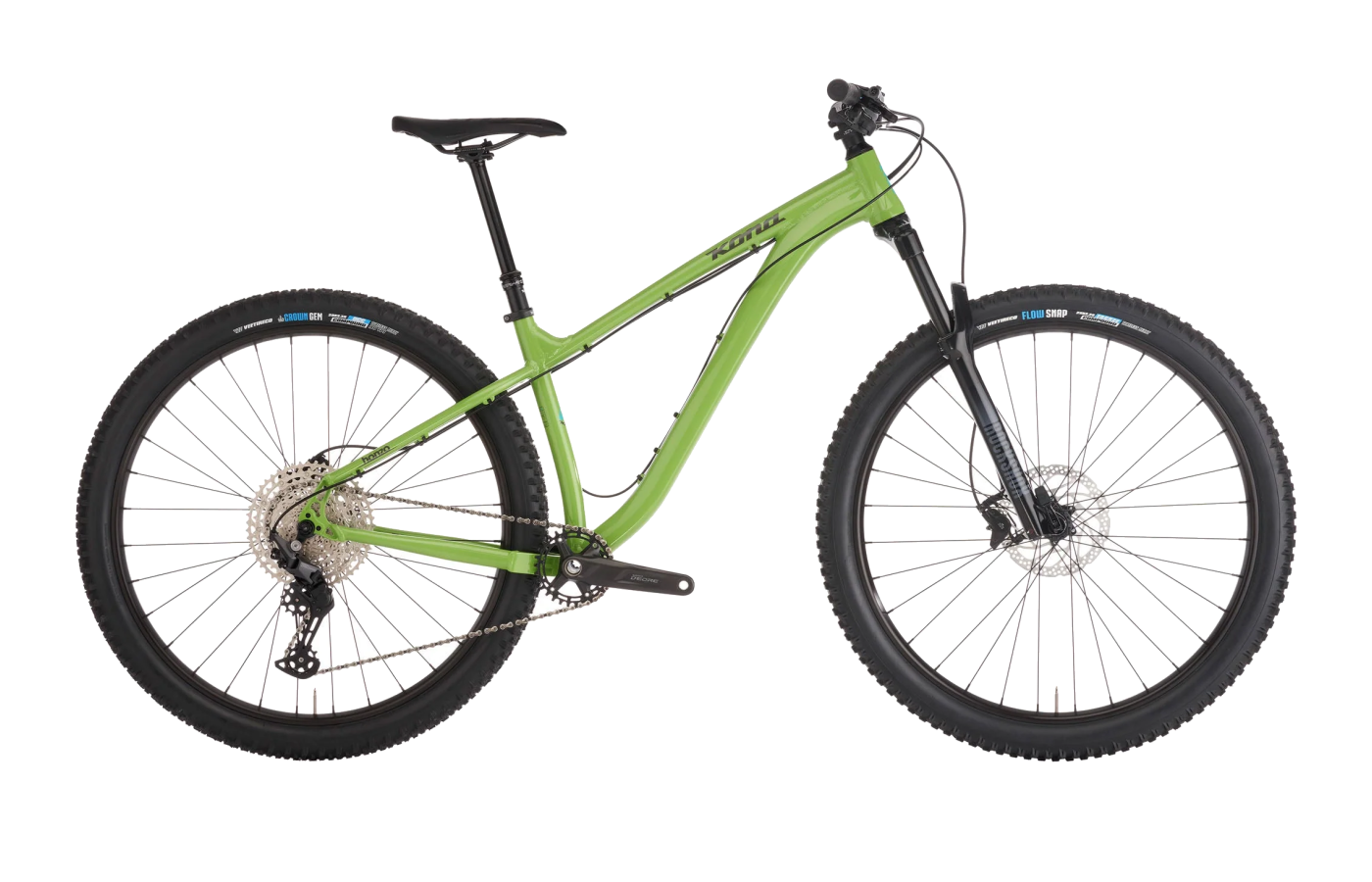
Honzo
The classic playful trail hardtail — noticeably zippier and more efficient on the climbs than the Torrent or Growler, and a better fit for riders who want a more traditional, agile feel.
Compare →