Shadowcat
vs5010
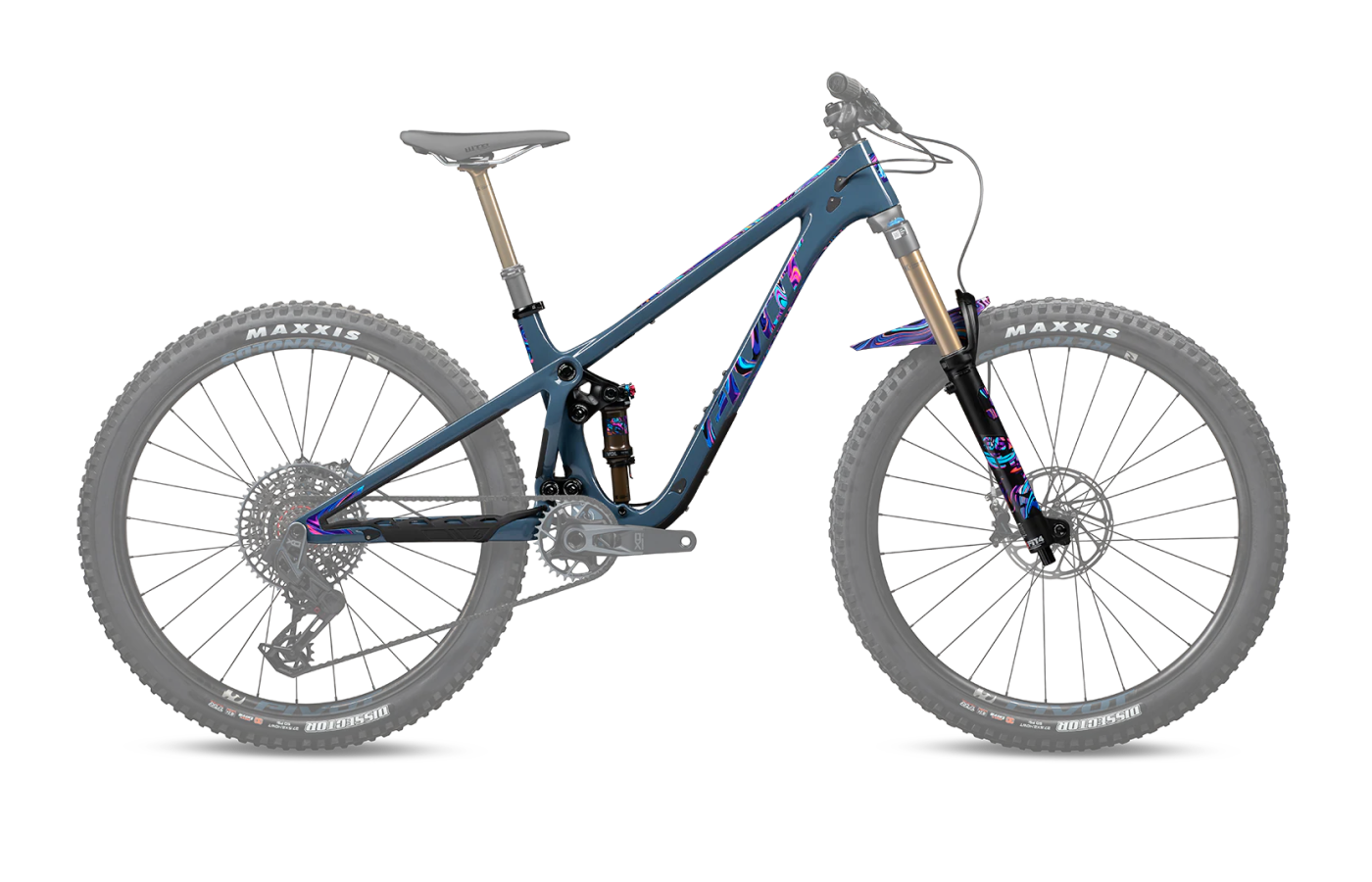
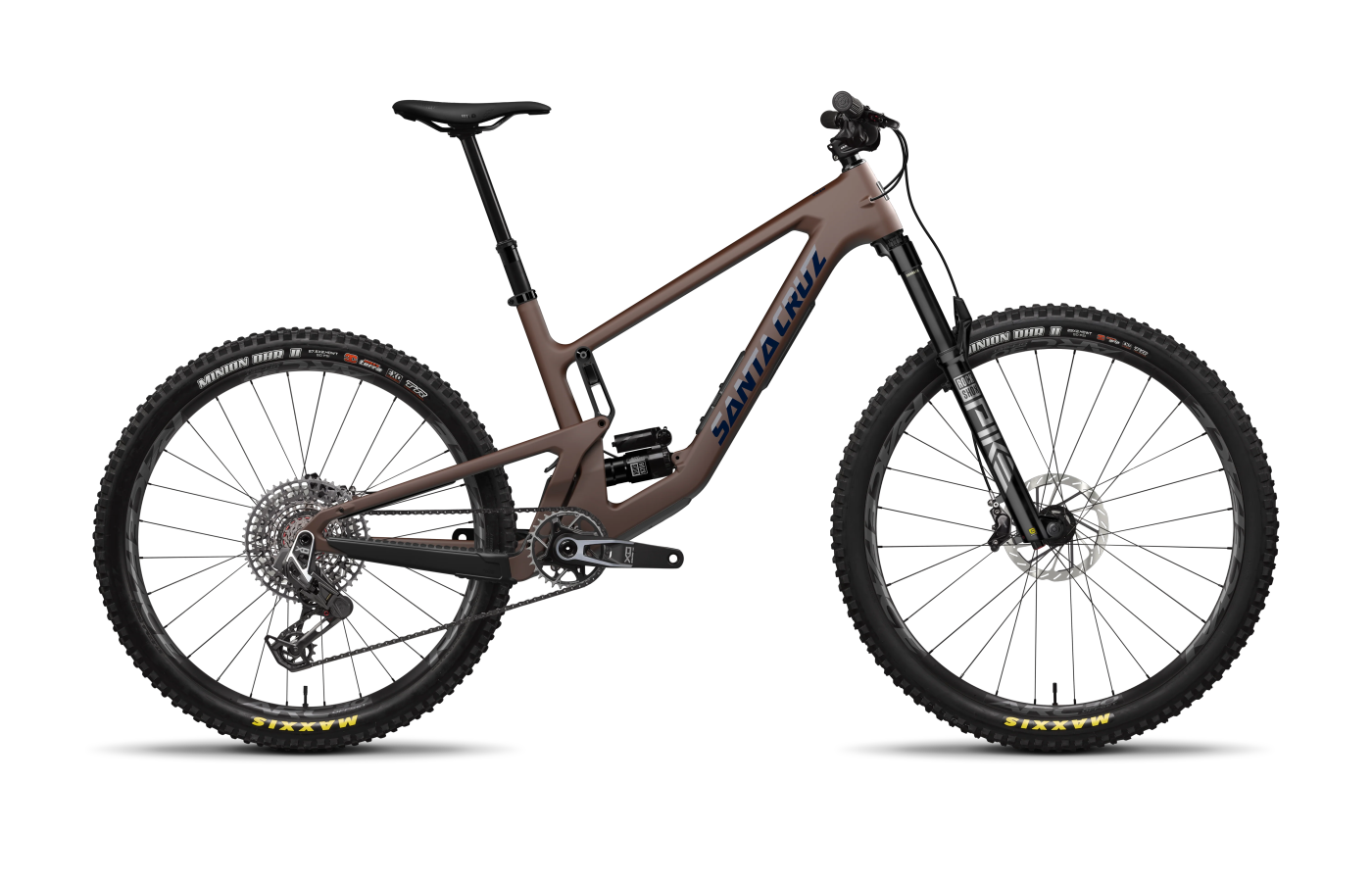
Two playful trail bikes, two wheel philosophies.
The Shadowcat keeps both wheels at 27.5" and chases ultralight agility. The 5010 went mullet to add 29" rollover up front while keeping the rear flickable.
Shadowcat
- Genuinely lightweight — Blister measured 13.1 kg / 28.8 lb on a Medium; Loam Wolf saw 12.0 kg on the Team XTR. Few 140 mm trail bikes are this light.
- Snappier 27.5" agility — short 430 mm chainstays at every size and small wheels make tight cornering and direction changes effortless.
- DW-Link climbs hard — minimal pedal bob even with the lockout open; reviewers rarely reached for the climb switch.
- Less stable than the 5010 at high speed in chunky terrain — reviewers note it's not a plow.
- Fox 36 ships with the FIT4 damper across all builds (no GRIP2 option), which several reviewers found over-damped for lighter riders.
5010
- Plush mixed-wheel composure — the 29" front rolls over chunder while the 27.5" rear keeps it flickable; "mini-Bronson" is the recurring reviewer label.
- Size-specific geometry — chainstays scale from 428 mm (XS) to 442 mm (XXL), so taller riders aren't fighting a stubby rear end.
- Refined frame package — Glovebox internal storage, sag-window peephole, threaded BB, lifetime frame and pivot-bearing warranty.
- About 1.5–2 kg heavier than the Shadowcat in equivalent trim — climbs feel less sprightly.
- Reviewers consistently flag the stock Maxxis EXO tires as too thin for the bike's cornering forces; plan on a casing upgrade.
Editor’s analysis
These bikes share the same mission — make every trail feel like a party — but they take opposite routes to get there.
On paper, the Pivot Shadowcat and Santa Cruz 5010 V5 sit in the same playful-trail bracket. Both are mid-travel carbon bikes from boutique American brands. Both run 12-speed AXS or Di2 drivetrains. Both get name-checked by reviewers as fun-first "corner destroyers" rather than enduro bruisers. But the wheel-size choice splits them down the middle, and almost every other geometry and travel decision flows from there.
The Pivot Shadowcat is the holdout — full 27.5" wheels at both ends, paired with 140 mm of DW-Link rear travel and a 160 mm fork. The frame is genuinely featherweight (Pivot says only 45 g heavier than their Mach 4 SL XC race chassis), short 430 mm chainstays across every size, and a 65.8 deg head angle that's modern but not extreme. Reviewers describe it as "snappy," "nimble," and "easy to chuck about" — a bike that asks you to actively pump and pop rather than plow.
The Santa Cruz 5010 V5 went the other direction. A 29" front wheel and 27.5" rear, 130 mm of VPP travel out back with a 140 mm fork, a slacker 65.2 deg head angle, and size-specific chainstays (433 mm on Medium, growing with the frame). Santa Cruz dropped peak anti-squat about 16% from the V4 — the rear suspension is now plusher and tracks rough ground better, at the cost of some standing-sprint snap. Reviewers consistently call it a "mini-Bronson": a 130 mm bike that punches above its travel on enduro-grade descents.
Put another way: the Shadowcat is the bike you buy when 27.5" wheels and ultralight carbon are the whole point. The 5010 is the bike you buy when you want 29" rollover at the front and a flickable rear, in the kind of refined, lifetime-warranty package Santa Cruz is known for.
Where the builds differ.
Comparing our editor's-pick builds side-by-side. Winners highlighted row-by-row — lower price and weight, and the better-spec component, each mark a point.
Build variants & pricing
Both ranges top out near $9k–$12k. The Pivot stretches lower with the $4k Brunch Ride; the 5010's R build starts at $4,799.
Prices are current US MSRP. Our editor's picks pair the Pivot Pro X0 Eagle Transmission ($8,999) with the Santa Cruz X0 AXS ($8,299) — same X0 AXS Transmission drivetrain on both, alloy wheels on both, within $700 of each other. The Pivot's full Factory-tier Fox suspension is what pushes the price up at this tier; the 5010 saves money by running carbon-RSV wheels only on the more expensive X0 AXS RSV build.
How they fit, how they steer.
The Shadowcat SM and 5010 M are the fit-picked sizes for the same rider. Reach lands close (430 vs 459 mm), but the 5010 sits 17 mm taller in stack and 0.6 deg slacker at the head tube — that's the mullet front end versus the small-wheel front end in numbers.
Which size should I buy?
Size recommendations based on stack, reach, and effective top tube. The 5010 offers six sizes (XS–XXL); the Shadowcat tops out at LG by design — Pivot directs taller riders to its 29" platforms.
→These are starting points. Flexibility, riding style, and preferred position all shift the answer — if you’re between sizes, a professional fit beats a chart.
What the magazines said.
Published reviews from trusted cycling outlets. Click through for the full write-up.
Which one should you buy?
If you want the lightest, snappiest 27.5" trail bike on the market, get the Shadowcat. If you want 29" rollover with a flickable rear and a frame built for the long haul, get the 5010.
Shadowcat
If your trails reward agility over plowing — tight singletrack, technical climbs, twisty descents — and you'd rather hop a feature than smash through it, the Shadowcat is the sharper tool. Especially compelling for smaller or lighter riders who find 29ers cumbersome.
5010
If you want a bike that drifts corners, slashes berms, and gets airborne but still rolls over chunder thanks to the 29" front wheel — and you value a refined, lifetime-warrantied frame package — the 5010 V5 is the more complete trail bike.
Questions buyers actually ask.
Short answers to the things we get emailed about most often.
01Which is more capable on rough, fast descents?
The Santa Cruz 5010, despite running 10 mm less rear travel (130 mm vs 140 mm). The 29" front wheel rolls over chunder more easily, the head angle is 0.6 deg slacker (65.2 vs 65.8 deg), and the wheelbase is longer at every size (1,212 mm vs 1,206 mm in the medium-equivalent fit-picked sizes). Reviewers consistently described the 5010 as a "mini-Bronson" that punches above its travel.
The Shadowcat is more capable than its small wheels suggest, but multiple reviewers flagged that it's "not a plow" — you have to ride it actively in chunky terrain rather than letting it iron things out.
02Which climbs better?
The Pivot Shadowcat, by a clear margin in most conditions. It's about 1.5–2 kg lighter in equivalent trim (Blister measured 13.1 kg / 28.8 lb on a Medium; Santa Cruz lists the X0 AXS at 14.0 kg / 30.85 lb), and its DW-Link suspension is stiffer under power — most testers reported never reaching for the climb switch.
The 5010 traded some climbing snap for descent traction in the V5 — Santa Cruz cut peak anti-squat ~16% from the V4. Reviewers liked it on technical, chunky climbs (the rear wheel tracks better) but called it "soggy" on smooth fire-road grinds compared to firmer-pedaling bikes.
03Why does the Shadowcat keep both wheels at 27.5" when the rest of the industry has moved on?
Pivot's argument is that 27.5" wheels are simply more agile, accelerate faster, and corner tighter — and that for a fun-focused trail bike, those traits matter more than raw rollover. Reviewers across Blister, MBA, Pinkbike, and Loam Wolf back this up: the Shadowcat "snaps through corners with authority" and is "easy to chuck about" in ways even the mullet 5010 can't match.
It's also a clear gift to smaller riders. Pivot caps the Shadowcat at size LG and points taller riders to its 29" platforms; reviewers from GearJunkie noted the bike "appeals to folks that aren't proportioned like Paul Bunyan."
04What's the rear travel on each?
Pivot Shadowcat: 140 mm DW-Link, 160 mm fork (Fox 36).
Santa Cruz 5010: 130 mm VPP, 140 mm fork (RockShox Pike).
The Shadowcat is the longer-travel platform on paper, but the 5010 feels more composed at speed because of the slacker head angle and 29" front wheel. Travel numbers don't tell the whole story on these two.
05Which has the better suspension package on the editor's-pick builds?
It's close, with different strengths. The Shadowcat Pro X0 Transmission ($8,999) runs Fox Factory 36 fork and Float DPS shock — top-tier kashima coatings, but the Fox 36 across the entire Shadowcat range uses the FIT4 damper rather than the more tunable GRIP2, which several reviewers (Blister, Pinkbike, Singletrackworld) noted as a limitation for picky or lighter riders.
The 5010 X0 AXS ($8,299) runs RockShox Pike Ultimate fork and Super Deluxe Ultimate shock. The Pike Ultimate's Buttercups tech got specific praise from multiple reviewers for damping high-frequency vibration. BikeRadar did note the Pike can lack initial suppleness on high-speed chatter.
06What about wheel size for shorter riders?
The Shadowcat is the easier fit for riders under about 5'6". It comes in XS and SM with a low standover (582 / 605 mm stack), and the full 27.5" wheels keep the front end manageable.
The 5010's XS and S sizes still pair a 29" front wheel with the small frame, which can feel "nose-high" on steep climbs and challenging on tight switchbacks. If 29" wheels have ever felt like too much bike, the Shadowcat solves that more decisively. (Santa Cruz's sister-brand Juliana Furtado is the same frame in XS–M with a lighter shock tune, if that's a closer fit.)
07What tire clearance do they have, and can I run a more aggressive setup?
Both ship with 2.4" Maxxis tires in EXO casing — and reviewers of both bikes nearly universally recommend swapping to a heavier casing (EXO+ or DoubleDown) for anything aggressive. The 5010 is published at 63.5 mm of tire clearance.
The Shadowcat ships with Maxxis Dissector (fast-rolling); the 5010 gets the more aggressive Minion DHR II (MaxxGrip front / MaxxTerra rear). If you ride wet or rocky terrain, the 5010's stock rubber is better suited; the Shadowcat is the bigger upgrade target.
08Which has better long-term ownership support?
Both come with strong warranties. Santa Cruz offers a lifetime frame warranty and lifetime pivot bearing replacements — that bearing-replacement policy is genuinely rare in the industry and a real long-term cost saver. Pivot offers a 10-year frame warranty for the original owner.
Santa Cruz also has a larger US dealer network. Pivot is more boutique, with fewer dealers and no frame-only build option (so custom builders can't start from a bare frame).
Similar bikes
If your priorities don’t map cleanly onto either of these, one of these adjacent bikes probably fits better.
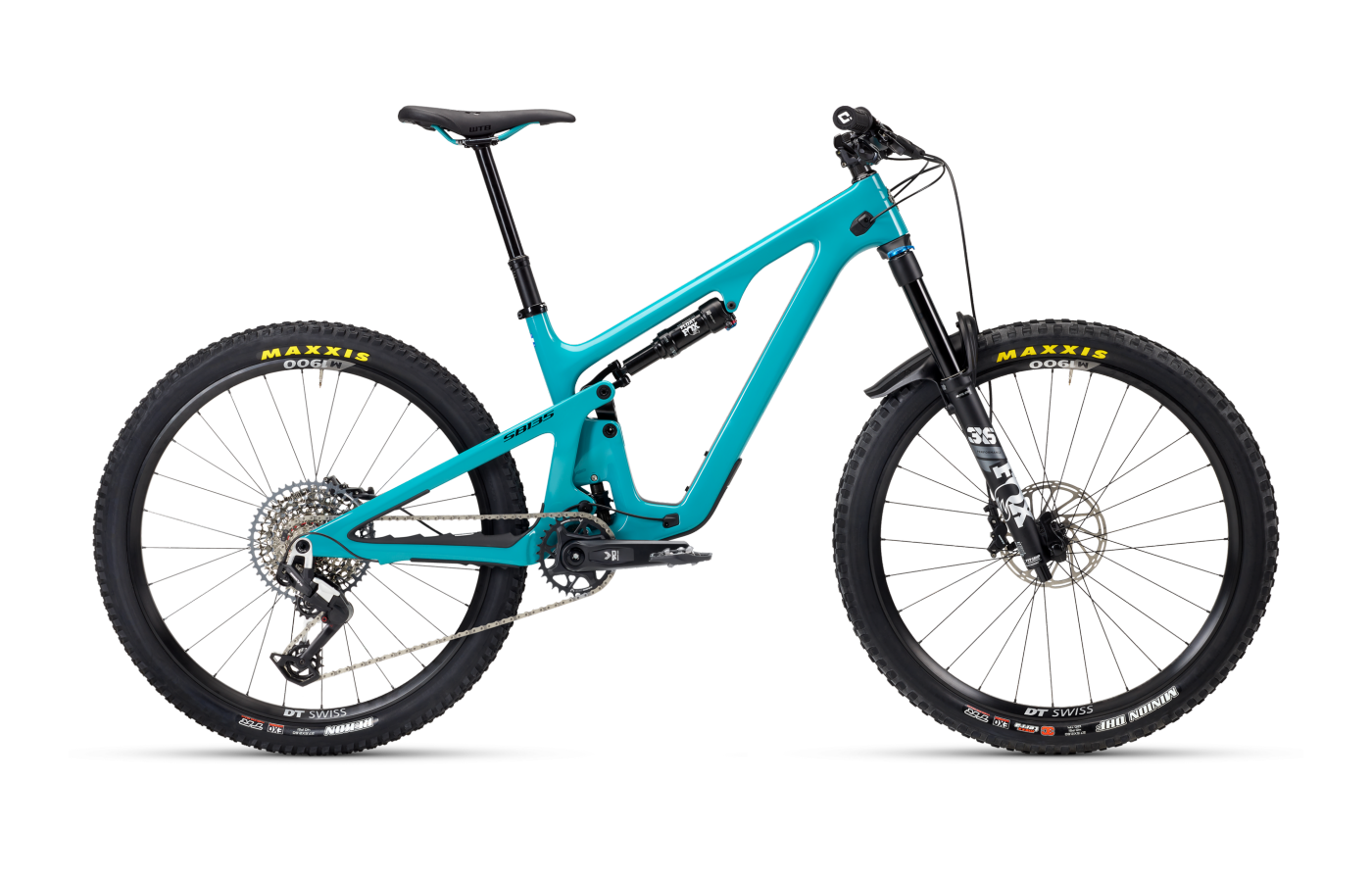
SB135
The closest cross-shop to the Shadowcat — another full 27.5" trail bike with 135 mm rear travel and Yeti's Switch Infinity link. If you've decided 27.5" is the answer, the Yeti SB135 is the other obvious bike to ride.
Compare →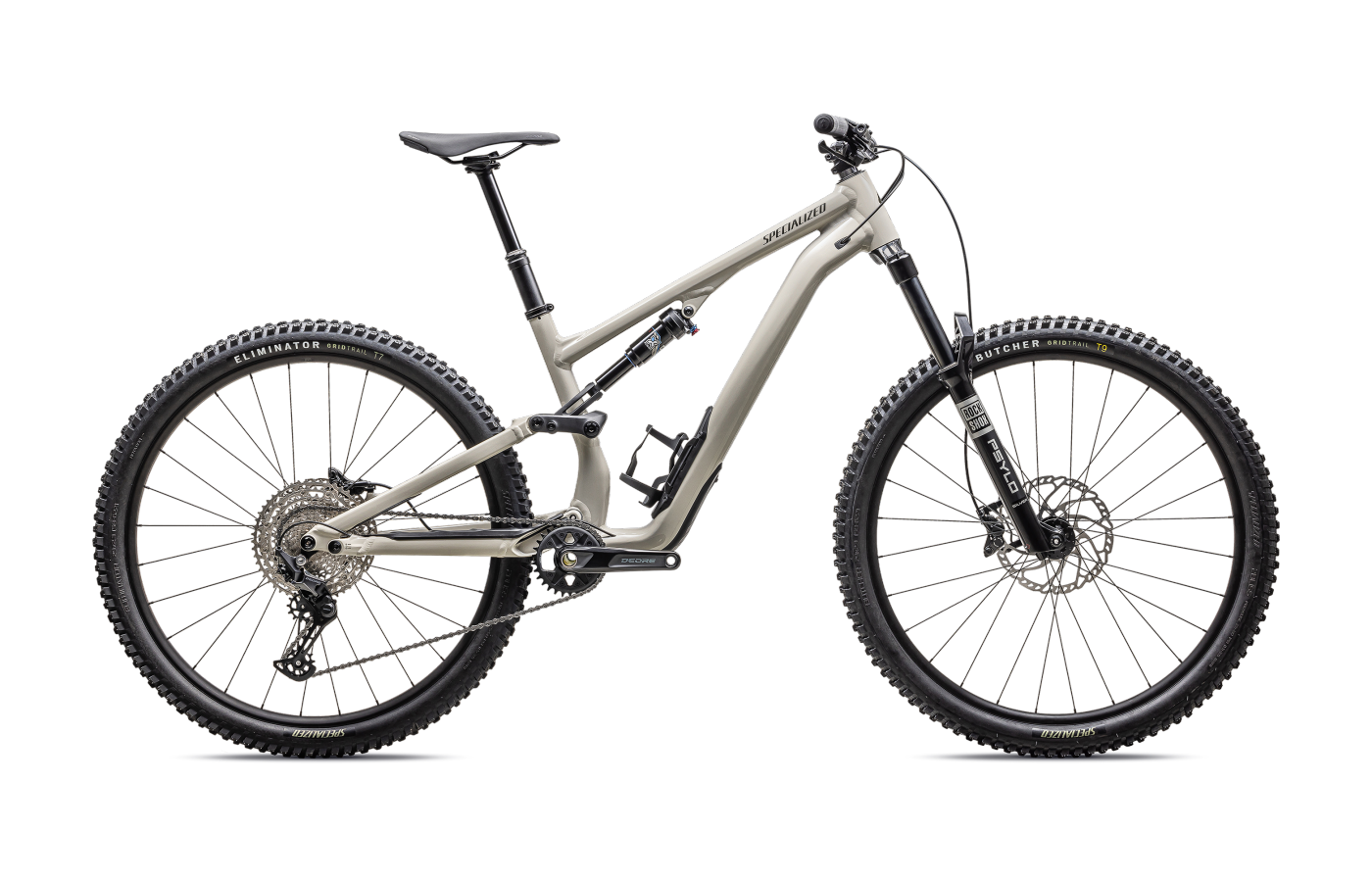
Stumpjumper
The volume benchmark for versatile trail bikes. Available in 29" and mullet, with 130/140 mm travel and Specialized's Genie shock — broader build range than either of these and a much larger dealer footprint.
Compare →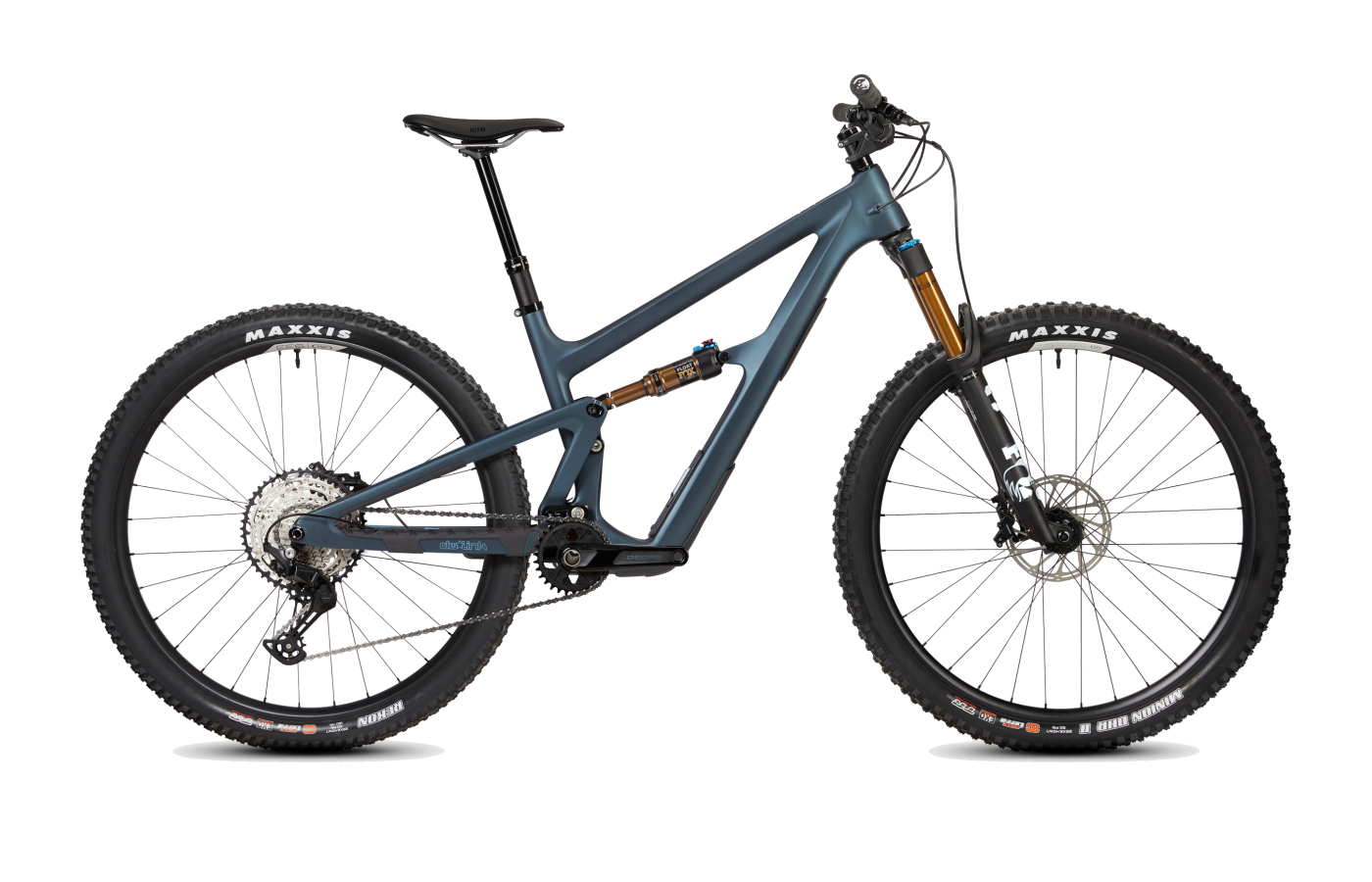
Ripley
Same DW-Link climbing efficiency as the Shadowcat, but on 29" wheels with 120 mm of rear travel — a more downcountry-flavored take if you want efficiency over playfulness.
Compare →