Switchblade
vsStumpjumper
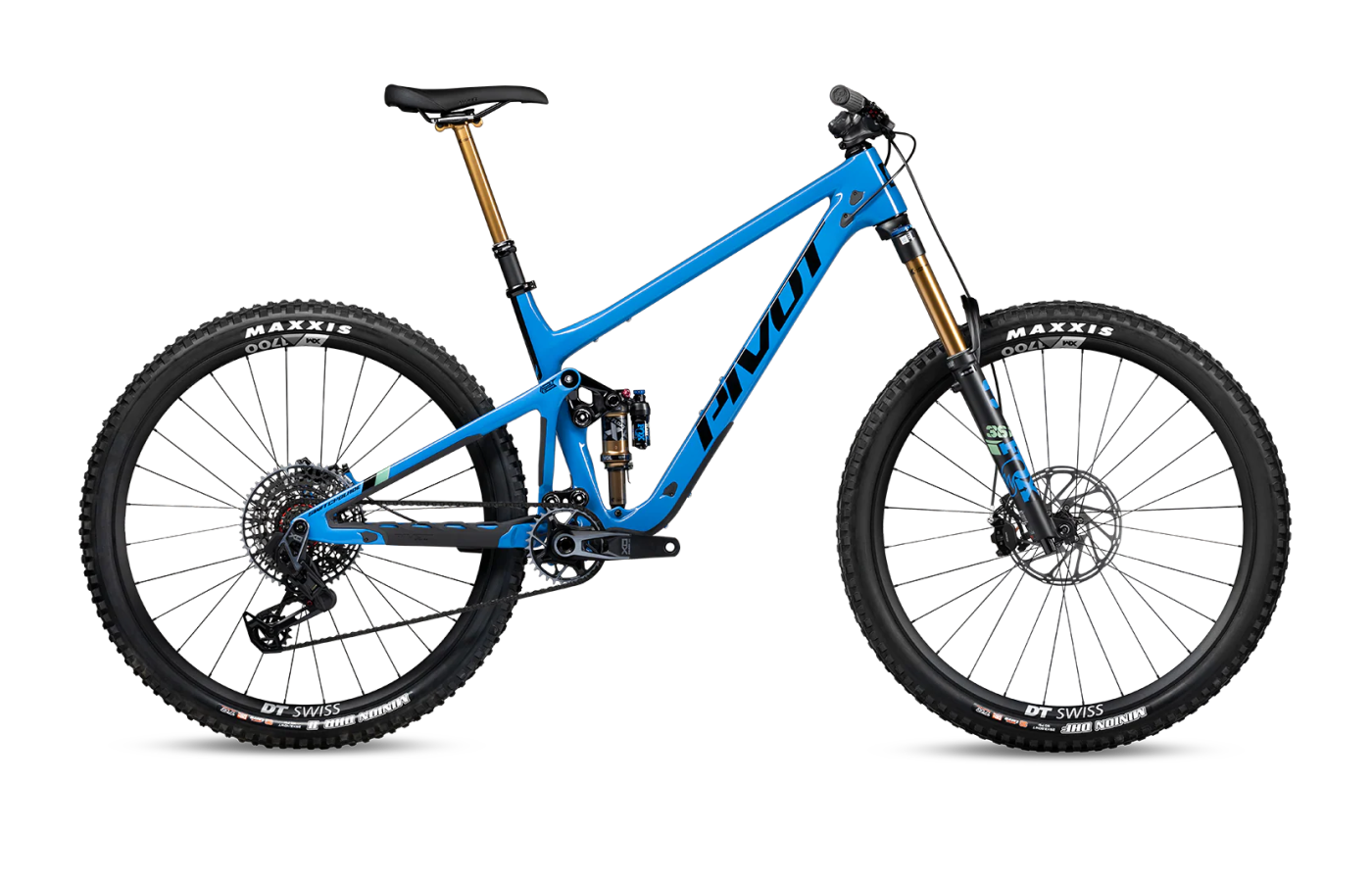
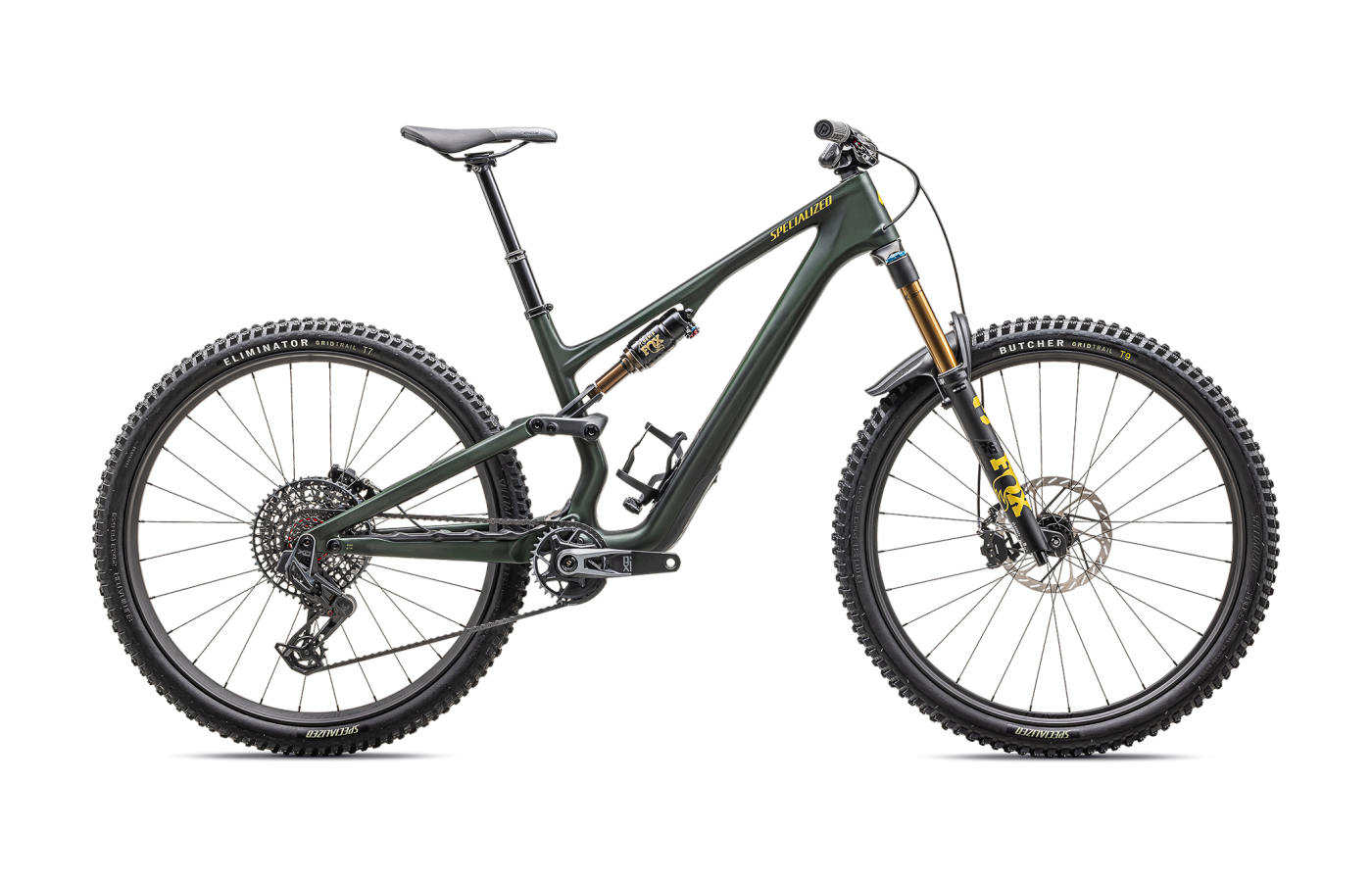
Two trail bikes, two characters.
The Switchblade is the playful, precise DW-Link rifle. The Stumpjumper is the adjustable, tractor-grip swiss-army-knife built around the GENIE shock.
Switchblade
- Lively, precise chassis — short 431 mm chainstays and Pivot's tight build quality make it one of the more playful trail bikes in class.
- Strong technical climber — the new lower-link kinematic adds rear-wheel grip without softening pedaling response.
- Drivetrain choice — Pivot offers both Shimano XT/XTR Di2 and SRAM Eagle Transmission across the lineup, including mechanical builds at the entry tier.
- Price floor of $6,499 — there's no entry-level alloy or budget-carbon option.
- SuperBoost+ 157 mm rear hub spacing limits aftermarket wheel compatibility.
- Press-fit BB and exposed bearing interfaces draw recurring service complaints.
Stumpjumper
- Massive tunable range — adjustable headset cup (63°–65.5° HTA) and chainstay-length flip chip let one frame cover XC efficiency to enduro-spec aggression.
- GENIE shock traction — Specialized claims 57% more rear-wheel traction; reviewers near-universally describe the ride as "glued" to chunder and roots.
- True full-range pricing — alloy builds start at $2,999 and the carbon Comp lands at $4,999, undercutting Pivot's entire range.
- Carbon frames are wireless-only — no mechanical Shimano or cable-shift option on FACT 11m models.
- Proprietary GENIE shock raises long-term parts-availability questions.
- Stock alloy wheels and lighter-casing tires are flagged by reviewers as a weak point for aggressive use.
Editor’s analysis
Same travel bracket, same 29" wheels, same do-it-all pitch — but two very different feels under your hands.
On paper they line up: 142–145 mm rear, 150–160 mm front, 65.2° vs 64.5° head angles, both built to be the only mountain bike in the garage. But spend a paragraph on the kinematics and the philosophies split.
The Pivot Switchblade is the precision tool. A longer lower DW-Link, short 431 mm chainstays through size MD, and Pivot's famously tight QC produce a frame that reviewers across Pinkbike, BikeRadar and Blister describe with the same word: committed. Weight it forward, push the front wheel, and it rewards you with quick steering and a poppy, manualable rear end. Sit back and it'll "take you for a ride," as BikeRadar put it. It's the bike for an experienced rider who wants to work the trail, not be carried by it.
The Specialized Stumpjumper 15 plays the opposite hand. The proprietary Fox GENIE shock — a dual-chamber air spring — delivers what Flow Mountain Bike called a "coil-like" first 70% of travel, then ramps hard via a "GENIE band" to swallow drops without bottoming. Combined with a slacker 64.5° head angle, a 1244 mm wheelbase at S4, and an adjustable headset cup that swings the HTA from 63° to 65.5°, the bike feels — to use the recurring reviewer phrase — sat in. It tractors up technical climbs, glues itself to chunder, and adapts via flip chip and headset to whatever terrain you point it at.
Put another way: the Switchblade is the bike you buy because you love the act of riding and want a chassis that talks back. The Stumpjumper is the bike you buy because you have one weekend to do everything from a Sedona shuttle to a Wednesday-night XC loop and you want one platform to handle all of it.
Where the builds differ.
Comparing our editor's-pick builds side-by-side. Winners highlighted row-by-row — lower price and weight, and the better-spec component, each mark a point.
Build variants & pricing
Both span ~$5k of range. The Stumpjumper starts at $2,999 in alloy and tops out at $11,999; the Switchblade lineup is carbon-only and starts at $6,499.
Prices are current US MSRP. The Switchblade has no alloy or sub-$6k option — if your ceiling is below $6,500, the Stumpjumper is the only choice on this page. Editor's pick on each side is the X0 AXS Transmission build with Fox Factory 36 / Float, matched on drivetrain tier and suspension grade.
How they fit, how they steer.
Pivot SM and Specialized S3 are the fit-picked sizes for our default 173 cm rider. The Stumpjumper sits 0.7° slacker (64.5° vs 65.2° HTA), 10 mm longer in reach (450 vs 440 mm), and ~20 mm longer in wheelbase — measurably more stability, slightly less flick.
Which size should I buy?
Specialized's S-sizing decouples size from seat-tube length, so S2/S3/S4 overlap heights more than Pivot's traditional XS-XL. Pick by reach and stack rather than nominal size.
→These are starting points. Flexibility, riding style, and preferred position all shift the answer — if you’re between sizes, a professional fit beats a chart.
What the magazines said.
Published reviews from trusted cycling outlets. Click through for the full write-up.
Which one should you buy?
If you want a precise, playful trail bike that rewards an active rider, get the Switchblade. If you want maximum tunability and tractor-grip suspension that adapts to any trail, get the Stumpjumper.
Switchblade
If you ride forward on the bike, work the front wheel, and want a chassis that pops, manuals, and carves tight switchbacks — the Switchblade is the sharper tool. Experienced riders who tune their bike to their style will get the most out of it.
Stumpjumper
If you want one bike to handle everything from Sunday all-day epics to bike-park laps to the occasional XC race, and you like fiddling with geometry settings, the Stumpjumper covers more ground than almost anything in the class. The GENIE shock is the killer feature.
Questions buyers actually ask.
Short answers to the things we get emailed about most often.
01Which is the better climber?
Both climb well for ~145 mm trail bikes, but they get there differently.
The Stumpjumper 15 wins on technical, traction-limited climbs. The GENIE shock's supple first 70% of travel keeps the rear tire glued to roots and rocks — Specialized claims a 57% traction increase, and reviewers from The Loam Wolf to Singletracks back that up with descriptions of the bike "hugging" the ground on steep tech.
The Switchblade is the more efficient pedaler on smooth, sustained climbs. Pivot's DW-Link suspension stays calmer under power, and at a claimed weight closer to 14 kg in carbon Pro/Team trim it doesn't carry the alloy Stumpjumper's penalty. On a fire-road grind, the Switchblade feels crisper at the pedals.
02Which is faster on rough descents?
The Stumpjumper 15 has the edge in the chunk. Its slacker 64.5° head angle, 1244 mm wheelbase at S4, and the GENIE shock's progressive bottom-out resistance make it more composed at speed and more forgiving of bad line choices. Multiple reviewers reported never reaching full travel even on big hucks.
The Switchblade V3 is significantly more composed than the V2 — a slacker 65.2° HTA, longer reach, and the new lower-link kinematic close much of the gap. But it stops short of a true enduro feel, and reviewers consistently note it rewards a forward, committed riding style. Sit back on it and it gets unsettled. Push hard and it tracks beautifully.
03What's the deal with the Stumpjumper's GENIE shock?
It's a Specialized-Fox collaboration: a dual-chamber air spring where a sleeve closes off the larger outer chamber after about 70% of travel, sharply ramping up progression for the last third. The result is a coil-like first half (huge small-bump compliance, traction) and an air-shock-like ramp at the end (no harsh bottom-outs).
Reviewers love the performance. The concern across Pinkbike comments and a few longer-term reviews is proprietary risk — long-term parts and service availability. Specialized says service uses mostly standard Fox internals plus one extra seal, but Pivot's standard-shock approach is the safer bet on that axis.
04What about Pivot's SuperBoost+ 157 rear hub?
Pivot has used SuperBoost+ 157 mm rear spacing across the Switchblade range since 2016. The argument for it: better chainline, stiffer rear wheel, and stronger spoke bracing angles for a given rim width.
The argument against: fewer aftermarket wheel options. Most current high-end MTB wheelsets come in 148 mm Boost first, with SuperBoost as a secondary option (or not at all). If you swap wheels between bikes, or hunt for used-market wheel deals, the Stumpjumper's standard 148 mm rear is the more flexible platform.
05Can either run a mullet (mixed-wheel) setup?
Yes, both are designed for it.
The Switchblade has flip-chip geometry adjustment that compensates for a 27.5" rear, and reviewers (including Flow's nine-month long-term test) ran it as a mullet without issue. Pivot recommends shorter cranks (170 or 165 mm) when you do, to manage BB drop.
The Stumpjumper 15 ships sizes S1 and S2 as factory mullets and supports mixed-wheel conversion on larger sizes via an aftermarket link. The headset cup and flip chip both contribute to keeping geometry sane after the swap.
06How adjustable is each frame's geometry?
Stumpjumper 15: Significantly more adjustable. The headset cup swings the head tube angle from 63° to 65.5° (a 2.5° range), and a flip chip in the lower link tweaks BB height and chainstay length. You can configure it as a slack enduro setup or a snappier trail bike from the same frame.
Switchblade V3: Has a flip chip that offers a 0.5° head-angle swing and ~5 mm of BB-height change between low and high positions. Useful, but a much smaller range than the Stumpjumper's headset-cup system. Pivot's philosophy is "we set the geometry; you tune setup."
07Which has the better warranty and long-term support?
Both are strong. Specialized offers a lifetime frame warranty and lifetime pivot bearing replacement to the original owner — the strongest in the class. Pivot offers a 10-year frame warranty plus their well-regarded in-house QC and torque-spec labels at every pivot, but multiple reviewers noted they'd like to see a lifetime guarantee at Pivot's price points.
Dealer networks differ too: Specialized has the broader retail footprint in North America, while Pivot is a smaller boutique brand with a more concentrated dealer base.
08What's the realistic price-to-spec sweet spot on each?
Switchblade: The Pro X0 Eagle Transmission at $8,999 is widely seen as the value pick — Fox Factory 36/Float X suspension, X0 AXS Transmission, DT Swiss XM1700 wheels. The Ride GX at $7,399 drops to Fox Performance and alloy DT M1900 wheels but keeps the same frame.
Stumpjumper: Reviewers from BikeRadar and Enduro MTB consistently flag the 15 Pro at $7,999 as the sweet spot — same FACT 11m carbon, X0 AXS Transmission, Fox Factory 36 with the Factory GENIE shock — for $3,000 less than S-Works. The 15 Expert at $5,999 is the value-carbon entry, downgrading to GX AXS and Fox Performance Elite suspension.
Similar bikes
If your priorities don’t map cleanly onto either of these, one of these adjacent bikes probably fits better.
Hightower
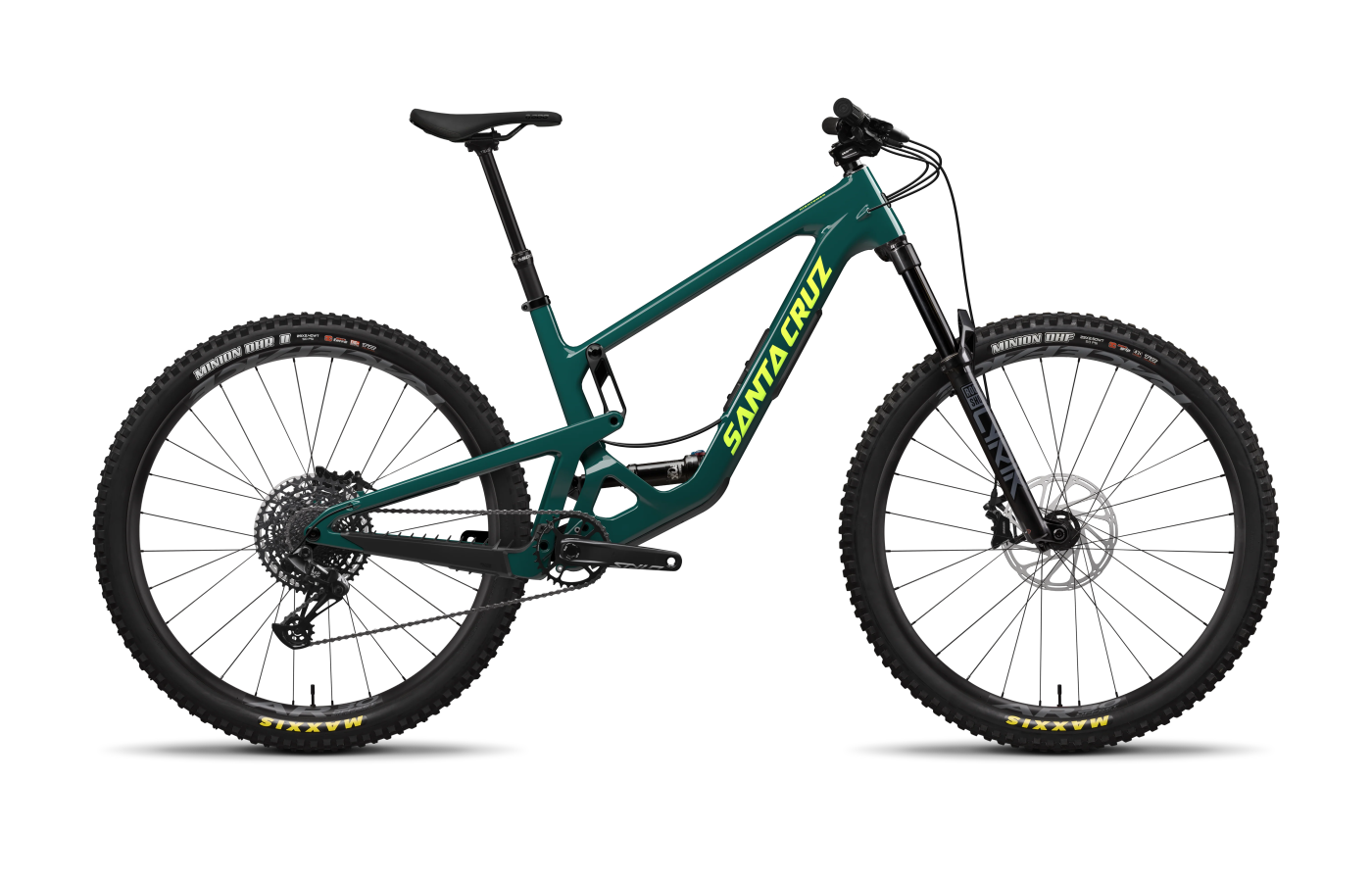
The Santa Cruz Hightower is the obvious cross-shop — 145 mm rear, 150 mm fork, VPP suspension, and a similar do-it-all pitch. Less tunable than the Stumpjumper, more polished and quieter than either.
Compare →
Ripmo AF
If the Switchblade's DW-Link feel is what you're after but the price ceiling is the deal-breaker, the Ibis Ripmo AF gets you the same family of suspension on an alloy frame for thousands less. Heavier, simpler, very loved by the Pinkbike commentariat.
Compare →
Fuel EX
Trek's Fuel EX is the third leg of the do-it-all stool, with a Mino Link flip chip, in-frame storage, and Trek's broad dealer network. Less flashy than the GENIE shock, more conventional than DW-Link, but consistently good across the lineup.
Compare →