Vault
vsStigmata
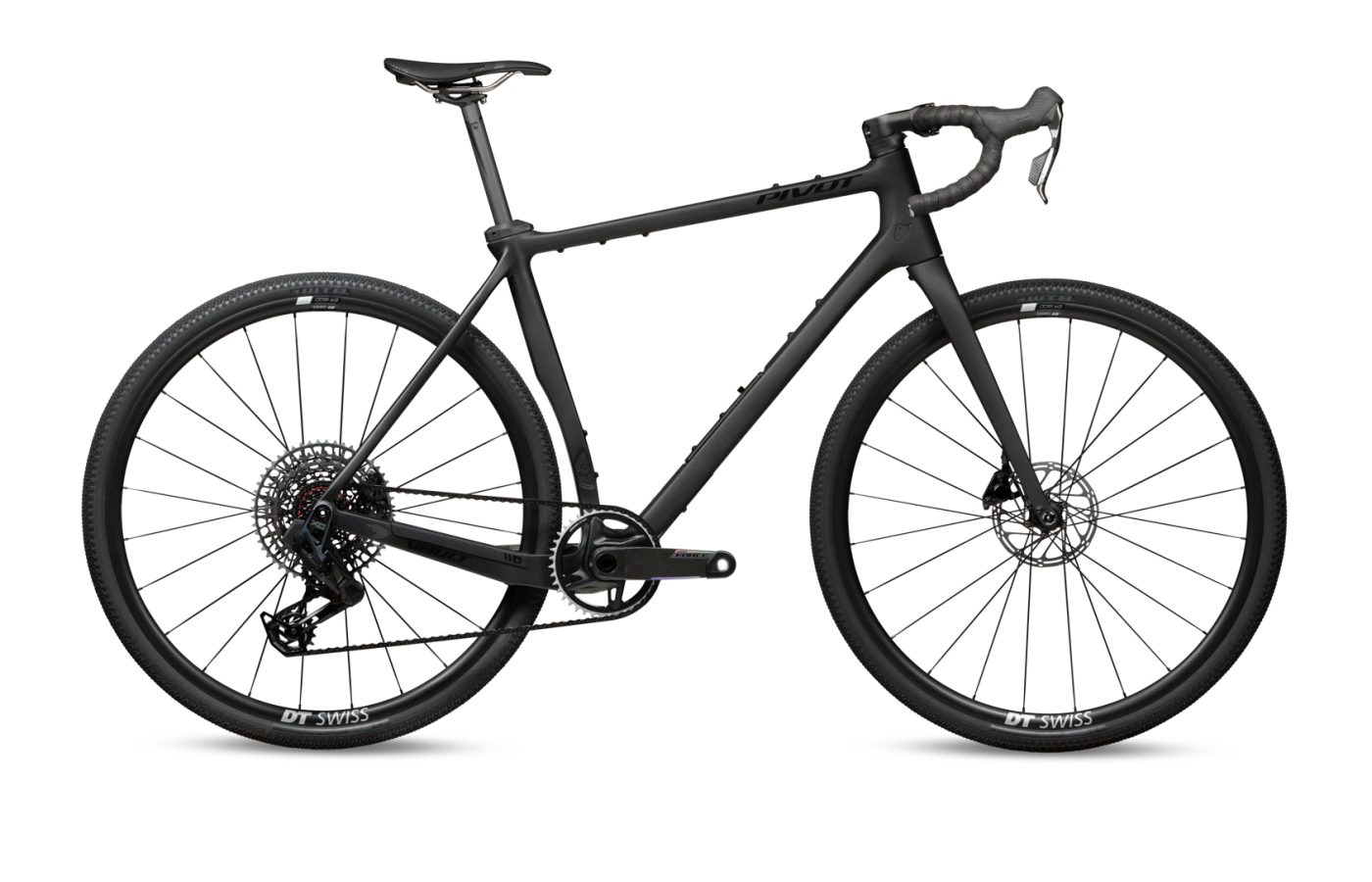
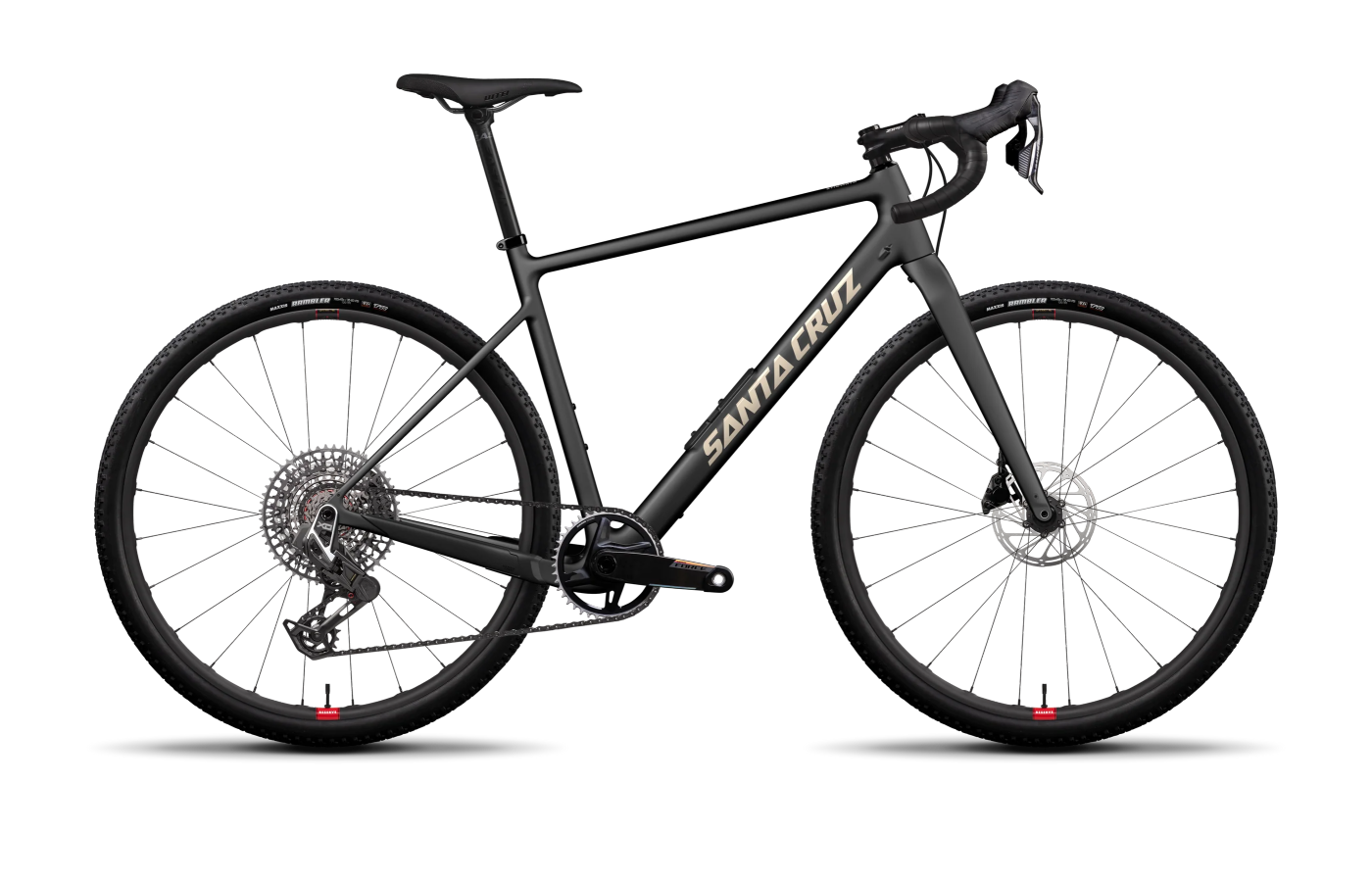
Two 50 mm-clearance gravel bikes, two very different intents.
The Vault is the modern, balanced adventure rig. The Stigmata is a drop-bar mountain bike that happens to race gravel.
Vault
- Lower price of entry — builds start at $4,199 for the SRAM Apex; the Stigmata range starts $850 higher.
- Lighter complete builds — reviewers put complete Vaults around 8.3 kg, versus 8.7 kg for the rigid Force-level Stigmata.
- Modern but balanced geometry — fast enough for Unbound, relaxed enough for a 10-hour bikepacking day.
- Stock 40 mm WTB Vulpine tires are widely panned; reviewers recommend an immediate swap to 45–50 mm rubber.
- BB386EVO press-fit bottom bracket versus the Stigmata's service-friendly BSA threaded shell.
Stigmata
- Descending confidence — a 69.5° head tube and 40 mm fork compatibility turn chunky terrain into a non-event.
- CC-only carbon, lifetime frame warranty — Santa Cruz skips the cheaper carbon grade every competitor sells.
- Service-friendly standards — BSA threaded BB, 27.2 mm round seatpost, side-entry cable routing that skips the headset entirely.
- ~$850 higher price-of-entry and a steeper jump to the Force-level builds.
- Slack geometry and heavier complete builds make it work harder on smooth tarmac.
Editor’s analysis
Same tire clearance, same category, same price ballpark — and yet these bikes are shaped for opposite ends of the gravel spectrum.
On paper the Pivot Vault and Santa Cruz Stigmata look like close siblings. Both are premium carbon gravel frames, both clear a true 50 mm tire, both ship with internal frame storage (Pivot's ToolShed, Santa Cruz's Glovebox), both use a 27.2 mm round seatpost, and both can be built with a SRAM Force AXS mullet drivetrain. Spend thirty seconds with the geometry charts, though, and the two diverge completely.
The Pivot Vault is Pivot's self-described move away from racy, cyclocross-tinged heritage toward a 'Goldilocks' adventure geometry. In the SM size, head tube angle is 70.4°, trail 69 mm, wheelbase 1,034 mm, chainstays a short 420 mm. Pivot's Iso Flex elastomer seatpost damper handles low-amplitude buzz; reviewers describe the bike as 'supremely comfortable' (Bike Rumor) and 'easy to live with' (Velo), with a frame that's quick, light (claimed sub-1,000 g bare frame; complete builds around 8.3 kg), and willing to be pushed without ever feeling on edge.
The Santa Cruz Stigmata is the mountain-bike company's drop-bar reinterpretation. In SM, head tube angle is 69.5°, wheelbase 1,043 mm, chainstays 423 mm, seat tube angle a steep 74° — the geometry of a modern hardtail with dropbars bolted on. Santa Cruz openly cut frame stiffness 10–12% versus the Gen 3, designed the front end around a 40 mm-travel fork (the RockShox Rudy is offered stock on the top build), and made the bike 'as aero as a Jeep' (Escape Collective). On chunky descents Velo called it 'the fastest descending gravel bike' they'd ridden; on pavement it demands deliberate inputs.
Put another way: the Pivot Vault is the bike for a rider whose mix is 70% gravel, 30% road — fast dirt, long days, occasional singletrack. The Santa Cruz Stigmata is for the rider whose mix is 70% dirt and 30% 'is this even a gravel road anymore?' The Vault rewards cadence and composure; the Stigmata rewards the kind of rider who owns a hardtail and wants one bike that does almost everything.
Where the builds differ.
Comparing our editor's-pick builds side-by-side. Winners highlighted row-by-row — lower price and weight, and the better-spec component, each mark a point.
Build variants & pricing
Both ranges top out with SRAM Force AXS mullet builds; the Vault opens $50 cheaper on an Apex mechanical build and scales up to $5,999, while the Stigmata runs from $4,149 to $7,549.
Prices are current US MSRP. The top-tier Stigmata Force 1x AXS RSV Rudy ($7,549) adds a RockShox Rudy 40 mm suspension fork and Reverb dropper — there's no suspension-corrected build in the Vault range to match it directly.
How they fit, how they steer.
Both compared at SM. The Stigmata sits 4 mm lower in stack with identical 390 mm reach, runs a 0.9° slacker head tube, 3 mm longer chainstays, and a 9 mm longer wheelbase — numbers closer to a short-travel hardtail than a road bike.
Which size should I buy?
Size recommendations based on stack, reach, and effective top tube. Both ranges overlap closely through the middle sizes; the Vault extends further down (XXS) for smaller riders.
→These are starting points. Flexibility, riding style, and preferred position all shift the answer — if you’re between sizes, a professional fit beats a chart.
What the magazines said.
Published reviews from trusted cycling outlets. Click through for the full write-up.
Which one should you buy?
If your gravel is fast and varied, get the Vault. If your gravel looks suspiciously like singletrack, get the Stigmata.
Vault
If you mix fire roads, light singletrack, paved transfers, and the occasional long-distance race like Unbound, the Vault is the sharper tool. Lighter, cheaper, composed across the full range of real-world gravel without ever feeling overbuilt.
Stigmata
If you want a gravel bike that can take a suspension fork, keeps its composure on chunder, and carries a lifetime frame warranty — the Stigmata is purpose-built for it. Accept the weight penalty and the tarmac compromise and you get one of the most confidence-inspiring off-road drop-bar bikes made.
Questions buyers actually ask.
Short answers to the things we get emailed about most often.
01Which is better for Unbound or long gravel races?
Both have real race pedigree — Keegan Swenson won Unbound 200 on a Stigmata. For most riders on most Unbound-style courses (fast, rolling, open gravel), the Pivot Vault is the more efficient choice: lighter complete build (around 8.3 kg vs 8.7 kg), more upright but still fast geometry, and an Iso Flex elastomer seatpost that damps chatter without robbing pedaling efficiency.
The Stigmata earns its keep when the course turns genuinely rough — think Mid South mud, BWR San Diego's chunder descents, or anywhere a suspension fork pays back its weight.
02Can I actually fit a 50 mm tire on both?
Yes. Both manufacturers rate the frame at 700c x 50 mm clearance. Multiple reviewers confirmed the real-world fit — Grava Adventure Co. ran 50 mm rubber on the Vault and praised the 'unparalleled confidence'; Santa Cruz spec'd 45 mm Maxxis Ramblers stock on every Stigmata build with room to spare.
Neither bike takes 650b wheels by spec, so the 50 mm 700c window is the upper bound.
03Which one climbs better?
The Pivot Vault, by a meaningful margin in most conditions. It's 300–400 g lighter in comparable builds, and its 70.4° head tube is less prone to the front-wheel wander that reviewers flagged on the Stigmata's slack 69.5° head tube during steep technical climbs.
That said, the Stigmata's 74° seat tube angle (vs the Vault's 73°) puts the rider further over the bottom bracket for efficient seated power — so on long, steady gradients, the difference shrinks.
04Can I run a suspension fork on either?
The Santa Cruz Stigmata is explicitly suspension-corrected for a 40 mm-travel fork (430 mm axle-to-crown), and the top build ships with a RockShox Rudy Ultimate XPLR. Reviewers report it transforms the bike's chunky-terrain composure.
The Pivot Vault is also suspension-corrected — Pivot spec'd the fork axle-to-crown at 415 mm, intended for 30–40 mm travel forks. But Pivot doesn't ship any suspension build, so you'd be sourcing the fork and paying for a new one.
05How serviceable are they?
The Stigmata is the easier bike to live with. It uses a standard 68 mm BSA threaded bottom bracket, a 27.2 mm round seatpost with an external collar, and cable routing that enters the side of the head tube instead of passing through the headset — so you can swap stems and handlebars without bleeding the brakes.
The Vault uses a BB386EVO press-fit bottom bracket (press-fit done right, by most accounts) and offers two routing options: fully internal through the headset, or a side-entry 'Pivot Cable Port' that mimics the Stigmata's approach. If ease of maintenance is a decision factor, the Stigmata wins outright.
06What's the price difference I should budget for?
The Stigmata's starting Apex build is $4,149 vs the Vault Pro Apex at $4,199 — nearly identical entry points. The gap opens up at the top: the priciest rigid Vault is the Team Force/X0 AXS at $5,999, while the comparable rigid Stigmata Force 1x AXS RSV is $6,849 (and the suspension-equipped Force 1x AXS RSV Rudy tops out at $7,549).
So roughly: similar entry point, $850 Santa Cruz premium at the Force-tier, and only Santa Cruz offers a stock suspension build.
07Will the stock tires hold me back?
On the Vault, yes — every major review flagged the stock 40 mm WTB Vulpine tires as undersized and uninspiring. Plan on swapping to a 45 mm or 50 mm tire immediately.
On the Stigmata, the 45 mm Maxxis Rambler is a sensible, well-regarded choice out of the box. Multiple reviewers kept them on for their entire test period.
08Which has a better warranty?
The Santa Cruz Stigmata — Santa Cruz offers a lifetime frame warranty to the original owner, which also extends to Reserve carbon wheels on builds that have them. Pivot offers a more conventional multi-year carbon frame warranty rather than a lifetime policy.
For a rider planning to keep a bike for a decade, that warranty gap is a real piece of the Stigmata's value story.
Similar bikes
If your priorities don’t map cleanly onto either of these, one of these adjacent bikes probably fits better.
Szepter
Drop-bar mountain bike taken even further — the YT Szepter ships with a real suspension fork as standard and leans harder into technical gravel than the Stigmata. If you loved the Stigmata's underbiking pitch but want more travel, this is the direct-to-consumer cousin.
Compare →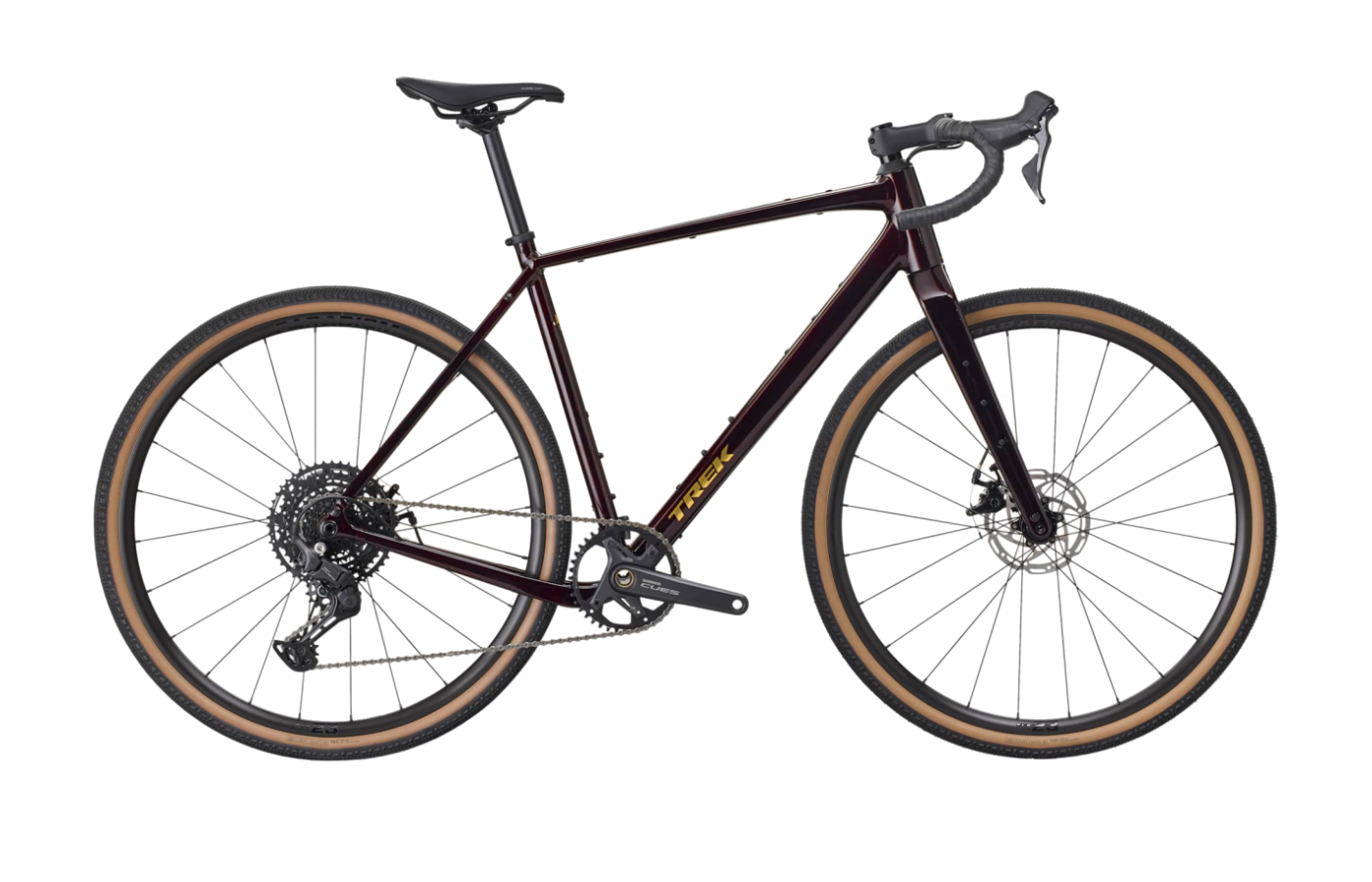
Checkpoint
Trek's answer to the all-day gravel brief — the Checkpoint pairs IsoSpeed rear compliance with progressive geometry, pitched squarely at the same long-distance-comfort rider the Pivot Vault chases.
Compare →Grizl
Canyon's adventure-first gravel bike at direct-to-consumer pricing — big tire clearance, mounts for days, and optional suspension-fork builds. The catch, as always with Canyon, is no local dealer and no pre-purchase demo.
Compare →