Vault
vsCheckpoint
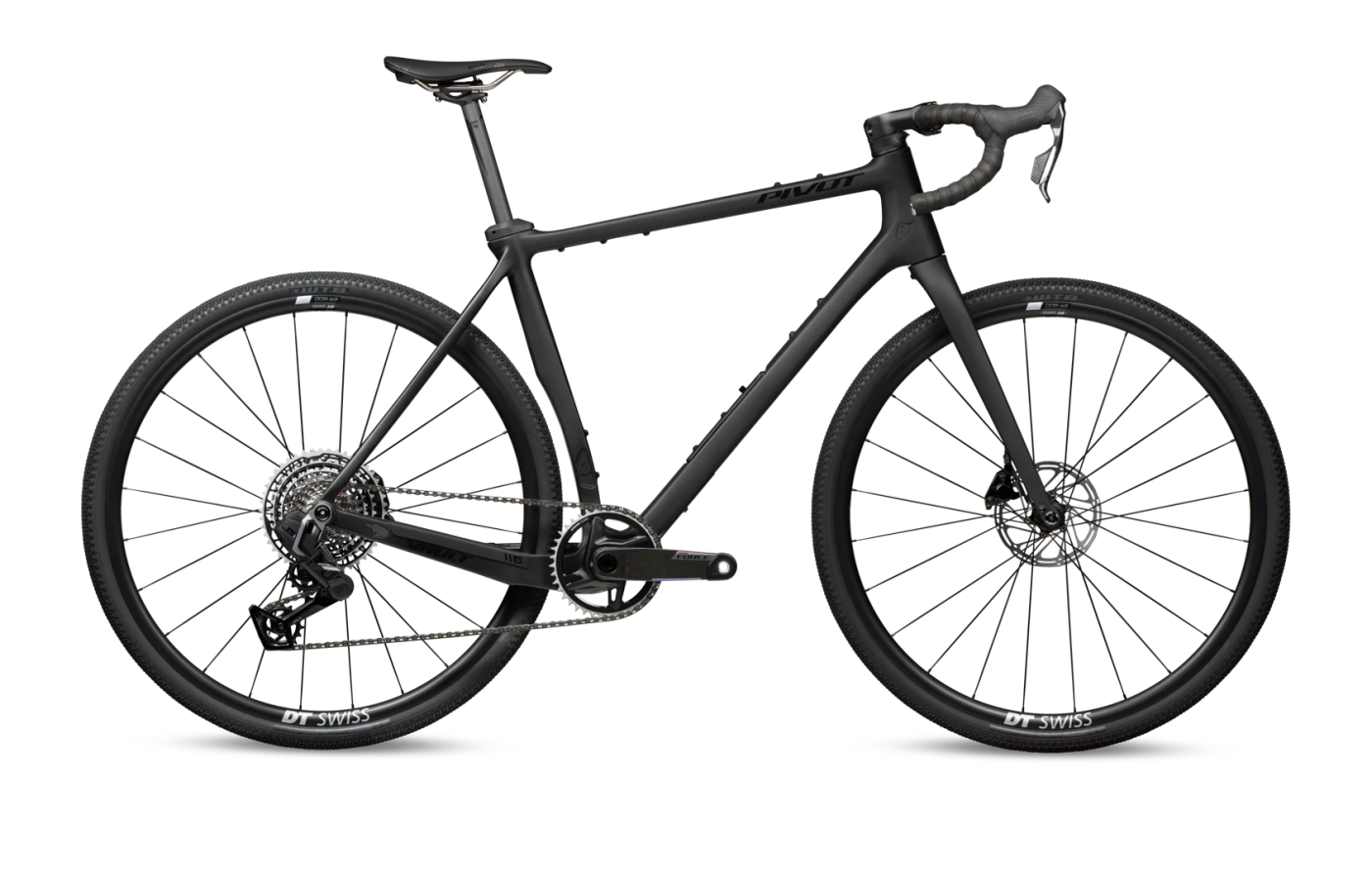
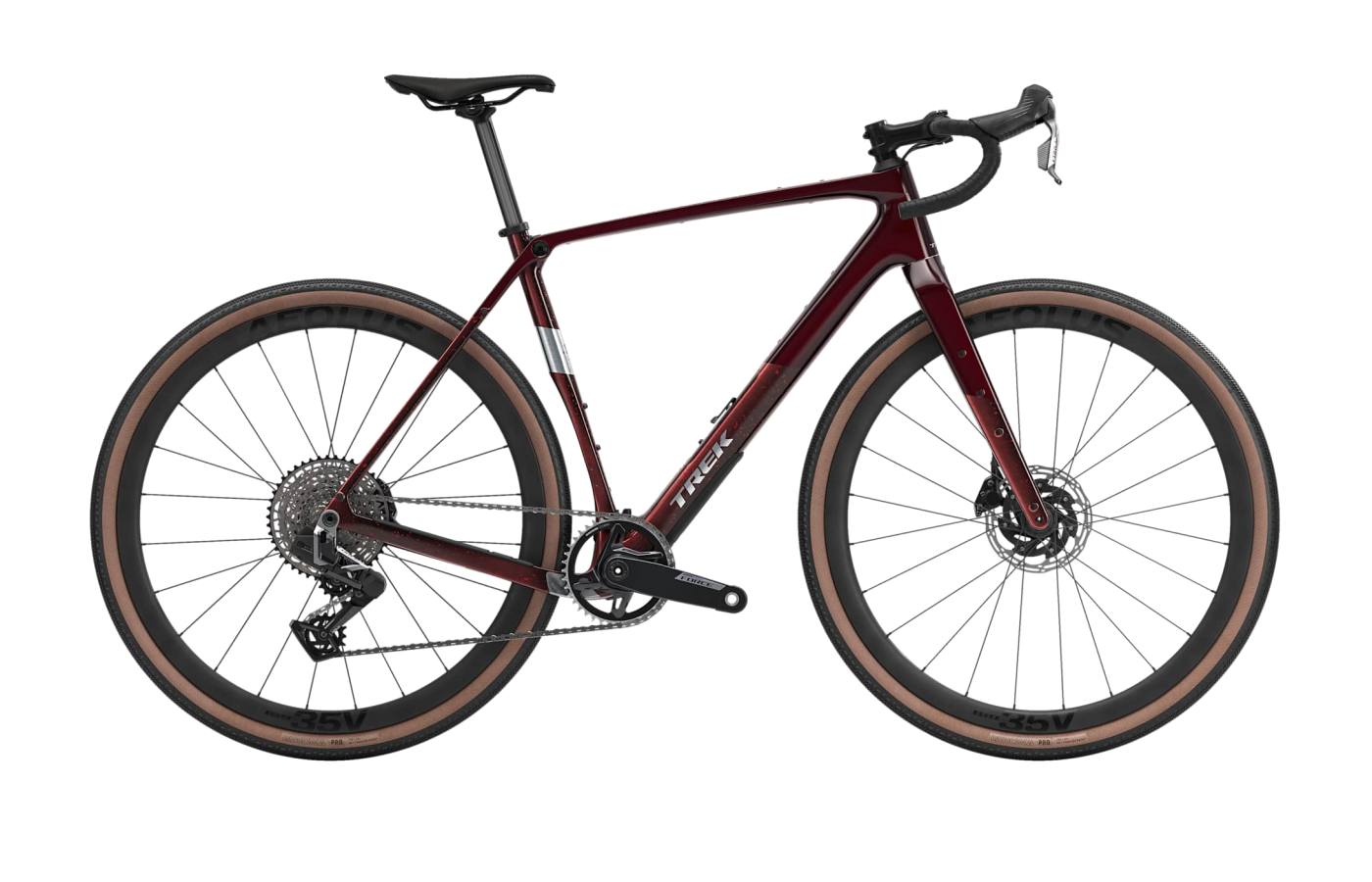
Two adventure-gravel bikes, two routes to comfort.
The Pivot Vault leans on a hidden elastomer and wide-tire compliance. The Trek Checkpoint counters with a rear-end decoupler and the broadest price ladder in the class.
Vault
- Short 420 mm chainstays across every size — uncommon for a 50 mm-clearance frame, and the rear end stays nimble.
- Iso Flex compliance is invisible and saddle-height-stable — reviewers call it subtle but effective.
- Premium carbon throughout — sub-1 kg claimed frame weight, custom layup scaled per size for stiffness.
- No aluminum or budget option — entry build is $4,199.
- Stock 40 mm WTB Vulpine tires get nearly universal 'swap immediately' reviews.
Checkpoint
- Six-build range from $1,599 to $6,499 — same geometry and 50 mm clearance from alloy to carbon.
- IsoSpeed decoupler on SL models — a visible, serviceable rear-end pivot that calms washboard chatter.
- Trek dealer network and a lifetime OCLV frame warranty — the easiest gravel platform to live with long-term.
- Headset cable routing makes mechanical-shift cable swaps expensive on lower builds.
- Stock tires are fast on hardpack but felt 'out of their depth' in mud by multiple reviewers.
Editor’s analysis
Both bikes clear a 50 mm tire and both promise all-day comfortable — they just take very different roads to get there.
On paper the Pivot Vault and Trek Checkpoint look like twins: 50 mm tire clearance, sub-1 kg-class carbon flagships, integrated frame storage, UDH-ready drivetrains, fender and rack mounts everywhere. Both have shed the racy DNA of their previous generations and chased the modern endurance-gravel rider — long days, mixed surfaces, the occasional bikepacking weekend.
Pivot's approach is structural. The Vault hides an Iso Flex elastomer inside an elongated seat tube, scales carbon stiffness across sizes, and runs a 27.2 mm seatpost for natural compliance. Geometry is composed but still tight — 420 mm chainstays across every size, a slacker 70.4 head angle in size SM, and a 1034 mm wheelbase that reviewers describe as planted without being a limousine. It's a premium platform with a premium price floor: $4,199 to enter, $5,999 at the top, and no aluminum option at all.
The Checkpoint's compliance is mechanical. The IsoSpeed decoupler at the seat tube/top tube junction lets the seatpost flex independently — visible, serviceable, and according to reviewers, more felt over washboard than the Vault's quieter elastomer. Geometry is steeper (71.4 head angle in size S, 430 mm chainstays) and slightly more upright. The real story is the build ladder: Trek will sell you a Checkpoint from $1,599 (CUES on aluminum) all the way to $6,499 (Force AXS on OCLV carbon). The aluminum ALR keeps the same geometry, the same 50 mm clearance, the same UDH — just trades IsoSpeed for $4k of savings.
Put simply: the Pivot Vault is a one-tier carbon platform that asks you to commit. The Trek Checkpoint is a six-build range that asks how much you want to spend. If you've already decided you want carbon and you ride hard enough to feel a 5 mm shorter chainstay, the Vault is the more focused tool. If you want one bike that scales — or you're looking under $3k — the Checkpoint is the only real conversation.
Where the builds differ.
Comparing our editor's-pick builds side-by-side. Winners highlighted row-by-row — lower price and weight, and the better-spec component, each mark a point.
Build variants & pricing
The Vault is a four-build carbon range starting at $4,199. The Checkpoint stretches from a $1,599 CUES alloy build all the way to a $6,499 Force AXS carbon flagship.
Prices are current US MSRP. The Vault has no aluminum or sub-$4k option — if your budget is under $3k, the Trek ALR range is the only real choice between these two.
How they fit, how they steer.
Pivot Vault SM vs Trek Checkpoint S — the fit-picked sizes for a 5'8" rider on each. The Vault sits 12 mm taller in stack with a 1-degree slacker head angle, 10 mm shorter chainstays, and a 12 mm longer wheelbase — composed but with a quicker rear end.
Which size should I buy?
Sizes are picked by stack, reach, and effective top tube. The Vault offers six sizes from XXS to XL; the Checkpoint runs XS to XL with an extra ML in the middle for sizing-on-the-line riders.
→These are starting points. Flexibility, riding style, and preferred position all shift the answer — if you’re between sizes, a professional fit beats a chart.
What the magazines said.
Published reviews from trusted cycling outlets. Click through for the full write-up.
Which one should you buy?
If you want one premium carbon platform optimized end-to-end, get the Pivot Vault. If you want options — budget, alloy, or carbon — get the Trek Checkpoint.
Vault
If you're in for the long haul on a carbon adventure-gravel bike — Unbound training, multi-day bikepacking, the kind of rider who upgrades wheels first and frames last — the Vault is the more focused tool. Short chainstays and Iso Flex give it a character the Checkpoint can't quite match.
Checkpoint
If you want one gravel bike that can be a $1,599 commuter, a $2,299 alloy adventure rig, or a $6,499 race-ready carbon flyer — and you value Trek's dealer network and lifetime warranty — the Checkpoint is the most flexible buy in the segment.
Questions buyers actually ask.
Short answers to the things we get emailed about most often.
01Which bike has more tire clearance?
Both clear 700c x 50 mm, with the same official maximum. Reviewers of both bikes recommend running closer to the maximum than the stock spec — the Vault ships with 40 mm WTB Vulpines and the Checkpoint with 42 mm Bontrager Gironas, and in both cases moving up to 45–50 mm rubber transformed the ride.
If you want a true big-tire setup out of the box, neither stock build delivers it — plan for a tire swap on either bike.
02How does Iso Flex compare to IsoSpeed?
They solve the same problem (high-frequency vibration at the saddle) very differently.
The Pivot Vault's Iso Flex hides an elastomer sleeve inside an elongated seat tube around a 27.2 mm post. Reviewers describe it as subtle — saddle height never changes, and it 'never feels like a suspension seatpost.'
The Trek Checkpoint's IsoSpeed decouples the seat tube from the top tube with a visible mechanical pivot, letting the post flex backward over hits. Reviewers call it more pronounced over washboard.
The Vault's system is quieter and more invisible; the Checkpoint's is more felt. Note that only the carbon Checkpoint SL has IsoSpeed — the aluminum ALR builds rely on tire pressure for compliance.
03Is the Pivot Vault worth nearly twice as much as a Trek Checkpoint ALR?
Depends on what you want from the bike. The Pivot Vault Pro Apex starts at $4,199; the Trek Checkpoint ALR 3 starts at $1,599 — a $2,600 gap. For that you get a carbon frame (vs aluminum), Iso Flex compliance, and Pivot's premium-tier finish quality.
The ALR retains the same geometry, the same 50 mm tire clearance, the same UDH drivetrain compatibility — and reviewers consistently praise it as one of the best sub-$2k gravel platforms available. If you don't specifically need a carbon frame, the ALR is one of the strongest value plays in the category.
04Which has shorter chainstays?
The Pivot Vault — 420 mm across every frame size. The Trek Checkpoint runs 430 mm, also across every size.
That 10 mm difference shows up in low-speed handling: reviewers describe the Vault as nimble enough to creep over technical terrain even with its long wheelbase, while the Checkpoint feels more planted but slightly less maneuverable in tight turns. Pivot achieves the short stays despite the same 50 mm tire clearance, which is unusual — most adventure-gravel frames stretch out the rear to fit big rubber.
05Can I run a dropper post on either?
Yes on both, with caveats.
The Pivot Vault uses a 27.2 mm seatpost — dropper options at that diameter exist (Fox Transfer SL, PNW Rainier 27.2) but the selection is limited and travel tops out around 90–125 mm.
The Trek Checkpoint also accepts dropper posts, and Trek explicitly markets the Gen 3 frame as dropper-compatible. The Checkpoint accommodates a wider range of post diameters and travel options.
Neither is a mountain bike — but for technical gravel where a few inches of drop matters, both work.
06Which has better in-frame storage?
The Trek Checkpoint wins this clearly on the SL builds. Reviewers describe Trek's downtube storage door as well-designed, secure, and rattle-free, with generous internal volume and a useful BITS bag system.
The Pivot Vault's ToolShed is described by reviewers as functional but a 'tight squeeze,' with one source noting the bottle cage mount screw lacks a seal and 'will likely leak in sustained rain.' It's adequate for a tubeless repair kit but not much beyond that.
Note that in-frame storage on the Checkpoint is SL-only — the ALR aluminum builds don't get it.
07Are both compatible with 2x drivetrains?
Yes. Both frames support 1x or 2x setups, mechanical or electronic groupsets. Pivot specifies that the Vault frame retains a removable front derailleur mount, and Trek's Checkpoint Gen 3 frame keeps the same flexibility.
In practice, every stock build of both bikes ships 1x — neither brand offers a 2x build off the rack, so a 2x conversion is an aftermarket project on either platform.
08What about the warranty?
Trek offers a lifetime warranty on all OCLV carbon frames to the original owner — one of the strongest in the industry — plus a generous crash-replacement program through their dealer network.
Pivot offers a lifetime frame warranty against manufacturing defects to the original owner as well, with a separate crash-replacement program. Pivot's dealer network is much smaller than Trek's, which can matter for service turnaround in less-populated regions.
Similar bikes
If your priorities don’t map cleanly onto either of these, one of these adjacent bikes probably fits better.
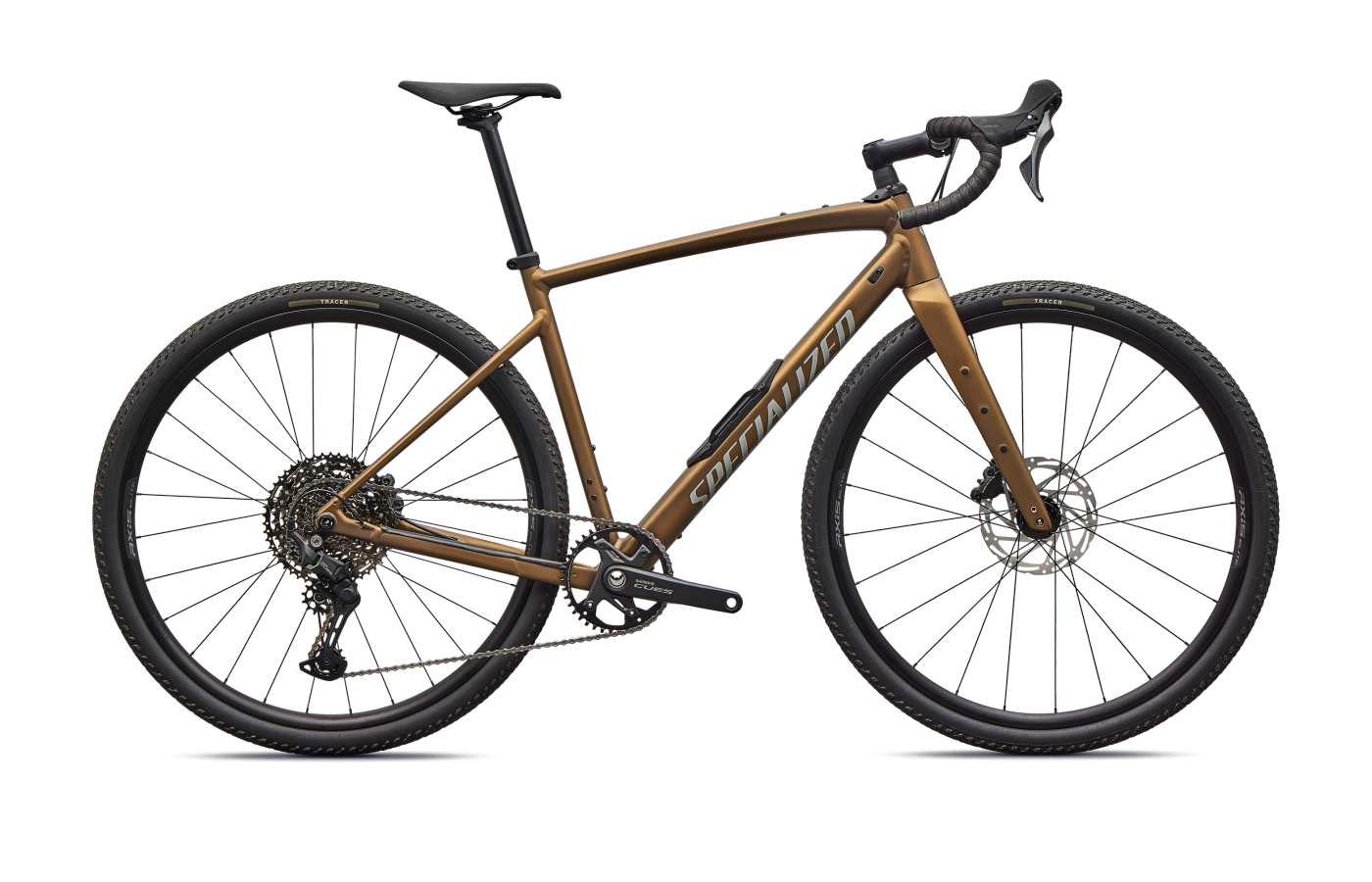
Diverge
The Specialized Diverge takes the comfort idea even further with the Future Shock head-tube damper — front-end suspension you can feel, not just an elastomer sleeve. If the Vault's Iso Flex sounds too subtle and the Checkpoint's IsoSpeed sounds too rear-only, the Diverge is the third option.
Compare →Grizl
Canyon's Grizl is the direct-to-consumer adventure play — even more mounts, comparable tire clearance, and roughly 20–30% less money than the Trek SL builds. The catch is no dealer support and no demos before you buy.
Compare →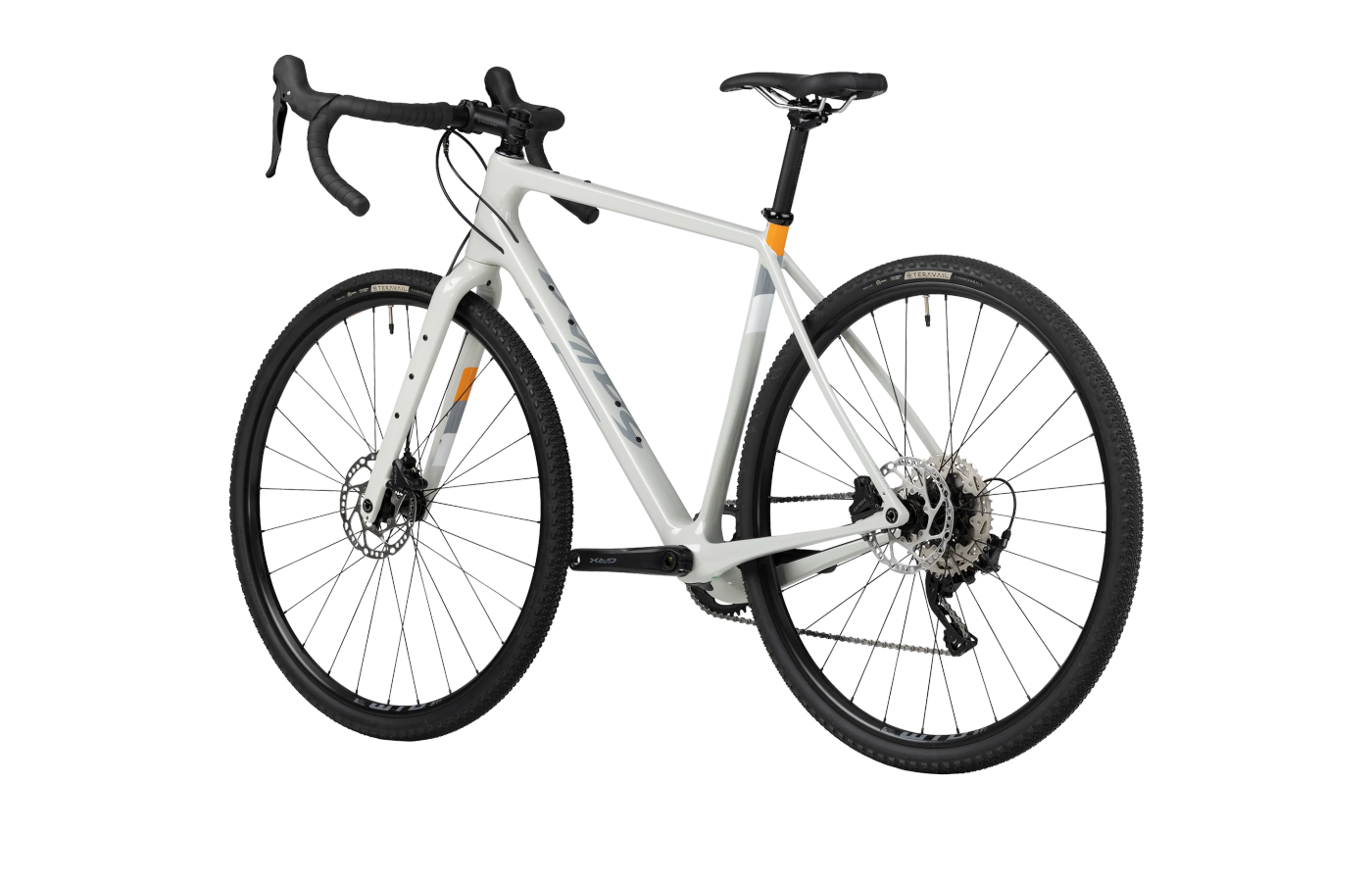
Warbird
Salsa's Warbird is the endurance-race specialist — purpose-built for long, fast gravel days, with handling biased toward speed maintenance over technical maneuvering. Worth a look if Unbound is the goal and adventure storage matters less than getting to the finish.
Compare →