Hugene
vsHightower
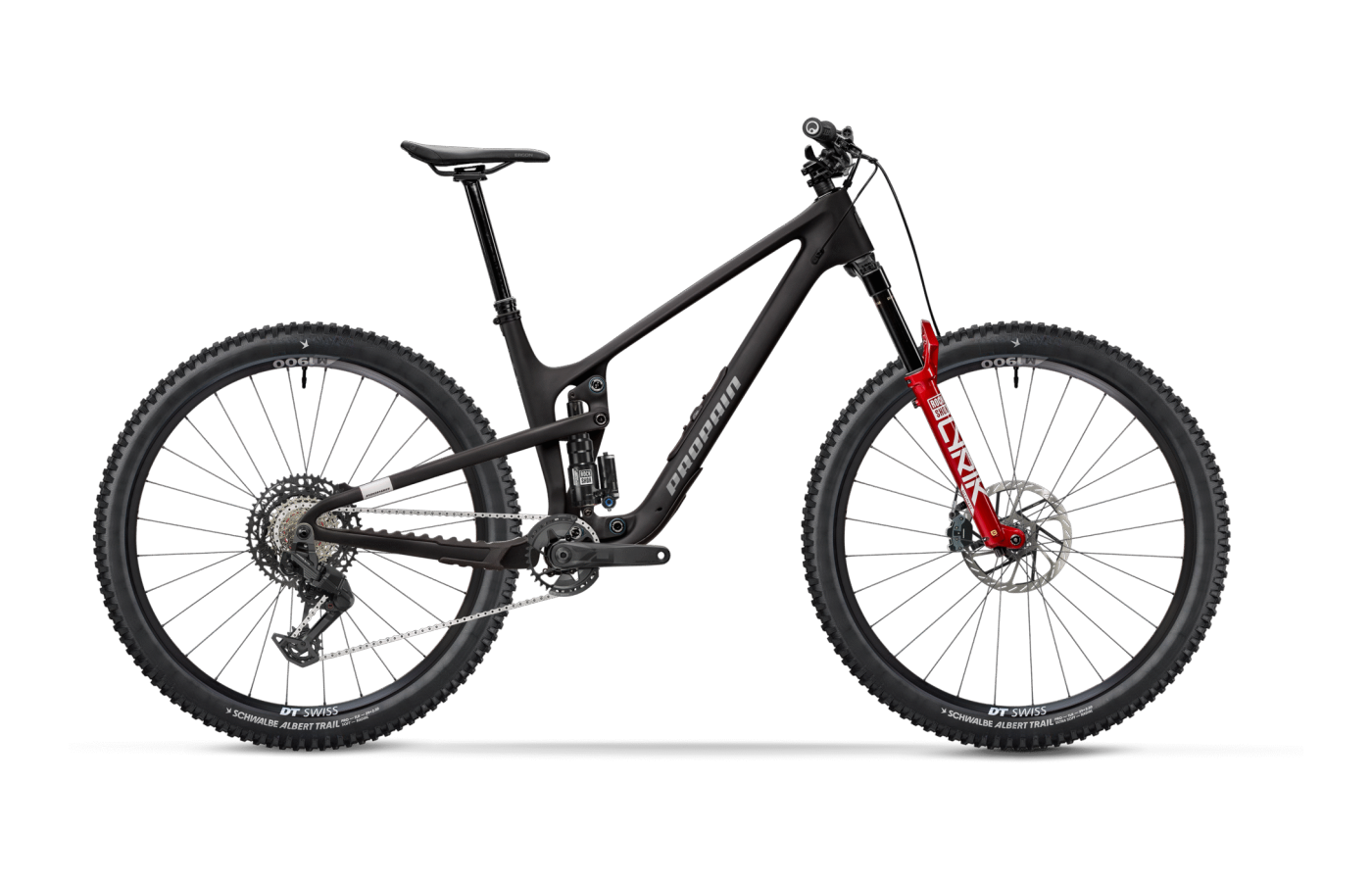
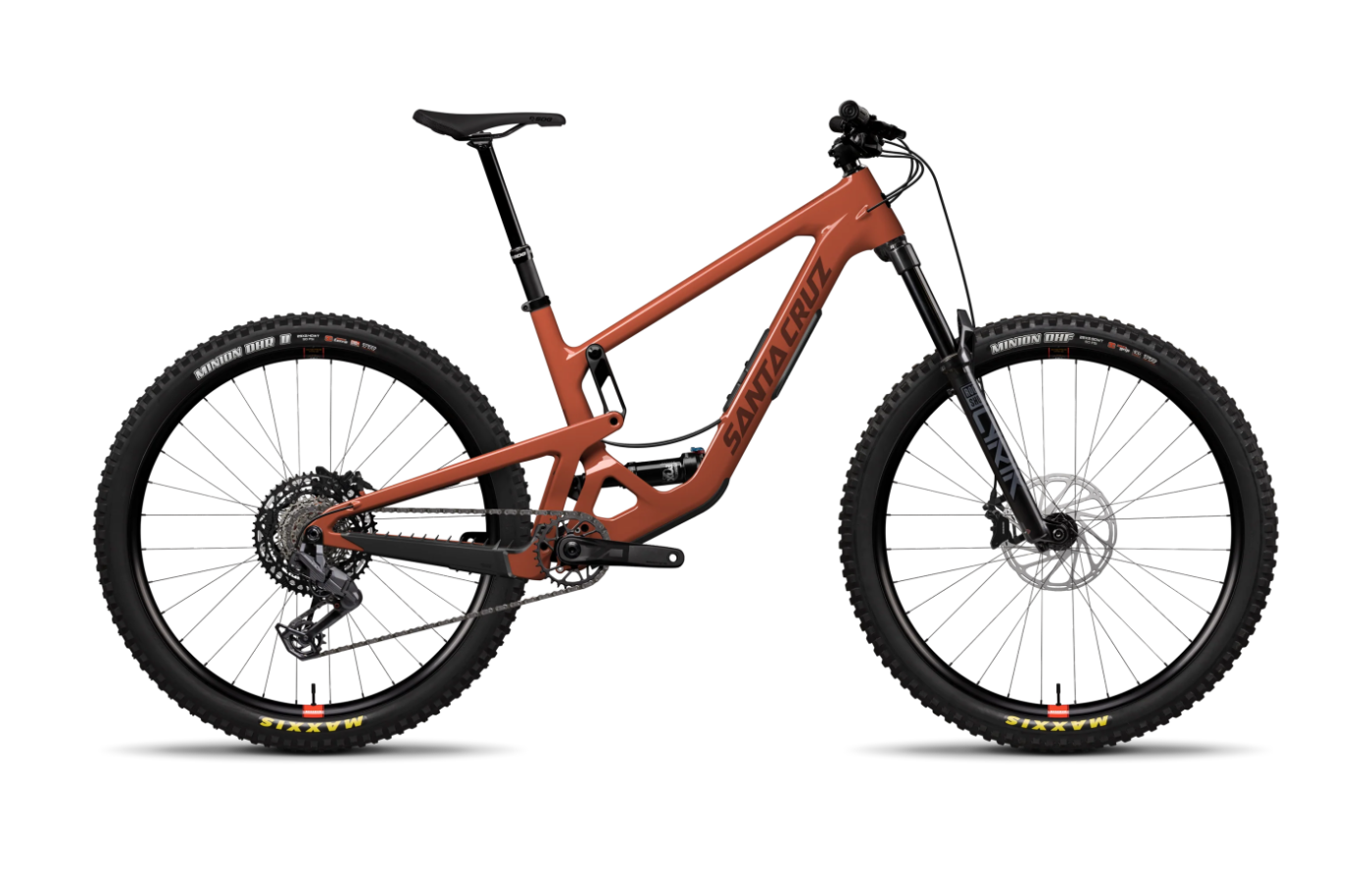
Two trail bikes pulling in opposite directions.
The Hugene 3 cut travel to chase playful efficiency. The Hightower V4 added travel to chase enduro composure. Same category, opposite bets.
Hugene
- Lighter, livelier feel — 130/140 mm travel and high anti-squat make it 'snappy and responsive' under power, with reviewers noting it 'holds a line at speed beautifully' for its travel class.
- Direct-to-consumer pricing — a full-carbon Lyrik Ultimate / Super Deluxe Ultimate build for $5,299, well under what equivalent suspension costs from dealer brands.
- Configurable spec — Propain's web configurator lets you swap shock, drivetrain, brakes, and bars before the bike ships, so you don't pay for parts you'd immediately replace.
- Hits its ceiling on sustained rough descents — reviewers call the rear 'not particularly forgiving when things get rough.'
- Low front end (632 mm stack at size M) puts pressure on the hands on steep, technical terrain.
Hightower
- Best-in-class descending composure — 150/160 mm travel, 64.2-degree HTA, and active VPP rear end let it 'mute the chatter and rough better than all of the bikes in the category' (Bebikes).
- Lifetime frame, bearing, and Reserve rim warranty — a tangible long-term offset to the higher upfront price, plus user-serviceable collet pivots with grease ports.
- Genuine technical-climbing ability — steep 77.9-degree effective seat tube and reduced anti-squat keep the rear wheel 'glued to the ground' on rooty, loose ascents.
- Heavier and slower to accelerate — high-end builds land at 14.4–15.7 kg, and the 'Santa Cruz tax' shows in every price tier.
- Long wheelbase (1,237 mm at size M) and tall front end can feel cumbersome in tight, slow corners.
Editor’s analysis
Both call themselves trail bikes — but one shrank to get sharper, the other grew to get gnarlier.
Most mid-travel bikes have crept upward over the last decade — the Hightower itself launched as a 135 mm bike and now runs 150 mm rear, 160 mm front. The Propain Hugene 3 is the rare bike that went the other way. Propain shaved 10 mm off both ends to land at 130/140, then slacked the head angle to 64.8 degrees and steepened the seat tube to 77.5. The result is a 130 mm bike that reviewers say 'punches above its weight' on flow trails but clearly signals when it's reached its ceiling.
The Santa Cruz Hightower V4 went the opposite direction. With 150 mm rear travel, a 160 mm fork, a 64.2-degree head angle, and a 1,237 mm wheelbase at size M, it has migrated into what reviewers consistently call 'mini-enduro' territory. The revised VPP suspension drops anti-squat for plusher small-bump compliance — Bike Perfect calls it 'noticeably smoother than the V3 in terms of foot feel' — at the cost of snappy acceleration. It's a stable sled that rewards aggressive descenders and punishes apathetic ones.
The component story diverges just as sharply as the geometry. Propain's direct-to-consumer model puts a full-carbon frame with stainless-bearing pivots, downtube storage, and a Lyrik Ultimate / Super Deluxe Ultimate suspension package on the table for $5,299. Santa Cruz's lifetime-warranty, dealer-supported business model means the Hightower's cheapest carbon build starts at $4,999 — and a comparable Lyrik-equipped spec lands at $5,149 with a heavier C-grade frame and shorter dropper. The Hugene buys you more suspension for the dollar; the Hightower buys you more bike, and a warranty net.
Put another way: the Hugene is the bike you pick when your trails are flowy, you like to pump and pop, and you'd rather upgrade components than carry travel you don't use. The Hightower is the bike you pick when your trails point steeply down, you ride them fast, and you want one bike that can handle both an alpine epic and a bike-park lap without flinching.
Where the builds differ.
Comparing our editor's-pick builds side-by-side. Winners highlighted row-by-row — lower price and weight, and the better-spec component, each mark a point.
Build variants & pricing
The Hugene tops out at $5,299; the Hightower scales from $4,999 to $11,399 across nine builds. Both editor's picks land within $150 of each other for an apples-to-apples spec comparison.
Propain only sells the Hugene direct, with two pre-configured Signature builds plus a web configurator for custom specs. Santa Cruz sells through dealers and offers a much wider build ladder — including XX AXS and XTR Di2 builds at $11,399 that the Hugene lineup doesn't reach.
How they fit, how they steer.
Both at size M — the fit-picked size for a 5'8" rider on each bike. The Hightower sits 11 mm taller in stack with 2 mm more reach and a 0.6-degree slacker head angle; the Hugene's 9 mm shorter chainstays and lower bottom bracket give it the more agile, 'in-the-bike' feel.
Which size should I buy?
Size labels match across both ranges (S/M/L/XL), with the Hightower adding an XXL at the top end. The Hugene's M and L sit a touch shorter in reach than the corresponding Hightower sizes.
→These are starting points. Flexibility, riding style, and preferred position all shift the answer — if you’re between sizes, a professional fit beats a chart.
What the magazines said.
Published reviews from trusted cycling outlets. Click through for the full write-up.
Which one should you buy?
If you want a playful, efficient bike for flow trails and value, get the Hugene. If you live for rough descents and want a one-bike quiver with a lifetime warranty, get the Hightower.
Hugene
If your trails reward an active style — pumping, popping, carving — and you'd rather have efficient, lighter-feeling 130 mm travel than carry 150 mm you rarely use, the Hugene is the sharper tool. The configurable spec and direct-to-consumer pricing put a serious carbon build within reach for the price of a mid-tier dealer bike.
Hightower
If your trails point steeply down and you ride them fast, the Hightower's longer wheelbase, slacker geometry, and active VPP rear end will let you straight-line sections that would have you picking lines on the Hugene. The lifetime warranty and dealer support are the long-term sweetener.
Questions buyers actually ask.
Short answers to the things we get emailed about most often.
01Which descends better in rough terrain?
The Santa Cruz Hightower, by a clear margin. With 150 mm of rear travel and a 160 mm fork against the Hugene's 130/140, plus a 0.6-degree slacker head angle and a longer wheelbase, the Hightower is built to absorb sustained chunder. Reviewers consistently note it 'mutes the chatter' and feels 'planted' at speed.
The Hugene can hold its own on flowy descents and even short rough sections — NSMB says it 'swallows high-speed chunder as well as many bikes with 10–15 mm more travel' — but it telegraphs its limits when the descent gets long, steep, and relentless. Pinkbike found the rear suspension 'not particularly forgiving when things get rough.'
02Which climbs better?
It depends on the climb. On smooth fire roads or rolling singletrack, the Hugene wins — high anti-squat in the PRO10 suspension makes it 'snappy and responsive' under power, and it doesn't need a climb switch. NSMB calls it 'businesslike' on ascents.
On steep, rooty technical climbs, the Hightower has the edge. Santa Cruz deliberately reduced anti-squat in the V4 to keep the rear wheel 'glued to the ground' for traction. The trade-off is a slight pedal bob that the climb switch on the Fox Float X can mute when you want pure efficiency.
03How much do they weigh?
Enduro MTB measured a Hugene 3 CF at 15.3 kg in size L (€6,519 build with gravity-oriented tires). Propain claims a 2.8 kg frame in size M. Reviewers consistently note the bike feels heavier than its travel suggests, largely because of robust tires and DT Swiss alloy wheels.
The Hightower V4 ranges from 14.4 kg (XX AXS RSV, $11,399) to 15.7 kg (R, $4,999) for complete builds. The CC carbon frame is roughly 3.7 kg; the C-grade frame on the editor's-pick 70 build adds about 200 g. Neither bike is a lightweight — both prioritize durability over feathery weight.
04How do the suspension platforms compare?
Propain PRO10 is a Suzuki Full-Floater-inspired dual-link design with high anti-squat (above 100% across most of the travel) and a solidly progressive leverage curve. That means efficient pedaling and good bottom-out resistance, but the progression can feel ramp-y — NSMB's long-term tester swapped the stock Marzocchi shock for a RockShox Super Deluxe Ultimate to get better mid-stroke and supple small-bump feel.
Santa Cruz VPP in the V4 was retuned with lower anti-squat and a lower, more forward shock placement. The result is more active suspension, less pedal kickback, and a plusher feel in chunder — at the cost of some climbing efficiency. Both bikes are coil-shock compatible if you want to lean further into descending.
05What's the build quality and warranty story?
The Hugene uses a full-carbon front and rear triangle (including the upper linkage), stainless-steel pivot bearings with secondary 'Dirtshield' seals, a threaded BB, and downtube storage. Propain's standard frame warranty applies. As a direct-to-consumer brand, you don't have a local dealer for service — bigger repairs go back to Propain.
The Hightower offers a lifetime warranty on the frame, pivot bearings, and Reserve carbon rims to the original owner. Pivots are user-serviceable with a grease-injection port. The Glovebox internal storage is widely considered one of the best-executed in the market. Service through any Santa Cruz dealer.
06Why pick the Hugene Signature Spec 2 and Hightower 70 for the comparison?
Both run SRAM Eagle 70 cable T-Type drivetrains and RockShox Lyrik forks, the closest spec match available across the two lineups. Prices land within $150 of each other ($5,299 vs $5,149). The Hugene's full-carbon frame and Lyrik Ultimate / Super Deluxe Ultimate suspension package are higher-tier than the Hightower 70's Lyrik Base / Float Rhythm, but the Hightower brings a Carbon C frame with the lifetime warranty.
Higher up the Hightower ladder you get GX, X0, XX, and XTR builds that the Hugene lineup doesn't reach. If you want SRAM AXS wireless or Shimano XTR Di2, the Hightower is the only choice.
07Can I configure either to my exact spec?
Propain is built around configuration — the web configurator lets you choose suspension, drivetrain, brakes, wheels, bars, stem, and even decals before the bike ships. Reviewers call out small targeted upgrades (a $125 shock swap, a $260 Shimano XT shifting upgrade) as the smart way to use the system.
Santa Cruz sells nine fixed builds with no factory customization. Dealers will sometimes swap parts at the point of sale; otherwise you're upgrading after the fact. The two-tier carbon (CC for wireless-only, C for cable-compatible) is the closest thing to a configuration choice in the lineup.
08Which is better for occasional bike-park use?
The Hightower, comfortably. Its 150/160 mm travel, 64.2-degree head angle, and longer wheelbase are built for the sustained impacts and high speeds of lift-served terrain. It comes with EXO+ rear casing and Maxxis MaxxGrip front rubber on most builds.
The Hugene can survive a park day if you're picking smoother lines, but you'll hit its travel limits and the frame will start protesting on big repeated hits. Reviewers are explicit that it's 'not a mini-enduro.' For a bike-park-friendly trail bike, the Hightower is the right tool.
Similar bikes
If your priorities don’t map cleanly onto either of these, one of these adjacent bikes probably fits better.
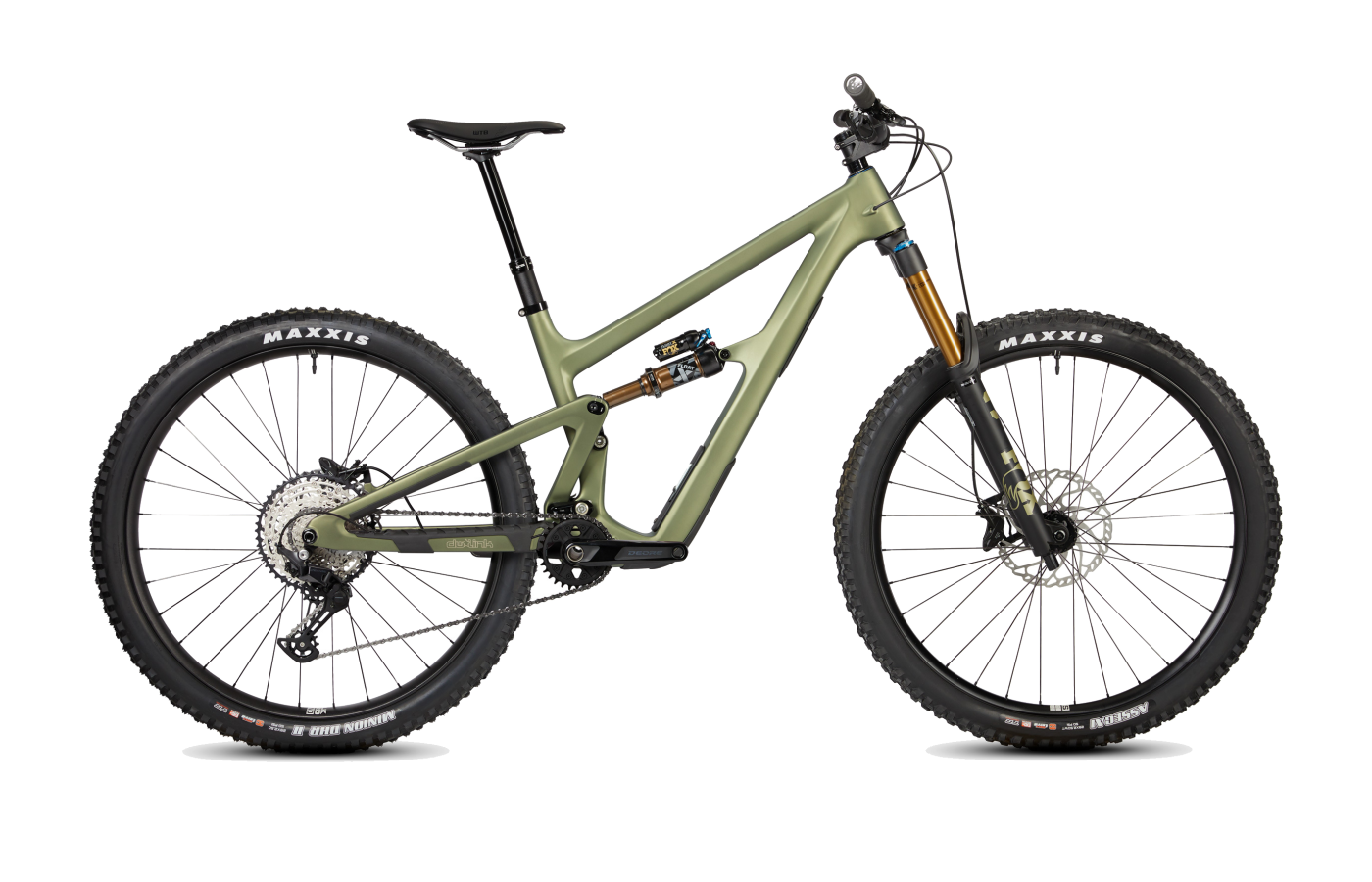
Ripmo
The Ibis Ripmo splits the difference — 147 mm rear, 160 mm front, with reviewers calling it the snappier-climbing alternative to the Hightower at a similar price point. If you want Hightower-class descending without the weight penalty.
Compare →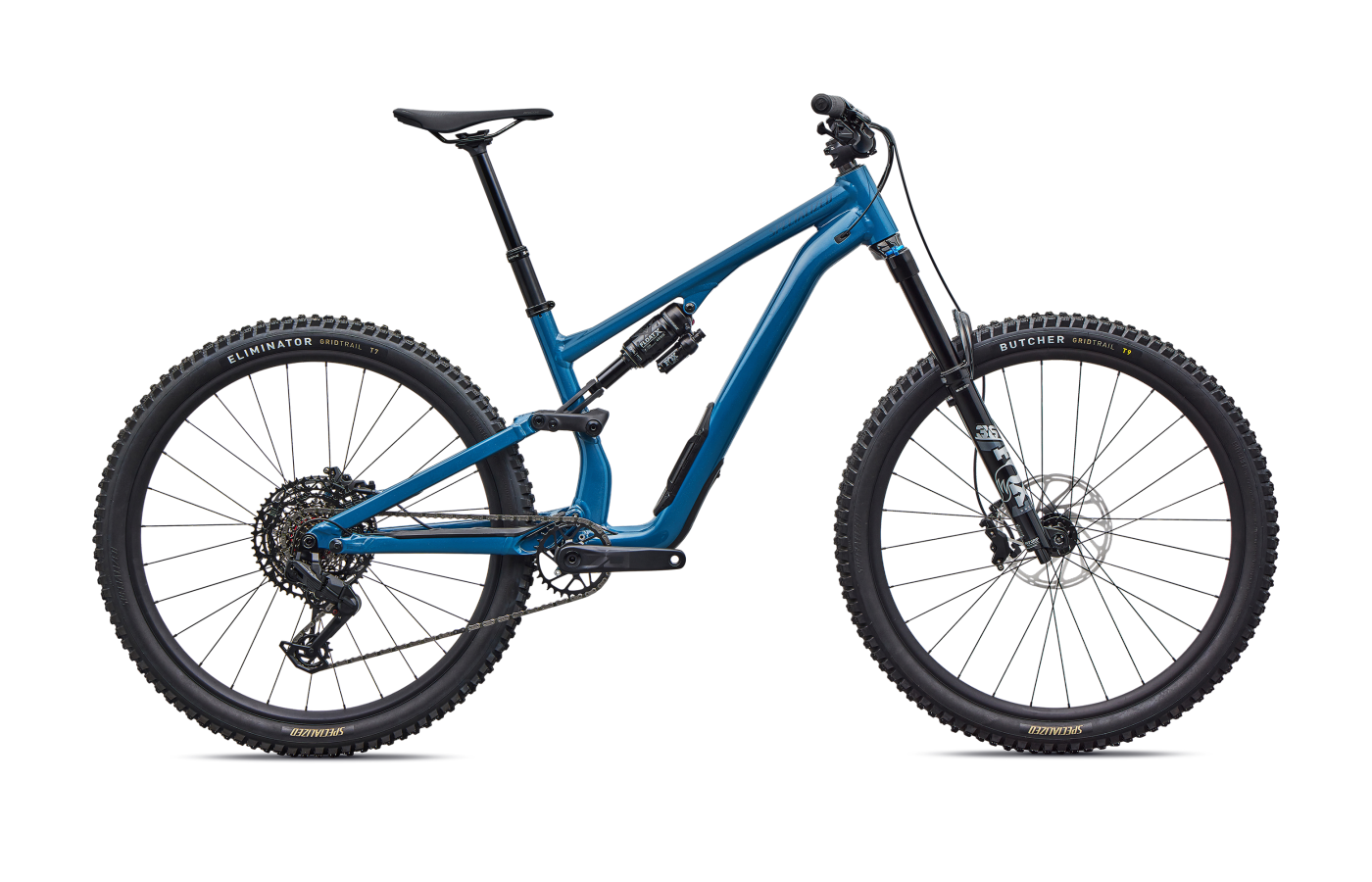
Stumpjumper Evo
The Specialized Stumpjumper Evo is the adjustability play — flip-chips and headset cups let you tune head angle, BB drop, and reach. If you want one bike that can mimic both the Hugene's poppy character and the Hightower's plowing capability.
Compare →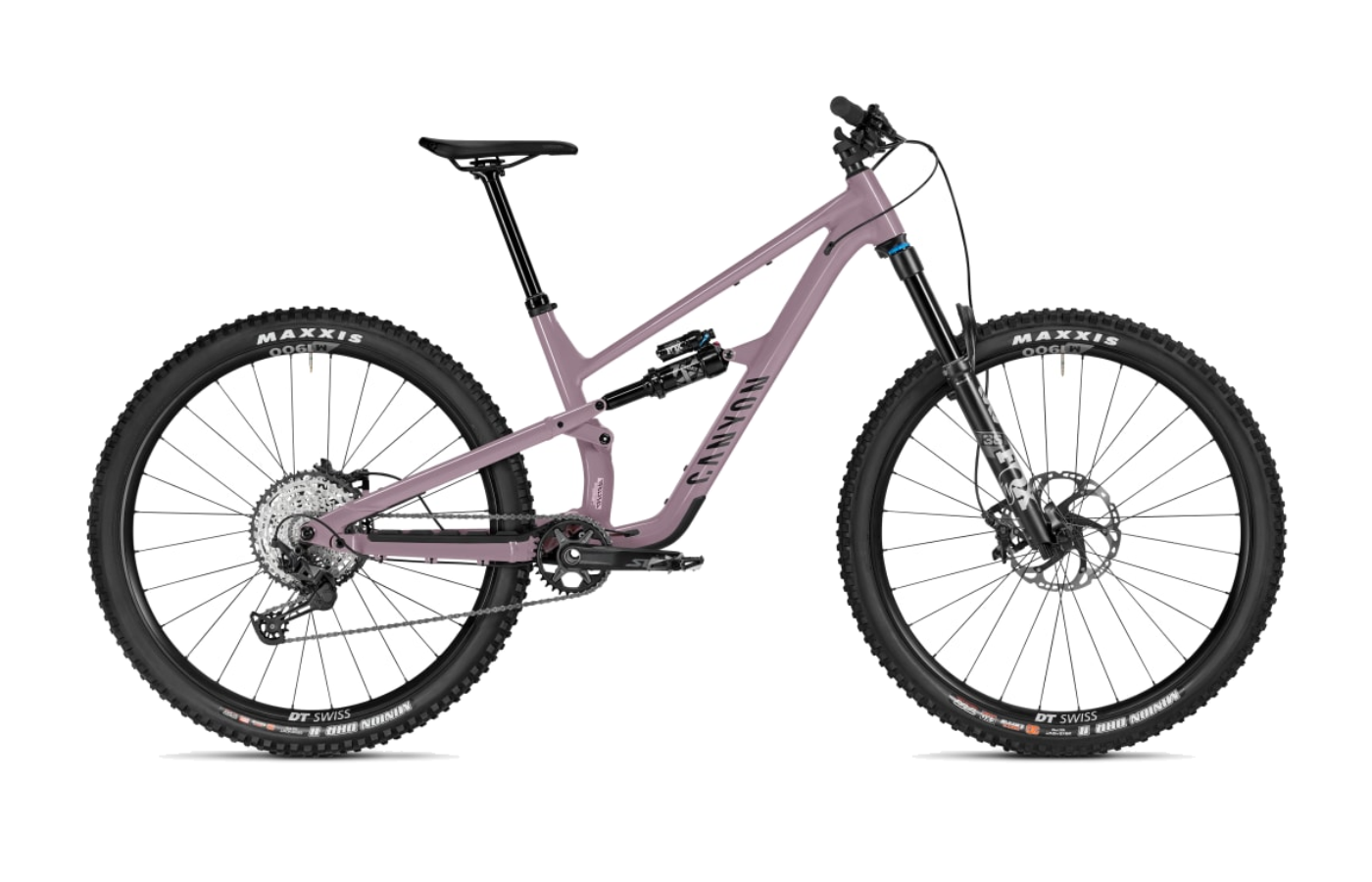
Spectral
The Canyon Spectral is the direct-to-consumer comp for the Hightower — similar travel and aggressive trail intent at meaningfully less money. Same DTC trade-offs as Propain: no dealer, no demos, you have to know your fit.
Compare →