Hugene
vsStumpjumper
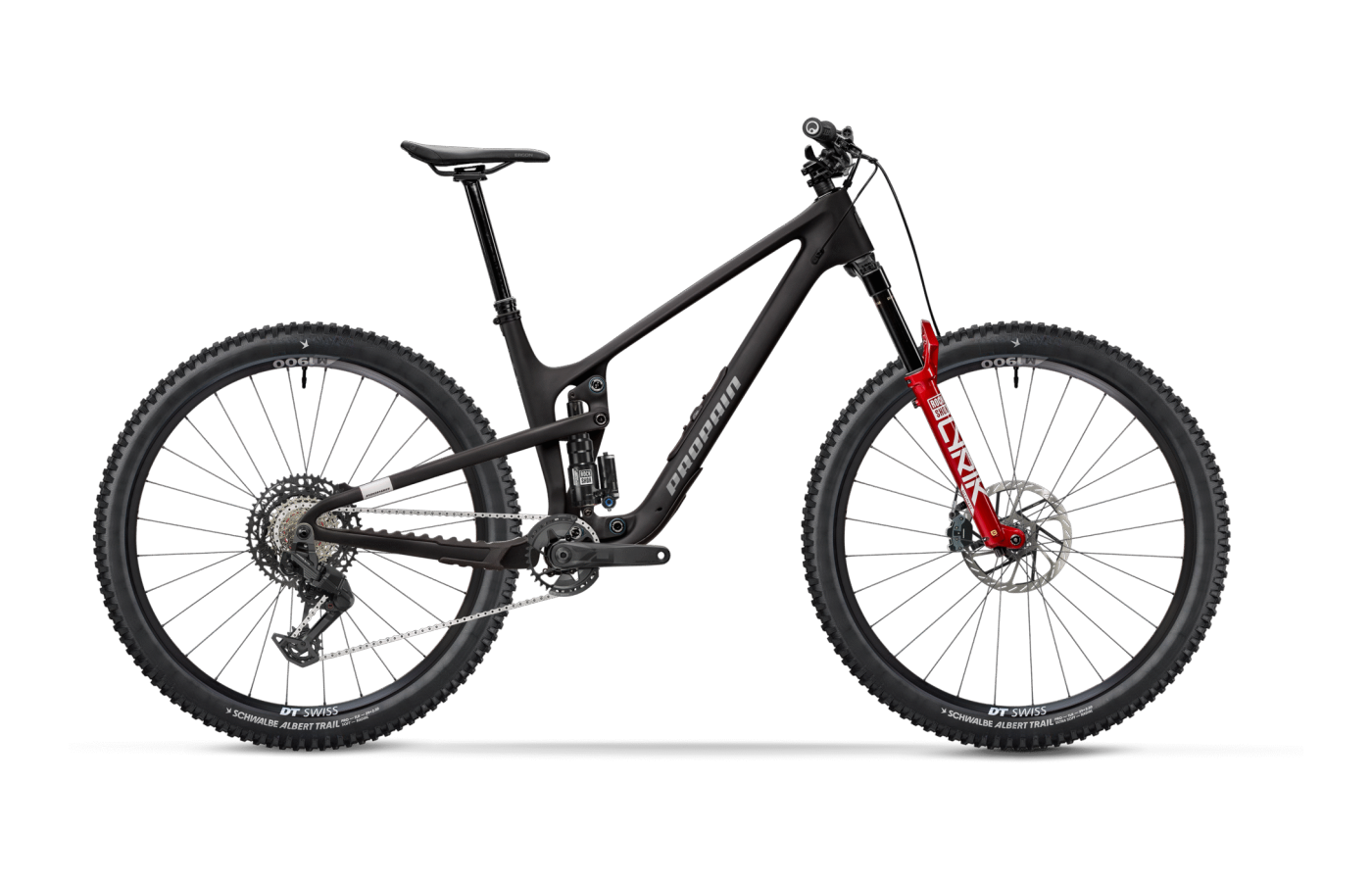
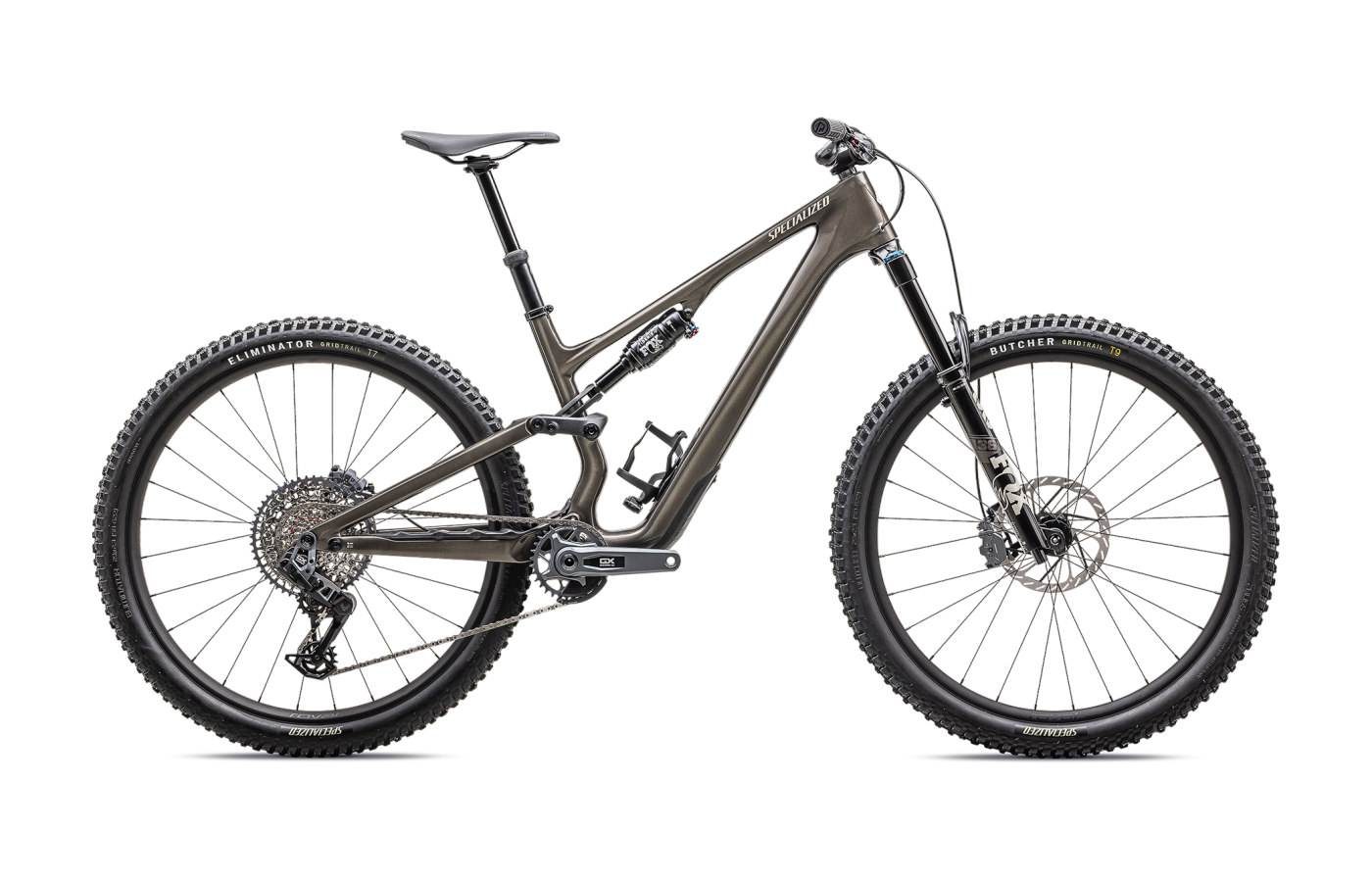
Two trail bikes, two philosophies.
The Hugene 3 is a short-travel, direct-to-consumer ripper tuned for pop and efficiency. The Stumpjumper 15 is a tech-heavy, endlessly adjustable do-everything platform.
Hugene
- Direct-to-consumer pricing — the complete range tops out at $5,299, below what a Stumpjumper 15 Expert costs.
- Efficient, poppy ride — high anti-squat and progressive leverage reward pumping, jumping, and out-of-saddle efforts.
- Long, stable geometry — 445 mm chainstays across every size and a 64.8-degree head angle hold a line at speed better than the travel suggests.
- Fixed geometry — no flip chip, no headset cups, no mullet conversion.
- Pedal feedback on chunky seated climbs is real; Pinkbike called it "juddery."
Stumpjumper
- GENIE shock traction — coil-like small-bump sensitivity keeps the rear tire glued on technical climbs and chattery descents.
- Adjustable geometry — eccentric headset cups plus flip chip span a 2.5-degree head-angle range and mixed-wheel compatibility.
- Nine-build lineup — from a $2,999 alloy entry to $11,999 S-Works LTD, there's a Stumpjumper at almost every budget.
- Carbon frames are wireless-only — no routing for mechanical drivetrains.
- Proprietary GENIE shock raises long-term parts and resale questions.
Editor’s analysis
This isn't a better-or-worse fight. It's a question of how you want your trail bike to feel — mechanical and snappy, or plush and cosseting.
On paper these look like the same bike: 29-inch wheels, carbon main triangle, sub-65-degree head angles, seat tubes above 77 degrees, roughly 30-plus-pound complete weights. Both land squarely in the mid-travel trail bracket. But spend time with the numbers and the two platforms pull in opposite directions almost immediately.
The Propain Hugene runs 130 mm rear and 140 mm front — 15 mm less total travel than the Stumpjumper — with a PRO10 suspension design that NSMB describes as "high anti-squat" and "solidly progressive." That's code for efficient and poppy. Reviewers across Enduro MTB, NSMB, and Mtb-news consistently call it "snappy," "playful," and "punches above its weight," and price it aggressively: the entire Hugene range is $3,999 to $5,299, and it's direct-to-consumer only.
The Specialized Stumpjumper 15 runs 145 mm rear and 150 mm front with the proprietary Fox GENIE dual-chamber air shock — plush and "coil-like" for the first 70% of travel, then ramping hard to resist bottom-out. Reviewers like Flow Mountain Bike say they "never hit full travel despite awful line choices." Adjustable geometry (eccentric headset cups, flip chip) means the head angle can range from 63 degrees slack to 65.5 degrees steep. The range is $2,999 for entry alloy up to $11,999 for the S-Works LTD.
Put another way: the Hugene is the bike you buy when you want to feel the trail and pay less to do it. The Stumpjumper is the bike you buy when you want one platform that can be tuned from flow-trail scalpel to enduro-capable chunder-eater, and you accept the premium that comes with that bandwidth.
Where the builds differ.
Comparing our editor's-pick builds side-by-side. Winners highlighted row-by-row — lower price and weight, and the better-spec component, each mark a point.
Build variants & pricing
Propain's lineup tops out where Specialized's middle starts — the Stumpjumper spans four times the price range.
Prices are current US MSRP. Propain sells direct-to-consumer only through their online configurator; Specialized sells through a global dealer network. Propain's full configurator often exposes higher-tier suspension and drivetrain options beyond the two pre-configured Signature Specs shown here.
How they fit, how they steer.
Hugene size M vs Stumpjumper S3 — the fit-picked sizes for a 5'8" rider. The Hugene runs 8 mm more reach (458 vs 450), 10 mm longer chainstays (445 vs 435), and a half-degree steeper seat tube (77.5° vs 77°). The Stumpjumper is slacker at 64.5° in its mid setting versus 64.8° fixed on the Hugene.
Which size should I buy?
Propain offers four sizes (S–XL); Specialized uses its own S1–S6 system spread over a wider reach range. Both cover most adult riders, but Specialized extends further at both ends.
→These are starting points. Flexibility, riding style, and preferred position all shift the answer — if you’re between sizes, a professional fit beats a chart.
What the magazines said.
Published reviews from trusted cycling outlets. Click through for the full write-up.
Which one should you buy?
If you want a poppy, efficient trail ripper at a direct-to-consumer price, get the Hugene. If you want one bike that tunes from flow to enduro with dealer support, get the Stumpjumper.
Hugene
If your local trails are flow, berms, and side-hits where you pump for speed rather than plow through it, the Hugene's efficient PRO10 platform and active ride will feel like money well spent. Direct-to-consumer pricing seals the deal for value-conscious buyers.
Stumpjumper
If you want one bike that handles everything from technical climbs to bike-park days — and you value small-bump traction, internal frame storage, and a dealer network — the Stumpjumper's GENIE shock and adjustable geometry are unmatched in the segment.
Questions buyers actually ask.
Short answers to the things we get emailed about most often.
01Which climbs better on technical terrain?
The Stumpjumper 15, by most accounts. The GENIE shock's supple initial stroke keeps the rear tire tracking over roots and rocks where the Hugene's higher anti-squat can feel "juddery" — Pinkbike's words — on bumpy seated climbs. Specialized claims a 57% traction improvement over the previous Stumpjumper, and reviewers across The Loam Wolf, Flow, and Singletracks echo that the rear end "hugs the ground" on technical ascents.
The Hugene is more efficient on smooth climbs and fire roads — its 77.5-degree seat tube and high anti-squat mean it "scoots forward with a businesslike urgency" (NSMB). But on chunky, rooty, traction-limited climbs, the Stumpjumper's GENIE-equipped rear end is the better tool.
02Which descends better?
Depends on the terrain. On flow trails, berms, and jumps, reviewers consistently prefer the Hugene — its progressive kinematic and firmer mid-stroke reward pumping and popping. NSMB said it "swallows high-speed chunder as well as many bikes with 10-15 mm more travel."
On sustained, rough, enduro-style descents, the Stumpjumper 15 has the advantage. Its extra 15 mm of rear travel, plusher mid-stroke, and geometry adjustability let it go deeper into aggressive terrain. Pinkbike called it "not particularly forgiving when things get rough" on the Hugene; the Stumpy has no such limit within its travel bracket.
03How different are the geometries?
More similar than you might expect, then different in ways that matter. At size M (Hugene) vs S3 (Stumpjumper): reach is 458 vs 450 mm, stack is 621 vs 627 mm, chainstay is 445 vs 435 mm, head angle is 64.8 vs 64.5 degrees (Stumpy mid setting), seat tube is 77.5 vs 77 degrees.
The bigger geometry story is adjustability. The Stumpjumper has eccentric headset cups (63° / 64.5° / 65.5° HTA) and a flip chip for the rear end. The Hugene is fixed — what you see on the geo chart is what you ride.
04How serviceable is the Stumpjumper's GENIE shock?
Specialized says the GENIE uses standard Fox Float internals with one additional seal, so any Fox-trained suspension shop can service it. That's been borne out in most reviews — Flow Mountain Bike reported no issues in ten months of testing.
The concern is long-term parts availability. A proprietary dual-chamber design means if Specialized stops supporting it, aftermarket shock options become limited by the frame's non-linear kinematic. Pinkbike commenters flagged this as a potential "solution in search of a problem." You can technically swap in a standard 210x55 mm shock, but you'd lose the GENIE's specific ramp tuning.
05What about build quality and durability?
Both frames are carbon and both come with thoughtful protection — the Hugene has stainless bearings with Propain's Dirtshield secondary seals, a threaded BB, UDH compatibility, ISCG tabs, and a downtube storage compartment. The Stumpjumper matches most of that with its SWAT 4.0 storage, threaded BB, and adds a lifetime frame warranty plus lifetime pivot bearing replacement for the original owner.
Stock wheelsets are the weak link on both. Propain's DT Swiss M 1900 aluminum wheels are robust but heavy. Specialized's stock alloy Rovals on the Expert and lower have been called "twangy" and "under-gunned" by multiple reviewers — riders pushing the bike hard often upgrade.
06Can I buy either of these with mechanical shifting?
Partially. The Hugene 3 CF ships with SRAM Eagle 70 Transmission on both Signature Spec builds, which is SRAM's cable-actuated T-Type system — mechanical-adjacent but still a Transmission setup. Propain's configurator (not fully reflected in the pre-configured Signature Specs) typically offers Shimano XT mechanical as an upgrade option.
The carbon Stumpjumper 15 is wireless-only — the FACT 11m frame has no cable routing for mechanical derailleurs. The alloy Stumpjumper 15 ($2,999 to $5,499) retains mechanical routing and ships with Shimano Deore or SLX on most builds. If you want a carbon Stumpjumper with Shimano mechanical, you're out of luck.
07Which is the better value?
On a dollars-per-feature basis, the Hugene. A $5,299 Signature Spec 2 gets you RockShox Lyrik Ultimate up front, SRAM Eagle 70 Transmission, and a full carbon frame — roughly comparable in spec to a Stumpjumper 15 Expert at $5,999. Direct-to-consumer has no local dealer markup.
But value isn't just spec-per-dollar. The Stumpjumper's dealer network, lifetime frame warranty, SWAT storage, and geometry adjustability add real long-term value for riders who use them. And the $2,999 alloy Stumpjumper is a budget option Propain simply doesn't offer.
08Which is more mod-friendly?
The Stumpjumper is explicitly designed for modification — flip chip for mullet, eccentric headset cups for HTA, fork travel can be bumped to 160 mm for a more enduro-flavored build, and there's an aftermarket mullet link available.
The Hugene is less flexible in hardware but infinitely flexible in purchase. Propain's online configurator lets you swap suspension brands, drivetrain tier, brake spec, wheel build, and even frame color before the bike ships — so the "mod" happens at checkout rather than after. Once assembled, the frame itself has no geometry adjustments.
Similar bikes
If your priorities don’t map cleanly onto either of these, one of these adjacent bikes probably fits better.
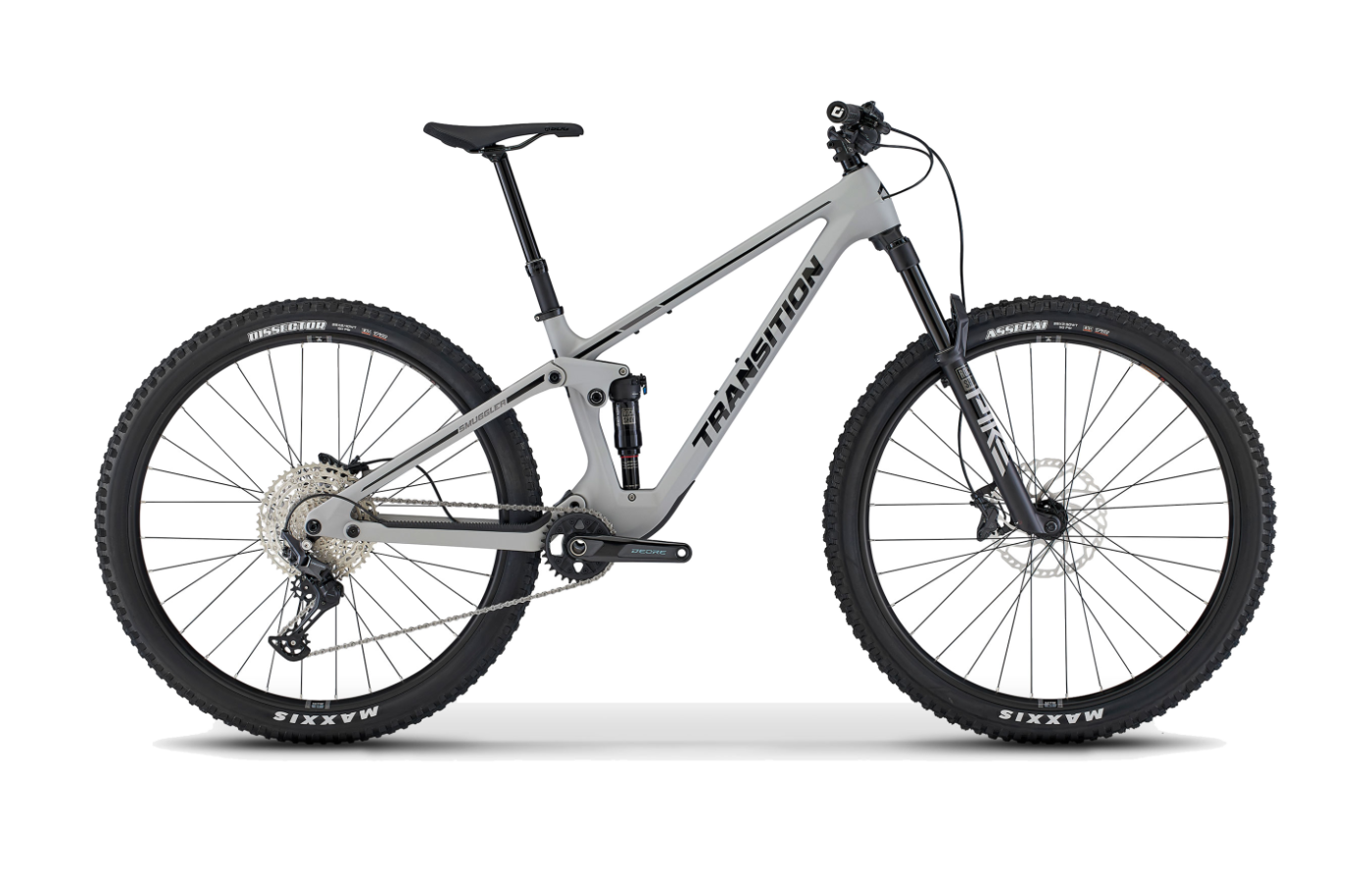
Smuggler
Near-identical travel and geometry to the Hugene but with a more composed, tractable climbing feel. Trade some of the Propain's poppy aggression for a calmer seated ride on chunky climbs.
Compare →
Fuel EX
The Stumpjumper's most direct big-brand rival — same do-everything trail-to-enduro brief, with IsoStrut rear suspension and downtube storage. Dealer network matches Specialized's.
Compare →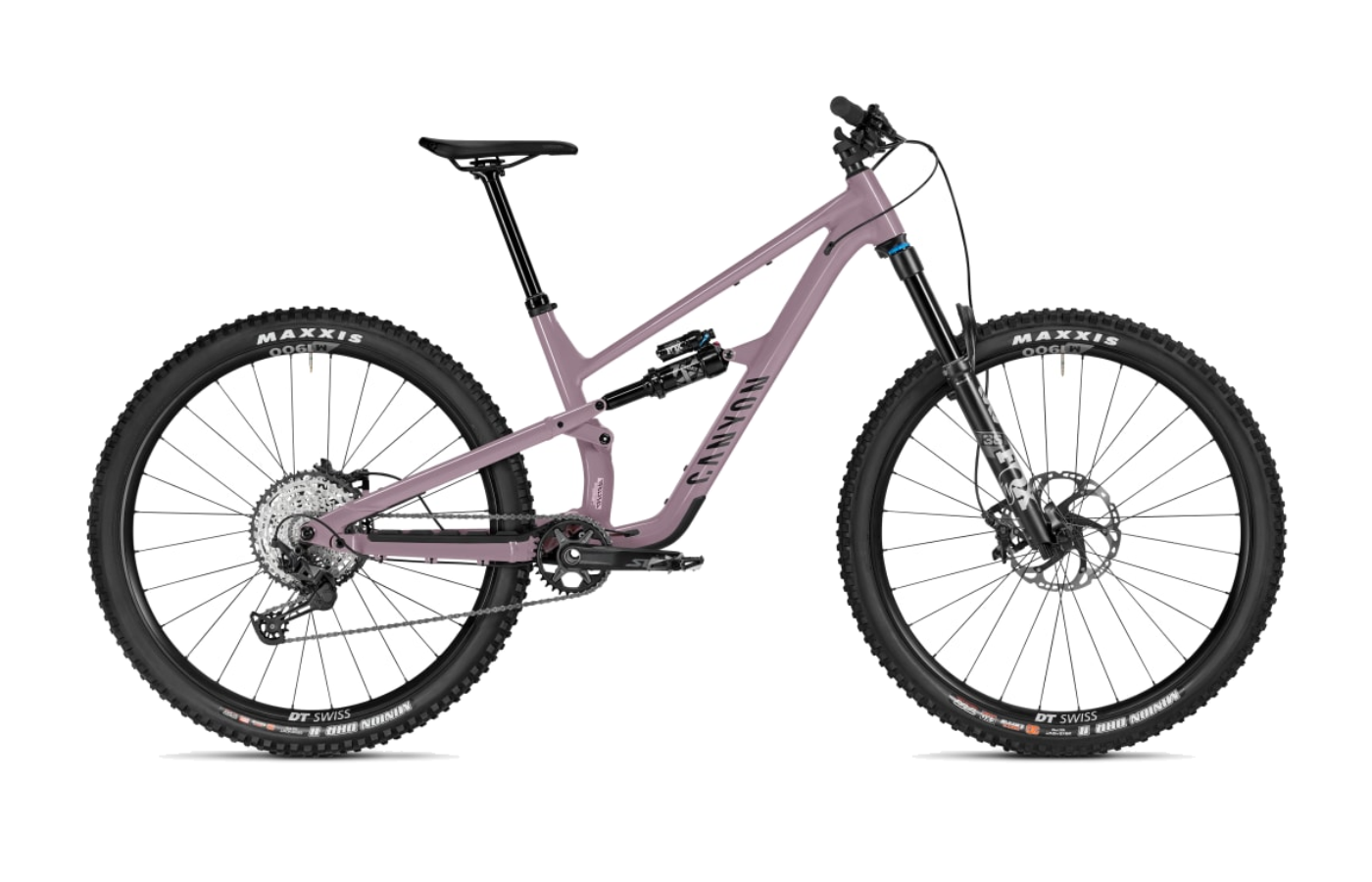
Spectral
The direct-to-consumer option with more travel and more frame features than the Hugene — internal storage, flip chip geometry, and Canyon's aggressive pricing. The logical middle ground between these two.
Compare →