Spindrift
vsCapra
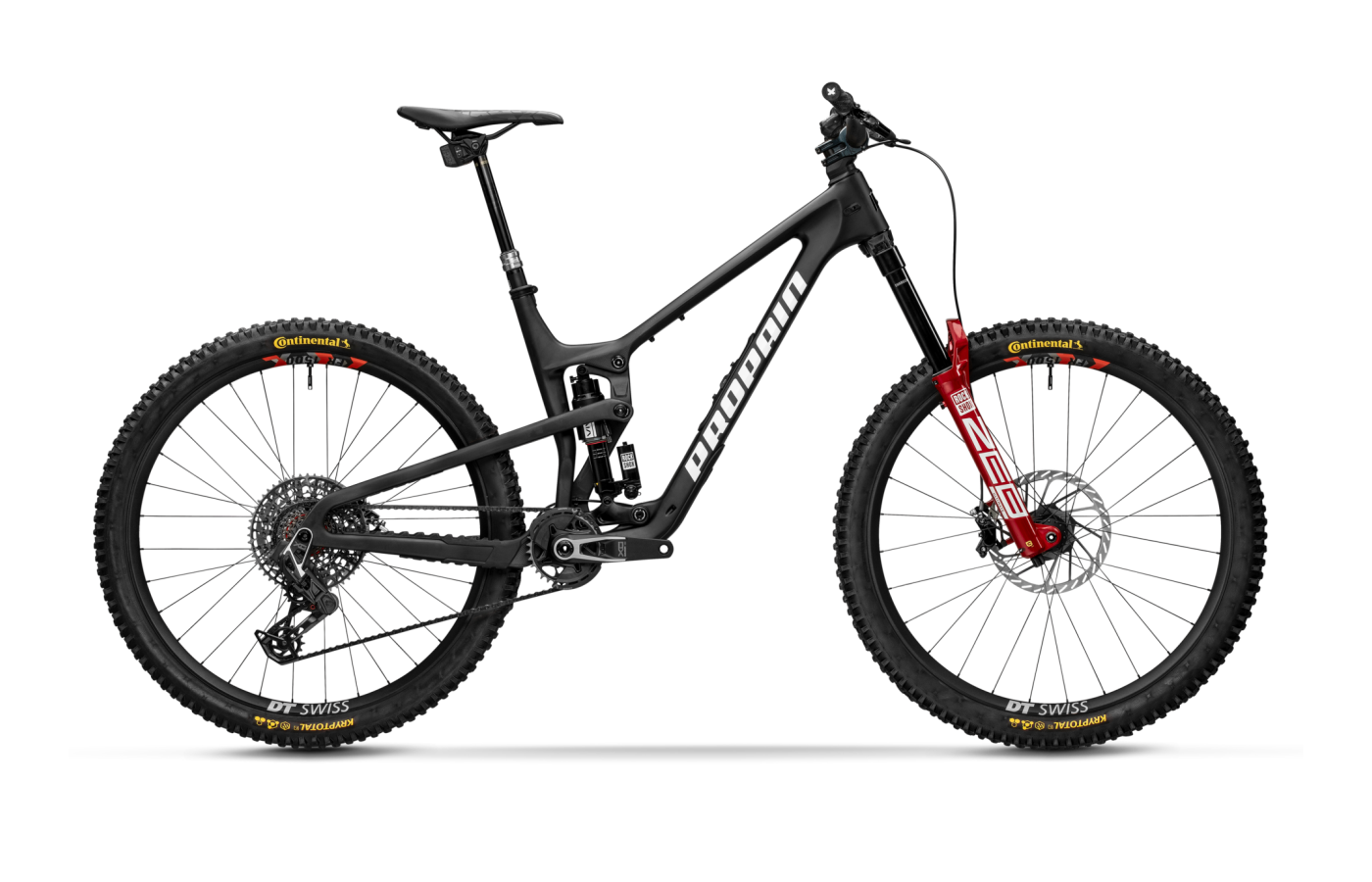
180 mm of freeride versus 170 mm of enduro race pace.
The Spindrift is the long-travel shapeshifter built for bike park laps you pedal up to. The Capra is the speed-tuned all-rounder that won BikeRadar's 2024 Enduro Bike of the Year.
Spindrift
- True freeride travel — 180 mm front and rear with a 63.5 degree head angle that rivals dedicated DH rigs.
- Climbs better than it should — Pro10's high anti-squat means most reviewers never used the climb switch on a 180 mm bike.
- Build-to-Order configurator lets you pick fork, shock, dropper length, and tire casing without aftermarket upgrade tax.
- Tall seat tube and shallow dropper insertion limit drop for shorter riders — a recurring critique across reviews.
- Carbon-only platform pricing starts at $3,699; no sub-$3k entry point like the Capra.
Capra
- Award-winning all-rounder — BikeRadar's 2024 Enduro Bike of the Year, with Pinkbike timing it as fastest in its Field Test cohort.
- Six builds from $2,999 to $6,299 — the cheapest serious 170 mm enduro platform from a name brand.
- Six size range — S through XXL, with size-specific 438 mm chainstays on XL/XXL where the Spindrift uses 445 mm across the board.
- Stock Continental Kryptotal tires in Enduro casing are routinely flagged as too thin for hard charging — plan a casing upgrade.
- Conservative geometry (464 mm reach in L) can feel small for taller, faster riders accustomed to modern super-enduro lengths.
Editor’s analysis
Both come from direct-to-consumer brands with rabid fan bases — but they want very different things from a descent.
Propain's Spindrift sits at 180 mm front and rear, with a 63.5 degree head angle and a 1284 mm wheelbase in size L. Those numbers used to live on dual-crown DH bikes. The trick is that Propain's Pro10 suspension somehow makes a 180 mm bike pedal — Pinkbike, MBR, and Enduro MTB all noted they almost never reached for the climb switch, with a 116% anti-squat value at the sag point doing the work.
The YT Capra Mk III runs 170 mm up front and 165 mm out back (170 mm on the MX), with a 64 degree head angle and a 1243 mm size L wheelbase. The reach is shorter at 464 mm — Pinkbike memorably called it a 'Harry Potter medium and three quarters.' That conservative geometry is intentional. The Capra wants to rotate, pump, and pop; it isn't trying to be a downhill bike on the climb.
On the descent, the Spindrift is the bike that lets you huck the chunk and hold lines through square-edge chunder. The Pro10's high progression — around 27.5% on the carbon — gives you a 'bottomless feeling on big compression' (Rémy Métailler) without the harshness. The Capra is faster than its travel suggests; in Pinkbike's timed Field Test it actually clocked the quickest downhill runs in its cohort, generating speed by transitioning through corners rather than monster-trucking.
Put another way: the Propain Spindrift is the bike for the rider whose home zone is Whistler, the North Shore, or the kind of trail that earns a black diamond by accident. The YT Capra is for the enduro racer who also wants to keep up on a mid-week trail ride.
Where the builds differ.
Comparing our editor's-pick builds side-by-side. Winners highlighted row-by-row — lower price and weight, and the better-spec component, each mark a point.
Build variants & pricing
Both ranges land in the same neighborhood at the top, but Propain pushes higher and YT starts much lower.
Editor's picks are tier-matched on SRAM X0 Eagle Transmission carbon builds — the Propain Ultimate at $7,029 versus the Capra Core 4 CF at $6,299. Propain's $700 premium buys 10 mm more travel front and rear plus a longer, slacker frame; the Capra brings a mixed-wheel configuration and Fox Factory suspension at the price.
How they fit, how they steer.
Compared at the fit-picked size on each bike. The Capra L and Spindrift M land at identical 636 mm stack, but the Spindrift carries a slacker 63.5 degree head angle versus 64 degree, and a 12 mm longer 445 mm chainstay — the freeride bias shows up even at smaller sizes.
Which size should I buy?
Both run S to XL, with the Capra adding XXL — Spindrift M and Capra L are the closest fit match for a mid-height rider.
→These are starting points. Flexibility, riding style, and preferred position all shift the answer — if you’re between sizes, a professional fit beats a chart.
What the magazines said.
Published reviews from trusted cycling outlets. Click through for the full write-up.
Which one should you buy?
If your rides end with a chairlift or a shuttle and start with double-blacks, get the Spindrift. If you want one bike for enduro race day and Wednesday-night trail rides, get the Capra.
Spindrift
If you live near real gravity terrain — bike parks, big-mountain lines, rowdy descents — and you want one bike that pedals well enough to earn its turns, the Spindrift is the platform. The configurator means you build it your way, including a dual-crown option on the alloy Park model.
Capra
If you want a fast, agile 170 mm bike that handles enduro race day and Tuesday-night trails without wrestling a super-enduro sled, the Capra delivers. The Core 1 AL at $2,999 is one of the cheapest serious enduro platforms on the market; the Core 4 CF at $6,299 punches well above its price.
Questions buyers actually ask.
Short answers to the things we get emailed about most often.
01Which is the more capable descender?
On paper, the Propain Spindrift. It runs 180 mm front and rear versus 170/165 mm on the Capra, with a slacker 63.5 degree head angle (vs. 64 degree) and a longer 1284 mm wheelbase in size L (vs. 1243 mm). MBR called it a 'shapeshifter' that 'somehow manages to blend great downhill performance with pedalling efficiency.'
That said, descending capability isn't just travel. The Capra clocked the fastest downhill times in Pinkbike's Field Test against bikes with more travel — its 'punchier' suspension and shorter wheelbase generate speed through corners that longer bikes lose in transitions. If your descents are flowy and corner-heavy rather than chunder-strewn, the Capra may actually be quicker.
02Which climbs better?
Both climb surprisingly well for the travel, but the Spindrift is the standout. Pinkbike said it 'doesn't just climb well for a 180 mm bike, it holds its own against some of the short-travel trail bikes I've tested.' The Pro10 suspension hits roughly 116% anti-squat at sag, and a steep 78 degree effective seat tube angle keeps the rider over the cranks.
The Capra is no slouch — its 77.4 degree seat tube and ~100% anti-squat make for an efficient pedal — but it's livelier under power and benefits more from flicking the climb switch on smoother fire-road grinds.
03Wheel size — 29er, mullet, or 27.5?
Spindrift: the carbon CF is offered in 29er or MX (mixed wheel); the alloy AL Park can run full 27.5 with a dual-crown fork. Reviewers note the MX setup is 'more fun in the tight stuff' while the 29er is the racer's pick.
Capra: YT engineers separate front triangles for full-29 and MX; flagship Core 4 CF and Core 3 builds tested here are MX (29 front / 27.5 rear) despite the '29' in the model name. The full 29er is YT's 'speed demon'; the MX is the 'playful park rat' — Loam Wolf's words.
04How big a difference is the price gap on the editor's-pick builds?
The Capra Core 4 CF is $6,299. The Spindrift Ultimate is $7,029 — a $730 premium for an extra 10 mm of travel at both ends, slacker geometry, and the build-to-order configurator. Both run SRAM X0 Eagle Transmission and carbon frames, so it's apples-to-apples on drivetrain and frame material.
If budget is the top filter, the Capra also sells an alloy Core 1 at $2,999 with no equivalent on the Spindrift platform — the cheapest carbon Spindrift is the $3,699 Base.
05Are the stock tires good enough?
Both ship with Continental Kryptotal-FR / Kryptotal-RE tires — the Capra Core 4 CF uses the proper Enduro casing, which is more robust than the EXO+ casings YT used to spec.
Even so, MBR and Enduro MTB explicitly recommended upgrading to Schwalbe Super Gravity or Maxxis DH casings for both bikes if you're racing enduro or hitting the bike park. For the Spindrift, the configurator lets you pick a heavier casing at order time; the Capra you'll have to upgrade aftermarket.
06Which has better customer service?
Both are direct-to-consumer, which is a calculated trade. Propain has a North American office and a Canadian owner detailed on Pinkbike comments how the brand replaced a damaged rear triangle 'with no hesitation' and followed up a year later. Reviewer KDix85 called Propain a brand that 'makes it right.'
YT has been faster to scale physical 'YT Mill' locations for setup and demos, but Pinkbike comments document warranty turnaround stretching 3 to 6 months for replacement frames, and there are documented top-tube cracking incidents on the Capra Mk III that YT attributed to carbon layup wrinkles.
07Is the Spindrift's seat tube really a problem?
It's the most consistent critique across Spindrift 5 reviews — Pinkbike, MBR, and owner forums all flag the relatively long seat tube and limited dropper insertion depth. It primarily affects shorter riders or anyone wanting a 200+ mm dropper.
The Capra has the same complaint in a different form — reviewers note the YT Postman dropper post often spec'd at 125-150 mm on Medium/Large frames is 'too short.' Neither bike is perfect here; the Spindrift's issue is structural (frame), the Capra's is component-level (swap the post).
08Which is more upgrade-friendly long term?
The Spindrift wins on day one — Propain's Build-to-Order configurator means you spec it correctly the first time without a costly post-purchase upgrade cycle. Frame features include UDH hanger, threaded BB, and triple-option cable routing (traditional, headset, or stem).
The Capra also has UDH and the same Mk III chassis is shared across all builds, so an entry-level Core 1 AL ($2,999) can be upgraded over time. The catch: it uses a press-fit BB92 bottom bracket, which is harder to service than a threaded one.
Similar bikes
If your priorities don’t map cleanly onto either of these, one of these adjacent bikes probably fits better.
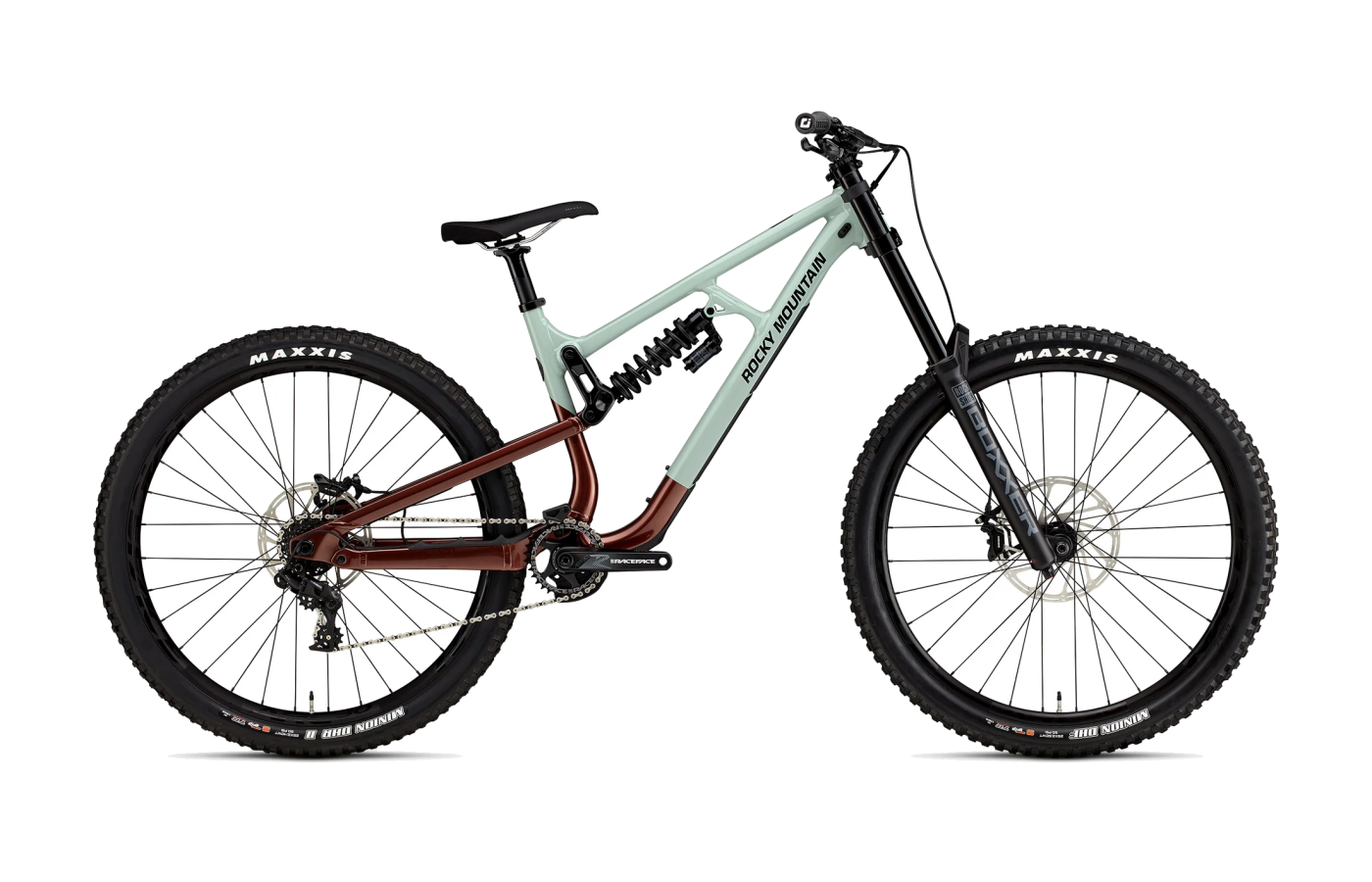
Slayer
Rocky Mountain's long-travel freeride-enduro crossover with the Ride-9 adjustable geometry chip — fewer build options than the Spindrift configurator, but a closer match for riders who want to dial geometry instead of components.
Compare →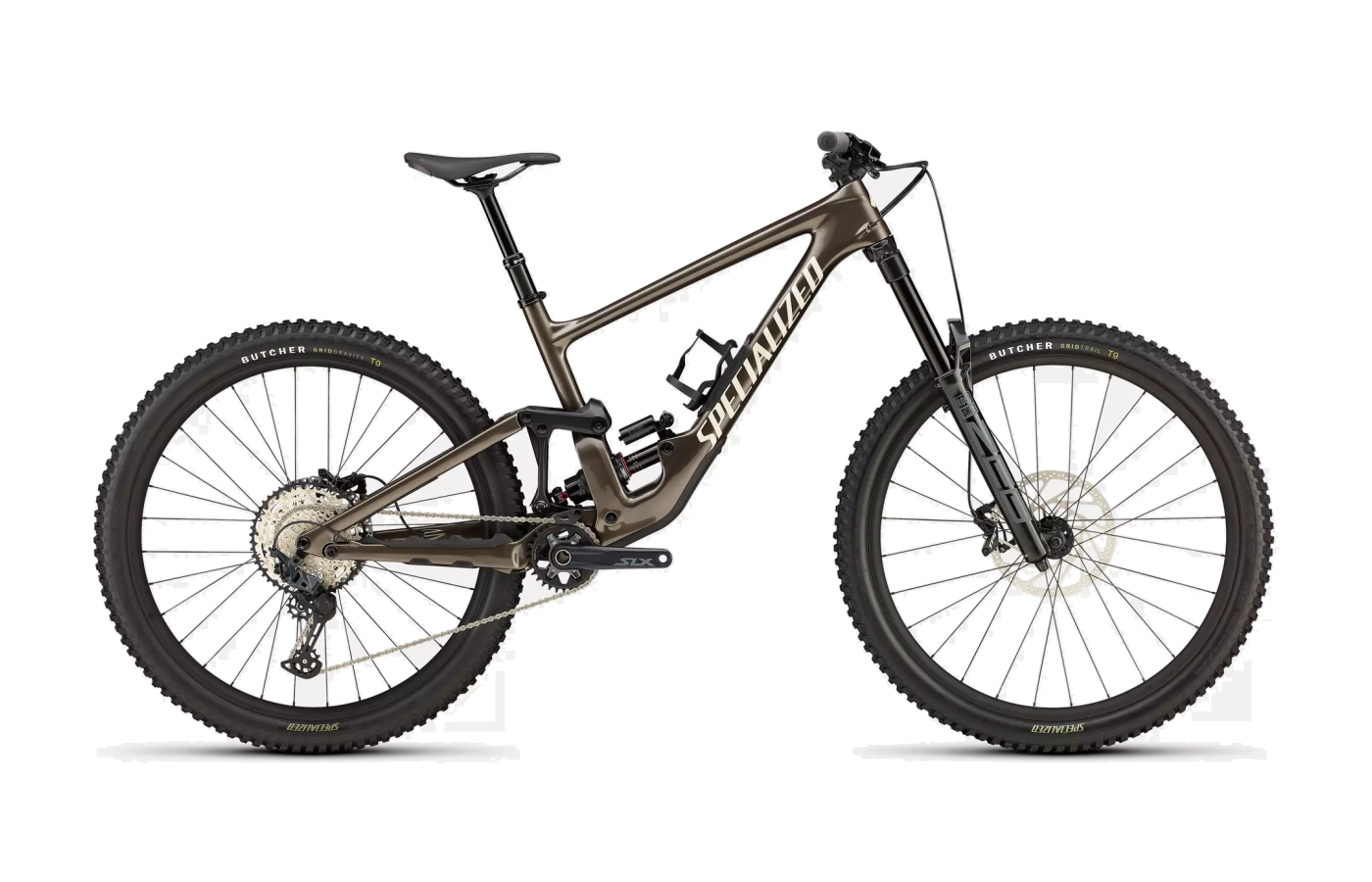
Enduro
Specialized's benchmark long-travel enduro bike — 170 mm rear with the FSR linkage, sold through dealers (no DTC waiting game). Splits the difference between the Capra's race manners and the Spindrift's gravity bias.
Compare →Spire
Transition's longer, slacker enduro platform for riders who find the Capra a touch conservative but aren't ready for full freeride travel. Aluminum-only with a quiet-riding chassis and the brand's SBG geometry.
Compare →