Altitude
vsInstinct
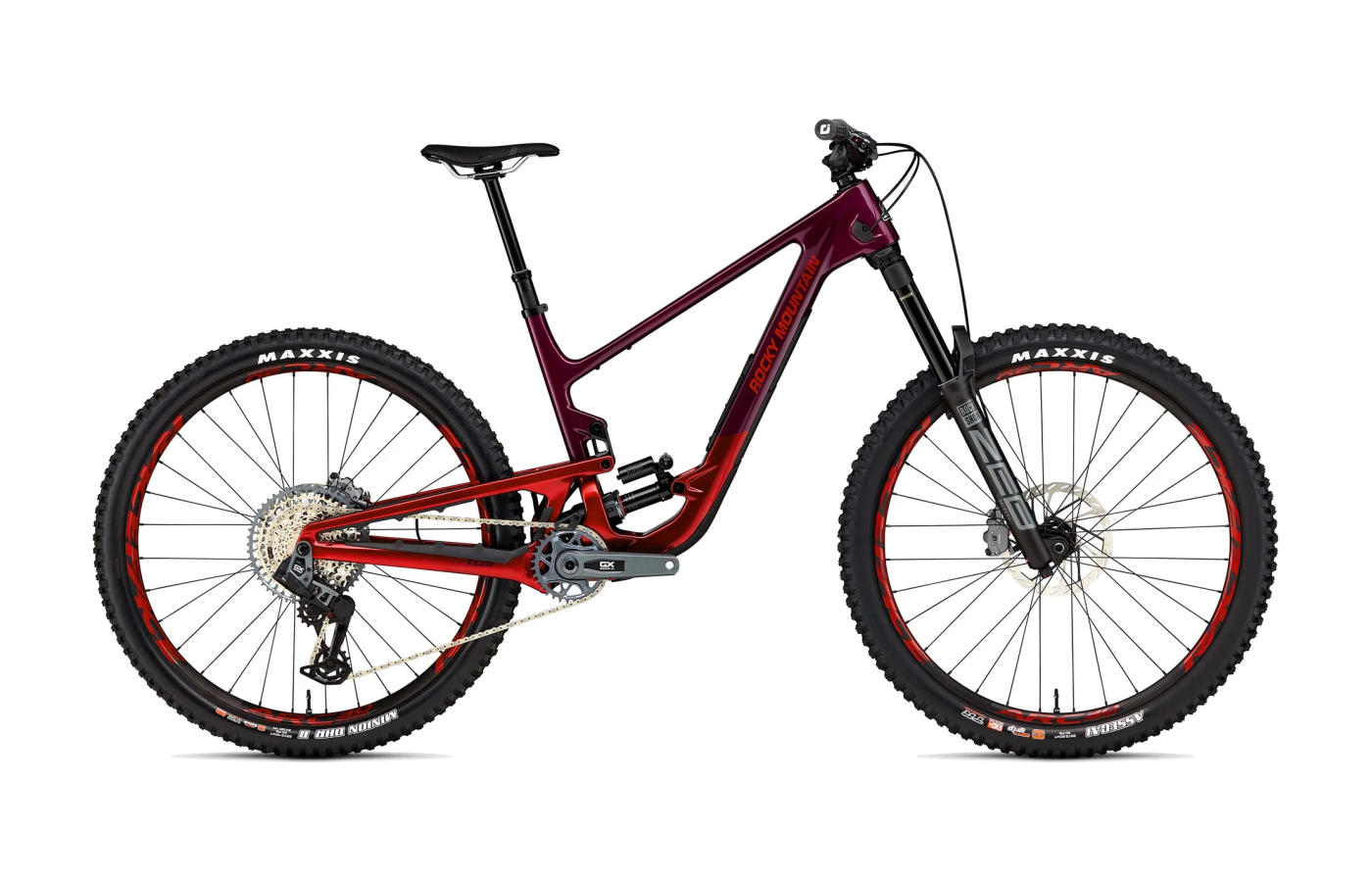
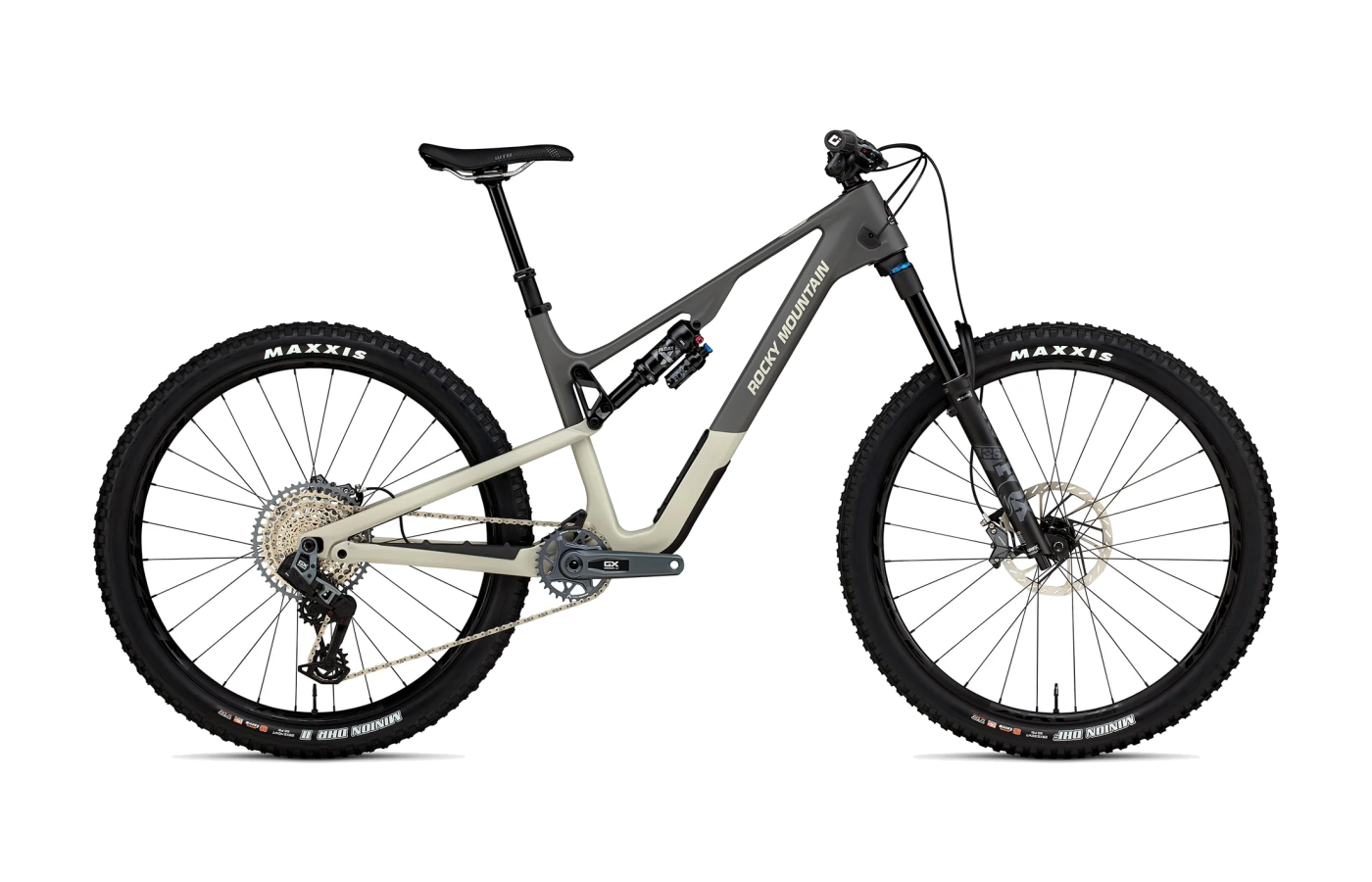
Same brand, same chassis tricks, two completely different bikes.
The Altitude is a 160 mm enduro race rig built to erase terrain. The Instinct is a 140 mm trail bike built to play with it.
Altitude
- Unflappable at speed — 62.9 degree HTA, 1,243 mm wheelbase on a medium, and a low-slung shock placement that reviewers call a 'magic eraser' on rough descents.
- Race-ready out of the box — Maxxis Assegai MaxxGrip / DHR II DoubleDown casings with pre-installed CushCore Trail inserts on most builds, saving several hundred in upgrades.
- Surprising climbing traction from the active LC2R suspension and a 77 degree seat tube angle — slow, but it claws up loose, technical pitches other enduro bikes wash out on.
- Long, heavy, and 'ponderous' on flatter trails — reviewers consistently flag it as too much bike for mellow blue terrain.
- Recurring early-production quirks: a main pivot bolt that needs Loctite and a proprietary tool to retorque, plus persistent dropper and cable rattle.
Instinct
- Genuinely playful trail bike — 140 mm rear / 150 mm front with a carbon frame around 13.5 kg, described by reviewers as 'sneaky fast,' 'lively,' and eager to be popped off features.
- Most adjustable bike in the segment — RIDE-4 chip, +/-5 mm reach-adjust headset, and a two-position chainstay flip (437–447 mm) yield 48 geometry combinations.
- Wider build range from $3,399 alloy up to a $9,449 Flight Attendant carbon — including a true high-end build the Altitude lineup doesn't offer.
- Stock Fox Float X tune drew sharp criticism from Pinkbike's Field Test as 'underdamped' and 'wallowy' when pushed hard — aggressive riders may want a re-valve or coil swap.
- Stock Maxxis Dissector EXO tires on mid-tier builds are under-specced for serious descending and a common early upgrade.
Editor’s analysis
The old Instinct and Altitude shared a frame. The 2024 versions don't share a philosophy — one wants to win the EDR, the other wants to win Tuesday night.
Rocky Mountain redrew both bikes in 2024 and the gap between them widened in every direction. The Altitude got a new LC2R dual-link suspension layout with the shock dropped low between the chainstays — 160 mm rear, 170 mm Zeb or Fox 38 up front, a 62.9 to 63.8 degree head angle, and a 1,243 mm wheelbase on a medium. It is unapologetically built for racing enduro and shuttling park laps. Reviewers call it a 'magic eraser' on rough descents and 'too much bike for intermediate blue trails.'
The Rocky Mountain Instinct kept the Horst Link layout, runs 140 mm rear / 150 mm front, sits at a 63.5 degree head angle, and weighs in around 13.5 kg in carbon trim — roughly 2 kg lighter than the Altitude. It is the do-it-all bike, with a two-position chainstay flip chip (437–447 mm) and a reach-adjust headset on top of the same RIDE-4 system. The character is closer to a sharp trail scalpel than a baby enduro. Reviewers describe it as 'playful,' 'sneaky fast,' and biased toward riders who pump and pop rather than plow.
The price spread tells the same story. The Altitude lineup runs $3,999 to $5,799 — five builds, all 160 mm, all enduro spec. The Instinct stretches from $3,399 to $9,449 because it's the platform Rocky Mountain pushes upmarket with Flight Attendant electronic suspension and SRAM XX Transmission at the top. If you want the gnarliest carbon build in the catalog, it's an Instinct, not an Altitude — which says everything about who each bike is actually for.
Put another way: the Rocky Mountain Altitude is the bike if your day starts at the chairlift or the shuttle van. The Rocky Mountain Instinct is the bike if your day starts at the trailhead and includes a real climb.
Where the builds differ.
Comparing our editor's-pick builds side-by-side. Winners highlighted row-by-row — lower price and weight, and the better-spec component, each mark a point.
Build variants & pricing
The Altitude lineup is tightly clustered ($3,999–$5,799) and uniformly enduro-spec. The Instinct stretches from $3,399 alloy up to a $9,449 Flight Attendant carbon flagship.
We picked the Carbon 70 on each side because it lets us compare apples to apples — both are SRAM GX AXS Transmission builds on Rocky Mountain's SMOOTHWALL carbon frame at $5,499 and $5,799. Prices are current US MSRP.
How they fit, how they steer.
Both at size MD — the fit-picked size for a 5'8" rider on each bike. The Altitude sits 31 mm taller in stack (630 vs 599 mm), runs a 62.9 vs 63.5 degree head angle, and stretches the wheelbase 16 mm longer. Reach is essentially identical (450 vs 449 mm).
Which size should I buy?
Size recommendations based on stack, reach, and effective top tube. The Instinct goes one size smaller (S, 423 mm reach) than the Altitude lineup.
→These are starting points. Flexibility, riding style, and preferred position all shift the answer — if you’re between sizes, a professional fit beats a chart.
What the magazines said.
Published reviews from trusted cycling outlets. Click through for the full write-up.
Which one should you buy?
If most of your riding is steep, fast, and big, get the Altitude. If you actually pedal to the top and value playfulness, get the Instinct.
Altitude
If your weekends look like shuttle laps, bike park days, or a race plate, the Altitude is the right tool. It rewards committed, aggressive riding and erases terrain at speed — but it's a workout to pedal and overkill on mellow trail.
Instinct
If your local loop mixes a real climb with rewarding descents and you'd rather pop, pump, and jib than plow, the Instinct is the smarter pick. It's lighter, more agile, and the most adjustable trail bike in its class.
Questions buyers actually ask.
Short answers to the things we get emailed about most often.
01How much travel does each bike have?
Rocky Mountain Altitude: 160 mm rear / 170 mm front. Built around a Fox 38 or RockShox Zeb, with a low-mounted Float X, Vivid, or DHX2 shock depending on build.
Rocky Mountain Instinct: 140 mm rear / 150 mm front on most builds, with a Fox 36 or RockShox Lyrik. The top-end Carbon 99 bumps the fork to 160 mm and adds a 150 mm Lyrik Ultimate Flight Attendant.
02Which is better for climbing?
The Instinct, clearly. It's roughly 2 kg lighter than the Altitude in carbon trim (around 13.5 kg vs 15.5 kg measured), runs a faster-rolling tire spec, and has a steeper-feeling pedaling position once you flip it into a steeper RIDE-4 setting.
The Altitude isn't bad on climbs — reviewers actually praise its traction on technical, loose pitches thanks to the active LC2R suspension — but it's a 160 mm enduro bike with DoubleDown casings and CushCore inserts. You feel every gram on a fire road.
03Which is better for downhill and bike park?
The Altitude, no contest. Slacker head angle (62.9 vs 63.5 degrees), longer wheelbase (1,243 vs 1,227 mm on a medium), 20 mm more rear travel, and a low-mounted shock that reviewers describe as 'magic eraser' planted at speed.
The Instinct holds up better than its 140 mm spec suggests on rowdy trails — particularly with a coil shock and the slacker RIDE-4 setting — but if your weekends are shuttle days, the Altitude is the right tool.
04Are the geometries adjustable?
Both bikes use Rocky Mountain's RIDE-4 flip chip at the shock yoke (four positions) plus a +/-5 mm reach-adjust headset. The Altitude adjusts the head angle from 63 to 63.8 degrees and the seat tube from 77 to 77.8 degrees.
The Instinct goes further — it adds a two-position chainstay flip chip at the rear axle that swings the rear end from 437 to 447 mm. Combined, that's 48 possible geometry configurations on the Instinct, the most adjustable bike in its segment.
05What's the deal with the main pivot bolt issue on the Altitude?
Early-production Altitudes shipped without enough thread-locker on the main pivot bolt, and multiple reviewers (Pinkbike, Vital, Singletracks, Cycling Magazine) reported it loosening in service, often with a creak.
Rocky Mountain's fix is straightforward: Loctite the bolt and torque it to 25 Nm. The catch is that accessing it requires removing the drive-side crank and bottom bracket cup with a proprietary tool — Rocky Mountain ships the tool with every bike, but it's not a trailside fix. Worth knowing if you buy used.
06Can both run a mullet (mixed-wheel) setup?
Yes. Both the Altitude and Instinct support a 29-inch front / 27.5-inch rear mullet configuration on Medium through XL frames (the Small ships full 27.5). On both bikes, mulleting tends to make the rear end feel snappier and quicker to step out, especially in tight terrain.
07How do the build lineups compare?
The Altitude has 5 builds tightly clustered between $3,999 (Alloy 30, Deore) and $5,799 (Carbon 70, GX AXS Transmission). It's purely enduro — no flagship halo build.
The Instinct also has 5 builds but spans a much wider range, from $3,399 (Alloy 30, Deore) all the way up to $9,449 for the Carbon 99 with SRAM XX Transmission and RockShox Flight Attendant electronic suspension front and rear. If you want the highest-end carbon Rocky Mountain trail platform, it's an Instinct.
08Which one should I buy if I'm only buying one bike?
For most riders, the Instinct. A 140 mm trail bike with this much adjustability handles 90% of what people actually ride — flowy singletrack, technical climbs, rowdy trail descents, even the occasional bike park lap. It's lighter, climbs better, and is more fun on mellow trails.
Get the Altitude only if you genuinely live for the descents — bike park regular, enduro racer, shuttling steep terrain most weekends. On a trail bike loop it's overkill in every dimension.
Similar bikes
If your priorities don’t map cleanly onto either of these, one of these adjacent bikes probably fits better.
Hightower
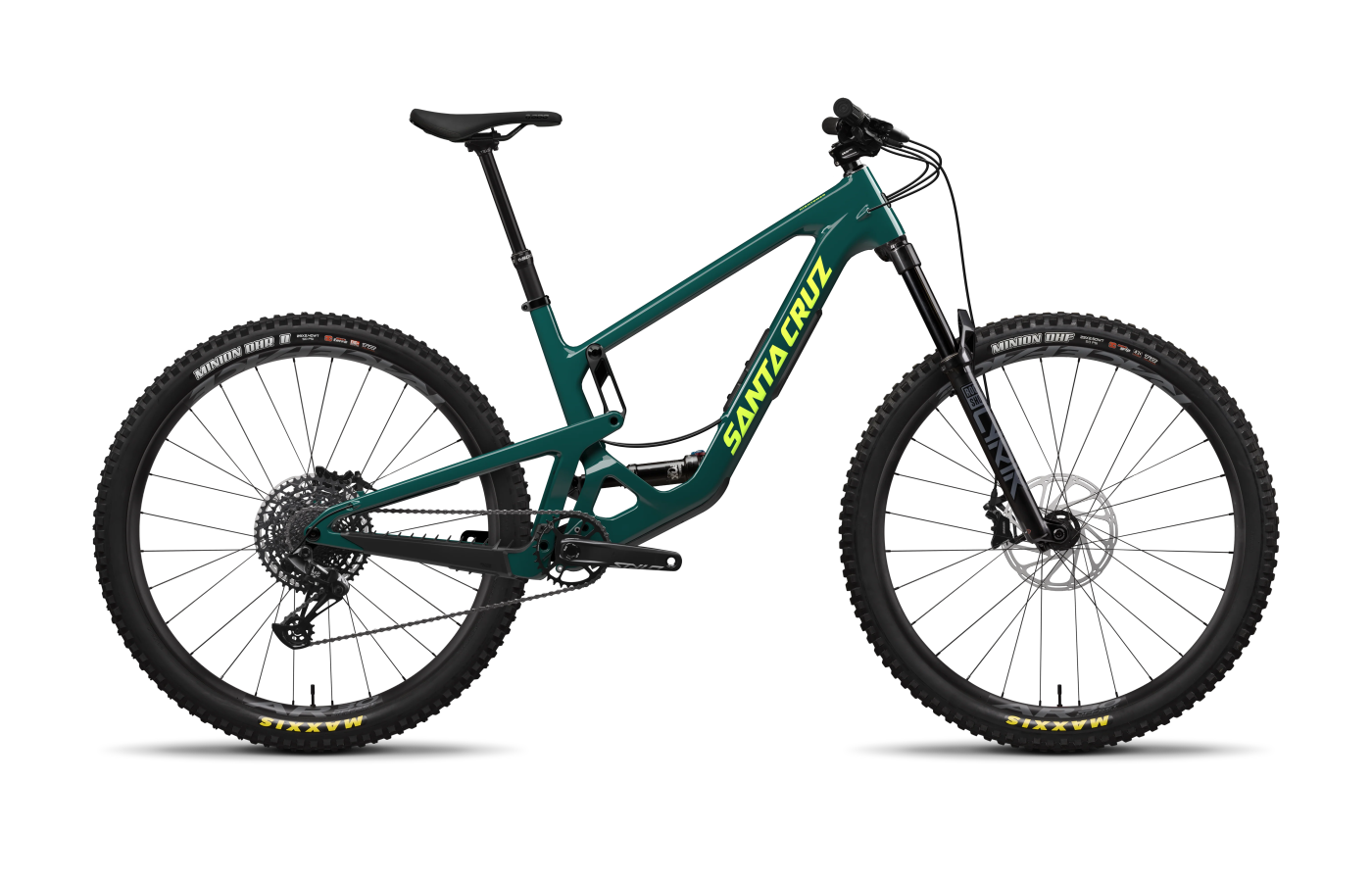
Santa Cruz's perennial trail-to-light-enduro answer. VPP suspension, refined manners, and a build menu that scales from GX AXS to XX SL — a closer cross-shop with the Instinct than the Altitude.
Compare →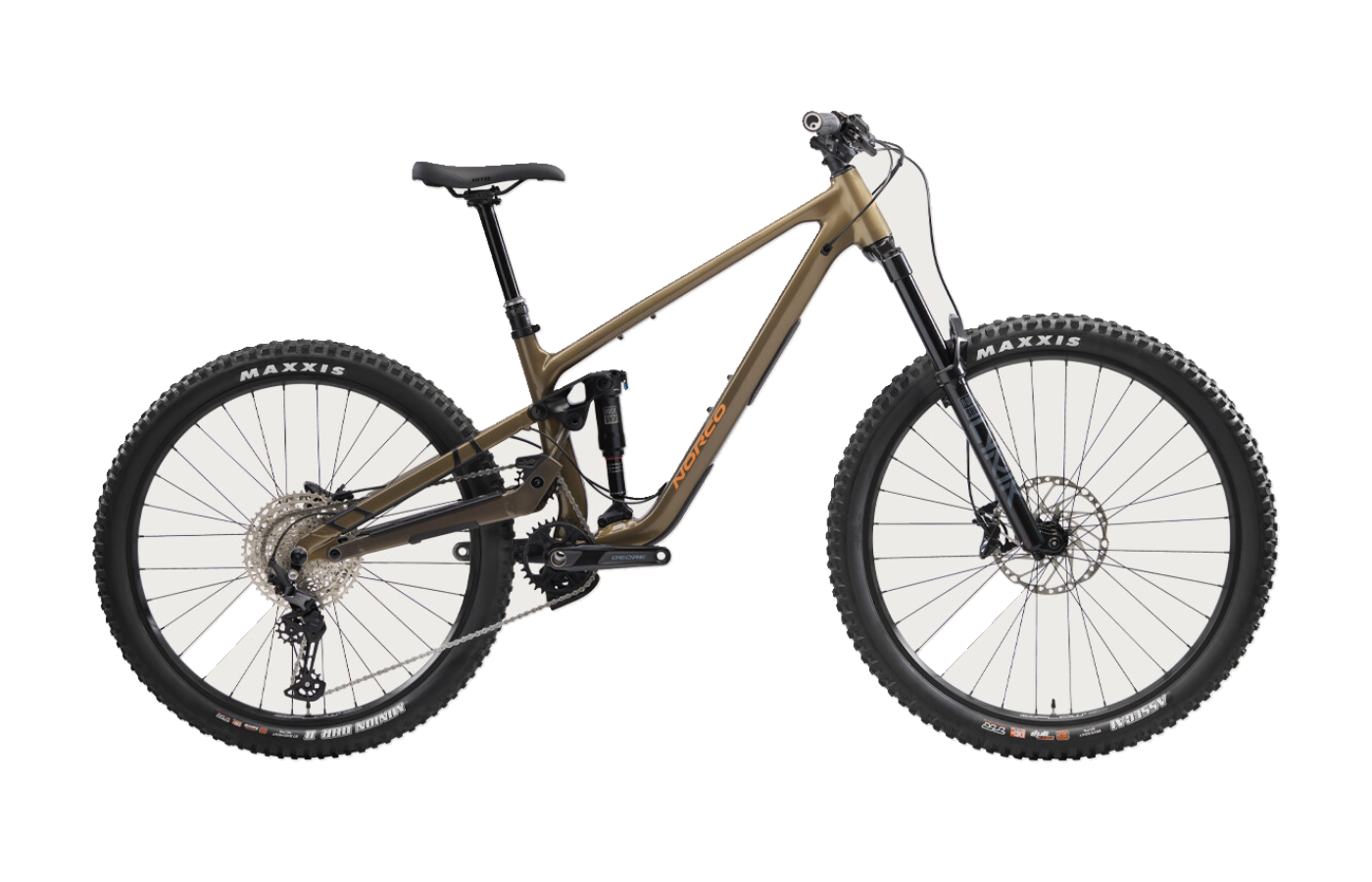
Sight
Norco's all-mountain platform with size-specific rear-center geometry — each frame size gets its own chainstay length so the bike rides the same on a Small as on an XL. A cross-shop for either side depending on travel preference.
Compare →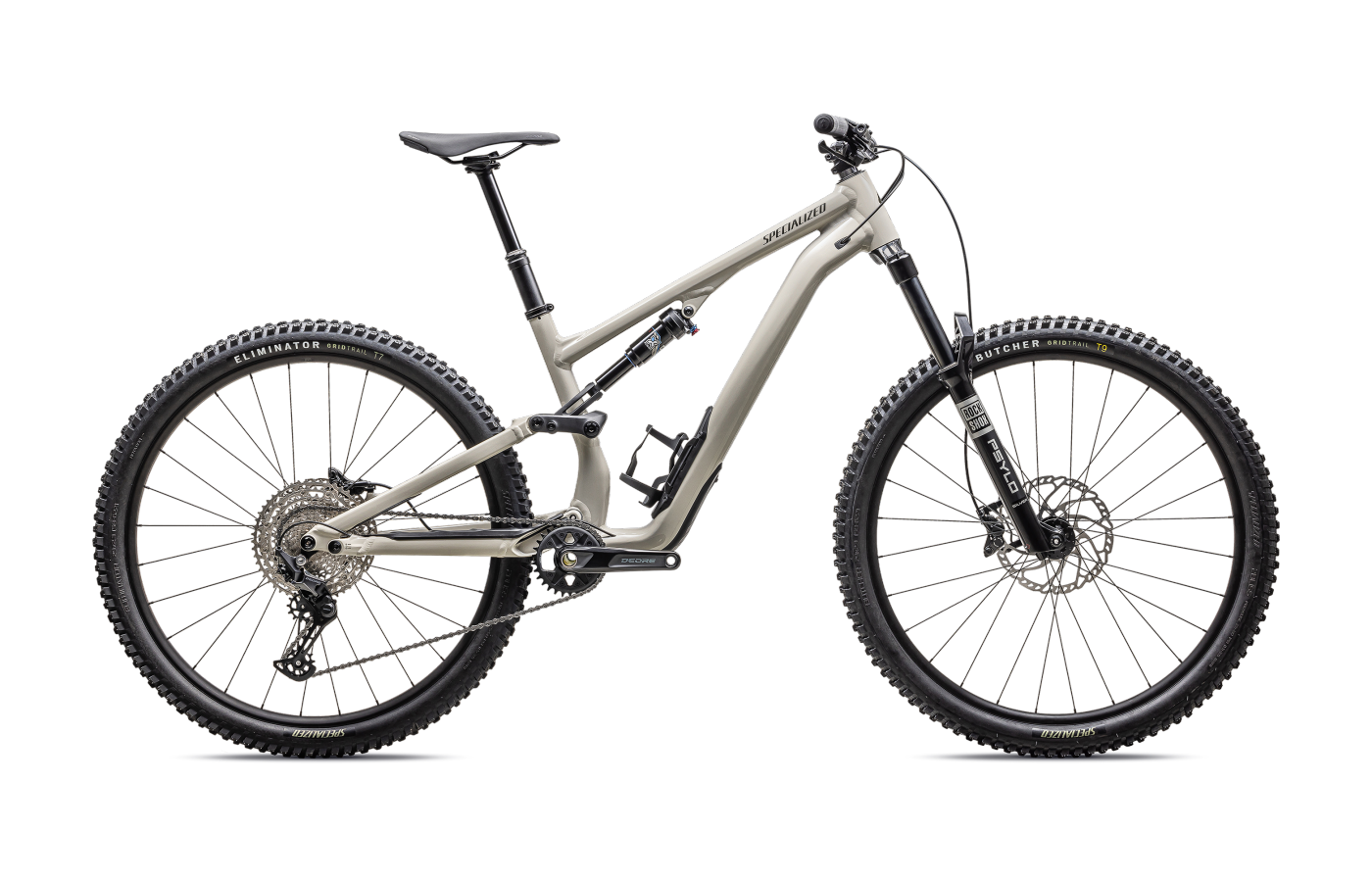
Stumpjumper
The default trail-bike benchmark. 145 mm rear, 150 mm front, FACT 11m carbon, and the SWAT downtube storage that everyone copied. If you want what the Instinct does but with broader dealer support, this is the obvious cross-shop.
Compare →