Altitude
vsSpire
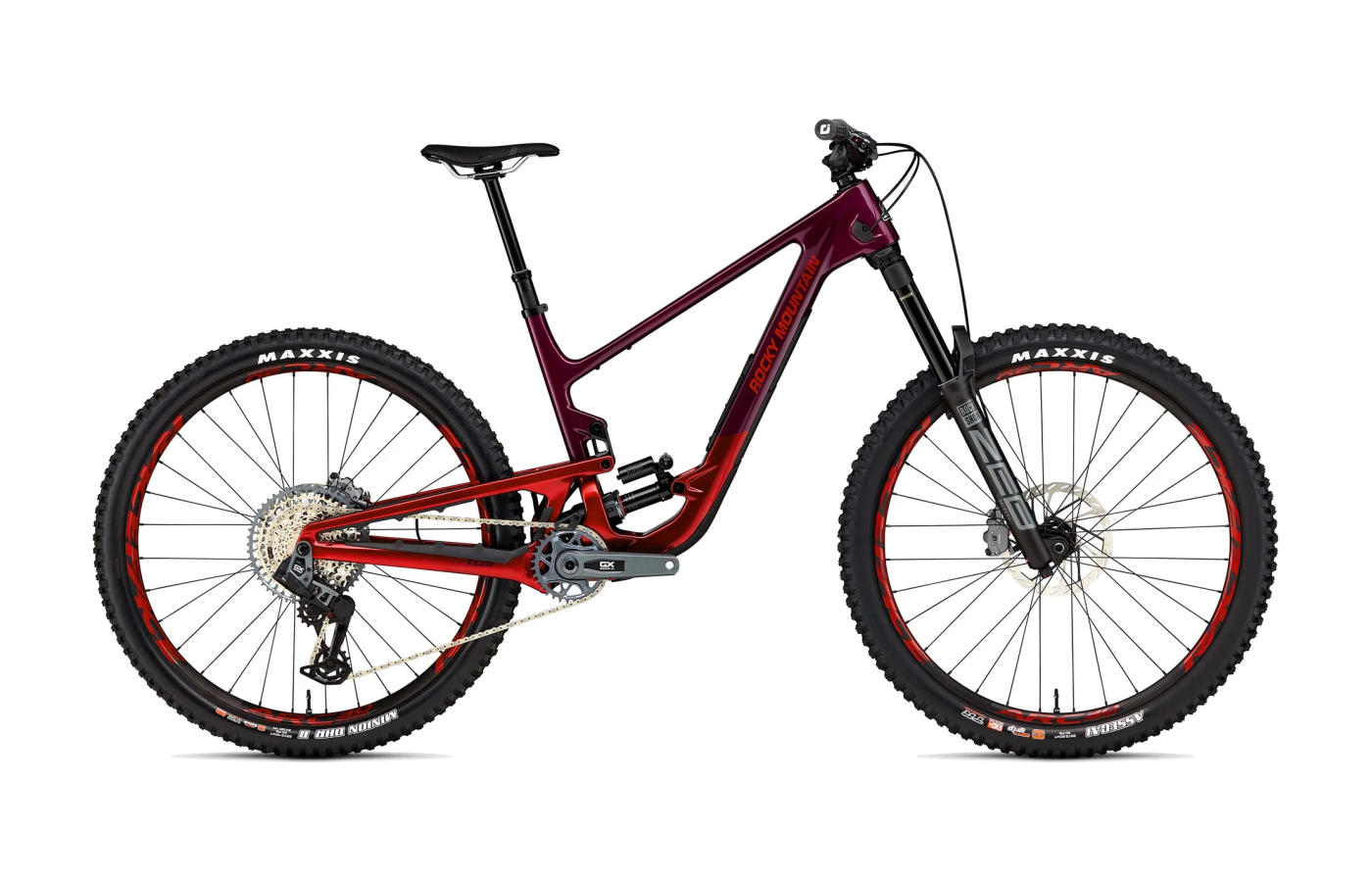
Two enduro race bikes, two suspension philosophies.
The Altitude is the planted, low-CG dual-link plow — a magic-eraser for chunder. The Spire is the long, slack four-bar that wants to pop off everything in sight.
Altitude
- Planted, low-CG rear end — LC2R dual-link makes square-edged chunder disappear at speed.
- Race-ready stock spec — CushCore Trail inserts, MaxxGrip front and DD rear save several hundred dollars in 'race-mode' upgrades.
- Deep adjustability — Ride-4 flip chip plus +/- 5 mm reach-adjust headset cups give 24 usable geometry combinations.
- Less playful on mellow trails — the previous Altitude's pop is gone.
- Main pivot bolt and dropper rattles surfaced in early production runs; both are addressable but real.
Spire
- Poppy and engaging — GiddyUp suspension wants to leave the ground; it 'rides smaller than its numbers'.
- Lifetime frame warranty — transferable; the Altitude's is five years to original owner only.
- Steepest seat angle in class — 78.8 degrees at MD puts you directly over the BB on technical climbs.
- Stiffer rear feel on repeated square-edge hits than the Altitude's deeper rear end.
- Long wheelbase (1257 mm at MD) makes tight, slow switchbacks a chore.
Editor’s analysis
Same travel, same head angle, same pitch deck — but the way these two bikes meter that 170/160 mm of travel could not be more different.
On paper the Rocky Mountain Altitude and Transition Spire look like twins. Both are 29ers, both run 170 mm forks, both sit at roughly 63 degrees of head angle, and both target the same enduro-race / bike-park / earn-your-descent rider. Spend any time digging into the suspension layouts and the philosophies pull apart immediately.
The Altitude's 2024 redesign moved to LC2R — a dual-link virtual-pivot system that tucks the shock low in the frame, dropping the center of gravity and giving the rear end an unusually planted, bump-eating character. Reviewers consistently land on the same metaphor: a 'magic eraser' that makes square edges disappear. The 160 mm of rear travel is sensitive off the top, supportive in the middle, and ramps progressively (~36% progression) at the bottom. The penalty is liveliness — multiple testers say it's less poppy than the bike it replaced and demands speed to come alive.
The Transition Spire keeps the brand's GiddyUp four-bar layout and tunes it for pop. It runs 170 mm front and rear and sits a half-degree steeper in stack but 10 mm longer in reach at the comparable size — a longer, more weighted-out cockpit. Reviewers describe it as a 'nimble bruiser' that 'rides smaller than it is' — eager to leave the ground, willing to be muscled around at slower speeds, but more direct on repeated square-edge hits than the Altitude's plusher rear end.
Put another way: the Altitude is the bike you pick when the priority is letting terrain disappear under you at race pace. The Spire is the bike you pick when you want to pump, jump, and choose creative lines through that same terrain. Both finish the descent. Only one will make you feel like you cheated.
Where the builds differ.
Comparing our editor's-pick builds side-by-side. Winners highlighted row-by-row — lower price and weight, and the better-spec component, each mark a point.
Build variants & pricing
The Altitude offers a wider build range — five trims spanning $3,999 to $5,799. The Spire's three trims start at $4,199 and top out at $7,699.
Editor's picks compared above are the top-of-platform carbon builds on each side: Rocky Mountain Carbon 70 ($5,799, GX Eagle Transmission wireless) vs Transition Carbon Eagle 90 ($7,699, Eagle 90 Transmission mechanical). The price gap is real — Transition's carbon flagship costs $1,900 more — but it ships with RockShox Ultimate-tier suspension front and rear, where the Altitude Carbon 70 runs Select+ tier. Drivetrain tier is roughly comparable but the Altitude is wireless AXS while the Spire is mechanical.
How they fit, how they steer.
Both at size Medium — the fit-picked size for a 5'8" rider on each bike. The Altitude sits 11 mm taller in stack and 10 mm shorter in reach; its seat tube is 1.8 degrees slacker (77.0 vs 78.8). The Spire's wheelbase is 14 mm longer at this size, and its chainstays 6 mm longer.
Which size should I buy?
Size recommendations based on stack, reach, and effective top tube. The Spire offers an extra size on each end (SM through XXL); the Altitude runs SM through XL only.
→These are starting points. Flexibility, riding style, and preferred position all shift the answer — if you’re between sizes, a professional fit beats a chart.
What the magazines said.
Published reviews from trusted cycling outlets. Click through for the full write-up.
Which one should you buy?
If you want the bike that erases the trail beneath you at race pace, get the Altitude. If you want the bike that lets you play with the trail, get the Spire.
Altitude
If your default move on a chunky descent is 'point it and hold on', the Altitude rewards that with the most composed, glued-down rear end in the segment. The LC2R platform, the deep tune-ability, and the race-ready stock spec make it a bike you can take from the parking lot to a stage start without changing tires.
Spire
If you'd rather pump, pop, and pick creative lines than plow through everything, the Spire's GiddyUp four-bar wants to play. It's stable enough to hold lines on the steepest gravity tracks but lively enough to make a flow trail interesting — and the lifetime warranty is real long-term value.
Questions buyers actually ask.
Short answers to the things we get emailed about most often.
01Which descends faster on rough, high-speed terrain?
Probably the Rocky Mountain Altitude, by a small margin. Reviewers universally describe its LC2R suspension as a 'magic eraser' on square-edged hits, with a planted, low center of gravity that makes the bike 'only seem to grow the faster you go'. The Spire is no slouch — its slack head angle and 1257 mm MD wheelbase keep it stable — but several testers flagged a degree of harshness or feedback through the rear end on repetitive square edges, where the Altitude's deeper rear travel just absorbs.
The gap closes on flowier or moderately chunky descents. On true rock-garden chunder, the Altitude is the more confident tool.
02Which is more playful?
The Transition Spire, clearly. Reviewers across Pinkbike, NSMB, and BikeRadar describe its GiddyUp suspension as 'eager to leave the ground' and praise its 'wonderful eagerness' to pop and pump. The Altitude, by contrast, is consistently called less lively than its predecessor and is reported to feel 'less lively when the trail mellows out'.
If you ride flow trails, jump lines, or like to manual everything between rocks, the Spire is the more rewarding bike. The Altitude will do it — but you have to work harder for the same trail-energy.
03Which climbs better?
Both climb well for 160-170 mm enduro bikes, but they get there differently.
The Altitude has a steep effective seat angle (77-77.8 degrees) and the LC2R suspension delivers what reviewers call 'an endless amount of traction' on technical, loose climbs. Some testers noted pedal bob with coil shocks on smoother grades, addressed via the climb switch.
The Spire has the steeper seat tube (78.8 degrees at MD) and a more efficient-feeling pedaling platform — multiple reviewers said it 'rides smaller than it is' on the way up. Its 1257 mm wheelbase makes tight switchbacks a real chore, though, where the Altitude is 14 mm shorter at the comparable size.
04How much adjustability does each frame offer?
Altitude: more. Rocky Mountain's Ride-4 flip chip offers four geometry positions (head angle 63 to 63.8 degrees, plus BB drop changes), and the headset has +/- 5 mm reach-adjust cups. Reviewers report that the 24-combination matrix is genuinely usable, not just marketing. Mixed-wheel (mullet) is also supported on MD-XL.
Spire: simpler. A single flip chip switches between Low (62.5 degrees, 343 mm BB) and High (63 degrees, 350 mm BB) settings, and mullet is supported via the high setting. No reach-adjust headset.
05What's the warranty story?
Transition offers a lifetime frame warranty to the original owner. Rocky Mountain offers five years, also to the original owner, and reviewers note it's transferable — meaning second-hand buyers retain coverage. Both brands offer crash-replacement pricing for damaged frames.
For used-market buyers, Rocky's transferability is meaningful; for original owners planning to keep the bike a decade, Transition's lifetime coverage is stronger on paper.
06Are there known reliability issues on either frame?
Yes, on both — neither is a deal-breaker.
Altitude: early production runs had a main pivot bolt that loosened due to insufficient thread-locker; Rocky's fix is Loctite at 25 Nm, but accessing it requires removing the drive-side crank and BB cup with a proprietary tool (included with the bike). Cable rattle and dropper rattle are also frequently mentioned.
Spire: linkage bearings tend to need attention after a season of hard riding, and reviewers report the alloy linkage bolts are 'soft' and prone to stripping if torqued aggressively. Paint is reportedly thin and prone to wear from heel rub on the chainstays.
07Coil or air shock — which platform takes coil better?
Both accept coil shocks, but the Altitude has the more developed coil story. Rocky offers a factory Alloy 70 Coil build with a Fox DHX2 Factory and tunes the LC2R kinematics with ~36% progression for coil compatibility. Reviewers consistently describe the coil-equipped Altitude as 'deeper, plusher, and gooier' than the air version.
The Spire is also coil-compatible (Transition publishes the kinematics) but ships air-only across the current 2025 lineup. Going coil on the Spire is an aftermarket move.
08Which has the better stock tire spec?
Altitude Carbon 70: Maxxis Assegai 2.5 WT MaxxGrip EXO+ front, Minion DHR II 2.4 WT MaxxTerra DD rear, with CushCore Trail inserts pre-installed. Race-ready out of the box — the inserts alone save ~$150 plus install.
Spire Carbon Eagle 90: Schwalbe Magic Mary Radial Trail Pro Ultra Soft 2.5 front, Schwalbe Albert Radial Gravity Pro Soft 2.5 rear. No inserts stock. Both are excellent gravity casings; the Schwalbes are newer to North America and slightly less common at shops.
Similar bikes
If your priorities don’t map cleanly onto either of these, one of these adjacent bikes probably fits better.
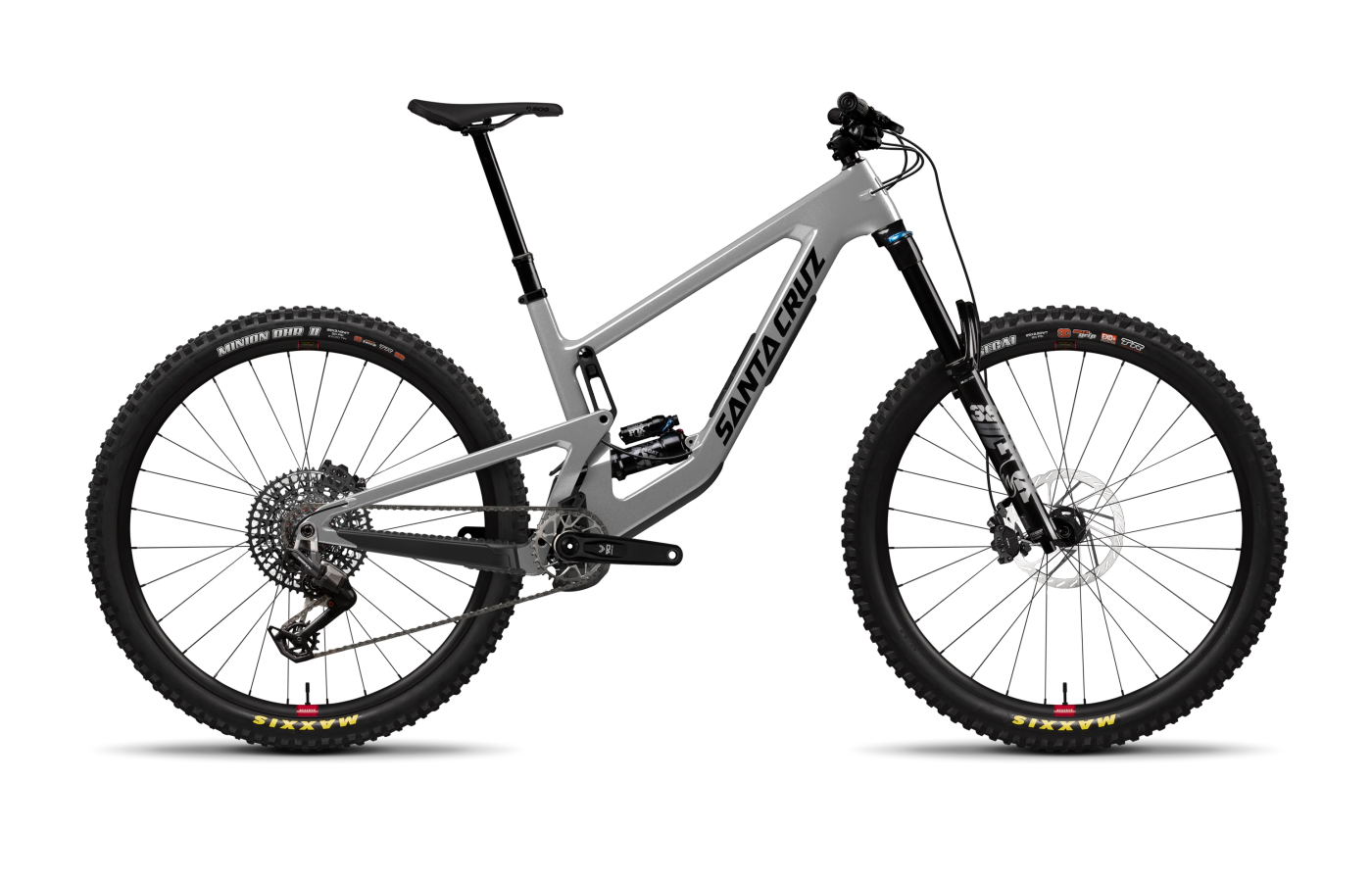
Megatower
The Megatower is the closest direct competitor to both bikes — long, slack, planted, with VPP suspension that splits the difference between Altitude composure and Spire pop. Worth a demo if you can't decide.
Compare →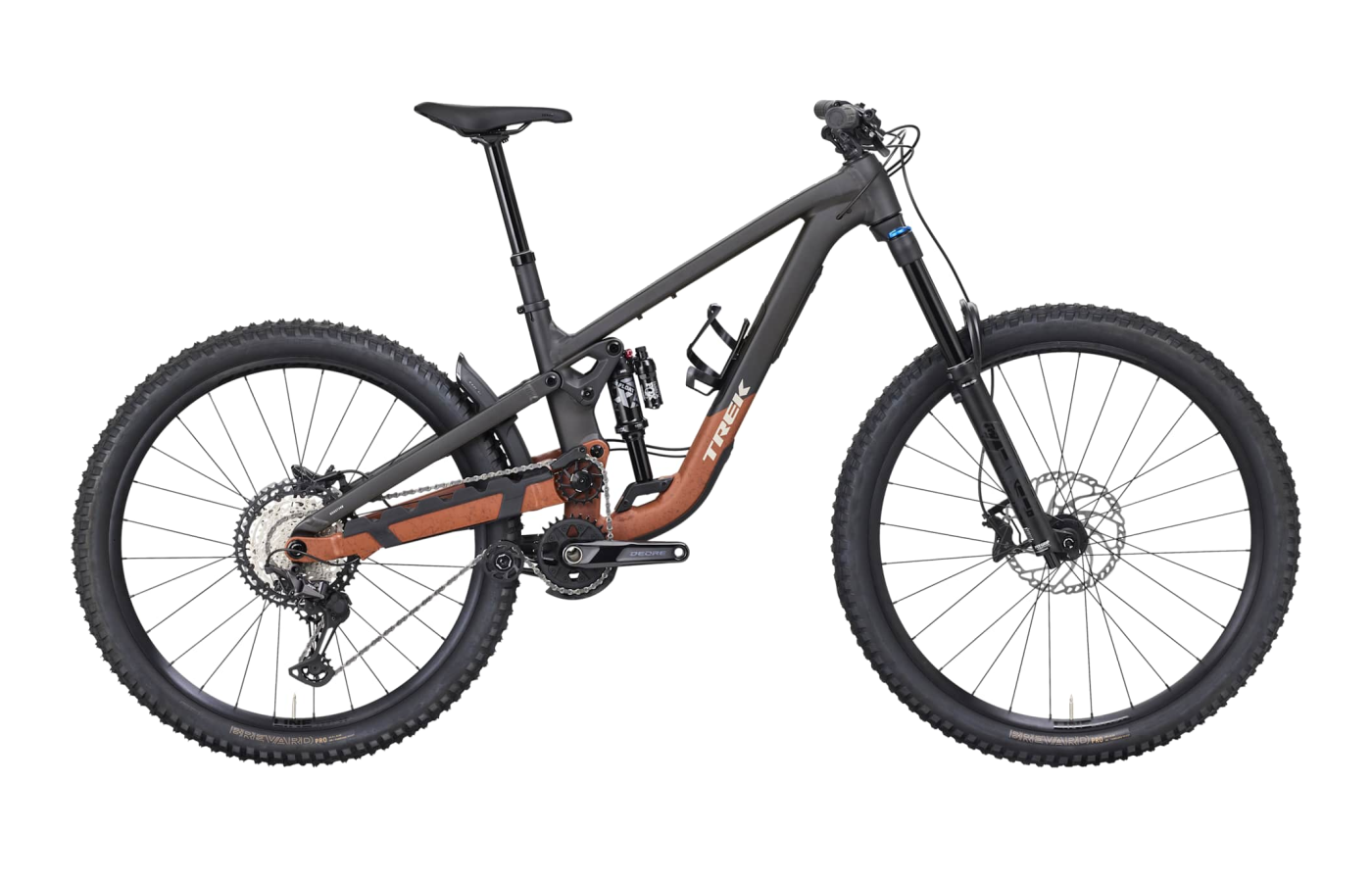
Slash
The Slash takes a different approach with a high-pivot suspension layout — the rearward axle path eats square edges in a way no four-bar can. Pick it if outright high-speed bump absorption is the priority.
Compare →Capra
The Capra is the value play — direct-to-consumer pricing means similar travel and components for noticeably less money. The catch is no local dealer and no demo before you commit.
Compare →