Element
vsEpic
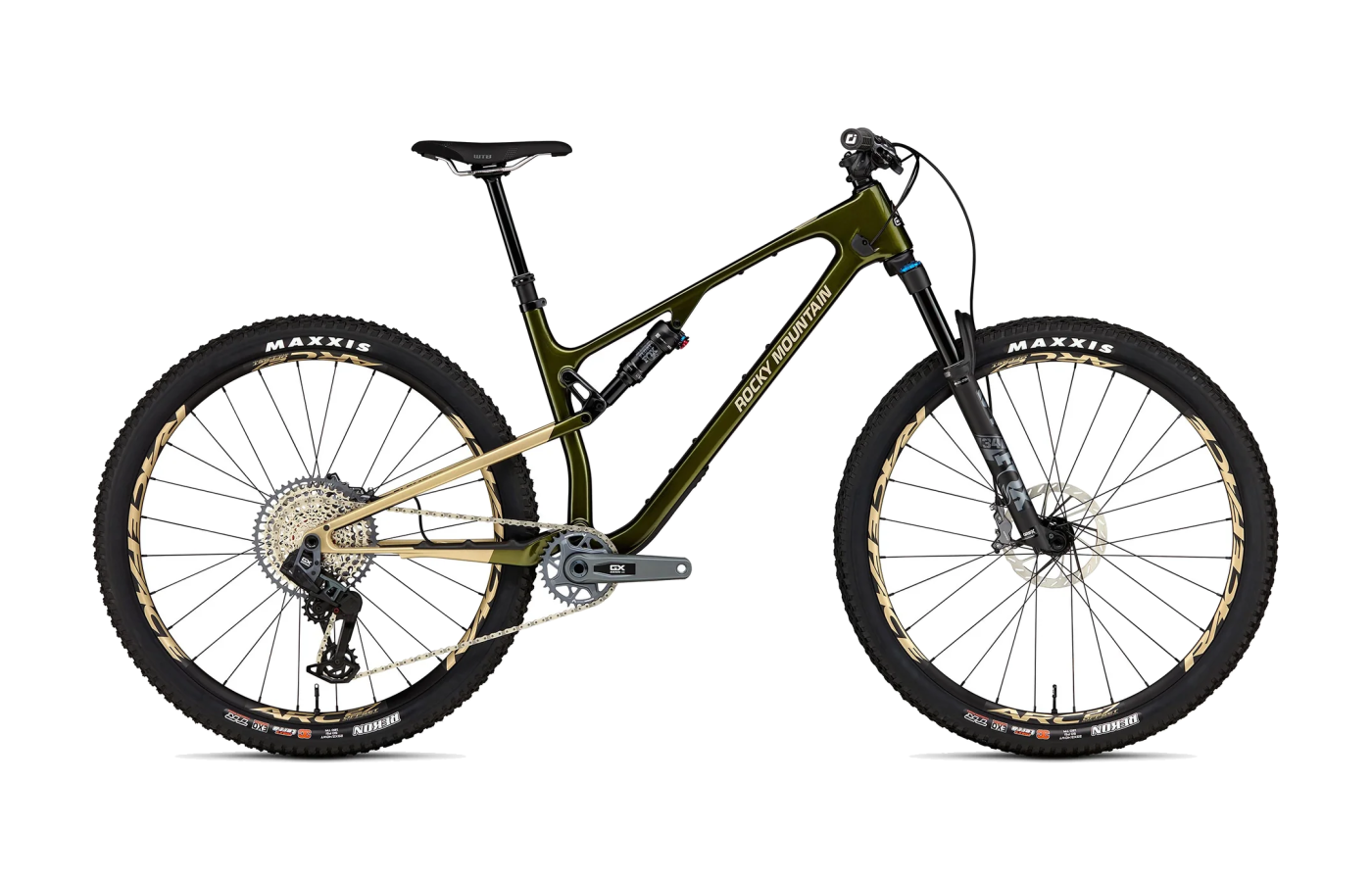
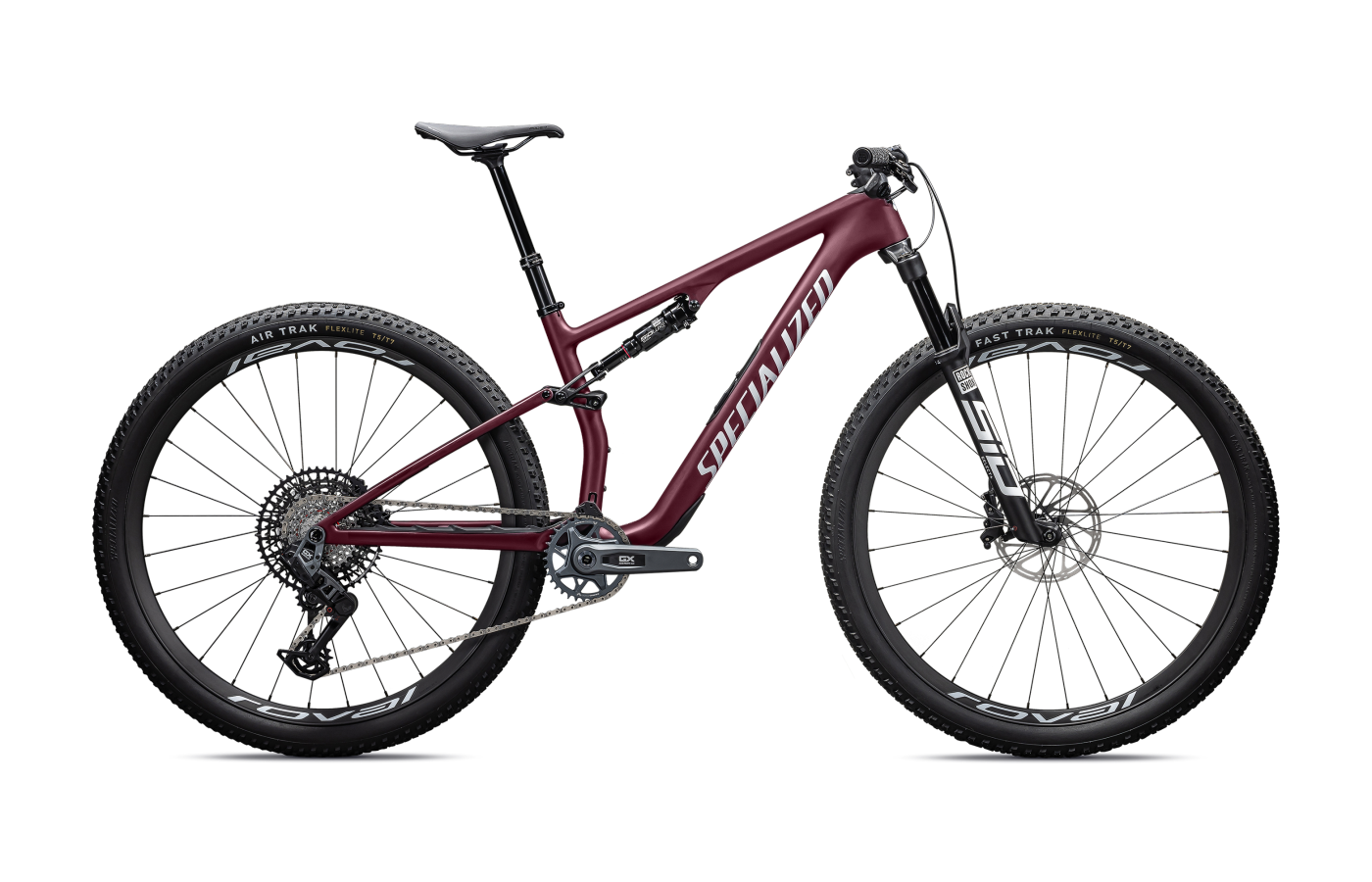
Two 120 mm carbon XC bikes, two takes on what fast means.
The Rocky Mountain Element leans downcountry — slacker, longer-forked, more trail. The Specialized Epic 8 is a modern XC racer with a usefully active suspension.
Element
- Trail-bike geometry in an XC package — 130 mm fork and 65° head angle (slack RIDE-4 setting) make it noticeably more confident on chunky descents than most 120 mm-rear bikes.
- RIDE-4 adjustable geometry lets you flip the chip between four head-angle / seat-angle / progression settings to suit terrain — no other bike in this comparison offers it.
- Rear-end stiffness with weight savings — the new Smoothlink SL flex-stay drops ~350 g and increases lateral stiffness, per Rocky and confirmed by Bikepacking and Theradavist.
- Press-fit bottom bracket — flagged as a long-term creak risk by Bike-test, Singletracks, and Bikepacking.
- No in-frame storage; only three builds, none under $4,499.
Epic
- SWAT downtube storage — a sealed in-frame compartment for a tube, tool, and CO2; reviewers consistently single it out as the best-executed in-frame storage on the market.
- Threaded BSA bottom bracket — a real long-term-ownership win that Element buyers don't get.
- 'Magic Middle' suspension tune — a custom RockShox SIDLuxe digressive compression mode that holds high in its travel under power and opens up on impacts, with ~20% less pedal bob than the previous Epic.
- 120 mm fork and lower stack make it feel more like a race bike and less like a trail bike on steep descents than the Element.
- Lineup spans $4,499 to $14,999 — the S-Works tax is real.
Editor’s analysis
Same travel, same wheel size, same broad category — and almost completely different missions once you ride them.
On paper the Rocky Mountain Element and the Specialized Epic look like twins: 120 mm rear travel, 29-inch wheels, carbon-only frames, full SRAM Transmission across the mid builds. Spend any time with the geometry charts, the suspension specs, and the meta-reviews and the philosophies pull apart fast.
The Rocky Mountain Element is the downcountry one. It runs a 130 mm fork on every build above the entry trim, sits on a 65° head tube angle in the slack RIDE-4 setting, and uses Rocky's new flex-stay rear end to drop ~350 g of frame weight while stiffening the rear triangle. Reviewers from NSMB to Singletracks describe it as lively, planted in corners, and capable enough that 'on almost anything on the map, it's often splitting hairs on whether a bigger bike is faster.' It's an XC bike that wants you to point it at the trail bike's lines.
The Specialized Epic 8 is the racer. A 120 mm SID up front, a 65.9° head angle, a steeper-feeling rider position, and the custom 'Magic Middle' SIDLuxe shock tune that gives you a firm pedaling platform that pops open on impacts. Pinkbike, Flow, and Bicycling all converge on the same line: this is the most capable Epic ever, but the bones are still race bones — low BB, short 435 mm stays, calm-rather-than-twitchy steering, and SWAT downtube storage so you can carry tools without a hip pack.
Put another way: the Element wants to be the one bike you take to a sketchy alpine ride. The Epic 8 wants to be the one bike you take to a marathon-XC start line — and now, unlike previous Epics, it won't punish you on the descent home.
Where the builds differ.
Comparing our editor's-pick builds side-by-side. Winners highlighted row-by-row — lower price and weight, and the better-spec component, each mark a point.
Build variants & pricing
The Element runs a tight three-build lineup from $4,499 to $9,599. The Epic 8 sprawls across eight builds from $4,499 to $14,999.
Prices are current US MSRP. Our editor's picks — the Element Carbon 70 ($6,999) and the Epic 8 Expert ($7,199) — are matched at SRAM GX Eagle AXS Transmission, the wireless one-down tier where most serious buyers land. Both editor's-pick builds use the same drivetrain and similar-tier suspension, so the spec table below isolates the platforms' real differences (fork travel, wheels, frame features) rather than drivetrain tier.
How they fit, how they steer.
Both at the size that fits a 5'8" rider. Reach is identical at 450 mm. The Rocky Mountain Element sits 24 mm taller in stack, runs 0.9° slacker at the head tube (65.0° vs 65.9° in the slack settings), and has a 29 mm longer wheelbase — geometry that reads more trail than race.
Which size should I buy?
Size recommendations based on stack, reach, and effective top tube. The Epic offers an XS that the Element doesn't; otherwise the size ranges overlap closely.
→These are starting points. Flexibility, riding style, and preferred position all shift the answer — if you’re between sizes, a professional fit beats a chart.
What the magazines said.
Published reviews from trusted cycling outlets. Click through for the full write-up.
Which one should you buy?
If you want one bike for everything from XC laps to alpine descents, get the Element. If most of your riding is racing or fast laps where every watt matters, get the Epic 8.
Element
Pick the Rocky Mountain Element if you want a 120 mm bike that punches into trail-bike terrain — slack head angle, 130 mm fork, RIDE-4 adjustability, planted in the corners. Reviewers consistently call it a bike that 'punches well above its weight class.' The trade-off is the press-fit BB and no in-frame storage.
Epic
Pick the Specialized Epic 8 if your day has a stopwatch on it. The 'Magic Middle' shock tune, 120 mm fork, low BB, and short stays make this the most efficient pedaling Epic ever, while the active travel keeps it composed on the descents older Epics couldn't handle. SWAT storage and a threaded BB are everyday-ownership wins.
Questions buyers actually ask.
Short answers to the things we get emailed about most often.
01Which is the better climber?
Both climb very well — they're 120 mm bikes built around efficiency. The Epic 8 has the sharper pedaling platform thanks to its 'Magic Middle' SIDLuxe shock tune, which Specialized claims (and reviewers confirm) gives roughly 20% less pedal bob than the previous Epic. On smooth fire roads in the firmest setting it 'feels like a hardtail,' per Pinkbike.
The Element's 130 mm Fox 34 fork raises the front end slightly, which trades a touch of out-of-saddle pedaling efficiency for traction on technical chunky climbs. With the RIDE-4 chip in the steepest setting, Singletracks found it gave 'snappier handling on the climbs, particularly in tight switchbacks.'
02Which is the better descender?
The Element, slightly. Same 120 mm of rear travel, but 10 mm more fork (130 mm vs 120 mm), a 0.9° slacker head angle in the comparable settings (65.0° vs 65.9°), and 24 mm more stack at the equivalent fit-picked size. Multiple reviewers — NSMB, Bike-test, Enduro MTB — describe the Element as feeling 'more capable than you'd expect from a 120 mm bike.'
The Epic 8 has closed most of the gap thanks to its slack-for-XC 65.9° head angle and the active 'Magic Middle' suspension, but it still rides more like a racer with great descending manners than a trail bike with race manners.
03How do the editor's-pick builds (Carbon 70 vs 8 Expert) compare on spec?
Both run SRAM GX Eagle AXS Transmission — same wireless drivetrain, same one-down tier. The differences:
- Wheels: Epic 8 Expert ships with Roval Control SL V hookless carbon wheels (29 mm internal). Element Carbon 70 uses Race Face ARC 27 alloy rims with a DT Swiss 370 rear hub — the slow-engagement hub is a recurring critique.
- Fork: Element runs a Fox 34 Float Performance Elite at 130 mm. Epic runs a RockShox SID Select+ at 120 mm.
- Frame features: Epic has SWAT downtube storage and a threaded BB. Element has neither.
At $6,999 vs $7,199, the prices are within $200 — the spec table isolates platform differences, not tier mismatch.
04What's the deal with the Element's RIDE-4 chip?
RIDE-4 is a flip-chip system in the rocker link that gives you four geometry positions, adjusting head angle, seat tube angle, and shock progression simultaneously. In the slackest setting the Element sits at a 65.0° head angle; in the steepest it sharpens to roughly 65.8°.
Reviewers used the steeper settings for tight, technical climbing and the slacker settings for descending-heavy days. The Epic 8 has its own simpler Hi/Lo flip chip (~0.5° HTA / a few mm BB drop), but it doesn't offer the same range or progression tuning.
05Is the press-fit bottom bracket on the Element a real problem?
It's a recurring concern, not a guaranteed one. Bikepacking put it bluntly: 'It's usually only a matter of time' before press-fit creaks set in. Singletracks and Bike-test both list it as a 'con,' though none reported actual creaking during their test periods.
The Specialized Epic 8 uses a threaded BSA bottom bracket across the entire range — reviewers described it as a 'win for mechanics.' If long-term low-maintenance ownership matters to you, that's a real difference.
06Does either bike have in-frame storage?
Only the Specialized Epic 8, which uses SWAT 4.0 downtube storage — a sealed in-frame compartment with a flush, lever-actuated door. Reviewers describe it as 'rattle-free' and the best-executed in-frame storage in the segment, big enough for a tube, tool, and CO2.
The Rocky Mountain Element doesn't have in-frame storage. It does ship with two downtube bottle mounts plus an under-top-tube accessory mount on most sizes (XS gets one bottle), so you can run two bottles and a tool strap — a different solution to the same problem.
07Which has better long-term parts and warranty support?
Both come with multi-year frame warranties — Specialized's is lifetime to the original owner, Rocky Mountain's is 5 years.
The wrinkle: Rocky Mountain announced bankruptcy protection and restructuring during the 2025 Element's review cycle. NSMB and Singletracks both flagged this as a real consideration for long-term parts and warranty support. Specialized has no such overhang and runs a much larger global dealer network. If service-network depth matters, the Epic 8 has the clearer advantage today.
08Which build is the value sweet spot on each side?
On the Element, it's the Carbon 70 at $6,999 — SRAM GX AXS Transmission, Fox Performance Elite suspension, carbon frame. The cheaper Carbon 30 ($4,499) drops to a Marzocchi Z2 fork and a Shimano XT/Deore mechanical mix; the C99 ($9,599) adds Flight Attendant and XX Transmission for $2,600 more.
On the Epic 8, reviewers near-unanimously point at the 8 Expert at $7,199 (GX AXS Transmission, Roval carbon wheels, SID Select+ suspension) — Pinkbike and Flow both call it the best performance-per-dollar in the lineup. The S-Works at $14,999 is the technology benchmark, not the value play.
Similar bikes
If your priorities don’t map cleanly onto either of these, one of these adjacent bikes probably fits better.
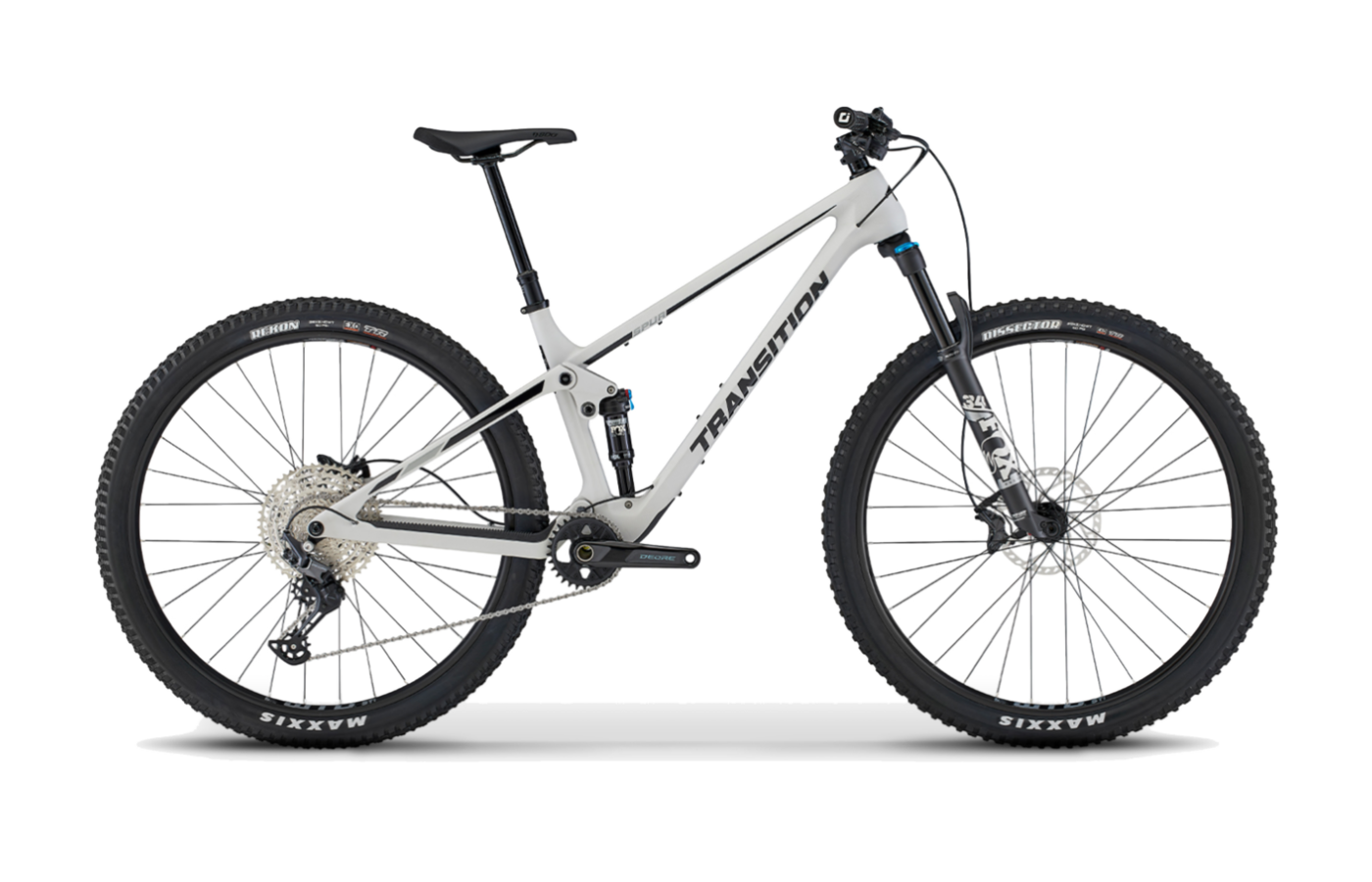
Spur
The closest peer to the Element in the downcountry conversation — light, playful, and consistently called out as a direct competitor for riders who want a 120 mm bike with real descending chops.
Compare →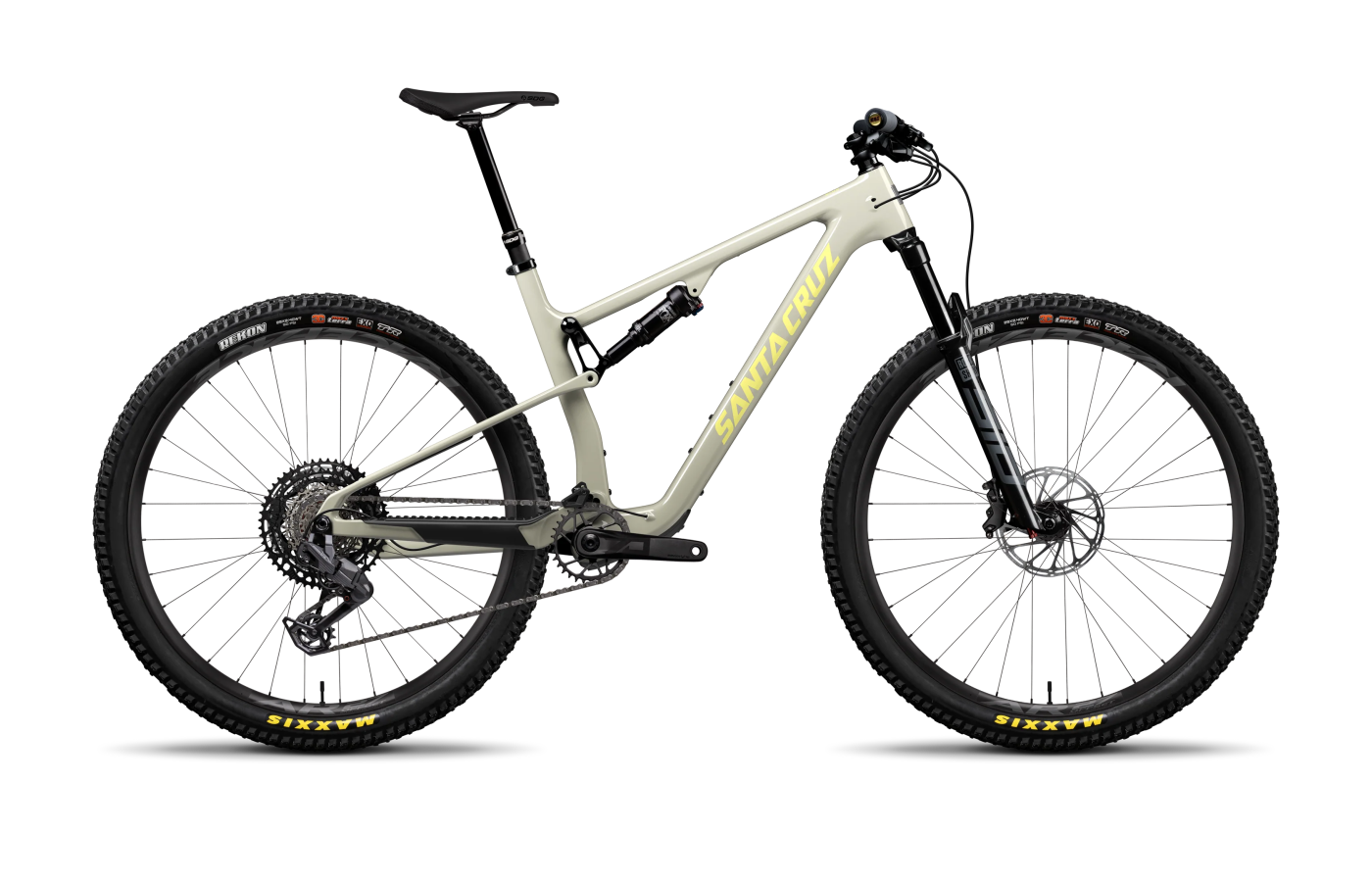
Blur
Another flex-stay 120 mm XC bike, but tilted further toward race efficiency than the Element. A natural cross-shop if you're between race and downcountry.
Compare →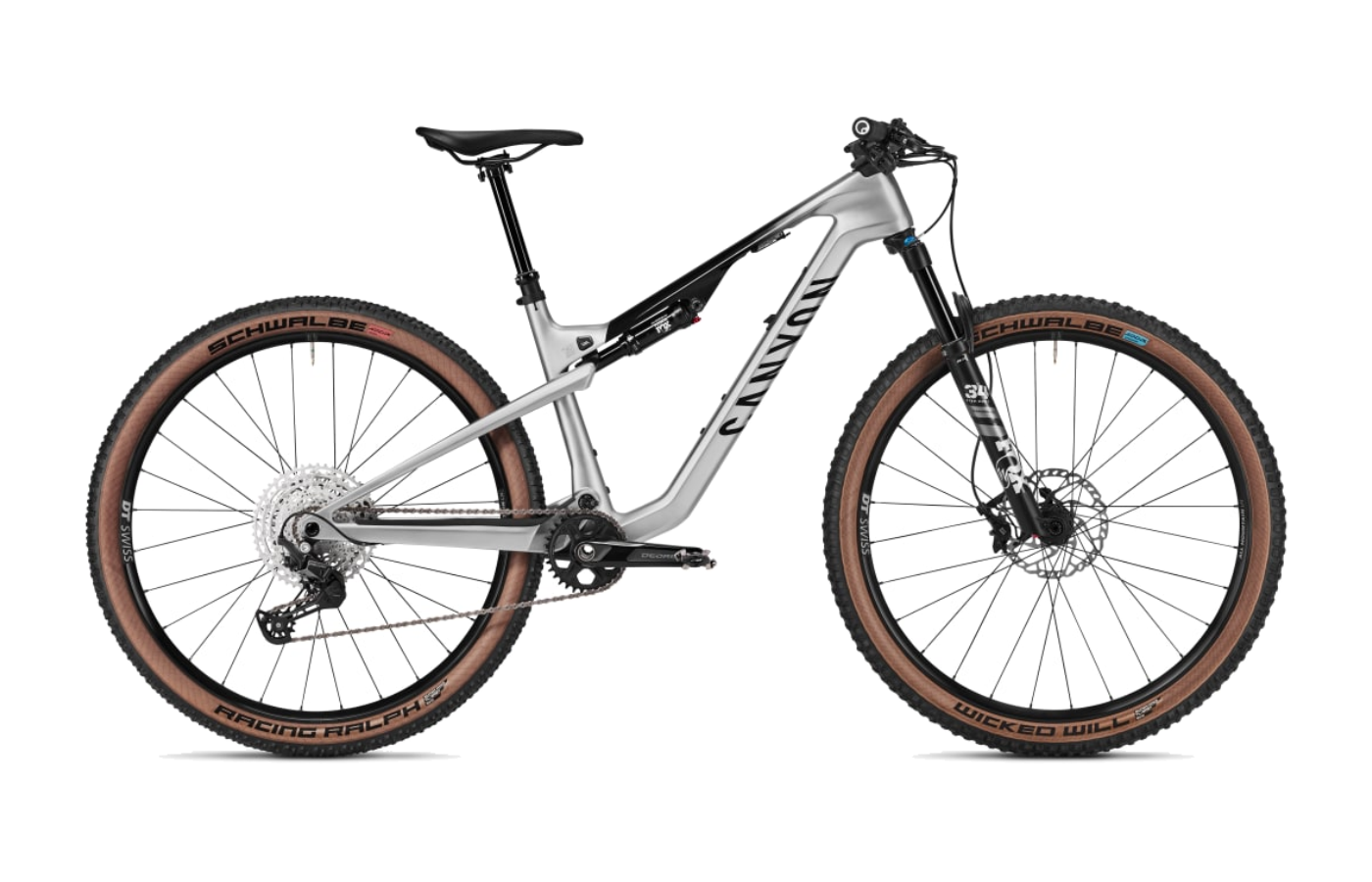
Lux Trail
Canyon's direct-to-consumer take on the same brief — XC pedaling with trail-bike geometry — at a noticeably lower price. The catch is the usual DTC trade-off: no local dealer, no demos.
Compare →