Fusion
vsGrowler
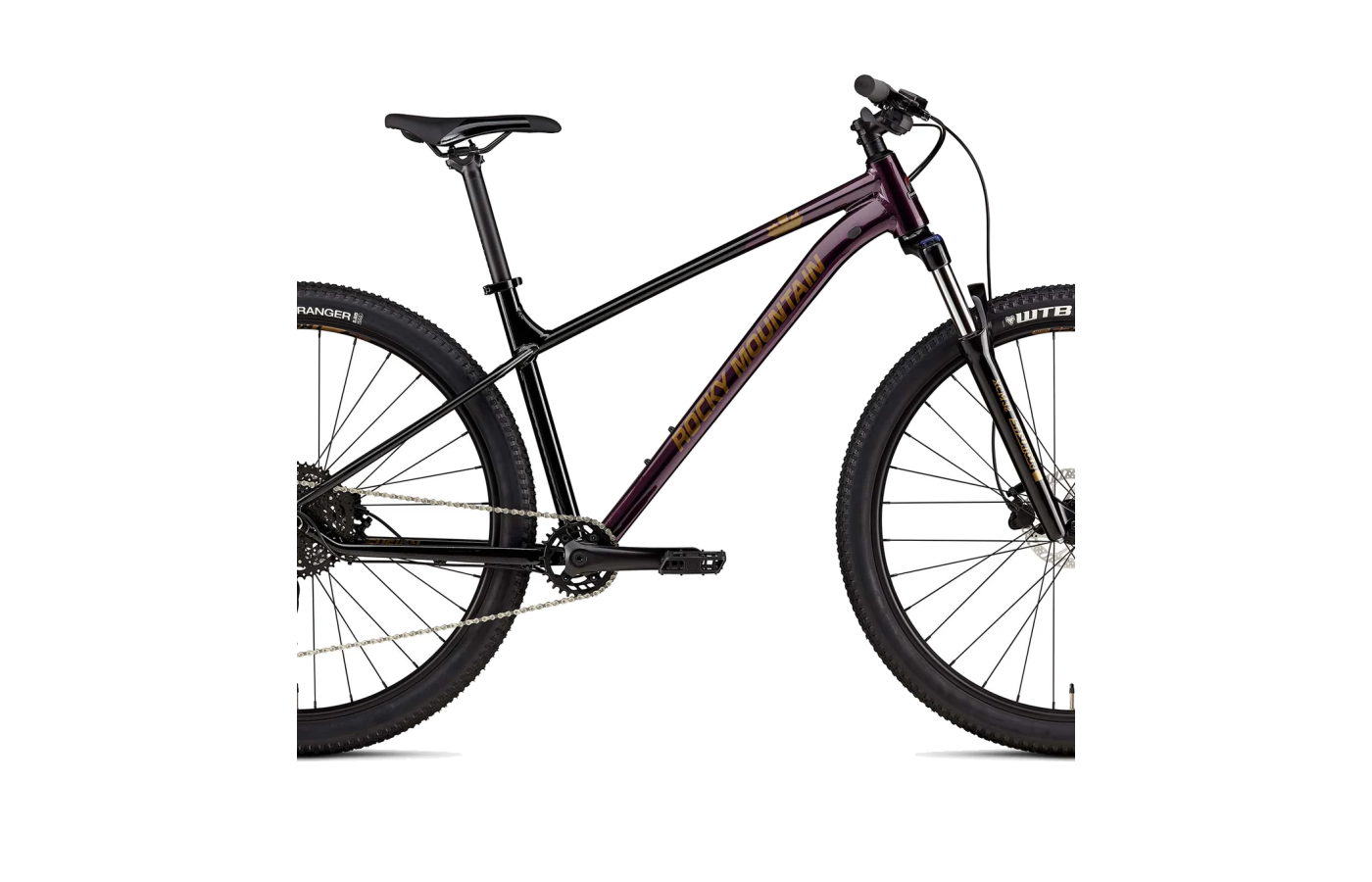
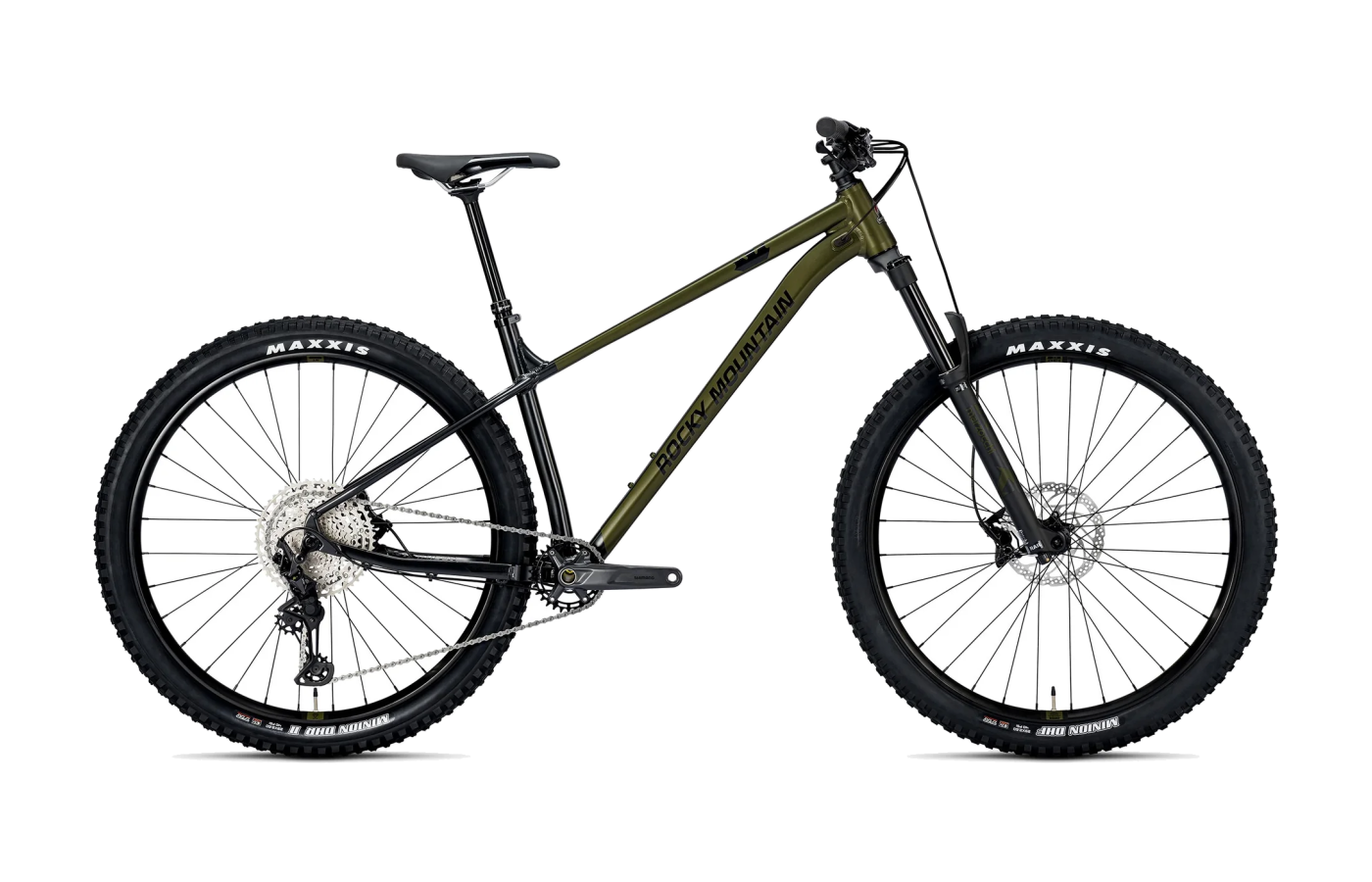
Two hardtails, two missions.
The Fusion is a $909 entry-level XC hardtail. The Growler is a $1,999 enduro-geometry hardtail that wants to be a downhill bike.
Fusion
- Lowest entry price in the Rocky Mountain off-road lineup at $909 — well under the Growler's $1,999 floor.
- XC-friendly geometry — 66.5-degree head angle and 445 mm chainstays give predictable, neutral steering on smoother trails.
- Modern 1x drivetrain — Shimano CUES 9-speed is durable, simple, and easy to service at any shop.
- 120 mm SR Suntour XCM fork is a basic coil unit — overwhelmed quickly on rougher trails.
- No dropper post and narrow 2.4-inch tires limit how aggressive you can ride.
Growler
- Enduro geometry on a hardtail — 64-degree head angle and 1,210 mm wheelbase (size M) feel uncannily stable at speed.
- Marzocchi Z2 150 mm fork — a properly capable air fork, far above the suspension on most sub-$2k hardtails.
- Aggressive tire spec — 2.6-inch Maxxis Minion DHF/DHR II grip hard and add real damping to a rigid rear end.
- Heavy and long — feels sluggish on tight, twisty climbs and mellow flow trails.
- Stiff aluminum frame plus no rear suspension means a fatiguing ride on chunky terrain.
Editor’s analysis
Same brand, same material, same number of wheels — and almost nothing else in common.
On the showroom floor the Rocky Mountain Fusion and Rocky Mountain Growler look like cousins. Both are 6061 aluminum hardtails, both run a single chainring, both wear Maxxis rubber. Spend ten seconds with the geometry chart and the family resemblance evaporates.
The Fusion is the cheaper, more conventional bike — 66.5-degree head angle, 120 mm SR Suntour fork, 2.4-inch Rekons, no dropper post. It's pitched as an entry-level XC hardtail and that's exactly how it reads on paper: an efficient, predictable bike for fire roads, mellow singletrack, and learning how to ride. At $909 it's also the cheapest way into a Rocky Mountain mountain bike, full stop.
The Growler is the louder sibling. A 64-degree head angle (2.5 degrees slacker than the Fusion), a 150 mm Marzocchi Z2 fork, 2.6-inch Minion DHF/DHR II tires, and 10 mm shorter chainstays — these are enduro-bike numbers stuck onto a hardtail rear end. Pinkbike, Bike Magazine, and Mountain Bike Action all describe riders attacking descents on it the way they would on a full-suspension trail bike. The trade-off is weight (~14 kg), tight-trail sluggishness, and a price tag more than double the Fusion's.
Put another way: the Fusion is the bike you buy to start mountain biking. The Growler is the bike you buy when you already mountain bike and want to make every descent feel slightly more dangerous than it should.
Where the builds differ.
Comparing our editor's-pick builds side-by-side. Winners highlighted row-by-row — lower price and weight, and the better-spec component, each mark a point.
Build variants & pricing
Both ranges are tightly scoped — the Fusion is offered as a single $909 build, and the Growler as a single $1,999 build.
Prices are current US MSRP. The two bikes don't really overlap on price or intent, so editor's picks are simply the only builds Rocky Mountain offers in each line.
How they fit, how they steer.
Both at size medium — fit-picked for a 5'8" rider on each bike. Reach is identical at 450 mm, but the Growler stacks 45 mm taller, slackens the head angle by 2.5 degrees, and shortens the chainstays by 10 mm. Same fit, very different attack posture.
Which size should I buy?
Size recommendations based on stack, reach, and effective top tube. Both bikes use S/M/L/XL labels and the size ranges line up closely.
→These are starting points. Flexibility, riding style, and preferred position all shift the answer — if you’re between sizes, a professional fit beats a chart.
What the magazines said.
Published reviews from trusted cycling outlets. Click through for the full write-up.
Which one should you buy?
If you're new to mountain biking or stick to mellow trails, get the Fusion. If you already ride and want a hardtail that descends like an enduro bike, get the Growler.
Fusion
If you're getting into the sport, riding fire roads and mellow singletrack, or building skills on a budget — the Fusion is a sensible, durable, conventional XC hardtail at the lowest price Rocky Mountain offers. It won't push you into terrain you're not ready for, and it leaves room in the budget for a helmet, shoes, and gas to the trailhead.
Growler
If you already mountain bike and want a hardtail that punches well above its travel — the Growler's enduro-grade geometry and 150 mm Marzocchi fork let you ride descents on lines you'd normally save for a full-suspension bike. The cost is climbing efficiency and tight-trail nimbleness, both of which the geometry trades away on purpose.
Questions buyers actually ask.
Short answers to the things we get emailed about most often.
01Which one is faster on a climb?
The Rocky Mountain Fusion, on most climbs. It's lighter, runs faster-rolling Maxxis Rekon 2.4 tires, and has a slightly steeper head angle that makes tight switchbacks easier to thread.
The Growler isn't a bad climber — its 75-degree seat tube angle puts you over the cranks and the wide-range Deore 12-speed cassette goes low enough for steep grades — but the long wheelbase, slack head angle, and heavy 2.6-inch Minion tires all add up. Reviewers consistently call the Growler 'fine' or 'surprisingly pleasant' uphill, never 'fast.'
02Which one is better on a descent?
The Rocky Mountain Growler, by a wide margin. Multiple reviews — Pinkbike, Bike Magazine, Mountain Bike Action, Bigbluetire — describe taking lines on the Growler that they would only otherwise attempt on a full-suspension bike. The 64-degree head angle, 150 mm Marzocchi fork, and aggressive Minion tires make it stable and confident on terrain that would have a Fusion bouncing off-line.
The Fusion's 66.5-degree head angle and 120 mm coil fork are tuned for moderate XC trails. Push it down a steep, chunky descent and it gets out of its depth quickly.
03How much travel does each bike have?
Fusion 10: 120 mm front (SR Suntour XCM32 DS coil fork), 0 mm rear — it's a hardtail.
Growler 50: 150 mm front (Marzocchi Z2 Float EVOL Rail air fork), 0 mm rear — also a hardtail.
Neither bike has rear suspension, so all bump absorption beyond the fork comes from tires, body english, and the modest flex of the aluminum frame.
04What size tires can they fit?
Fusion 10: ships with 2.4-inch Maxxis Rekon tires on Rocky Mountain TR25 rims. There's headroom for slightly larger XC rubber, but it's not designed around plus-sized tires.
Growler 50: ships with 2.6-inch Maxxis Minion DHF/DHR II tires on WTB ST i30 TOUGH rims. The Growler frame is explicitly built around 29 x 2.6-inch clearance, which is part of why it feels so planted.
If you want fast XC rolling, the Fusion's setup is better. If you want grip and damping for rough terrain, the Growler's is.
05Does either come with a dropper post?
The Growler 50 is dropper-post compatible and ships with one — Pinkbike specifically calls out the dropper as one of the features that makes it feel like a bike from a higher price bracket.
The Fusion 10 does not come with a dropper post. The frame's seat tube can accept one as an aftermarket upgrade, but you'll be spending extra to add it. For the kind of riding the Fusion is built for, the omission is reasonable; for the kind of riding the Growler is built for, a dropper is non-negotiable.
06Who is the Fusion for, and who is the Growler for?
The Fusion is for someone buying their first real mountain bike, riding mellow singletrack and fire roads, and not yet sure how deep they'll go in the sport. The price ($909), the simple Shimano CUES drivetrain, and the conventional XC geometry all point at the same buyer.
The Growler is for someone who already mountain bikes and wants a hardtail that can hold its own on aggressive descents — either as a primary bike on a budget or as a second 'hardtail day' bike alongside a full-suspension trail rig.
07Are these worth upgrading over time?
The Growler has a bright upgrade path. Reviewers consistently note that the frame is the star of the show, and that brakes, tires (tubeless conversion), and eventually drivetrain are sensible places to put money over time without ever feeling like the chassis is the limit.
The Fusion can be upgraded — fork, dropper, brakes — but you'll quickly hit the ceiling of an entry-level XC frame. Past a certain point, most riders are better off saving for a higher-tier bike than continuing to upgrade a $909 platform.
Similar bikes
If your priorities don’t map cleanly onto either of these, one of these adjacent bikes probably fits better.
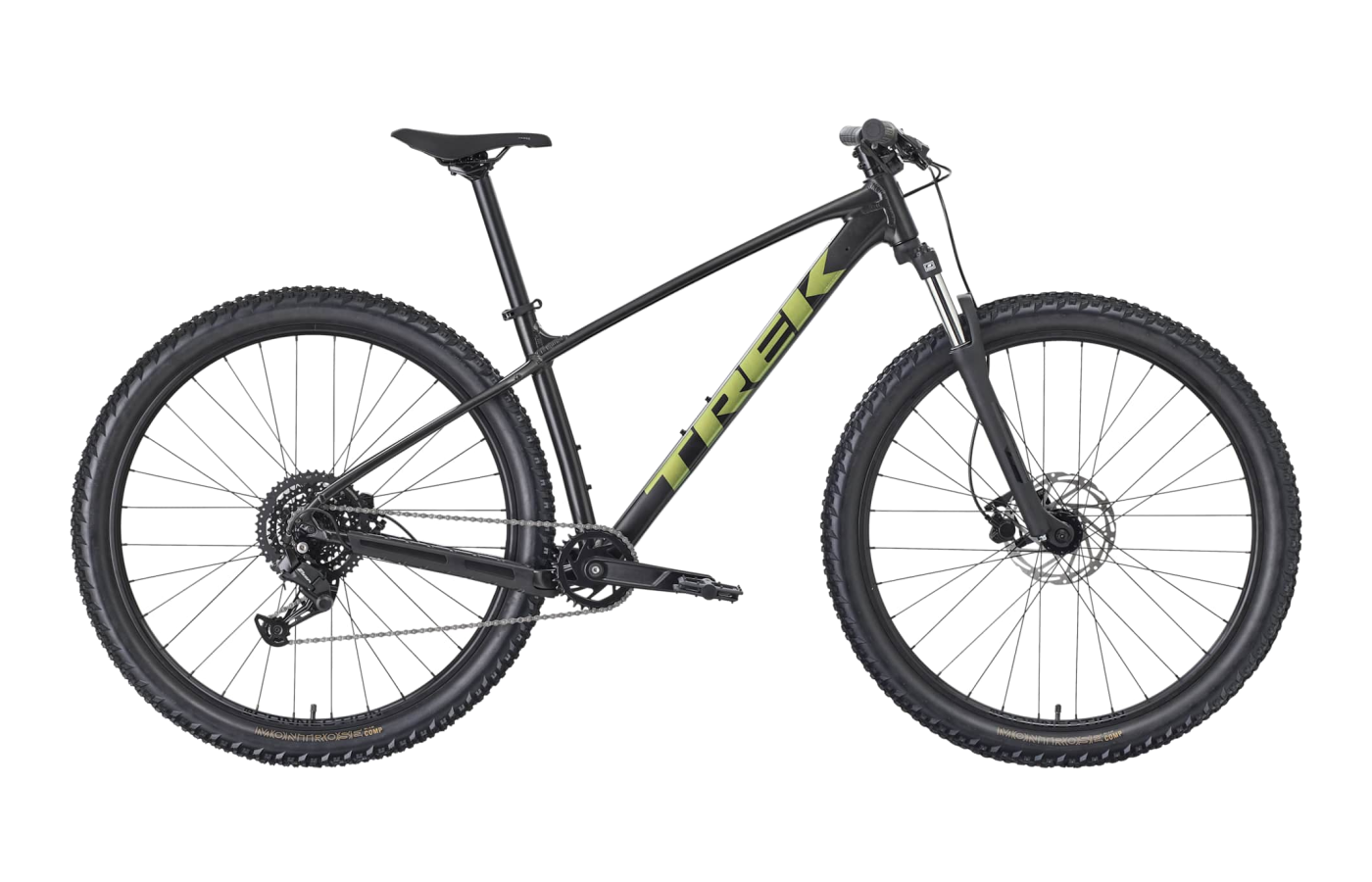
Marlin
The default cross-shop for the Fusion — a similarly priced entry-level hardtail from a brand with one of the largest dealer networks in North America. Easier to test ride and easier to service almost anywhere.
Compare →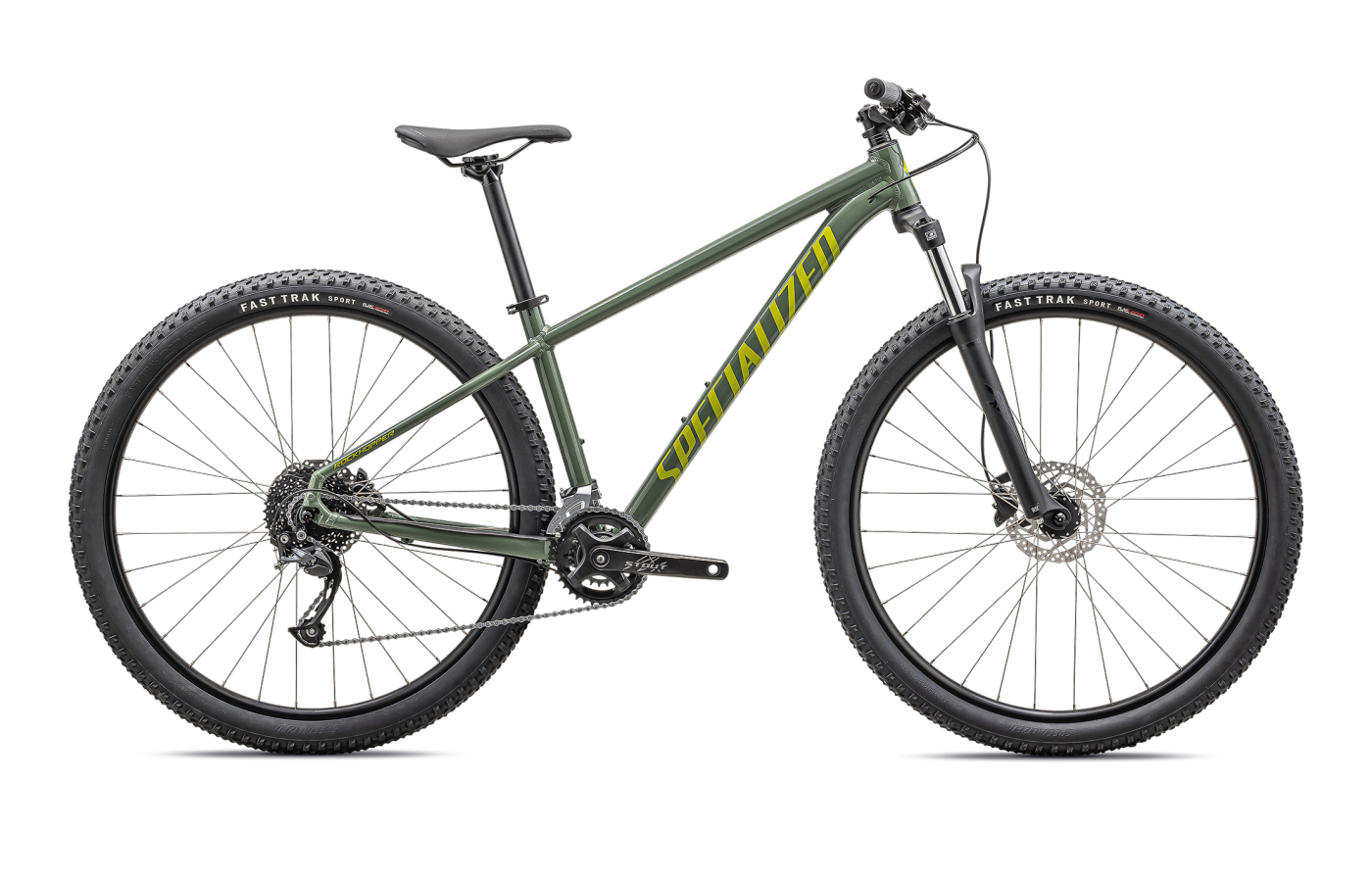
Rockhopper
Specialized's long-running entry-level hardtail, with a slightly more polished frame finish and color palette than the Fusion and a comparable spec for the money. A safer pick if you live near a Specialized dealer.
Compare →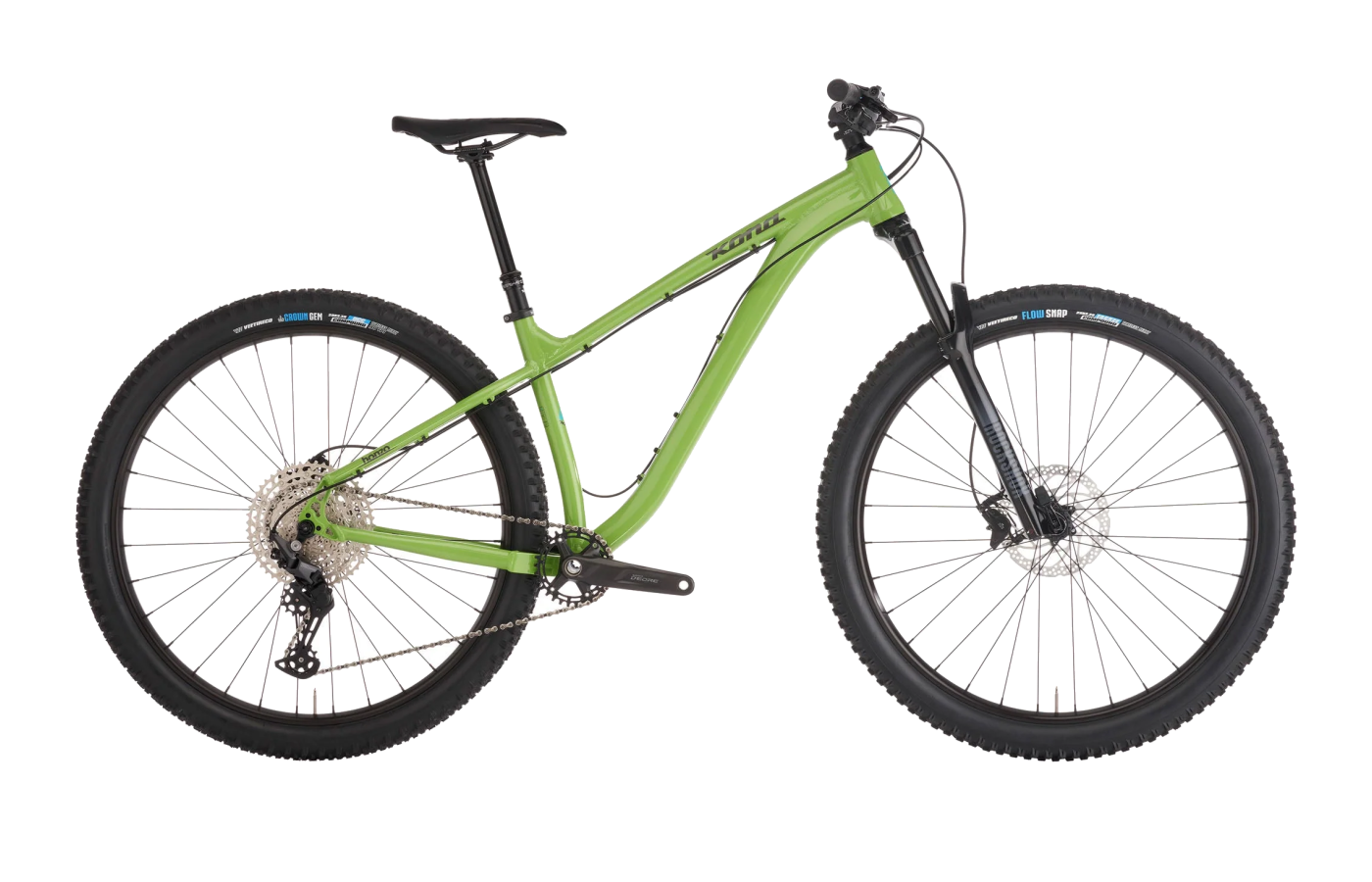
Honzo
The closest spiritual sibling to the Growler — a slack, aggressive hardtail with a long-running reputation for being playful and tough. If you like the Growler's intent but want a different brand's take on the formula, start here.
Compare →