Growler
vsRockhopper
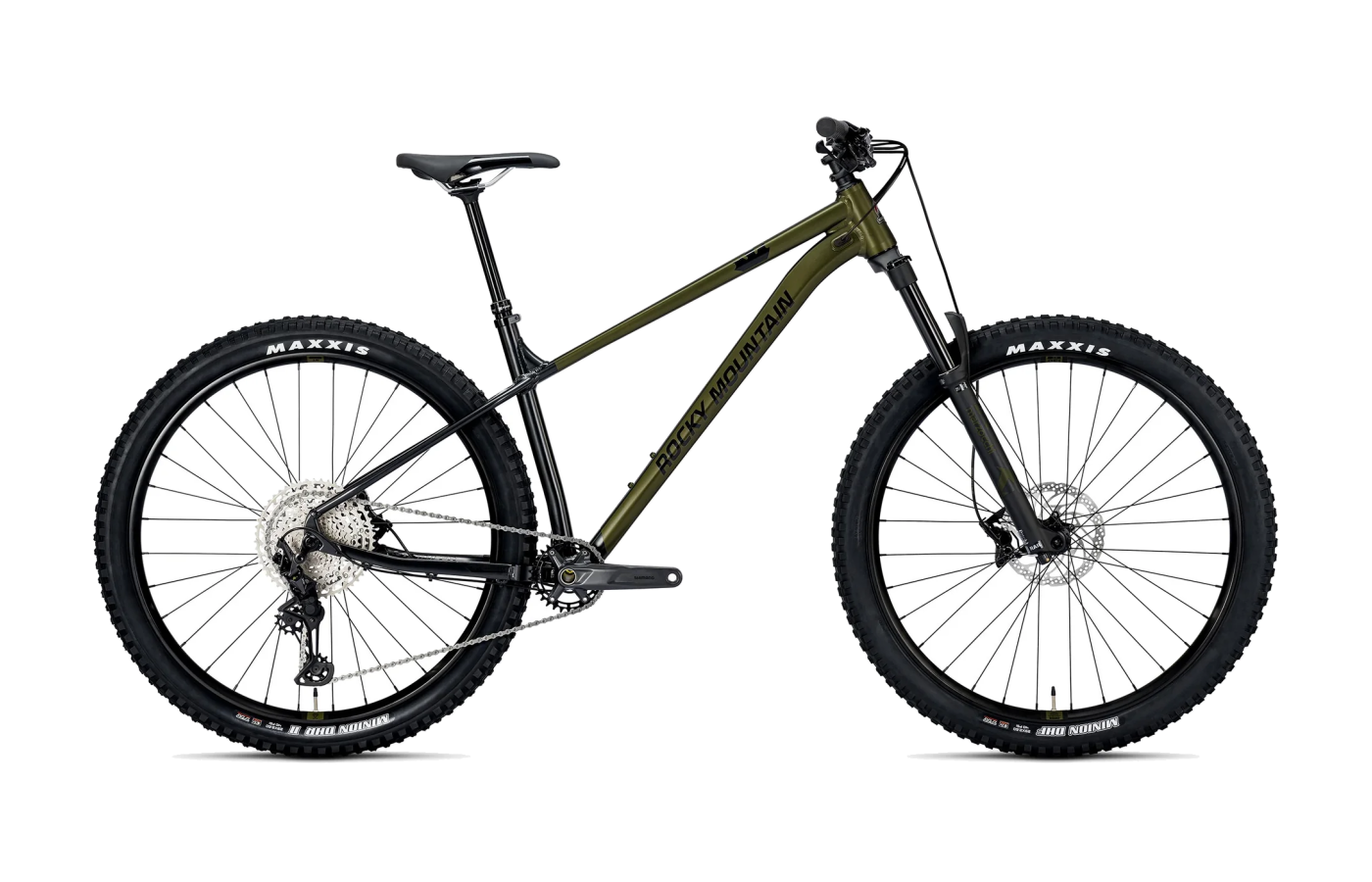
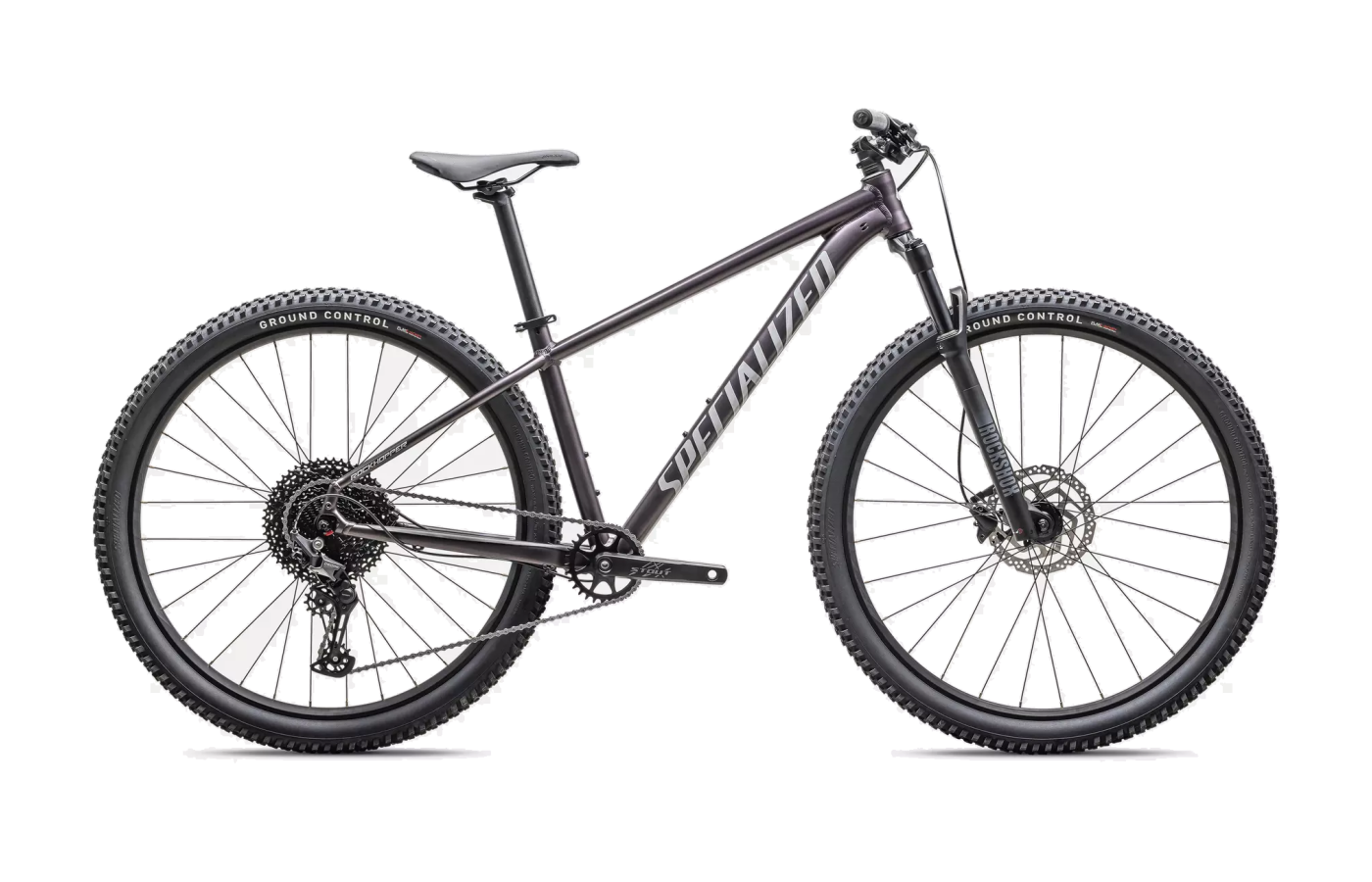
Two budget hardtails, two opposite agendas.
The Growler is a 150 mm enduro-geometry descender wearing a hardtail's clothes. The Rockhopper is a classic XC mile-muncher built to climb.
Growler
- Enduro geometry on a hardtail — 64-degree HTA, 1,210 mm wheelbase at medium, 150 mm Marzocchi Z2 fork.
- Modern frame standards — Boost 148 thru-axle, tapered head tube, threaded BB. Future fork and wheel upgrades just bolt on.
- Genuinely descent-capable — reviewers consistently rode it on the same trails, at the same speeds, as full-suspension bikes.
- One build, one price — no $1k entry point if your budget can't stretch.
- Long wheelbase makes tight climbs and switchbacks awkward; not a quick, nimble hardtail.
Rockhopper
- Lightweight and efficient — 13.3 kg at the Comp build, with a steep 73.5-degree seat tube angle that climbs eagerly.
- Wide build range — $649 to $1,299, nine variants. Easy to spec to a budget.
- Extensive size and wheel options — XS through XXL, with smaller sizes on 27.5" wheels for proper fit.
- Straight head tube and 135 mm QR axles mean almost no real upgrade path for forks or wheels.
- 80–100 mm fork and 68.5-degree HTA get nervous and overwhelmed on technical descents.
Editor’s analysis
These bikes share a category — sub-$2k aluminum hardtail — and almost nothing else.
The Rocky Mountain Growler picks one job and over-commits to it. A 64-degree head tube angle, a 1,210 mm wheelbase at size medium, 435 mm chainstays, and a 150 mm Marzocchi Z2 up front — the geometry sheet reads like a 160 mm enduro bike that someone forgot to bolt a shock onto. Reviewers across PinkBike, Bike Magazine, and Bigbluetire all converged on the same line: they rode it like a full-suspension bike, took similar lines, made similar commitments. It is, by current consensus, the most descending-capable hardtail under $2k.
The Specialized Rockhopper plays the opposite hand. A 68.5-degree head tube angle, a 425 mm reach at size large, an 80–100 mm fork that scales with frame size — this is XC geometry derived from the Epic. BikeRadar weighed an Elite at 13 kg; the Comp build here lands at 13.3 kg. It feels, in their words, zippy and direct under power. On groomed singletrack and rolling fire roads, it surges. On chunky descents, the front end goes nervous and the short fork runs out of ideas.
The component story tracks the geometry. The Growler runs Boost 148 thru-axles, a tapered head tube, a Marzocchi Z2 150 mm air fork, and 2.6-inch Maxxis Minion DHF/DHR tires — modern trail standards, top to bottom. The Rockhopper, even at the Expert level, is still on 135 mm quick-release axles and a straight 1-1/8" head tube. Bike Perfect and Off.road.cc both flagged this as a hard ceiling on long-term upgrades: most modern aftermarket forks and wheels won't bolt on.
Put another way: the Growler is a hardtail you'd buy because you want to ride blue and black-graded descents on a budget. The Rockhopper is a hardtail you'd buy because you want to cover 20 miles of green and blue singletrack without thinking about the bike. The price gap — $999 for the Comp vs. $1,999 for the lone Growler build — is the cost of admission to that descending capability.
Where the builds differ.
Comparing our editor's-pick builds side-by-side. Winners highlighted row-by-row — lower price and weight, and the better-spec component, each mark a point.
Build variants & pricing
The Growler ships as a single $1,999 build. The Rockhopper spans nine builds from $649 to $1,299.
Prices are current US MSRP. The compared builds match drivetrain tier (Shimano Deore 12-speed on both) but sit $1,000 apart in absolute price — the Growler simply doesn't offer a cheaper variant, and the Rockhopper doesn't offer anything close to its trail-ready spec.
How they fit, how they steer.
The Growler at medium and the Rockhopper at L-29 are both fit-picked for a 5'8" rider. The Growler sits 27 mm taller in stack, runs 25 mm more reach, sits 4.5 degrees slacker at the head tube, and stretches the wheelbase by 82 mm — entirely different cockpit, entirely different bike.
Which size should I buy?
The Rockhopper offers more sizes (XS through XXL, with smaller sizes on 27.5" wheels). The Growler runs SM through XL on 29" only.
→These are starting points. Flexibility, riding style, and preferred position all shift the answer — if you’re between sizes, a professional fit beats a chart.
What the magazines said.
Published reviews from trusted cycling outlets. Click through for the full write-up.
Which one should you buy?
If you want a hardtail that descends like a full-suspension bike, get the Growler. If you want a light, efficient XC bike for groomed trails, get the Rockhopper.
Growler
If your local trails go down more than they go up — or if you want a budget bike that won't flinch when you point it at a black diamond — this is the most capable hardtail in its class. Bring strong legs for the climbs.
Rockhopper
If your weekend looks like 20-mile loops on green and blue singletrack, NICA-grade trails, or commuting that occasionally finds dirt — the Rockhopper is light, efficient, and cheap to get into. Don't expect it to hold up on rougher terrain.
Questions buyers actually ask.
Short answers to the things we get emailed about most often.
01Which is better for technical descents?
The Growler, decisively. Its 64-degree head tube angle, 1,210 mm medium wheelbase, and 150 mm Marzocchi Z2 fork put it in enduro-bike territory geometrically. PinkBike's Sarah Moore and Mike Levy both noted they rode it like a full-suspension bike — same lines, same commitment.
The Rockhopper, by contrast, runs a 68.5-degree head angle and an 80–100 mm fork (size-dependent). BikeRadar described its descending behavior as nervous, requiring constant micro-corrections. It's not built for that job.
02Which climbs better?
The Rockhopper. At ~13.3 kg for the Comp build versus a Growler weight that reviewers consistently logged at 31+ lb (~14.1 kg), the Rockhopper is physically lighter — and its XC-focused geometry encourages out-of-saddle pedaling.
The Growler isn't bad uphill — its 75-degree seat tube angle puts you over the cranks, and its wide-range Shimano Deore 12-speed cassette (11-51T) handles steep climbs. But its weight and long wheelbase make it sluggish on tight, technical climbs. As one reviewer put it, the Growler is for getting to the top, not setting Strava KOMs.
03What about tire clearance?
Growler: ships with 2.6-inch Maxxis Minion DHF/DHR tires stock. The frame is designed around that volume and reviewers ran them at 18-23 PSI as the bike's primary suspension.
Rockhopper: Specialized's published clearance is around 60 mm (2.35 inches is the stock size, with Ground Control or Fast Trak tires). It's not built for plus-tire volume.
04How do the suspension forks compare?
Growler 50: Marzocchi Z2 Float EVOL at 150 mm of travel, with a 44 mm offset. It's a real trail fork from a name brand — adjustable rebound, air spring, and enough damping to back up the bike's aggressive geometry.
Rockhopper Comp: RockShox Judy with a TurnKey damper, Solo Air spring, 46 mm offset, and 80–100 mm of travel that varies by frame size. Reviewers (BikeRadar, Off.road.cc) called it agricultural — fine for green and blue trails, overwhelmed by repeated big hits. Air-sprung is a clear step up from the coil-sprung Suntour forks on the cheaper Rockhoppers, but it's still entry-level.
05What about the upgrade path?
The Growler is built around modern standards: Boost 148 thru-axle rear, tapered head tube, threaded bottom bracket. Aftermarket forks, wheels, and headsets all bolt on without compatibility headaches.
The Rockhopper, even at the Expert tier, sticks with 135 mm quick-release axles and a straight 1-1/8" head tube. Bike Perfect and Off.road.cc flagged this as a real ceiling — most quality aftermarket forks need a tapered steerer, and modern wheelsets are Boost-only. If you want a bike that grows with you, the Growler is the better long-term platform.
06Are they both 29ers?
The Growler is 29" only across all four sizes (SM, MD, LG, XL).
The Rockhopper uses size-specific wheels: XS and S/M run 27.5" wheels for proper fit on smaller riders, while M/L and up run 29". Specialized also varies fork travel (80/90/100 mm) by size — a thoughtful detail that helps the bike fit a wider range of riders.
07Which is the better value?
Different definitions of value. The Rockhopper at $649 (base) to $1,299 (Expert) is the cheapest reliable way into a name-brand hardtail — Shimano hydraulic brakes, internal routing, and Specialized's frame quality at sub-$700 price points.
The Growler at $1,999 isn't trying to be the cheapest hardtail — it's trying to be the cheapest hardtail that descends like an enduro bike. On that narrower mission, no other sub-$2k bike does the same job. Pick based on what you actually need: cheap-and-efficient, or trail-capable-on-a-budget.
08Are these good first mountain bikes?
The Rockhopper is the safer pick for a true beginner: lighter, more forgiving on mellow trails, easier to maneuver at low speeds, and cheaper. It's a frequent recommendation for NICA high-school racers and adults learning the sport on green and blue singletrack.
The Growler is more bike than most beginners need. Its slack geometry rewards aggressive riding and confidence, but it can feel sluggish and unforgiving at the slow speeds beginners tend to ride at. If you know you want to ride descents hard from day one, it's a great first bike. Otherwise, start with the Rockhopper.
Similar bikes
If your priorities don’t map cleanly onto either of these, one of these adjacent bikes probably fits better.
Roscoe
The Trek Roscoe is the closest thing to a Growler competitor at this price — a 65-degree head angle, 140 mm fork, and a 1x12 drivetrain make it the other serious sub-$2k progressive hardtail. Worth a cross-shop if the Growler's lone build doesn't fit your budget.
Compare →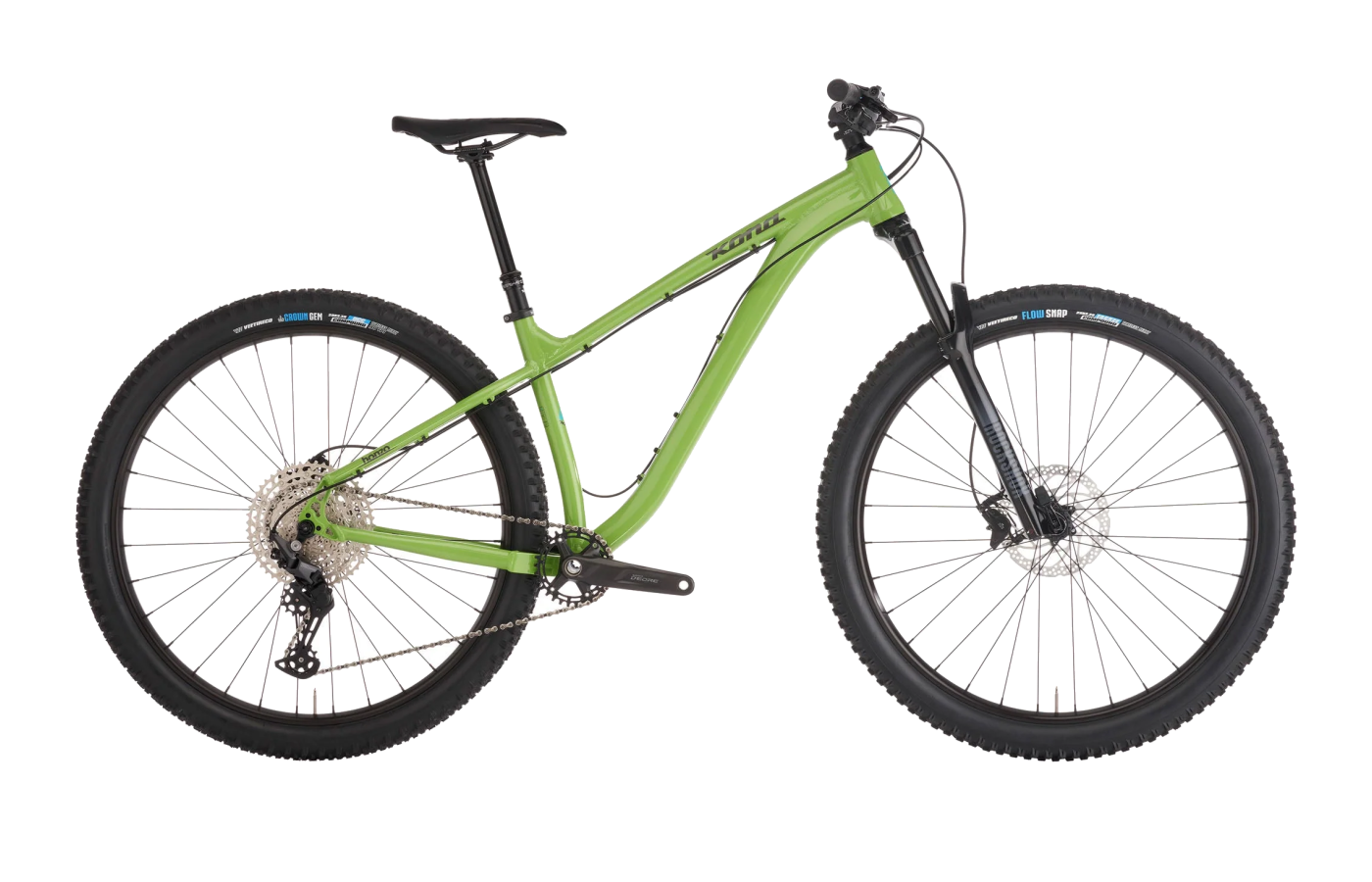
Honzo
The Kona Honzo splits the difference — more aggressive than the Rockhopper, more nimble than the Growler. A solid pick if you want trail capability without the Growler's enduro-length wheelbase.
Compare →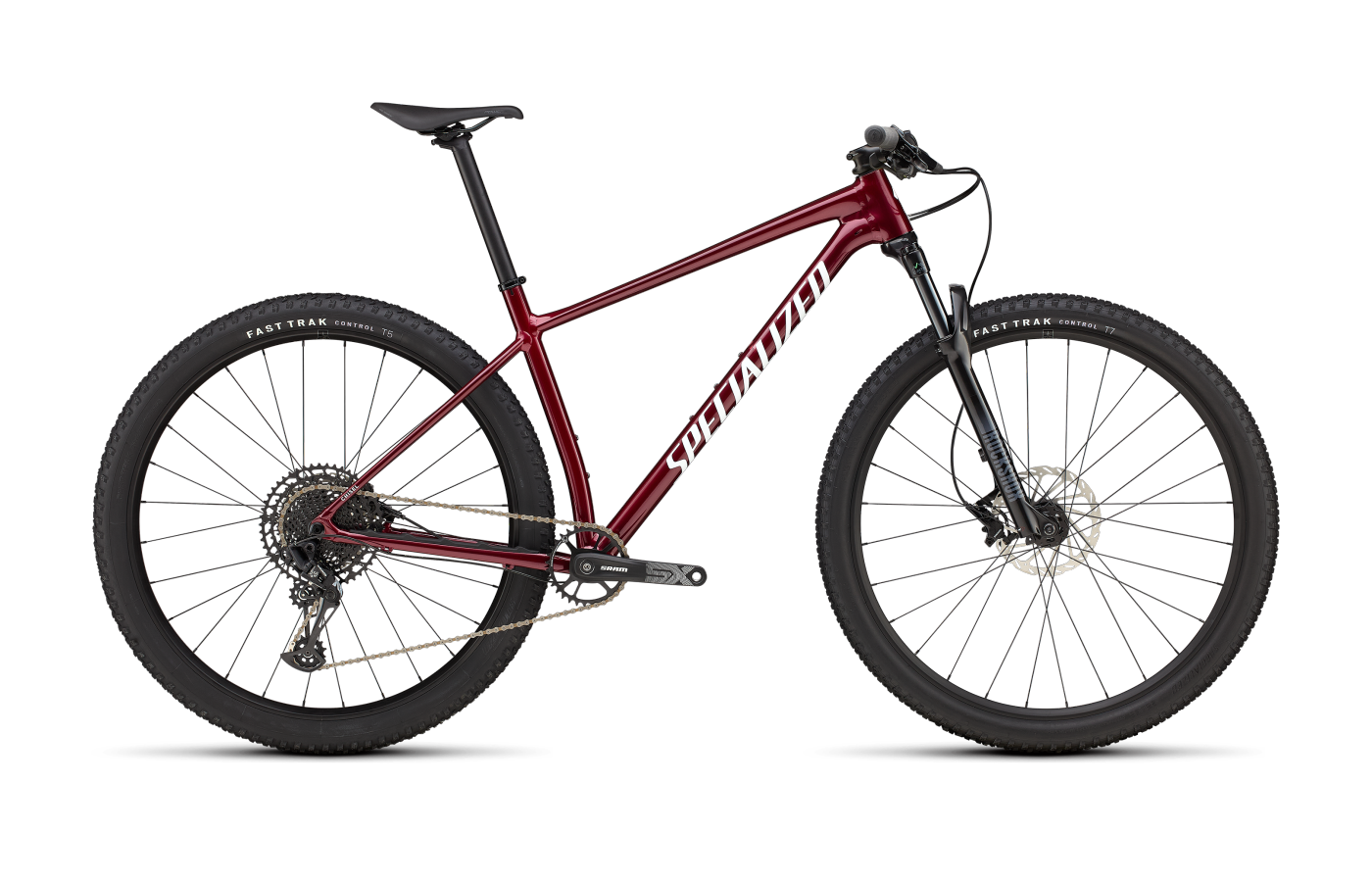
Chisel
The Specialized Chisel is the upgrade path the Rockhopper doesn't offer — modern thru-axles, lighter frame, and the same XC focus. Worth the bump if cross-country speed is the goal.
Compare →