Growler
vsVertex
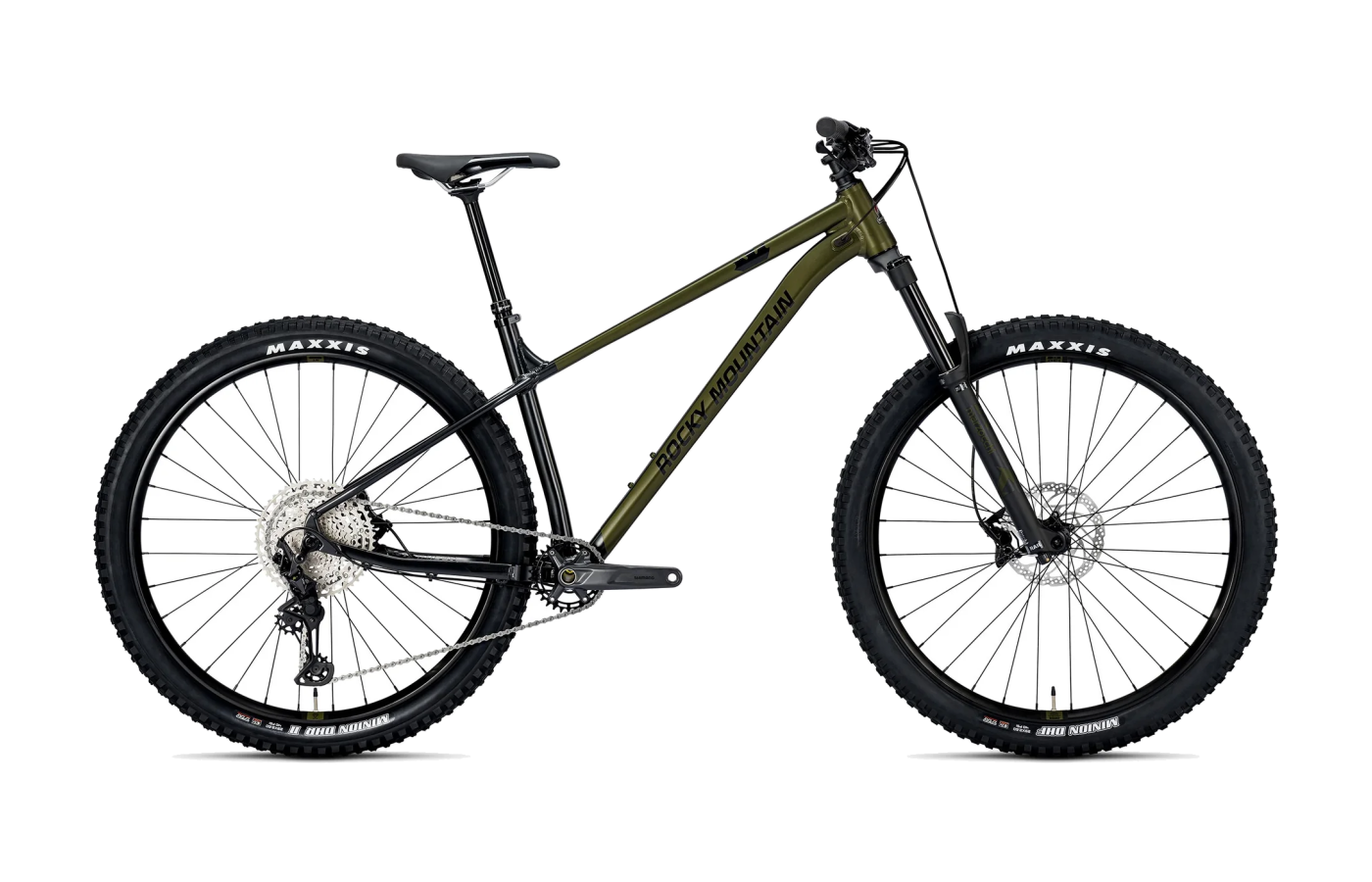
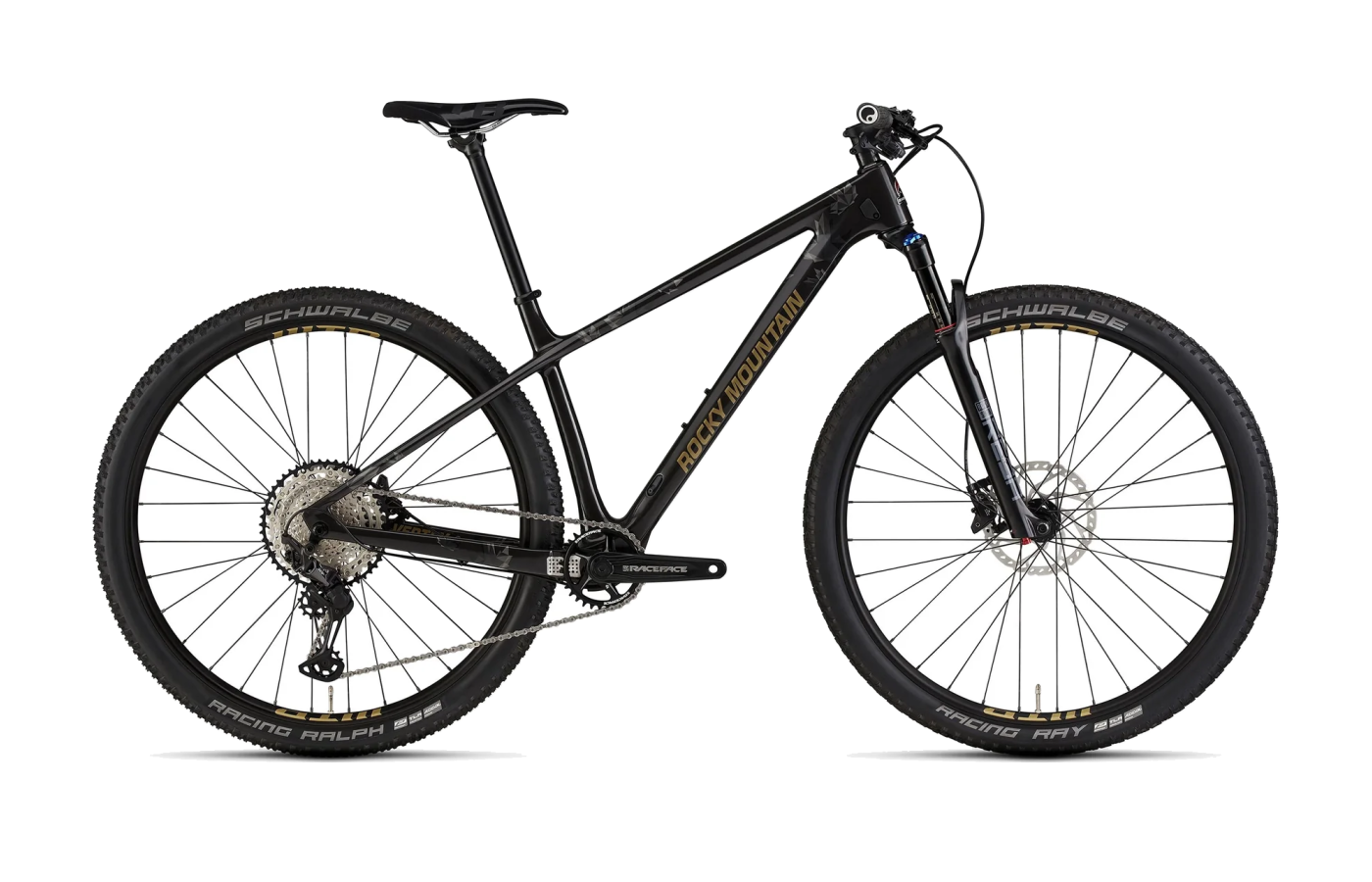
Same brand. Opposite jobs.
The Growler is a $2k aluminum descender built around enduro geometry. The Vertex is a carbon XC racer chasing seconds on the climbs.
Growler
- Enduro-grade geometry — a 64-degree head angle and 1210 mm wheelbase that reviewers compare to full-suspension bikes.
- $1,999 ceiling — there's only one build, and it's the cheapest way into truly progressive hardtail geometry.
- 150 mm Marzocchi Z2 fork and 2.6-inch Maxxis Minion tires — descent-ready spec straight out of the box.
- 31+ lb aluminum frame feels stiff over chop and sluggish in tight switchbacks.
- Shimano MT4100 brakes lack initial bite — most reviewers recommend an immediate pad upgrade.
Vertex
- SMOOTHWALL carbon frame — Rocky Mountain's lightest layup, with slimmed seatstays and a 27.2 mm post that genuinely take the edge off.
- Race-ready geometry — 69.5-degree HTA, 430 mm chainstays, 1127 mm wheelbase at size large for sharp, agile handling.
- Quality XC component spec — full Shimano XT 12-speed and Schwalbe Racing Ray/Ralph tires that roll fast and grip on hardpack.
- 100 mm of front travel and steep angles cap how aggressive you can ride it on rough descents.
- 27.2 mm seatpost limits dropper options versus the more common 30.9/31.6 mm posts.
Editor’s analysis
One bike makes you faster down. The other makes you faster up. Picking between them is really picking which clock you're racing.
On the surface they're both Rocky Mountain hardtails. Look at the numbers and the kinship ends there. The Rocky Mountain Growler runs a 64-degree head tube, a 1210 mm wheelbase at size medium, and a 150 mm Marzocchi fork. The Rocky Mountain Vertex runs 69.5 degrees, 1127 mm at size large, and a 100 mm cross-country fork. That's not two trims of the same idea — that's two completely different bikes wearing the same badge.
The Growler is the descender. Reviewers from Pinkbike, Bike Magazine, and MBA all rode it like a full-suspension bike — same lines, same commitment — and credited the slack front end and 2.6-inch Maxxis Minion DHF/DHR II tires for the composure. The trade-off is a 31+ lb aluminum hardtail that feels sluggish in tight switchbacks and stiff over chatter. For $1,999 with a Marzocchi Z2 fork and Shimano Deore 12-speed, it's the cheapest way to get geometry that aggressive on a hardtail.
The Vertex is the climber. SMOOTHWALL carbon frame, 100 mm fork, 430 mm chainstays, 73.5-degree seat tube, and 2.25-inch Schwalbe Racing Ray/Ralph tires that roll fast and hook up on hardpack. Reviewers called it "eager to get to the top of every mountain" — the slimmed-down seatstays and 27.2 mm post even take some sting out of the chatter. It's an XC race bike that rewards efficiency, not commitment.
Put bluntly: the Growler is for the rider whose favorite part of the ride is the descent and who wants enduro geometry without the full-suspension price. The Vertex is for the rider whose favorite part is the Strava segment going up. They're not really competitors — they're two different sports.
Where the builds differ.
Comparing our editor's-pick builds side-by-side. Winners highlighted row-by-row — lower price and weight, and the better-spec component, each mark a point.
Build variants & pricing
The Growler ships in a single $1,999 build. The Vertex comes in two carbon trims, $2,929 and $3,449.
Prices are current US MSRP. The two platforms barely overlap on budget — the Growler 50 is the only Growler built, and the Vertex starts above it. We've picked the Vertex Carbon 50 as the closer-priced comparison point; the Carbon 70 swaps the Reba for a Fox 32 Step Cast at $520 more.
How they fit, how they steer.
Compared at the fit-picked sizes: Growler in medium, Vertex in large. The Vertex sits 22 mm lower and 15 mm shorter in reach, with a 5.5-degree steeper head angle and an 83 mm shorter wheelbase — XC quickness versus enduro composure.
Which size should I buy?
Size recommendations based on stack, reach, and effective top tube. The Vertex runs proportionally taller in stack-to-reach; the Growler stretches longer for its sizing label.
→These are starting points. Flexibility, riding style, and preferred position all shift the answer — if you’re between sizes, a professional fit beats a chart.
What the magazines said.
Published reviews from trusted cycling outlets. Click through for the full write-up.
Which one should you buy?
If you live for descents and hate spending $5k, get the Growler. If you race XC or live on long climbs, get the Vertex.
Growler
If your favorite trails are fast, chunky, and pointed downhill — and you'd rather spend $2k on geometry than $5k on suspension — the Growler is the cheapest ticket to enduro-style commitment on a rigid rear end. Climbs are tolerable, descents are the point.
Vertex
If you measure rides in segment times and your local courses reward quick handling and efficient power transfer, the Vertex is the lighter, sharper, race-ready hardtail. Carbon frame, 100 mm fork, fast tires — built to chase podiums.
Questions buyers actually ask.
Short answers to the things we get emailed about most often.
01Which is faster downhill?
The Growler, comfortably. With a 64-degree head angle, 1210 mm wheelbase (size medium), 150 mm Marzocchi Z2 fork, and 2.6-inch Maxxis Minion DHF/DHR II tires, reviewers from Pinkbike and Bike Magazine reported riding it like a full-suspension bike on rough trails.
The Vertex's 69.5-degree HTA, 100 mm fork, and 2.25-inch fast-rolling tires are pointed in the opposite direction. It can descend competently for an XC bike, but it's not asking to be sent.
02Which climbs better?
The Vertex, by a wide margin. Carbon SMOOTHWALL frame, 430 mm chainstays, 73.5-degree seat tube, 100 mm fork, and Schwalbe Racing Ray/Ralph 2.25-inch tires — every spec choice is pointed at acceleration and efficiency. Reviewers called it "eager to get to the top of every mountain."
The Growler climbs "just fine" thanks to its steep 75-degree seat tube angle, but at 31+ lb with 2.6-inch tires and a long wheelbase, it's not chasing KOMs. Reviewers consistently described it as "not a climber's bike."
03What's the price difference?
Significant. The Growler ships in a single build at $1,999. The Vertex Carbon 50 is $2,929 and the Vertex Carbon 70 is $3,449. So you're looking at roughly a $1k–$1.5k premium for the Vertex, primarily covering the carbon frame and higher-tier components.
There's no carbon Growler and no aluminum Vertex (in this generation), so the platforms don't really overlap on price.
04How much fork travel does each one have?
Growler: 150 mm Marzocchi Z2 Float EVOL Rail. That's trail/all-mountain travel — unusual for a hardtail at this price.
Vertex Carbon 50: 100 mm RockShox Reba RL. Vertex Carbon 70: 100 mm Fox 32 Step Cast Performance. Both are XC-race forks tuned for efficiency, not big hits.
50 mm of fork travel is a meaningful gap — it's the single biggest reason the bikes feel so different on rough terrain.
05What tires do they ship with, and what's the max clearance?
Growler: 2.6-inch Maxxis Minion DHF (front) / DHR II (rear) on WTB ST i30 TOUGH rims — proper aggressive trail tires that, in reviewers' words, provide "all the suspension you got" on a hardtail.
Vertex: 2.25-inch Schwalbe Racing Ray (front) / Ralph (rear) on WTB ST Light i25 rims. Per the MBA review, the Vertex frame officially clears up to 2.35-inch tires.
06Which is more comfortable on long rides?
Counterintuitively, the Vertex. Reviewers specifically called out the slimmed-down seatstays and 27.2 mm seatpost as taking the edge off chatter, making it surprisingly compliant for an XC bike on "long days in the saddle."
The Growler relies almost entirely on its 2.6-inch tires for compliance — the aluminum frame itself is described by Bike Magazine as "especially stiff," and reviewers report still getting "bounced around" on rough terrain. Lower tire pressure helps; the frame doesn't.
07Can I run a dropper post on either?
Both are dropper-compatible. The Growler 50 ships with a Rocky Mountain dropper out of the box. The Vertex is dropper-ready but uses a 27.2 mm seatpost, which is a smaller and less common dropper diameter than the 30.9 mm or 31.6 mm posts you'll find on most modern trail bikes — fewer aftermarket options, often pricier.
If you want a dropper for trail riding on the Vertex, plan for a KS LEV Ci, BikeYoke Divine SL, or similar 27.2 mm-specific unit.
08Are these the same generation of frame?
No. The Growler in this comparison is the current 2025 platform (introduced 2021, still on sale). The Vertex here is the 2018–2021 carbon generation that Rocky Mountain has since stopped producing.
If you're shopping new today, the Growler is freely available; the Vertex Carbon will mostly be found through dealer leftovers or the used market.
Similar bikes
If your priorities don’t map cleanly onto either of these, one of these adjacent bikes probably fits better.
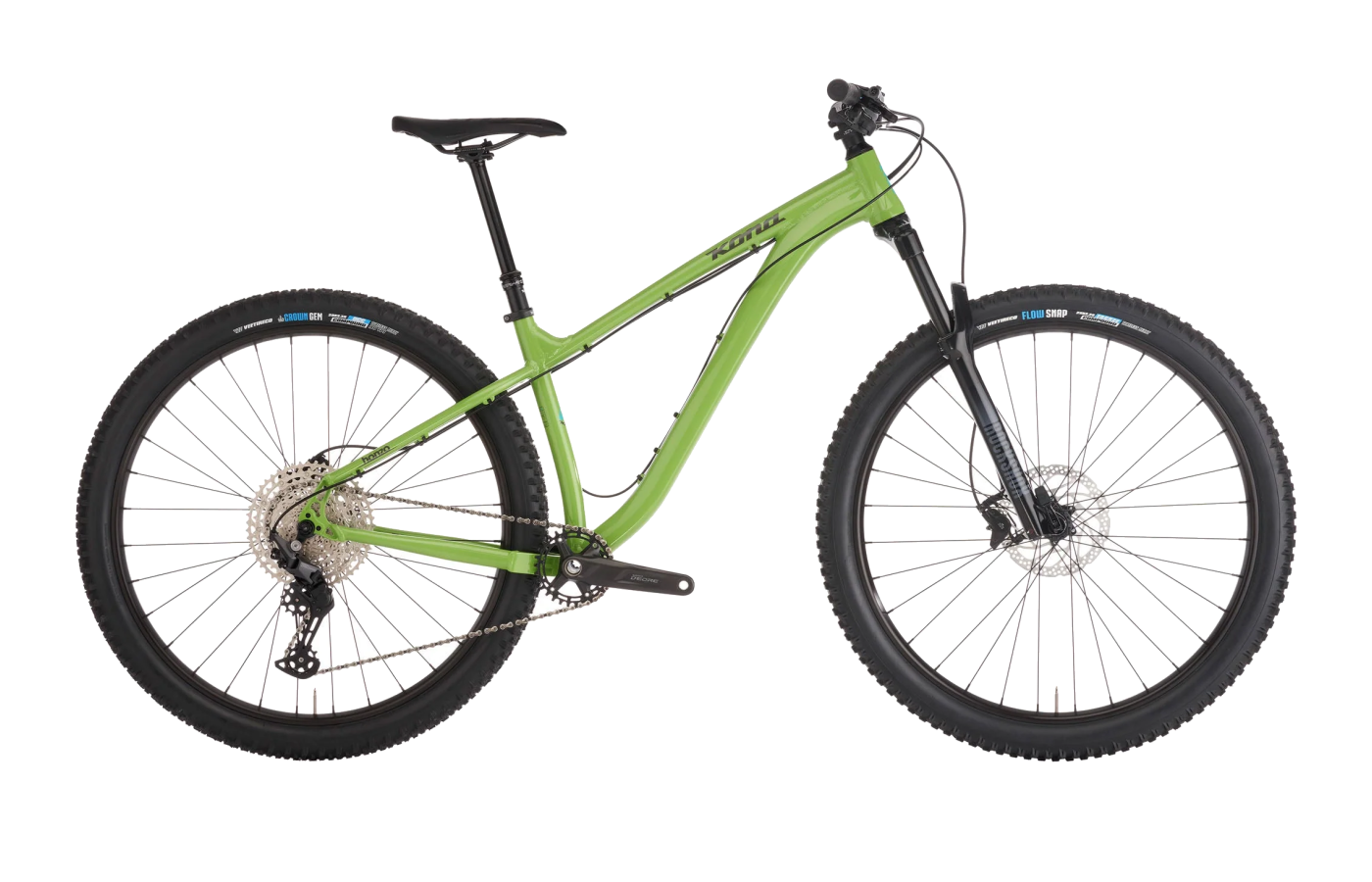
Honzo
Another aggressive hardtail in the Growler's spirit — playful, rowdy, built for descending. The Honzo's been the reference for slack hardtails for years and is worth a look if you want a steel option.
Compare →Roscoe
Trek's progressive trail hardtail with similar geometry intentions to the Growler, plus the dealer network advantage. A capable, confidence-inspiring ride if you'd rather buy from a local Trek shop.
Compare →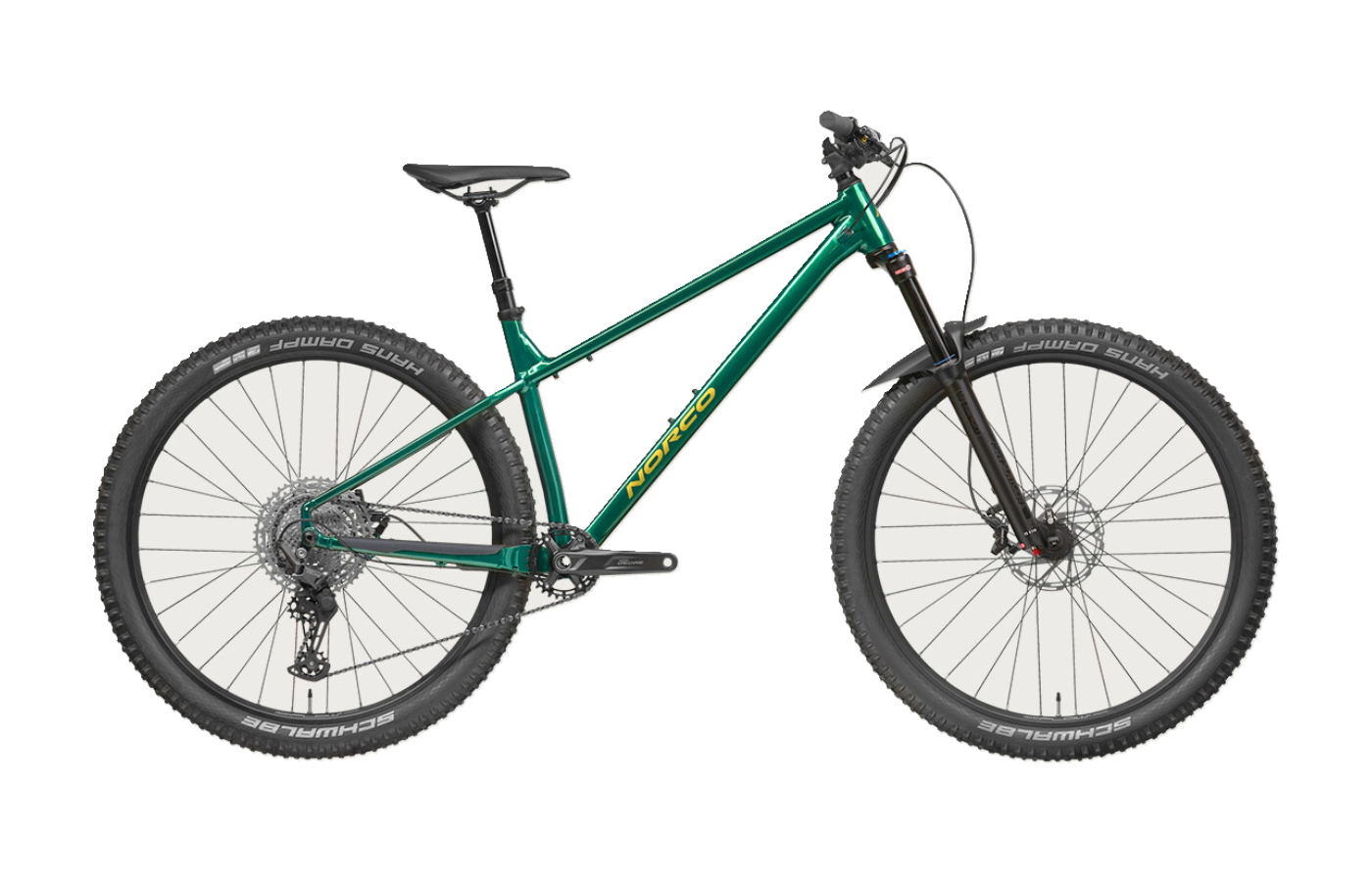
Torrent
Norco's direct answer to the Growler, with comparably progressive geometry and an aggressive trail spec. If you want the same descent-first ethos but want to compare options, the Torrent is the closest cross-shop.
Compare →