Instinct
vsStumpjumper
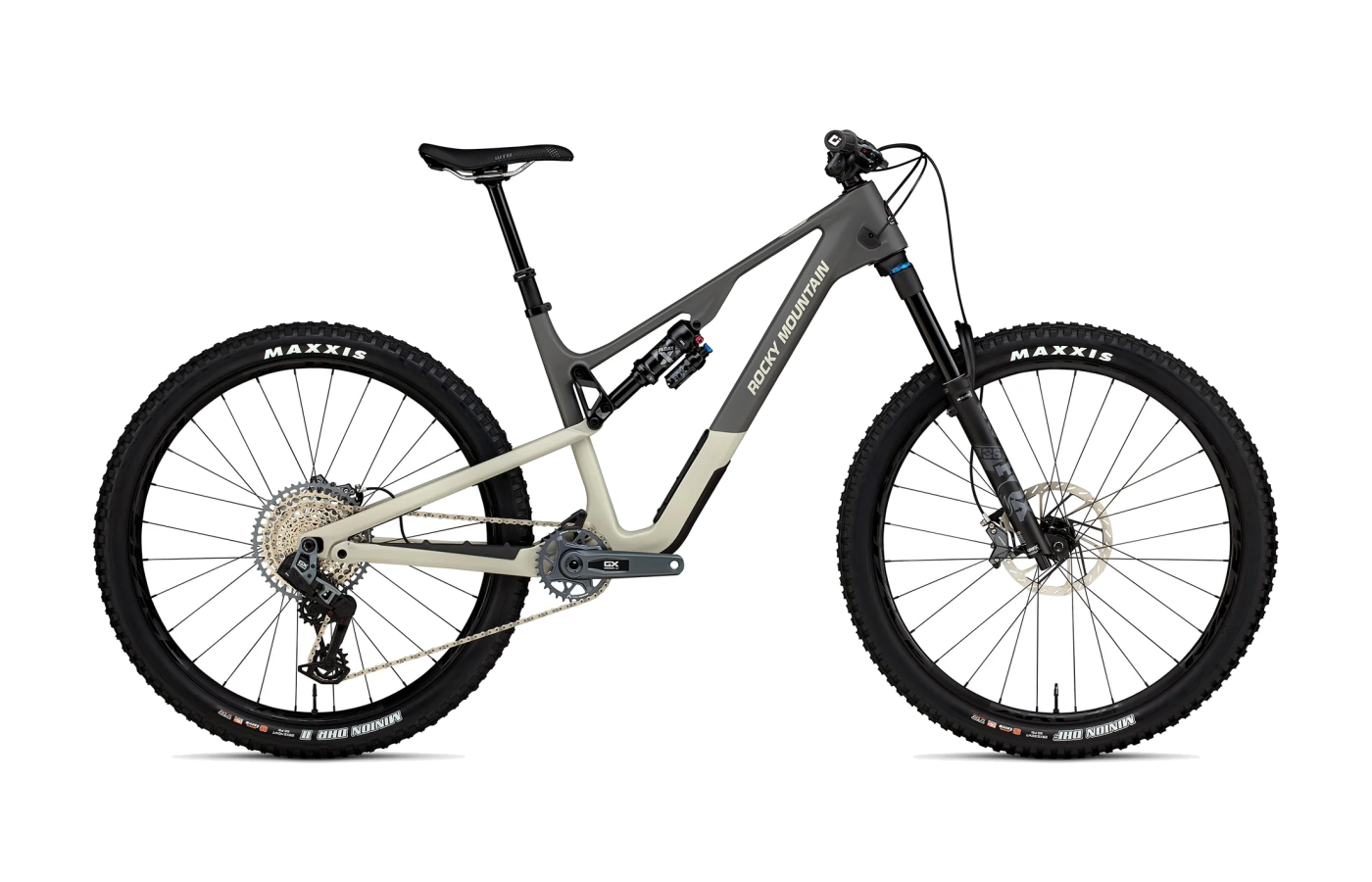
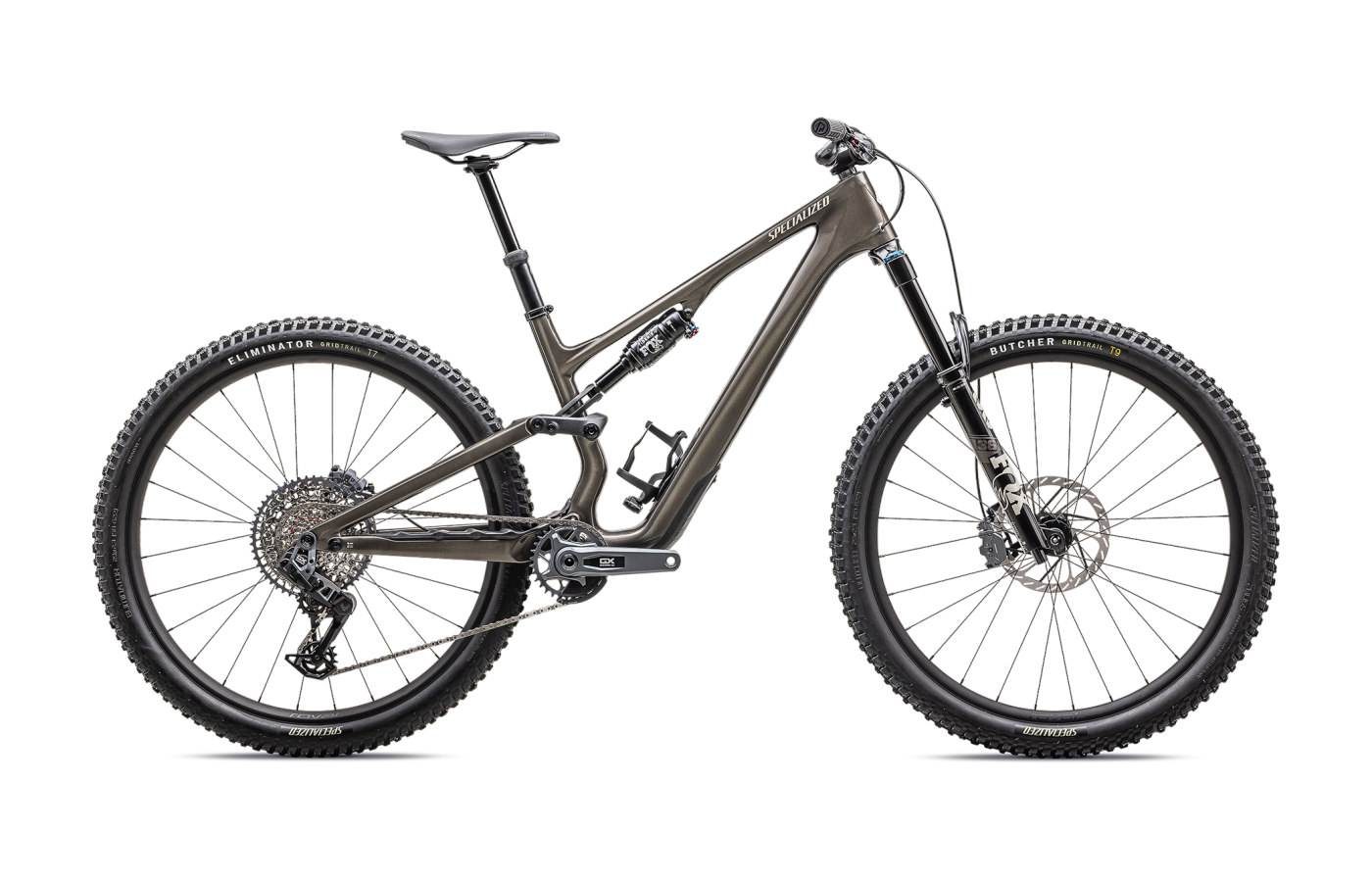
Two 140-ish mm trail bikes, two design philosophies.
The Instinct hands you a tinker-friendly chassis with 48 geometry combos. The Stumpjumper 15 hands you a single, highly-tuned ride built around a custom shock.
Instinct
- Unmatched adjustability — RIDE-4 plus chainstay flip chip plus reach-adjust headset gives 48 geometry combos.
- Lively, active character — rewards an engaged rider who pumps and jumps the trail rather than plowing through it.
- Lighter on paper — Blister measured the Carbon 90 at 13.43 kg / 29.6 lb in size large, light for a 140 mm trail bike.
- Stock Fox Float X tune drew sharp criticism from Pinkbike testers as underdamped on hard charging.
- Lineup tops out at $9,449 with no 16-bike depth chart — fewer entry options than the Stumpjumper.
Stumpjumper
- GENIE rear shock — coil-like first 70% of travel for traction, hard ramp at the end to prevent bottom-out.
- Deepest lineup in the segment — nine 2025 builds from $2,999 alloy to $11,999 S-Works LTD.
- Strong climbing position — 77-degree seat angle keeps the rider centered; reviewers cite "all-out grip" on technical climbs.
- Carbon frames are wireless-only — no mechanical Shimano or cable-shift compatibility.
- Proprietary GENIE shock raises long-term serviceability and replacement questions.
Editor’s analysis
Both bikes shoot for the same target — one trail bike, every trail — but they get there in opposite ways: one through adjustability, the other through engineering.
On the spec sheet they're nearly twins. Both run 145 mm of rear travel paired with a 150 mm fork. Both use a four-bar Horst-link rear end. Both ship with Maxxis or Specialized 2.3-2.5" tires and a SWAT- or Penalty Box-style downtube storage compartment. Travel, wheel size, intended use — all the same. The differences live in how each brand thinks a trail bike should be set up.
The Rocky Mountain Instinct is the tinkerer's bike. Rocky's RIDE-4 flip chip gives four geometry/kinematics positions, the rear axle has a two-position chainstay flip chip (437-447 mm), and a +/-5 mm reach-adjust headset adds another two settings on top. The math works out to 48 possible combinations, per Rocky. Head angle ranges from 63.5 to 64.3 degrees — slacker than the Stumpjumper across the board. The result is a chassis you're meant to dial to your trails, your style, and your day. Reviewers describe the ride as "playful," "sneaky fast," and rewarding active rider input — Jeff Kendall-Weed called it "the fox of the trail bike world."
The Specialized Stumpjumper 15 takes the opposite approach: fewer knobs, more engineering. Its proprietary Fox GENIE shock uses a dual-chamber air spring that gives 70% of the stroke a coil-like supple feel, then ramps hard in the final 30% to resist bottom-out. Reviewers consistently call it the bike's defining feature — "glued-like" rear-wheel traction climbing, plus near-immunity to harsh bottom-outs on drops and bike-park hits. The 64.5-degree head angle and 77-degree effective seat angle are dialed once at the factory; you adjust the headset cup (63 / 64.5 / 65.5 degrees) and the Horst-link flip chip if you want to fine-tune.
Put another way: the Instinct asks you to set up the bike. The Stumpjumper asks you to ride it. Neither approach is wrong — they suit different riders. The Instinct rewards the rider who likes to swap chainstay length seasonally and is happy to chase a coil-shock conversion. The Stumpjumper rewards the rider who wants a "do everything" bike that just works, with the GENIE doing the tuning that the Instinct asks of its owner.
Where the builds differ.
Comparing our editor's-pick builds side-by-side. Winners highlighted row-by-row — lower price and weight, and the better-spec component, each mark a point.
Build variants & pricing
The Stumpjumper has the broader range — nine builds spanning $9,000. The Instinct lineup is tighter at five, all 2025 model year, and starts higher at $3,399.
Prices are 2025 US MSRP. Both editor's picks are GX Eagle Transmission AXS, FACT/SMOOTHWALL carbon, with Fox 36 Performance Elite forks — about as apples-to-apples as these two lineups get. The $500 price gap reflects spec differences in wheels and finishing kit, not platform tier.
How they fit, how they steer.
Instinct in size MD vs Stumpjumper in S3 — both fit the same rider. The Stumpjumper is steeper (64.5 vs 63.5 deg HTA) and shorter in the rear (435 vs 440 mm chainstays); the Instinct sits 28 mm lower in stack with 1 mm less reach.
Which size should I buy?
Specialized's S-sizing is rider-fit-based rather than seat-tube-length based, so the size labels (md vs S3) can't be compared directly — both are the best-fit frame for the same person.
→These are starting points. Flexibility, riding style, and preferred position all shift the answer — if you’re between sizes, a professional fit beats a chart.
What the magazines said.
Published reviews from trusted cycling outlets. Click through for the full write-up.
Which one should you buy?
If you love dialing in a bike to your trails, get the Instinct. If you'd rather a bike that arrives dialed and just rides, get the Stumpjumper.
Instinct
If you treat geometry settings the way roadies treat tire pressure — adjusted to terrain, weather, and mood — the Instinct is a playground. Lighter than the Stumpjumper, slacker out of the box, and rewards an active style that pumps and jumps the trail rather than plowing.
Stumpjumper
If you want the broadest range of capability with the least setup, the Stumpjumper 15 is the deeper, more refined platform. The GENIE shock delivers traction and bottom-out control that no air shock at this price approaches, and the lineup runs from $2,999 alloy to $11,999 S-Works for whatever budget you bring.
Questions buyers actually ask.
Short answers to the things we get emailed about most often.
01Which bike has more travel?
Both have 145 mm rear / 150 mm front in their standard trim — effectively a tie. The Instinct's top-end Carbon 99 bumps up to a 160 mm Lyrik fork with Flight Attendant for a more aggressive setup. The Stumpjumper Coil builds and the S-Works 15 LTD also push up — the LTD pairs a 150 mm Fox 36 with a Live Valve coil shock, and the standard 15 build runs an Öhlins coil with a 160 mm fork.
Both are unambiguously trail bikes, not mini-enduros. If you regularly ride enduro-grade descents, look at the Rocky Mountain Altitude or Specialized Stumpjumper EVO geometry instead.
02How much adjustability does each bike offer?
Instinct: The most in the segment. RIDE-4 flip chip at the shock linkage offers four geometry/kinematics positions; a rear-axle flip chip swaps chainstay length between 437 and 447 mm; +/-5 mm reach-adjust headset cups change reach. Per Rocky, that's 48 possible combinations. Head tube angle ranges 63.5 to 64.3 degrees.
Stumpjumper 15: Simpler. Three-position headset cup (63 / 64.5 / 65.5 deg HTA) and a Horst-link flip chip that changes chainstay length by 6 mm and BB height by 7 mm. Fewer combinations, but each one is meaningful.
03What's the deal with the GENIE shock on the Stumpjumper?
The Fox FLOAT GENIE is a Specialized-Fox collaboration. It uses a dual-chamber air spring: a large outer sleeve gives the first 70% of travel a coil-like, very supple feel; at 70% a band closes off the outer chamber, sharply reducing air volume so the spring ramps hard to resist bottom-out.
Reviewers (Flow MTB, Loam Wolf, Bike Magazine) consistently call this the bike's signature feature. Specialized claims a 57% traction improvement over a conventional air shock. The trade-off: it's proprietary, which raises questions about long-term parts availability — though the internals are mostly stock Fox, and Specialized says any Fox-trained suspension shop can service it.
04Which carbon frame is lighter?
Both are competitive in the 13-14 kg range for top builds. Blister measured the Instinct Carbon 90 at 13.43 kg / 29.6 lb in size large. Specialized claims 13.56 kg / 29 lb 14 oz for the S-Works Stumpjumper 15 at the equivalent size. Roughly a tie at the top end.
Lower-tier builds get heavier — the Instinct C70 is around 14 kg, the Stumpjumper 15 Pro 13.99 kg — but both stay light for 145 mm of travel. Alloy versions are notably heavier on both sides; the Stumpjumper 15 Alloy weighs 16.9 kg / 37 lb, the Instinct Alloy 30 sits in similar territory.
05Is the Instinct's stock shock tune a problem?
It's the most polarizing topic in the reviews. Pinkbike's Henry Quinney was unequivocal that the Fox Float X compression tune is "simply too light" and the bike feels "unstable" and "undermining" when pushed hard. He recommends a re-valve or a coil shock for aggressive riding.
Other reviewers — GearJunkie (on the RockShox Super Deluxe Ultimate spec), Bebikes, Theradavist, Mountain Bike Action — found the suspension calm, plush, and supportive once dialed in. Heavier and harder-charging riders are more likely to share Pinkbike's view; lighter riders or those who prefer an active feel will likely be fine. The Instinct is progressive enough to accept a coil shock as a future upgrade if you want.
06Do both work with mechanical Shimano shifting?
Stumpjumper 15: Carbon frames are wireless-only — no internal routing for mechanical derailleurs. If you want Shimano XT mechanical or any cable-shift system, you have to buy an alloy frame, which retains conventional cable routing.
Instinct: Routes both wireless and mechanical. The Carbon 50 build ships with full Shimano XT mechanical, so the frame supports it natively. If you're loyal to mechanical drivetrains or Shimano, the Instinct gives you more freedom across the lineup.
07Which one climbs better?
Roughly even on smooth fire-road climbs, with a small edge to the Stumpjumper on technical, traction-limited terrain. The GENIE shock's supple first 70% keeps the rear tire glued — reviewers (Loam Wolf, Singletracks) repeatedly describe it as cleaning roots and ledges where most trail bikes spin out. The 77-degree effective seat angle puts the rider in a strong climbing position.
The Instinct climbs efficiently for its travel, especially in the steeper RIDE-4 settings — but Pinkbike noted the active suspension can sit deep in its travel and combine with the low BB to produce more pedal strikes. Use the climb switch on long sustained ascents, or run a steeper RIDE-4 position.
08What about warranty and long-term ownership?
Specialized offers a lifetime frame warranty plus lifetime pivot bearing replacement to the original owner — one of the strongest in the industry. Roval wheels also carry a lifetime warranty.
Rocky Mountain offers a frame warranty of 5 years for the original owner. Both brands have established dealer networks and crash-replacement programs. Specialized's edge on lifetime coverage is meaningful if you keep bikes long-term; Rocky's coverage is more standard for the segment but their dealer network is strong, especially in Canada and the western US.
Similar bikes
If your priorities don’t map cleanly onto either of these, one of these adjacent bikes probably fits better.

Fuel EX
Trek's Fuel EX is the third name in this conversation — same 140-ish mm travel target, similar do-everything pitch. The Mino Link flip chip handles the geometry tinkering; the IsoStrut rear end is the platform's signature trick. A natural shortlist add if you want a third opinion.
Compare →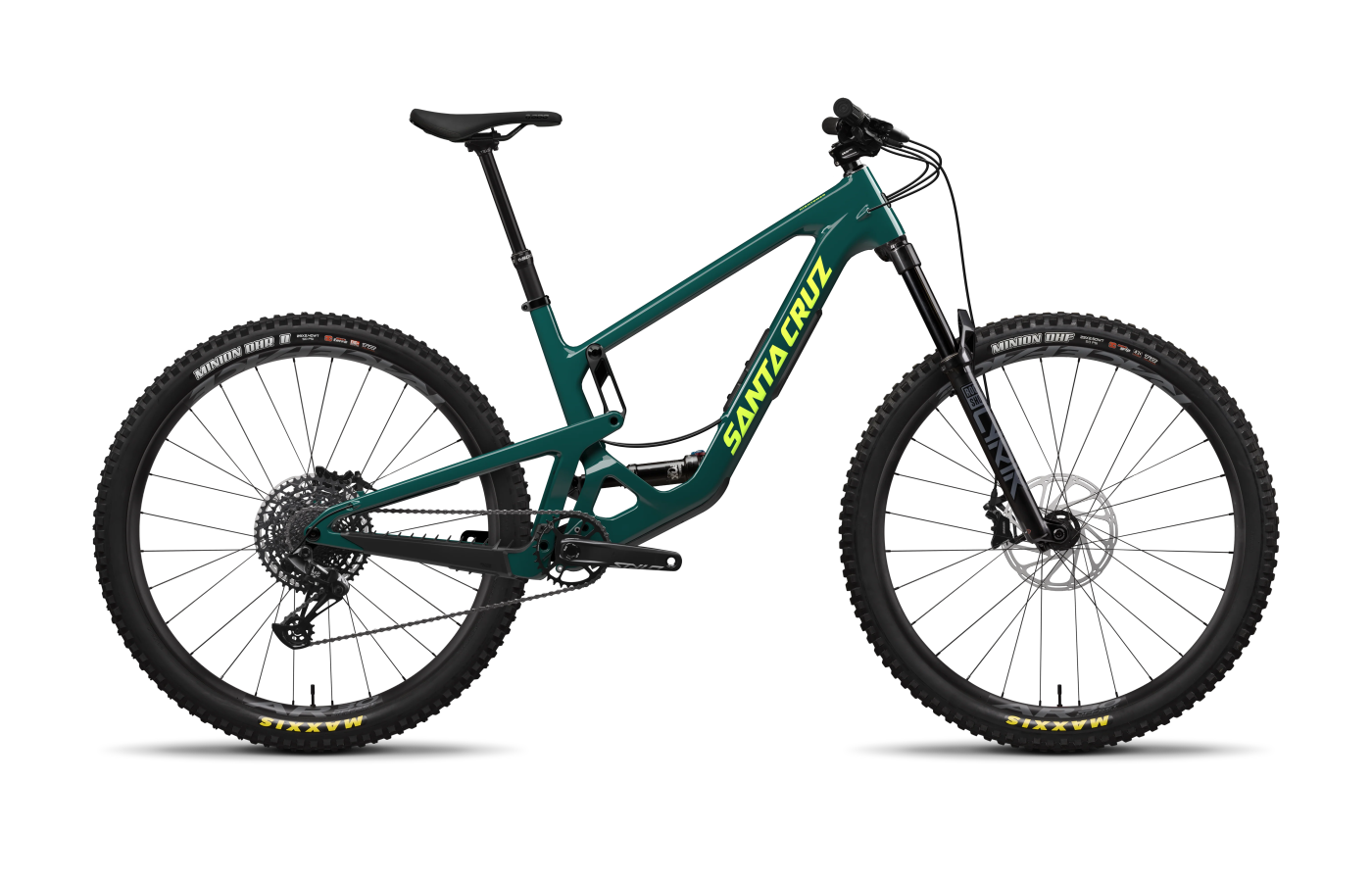
Hightower
More travel and a more downhill-oriented stance than either bike here, the Santa Cruz Hightower is the bike to consider if you frequently outride 145 mm. Heavier and less playful, but more composed in steep, rough terrain.
Compare →
Ripmo AF
The Ibis Ripmo AF is the value play — alloy frame, aggressive trail geometry, and a price floor well below either of these. Worth a look if you want most of the capability for less money and don't need carbon.
Compare →