Solo
vsCheckpoint
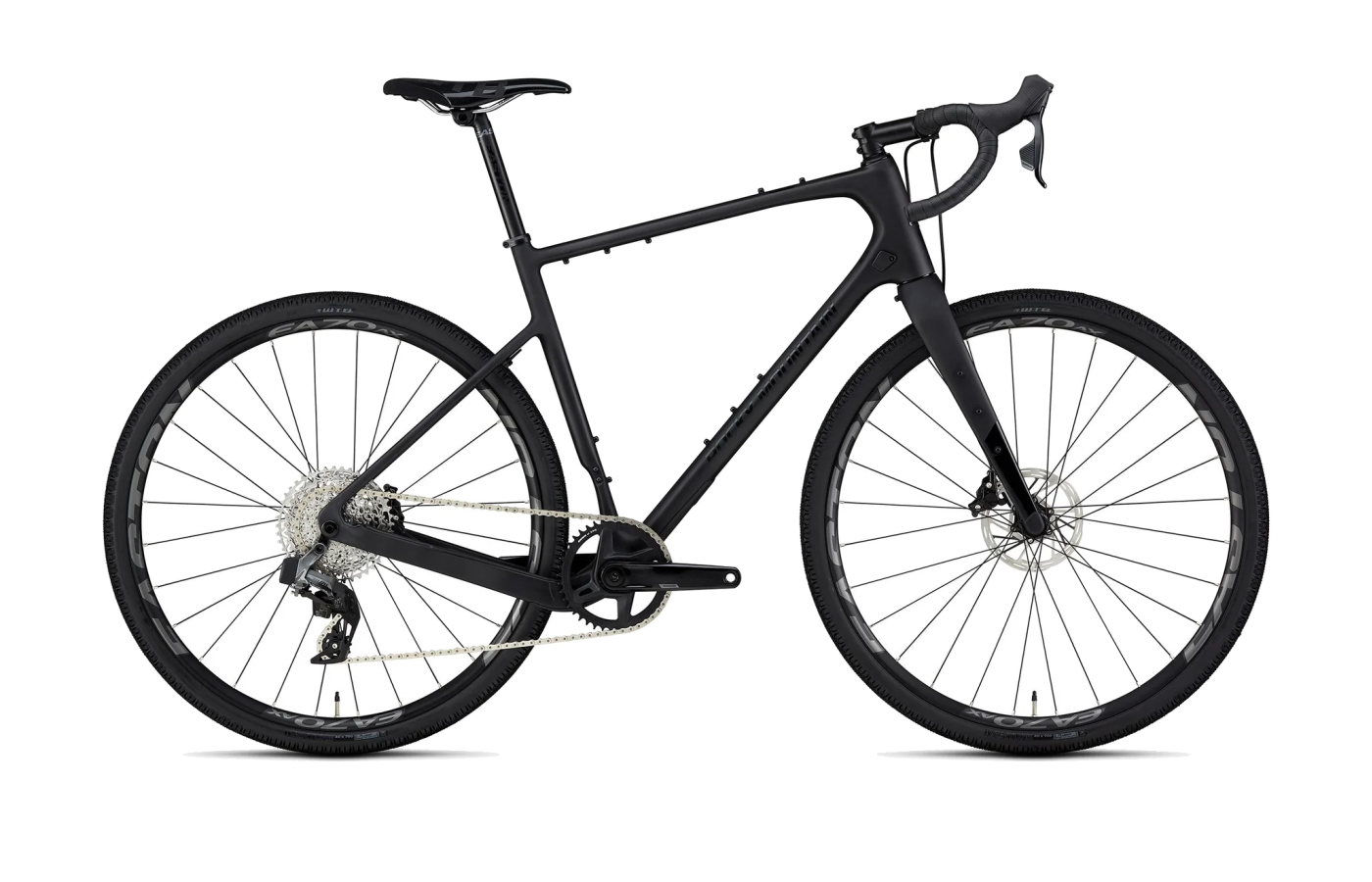
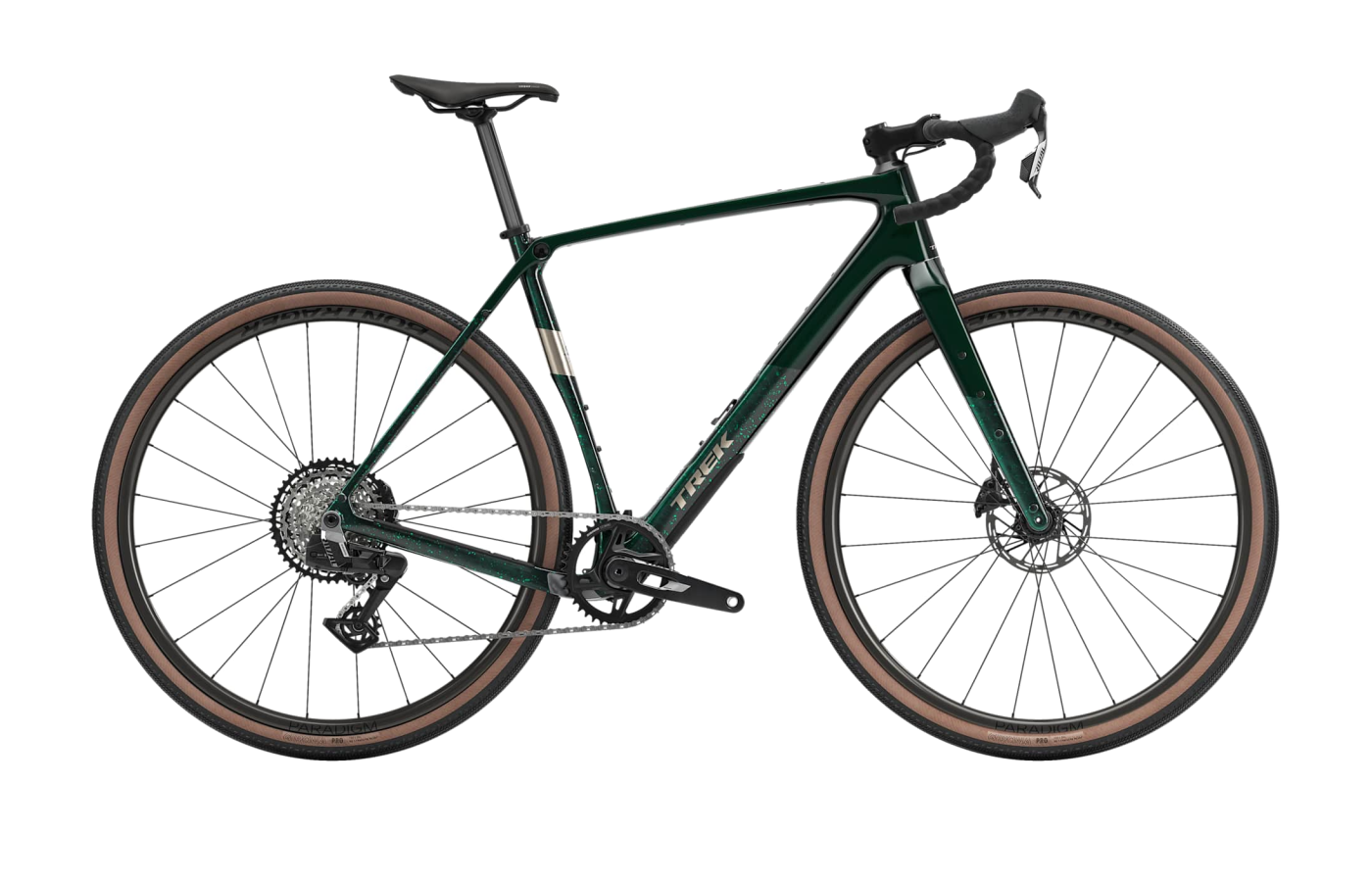
Two adventure-gravel bikes, two ways to soak up the rough.
The Rocky Mountain Solo throws 50 mm of tire at the problem. The Trek Checkpoint engineers compliance into the frame with IsoSpeed.
Solo
- Class-leading tire volume — 50 mm in the rear, 2.4-inch MTB rubber in the fork; reviewers routinely run 2.2" Kenda Rush and call it transformative.
- Confident off-road geometry — 75 mm BB drop, 425 mm chainstays, and an MTB-influenced stance that handles singletrack and CX courses, not just dirt roads.
- Wide build range — from a $1,699 Shimano CUES alloy to a $5,999 BC Edition carbon flagship.
- Press-fit BB386 bottom bracket — class-leading clearance comes at the cost of long-term creak-free serviceability.
- Stock 40 mm tires undersell the frame; you'll want to budget a tire swap on day one.
Checkpoint
- IsoSpeed rear compliance — a decoupled seat tube that takes the sting out of chatter without sapping pedaling efficiency.
- Endurance-tuned fit — taller stack, shorter reach, and reduced front-wheel flop on slow technical climbs.
- Future-proof frame standards — T47 threaded BB, UDH hanger, internal downtube storage, and lifetime frame warranty across every OCLV build.
- Through-the-headset cable routing on mechanical builds — reviewers report cable replacement labor can run $200 vs. $25 on externally routed bikes.
- Less aggressive geometry than the Solo — not the bike to pick if you want to dabble in cyclocross or ride loose singletrack.
Editor’s analysis
Same tire clearance, same all-day mission — but one bike treats the tire as the suspension, and the other treats the frame as the suspension.
Both the Rocky Mountain Solo and the Trek Checkpoint top out at 50 mm of tire clearance, both ship in carbon and aluminum, and both are pitched as do-everything adventure-gravel rigs. Pull the spec sheets together and you'd think they'd ride the same. They don't.
The Rocky Mountain Solo comes from an MTB brand that defaults to MTB answers. Its compliance comes from running giant tires — reviewers routinely swap the stock 40 mm WTBs for 45 mm gravel rubber or 2.2-inch mountain bike tires and report the bike transforms into a 'dreamy ride of floating over the roughest terrain.' Geometry follows the same logic: a 75 mm bottom bracket drop, 425 mm chainstays, and a flattened seat tube tuned for vertical flex. It's a gravel bike that's perfectly happy crossing into singletrack, and it punches above its category in cyclocross.
The Trek Checkpoint takes the road-bike route to the same destination. Trek pulled the racer-DNA Checkpoint SLR off the menu (it's the new Checkmate now), and the Gen 3 Checkpoint leans hard into 'Gravel Endurance' — taller stack, shorter reach, and a refined IsoSpeed decoupler at the seat tube that absorbs high-frequency chatter without bobbing under power. Reviewers described it as a 'calming sensation' rather than a suspension feel. The chainstays are 5 mm longer than the Solo's, the front-center is shorter, and the whole package is built to keep you fresh four hours in.
Put another way: the Solo is a mountain biker's gravel bike that asks you to choose your tire and unlock the ride. The Checkpoint is an endurance road rider's gravel bike that does most of the comfort work for you, then rewards a tire upgrade as a bonus. Both nail the brief — they just answer different riders.
Where the builds differ.
Comparing our editor's-pick builds side-by-side. Winners highlighted row-by-row — lower price and weight, and the better-spec component, each mark a point.
Build variants & pricing
Both ranges span roughly $1.6k to $6k. The Solo tops out lower; the Checkpoint goes higher and offers more tier granularity in between.
Prices are current US MSRP. The Checkpoint lineup runs six builds across two frame materials; the Solo runs four. Both stretch from a budget Shimano CUES alloy bike to a flagship carbon build, so there's a tier match at almost every price point.
How they fit, how they steer.
Both at the brand's small size — the fit-picked frame for a 5'8" rider on each. The Checkpoint S sits 11 mm lower in stack and 3 mm longer in reach, with a 0.9° steeper head angle and 5 mm longer chainstays — the Solo is the more upright, slacker, mountain-bike-flavored chassis.
Which size should I buy?
Size recommendations based on stack, reach, and effective top tube. The Checkpoint offers a sixth size (ML) between M and L; the Solo runs a more conventional five-size range.
→These are starting points. Flexibility, riding style, and preferred position all shift the answer — if you’re between sizes, a professional fit beats a chart.
What the magazines said.
Published reviews from trusted cycling outlets. Click through for the full write-up.
Which one should you buy?
If you want a gravel bike that doubles as a light singletrack and cyclocross weapon, get the Solo. If you want one that doubles as an endurance road bike with rack mounts, get the Checkpoint.
Solo
If your weekends bleed from gravel into singletrack, if you race the occasional CX, and if you want one bike that takes 2.2-inch mountain rubber when the route gets rude — the Solo is the more versatile chassis. It rewards riders who treat tire choice as a tuning dial.
Checkpoint
If your big days are 100 km of mixed-surface adventure, if you're coming from a road background, or if you want the most refined long-haul comfort in this class — the Checkpoint's IsoSpeed and Gravel Endurance geometry will keep you fresh deeper into the ride. Add a wheel upgrade later and it scales beautifully.
Questions buyers actually ask.
Short answers to the things we get emailed about most often.
01Which is more comfortable on rough terrain?
Both are comfortable, but they get there differently. The Trek Checkpoint uses an IsoSpeed decoupler at the seat tube to absorb high-frequency vibration — reviewers describe it as a 'calming sensation' over washboard rather than a suspension feel. It works on the stock 42 mm tires.
The Rocky Mountain Solo has no frame compliance system on the carbon model beyond a flattened, flexing seat tube. Its comfort comes from tire volume — reviewers routinely swap the stock 40 mm WTBs for 45 mm gravel or 2.2-inch MTB rubber and call the transformation 'dreamy.' Out of the box at 40 mm, the Checkpoint feels smoother. Set both up with 50 mm tires, and the gap narrows considerably.
02Which can run wider tires?
It's a tie at 50 mm in the rear on the official spec sheet for both bikes. The Solo's fork stretches further — Rocky Mountain advertises clearance for 2.4-inch (~60 mm) mountain bike tires up front, and reviewers have run 2.2-inch Kenda Rush MTB rubber on the Solo C70 successfully. The Checkpoint's official 50 mm rear / 50 mm front is more conservative.
If monster-cross setups or borderline-MTB tires are part of your plan, the Solo has more headroom. If 50 mm gravel is your ceiling, both deliver.
03Which has better geometry for technical singletrack?
The Rocky Mountain Solo, fairly clearly. It sits on a slacker head angle (70.5° on the small vs. the Checkpoint's 71.4°), shorter 425 mm chainstays (vs. 430 mm), and a lower 75 mm bottom bracket drop. Reviewers explicitly chose it for cyclocross racing and praised it on roots, rocks, and singletrack.
The Checkpoint's Gen 3 geometry was retuned away from racy aggression toward endurance comfort — taller stack, shorter reach, and a more upright stance. It handles technical terrain competently, but the Solo is the more capable off-road chassis.
04Which has better long-term serviceability?
The Trek Checkpoint wins on bottom bracket — its T47 threaded BB is universally praised for being creak-free and easy to service. The Solo uses a press-fit BB386, which is structurally sound but has a reputation for occasional creaking and trickier maintenance.
The Checkpoint's catch is its cable routing. On mechanical builds (the ALR 3 and ALR 4), housing runs through the headset, which one technical reviewer warned can rack up labor bills near $200 for a shift cable replacement vs. $25 on an externally routed bike. On the AXS electronic builds (SL 5 / SL 6 / SL 7), this is moot — wireless. Both frames use UDH hangers, so derailleur replacement is universally easy.
Net: pick an electronic Checkpoint and serviceability favors Trek. Pick a mechanical one, and the Solo is friendlier.
05How do the editor's-pick builds compare on weight?
The Solo Carbon 70 has a published weight of 19.8 lbs (9.0 kg). The Checkpoint SL 6 AXS Gen 3 is published at 9.49 kg (20.9 lbs) in size ML with sealant. Both numbers are competitive for ~$4–5k carbon gravel bikes; the Solo C70 is lighter on paper, but the Checkpoint's published figure includes tubeless sealant where the Solo's may not.
In practice, expect them within a pound of each other in equivalent build trim.
06Are these bikes good for bikepacking?
Both are excellent. The Checkpoint has internal downtube storage, integrated frame-bag mounts, and dedicated rack/fender mounts on every build — Trek's adventure-bag system is purpose-built for it. The Solo has multiple bottle cage bolts, fork leg mounts, and top-tube bag mounts, giving you broad third-party bag compatibility without a proprietary system.
Reviewers used both for multi-day trips. The Checkpoint is more 'integrated out of the box'; the Solo is more 'mix and match what you already have.'
07Which has the better build at the entry point?
The Trek Checkpoint ALR 3 at $1,599 vs. the Rocky Mountain Solo Alloy 30 at $1,699 — both run Shimano CUES drivetrains and alloy frames. The Checkpoint has the same updated Gravel Endurance geometry, T47 BB, UDH hanger, and 50 mm tire clearance as the carbon SL models. The Solo Alloy 30 also gets 50 mm clearance and a carbon fork.
Velo called the Checkpoint ALR 5 ($2,299) one of the best sub-$2k gravel bikes on the market. Both entry-level builds are credible adventure rigs; the Checkpoint has the slight edge on standards and frame features.
08What warranty do they come with?
Trek offers a lifetime frame warranty to the original owner across all OCLV carbon and Alpha aluminum frames. Rocky Mountain offers a 5-year frame warranty on its bikes (carbon and alloy) to the original owner against manufacturing defects. Both brands offer crash-replacement programs for owners who damage a frame in a wreck.
Similar bikes
If your priorities don’t map cleanly onto either of these, one of these adjacent bikes probably fits better.
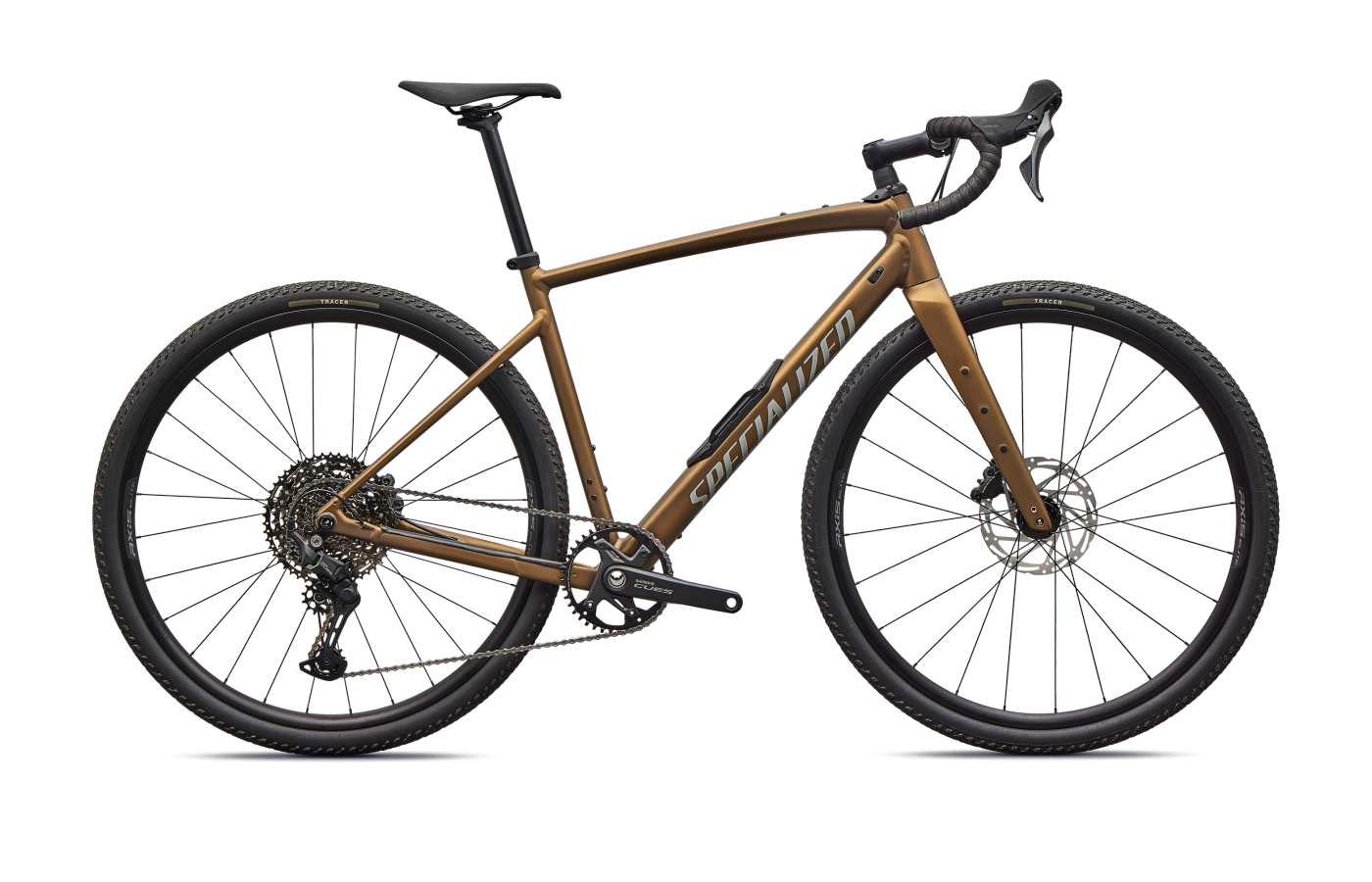
Diverge
Specialized's third take on the comfort question — a Future Shock spring at the steerer instead of a flexing seat tube or bigger tires. The most overtly 'suspended' bike of the three, with similar 47 mm clearance and a deep build range.
Compare →Grizl
Canyon's adventure-gravel pitch at direct-to-consumer pricing — same generous tire clearance and bikepacking mounts, typically 25–30% cheaper than equivalent Trek or Rocky Mountain trim. Catch is no local dealer if anything goes wrong.
Compare →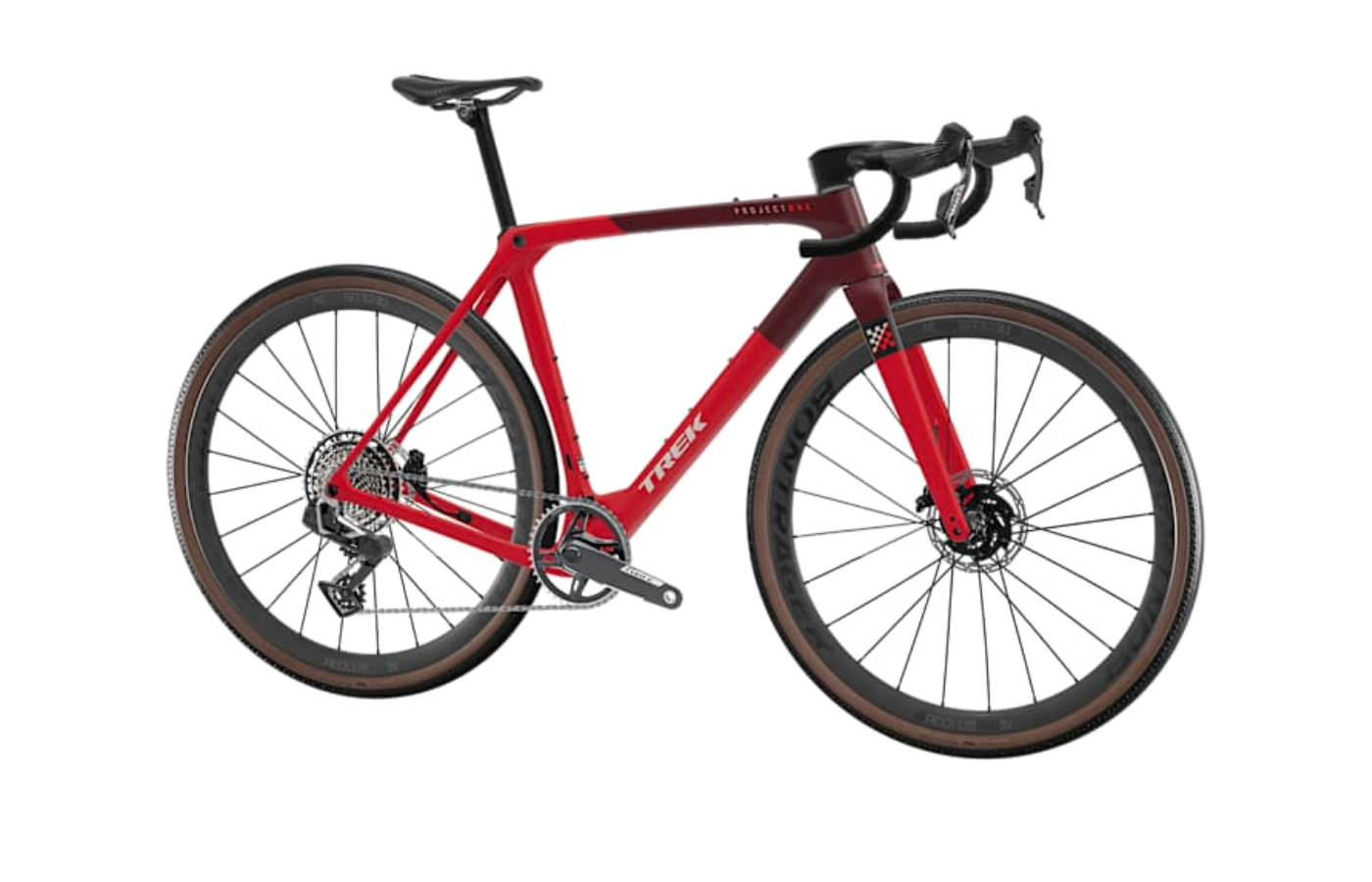
Checkmate
Trek's race-focused gravel bike — same brand DNA as the Checkpoint but lighter, faster, and tuned for podiums rather than overnighters. Pick it if you want IsoSpeed-adjacent comfort but in a sharper, more aggressive chassis.
Compare →