Salsa TimberjackvsTrek Roscoe

Does a hardtail need to be a Swiss Army knife, or a sledgehammer? The Salsa Timberjack (V2) and Trek Roscoe (Gen 4) both offer aggressive aluminum hardtail experiences, yet their approaches diverge significantly. One aims for ultimate versatility and bikepacking readiness, while the other leans hard into raw trail capability, daring you to push its limits on demanding descents.

Salsa Timberjack
Image pending

Overview

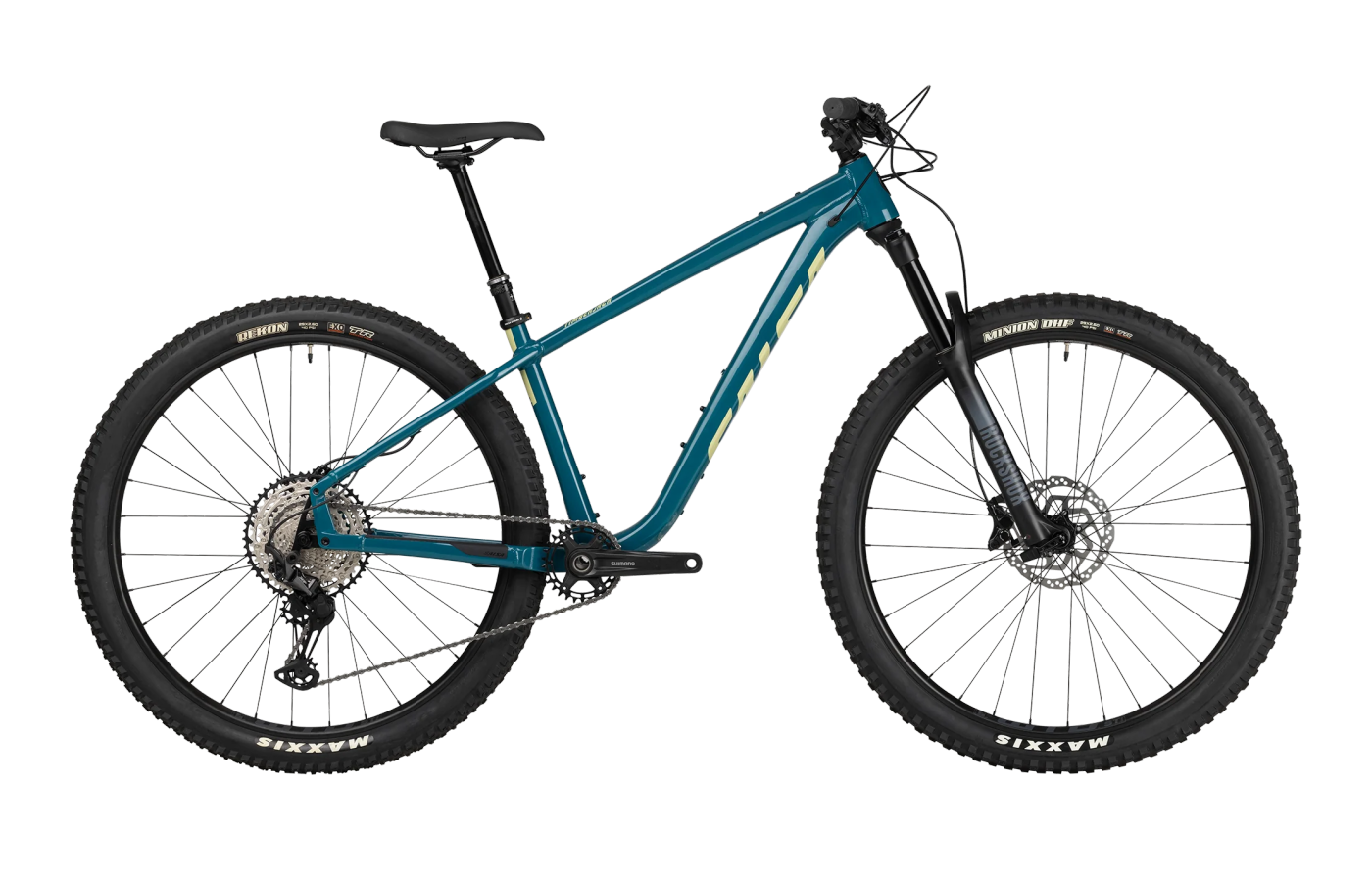
The Salsa Timberjack has long enjoyed a reputation as a highly adaptable trail hardtail, one equally at home on multi-day bikepacking trips as it is on a local singletrack loop. Its updated V2 iteration retains this "do-it-all" spirit with modernized geometry and a plethora of mounting points, making it a genuine chameleon for various riding styles. Reviewers frequently call it a bike that "makes sense" for simply wanting to go mountain biking, offering a balanced, semi-aggressive platform that can transition from playful to stable. In contrast, the Trek Roscoe (Gen 4), particularly the top-tier Roscoe 8, has shed much of its previous generation's more reserved character to become what many are calling a "hardcore hardtail." Trek built the new Roscoe using their Alpha Platinum Aluminum, the same high-end alloy found on their full-suspension bikes, signaling a clear intent for serious trail aggression. While it retains a surprising playfulness, its design cues, like the substantial 150mm Fox Rhythm 36 fork and aggressive geometry, clearly push it towards riders who relish steep descents and challenging features, rather than just cruising. Where the Timberjack offers inherent customization — from adjustable chainstays to compatibility with both 29-inch and 27.5-plus wheels — the Roscoe comes out of the box with an uncompromising focus on downhill prowess and rider confidence. The Roscoe's frame integrates smart solutions like a huge 200mm dropper post for maximum body English and a dedicated frame bag for streamlined storage, suggesting a refined vision for aggressive trail riding. The Timberjack, while capable, maintains a slightly broader appeal for riders who might value efficient climbing and bikepacking utility alongside trail fun, where the Roscoe is decidedly less concerned with the

Ride and handling

Jump on the Salsa Timberjack, and you’ll find a bike that truly lives up to its versatile billing. Its modern geometry allows it to "charge down steep descents and carve through corners" with newfound confidence, yet it never feels "sluggish or unresponsive" on climbs or low-speed technical singletrack. Reviewers highlight its "lively feel" on trails with berms, fast descents, and small kickers. You can genuinely make this 29er "dance" if you know how to corner, with some finding it among the "best-cornering 29ers" on tighter trails. This adaptability comes partly from the adjustable Alternator 2.0 dropouts, allowing riders to swap between a stable 437mm chainstay or a more "fun flickable feeling" 420mm length for playful turns and descents. The Roscoe Gen 4, on the other hand, embraces its "burly" nature right from the first pedal stroke. With a stout 150mm Fox Rhythm 36 fork and 36mm stanchions, the front end feels incredibly precise and composed. This fork, a major upgrade over the Timberjack's typical RockShox 35 Gold/Silver, delivers a ride character that absorbs significant trail chatter, providing a level of confidence usually reserved for short-travel full-suspension bikes. Reviewers describe the Roscoe as feeling "fast" and retaining a playful nature despite its aggressive geometry, making it a bike that can "really get wild" on technical terrain. However, both bikes manifest their aluminum stiffness differently. The Timberjack's 6066-T6 alloy frame, while contributing to its responsive and "charging" feel, often draws comments about its rigidity. "I often felt as if it didn’t take long to surpass the Timberjack’s comfort point," one reviewer noted, particularly on rough, bumpy trails, attributing some of this to oversized 35mm aluminum handlebars. This can translate to increased feedback in the hands and wrists on extended rough sections. The Roscoe's Alpha Platinum Aluminum frame is also stiff, but its high-volume 2.5-inch tires and superior Fox 36 fork help mute some of the trail's harshness. Moreover, the Roscoe's high-rise 40mm handlebars contribute to a more upright and arguably more comfortable riding position, potentially reducing fatigue during long sessions, even with its aggressive geometry. When it comes to descending, the Roscoe's confidence is undeniable. Its combination of slack head angle, powerful 4-piston Shimano Deore brakes with a massive 203mm front rotor, and that generous Fox 36 fork allows it to "stop on a dime" and maintain composure on even the gnarliest descents. The Timberjack, too, excels on the downs, feeling "very well-mannered" and offering "good stability," especially with its updated slacker geometry. While the Timberjack's stock RockShox 35 forks are adequate, they tend to "eat up its 130mm of travel almost instantly" on bigger hits, sometimes "begging for something more progressive." For riders who prioritize pushing downhill limits and jumping, the Roscoe offers a more robust, ready-to-shred package out of the box, whereas the Timberjack might warrant a fork upgrade to match its frame's potential.

Specifications

Perhaps the most immediate and consequential difference in componentry lies in the front suspension. The Salsa Timberjack XT 29, selected here, comes with a RockShox 35 Gold RL fork with 130mm of travel. While generally deemed "adequate" for most trails, it's often cited as the primary area for potential upgrades, with reviewers noting it can feel "a little harsh" or prone to bottoming out on bigger hits. In contrast, the Trek Roscoe 8 (Gen 4) boasts a Fox Rhythm 36 fork with 150mm of travel and beefy 36mm stanchions. This is a significant performance leap, providing superior damping, stiffness, and adjustability (compression and rebound knobs), making the Roscoe's front end considerably more capable and confidence-inspiring out of the box. Drivetrain and braking systems also present interesting comparisons. The Timberjack XT 29 uses a Shimano XT/SLX mix, with an XT M8100 derailleur and SLX M7100 cassette and shifter, paired with Shimano BR-M4120 4-piston brakes. This drivetrain is praised for its reliable, precise shifting. However, the Roscoe 8 steps up its braking game with Shimano Deore 4-piston hydraulic disc brakes, featuring a massive 203mm front rotor and a 180mm rear. This combination provides "insane stopping power," allowing the Roscoe to "stop on a dime," a clear advantage for aggressive descending. The Roscoe's Shimano Deore M6100 1x12 drivetrain is also a solid, reliable performer, known as a "workhorse" setup. Wheelsets and hubs reveal another key difference. Both bikes use 29-inch wheels (Maxxis Minion DHF/Rekon 2.6" for Timberjack, Bontrager Brevard Pro XR 2.5" for Roscoe) with 30mm internal width rims. The Timberjack uses Shimano MT400/MT410 hubs, which are budget-friendly but generally reliable. The Roscoe, however, stands out with Bontrager Rapid Drive hubs featuring an impressive 108 points of engagement. This high engagement minimizes pedal lag, crucial for technical terrain and quick bursts of speed, giving the Roscoe a more premium and responsive feel under power. Finally, the cockpits offer contrasting philosophies. The Timberjack XT 29 features a Salsa Guide Trail stem and Race Face Chester 35x780mm handlebars. While a solid setup, one reviewer found the 35mm aluminum bars to be too stiff, contributing to discomfort. The Roscoe 8, despite its higher price point, surprisingly uses a "low-quality" stem and handlebars found on Trek's entry-level Marlin series, which is a notable detractor. However, these bars are 780mm wide with a substantial 40mm rise, contributing to the Roscoe's notably upright and confidence-inspiring riding position, even if their quality is underwhelming for the price.

TimberjackRoscoe
FRAMESET
FrameTimberjack Alloy V2
ForkRockShox 35 Silver TK, 130 mm, 44 mm offset
Rear shock
GROUPSET
Shift leversShimano Deore M6100 I-SPEC EV
Front derailleur
Rear derailleurShimano SLX M7100 SGS
CassetteShimano Deore M6100-12, 12-speed, 10–51t
ChainShimano Deore M6100
CranksetShimano MT510, 30t
Bottom bracketShimano MT510 (BB not specified)
Front brakeShimano MT401 hydraulic disc
Rear brakeShimano MT401 hydraulic disc
WHEELSET
Front wheelShimano MT400-B 15 x 110 mm hub, WTB ST i40 32h 27.5" rim
Rear wheelShimano MT410-B Micro Spline 12 x 148 mm hub, WTB ST i40 32h 27.5" rim
Front tireMaxxis Minion DHF, 27.5 x 2.8", EXO, TR
Rear tireMaxxis Rekon, 27.5 x 2.8", EXO, TR
COCKPIT
StemSalsa Guide Trail
HandlebarsRace Face Chester 35
SaddleWTB Volt 250 Steel
SeatpostTranzX YSI05 RAD+, Shimano MT500 lever, 30 mm travel adj
Grips/TapeSalsa File Tread

Geometry and fit comparison

Comparing the Salsa Timberjack's geometry to the Trek Roscoe's reveals distinct philosophies, leaning the Timberjack toward versatility and the Roscoe towards aggressive trail prowess. For a size Medium, the Timberjack has a 66.4-degree head tube angle (measured at 25% sag, about 65 degrees unsagged), a 75.1-degree seat tube angle, and a 453.6mm reach. While specific geometry data for a Roscoe Medium isn't available in the provided context, the Gen 4 Roscoe (size Large) is reported to feature an even slacker 65-degree head tube angle, a steeper 76-degree seat tube angle, and a 470mm reach. This suggests a consistently longer, lower, and slacker approach on the Roscoe compared to the Timberjack, even when considering potential size differences. The Roscoe's slacker 65-degree head tube angle, combined with its 150mm fork (20mm more than the Timberjack's 130mm fork on the selected build), points directly to enhanced stability and confidence on steep, fast descents. This setup helps keep the front wheel further out, reducing the sensation of going over the bars when things get gnarly. The Timberjack's 66.4-degree (sagged) head tube is still quite modern, contributing to its "confident descender" reputation, but it's not quite as gravity-focused as the Roscoe. Both bikes employ steep seat tube angles, crucial for efficient climbing on hardtails. The Timberjack's 75.1-degree angle effectively positions the rider over the bottom bracket for direct power transfer, preventing the front wheel from wandering on ascents. The Roscoe's reported 76-degree seat tube angle is even steeper, which, when combined with its generous reach, helps maintain a centered and commanding climbing position. However, one reviewer for the Timberjack noted feeling "a little hunched over" on flat terrain, suggesting that while great for climbing, the overall cockpit length might feel stretched for some riders during casual pedaling. A significant feature on the Timberjack is its adjustable Alternator 2.0 dropouts, allowing for chainstay lengths of 420mm or 437mm. The shorter setting creates a more agile, "flickable" rear end for playful trail riding, while the longer setting enhances stability. The Roscoe, while not offering adjustable chainstays, enables an unprecedented amount of dropper post insertion by removing water bottle mounts from the seat tube. This allows for a massive 200mm dropper post, letting the saddle disappear completely for maximum rider-to-bike separation and freedom of movement on descents, a key advantage for aggressive riding styles and those who use their legs as secondary suspension.

vs
FIT GEOTimberjackRoscoe
Stack613.5
Reach475.5
Top tube639
Headtube length115
Standover height772.1
Seat tube length432
HANDLINGTimberjackRoscoe
Headtube angle66.4
Seat tube angle75.1
BB height
BB drop56.6
Trail
Offset44
Front center
Wheelbase1180.5
Chainstay length420

Who each one is for

Salsa Timberjack

The Salsa Timberjack (V2) is for the rider who values versatility above all else, seeing their hardtail as a true do-it-all machine. This rider might spend their weekdays commuting or exploring local flow trails, then load up a frame bag for an overnighter on gravel roads and singletrack come the weekend. They appreciate a bike that climbs efficiently and still feels playful on the descents, but isn't overly aggressive, making it approachable for a wide range of skill levels and terrain. They might even dabble in single-speed conversions or experiment with different wheel sizes, leveraging the Timberjack's adaptable design. This person likely rides a mix of blue and black trails and sees potential upgrades, like a better fork, as a natural evolution for an already solid foundation.

Trek Roscoe

The Trek Roscoe (Gen 4) is built for the rider who lives for the descent and wants a hardtail that feels as close to a full-suspension trail bike as possible without the rear shock. This rider isn't afraid of steep, technical black diamond trails, big drops, or aggressive jump lines. They want maximum confidence at speed, exceptional braking power, and a front end that shrugs off big hits. They value top-tier suspension performance and instant hub engagement right out of the box, even if it means a slightly higher price point. This person might already own a full-suspension bike but wants a hardtail for training, winter riding, or just to hone their skills on rowdier terrain, appreciating the Roscoe's "burly" yet surprisingly playful demeanor.

Other bikes to consider

Specialized Chisel
Specialized Chisel
Santa Cruz Chameleon
Rocky Mountain Growler