Blur
vsTallboy
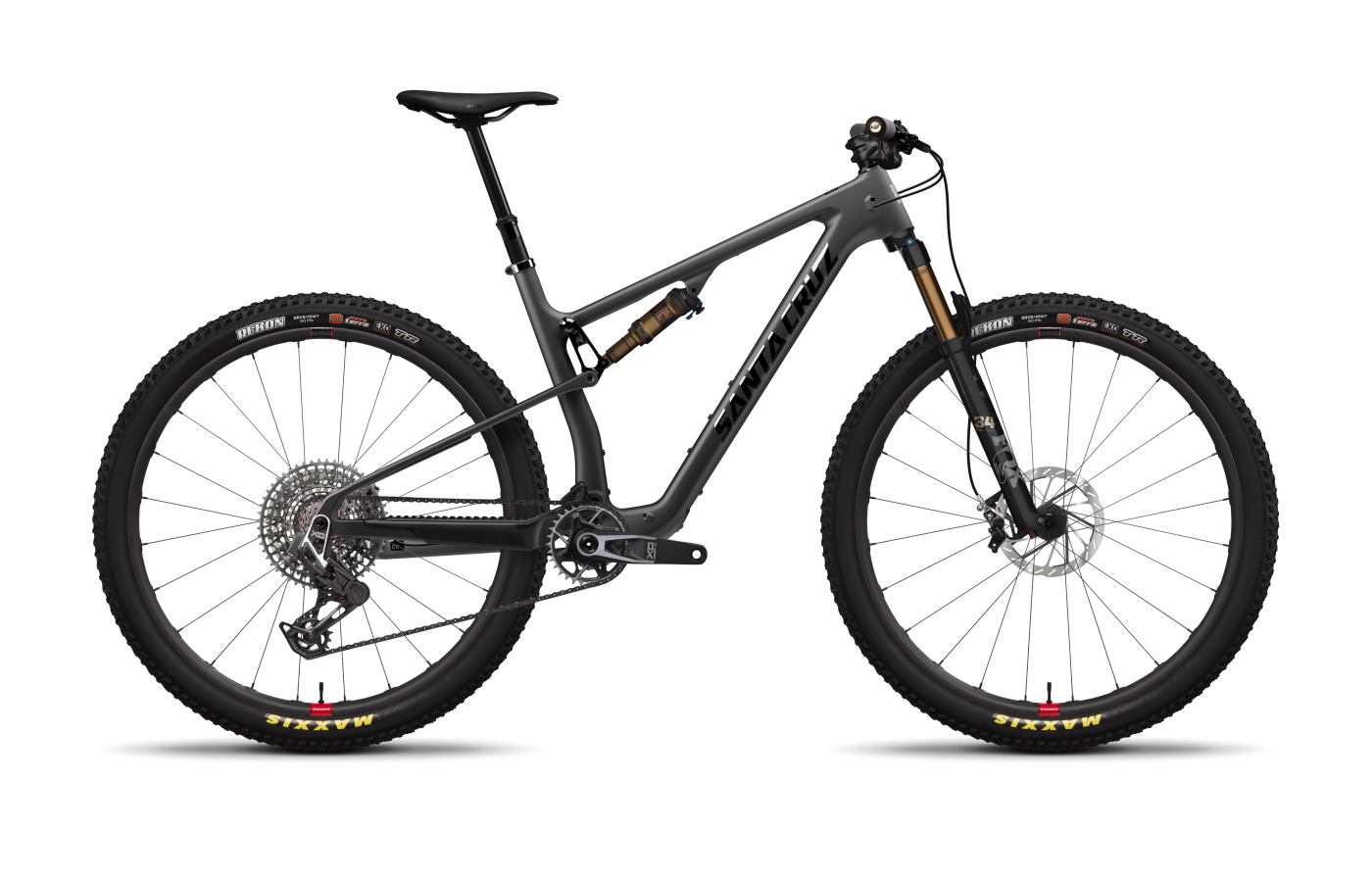
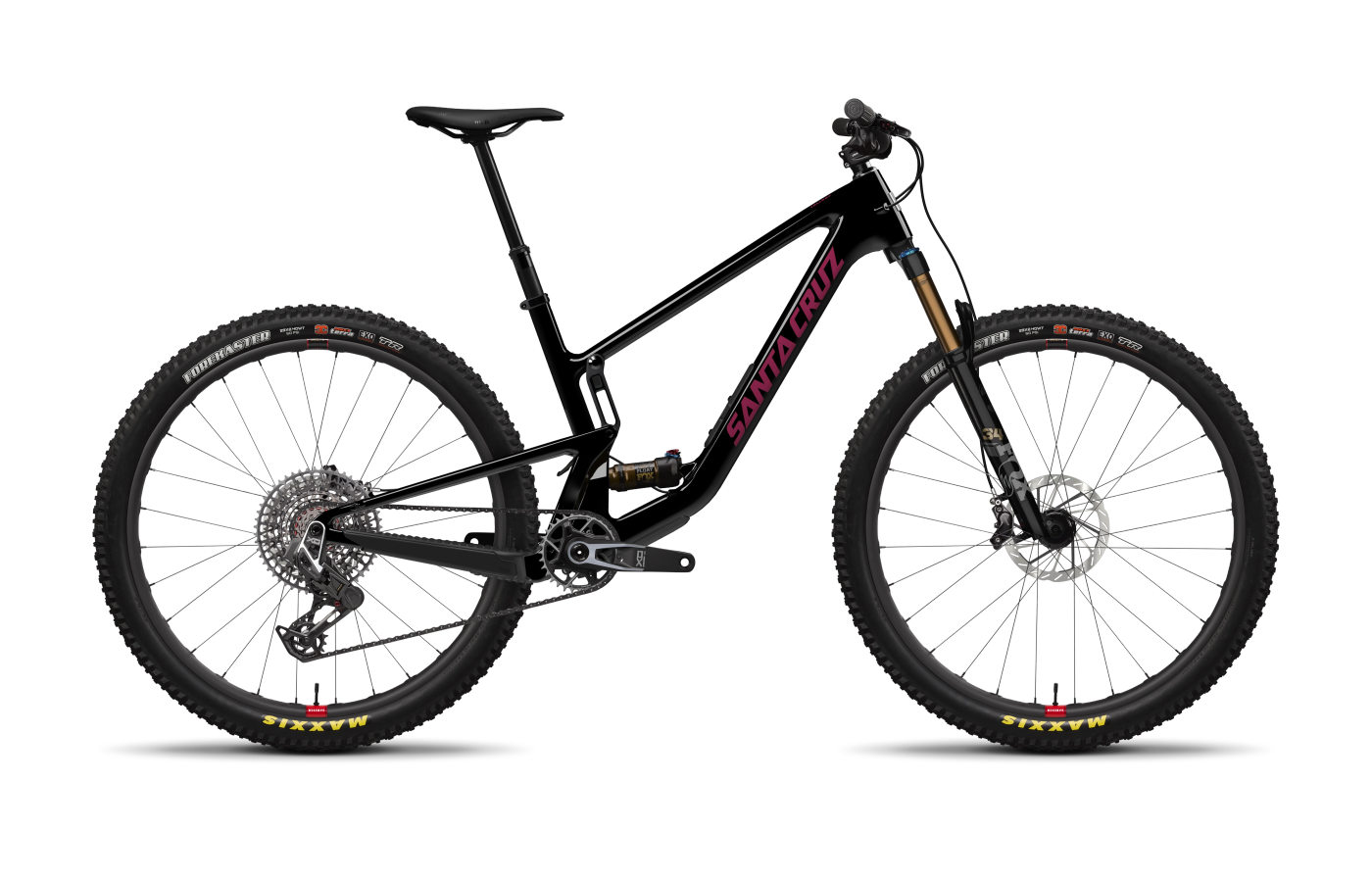
Same brand, two answers to the same question.
The Blur is the marathon racer that flexes to find grip. The Tallboy is the short-travel trail bike built to be ridden well past its travel.
Blur
- 3.5 lb lighter than the Tallboy at the same price tier — a real advantage on long climbs and stage races.
- Traction monster — low anti-squat and flex-stay rear end let it claw up rooty technical climbs others spin out on.
- Frame compliance from the flex-stay design takes the buzz out of four-hour days in a way most XC bikes can't.
- Suspension stays active on smooth climbs — the lockout becomes mandatory, not optional, on fire roads.
- 67.1° head angle and shorter wheelbase get twitchy when the descent steepens past XC pace.
Tallboy
- Descends like a 140 mm bike — 65.7° head angle, 42 mm longer wheelbase than the Blur, and VPP support that holds its mid-stroke.
- Steeper seat angle (76.7° vs 75°) keeps you centred and pedalling efficiently on steep technical climbs.
- Glovebox internal storage in the downtube — tools and a spare tube tucked away, no strap-on hipster pack required.
- Heavier and stiffer frame — long, chunky descents can be "tiring" relative to the Blur's compliance.
- Stock SRAM Level brakes are universally flagged as under-gunned for what the geometry encourages.
Editor’s analysis
Two Santa Cruz carbon 29ers, both 120 mm up front — but one is built to finish a four-hour race and the other is built to bomb a black diamond on a 120 mm rear.
The Santa Cruz Blur and Santa Cruz Tallboy share a brand, a wheel size, and a 130 mm-or-less front-travel ceiling. Almost nothing else lines up. The Blur ditched the brand's signature VPP for a Superlight single-pivot flex-stay design — a deliberate weight-and-compliance play that drops the CC frame to 1,933 g and prioritises mechanical grip on rooty climbs. The Tallboy keeps the counter-rotating VPP links, a 130 mm fork, and a 65.7° head angle in service of high-speed composure on the descents.
On the editor's-pick X0 AXS builds, the Blur Trail RSV comes in at 25.89 lb (11.74 kg) for $9,349; the Tallboy X0 AXS RSV is 29.43 lb (13.35 kg) for $9,249. That's a 3.5 lb (1.6 kg) gap at near-identical price — a real-world penalty you feel on every climb and every transition between corners. The Blur is meaningfully lighter, period.
The geometry diverges just as cleanly. At the fit-picked Medium for a 5'8" rider, the Tallboy is 22 mm taller in stack, 17 mm longer in reach, 1.4° slacker in head angle, and 42 mm longer in wheelbase than the Blur. The Tallboy's seat tube is also 1.7° steeper (76.7° vs 75°), which keeps your weight centred on the kind of steep, technical climbs where the Blur's more rearward position can wash the front wheel. The Tallboy is the longer, lower, slacker bike on every axis that matters for descending.
Put differently: the Santa Cruz Blur is what you buy when your race calendar says BC Bike Race or marathon nationals and you want a bike that takes the edge off lap four. The Santa Cruz Tallboy is what you buy when your weekend rides have more descending vert than climbing and you'd rather have a 120 mm bike you can ride like a 140 mm one.
Where the builds differ.
Comparing our editor's-pick builds side-by-side. Winners highlighted row-by-row — lower price and weight, and the better-spec component, each mark a point.
Build variants & pricing
Both lineups span ~$5k of range and bottom out near $4,700. The Blur stretches higher, topping out at $13,449 with the XX SL Flight Attendant build.
Editor's picks are the X0 AXS Trail RSV (Blur, $9,349) and X0 AXS RSV (Tallboy, $9,249) — same Carbon CC frame grade, same SRAM X0 Transmission, same Reserve carbon wheels, prices within $100. About as apples-to-apples as a cross-platform pick gets.
How they fit, how they steer.
Both at size Medium — the fit-picked size for a 5'8" rider. The Tallboy is 22 mm taller in stack, 17 mm longer in reach, 1.4° slacker in head angle, and 42 mm longer in wheelbase. Chainstays are identical at 433 mm.
Which size should I buy?
Both run conventional sizing on overlapping ranges — the Tallboy adds an XS and XXL the Blur doesn't offer.
→These are starting points. Flexibility, riding style, and preferred position all shift the answer — if you’re between sizes, a professional fit beats a chart.
What the magazines said.
Published reviews from trusted cycling outlets. Click through for the full write-up.
Which one should you buy?
If your weekends are about climbing efficiency and stage-race comfort, get the Blur. If they're about descending hard on a short-travel bike, get the Tallboy.
Blur
If your A-race is a multi-day stage event or a four-hour XC marathon, and you want a bike that finds traction on the rootiest climb of the day, the Blur is the answer. The Superlight rear end is one of the more refined ways to keep a rider fresh in the closing hour.
Tallboy
If your trails point down more than they point up, and you want one bike that pedals to the top and then hangs with friends on bigger rigs at the bottom, the Tallboy's VPP support and slack front end are built exactly for that. Just budget for better brakes.
Questions buyers actually ask.
Short answers to the things we get emailed about most often.
01Which is faster on a long climb?
The Blur, by a clear margin. At the X0 AXS tier, the Blur Trail RSV is 25.89 lb (11.74 kg) versus the Tallboy X0 AXS RSV at 29.43 lb (13.35 kg) — a 3.5 lb (1.6 kg) difference at near-identical price. On a 30-minute fire-road climb that's worth roughly a minute for a typical rider.
The Blur also gets a slightly sharper acceleration feel from the flex-stay rear end. The trade-off is more pedal bob on smooth surfaces — the lockout isn't optional on the Blur, it's part of the workflow.
02Which descends better?
The Tallboy, comfortably. A 65.7° head tube angle (vs the Blur's 67.1°), a 42 mm longer wheelbase at Medium, and the supportive VPP mid-stroke all combine to produce what reviewers consistently called a bike that "punches above its travel class."
The Blur is no slouch — the TR build with a 120 mm fork is genuinely capable — but it gets twitchy at speed where the Tallboy stays planted. Riders coming from longer-travel bikes consistently describe the Tallboy as the easier transition.
03How much travel does each have?
Blur: 115 mm rear (TR builds) or 107 mm rear (XC builds), 120 mm fork on both. The editor's-pick X0 AXS Trail RSV is the 115 mm trail-oriented variant.
Tallboy: 120 mm rear, 130 mm fork — same on every build in the lineup. The Tallboy gets a stiffer 34 mm-stanchion FOX 34 fork; the Blur uses the lighter 34 SC variant.
04VPP or flex-stay — does it matter?
Yes, and the difference is the whole point of these two bikes existing in the same lineup.
The Blur's Superlight flex-stay single-pivot is a deliberate weight play — Santa Cruz shaved 289 g off the previous Blur frame by deleting the rear pivot. The trade-off is lower anti-squat and a more active rear end that needs the lockout on smooth climbs.
The Tallboy's counter-rotating VPP keeps the support and progression that make it ride higher in its stroke — better for pumping, jumping, and holding mid-stroke under hard cornering. It's also slightly heavier and asks for more frequent pivot-bearing service.
05What about the brakes?
Both editor's-pick builds ship with SRAM Level brakes. On the Blur this is fine — the bike isn't carrying enough speed into the rough to overwhelm them. On the Tallboy, nearly every long-term reviewer flagged the Levels as under-gunned for the geometry, with multiple recommending an immediate upgrade to SRAM Codes (or four-piston equivalent) plus 200 mm rotors.
Budget another $300–$500 if you're buying the Tallboy and plan to use it the way Santa Cruz's marketing suggests.
06Tire clearance?
Blur: 61 mm (roughly 2.4") official clearance. Both ship with 2.4" Maxxis Rekon (TR) or Rekon Race (XC) tires.
Tallboy: 63.5 mm (roughly 2.5") clearance. Stock tires are 2.4" Maxxis Forekaster — fast-rolling but reviewers commonly swap to a Maxxis Dissector or Assegai up front to match the bike's descending capabilities.
07Which holds up better long-term?
Both frames carry Santa Cruz's lifetime frame warranty, lifetime bearing replacement, and lifetime warranty on the Reserve carbon wheels. That's the strongest support package in the segment — it applies equally to both bikes.
The Blur has fewer pivots to service and a simpler maintenance burden, but its flex-stay area can collect debris (the "Dirt Skirt" mod is recommended in long-term reviews) and the lightweight Fox Transfer SL dropper has a poor reliability reputation.
The Tallboy has more bearings in the linkage and slightly more frequent service intervals, but the threaded BSA bottom bracket, grease ports on the lower link, and the Glovebox storage door all make it friendlier to home mechanics.
08Which one should the average rider buy?
If you don't race XC marathons and you don't have a longer-travel bike for the rough stuff, the Tallboy is the answer for most riders. Its versatility — climb-friendly enough to do all-day rides, capable enough to handle the rowdy descents at your local trail center — covers more of the use cases an average rider will actually encounter.
The Blur is the right call if you have a clearly defined XC or marathon goal, or if you already own a trail/enduro bike and want a dedicated lightweight rig for the long, climb-heavy days.
Similar bikes
If your priorities don’t map cleanly onto either of these, one of these adjacent bikes probably fits better.
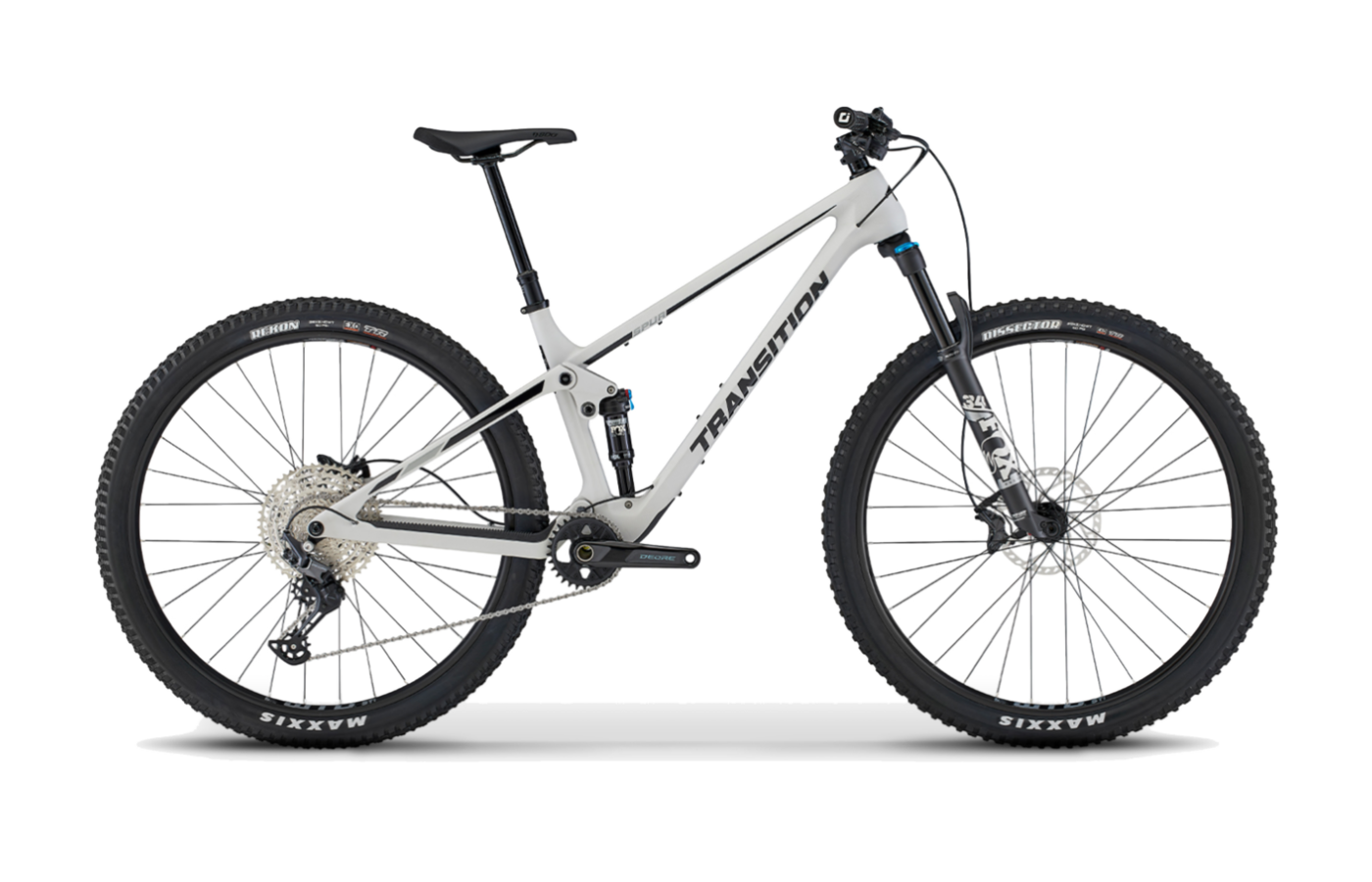
Spur
The Transition Spur splits the difference — Blur-rivalling weight in a frame with more progressive geometry that holds its line better at speed. The closest one-bike answer to this comparison.
Compare →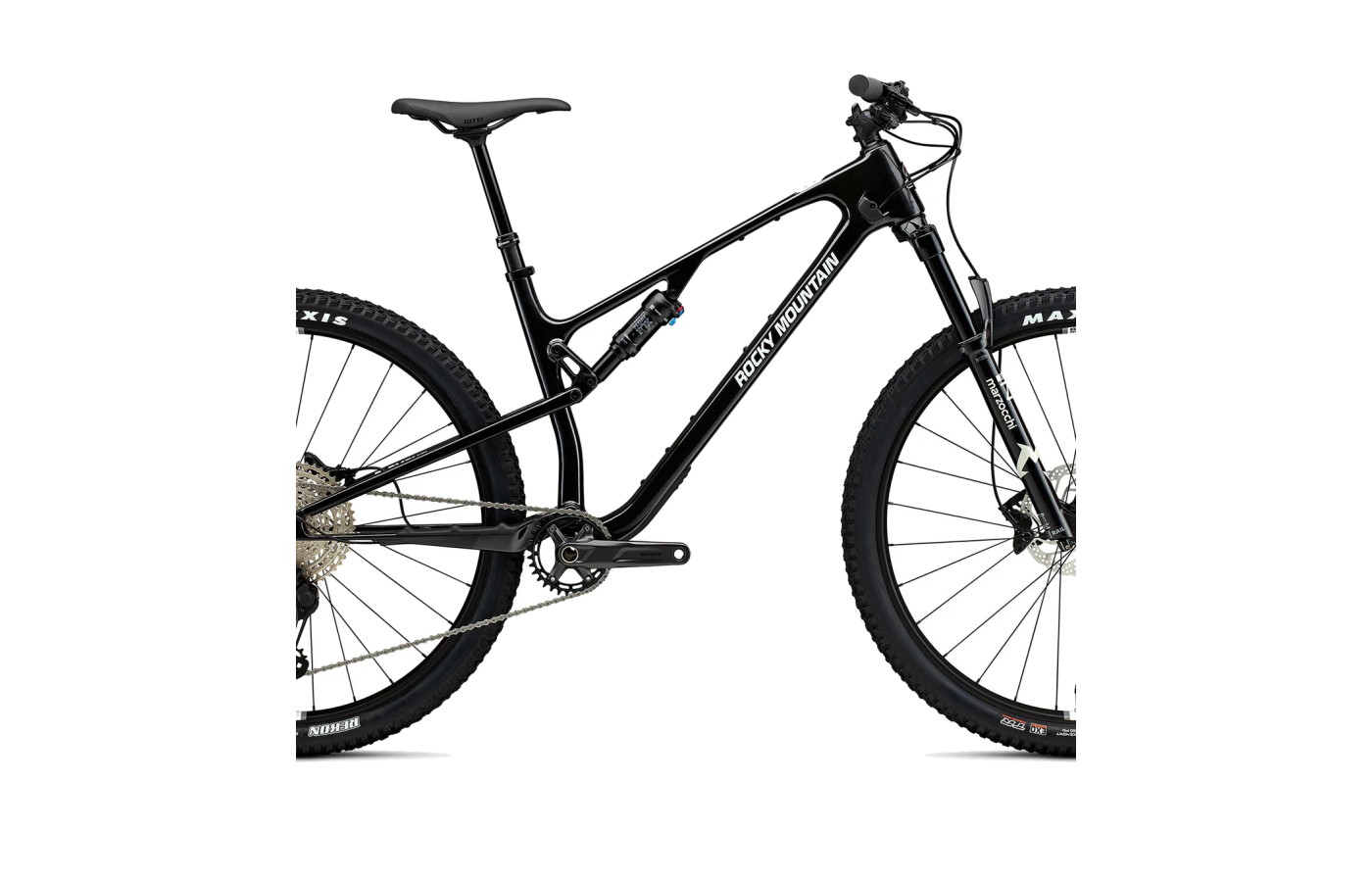
Element
The Rocky Mountain Element is a downcountry standout — more travel than the Blur, far lighter than the Tallboy, and Ride-9 geometry chips that let you tune the head angle to taste.
Compare →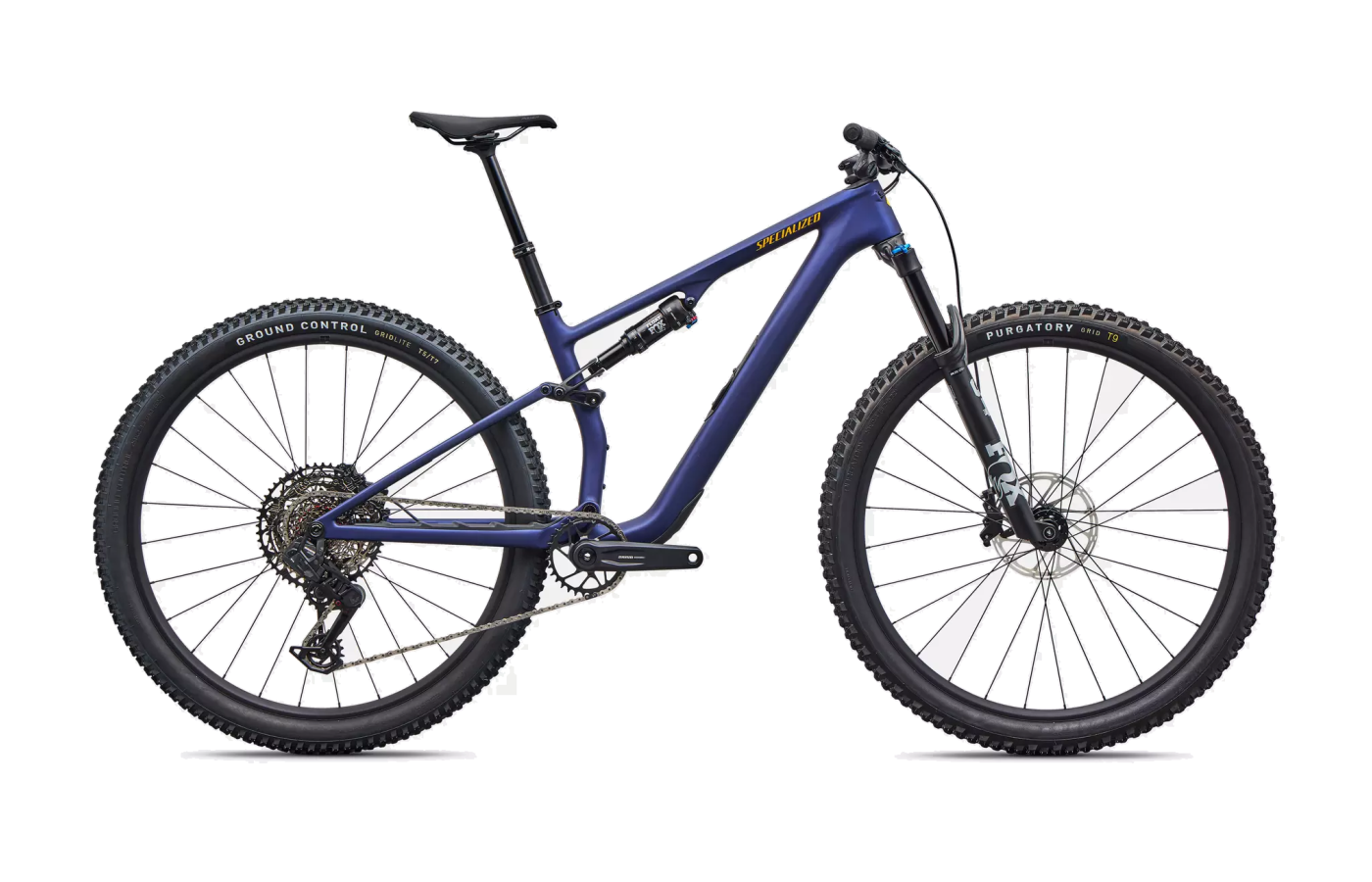
Epic Evo
The Specialized Epic Evo is the firmer, more hardtail-feeling counterpoint to the Blur — same XC remit, but with high anti-squat and a snappier pedalling platform for riders who hate any pedal bob.
Compare →