Blur
vsASR
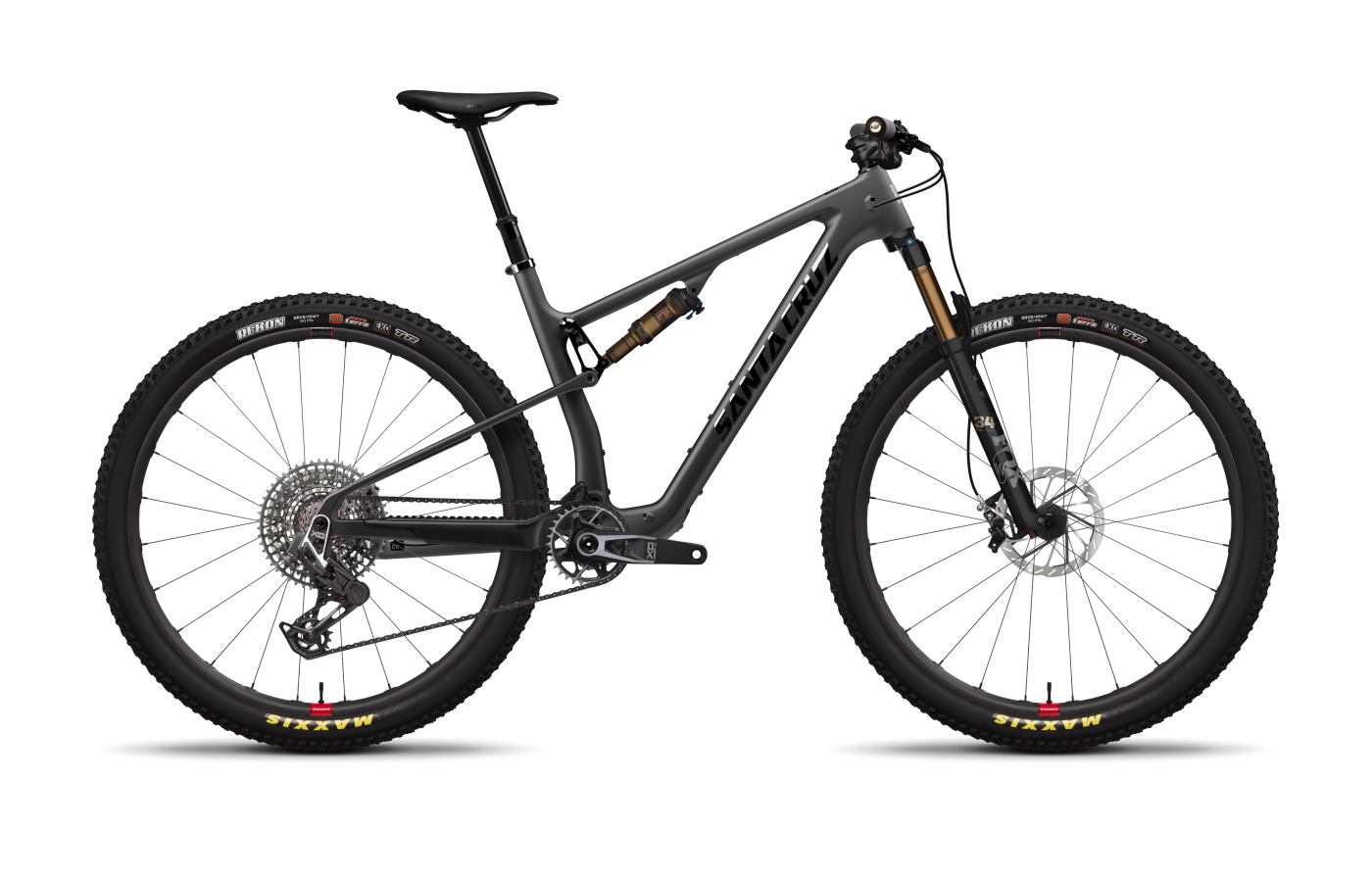
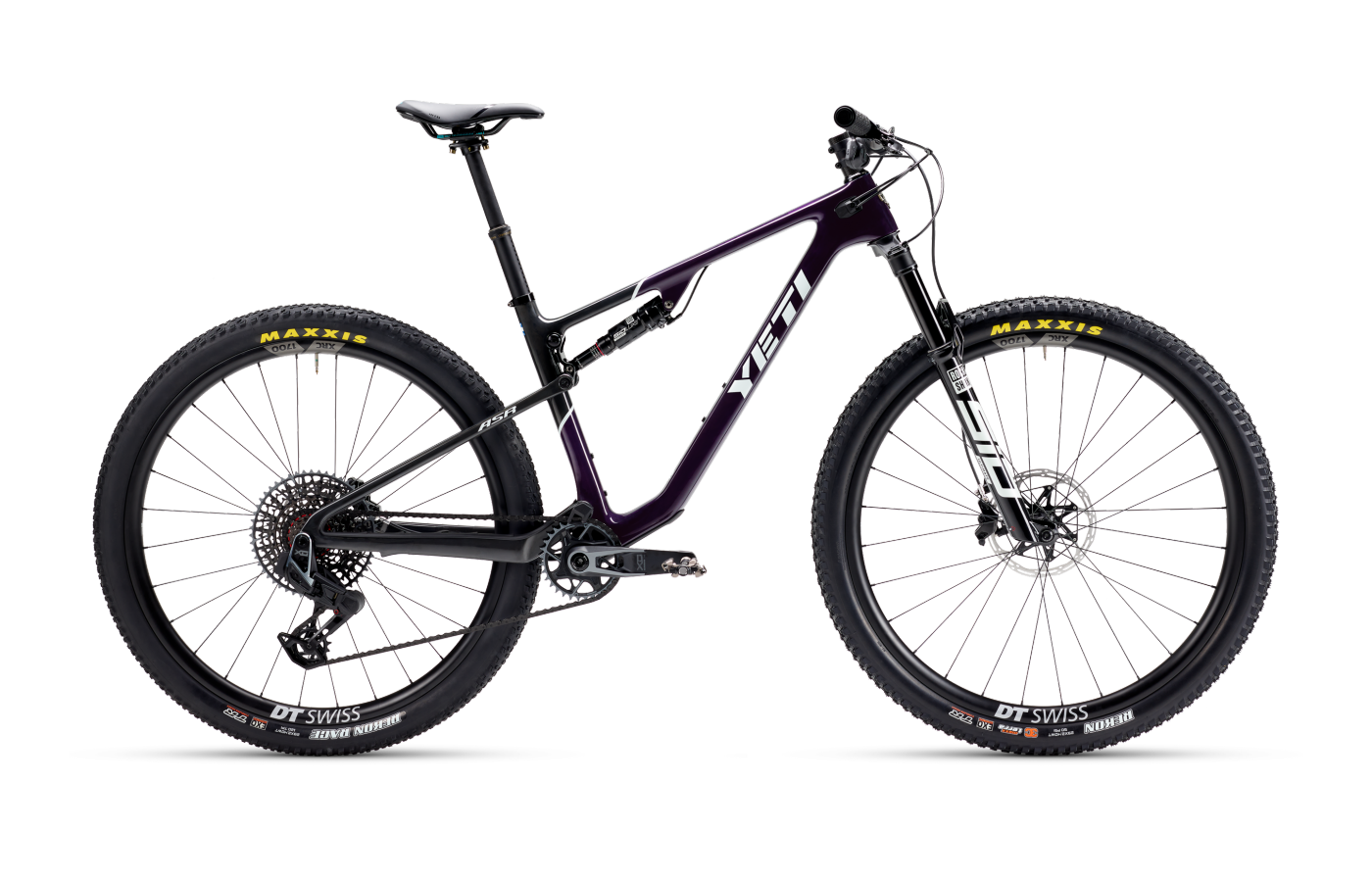
Two flex-stay XC bikes, two opposite tunings.
The Blur prioritizes traction and trail-bike comfort. The ASR pushes a slacker, lighter, more uncompromising race chassis.
Blur
- Best-in-class traction — low anti-squat keeps the rear wheel glued on rooted, technical climbs.
- Lower entry price — starts at $4,649, well below the ASR's $6,000 floor.
- Lifetime warranty covers frame, pivot bearings, and Reserve wheels — a real long-term value lever.
- Active suspension noticeably bobs under hard pedaling unless you use the lockout.
- Frame is ~500 g heavier than the ASR's flagship Turq layup.
ASR
- Class-leading frame weight — ~1,448 g for the wireless Turq, among the lightest XC frames on the market.
- Slacker, more modern XC geometry — 66.5° head angle and longer reach for descending confidence on technical courses.
- Mechanic-friendly details — threaded BB, no through-headset routing, and an integrated chain guide.
- Mid-tier builds spec heavy alloy DT Swiss XM1700 wheels at carbon-bike prices.
- Short 40 mm shock stroke and deep 30% sag make setup finicky and the lockout essentially mandatory.
Editor’s analysis
Both brands ditched their marquee linkages — VPP and Switch Infinity — for the same simple flex-stay layout. What they did with that simplicity is where they split.
On the spec sheet the Blur and ASR look like twins: 115 mm of rear travel, 120 mm forks, flex-stay single-pivot suspension, carbon frames in the 1.4–1.9 kg range. Both have just rejoined the World Cup XC race conversation. But ride either and the philosophical gap shows up in the first ten minutes.
Santa Cruz tuned the Blur for grip first, watts second. Anti-squat is intentionally low, the rear end stays active under power, and reviewers consistently call it a "technical climbing master" that sucks itself to the ground on rooted, stepped climbs. The flip side is the bob: on smooth fire-road grinds the suspension feels labored unless you flip the lockout. It's the bike for the marathon racer who'd rather clean a tech section than sprint a fire road.
Yeti went the other way. The ASR is slacker (66.5° vs 67.1°), longer (444 mm reach in a Medium vs 438 mm), and roughly 700 g lighter at the frame (~1,448 g for the wireless Turq vs ~1,933 g for the Blur CC). The recommended 30% rear sag is unusually deep for the category — it makes the suspension feel "fluttery" and planted on descents, but it means the 3-position remote isn't optional, it's required. Reviewers call the chassis a "race or rave weapon" with a Jekyll-and-Hyde character.
Put another way: the Blur is a trail bike that races. The ASR is a race bike that's been talked into being a trail bike. If your weeks are technical singletrack and stage races, the Blur. If they're World Cup-style laps and you want the lightest, sharpest chassis with a slacker front end for the modern course, the ASR.
Where the builds differ.
Comparing our editor's-pick builds side-by-side. Winners highlighted row-by-row — lower price and weight, and the better-spec component, each mark a point.
Build variants & pricing
The Blur scales from $4,649 to $13,449. The ASR's lineup is tighter and pricier, $6,000 to $14,300 — no entry-level door.
Prices are current US MSRP. The Blur's editor's-pick X0 AXS Trail RSV ships with carbon Reserve wheels at $9,349; the ASR's similarly-spec'd T3 X0 AXS Transmission costs $8,700 but rolls on alloy DT Swiss XM1700s — budget another ~$2,000 for the XRC1200 carbon upgrade if you want to match the Blur's wheel package.
How they fit, how they steer.
Both at size M — the fit-picked size for a 5'8" rider on each bike. The ASR sits 2.4 mm taller in stack with 6.5 mm more reach, a 0.6° slacker head angle, 3.9 mm longer chainstays, and a 16.5 mm longer wheelbase. It's the more stretched, more stable platform; the Blur is the tighter, flickier one.
Which size should I buy?
Size recommendations based on stack, reach, and effective top tube. Both ranges overlap at M and L; the ASR offers an XS the Blur doesn't.
→These are starting points. Flexibility, riding style, and preferred position all shift the answer — if you’re between sizes, a professional fit beats a chart.
What the magazines said.
Published reviews from trusted cycling outlets. Click through for the full write-up.
Which one should you buy?
If you race tech-heavy marathons and want maximum mechanical grip, get the Blur. If you want the lightest, slackest, most racy modern XC chassis, get the ASR.
Blur
If your races are five-hour technical singletrack epics where cleaning a rooted climb on the first try matters more than the finish-line sprint, the Blur is the right tool. The active suspension and lifetime warranty stack reward riders who plan to thrash one bike for years.
ASR
If you race short, intense laps on slacker, more technical XC courses and want the lightest possible chassis with descending-friendly geometry, the ASR is the sharper tool. Just be ready to manage the lockout and budget for the carbon-wheel upgrade.
Questions buyers actually ask.
Short answers to the things we get emailed about most often.
01Which is a better climber?
It depends on the climb. On smooth fire-road grinds, the Yeti ASR wins — it's lighter (~1,448 g Turq frame vs ~1,933 g Blur CC), has higher native anti-squat, and accelerates more crisply when locked out.
On technical, rooted, stepped climbs, the Santa Cruz Blur wins. Its intentionally low anti-squat keeps the rear wheel actively tracking the ground, and reviewers across PinkBike, Bike Perfect and Singletrackworld call it a "technical climbing master" that cleans sections that cause stiffer bikes to spin out.
02Which descends better?
The Yeti ASR, on most modern XC courses. The 66.5° head angle (vs the Blur's 67.1°), the longer 444 mm reach in a Medium (vs 438 mm), and the deep 30% recommended sag give it a more planted, trail-bike feel on descents.
The Blur isn't bad downhill — reviewers call it "surgical" in tight, low-speed switchbacks thanks to its shorter wheelbase. But on fast, chunky descents, the ASR is the more composed bike.
03How different are they really? They both have 115 mm of travel and flex-stay suspension.
Mechanically they're cousins. Philosophically they're opposites.
Santa Cruz tuned the Blur for traction first — low anti-squat, an active rear end, and a softer, set-and-forget character. Yeti tuned the ASR for light weight and snappy response — higher anti-squat, deeper recommended sag (30% vs the more typical 22–25%), and a chassis that demands an active pilot working the 3-position remote. Same parts list, different intent.
04Why is the lockout such a big deal on the ASR?
Because of the deep 30% sag. Yeti's recommended setup makes the bike unusually supple in the initial stroke — great for traction and small-bump compliance, but it means the suspension noticeably moves under hard out-of-the-saddle efforts.
The 3-position TwistLoc remote (Open / Pedal / Lock) lets you firm things up for sprints and smooth climbs, then dump back to Open for descents and chatter. Reviewers from PinkBike and Escape Collective consistently call it a requirement, not an accessory. The top-tier T5 build replaces it with RockShox Flight Attendant, which manages the same job automatically.
05Is the editor's-pick X0 AXS build really worth it on either bike?
Both X0 AXS Transmission builds we picked sit in the sweet spot of the lineup — full SRAM Eagle AXS Transmission shifting, top-tier carbon frames (Santa Cruz CC and Yeti TURQ), and prices that don't crest five figures.
The Blur X0 AXS Trail RSV ($9,349) ships with Reserve 28|XC carbon wheels and Fox 34SC suspension — race-ready out of the box. The Yeti T3 X0 AXS Transmission ($8,700) is $649 cheaper but ships with alloy DT Swiss XM1700 wheels weighing nearly 2 kg. Most reviewers recommend budgeting another ~$2,000 for the XRC1200 carbon upgrade to actually unlock the ASR's potential.
06What about the warranty?
Santa Cruz offers a lifetime warranty on the frame, pivot bearings, and (on RSV builds) the Reserve carbon wheels. Reviewers consistently flag this as a primary justification for the Blur's premium price.
Yeti offers a 5-year frame warranty. Solid by industry standards, but a notably shorter promise than Santa Cruz's lifetime coverage — particularly on the bearings and wheels.
07Which is more comfortable for long days?
Reviewers lean Blur, narrowly. The combination of a more compliant frame layup, the high-volume 2.4" tires on Reserve carbon rims, and the actively-tuned suspension is consistently called "muted" and fatigue-reducing on long efforts.
The ASR isn't far behind — it has a similarly compliant feel and a more upright 75.5° seat tube angle that several testers said reduced neck and back strain on multi-hour rides. But the Blur's softer pedaling platform and more forgiving setup window give it the edge for stage-race comfort.
08Can I run a bigger fork to make either more capable on descents?
Both frames are designed around 120 mm forks and reviewers don't recommend going bigger on either. The geometry, leverage curve, and frame layup are all optimized for that travel — slap a 130–140 mm fork on and you'll slacken the head angle, raise the BB, and void the warranty without actually getting a more capable bike out of it.
If you want more travel, look at Yeti's SB120 or Santa Cruz's Tallboy — both are purpose-built short-travel trail bikes with more aggressive geometry from the start.
Similar bikes
If your priorities don’t map cleanly onto either of these, one of these adjacent bikes probably fits better.
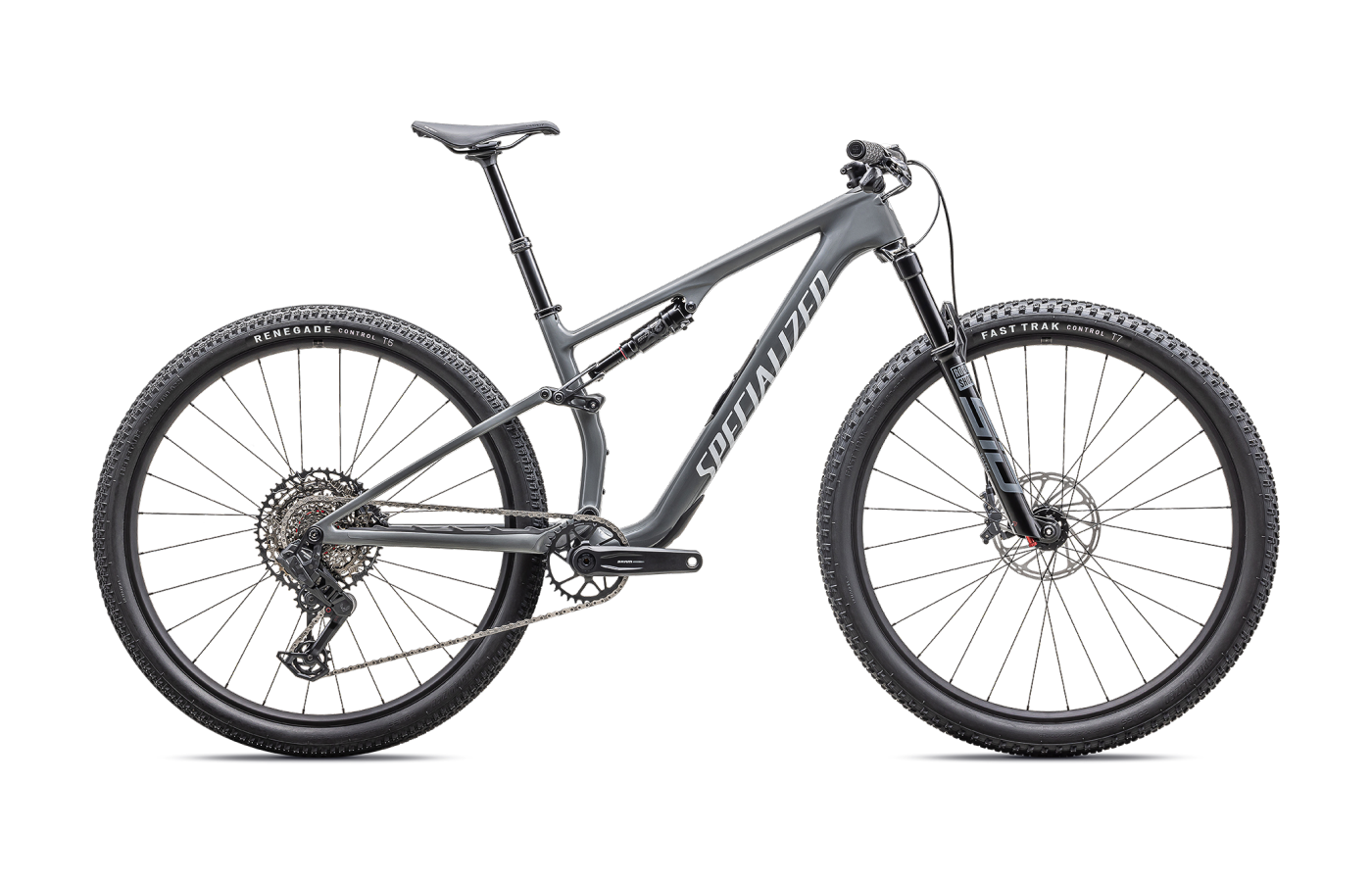
Epic
The Specialized Epic is the firm-and-locked-out counterpoint — much closer to a hardtail's pedaling feel than either of these. If you hate suspension bob and prioritize sprint efficiency over traction, this is the bike.
Compare →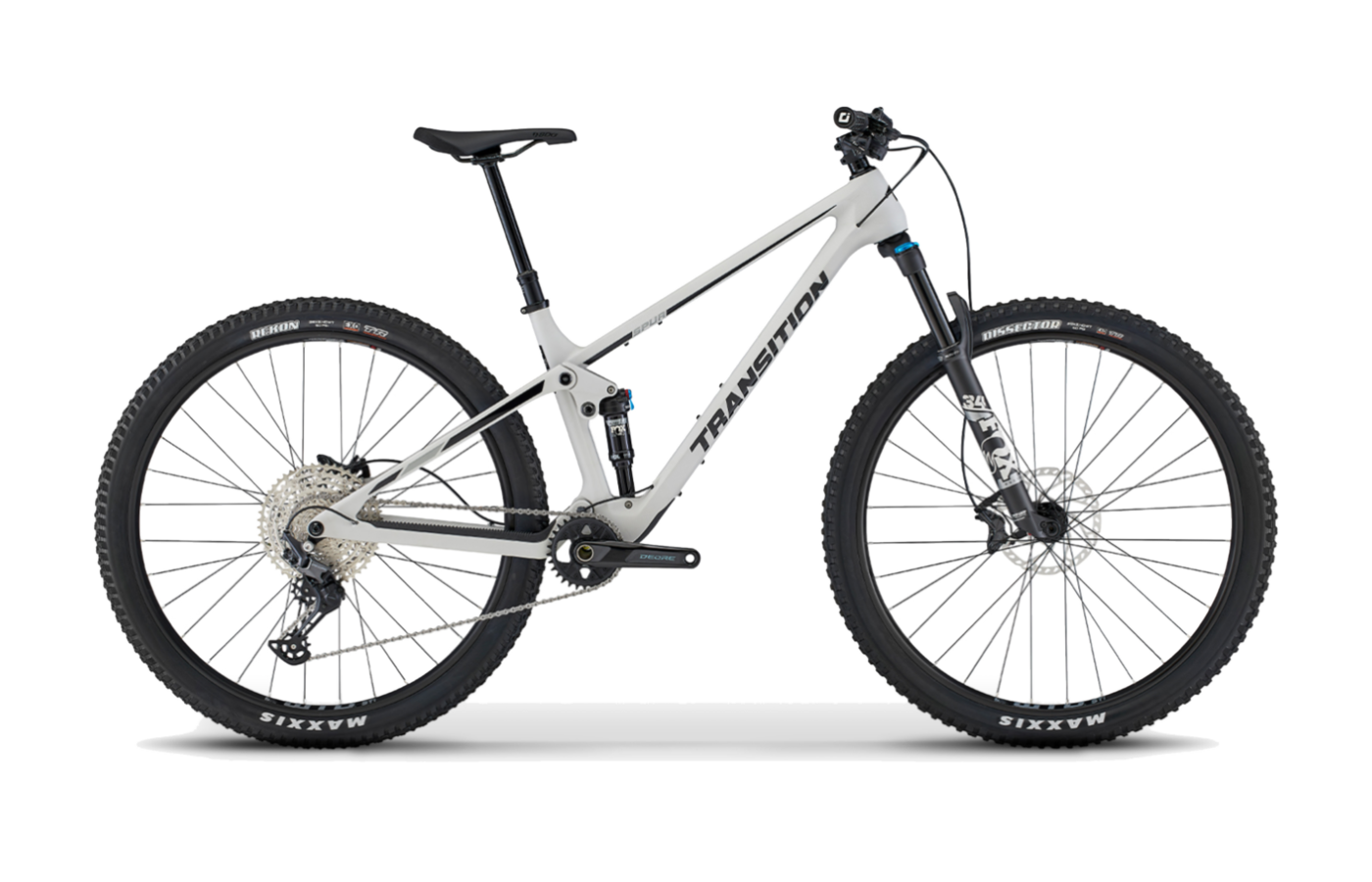
Spur
If the Blur feels too conservative downhill, the Transition Spur takes a true downcountry approach — slacker, longer, more capable on descents while keeping the short-travel platform.
Compare →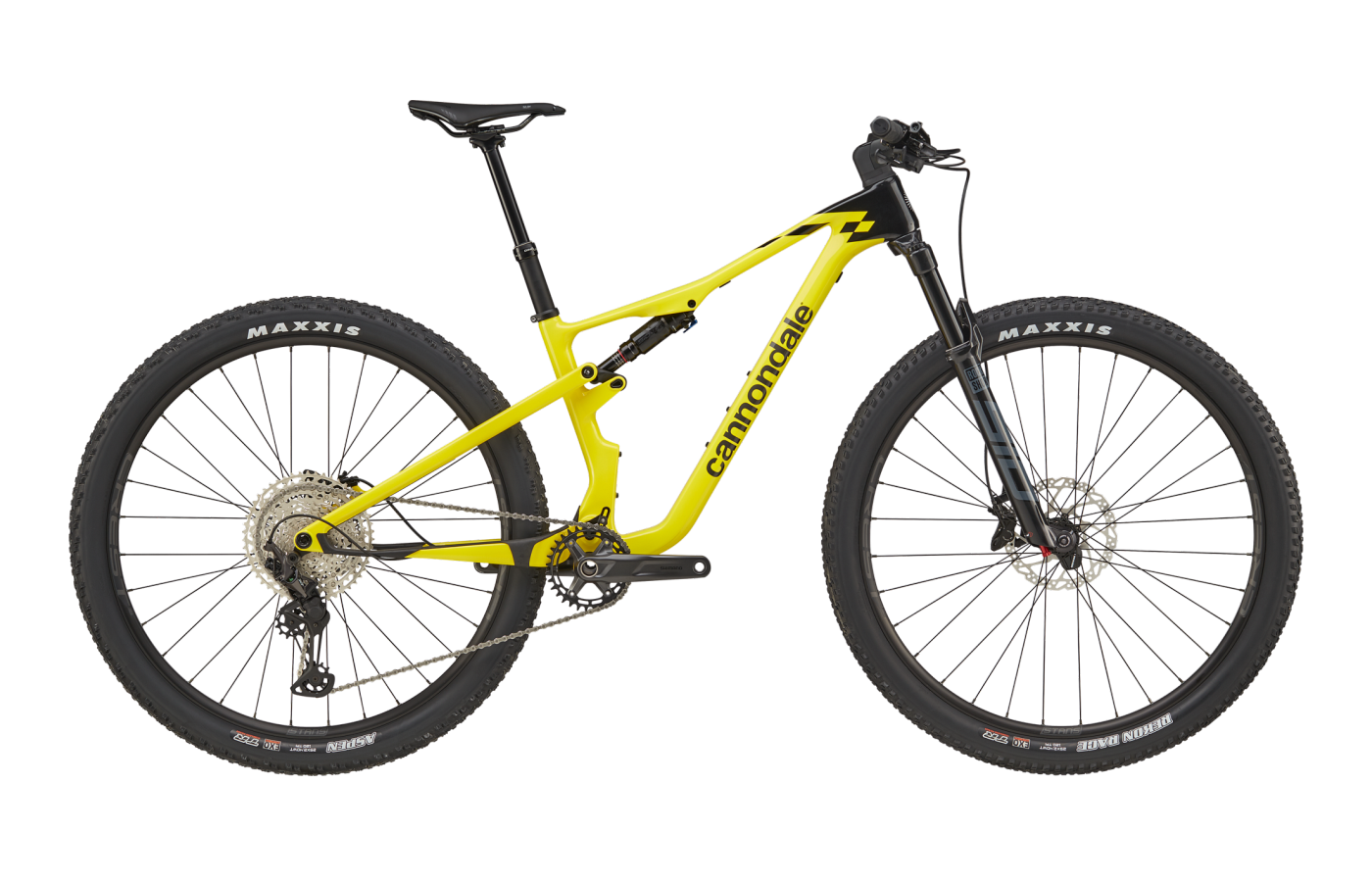
Scalpel
The Cannondale Scalpel is the closest direct rival to the ASR's flex-stay race brief — similar weight and speed, with the unique ultra-precise handling of the Lefty fork as the differentiator.
Compare →