Bronson
vsSentinel
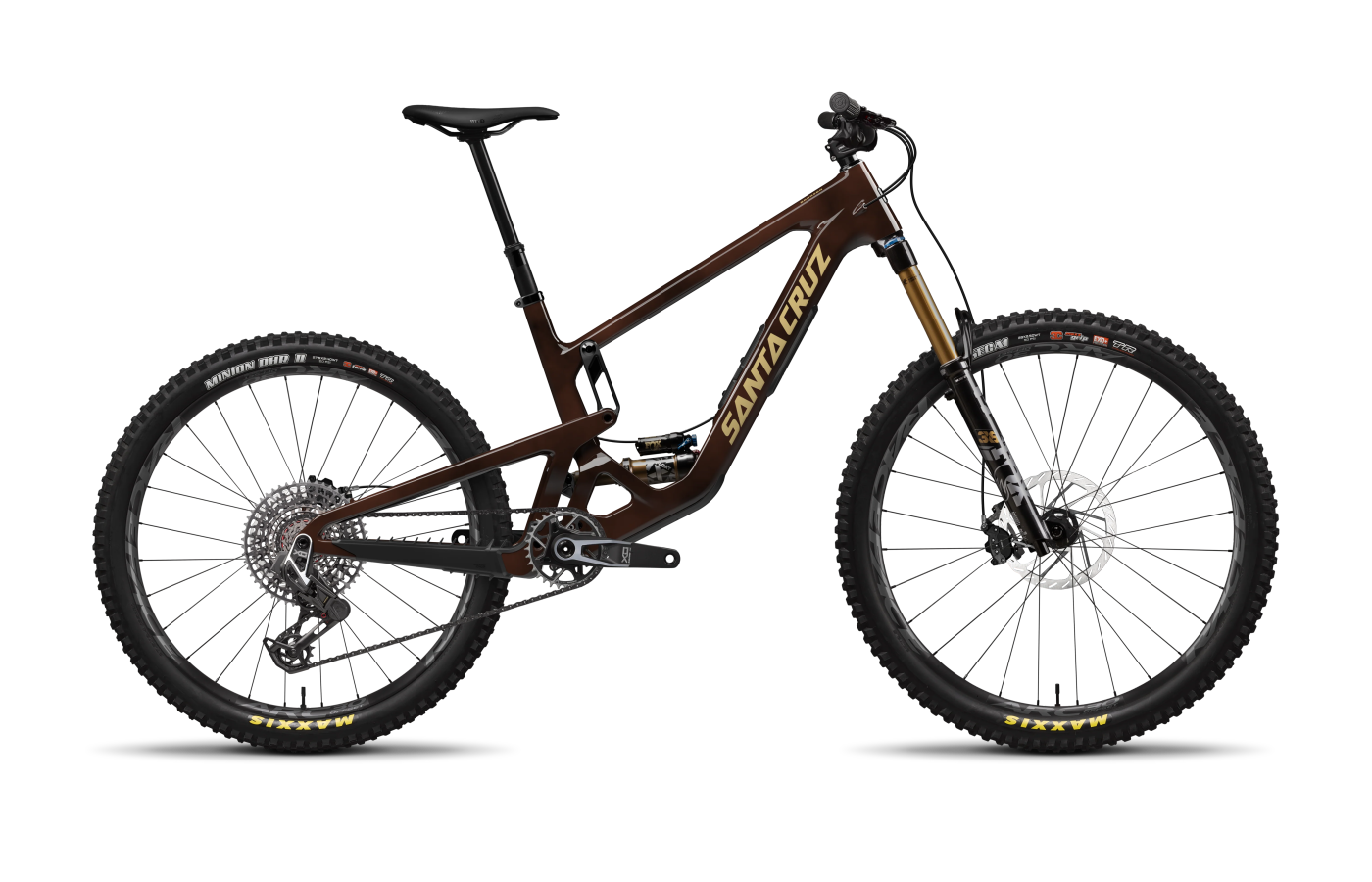
Same travel, opposite personalities.
The Bronson is a mixed-wheel hooligan built for line choice. The Sentinel is a 29er freight train that climbs.
Bronson
- Mixed-wheel agility — the 27.5 rear flicks through switchbacks and manuals far easier than a 29er.
- Lifetime bearing replacement — Santa Cruz's no-questions warranty covers pivot bearings for the life of the frame.
- Quiet, refined chassis — sleeved internal routing and a threaded BSA bottom bracket make it easy to live with.
- Carbon-only — no alloy frame, so $4,999 is the floor.
- 27.5 rear wheel can hang up on square-edge hits where a 29er rolls through.
Sentinel
- Better technical climber — a steeper 78.9° seat angle and 350 mm BB keep weight forward and pedals clear.
- Lower entry price — the alloy Deore build starts at $3,499, $1,500 below the cheapest Bronson.
- B.O.O.M. Box internal storage on carbon frames — separate latch from the bottle, multi-tool stays out of your pocket.
- Stock RockShox Super Deluxe Ultimate shock tune is widely panned as too light — budget for a re-tune.
- 350 mm BB feels less locked-in on fast, high-lean berms than lower-slung rivals.
Editor’s analysis
Both run 150 mm rear, 160 mm front, and a 64-degree-ish head angle. Then the philosophies fork apart — one bike picks lines, the other holds them.
On paper the Santa Cruz Bronson and Transition Sentinel are twins. Same 150 mm of rear travel, 160 mm forks, carbon frames, $5k–$10k price ranges, lifetime warranties. Read the spec sheets back-to-back and you'd struggle to pick one. Ride them and the difference is immediate.
The Bronson is a dedicated mullet — 29 in front, 27.5 out back — and Santa Cruz designed every angle around that decision. Reviewers call it a 'hooligan' and a 'playbike': snappy through tight switchbacks, easy to manual, the kind of bike that turns boring singletrack into a series of side-hits. The trade-off is that smaller rear wheel hangs up on square edges where a 29er would just keep rolling, and the towering 632 mm stack on a Medium can feel rear-biased on flat corners. It's a specialist tool, and it's honest about it.
The Sentinel V3 went the other way — Transition reeled it in from its old enduro-sled persona toward something more versatile. Native 29-inch wheels, a steeper seat tube (78.9° on a Medium vs. the Bronson's 77.9°), and a 350 mm bottom bracket that's high enough to keep your pedals out of desert chunder. It rolls better, climbs technical pitches more comfortably, and stays composed through high-speed chop. The price: a notoriously light stock shock tune that several reviewers (Blister, Pinkbike) say needs a re-tune to unlock the chassis, and a slightly less playful character than the Bronson on jib-heavy trails.
Put another way: the Santa Cruz Bronson is the bike you buy when your local trails are tight, twisty, and full of optional features. The Transition Sentinel is the bike you buy when you want one rig that handles Moab on Saturday and the bike park on Sunday — and you don't mind tinkering with the rear shock to get there.
Where the builds differ.
Comparing our editor's-pick builds side-by-side. Winners highlighted row-by-row — lower price and weight, and the better-spec component, each mark a point.
Build variants & pricing
Both span ~$4.5k of range. The Sentinel goes lower in alloy; the Bronson tops out higher with Reserve carbon wheels.
Prices are current US MSRP. Santa Cruz dropped the alloy Bronson for the V4, so the entry point is a $4,999 carbon R build; Transition still sells alloy frames from $3,499. If sub-$5k matters to your budget, the Sentinel is the only choice between these two.
How they fit, how they steer.
Bronson Medium and Sentinel MD both come in for a 5'8" rider. The Sentinel sits 11 mm lower in stack with a fractionally shorter reach, a slightly slacker 64° head angle, and 3 mm longer chainstays — geometry tilted toward stability over flickability.
Which size should I buy?
Both ranges overlap closely in the middle. The Sentinel reaches further at the small end (XS at 415 mm reach) and offers an XXL the Bronson matches.
→These are starting points. Flexibility, riding style, and preferred position all shift the answer — if you’re between sizes, a professional fit beats a chart.
What the magazines said.
Published reviews from trusted cycling outlets. Click through for the full write-up.
Which one should you buy?
If your trails reward line choice over straight-line speed, get the Bronson. If you need one bike that climbs Moab and rails the bike park, get the Sentinel.
Bronson
If you treat singletrack like a skatepark, hunt for side-hits, and ride trails tight enough that a full 29er feels cumbersome — this is the bike. The mullet setup pays off every time you flick into a corner or pop off a root.
Sentinel
If you want one rig for technical climbs, all-day adventures, and the occasional bike park lap, the Sentinel is the more versatile pick. Just budget for a shock re-tune if you ride hard — the stock damping leaves performance on the table.
Questions buyers actually ask.
Short answers to the things we get emailed about most often.
01Which one climbs better?
The Sentinel, on most terrain. Its 78.9° effective seat tube angle (Medium) puts you 1° more forward than the Bronson's 77.9°, and the 29-inch rear wheel rolls over square-edge ledges that hang the Bronson's 27.5 up. The Sentinel's slightly higher 350 mm BB also clears pedal strikes in chunky rock gardens.
The Bronson isn't a bad climber — Santa Cruz's VPP gives it excellent anti-squat, and reviewers note the climb switch is essentially decorative. But on long technical pitches, the Sentinel's geometry is the better tool.
02Which one is more fun on flowy trails?
The Bronson, by a noticeable margin. The 27.5 rear wheel makes it easier to manual, schralp, and flick through tight corners — Vital MTB called it a 'hooligan,' The Loam Wolf said it 'annihilated' twisty tracks. If your local loops are pumpy and feature-heavy, this is the bike that'll have you grinning.
The Sentinel V3 is sportier than the V2, with a 'BMX-ish' feel reviewers liked, but it's still a 29er. It rewards an active rider, but it doesn't disappear under you the way the Bronson does on tight stuff.
03What's the deal with the Sentinel's stock shock?
It's the bike's most-cited weakness. The factory RockShox Super Deluxe Ultimate ships with a compression tune that Blister called 'mushy' and Pinkbike called 'bizarrely light.' At speed it blows through the mid-stroke, leaving the bike feeling unsettled on square-edged hits.
The fix is a custom re-tune (Push, Avalanche, Vorsprung all do them, ~$200–$300) or a shock swap. Reviewers who did either described the change as 'transformative.' It's a real cost to factor into the purchase if you're an aggressive rider.
04Can I run a mullet (mixed-wheel) setup on the Sentinel?
Yes. The Sentinel V3 has a flip chip designed for mixed-wheel compatibility — Transition recommends the 'High' setting with a 27.5 rear wheel, which lowers the BB by 6 mm and slacks the head angle by 0.4°. Blister and Awesome MTB both found this configuration to be the bike's handling sweet spot.
The Bronson is mullet-only — Santa Cruz designed the V4 around the mixed-wheel layout, so there's no 29er option.
05What's the cheapest way into each platform?
Bronson: the carbon C 'R' build at $4,999 with NX Eagle and a RockShox Lyrik Base fork. There is no aluminum option for the V4 — Santa Cruz dropped it.
Sentinel: the alloy Deore build at $3,499 — $1,500 cheaper than the entry Bronson, with a comparable Lyrik-tier fork on a frame that gets the same lifetime warranty as the carbon. If budget is the constraint, the Sentinel is meaningfully more accessible.
06How much do they weigh?
Roughly equivalent at matched build tiers. Top builds: the Bronson X0 AXS RSV claims 14.7 kg / 32.41 lb; the Sentinel Carbon XTR Di2 claims 14.53 kg / 32.0 lb (Size MD). Mid-tier carbon builds land in the 14.7–15.2 kg range for both.
Alloy Sentinel builds run heavier — the Alloy Deore at 16.51 kg / 36.4 lb — but that's the price of the lower entry point.
07Frame storage — does either have it?
Sentinel carbon frames have the B.O.O.M. (Burritos or Other Munchies) Box — an in-frame downtube hatch with a metal latch separate from the water bottle mount, so you don't have to remove your bottle to access tools. Reviewers praised the execution, though Bicycling noted some water leaked past the seal during a wash.
Bronson does not have in-frame storage. Santa Cruz prioritized the VPP linkage layout over a downtube hatch on this generation.
08What warranty do they come with?
Both frames come with a lifetime warranty to the original owner. Santa Cruz also offers free lifetime pivot bearing replacement and the 'No Missed Rides' parts program — frequently cited as the reason buyers pay the 'Santa Cruz tax.' Transition extends crash-replacement pricing to second-hand owners as well, which is unusually generous in the segment.
Similar bikes
If your priorities don’t map cleanly onto either of these, one of these adjacent bikes probably fits better.
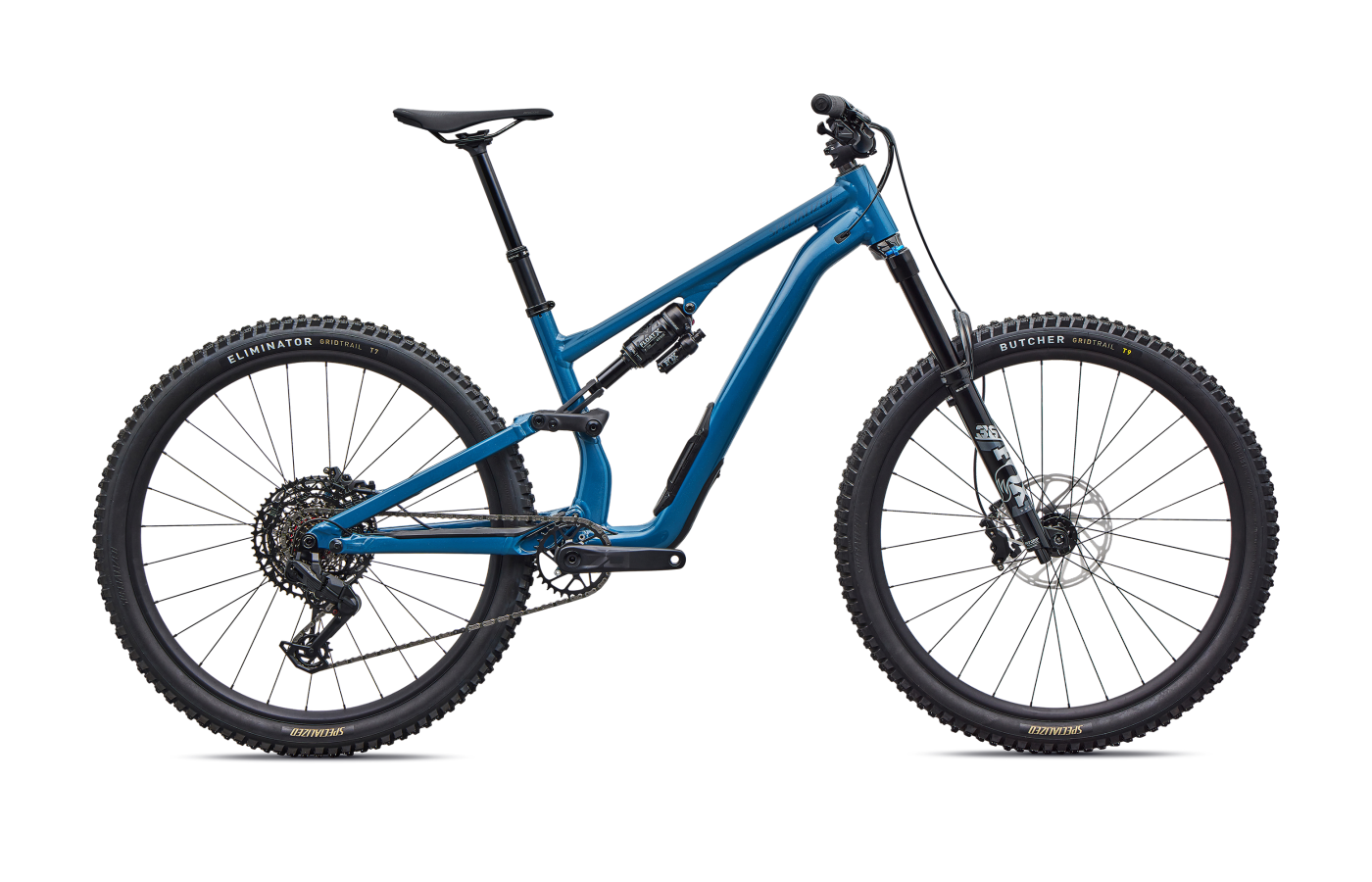
Stumpjumper Evo
Specialized Stumpjumper Evo — same 150/160 mm travel bracket but with extensive geometry adjustment (head angle, BB height, multiple flip chips). The pick if you want to tune the bike to your trails rather than the other way around.
Compare →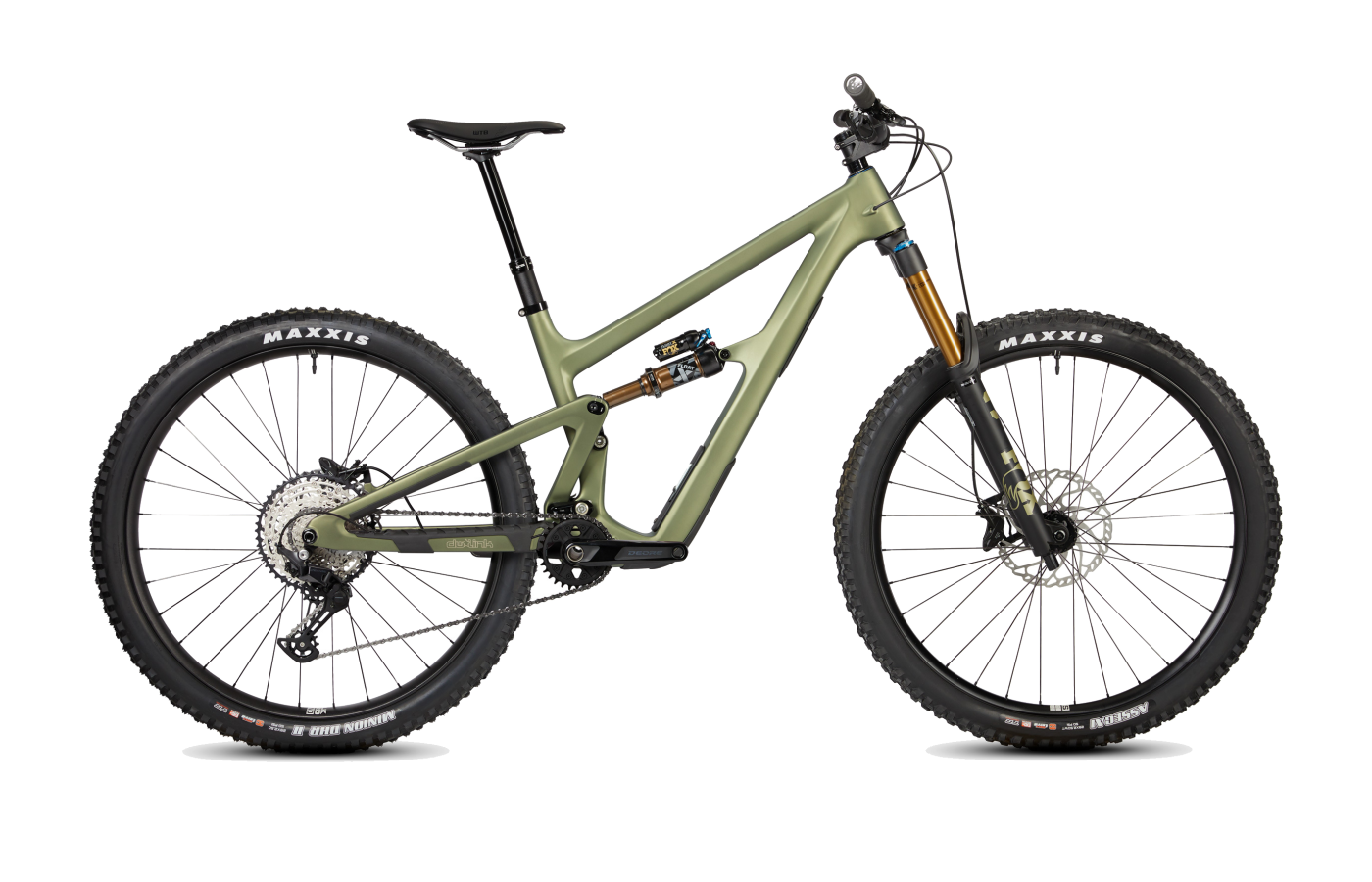
Ripmo
Ibis Ripmo — the climbing benchmark in the 150 mm category. DW-link suspension is poppier and softer than either the Bronson's VPP or the Sentinel's GiddyUp, and it climbs about as well as anything with this much travel.
Compare →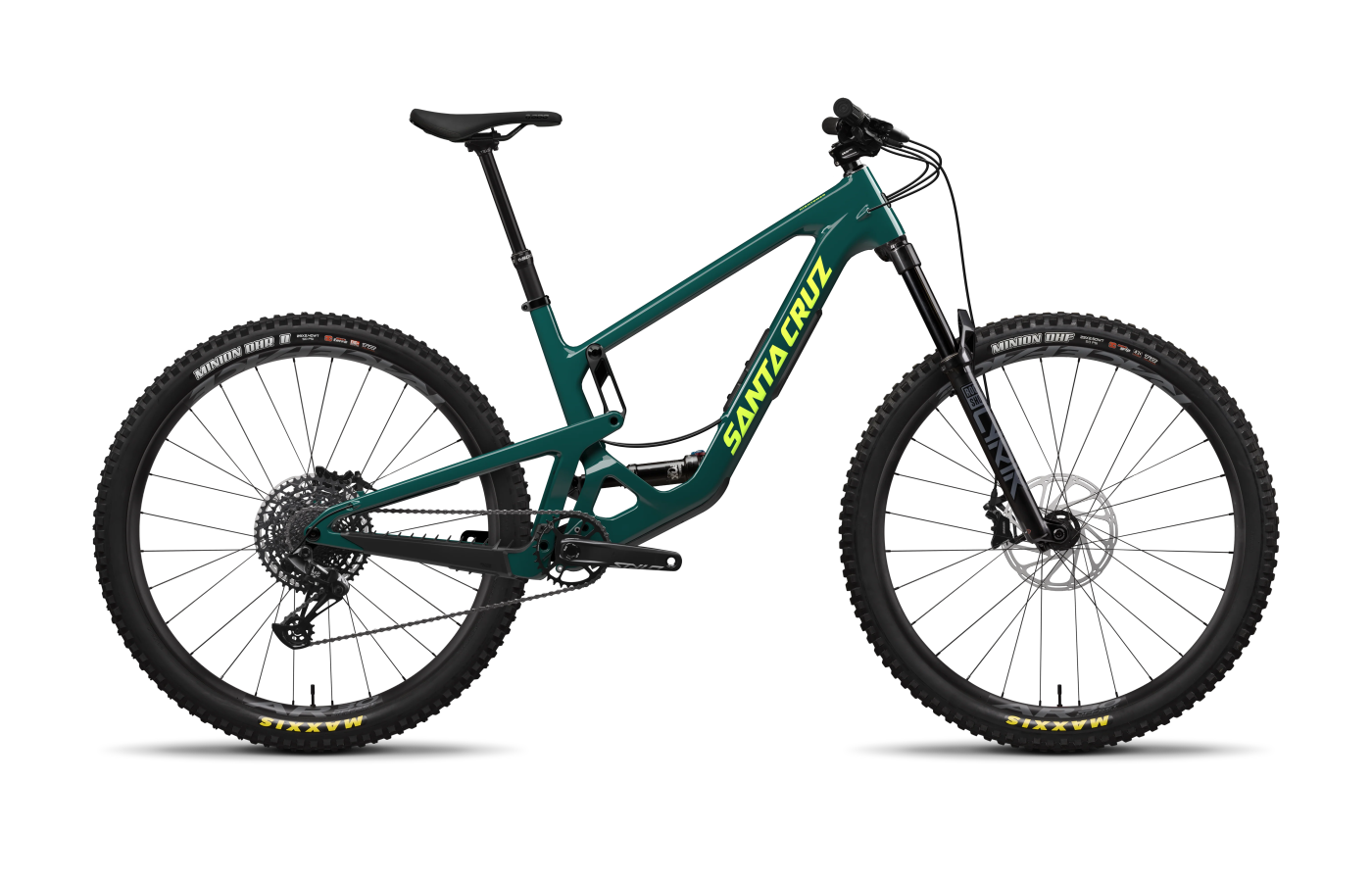
Hightower
Santa Cruz Hightower — the dual-29 alternative if you love the VPP feel of the Bronson but find the 27.5 rear wheel limiting on technical climbs. Same lifetime warranty, more rolling speed.
Compare →