Bronson
vsSB140
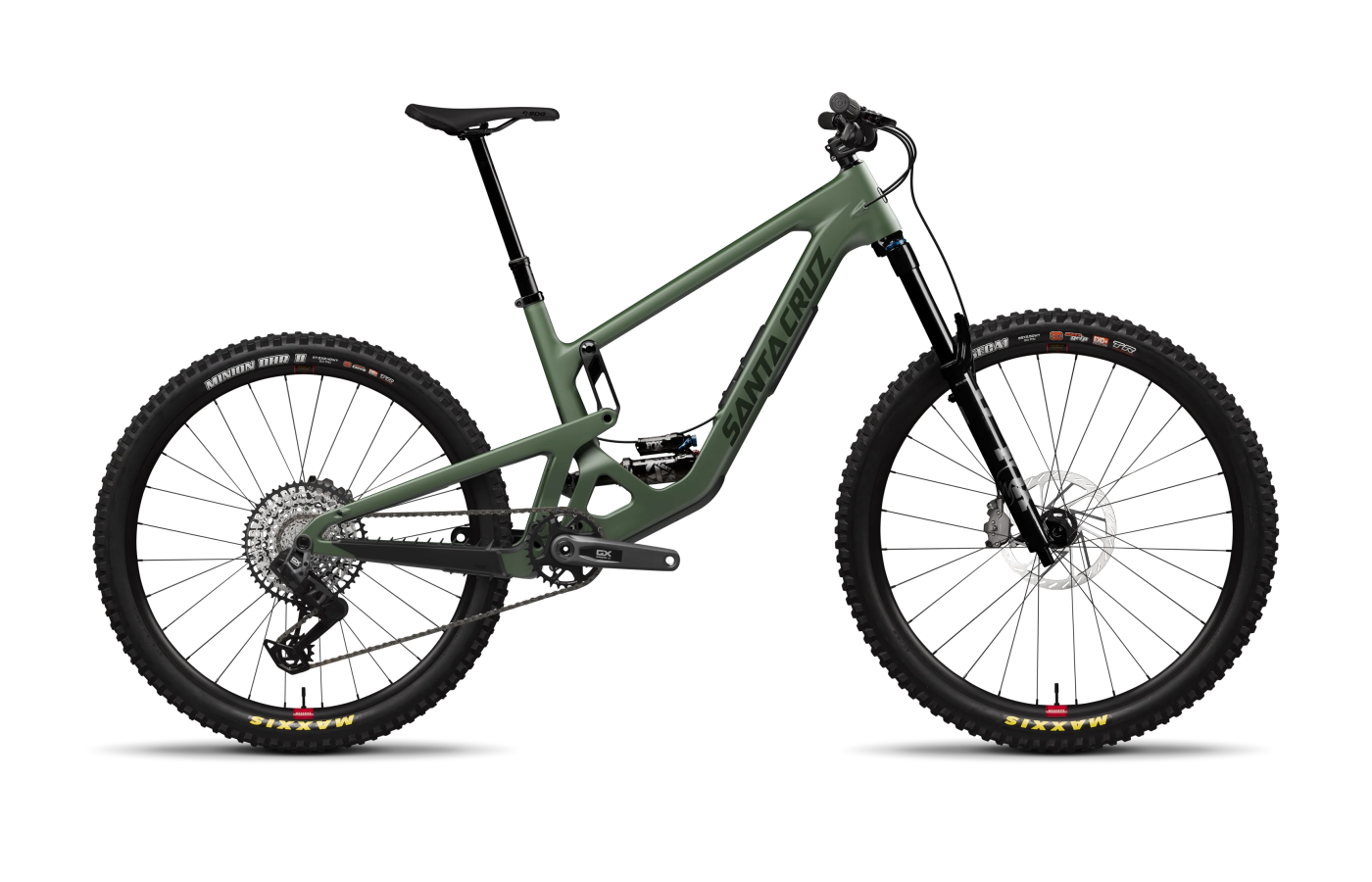
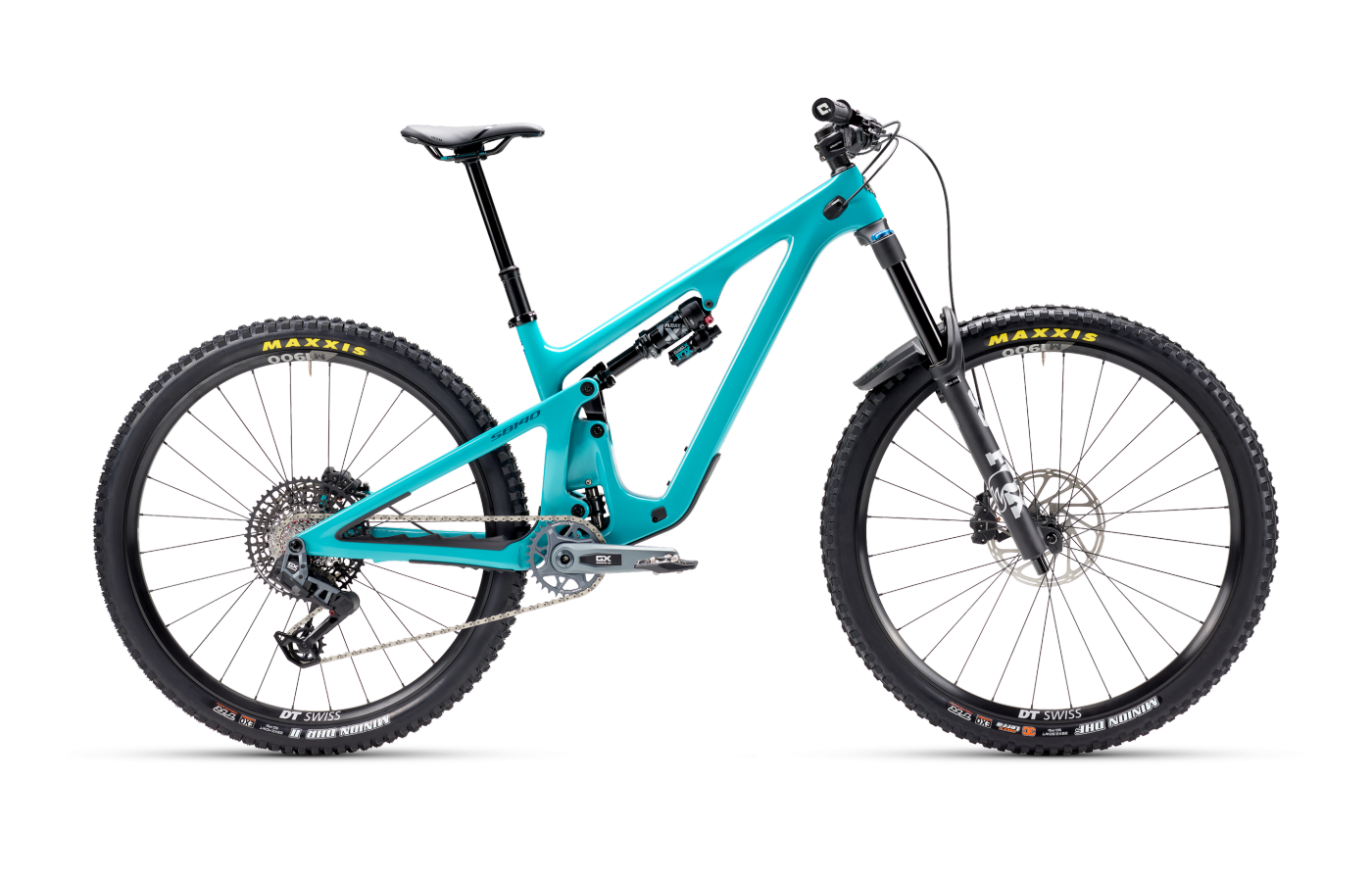
Mullet hooligan, or 29-inch scalpel.
The Bronson trades a small rear wheel for playful, jib-friendly handling. The SB140 trades nothing — it just builds speed.
Bronson
- Mullet agility — the 27.5 rear makes it effortless to manual, flick, and schralp tight corners.
- Tall, comfortable cockpit — 632 mm stack on a Medium plus 35 mm rise bars, a planted feel on steep descents.
- Lifetime bearing replacement — Santa Cruz's program covers pivot bearings for the life of the frame.
- 27.5 rear wheel can hang up on square-edge hits the 29 front rolled through.
- Tall front end can feel light and wander on steep technical climbs.
SB140
- Class-leading pedalling — Switch Infinity gives a firm, anti-squat platform riders rarely need to lock out.
- Composed on chop — rolls fast and quiet over chattery, broken-up ground despite only 140 mm of rear travel.
- Sharper, lower stance — 619.8 mm stack and 65 deg HTA give a more precise, race-trail feel.
- Low stack height has reviewers swapping in higher-rise bars to feel comfortable on steep descents.
- No internal frame storage and no geometry adjustment — trailing competitors on convenience features.
Editor’s analysis
Same travel bracket, same money, completely different theories of how a trail bike should feel.
On paper the Santa Cruz Bronson and Yeti SB140 land in the same place — 150 mm-ish of rear travel, 160 mm fork, mid-travel trail bike, $5k–$11k. Both run VPP-style linkages, both are carbon-only, both come with a lifetime frame warranty. Read deeper than the spec sheet and the philosophies couldn't be further apart.
The Santa Cruz Bronson is the mullet — 29 up front, 27.5 out back — and that single decision shapes everything about how it rides. Reviewers across BikeRadar, Vital, and The Loam Wolf converge on the same word: hooligan. The smaller rear wheel makes it effortless to manual, schralp, and pop off trail features, with size-specific chainstays (439 mm on a Medium, 442 on a Large) keeping the back end tight. The trade-off is documented and real — the 27.5 rear can hang up on square-edged hits the 29 front just rolled over, and the 632 mm stack on a Medium pushes the cockpit tall enough that BikeRadar called the front end "towering."
The Yeti SB140 picks a different fight. It runs a 65 deg head angle (about a degree steeper than the Bronson's 64.2), a lower 619.8 mm stack on the Medium, and Yeti's Switch Infinity translating-pivot suspension. Reviewers describe the result as "surgical" — Awesomemtb called it a Tesla Plaid, MBR a "brilliant pedaller," Bike Perfect noted an "AI sensor feel" where the rear wheel seems to know when to firm up and when to open. It's the more efficient climber, it carries momentum better on chunder, and despite only 140 mm of rated travel it punches like a 150. But it demands a forward-weighted, attacking posture — tram-passenger riders won't get the most out of it.
Put simply: the Bronson is the bike you buy when you want to play with the trail. The SB140 is the bike you buy when you want to go faster on it.
Where the builds differ.
Comparing our editor's-pick builds side-by-side. Winners highlighted row-by-row — lower price and weight, and the better-spec component, each mark a point.
Build variants & pricing
The Bronson runs $4,999–$9,349 across seven builds; the SB140 runs $6,200–$11,000 across six. The Bronson opens lower; the Yeti tops out higher.
Prices are current US MSRP. Both editor's picks are SRAM GX Eagle AXS Transmission on the lower of each platform's two carbon grades — the cleanest apples-to-apples spec match in either lineup.
How they fit, how they steer.
Both at size M — the fit-picked size for a 5'8" rider on each bike. The SB140 sits 12.2 mm lower in stack with effectively identical reach (459.7 vs 460), runs about 0.8 deg steeper at the head tube, and has 2 mm shorter chainstays.
Which size should I buy?
Size recommendations driven by stack, reach, and effective top tube. The Bronson runs a noticeably taller stack at every size.
→These are starting points. Flexibility, riding style, and preferred position all shift the answer — if you’re between sizes, a professional fit beats a chart.
What the magazines said.
Published reviews from trusted cycling outlets. Click through for the full write-up.
Which one should you buy?
If you ride for fun more than fitness, get the Bronson. If you ride to be faster than your friends, get the SB140.
Bronson
If your trails reward line choice over raw speed and you'd rather pop off a root than plough through it, the Bronson is built for you. The mullet-and-lifetime-bearings combo also makes it the easier long-term ownership story.
SB140
If you want the most efficient pedalling platform in the segment and you're willing to ride forward to unlock the front end, the SB140 will quietly post you faster lap times on familiar trails. Just budget for a higher-rise bar.
Questions buyers actually ask.
Short answers to the things we get emailed about most often.
01Mullet vs. dual 29 — which actually rides better?
It depends on the trail and the rider. The Bronson's mixed-wheel setup makes the bike easier to manual, easier to whip into corners, and more forgiving in tight, twisty terrain. The trade-off, noted by Pinkbike, BikeRadar and Singletrack World, is that the 27.5 rear wheel can hang up on square-edge hits the 29 front just rolled through.
The SB140's dual 29 setup rolls faster across broken ground and carries momentum better on chunky descents. It's the better choice if your trails are fast and rough; the Bronson is the better choice if they're tight and creative.
02Which one climbs better?
The SB140, by a clear margin. Yeti's Switch Infinity system was singled out by MBR as a "brilliant pedaller," by OutdoorGearLab as having a "flexible tank track" feel for traction, and by Awesomemtb as the kind of bike that drives momentum forward with every pedal stroke. Most reviewers say the lockout is decorative.
The Bronson is also well-regarded — Vital MTB went as far as saying the climb switch is essentially "for decorative purposes" — but the taller front end (632 mm stack on a Medium) makes the front wheel feel light on steep technical climbs. Several reviewers recommend dropping spacers or sliding the saddle forward to compensate.
03How much travel do they actually have?
Bronson V4: 150 mm rear, 160 mm front (Fox 36 on every build). MX wheels — 29 front, 27.5 rear.
Yeti SB140 (29): 140 mm rear, 160 mm front on the builds we list (also a Fox 36). Dual 29 wheels.
The SB140 has 10 mm less rated rear travel but reviewers from Blister and OutdoorGearLab noted it punches like a 150 — credit the 14% progression rate and the Switch Infinity ramp.
04Are these aluminum or carbon only?
Both are carbon-only. Santa Cruz dropped the alloy Bronson with the V4 generation, and Yeti has never offered the SB140 in alloy.
Both brands offer two carbon grades — Santa Cruz Carbon C (heavier) and CC (lighter), Yeti C/Series (heavier) and Turq (lighter). The C and C/Series grades are stiffness-equivalent to the premium tiers; the lighter grades just save 200–300 g and cost more.
05Which has better long-term ownership support?
Santa Cruz has the edge. Both brands offer a lifetime frame warranty to the original owner, but Santa Cruz also covers pivot bearings for the life of the frame — replacements are free. Their "No Missed Rides" program keeps spare parts in stock for fast dispatch.
Yeti offers a lifetime warranty on the Switch Infinity link as well, but bearing replacements are on you. Reviewers note the Switch Infinity also wants a bit more care than a conventional linkage — in particular, owners in muddy climates should grease the system regularly.
06Do either have internal frame storage?
No, neither does. This is a notable miss for both, since Specialized Stumpjumper 15, Trek Top Fuel, and several other competitors at this price now ship with downtube storage hatches. If a tool roll inside the frame matters to you, look at the Stumpjumper Evo from the alt-bike list.
07What about geometry adjustment?
The Bronson has a flip-chip in the lower shock mount that swaps between High and Low geometry settings (about 0.3 deg of HTA / 4 mm of BB height). BikeRadar noted the chip is a bit fiddly and easy to lose parts into the linkage, but it works.
The SB140 has no geometry adjustment. OutdoorGearLab and Enduro MTB both flagged this as a knock against the platform versus rivals like the Stumpjumper 15 that offer a flip-chip plus a headtube angle adjust.
08Which holds value better on the used market?
Both depreciate similarly to other premium full-suspension bikes — typically 30–40% over three years for top-tier builds. Yeti tends to hold a small premium because production runs are smaller, but Santa Cruz's lifetime bearing program adds real ownership value that transfers to a second buyer.
For either bike, the cleanest path to value is buying a one-season-old build secondhand from Pro's Closet or The Bike List.
Similar bikes
If your priorities don’t map cleanly onto either of these, one of these adjacent bikes probably fits better.
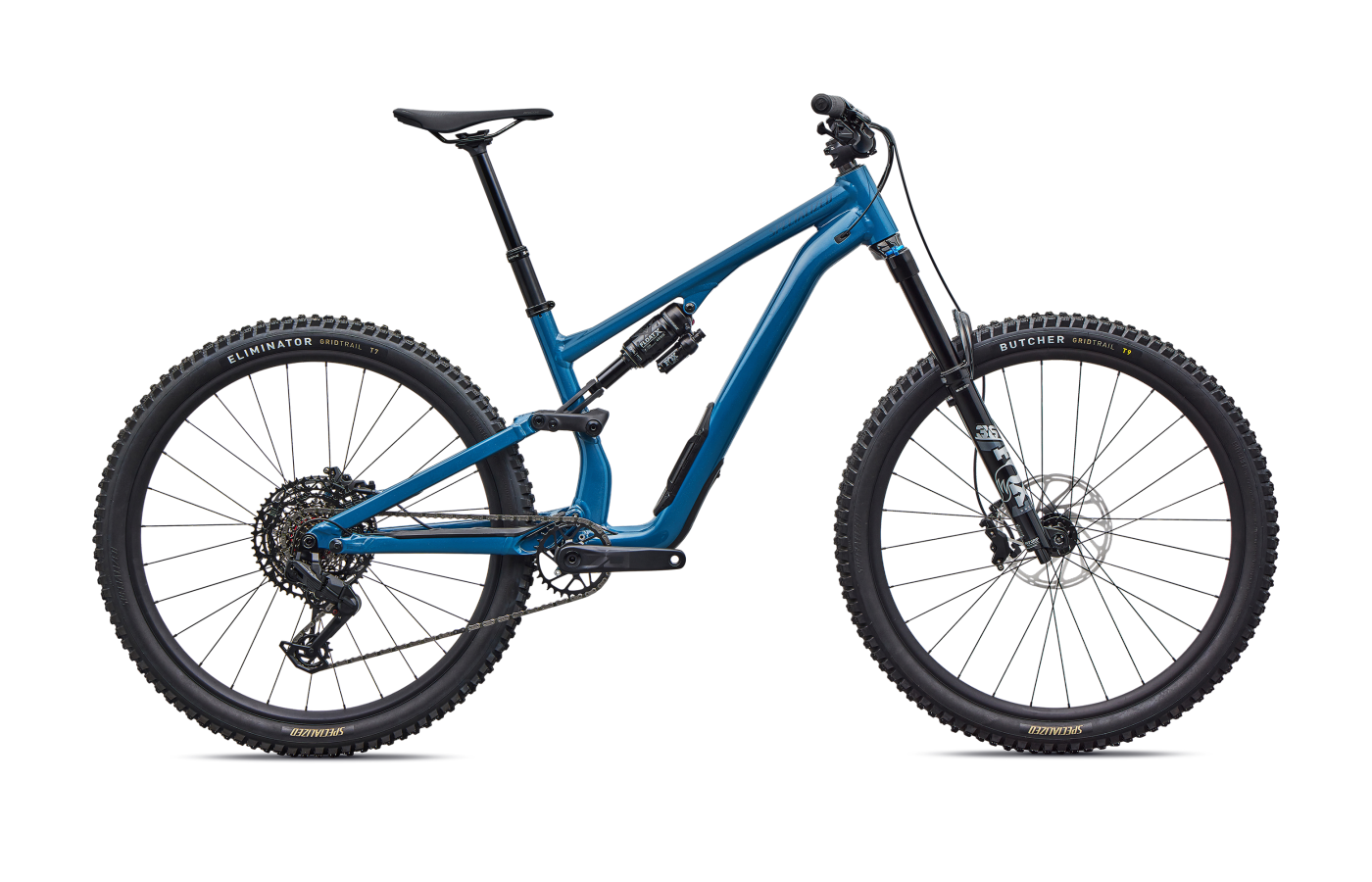
Stumpjumper Evo
The do-it-all rival to both — internal frame storage, an adjustable headtube angle, and a flip-chip, none of which the Bronson or SB140 offers. The current usability benchmark in the segment.
Compare →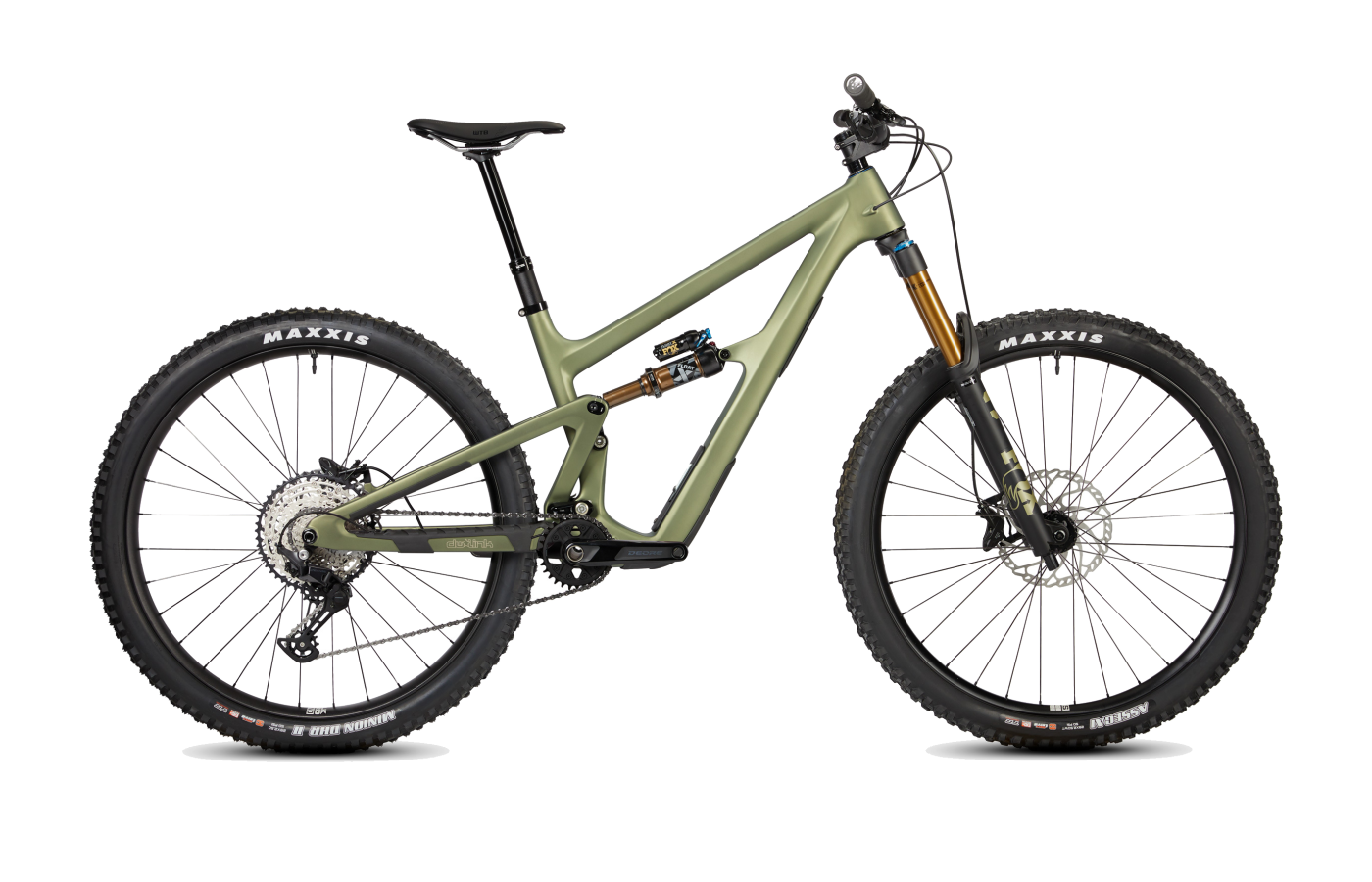
Ripmo
Often cited as the value benchmark for 29er trail bikes — DW-link suspension that pedals close to the SB140 at meaningfully less money. Worth a look if the Yeti tax stings.
Compare →Patrol
Another mullet, but pushed harder toward gravity. Slacker, more linear, and happier than the Bronson on full-on enduro tracks — at the cost of some climbing efficiency.
Compare →