Chameleon
vsARC
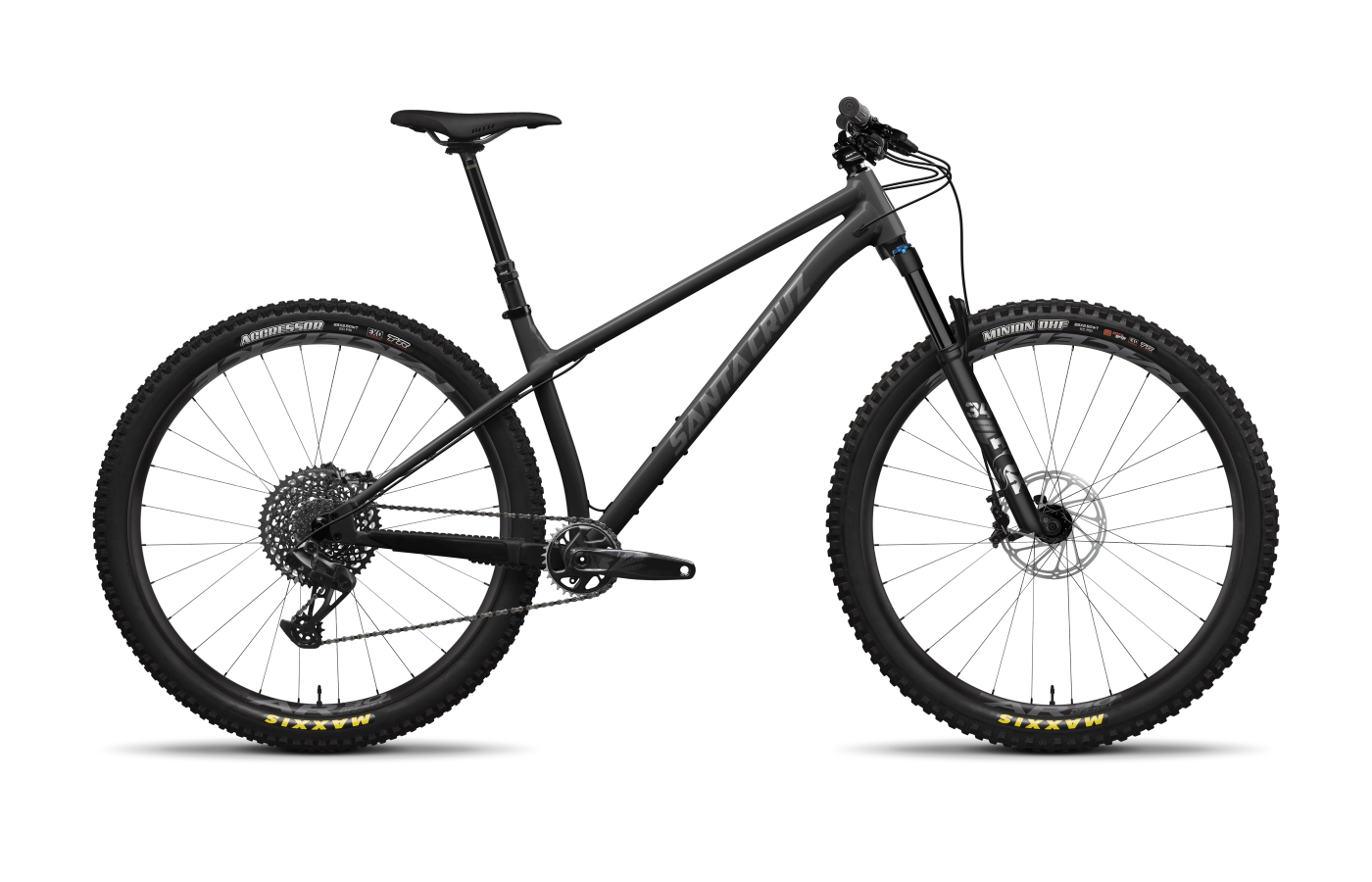
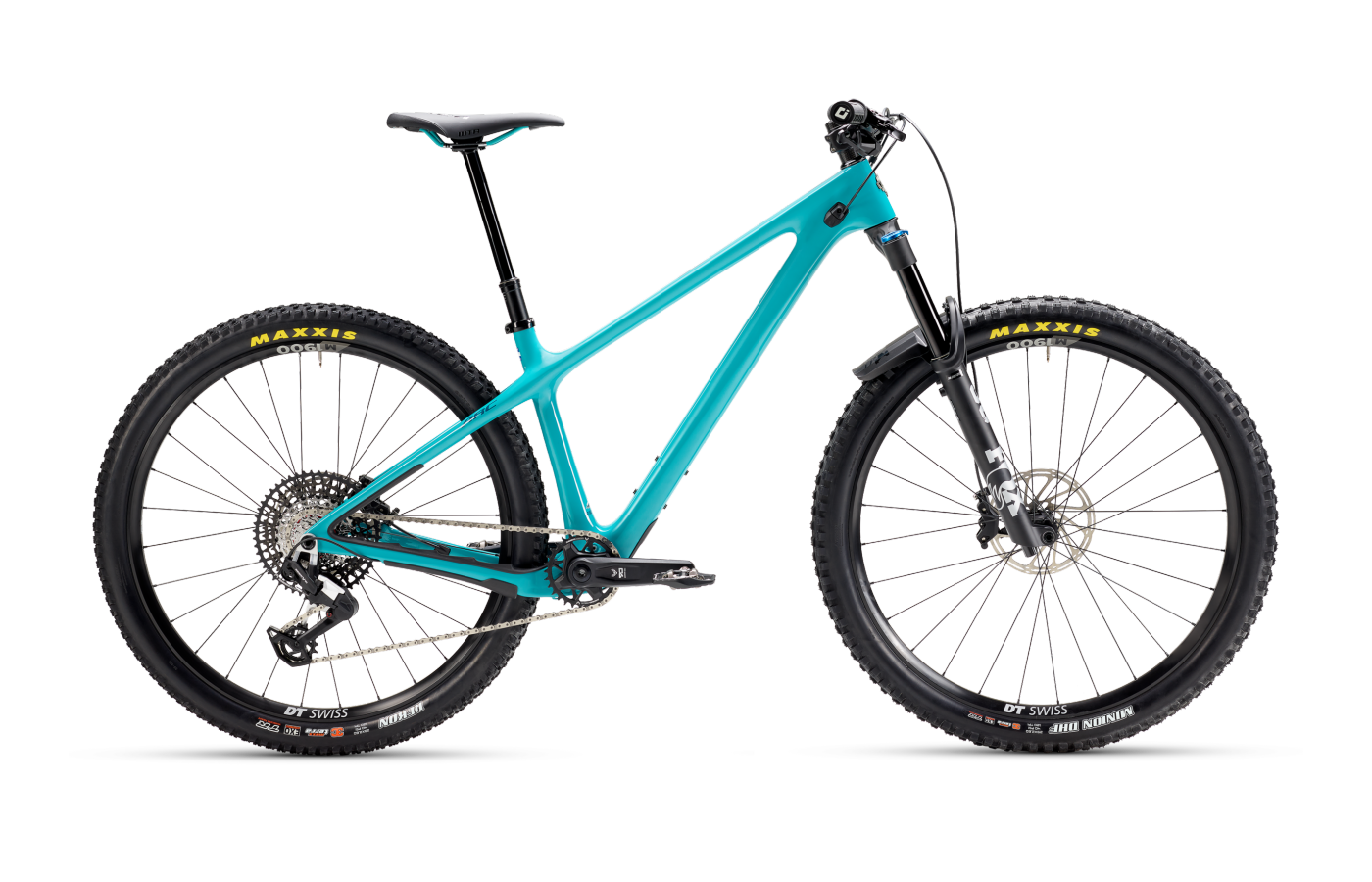
Two hardtails, two wildly different missions.
The Chameleon is an aluminum brawler with adjustable dropouts and a $2k entry point. The ARC is a 25-pound carbon climber that costs as much as a full-suspension trail bike.
Chameleon
- Cheapest entry into modern trail-hardtail geometry at $2,099 for the D build — most ARC owners spend twice that on the carbon equivalent.
- Adjustable 425–437 mm chainstays via sliding dropouts, plus mullet and single-speed conversions baked into the frame.
- Slacker 65-degree head angle makes it the more confident bike when the trail turns ugly or steep.
- Heavy — 28.6 lb on the top alloy build; ~3 lb more than the carbon ARC.
- Reviewers consistently flag the stock SRAM MTH hubs (17° engagement) and Guide T brakes as upgrade targets.
ARC
- Featherweight 25.4-lb top build — a TURQ carbon frame at ~2.82 lb makes this one of the lightest 130 mm hardtails sold.
- Steeper 76-degree seat angle puts the rider noticeably more centered over the cranks than the Chameleon's 74.3°.
- Tube-in-tube internal routing and a finned chainstay protector deliver what reviewers call 'singlespeed-level quiet.'
- Entry price is $4,500 — more than the Chameleon's flagship and into full-suspension territory.
- Press-fit BB92 instead of threaded — a maintenance gripe in wet climates.
Editor’s analysis
Same wheel count, same fork travel, same 2.6-inch tires — and almost nothing else in common.
Both bikes run a 130 mm fork. Both ship on Maxxis 2.6-inch rubber. Both use the SRAM Universal Derailleur Hanger. That's where the convergence ends. Every other spec sheet decision points the two bikes in opposite directions — material, weight, geometry, price ceiling, whether you can run it as a mullet or a single-speed.
The Santa Cruz Chameleon is the play-everywhere alloy hardtail. A 65-degree head angle, sliding dropouts that swing chainstays from 425 mm to 437 mm, mullet and single-speed conversions, and a frame burly enough that reviewers happily send it down double-black trails. Weight is 28.6 lb on the top S build — heavy for a hardtail, by design. The trade-off is a $2,099 entry price and a frame that doesn't flinch when you case a jump.
The Yeti ARC is the opposite philosophy: high-modulus TURQ carbon, a 2.82 lb frame, 25.4 lb on the top build, 67-degree head angle, 76-degree seat angle. It's an XC platform stretched into trail geometry — a 'downcountry' bike before the term existed. It climbs like a mountain goat, accelerates harder than anything else in the segment, and quietly commands $4,500 for the cheapest build. There's no MX kit, no sliding dropouts, no wheel-size flexibility — Yeti picked a setup and dialed it.
Put another way: the Santa Cruz Chameleon is the bike you buy when you want one hardtail to do everything from pump-track laps to bikepacking tours. The Yeti ARC is the bike you buy when you already own a full-suspension trail bike and want a featherweight second rig for big mileage days.
Where the builds differ.
Comparing our editor's-pick builds side-by-side. Winners highlighted row-by-row — lower price and weight, and the better-spec component, each mark a point.
Build variants & pricing
The Chameleon spans $2,099–$2,999, all aluminum, all SRAM Eagle mechanical. The ARC spans $4,500–$6,400, all TURQ carbon, with the top build going XT Di2.
The platforms barely overlap on price — the Chameleon's flagship is cheaper than the ARC's entry. We've matched the Chameleon S (GX Eagle, FOX 34 Performance) against the ARC C2 (Eagle 90 Transmission, FOX 36 Performance) because both sit at the 'GX-class drivetrain + Performance-tier fork' level on their respective platforms. Apples-to-apples on tier; the ~$1.5k price gap is the platform story.
How they fit, how they steer.
Both at size M. The ARC sits 11 mm taller in the stack with essentially identical reach (444.5 vs 445 mm). The Chameleon's wheelbase is 13 mm longer despite shorter chainstays (425 mm vs 432 mm) — its 2-degree-slacker head angle stretches the front end out instead.
Which size should I buy?
Size recommendations from stack, reach, and effective top tube. Both run S/M/L/XL with closely matched reach numbers across the range.
→These are starting points. Flexibility, riding style, and preferred position all shift the answer — if you’re between sizes, a professional fit beats a chart.
What the magazines said.
Published reviews from trusted cycling outlets. Click through for the full write-up.
Which one should you buy?
If you want one hardtail that survives jumps, mullets, and weekend abuse for ~$3k, get the Chameleon. If you want the lightest, fastest-climbing carbon hardtail in the segment and the budget tolerates it, get the ARC.
Chameleon
If your idea of a fun ride involves jumps, drops, and the occasional questionable line, the Chameleon's alloy frame and slack 65-degree front end will outlast your enthusiasm. Throw on a high-engagement hub, run 2.6-inch tires at low pressure, and it'll handle pump tracks, bikepacking, and mullet conversions on the same frame.
ARC
If your rides are measured in elevation gained and you'd rather feel light under power than slack into descents, the ARC's 25-lb TURQ carbon chassis and 76-degree seat angle make it a mountain goat. It's a boutique investment that earns its price on every climb — and asks the rider, not the suspension, to manage the rough stuff.
Questions buyers actually ask.
Short answers to the things we get emailed about most often.
01Which one climbs better?
The Yeti ARC, by a clear margin. Its top build comes in at 25.4 lb versus 28.6 lb for the Chameleon S — about 3 lb on the same fork travel. Combine that with a 76-degree seat tube angle (vs. 74.3° on the Chameleon) and the rider sits noticeably more centered over the cranks on steep pitches.
Reviewers across MBR, BikeMag, and Mountain Flyer described the ARC as a 'mountain goat' on technical climbs. The Chameleon climbs fine — its longer wheelbase and slacker seat angle just mean you're working harder to keep the front wheel from wandering.
02Which one descends better?
The Santa Cruz Chameleon, especially when the trail gets ugly. Its 65-degree head angle is two full degrees slacker than the ARC's 67°, and the 1184 mm wheelbase (size M) gives it a more planted, full-suspension-like feel at speed.
The ARC isn't slow downhill — reviewers called it 'surprisingly capable' — but it's been tuned for downcountry, not enduro. Mountain Flyer warned that the ARC can 'break ankles' if pushed too far into rocky, ledgy terrain. The Chameleon's alloy frame and slacker geometry let you charge harder before you hit that wall.
03Why is the ARC so much more expensive?
Three reasons. First, carbon — the TURQ-series frame is a high-modulus layup that weighs about 2.82 lb on its own; the Chameleon is aluminum. Second, Yeti's brand and dealer model carry a real premium (reviewers nicknamed it the 'Yeti tax'). Third, the ARC's component spec at the top tier — XT Di2, DT Swiss XM1700 wheels, Fox Factory 36 — costs more to assemble than the Chameleon's mechanical Eagle / DT Swiss 370 builds.
For the same money as a mid-tier ARC you can buy a Chameleon plus a wheel and brake upgrade and still have change. Whether that's a better deal depends on whether you want the carbon frame at the heart of it.
04Can both run a mullet (mixed-wheel) setup?
Chameleon: yes. The sliding dropouts and a swappable rear axle mount let you run a 27.5-inch rear wheel with the 29-inch front, and Santa Cruz officially supports the conversion. Reviewers across NSMB, MTB Party, and Bike Perfect specifically tested the MX configuration and praised it for cornering and 'pop.'
ARC: no. The ARC is a fixed 29er — no chainstay adjustment, no factory mullet support. Yeti picked a geometry and committed to it.
05What about the bottom bracket — threaded or press-fit?
Chameleon: 73 mm threaded BSA. Easier to service, less prone to creaking long-term — a frequently cited quality-of-life win in alloy hardtails.
ARC: Press-fit BB92. Reviewers noted that Mountain Flyer had no issues during testing, but MBR expressed disappointment that Yeti stuck with press-fit while the industry has been migrating back to threaded. In wet climates, expect more frequent service or to budget for a high-quality thread-together press-fit cup as an upgrade.
06Which has better tire clearance?
Both ship with 2.6-inch Maxxis tires stock — Minion DHF front, Aggressor (Chameleon) or Rekon (ARC) rear. The Chameleon's frame is officially cleared up into the plus-tire range in 29er mode (we measure ~71 mm in the catalog). The ARC's clearance isn't documented as precisely in the materials we've seen, but the stock 2.6-inch fit confirms it handles plus-ish rubber comfortably.
For either bike, reviewers consistently recommended sticking with 2.6-inch tires as the de facto 'rear suspension' on long days.
07Can I get either one with electronic shifting?
ARC: yes — the top T1 build comes with Shimano XT Di2 ($6,400). The T2 build runs SRAM Eagle 90 Transmission, which uses the wireless AXS rear derailleur.
Chameleon: no. All three builds (S, R, D) ship with mechanical SRAM Eagle drivetrains (GX, NX, NX/SX). If you want wireless or electronic shifting on the Chameleon, you're aftermarketing it yourself.
08What warranty do they come with?
Both brands offer a lifetime frame warranty to the original owner, which reviewers cited heavily as part of what justifies the price tags. Santa Cruz also includes lifetime bearing replacement (their 'Bike for Life' program), which Chameleon owners highlight as a meaningful long-term ownership perk. Both brands offer crash-replacement pricing on damaged frames.
Similar bikes
If your priorities don’t map cleanly onto either of these, one of these adjacent bikes probably fits better.
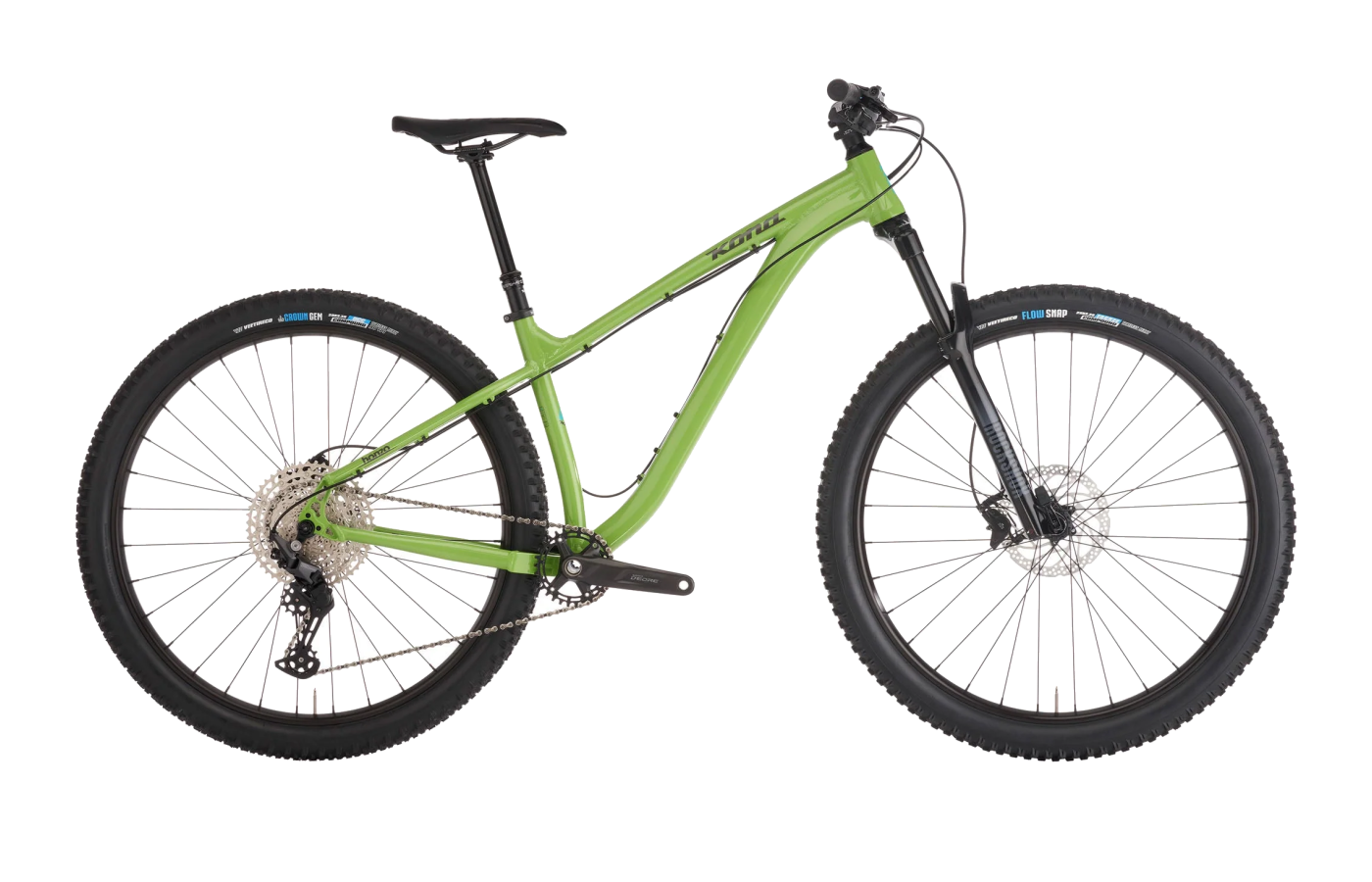
Honzo
The Chameleon's closest rival in spirit — adjustable sliding dropouts, an aluminum-tough chassis, and a similarly aggressive trail bias. Cheaper than either bike here and beloved by the cult-hardtail crowd.
Compare →DV9
A carbon trail hardtail that splits the difference — lighter than the Chameleon, cheaper than the ARC, with the kind of straightforward design that lets you build it up exactly how you want.
Compare →Roscoe
Trek's aluminum trail hardtail — similar geometry to the Chameleon, but with noticeably better component value at every price point. The pragmatist's pick if you don't need the Santa Cruz badge.
Compare →