Hightower
vsSentinel
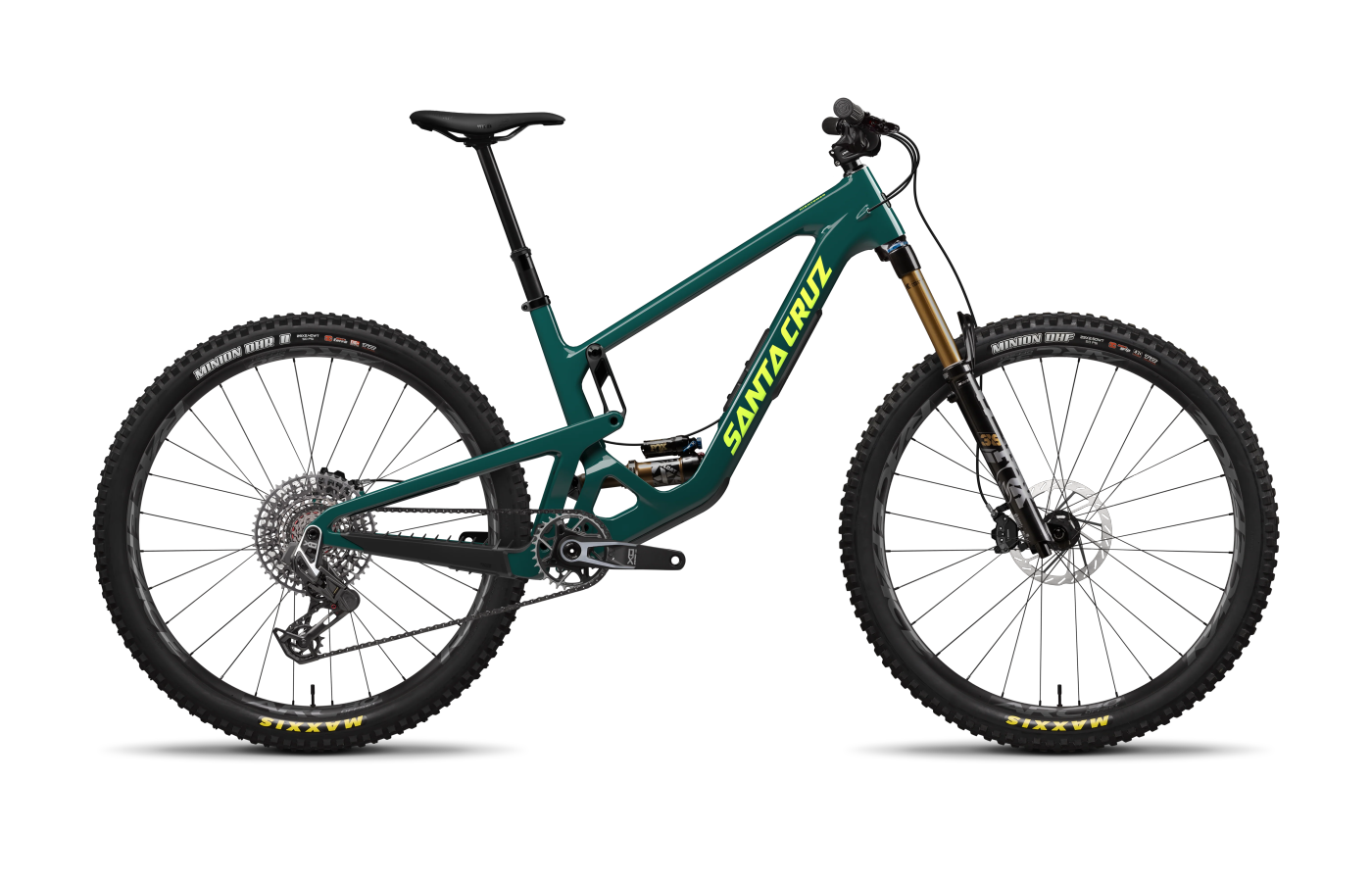
Two 150 mm 29ers, two opposite personalities.
The Hightower V4 is the planted bruiser that erases mistakes. The Sentinel V3 is the springy, BMX-ish trail bike that rewards them — if you ride well.
Hightower
- Best-in-class high-speed composure — the active rear end and 1237 mm wheelbase (size M) mute square-edge hits other 150 mm bikes choke on.
- Technical climbing traction from the reduced anti-squat — the rear wheel stays glued on rooty, loose ascents.
- Lifetime warranty on frame, bearings, and Reserve rims — meaningful long-term value at the premium price point.
- Premium pricing: nothing under $4,999, no alloy option at all.
- Less playful at low speeds — reviewers consistently note it 'wants to be manhandled' through tight switchbacks.
Sentinel
- Poppy, energetic ride — the supportive GiddyUp tune rewards active riders who like to jump off everything.
- Genuine value at the entry point — Alloy Deore from $3,499 with the same geometry and warranty as the carbon flagship.
- Mullet-compatible flip chip — swap to a 27.5" rear and the bike unlocks an even sharper cornering character.
- Stock Super Deluxe shock tune is widely panned as too lightly damped; budget for a re-tune.
- 350 mm bottom bracket sits tall — great for desert pedal clearance, less locked-in on bermed flow.
Editor’s analysis
Same numbers on the spec card — 150 mm rear, 160 mm front, 29-inch wheels, ~64 degree head angle. Completely different bikes underneath.
On paper this looks like the closest matchup in the trail-bike segment. Both bikes run 150 mm rear and 160 mm front travel, both spin 29-inch wheels, both sit at roughly a 64-degree head angle, both come in around 14.5–15 kg in carbon trim. Pick them up at a shop and you'd struggle to tell which is which without reading the headtube badge.
Get them on a trail and the gap opens immediately. The Hightower V4 was rebuilt around a revised VPP layout with a lower, more forward shock position that drops anti-squat and keeps the rear wheel actively glued to the dirt. Reviewers across Bebikes, Flow, and Bike Perfect describe it as 'planted,' 'composed,' and a 'mini-enduro' — a bike that mutes square edges and erases small mistakes at speed. The trade-off is a higher stack (632 mm at size M vs. the Sentinel's 621 mm) and a slightly long, slightly cumbersome feel in tight low-speed switchbacks.
The Sentinel V3 went the other way. Transition retuned the GiddyUp linkage for more mid-stroke support, stiffened the frame with a one-piece rocker link, and steepened the head tube a hair. The result is a bike Blister calls 'BMX-ish' — poppy, energetic, willing to change lines mid-corner. Its 350 mm bottom bracket sits higher than the Hightower's, which keeps pedals out of trouble in chunky rock but can feel like you're riding on top of the bike rather than in it. And every long-form review flags the same thing: the stock RockShox Super Deluxe Ultimate tune is 'bizarrely light' on compression — most aggressive riders will want a re-tune within a season.
Put another way: the Hightower is the bike you buy when you want a single platform that lets a B-line rider survive A-line terrain. The Transition Sentinel is the bike you buy when you're already a B-line rider and want more energy back from the chassis — pop off the lip, change your line halfway through the corner, ride home tired but smiling.
Where the builds differ.
Comparing our editor's-pick builds side-by-side. Winners highlighted row-by-row — lower price and weight, and the better-spec component, each mark a point.
Build variants & pricing
Both lineups span ~$6.5k of range. The Sentinel starts $1,500 lower and stays cheaper at every tier; the Hightower goes higher at the top.
Editor's picks here — Hightower X0 AXS ($8,299) vs. Sentinel Carbon XO AXS ($7,999) — were chosen because both run the exact same SRAM X0 AXS T-Type drivetrain on carbon frames. That makes the spec table a fair fight rather than a drivetrain-tier mismatch. Prices are current US MSRP.
How they fit, how they steer.
Both at their fit-picked size for a 5'8" rider — Hightower size M, Sentinel size MD. Reaches are within 5 mm (460 vs. 455). The Hightower runs 11 mm taller in the stack and 6 mm shorter in the chainstay; the Sentinel sits 1 degree steeper at the seat tube. Wheelbases are identical at 1237 mm.
Which size should I buy?
Both ranges overlap closely through the middle. The Sentinel offers an XS that runs 27.5" wheels front and rear; the Hightower starts at S and never drops below 29".
→These are starting points. Flexibility, riding style, and preferred position all shift the answer — if you’re between sizes, a professional fit beats a chart.
What the magazines said.
Published reviews from trusted cycling outlets. Click through for the full write-up.
Which one should you buy?
If you want a bike that erases your mistakes on rough descents, get the Hightower. If you want a bike that rewards every pump, pop, and line change, get the Sentinel.
Hightower
If your weekends are big alpine days where the descent is the point and traction is the limiter, the Hightower stays calm in terrain that would unsettle other 150 mm bikes. It's the heavier-handed pick — composed at speed, less interested in playing on small features.
Sentinel
If you treat every root and rock as something to pop off, and you want one bike that handles trail, bike-park days, and the occasional enduro lap, the Sentinel rewards the input. Just plan on swapping or re-tuning the rear shock to unlock its full potential.
Questions buyers actually ask.
Short answers to the things we get emailed about most often.
01Which is faster on rough, high-speed descents?
The Santa Cruz Hightower, by a clear margin in reviewer consensus. The revised VPP layout reduces anti-squat and keeps the rear wheel actively tracking the ground, so square-edge hits and rock chatter get muted rather than transmitted. Bebikes called it 'unrivaled in the category' for staying composed through fast chunder, and Flow Mountain Bike specifically noted that lines requiring careful navigation on the V3 can be straight-lined on the V4.
The Sentinel is no slouch on the descent — the longer wheelbase and stable chainstays carry speed well — but it's more demanding on the rider. The firmer mid-stroke and higher BB mean the rider has to actively manage chassis attitude rather than letting the suspension do all the work.
02Which one is more fun on flow trails?
The Transition Sentinel, almost unanimously. Reviewers from Blister, Awesome MTB, and Singletracks describe it as 'BMX-ish,' 'poppy,' and 'wants to play' — the supportive GiddyUp tune holds the bike up in its travel so you can pump rollers, push into berms, and pop off lips without the suspension wallowing.
The Hightower's more active rear and taller stack make it feel like a bigger bike on flow trails. It's not unfun, but it's not the bike that'll have you doubling stuff for the sake of it.
03How much travel do they actually have?
Both bikes run 150 mm rear / 160 mm front, with 29-inch wheels at most sizes. The Sentinel can be 'long-stroked' to 160 mm rear by swapping in a 65 mm stroke shock, which is a documented Transition-supported conversion. The Hightower stays at 150 mm rear; if you want more travel from the same brand, that's the Megatower's job.
Both bikes use Fox 36 forks at 160 mm in their carbon builds (Performance, Performance Elite, or Factory depending on tier).
04What's the actual difference in geometry at my size?
At our fit-picked sizes for a 5'8" rider — Hightower size M, Sentinel size MD — they're surprisingly close on the headline numbers. Reach is 460 mm (Hightower) vs. 455 mm (Sentinel). Wheelbase is identical at 1237 mm. Head tube angle is 64.2 vs. 64 degrees.
The meaningful gaps are elsewhere: the Hightower runs 11 mm taller in the stack (632 vs. 621), which gives a more upright, dominant feel on descents. The Sentinel's seat tube angle is 1 degree steeper (78.9 vs. 77.9), which puts more rider weight over the cranks on technical climbs. And the Hightower's chainstays are 6 mm shorter (436 vs. 442 mm), making it slightly easier to manual or loft the front.
05Do I need to worry about the Sentinel's rear shock tune?
Probably yes, if you're an aggressive or heavier rider. Both Blister and Pinkbike independently flagged the stock RockShox Super Deluxe Ultimate tune as 'bizarrely light' on compression damping — they reported the bike blowing through mid-stroke on square-edged hits even with the dial closed all the way. Several testers swapped to a Manitou Mara Pro or had Transition re-tune the stock unit and described the change as 'transformative.'
If you're a lighter or more passive rider, the stock tune may feel fine. But it's a documented hidden cost of admission worth budgeting $200–$400 for early in ownership.
06Is there a meaningful price difference?
Yes. The Sentinel starts at $3,499 for the Alloy Deore and tops out at $9,999 for Carbon XTR Di2. The Hightower starts at $4,999 (the R, on Carbon C frame) and tops out at $11,399. There is no alloy Hightower at all — Santa Cruz only sells this generation in carbon.
For a budget rider, the Sentinel Alloy XT at $4,599 sits at the same price point as the cheapest Hightower and runs a full Shimano XT drivetrain rather than NX. The carbon-vs-carbon comparison is closer — our editor's picks land $300 apart at $7,999 (Sentinel) and $8,299 (Hightower).
07Can either run a coil shock?
Yes for both, though it's a bigger personality change on the Hightower. Santa Cruz explicitly designed the V4 layout to be coil-compatible — the more linear leverage curve from the revised linkage makes the bike a credible coil candidate, especially for riders who want even more traction on rough terrain.
The Sentinel's GiddyUp curve is more progressive, and the platform was tuned around an air shock; reviewers haven't put coils on it as enthusiastically. Possible? Yes. Necessary? No — the air-shock fix on the Sentinel is a re-tune, not a coil swap.
08Which has better warranty and long-term support?
Both come with a lifetime frame and bearing warranty. Both brands have strong reputations for honoring it. Santa Cruz's lifetime program also extends to Reserve carbon rims, which is a meaningful add since the higher-end builds ship with them stock. Transition's warranty extends crash-replacement pricing to second-hand owners, which is unusual in the industry and a real selling point on the used market.
For parts availability, both use standard formats — threaded BB, SRAM UDH, no proprietary headset cups — so any decent shop can keep either one running long-term.
Similar bikes
If your priorities don’t map cleanly onto either of these, one of these adjacent bikes probably fits better.
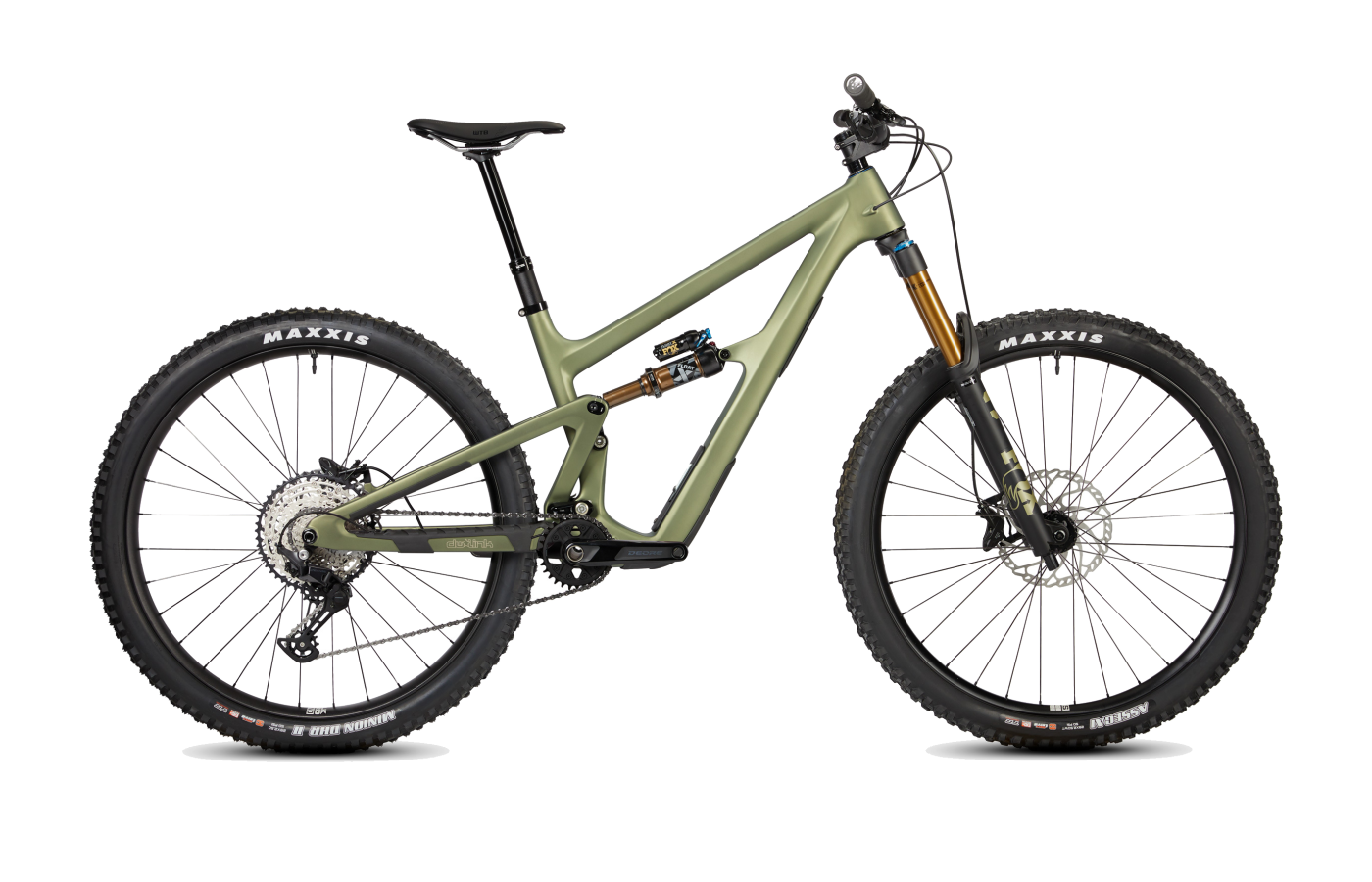
Ripmo
Same 150 mm travel and 64-degree head angle as both bikes here, but with Ibis's signature DW-link feel — softer, poppier, and easier to keep moving on long climbs. The pick if pedaling efficiency matters as much as descent capability.
Compare →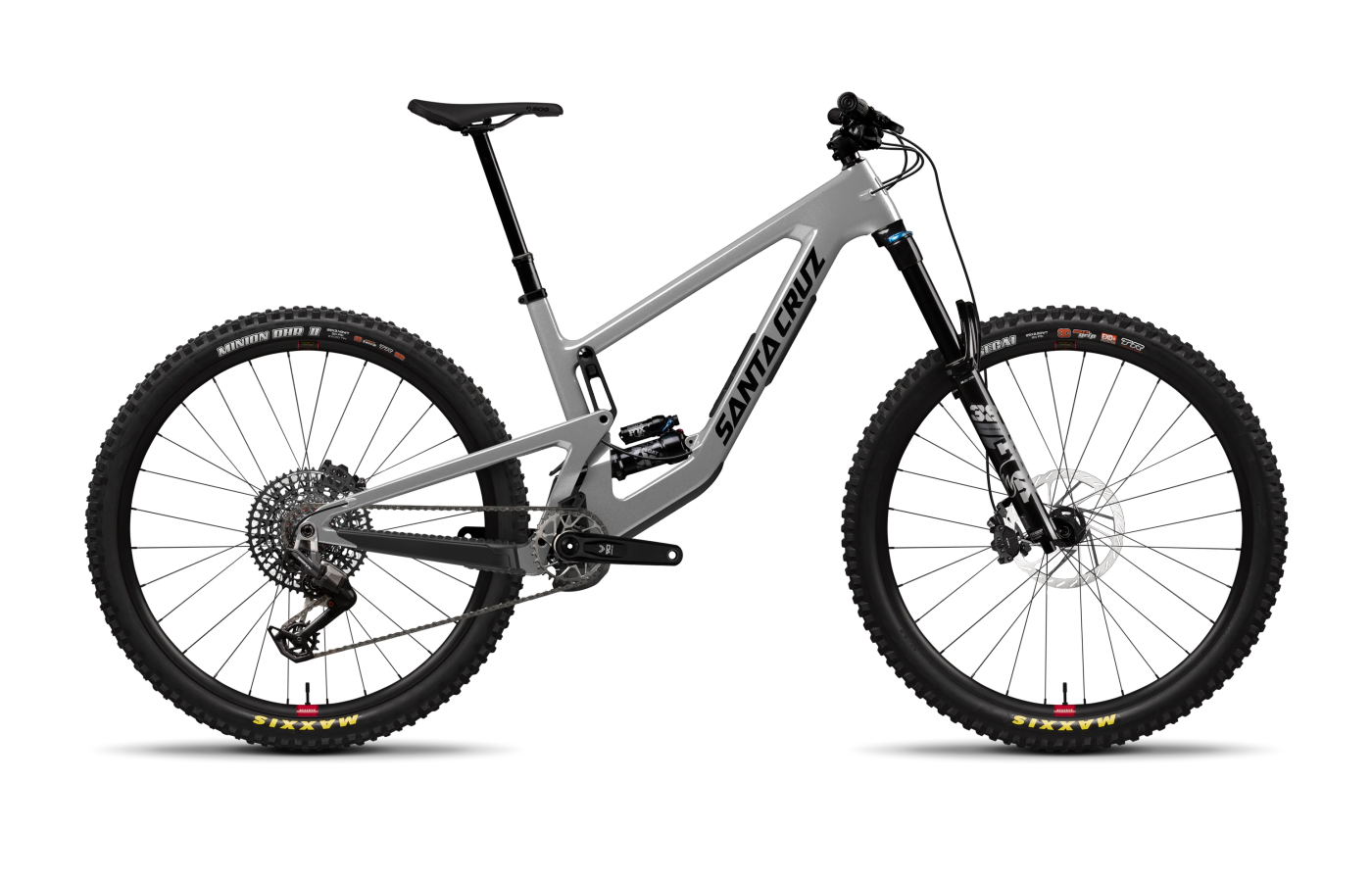
Megatower
If the Hightower's 'mini-enduro' shift still doesn't feel like enough bike for your local park, the Megatower is the logical next step — full 170 mm travel, same VPP refinement, same warranty package.
Compare →Spire
Transition's no-nonsense approach with the geometry correction the Sentinel pulled back from. 170 mm travel, slacker, longer — the right pick if you're racing enduro and the Sentinel feels too conservative.
Compare →