Megatower
vsNomad
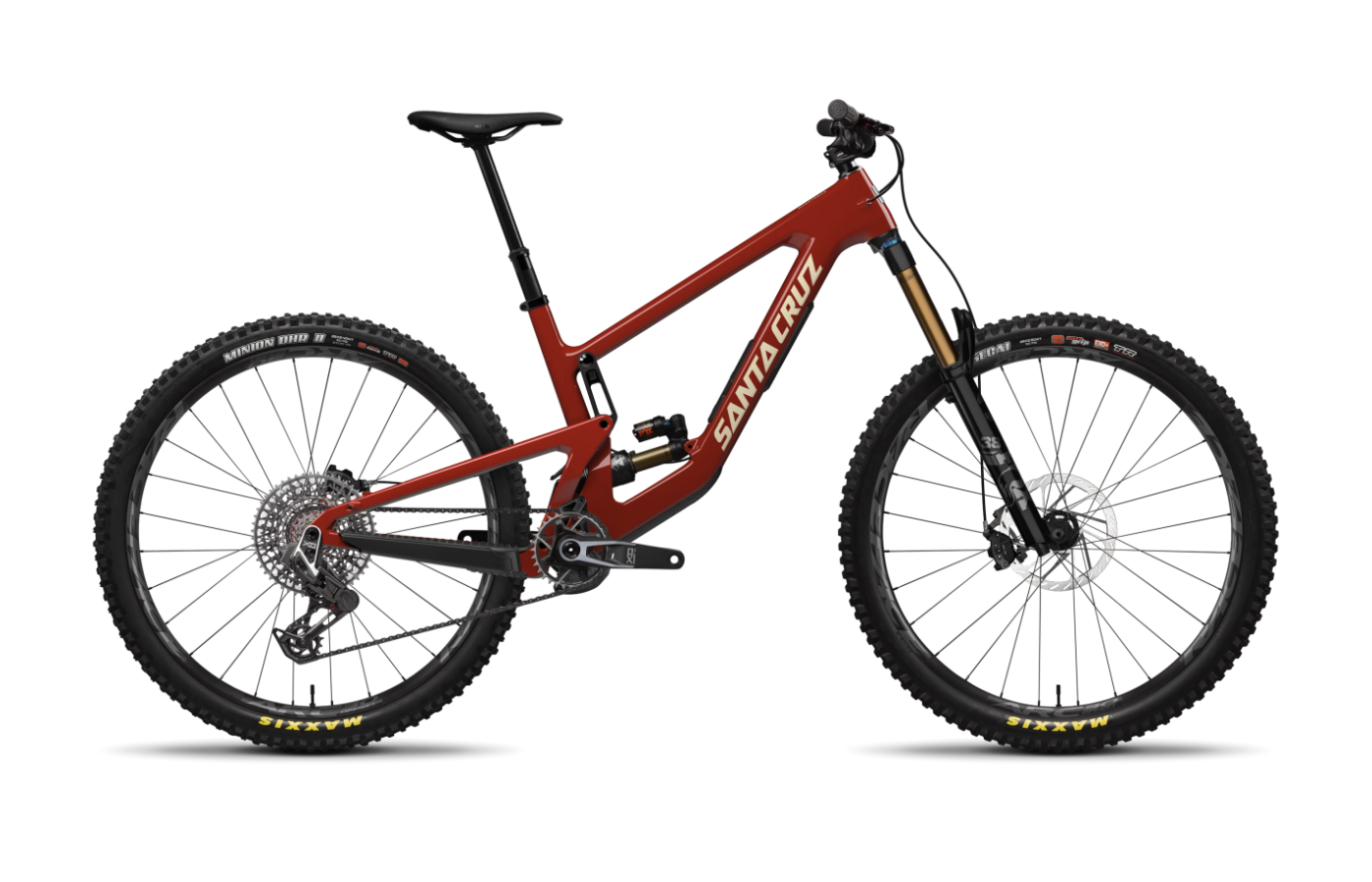
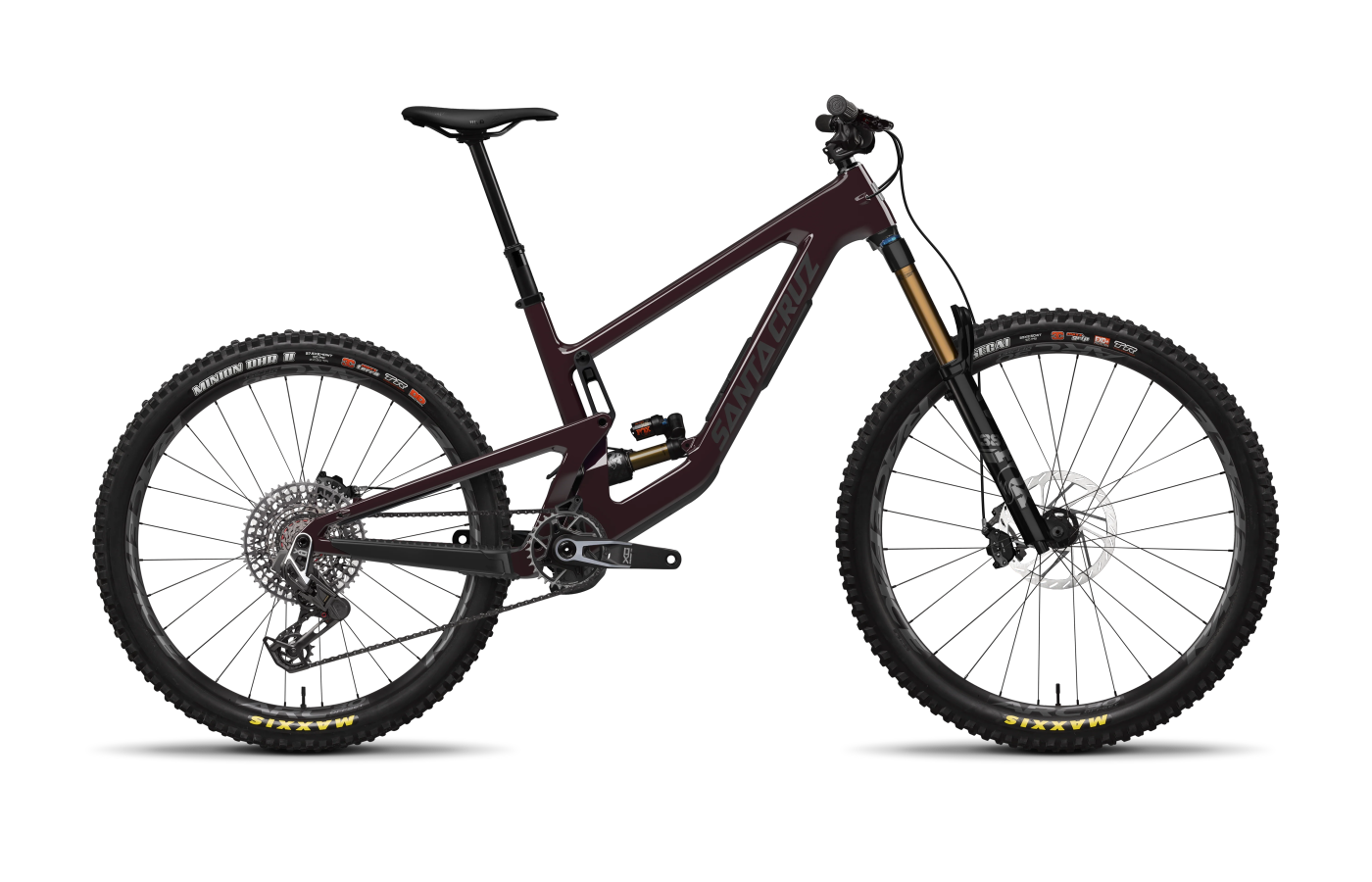
Same family, two ways down the hill.
Shared front triangle, shared 170 mm fork — but the wheel-size split turns the Megatower into a 29er enduro racer and the Nomad into a mixed-wheel park bike.
Megatower
- DH-bike composure in fast, chunky terrain — reviewers call it a "mini-DH bike" that flattens rock gardens at race pace.
- Bigger rear wheel rolls over square-edged hits the Nomad's 27.5" hangs up on, especially on technical climbs.
- Long, stable wheelbase (1236 mm at size M) keeps it planted at speeds where shorter bikes start to twitch.
- Slower to initiate turns — needs aggressive lean inputs to come alive at lower speeds.
- Stiff Carbon CC chassis can feel chattery on high-frequency small-bump chop.
Nomad
- Sharper cornering — Vital MTB called it "shifter-kart-like"; smaller rear wheel snaps through tight turns with less effort.
- 5 mm more rear travel (170 mm vs the Megatower's 165 mm) plus mixed-wheel clearance for steep rock rolls.
- Cheapest entry point in the lineup at $5,149 for the Nomad 70 — the Megatower starts $950 higher.
- 27.5" rear wheel hangs up on roots and step-ups where a 29er would just roll over.
- Low 343 mm BB combined with long travel means frequent pedal strikes in technical climbing.
Editor’s analysis
This isn't a better-or-worse fight. It's a question of what kind of fast you want to be — the line-holding race plow, or the mullet that snaps through every turn.
The Santa Cruz Megatower and Santa Cruz Nomad share a near-identical front triangle, both ride on Santa Cruz's revised lower-link VPP suspension, both ship with a 170 mm Fox 38 fork, and both come in C and CC carbon. At size M they have identical reach (455 mm), identical stack (625 mm), and identical 63.8-degree head angles. The pricing overlaps almost perfectly above $6k — both top out at $9,749, both hit a $7,249 GX AXS, both hit an $8,699 X0 AXS. So why does Santa Cruz sell two of them? Wheels.
The Megatower is the full-29er enduro race tool. With 165 mm of rear travel and 170 mm up front, it's the bike Santa Cruz's enduro athletes actually race. Reviewers from Blister, MBR, and BikeRadar describe it consistently: a "mini-DH bike" that "flattens the trail" at warp speed, rewards aggressive input, and can feel "too much bike" when you're not pushing it. The Carbon CC chassis is stiff enough to draw "chattery" complaints on high-frequency chop, but the upside is that it holds a line at ridiculous speeds in chunder.
The Nomad runs the same front end with a 27.5" rear wheel and 170 mm of travel at both ends. That smaller rear wheel — paired with size-specific chainstays that are actually 3 mm longer than the Megatower's at size M (440 vs 437) — turns it into what Vital MTB called a "shifter-kart." It corners on rails, snaps from edge to edge with less effort, and stays alive on jump lines and berms where the Megatower goes business-like. Reviewers consistently note it feels more reactive at lower speeds than its 29er sibling without giving up much composure when things get steep.
Put another way: the Megatower is the bike you buy if you're chasing podiums on rough, fast, line-choice tracks. The Nomad is the bike you buy if you spend your weekends on bermed park trails, steep rock rolls, and jib lines — and care more about how a bike carves than how fast it goes in a straight line. Both have the same Glovebox internal storage, the same lifetime frame and bearing warranty, and the same boutique-tax sticker price. Pick by terrain, not by spec sheet.
Where the builds differ.
Comparing our editor's-pick builds side-by-side. Winners highlighted row-by-row — lower price and weight, and the better-spec component, each mark a point.
Build variants & pricing
Build kits run nearly identical between platforms — same SRAM tiers, same Reserve wheel hierarchy, same Fox suspension levels. Only the rear wheel size and shock tune change.
Prices are current US MSRP. Both bikes are carbon-only — there is no aluminum option on either platform. The Nomad's $5,149 Nomad 70 build is the cheapest way into either platform.
How they fit, how they steer.
Both at size M — the fit-picked size for a 5'8" rider on each. Reach (455 mm), stack (625 mm), and head angle (63.8 degrees) are identical. The Nomad runs a 3 mm longer chainstay (440 vs 437 mm) — that's the "secret sauce" that keeps the mullet from feeling twitchy.
Which size should I buy?
Both ranges run S to XXL with very close stack and reach numbers across all sizes — fit picks are essentially interchangeable between the two.
→These are starting points. Flexibility, riding style, and preferred position all shift the answer — if you’re between sizes, a professional fit beats a chart.
What the magazines said.
Published reviews from trusted cycling outlets. Click through for the full write-up.
Which one should you buy?
If you race enduro on fast, rough, big-wheel terrain, get the Megatower. If you ride steep, technical, bermed parks and care more about cornering than top speed, get the Nomad.
Megatower
If you're chasing podium times on long, rough, line-choice tracks where straight-line composure beats tight cornering, the Megatower is the sharper tool. The full-29er rollover and 1236 mm M-size wheelbase let it hold a line at speeds the Nomad can't match.
Nomad
If most of your descents involve berms, jumps, steep rock rolls, and tight switchbacks — and you'd rather a bike feel alive than fast — the Nomad's mullet setup turns every corner into a snap. It still has 170 mm of travel for the rough stuff; it just doesn't ask you to push that hard to enjoy it.
Questions buyers actually ask.
Short answers to the things we get emailed about most often.
01Why does Santa Cruz sell two 170 mm enduro bikes that share a front triangle?
Wheels and intent. The Megatower is a full 29er with 165 mm of rear travel — Santa Cruz's enduro race bike, built for fast, rough, line-choice tracks where the bigger rear wheel rolls over chatter and holds composure at speed.
The Nomad runs a 27.5" rear wheel and 170 mm of rear travel — a mixed-wheel "park" bike that trades some straight-line composure for sharper cornering, more rear-wheel clearance on steep rolls, and a more playful feel on jumps and berms.
Same chassis, two different jobs.
02Which one corners better?
The Nomad, by a clear margin. Reviewers across Vital MTB, NSMB, PinkBike, and MBR all converge on the same description: the smaller 27.5" rear wheel paired with a low VPP linkage makes the Nomad initiate leans with minimal input and snap through tight turns in a way the full-29er Megatower simply doesn't.
Vital MTB called the handling "shifter-kart-like." The Megatower, by contrast, is described as a "flat-out" race sled — it corners fine, but it wants to be ridden aggressively, not flicked.
03Which one climbs better?
Roughly even, with different strengths. Both weigh ~34 lb in carbon trim, both have steep ~77.4-degree seat tube angles at size M that center the rider, and both ship with sticky Maxxis rubber that hurts on fire-road grinds.
The Megatower's 29" rear wheel rolls over square-edged climbing obstacles (roots, step-ups) more easily — reviewers note the Nomad's 27.5" rear can "hang up" on the same features.
But the Nomad's slightly higher anti-squat and 5 mm more rear travel can feel a touch more efficient when seated and spinning. Neither rewards out-of-saddle sprinting; both are "spin and win" climbers for 170 mm bikes.
04Are the geometries actually that close?
Yes — at size M they're nearly identical. Both run 455 mm reach, 625 mm stack, and a 63.8-degree head angle. Seat tube angles are within a few hundredths of a degree (77.42 vs 77.4).
The meaningful difference is at the rear: the Nomad has a 3 mm longer chainstay (440 vs 437 mm at M) and a 3 mm longer wheelbase. Counterintuitively, the mullet bike has the longer rear-center — that's deliberate, and reviewers credit it as the reason the smaller rear wheel doesn't feel twitchy.
05What's the maximum tire clearance?
Megatower: 63.5 mm rear (29" wheel). Nomad: 61 mm rear (27.5" wheel). Both ship stock with Maxxis Assegai 2.5 up front and Minion DHR II 2.4 in the rear, so neither bike is starved for rubber options.
Note that the Nomad's clearance figure is for the 27.5" rear only — the bike is sold mixed-wheel only and isn't intended to be converted to a full 29er.
06Are the stock tires good enough for serious enduro use?
On the air-shock builds, no — and reviewers across Blister, PinkBike, and Evo are unanimous on this. The Maxxis EXO+ casings spec'd on most builds of both bikes are widely described as too thin for 170 mm rigs, with multiple testers reporting immediate punctures or sidewall tears.
For either bike, plan to upgrade to DoubleDown casings at the rear — at minimum — if you're riding rocky terrain. The cost is roughly $90 per tire.
07How does the warranty work?
Both come with a lifetime frame warranty and Santa Cruz's lifetime free bearing replacement program — one of the most generous support packages in the industry. Reserve carbon wheels (spec'd on the RSV builds) carry their own lifetime warranty as well.
Reviewers consistently cite this as a meaningful offset to the high sticker price. Pivot bearings on long-travel enduro bikes wear out fast in wet conditions — the free replacement program saves real money over a multi-year ownership window.
08Which one should I buy if I can only have one bike?
Pick by terrain, not by spec sheet. If your local trails are fast, rough, big-mountain, or line-choice race tracks — get the Megatower. If they're steep, bermed, jump-line, park-style, or technical-corner-heavy — get the Nomad.
If you genuinely ride a mix and can't decide, the Nomad is the more forgiving "do everything" pick — it's faster to learn, easier to corner, and still has 170 mm of travel for the rowdy stuff. The Megatower demands more from the rider in exchange for its top-end ceiling.
Similar bikes
If your priorities don’t map cleanly onto either of these, one of these adjacent bikes probably fits better.
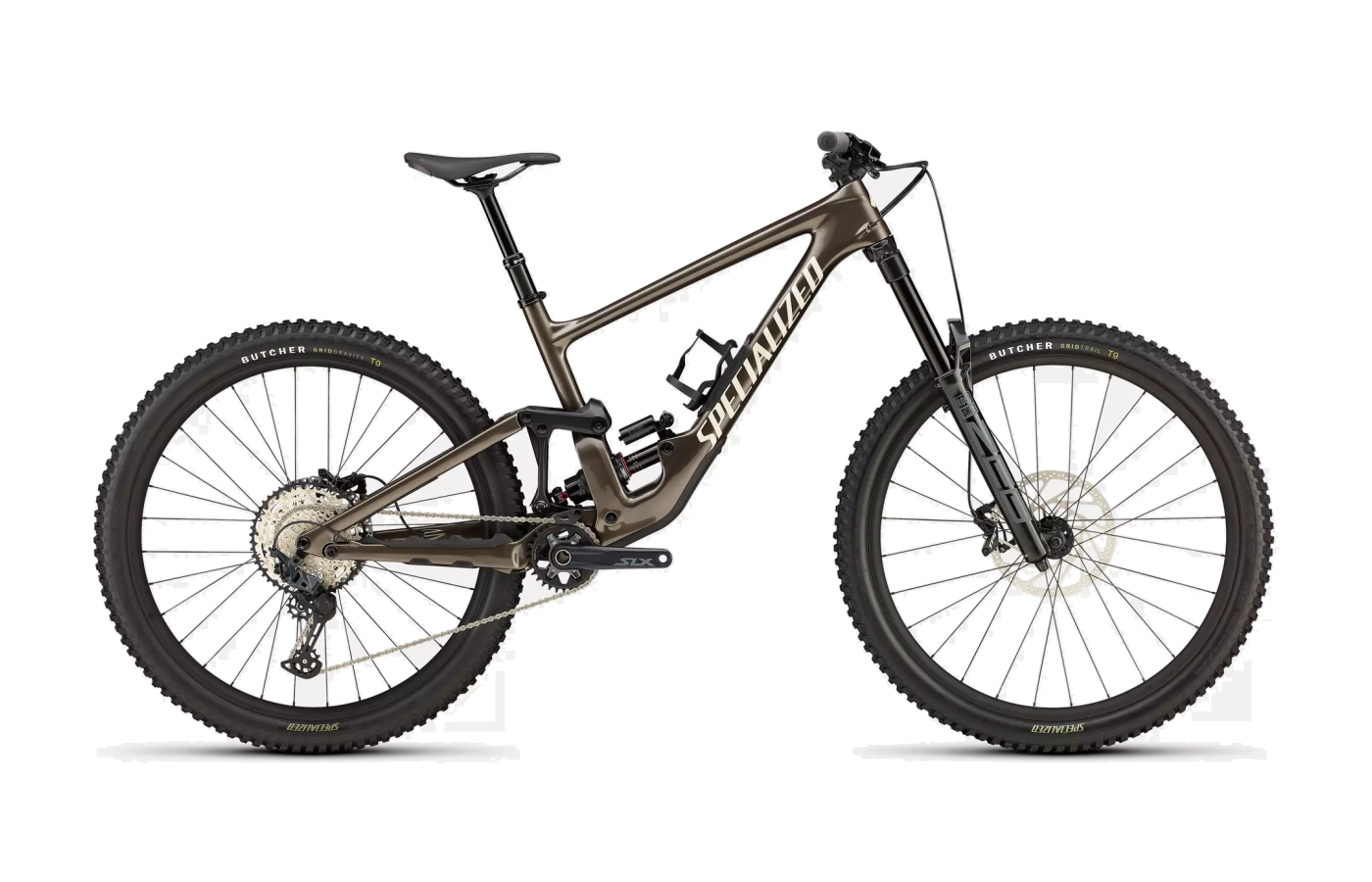
Enduro
The full-29er Megatower alternative for riders who want even more straight-line plow. Specialized's Enduro is consistently cited as one of the most planted, ground-hugging 29ers in the category — a step further in the same direction as the Megatower.
Compare →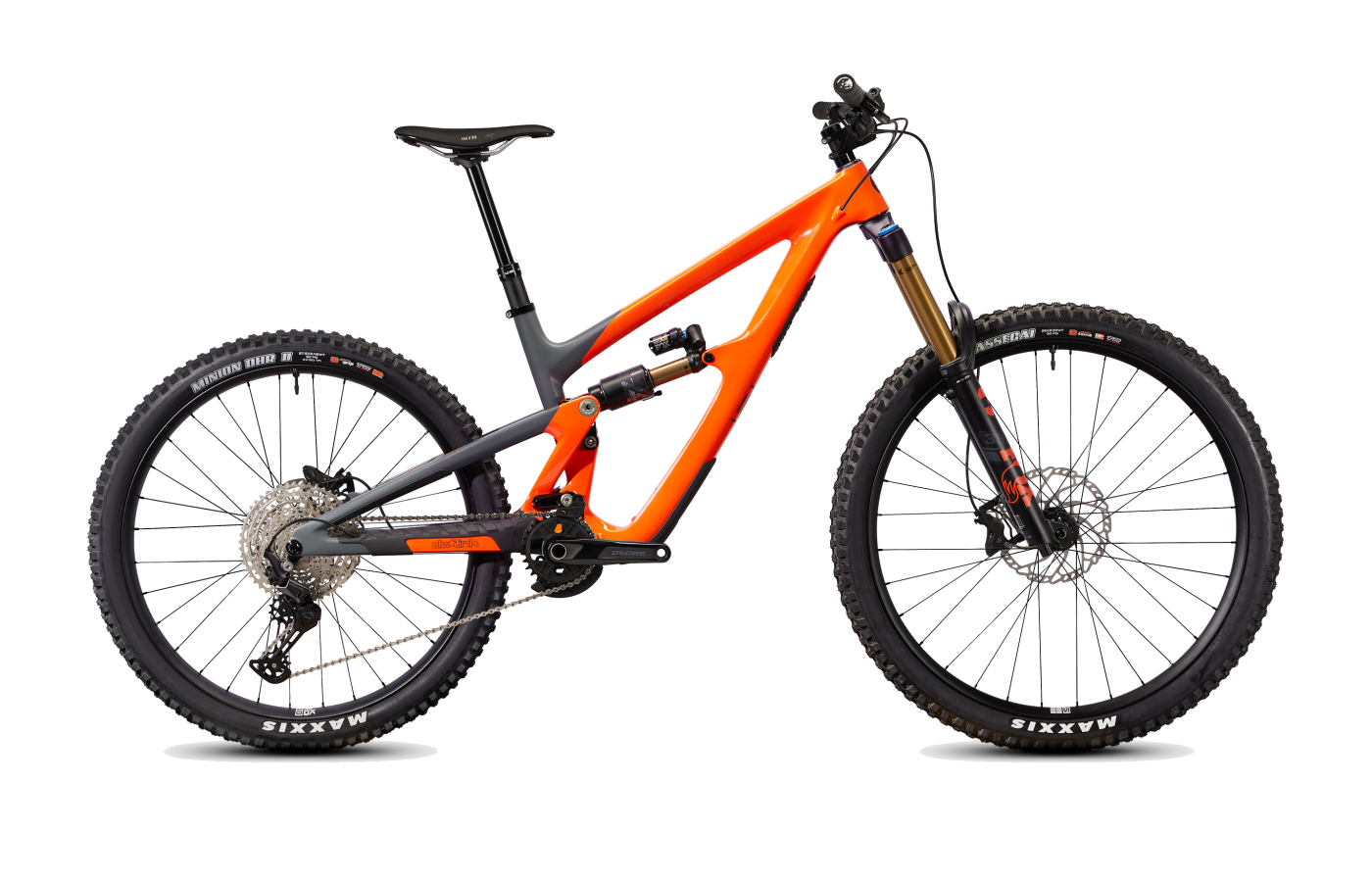
HD6
A different flavor of the Nomad recipe — same mixed-wheel format, but Ibis's DW-Link suspension delivers a snappier, more pedaling-efficient feel than the VPP. The HD6 is the Nomad alternative for riders who want mullet agility with a sportier climbing platform.
Compare →Spire
If you want the Megatower's race-bike intent in an even longer, slacker package, the Transition Spire is the obvious cross-shop. A 29er enduro sled with more aggressive geometry numbers and a noticeably lower price than the Santa Cruz.
Compare →