Nomad
vsSB165
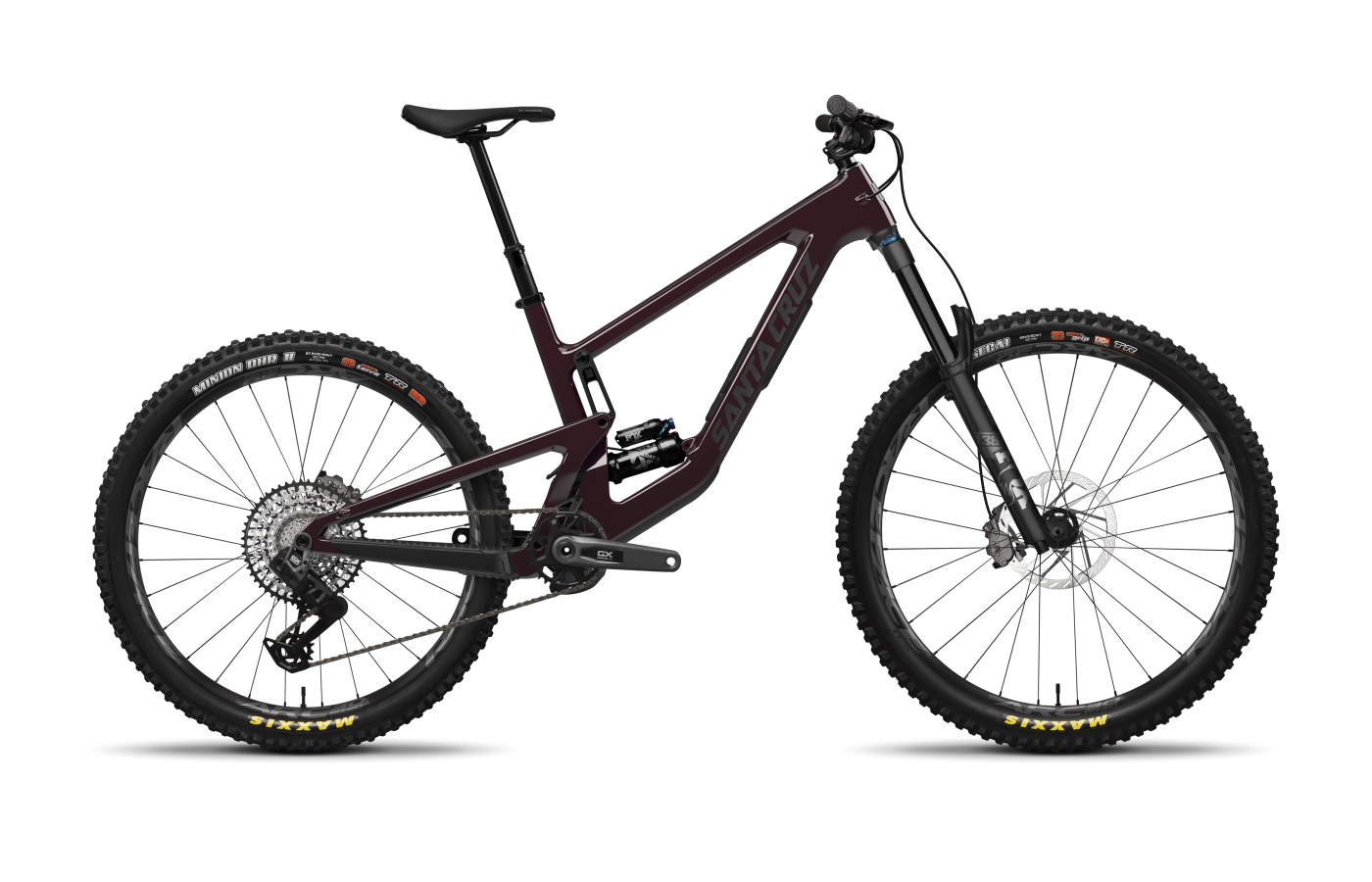
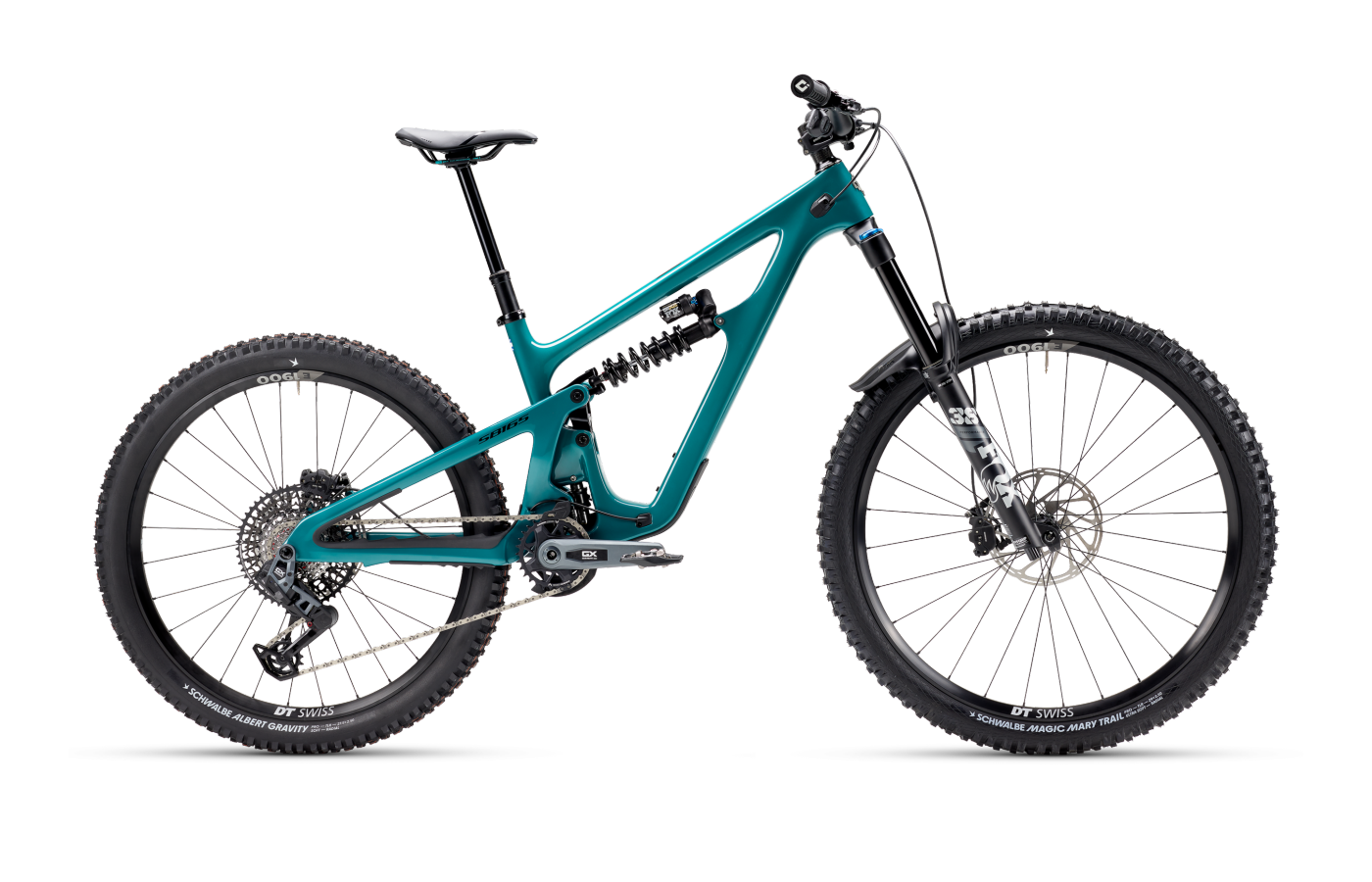
Two mullet bruisers, two ways to send.
The Santa Cruz Nomad is a precision carver with long stays and a centered stance. The Yeti SB165 is a coil-sprung freeride blanket built for the steep stuff.
Nomad
- Long size-specific chainstays (440 mm on the M) keep the mullet feel composed at speed without losing the snap.
- Adjustable geometry via flip-chip — Yeti has none, the Nomad lets you tune HTA and BB height.
- Lifetime bearing replacement — a real, ongoing value-add for a bike that gets ridden hard.
- Low 343 mm bottom bracket leads to frequent pedal strikes in chunky terrain.
- Air shock on most mid-tier builds — coil-loving riders will want to swap, adding cost.
SB165
- Coil shock standard on every build — even the entry C2 gets a Fox Factory DHX2, the suspension Yeti tuned the bike around.
- Mini-DH composure — buttery off the top, supportive in the mid-stroke, ramps hard for huck-to-flats.
- Slightly more reach than the Nomad at the same nominal size (459.7 mm vs 455 mm on M).
- No XXL size — riders over 6'3" will run out of frame.
- No flip-chip or geometry adjustment — what you see is what you get.
Editor’s analysis
Same wheel sizes, same 170 mm fork, same enduro bracket — and almost opposite ideas about how a long-travel mullet bike should feel.
On paper, the Santa Cruz Nomad and Yeti SB165 look like twins. Both run a 29-inch front and 27.5-inch rear. Both pack 170 mm up front. Both ship in carbon only. Both sit a hair under 35 lb in their middle builds. But ride them back-to-back and the philosophies diverge fast — Santa Cruz built a precision tool, Yeti built a security blanket.
The Nomad leans on geometry. A 440 mm chainstay on the size M (and 443 mm on the L) is genuinely long for a mullet enduro bike — Santa Cruz's stated 'secret sauce' for keeping the small rear wheel from feeling twitchy when you're pinned. Pair that with a 63.8-degree head angle, a 343 mm bottom bracket in the Low setting, and a flip-chip for adjustability, and you get a bike Vital MTB called 'shifter-kart-like' in corners. It rewards a centered, neutral stance.
The Yeti goes the other direction. The SB165 runs 5–6 mm shorter chainstays (434 mm on the M), a slightly slacker 63.5-degree head angle, and — critically — a Fox Factory DHX2 coil shock on every single build, top to bottom. Yeti dropped the leverage curve from 27.5% to 22% progressivity to suit that coil, and the result is what reviewers consistently called 'buttery,' 'damp,' and a 'mini-DH' feel. It's the bike to ride when you're tired, hungover, or just want to send something stupid.
Put another way: the Nomad is the one you buy when you ride hard but still pedal big days and want a frame that responds to precise inputs. The SB165 is the one you buy when most of your saddle time is at lift-served parks or self-shuttled steeps, and you want the suspension to forgive bad line choice.
Where the builds differ.
Comparing our editor's-pick builds side-by-side. Winners highlighted row-by-row — lower price and weight, and the better-spec component, each mark a point.
Build variants & pricing
Nomad spans $5,149–$9,749 across five builds. The SB165 starts higher at $6,400 and tops out at $9,500 across four builds — all with the same Fox Factory DHX2 coil shock.
Prices are current US MSRP. Yeti has no aluminum option and no entry-level mechanical-shift build below $6,400. If your budget caps at $5–6k, the Nomad's mechanical-shift 70 and 90 builds are the only way into either platform.
How they fit, how they steer.
Stack is effectively identical (625 mm vs 624.8 mm). The Yeti SB165 runs 4.7 mm more reach, 5.7 mm shorter chainstays, and a 0.3° slacker head angle — quicker rear end, slightly more stretched-out cockpit. The Nomad's seat tube angle is 0.5° steeper (77.4° vs 76.9°) for a more centered seated climb.
Which size should I buy?
Both ranges overlap closely in the middle; the Nomad extends to XXL while the Yeti tops out at XL.
→These are starting points. Flexibility, riding style, and preferred position all shift the answer — if you’re between sizes, a professional fit beats a chart.
What the magazines said.
Published reviews from trusted cycling outlets. Click through for the full write-up.
Which one should you buy?
If you want a precision carver with adjustable geometry and the option to pedal big days, get the Nomad. If most of your riding is bike park or winch-and-plummet steeps and you want a coil-sprung security blanket, get the SB165.
Nomad
If your riding is steep, technical, and corner-heavy — and you still want to pedal up to your descents — the Nomad's long chainstays, flip-chip, and centered stance reward accurate inputs. It's a tool for riders who like feeling what the bike is doing.
SB165
If most of your saddle time is lift-served, self-shuttled, or pointed at steep gnar — and you want a coil shock to do the thinking when you're tired — the SB165's mini-DH feel and forgiving stance let you ride messy and still come out the other side.
Questions buyers actually ask.
Short answers to the things we get emailed about most often.
01Which corners better?
The Santa Cruz Nomad, by most accounts. Vital MTB called its handling 'shifter-kart-like,' and the combination of long size-specific chainstays (440 mm on the M, 443 mm on the L), a low 343 mm bottom bracket, and the lower-link-driven VPP layout produces a precise, planted carving feel that several testers ranked as the best mullet bike they'd tested.
The SB165 is more 'slashy' than 'railing' — its shorter 434 mm rear end on the M lets you pop the back wheel out and break traction on purpose, but it doesn't carve with the same millimetric accuracy.
02Which is better in the bike park?
The Yeti SB165, narrowly. Every build ships with a Fox Factory DHX2 coil — the suspension Yeti specifically tuned the bike's 22% progressivity around — which gives it a 'damp,' 'muted' feel that holds up to back-to-back lift laps without fading. PinkBike's reviewer specifically called it a 'pedalable park bike.'
The Nomad is also park-capable, especially in coil-shock builds, but most mid-tier Nomads ship with an air-sprung Fox Float X2 or X. Reviewers consistently said the Nomad 'wants' a coil for park duty, which means a $400–$600 aftermarket swap to get the same character.
03Which climbs better?
Both climb surprisingly well for 170 mm-front bikes in the 34–35 lb range, and reviewers gave each the same 'efficient seated, bobs a bit when standing' verdict. The Nomad has a marginal edge on the steepest pitches — its 77.4° effective seat tube angle on the M is 0.5° steeper than the SB165's 76.9°, putting the rider a touch more centered over the bottom bracket.
Neither is a 'spry' climber. Both have low BBs (343 mm Nomad, 345 mm Yeti) that lead to pedal strikes in technical terrain — multiple reviewers on each bike resorted to 160 mm cranks.
04Why does the Yeti only come in carbon?
Yeti has been carbon-only across its full-suspension lineup for years. There's no aluminum SB165, which sets the entry price at $6,400 for the C2 build — Yeti's lower carbon grade.
Santa Cruz also only offers the Nomad in carbon (C and CC layups), but their entry C-series '70' build comes in at $5,149, roughly $1,250 cheaper than the cheapest SB165.
05Are the chainstays really that different?
Yes — and it's the single biggest geometry story in this comparison. On a size M, the Nomad runs 440 mm chainstays vs the SB165's 434 mm — a 6 mm gap that grows as you go up in size (443 vs 437 on the L).
Santa Cruz uses size-specific chainstays specifically to keep the mullet rear from feeling twitchy under big riders; Yeti also size-specs theirs but stays shorter overall. The Nomad feels more planted at high straight-line speed; the SB165 feels easier to manual and more eager to release the rear wheel in a corner.
06Which has the better warranty and long-term support?
Both come with lifetime frame warranties to the original owner. Santa Cruz pulls ahead on the long-term ownership angle with lifetime free bearing replacement — a program reviewers consistently called out as a meaningful, ongoing value-add for a bike that sees hard use.
Yeti doesn't offer free bearings, but the updated Switch Infinity unit on the latest SB165 has improved seals and floating collet axles — and the bike was praised for being unusually quiet and rattle-free thanks to its tube-in-tube cable routing.
07Should I upgrade the stock tires on either?
Yes — and reviewers were unanimous on this for both bikes. The air-shock Nomad builds and the SB165 both ship with Maxxis EXO+ casings (Schwalbe Radial on the Yeti) that nearly every tester called inadequate for the bikes' aggressive intentions.
Blister 'put a big hole in the rear tire on literally the first descent' on the Nomad. Yeti reviewers reported similar fast-flat experiences. Both are essentially 'day-one' upgrades to DoubleDown or DH casings if you ride sharp, rocky terrain.
08Can I run a dual-crown fork on either?
The SB165 is explicitly approved for a dual-crown fork up to a 607 mm axle-to-crown measurement, and accepts up to a 190 mm fork — Yeti openly markets it as Red Bull Rampage-eligible.
The Nomad is not officially dual-crown approved by Santa Cruz. If running dual-crown matters to you, the SB165 is the supported choice.
Similar bikes
If your priorities don’t map cleanly onto either of these, one of these adjacent bikes probably fits better.
Capra
The value play — direct-to-consumer pricing on a 170 mm mullet enduro that hits a fraction of the boutique tax. The trade is no local dealer support and a less polished frame finish.
Compare →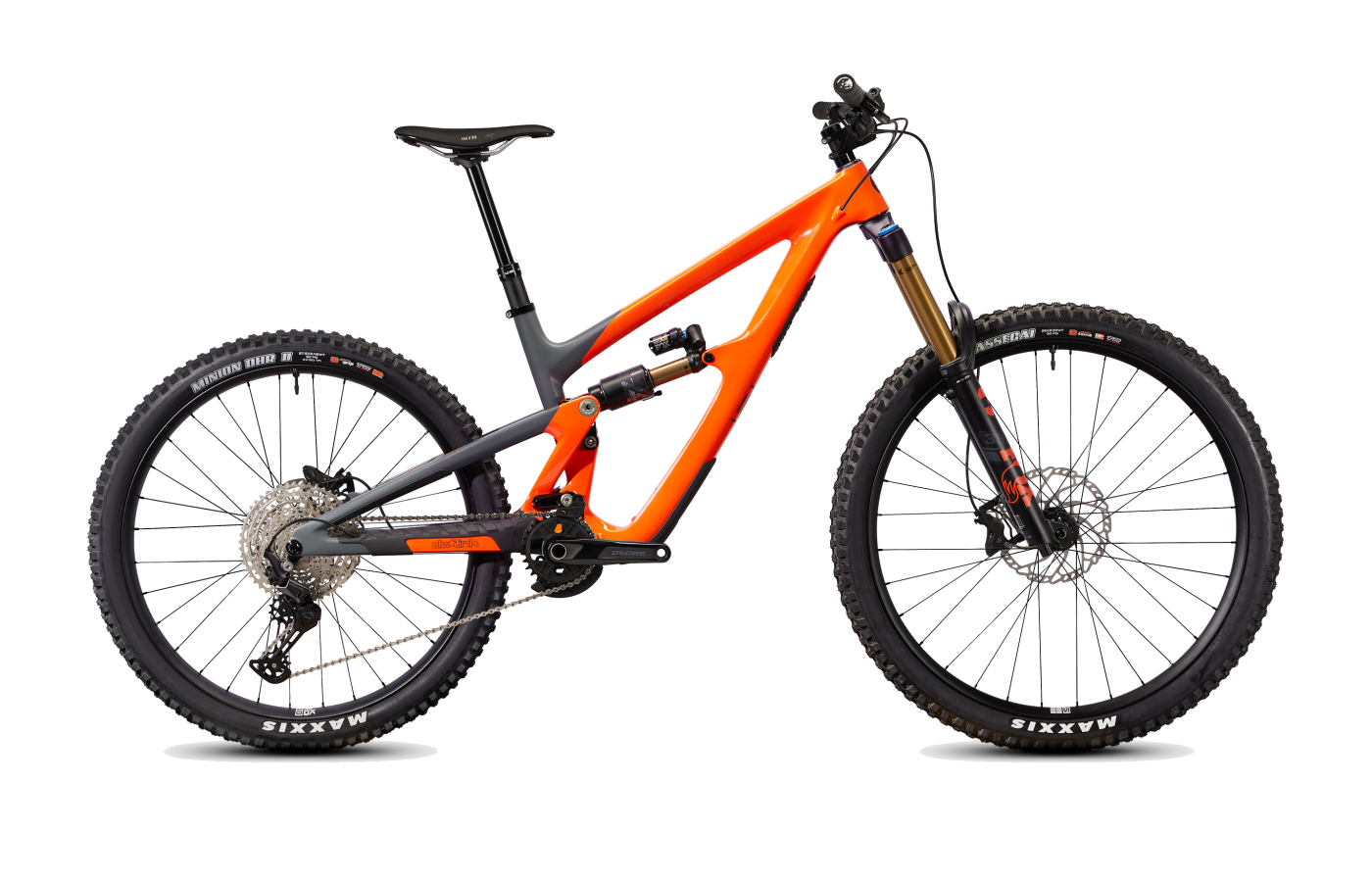
HD6
Lighter and more energetic than either bike here, with a sharper pedal response on technical climbs. The right pick if the SB165's coil-sprung 'damp' feel sounds like dead weight to you.
Compare →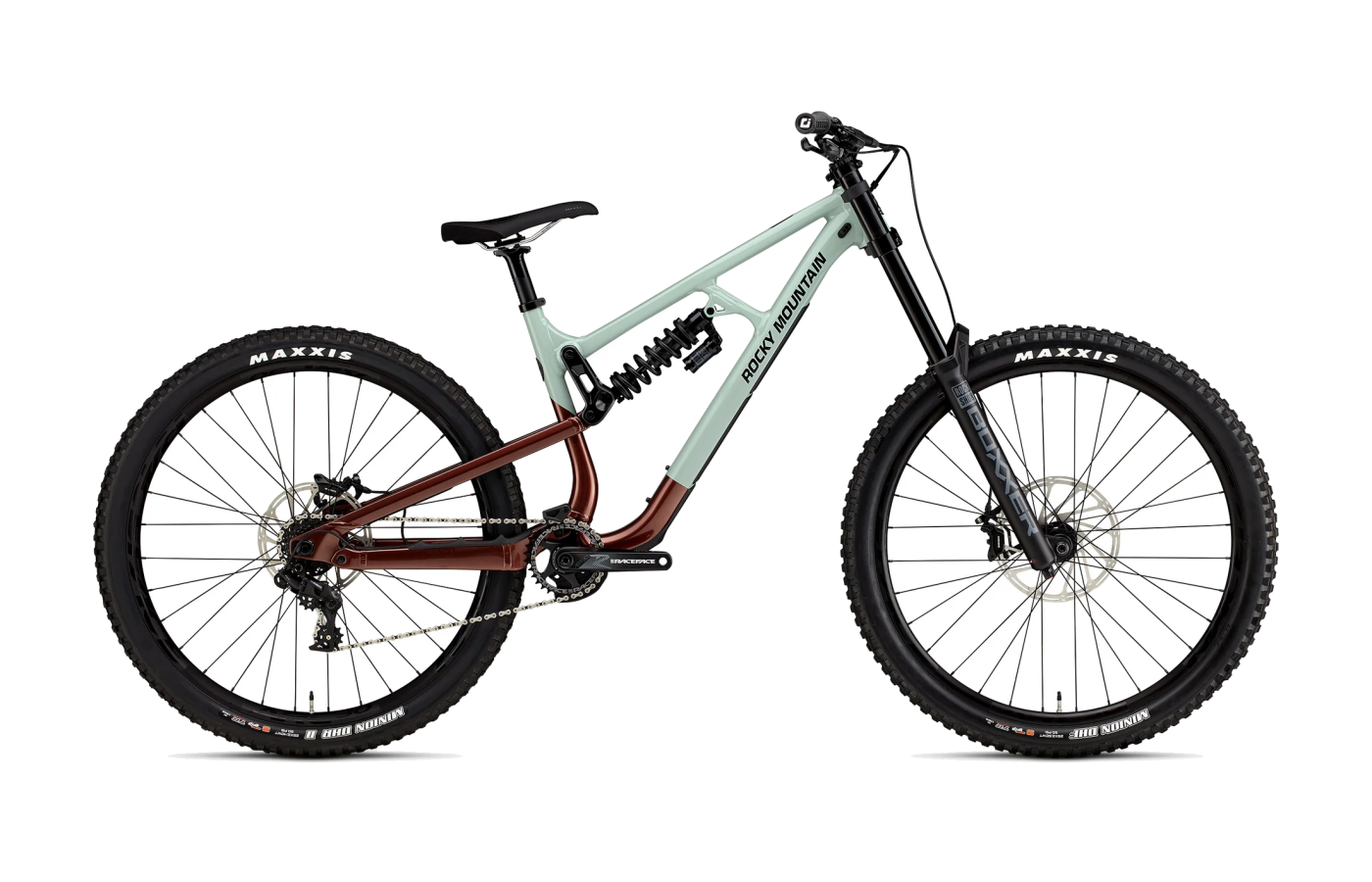
Slayer
If the SB165 is too 'enduro' and not 'freeride' enough for you, the Slayer goes harder — more travel, beefier chassis, and a clearer commitment to gravity-only riding.
Compare →