Tallboy
vsTop Fuel
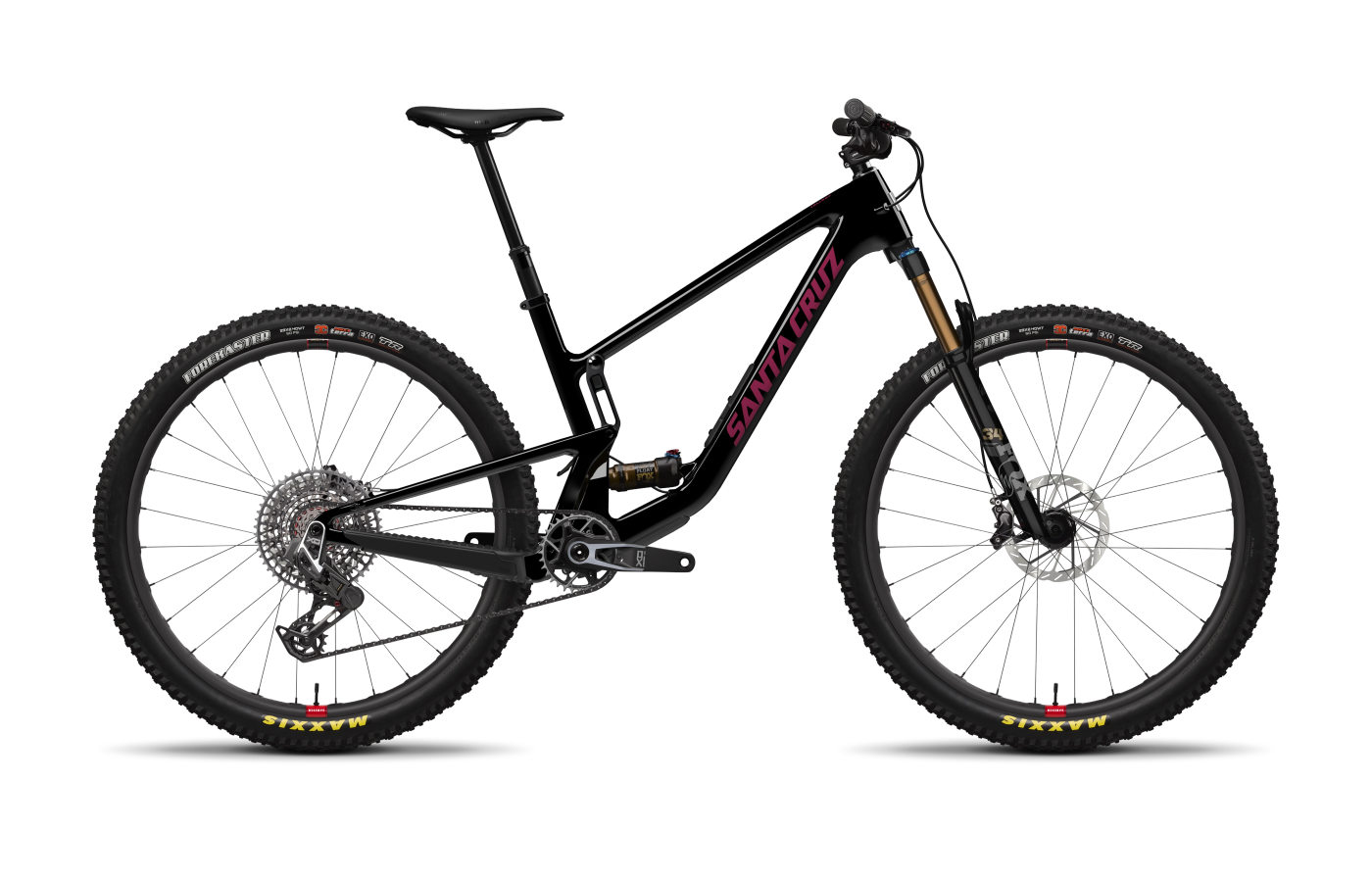
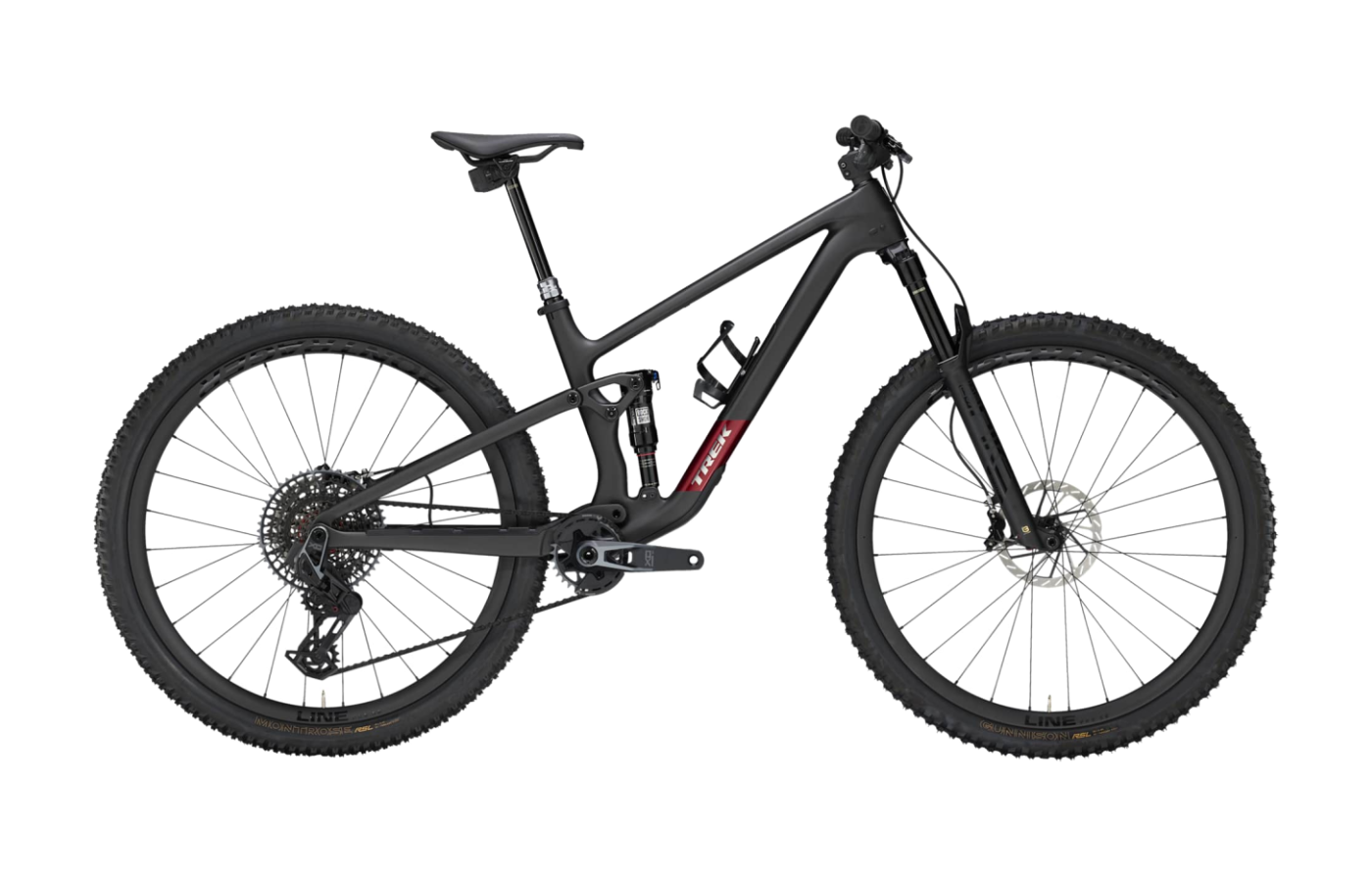
Two 120 mm trail bikes, two personalities.
The Tallboy is the downhiller's XC bike — stout, planted, willing to be over-ridden. The Top Fuel is the shape-shifter — lighter-feeling, more compliant, three bikes in one frame.
Tallboy
- Planted, 'downhiller's XC' character — stout chassis and high-riding VPP suspension let it punch above its 120 mm travel on aggressive descents.
- Lifetime everything — frame, Reserve wheels, and pivot bearings are all replaced for free for the original owner. Industry-leading long-term ownership.
- Snappy, urgent pedaling — refined VPP and a 76.7° seat tube angle deliver the pump-and-slingshot feel reviewers describe as a 'rocket ship.'
- Frame is 'relentlessly rigid' on long, chunky descents per MBR — comfort isn't its strong suit.
- Stock SRAM Level brakes are universally panned as under-gunned for the bike's descending capability.
Top Fuel
- Three bikes in one frame — the 4-position Mino Link plus 120/130 mm rear-travel swap turns the same chassis into XC racer, trail bike, or mullet party machine.
- Active under braking — the ABP four-bar keeps the rear suspension fluid even on the anchors, where many short-travel bikes stiffen up.
- Lower entry price — the alloy Top Fuel 8 starts at $4,199, $600 below the cheapest Tallboy and a real on-ramp to the platform.
- Bontrager RSL one-piece cockpit looks sleek but offers zero adjustment and gets harsh once trimmed.
- Same SRAM Level brake complaint as the Tallboy — both brands under-spec stoppers on bikes this capable.
Editor’s analysis
Same travel. Same wheel size. Same head angle, basically. And yet these two ride almost nothing alike.
On paper, the Santa Cruz Tallboy V5 and Trek Top Fuel Gen 4 look like twins — 120 mm rear, 130 mm fork, 29-inch wheels, head angles within a quarter degree, and price ranges that brush against each other in the carbon mid-tier. Spend any time reading the meta-reviews and the personalities split immediately. The Tallboy is what Santa Cruz calls the 'downhiller's XC bike' — stiff, planted, 'steroidally hench' in Bike Perfect's words, a chassis built to be over-ridden. The Top Fuel is the chameleon — Trek deliberately reduced frame stiffness in Gen 4 for better tracking, and the 4-position Mino Link lets you reconfigure it from a 120 mm XC racer to a 140/130 mm trail bike without buying a new frameset.
The Santa Cruz Tallboy picks one role and sharpens it. VPP suspension that 'rides high' in the stroke for pump-and-slingshot trails, a chassis stout enough that reviewers on enduro group rides keep up on the descents, and a geometry that begs for late braking. The trade-off is that 'relentless rigidity' MBR flagged on long, chunky descents — the bike doesn't iron out chatter, it transmits it. If you ride a 160 mm enduro bike on the weekends and want a sharper short-travel companion that doesn't feel toy-like, this is the bike. If you ride 4-hour technical XC laps and want comfort, you'll feel it.
The Trek Top Fuel goes the opposite direction. The Active Braking Pivot keeps the rear end fluid even when you're hard on the brakes, and the four-bar layout (rather than VPP's twin-link or a flex-stay) costs a little weight but delivers what reviewers call a 'cohesive' and 'quiet' ride. The 4-position Mino Link is the real headline: 14% or 19% progression, low or high BB, and the rear shock will accept a 5 mm longer stroke for 130 mm of rear travel — combined with a 140 mm fork, the same frame becomes a proper light trail bike. Versatility-buyers will love this. Riders who want a bike with one strong opinion will find the Top Fuel a little vanilla — NSMB's long-term reviewer literally called it 'understated' and admitted the lack of complaints made it a 'pretty boring bike review.'
Put another way: the Santa Cruz Tallboy is the bike you buy when you already own a 160 mm enduro rig and want a stiff, urgent short-travel partner for it. The Trek Top Fuel is the bike you buy when you want one frame that can be three different bikes depending on what fork and shock spacers you have on the workbench.
Where the builds differ.
Comparing our editor's-pick builds side-by-side. Winners highlighted row-by-row — lower price and weight, and the better-spec component, each mark a point.
Build variants & pricing
Both lineups span ~$6k. Santa Cruz starts at $4,799 carbon-only; Trek starts at $4,199 with an alloy on-ramp.
Prices are current US MSRP. Editor's picks are tier-matched: SRAM X0 AXS Transmission with carbon wheels on both sides. The Tallboy X0 AXS RSV runs ~$1,750 above the Trek 9.9 X0 AXS — most of that gap is paid back over years through Santa Cruz's lifetime frame, wheel, and bearing replacement program.
How they fit, how they steer.
Both at size M — fit-picked for a 5'8" rider on each bike. The Top Fuel sits 20 mm lower in the stack (599 vs 619 mm), 3 mm shorter in reach, and 0.2° steeper at the head — a more aggressive, forward-biased cockpit. Chainstays are nearly identical (433 vs 435 mm).
Which size should I buy?
Size recommendations based on stack, reach, and effective top tube. The Tallboy comes in six sizes XS to XXL; the Top Fuel runs S, M, ML, L, XL with a 27.5" rear option on size S.
→These are starting points. Flexibility, riding style, and preferred position all shift the answer — if you’re between sizes, a professional fit beats a chart.
What the magazines said.
Published reviews from trusted cycling outlets. Click through for the full write-up.
Which one should you buy?
If you want one bike that morphs to fit any trail day, get the Top Fuel. If you want a stout, planted short-travel rocket to ride alongside your enduro bike, get the Tallboy.
Tallboy
If your weekend bike is a 160 mm enduro rig and you want a short-travel companion that doesn't feel like a toy on the descents — this is it. The chassis is stout, the suspension rides high and slingshots, and the geometry begs for late braking. Buy it when planted, urgent, and 'over-ride me' is the brief.
Top Fuel
If you want one chassis that can be a 120 mm XC racer one weekend and a 140/130 mm trail bike the next, the Top Fuel's 4-position Mino Link and stroke-adaptable shock deliver something almost no competitor matches. The ABP suspension stays active on the brakes, climbs are snappy, and the entry price is real.
Questions buyers actually ask.
Short answers to the things we get emailed about most often.
01Which is more capable on aggressive descents?
The Tallboy, in stock form. Reviewers across Bike Perfect, The Loam Wolf, and Singletracks describe it as a 'downhiller's XC bike' that punches above its 120 mm travel on technical descents — the stout chassis and high-riding VPP suspension reward late braking and aggressive line choice.
But here's the asterisk: the Top Fuel's frame is rated for a 140 mm fork and 130 mm of rear travel via a longer-stroke shock. In that 140/130 'long-travel mode,' multiple reviewers (MBR, PinkBike, Flow) say it becomes a 'go-fast hooligan' that closes the gap. Out of the box, Tallboy. After a fork swap and a shock spacer, much closer.
02Which climbs better?
It depends on what you mean by 'climbs.' On smooth fire-road climbs, the Top Fuel feels snappier — Blister called it one of the best climbing bikes in its travel bracket, and the Mino Link's 'less progressive' (14%) setting firms up the platform further.
On loose, technical climbs where you need the rear tire to find traction over square edges, the Tallboy's VPP suspension is the standout — Singletracks and The Loam Wolf both note it puts power down on terrain where stiffer bikes spin out. The 76.7° seat tube angle on size M keeps the rider centered for steep seated efforts.
For pure climbing snap, Trek. For technical traction, Santa Cruz.
03How adjustable are the geometry chips?
The Tallboy has a two-position flip chip that adjusts BB height by roughly 3 mm and head angle by about 0.2°. Most reviewers preferred the Low setting for its 'in the bike' feel and added progression.
The Top Fuel has Trek's new 4-position Mino Link, which independently adjusts geometry (high vs low: ~6 mm BB height, ~0.4° head angle) and suspension progression (14% vs 19%). It's measurably more flexible than the Tallboy's chip and a real selling point for riders who like to tinker.
Neither chip changes the bike's character dramatically — these are fine-tuning adjustments, not three-bikes-in-one. (The Top Fuel's actual three-bikes-in-one trick is its travel adaptability, not the Mino Link.)
04What's the maximum tire clearance?
Both frames have ~63.5 mm (2.5") of official clearance — Santa Cruz lists 2.4" WT as stock and Trek ships 2.4" Bontrager Montrose/Gunnison RSL XT casings. In practice, riders fit a true 2.4" with mud clearance to spare, and a 2.5" Maxxis is the realistic upper limit on either.
Neither is a plus-tire bike — if you want 2.6" or wider for traction in loose conditions, you're outside this conversation. Both also support a 27.5" rear wheel for a mullet setup; the Trek size S ships in a 27.5" front-and-rear configuration from the factory.
05Can I really run the Top Fuel as a 140/130 mm trail bike?
Yes — and Trek officially supports it. The Top Fuel frame is rated for forks up to 140 mm, and the rear shock can be swapped (or its travel spacer removed) to give 130 mm of rear travel from the same frame. Multiple long-term reviewers (Flow Mountain Bike, MBR) tested this configuration and concluded the bike absolutely rips in 140/130 trim.
The Tallboy has no equivalent flexibility — it's a 120 mm rear-travel bike, period. Putting a 140 mm fork on it is widely discouraged: Flow's long-term tester noted it 'dulls the handling on flatter or tighter trails.' If you want this kind of adaptability, the Top Fuel is the only one of the two that delivers it.
06How are the stock brakes?
Universally panned on both bikes. Reviewers from MBR, PinkBike, Bike Perfect, The Loam Wolf, and Bicycling all flagged the SRAM Level brakes spec'd on the mid-to-upper builds of each platform as under-gunned for the bike's descending capability — Loam Wolf called them 'terrifying' on steep terrain and Bicycling said they were 'barely enough' even with 180 mm rotors.
Both are easy to upgrade: SRAM Codes or a swap to 200 mm rotors is the standard fix, and budget for it at purchase if you ride steep or technical terrain. This is a shared frustration across both brands' 120 mm trail offerings — not a meaningful tiebreaker between the two.
07How do the cockpits compare for adjustability?
The Tallboy uses a traditional two-piece setup — a Burgtec Enduro MK3 stem and Santa Cruz 20 Carbon bar (or Industry Nine A35 stem on the top XX AXS RSV build). Bar roll, stem length, and bar width are all adjustable the normal way.
The Top Fuel on the 9.9 X0 AXS and up uses a Bontrager RSL one-piece carbon bar/stem. It looks sleek and saves grams, but offers zero bar-roll adjustment, no stem-length swap without buying a new $400+ unit, and Flow and NSMB both noted it's 'laughably wide' at 820 mm and gets harsh once cut down. If cockpit tuning matters to you, the Tallboy is friendlier.
08Which holds up better long-term?
Both frames carry a lifetime warranty to the original owner against manufacturing defects. Santa Cruz pulls ahead on the support program: free pivot bearings for life and lifetime Reserve wheel coverage are industry benchmarks, and reviewers consistently cite them as a major justification for the brand's premium pricing.
Trek's frame is mechanic-friendly in different ways — torque ratings etched on pivot bolts, removable internal cable guides for easy hose swaps, and the dropped 'Knock Block' steering limiter means standard headset replacements. Reported quirks: Tallboy 'Glovebox' downtube door has been reported to creak under load with a full water bottle mounted; Trek's paint chips relatively easily and the shock-mount area lacks a drainage hole.
If long-term cost of ownership is a top-three buying criterion, the Santa Cruz support program is the deciding factor.
Similar bikes
If your priorities don’t map cleanly onto either of these, one of these adjacent bikes probably fits better.
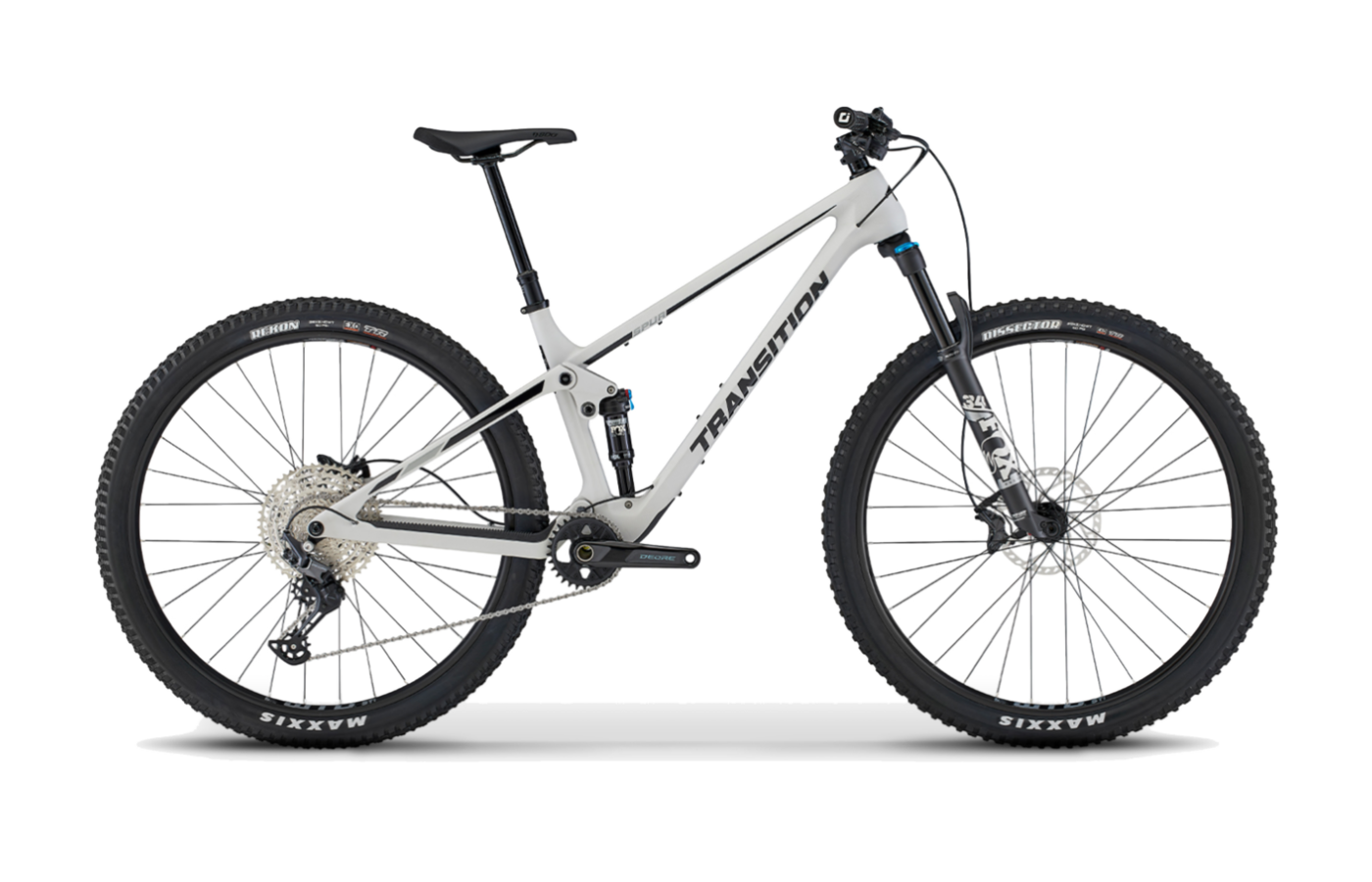
Spur
The lighter-side benchmark — a 25-lb pedaling platform for riders who find both the Tallboy and Top Fuel a touch overbuilt. If your priority is climbing efficiency over descending composure, the Spur is the call.
Compare →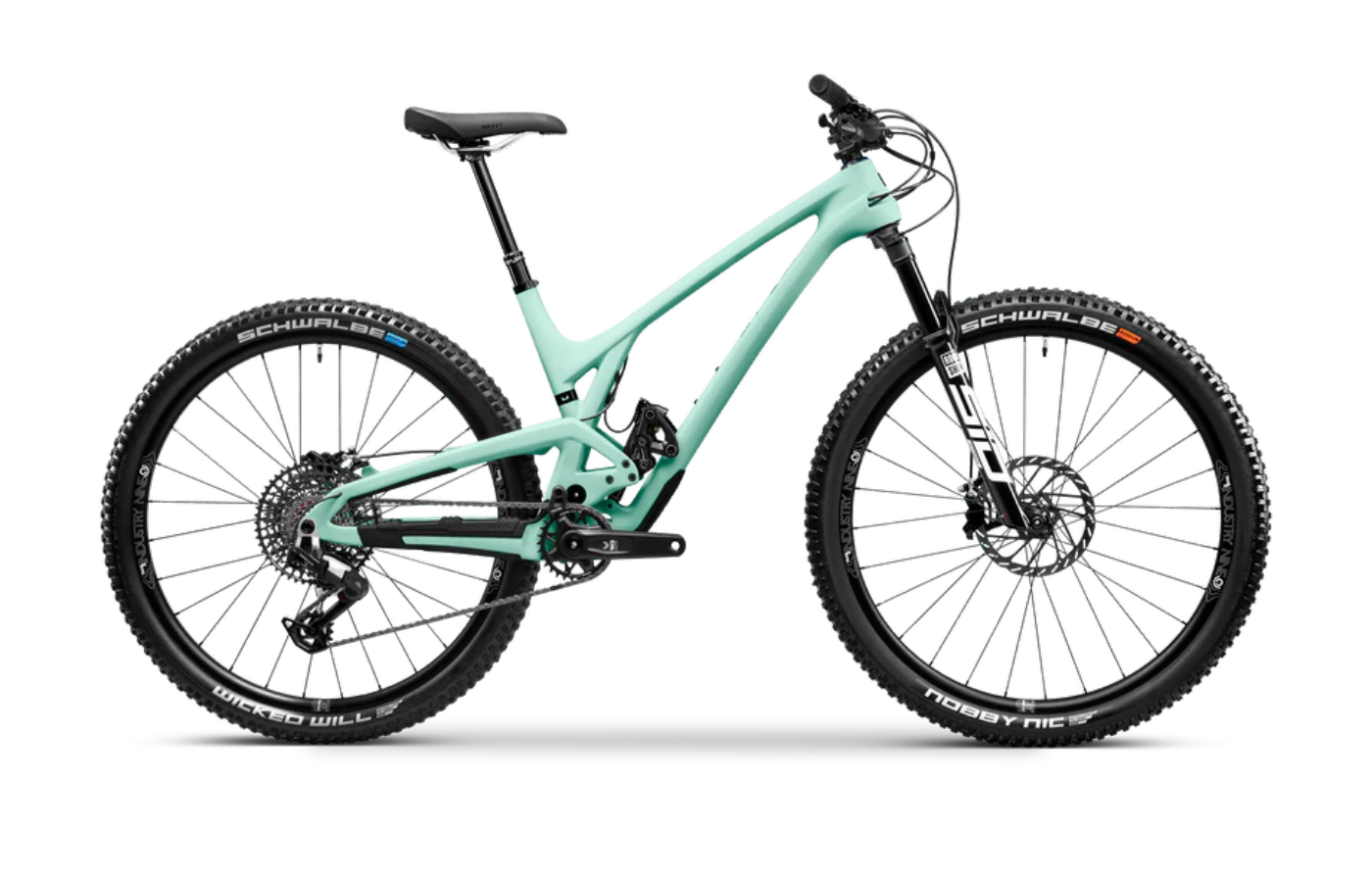
Following
If you're drawn to the Tallboy's 'downhiller's XC' brief but want something more poppy and playful, the Following's unique suspension character is what reviewers reach for. Aggressive short-travel with a different personality.
Compare →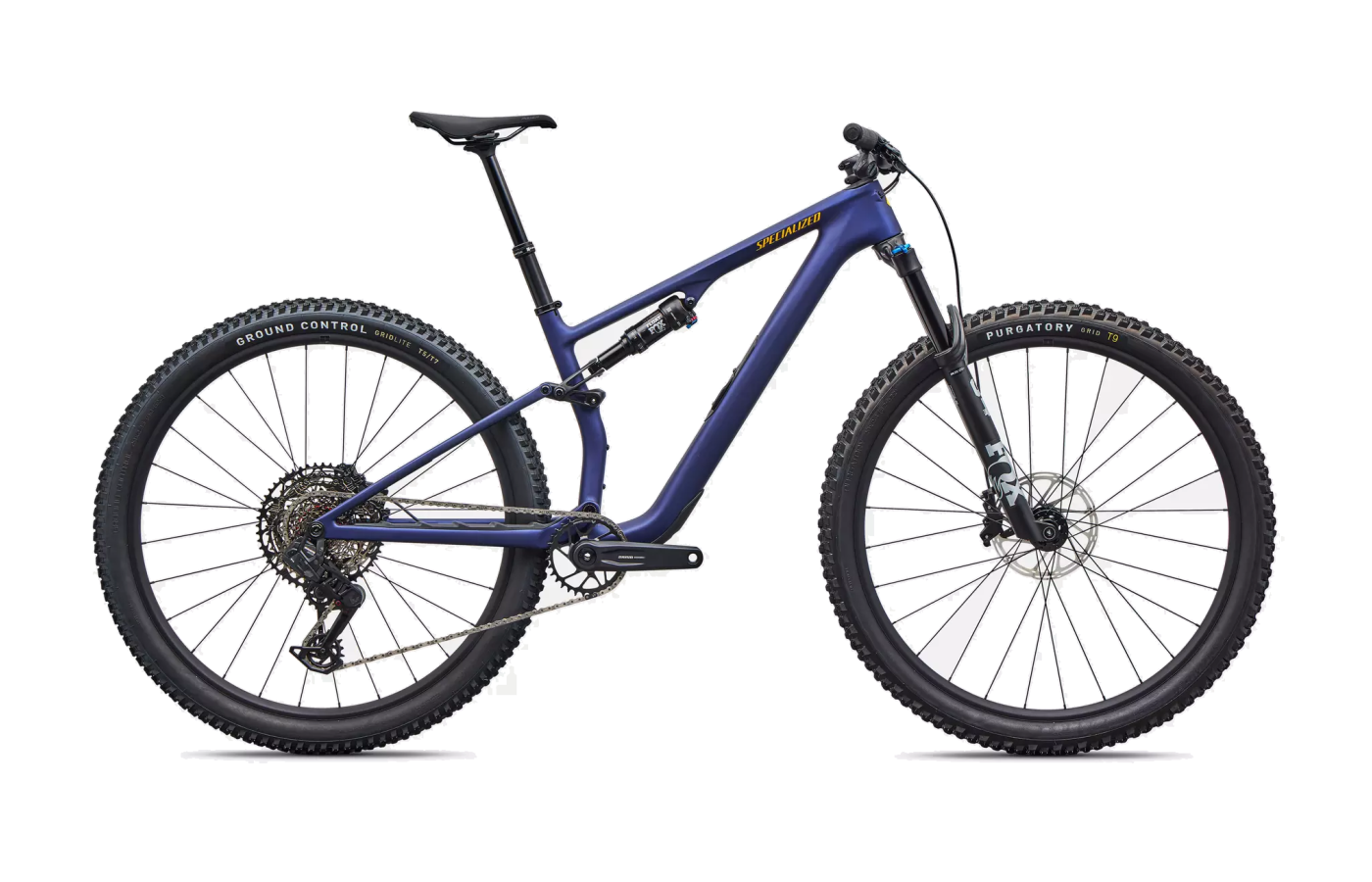
Epic Evo
Lighter and more XC-leaning than either bike here, but still ships with a 130 mm fork. The right pick if you race the occasional marathon and want a frame that rewards spinning over slugging.
Compare →