Specialized RockhoppervsTrek Roscoe

The Trek Roscoe Gen 4 is a burly trail brawler that makes the Specialized Rockhopper feel like a vintage XC racer by comparison. If your goals involve technical descents and clearing jumps, the Roscoe is the clear victor, though the Rockhopper remains a valid pick for riders who value low weight and efficiency on mellow fire roads.

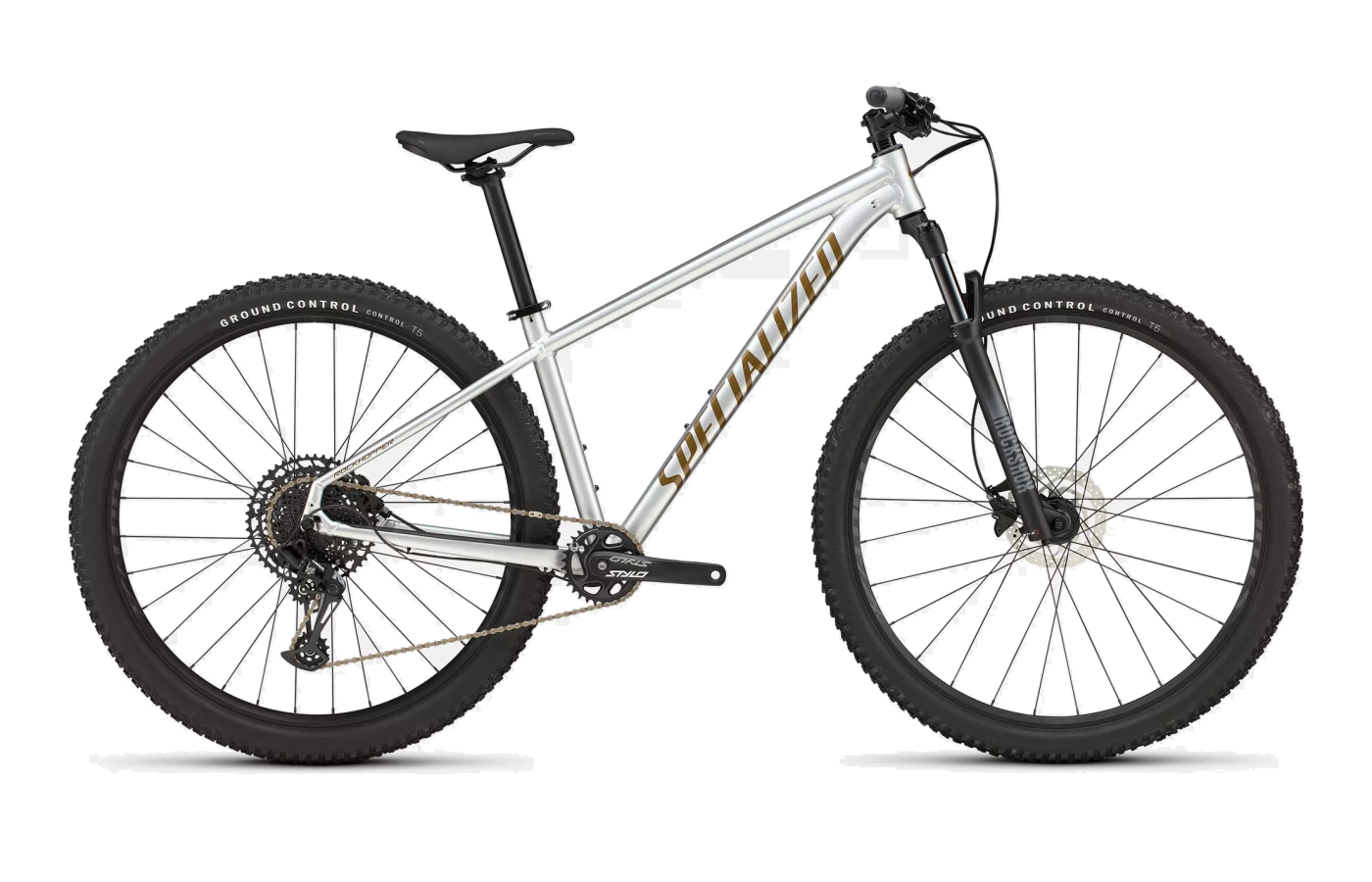
Specialized Rockhopper
Image pending

Overview

These bikes inhabit two different worlds of hardtail design. The Specialized Rockhopper is a classic cross-country mile-muncher, using a lightweight A1 Premium aluminum frame and geometry that encourages high-cadence pedaling and agile, low-speed handling. It is a bike designed for the mass market, covering everything from the $500 base model to the $1,300 Expert build, yet it sticks to traditional standards like quick-release axles and narrower tire clearances that keep it firmly in the light-duty category. In contrast, the Gen 4 Trek Roscoe has abandoned its entry-level roots to become a legitimate hardcore hardtail. It uses Trek’s high-end Alpha Platinum Aluminum and features a design language usually reserved for enduro rigs, including a massive 150mm travel fork on the Roscoe 8 and internal frame storage. While the Rockhopper aims for efficiency on green and blue trails, the Roscoe is built to handle technical jungles where a rider needs stability, high-engagement hubs, and 4-piston braking power to stay in control.

Ride and handling

Riding the Rockhopper feels like pilotng a scalpel; it is zippy and direct, rewarding the rider on steep, smooth climbs. However, reviewers frequently describe its handling as "nervous" or "twitchy" once the speedometer climbs or the rocks get bigger. The 68.5-degree head angle and short travel forks—often just 80mm to 100mm depending on size—mean the front end can feel overwhelmed. You’ll find yourself making constant micro-corrections to stay on line, and the lack of a stock dropper post on most builds means the saddle is often in the way when things get steep. The Roscoe Gen 4 behaves more like a sledgehammer that can still dance. With a slack 65-degree head angle and a beefy Fox 36 fork on the 8 build, it provides a level of front-end stiffness the Rockhopper simply cannot match. The massive 200mm TransX dropper post allows the seat to essentially disappear, letting you use your legs as suspension. While the Rockhopper might buck you like a pogo stick on repeated hits, the Roscoe’s high-volume 2.5-inch tires and stable wheelbase soak up chatter and provide "insane" stopping power through its 4-piston Deore brakes. Climbing is the only area where the Rockhopper holds a distinct advantage, primarily due to its 13kg-ish weight. It surges uphill with an urgency the 32.5lb Roscoe lacks. That said, the Roscoe’s 76-degree seat tube angle is actually more progressive than the Rockhopper’s 73.5-degree perch, keeping you better centered over the pedals on technical, punchy inclines. The Rockhopper is the choice for a long day of pedaling mellow trails, but the Roscoe is the bike you want if you intend to actually play on the features you encounter.

Specifications

The spec gap between these two is most visible in the wheels and axles. The Rockhopper range is hampered by 135mm quick-release rear spacing and a straight 1-1/8" head tube on many models, which essentially kills any high-end upgrade path for forks or wheels. Specialized also uses "RxTune" suspension that varies travel by size, but even the air-sprung Judy on the Expert build is described by testers as "agricultural" compared to more modern units. It’s a bike built to be ridden as-is, rather than a project for future upgrades. Trek has gone the opposite route, loading the Roscoe 8 with enthusiast-grade hardware. The Rapid Drive 108 hub provides nearly instantaneous engagement, a luxury usually reserved for aftermarket wheelsets. While the Rockhopper Expert uses a mix of SRAM SX and NX Eagle, the Roscoe sticks to the reliable Shimano Deore M6100 1x12 workhorse. The most disappointing part of the Roscoe’s spec is the cockpit—Trek uses the same low-quality stem found on their $500 Marlin bikes—but the core components like the 150mm Fox 36 fork and 4-piston brakes are massive performance wins over the Specialized offerings. Value is subjective here. The Rockhopper Elite is often called the "sweet spot" of its range for under $1,000, but it remains a light-duty XC tool. The Roscoe 8 commands a higher $2,400 price tag, but it justifies that with a frame and suspension package that can actually survive aggressive trail riding and enduro-style terrain. For a rider who plans to progress in the sport, the Roscoe’s Boost thru-axles and tapered head tube make it a much better long-term investment.

RockhopperRoscoe
FRAMESET
FrameSpecialized A1 Premium Butted Alloy, zero-stack head tube, internal cable routing, 135x9mm forged dropouts, chainstay-mounted disc brake, replaceable alloy derailleur hanger, stealth rack mounts, dropper post compatible
ForkSR Suntour XCM 27.5/29, 30mm stanchions, Rx Tune, coil spring, QR, 80/90/100mm travel (size-specific), 42mm offset
Rear shock
GROUPSET
Shift leversShimano Altus, RapidFire Plus, 9-speed
Front derailleurShimano Altus FD-M2020, 2-speed
Rear derailleurShimano Altus RD-M2000, 9-speed, Shadow Design
CassetteSunRace, 9-speed, 11-36T
ChainKMC X9EPT, 9-speed, anti-corrosion coating w/ reusable Missing Link
CranksetStout 2x, forged alloy
Bottom bracketSquare-tapered, 73mm, internal bearings, 122.5mm spindle
Front brakeShimano BR-MT200 hydraulic disc
Rear brakeShimano BR-MT200 hydraulic disc
WHEELSET
Front wheelSpecialized alloy, disc only, double-wall, 25mm inner width, 32h; Formula 6-bolt disc, 100x9mm, quick-release, 32h; Stainless, 14g
Rear wheelSpecialized alloy, disc only, double-wall, 25mm inner width, 32h; Formula SP-2125, 6-bolt freehub disc, 135x9mm, quick-release; Stainless, 14g
Front tireFast Trak Sport
Rear tireFast Trak Sport
COCKPIT
StemStout 3D-forged alloy, 31.8mm, 6-degree rise
HandlebarsAlloy Mini Rise, 9-degree backsweep, 15mm rise, 31.8mm
SaddleBridge Sport, steel rails, 155/143mm
SeatpostAlloy, 2-bolt clamp, 30.9mm
Grips/TapeSpecialized Trail Grips, lock-on

Geometry and fit comparison

The geometry charts reveal two entirely different riding positions. On a size Large, the Rockhopper’s 445mm reach and 68.5-degree head angle are standard for traditional XC, putting the rider in a stretched, forward-leaning position. This is great for keeping the front wheel down on climbs but can feel like you’re being pitched over the bars on steep descents. The 62mm bottom bracket drop is one of the Rockhopper’s best traits, helping the rider feel "in" the bike rather than perched on top, which mitigates some of that steep-angle twitchiness. The Roscoe Gen 4 moves to a modern "winch and plummet" geometry. Its 470mm reach and 65-degree head angle create a much longer, more stable wheelbase that resists the urge to tuck the front wheel in high-speed corners. Perhaps most importantly, the Roscoe’s seat tube angle is 2.5 degrees steeper than the Rockhopper’s. On a hardtail, a steep seat angle is vital because as the fork compresses, the angles get even steeper; the Roscoe starts from a better position, ensuring you aren't hanging off the back of the bike when pedaling uphill. Fit-wise, the Rockhopper is more accommodating for riders who want an upright, relaxed XC stance for casual riding. Specialized’s overlapping wheel sizes (27.5" or 29" on Medium frames) allow shorter riders to find a better fit. The Roscoe, with its 40mm rise bars and aggressive reach, favors a rider with a more active style. The massive dropper post insertion depth on the Roscoe is the final geometry win, allowing the saddle to drop far lower than the Rockhopper’s seat tube design permits, which is a game-changer for technical maneuverability.

vs
FIT GEORockhopperRoscoe
Stack616
Reach425
Top tube608
Headtube length95
Standover height695
Seat tube length400
HANDLINGRockhopperRoscoe
Headtube angle68.5
Seat tube angle73.5
BB height310
BB drop62
Trail97
Offset42
Front center696
Wheelbase1128
Chainstay length440

Who each one is for

Specialized Rockhopper

The Rockhopper Expert is for the rider who spends their weekends on rolling hills, gravel paths, and well-groomed singletrack. It is the ideal choice if you prioritize climbing speed and overall bike weight over technical capability. If your local trails involve more pedaling than plummeting, and you want a bike that doubles as an efficient commuter, the Rockhopper’s XC efficiency is hard to beat.

Trek Roscoe

The Roscoe 8 is for the rider who wants a hardcore hardtail that can keep up with full-suspension bikes on technical descents. It is built for someone who values stability, huge braking power, and a seat that gets completely out of the way. If you are learning to jump or frequenting trails with rocks, roots, and steep chutes, the Roscoe provides the confidence and modern standards you need to progress.

Other bikes to consider

Specialized Chisel
Specialized Chisel
Rocky Mountain Growler
Trek Marlin
Trek Marlin