Stumpjumper Evo
vsSentinel
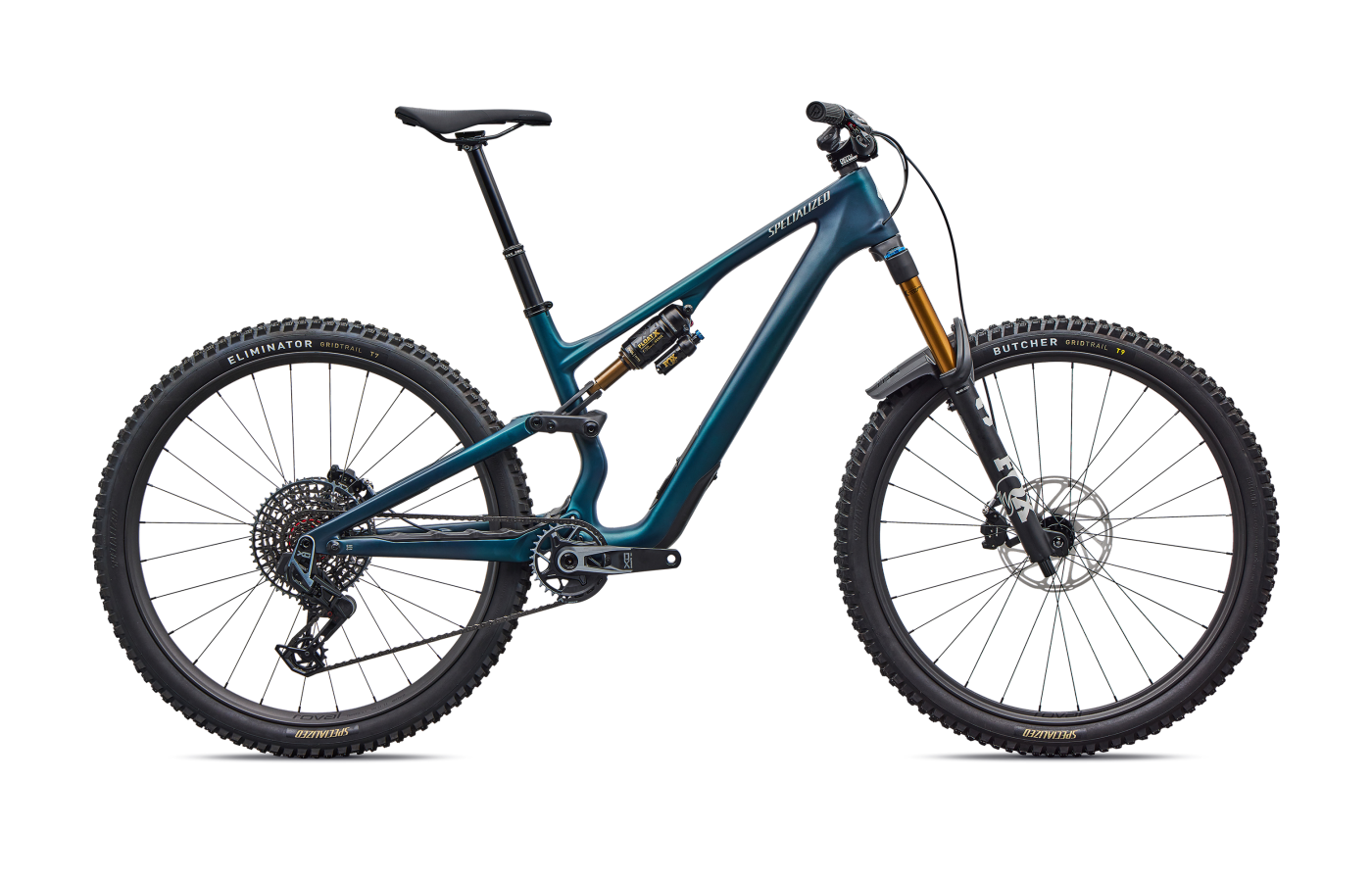
Two 150-class trail bikes, two opposite ride personalities.
The Stumpjumper Evo is the proprietary, plush, infinitely tweakable do-everything tool. The Sentinel is the stiff, communicative, mechanic-friendly shredder.
Stumpjumper Evo
- GENIE shock is genuinely different — hyper-supple early travel with a hard end-stroke ramp; reviewers couldn't bottom it out even on huck-to-flats.
- Adjustable across the board — headset cups give 63°/64.5°/65.5° HTA, flip chip swaps mullet, six size points (S1–S6) cover a wider rider range.
- Lighter at every tier — EVO Pro is 14.05 kg vs the Sentinel Carbon XO AXS at 15.07 kg, roughly 1 kg saved at the same price.
- Carbon frames are wireless-only — no Shimano mechanical, no Campy, no flexibility.
- Proprietary GENIE shock means you're locked into one specific Fox unit; aftermarket swap loses the kinematics it was tuned around.
Sentinel
- Stiff, communicative chassis — the new one-piece rocker makes the V3 'sharper and snappier out of corners' than the V2; rewards an active rider.
- Standard parts everywhere — threaded BB, UDH, non-proprietary routing, mechanical or wireless drivetrains on every build.
- Cheaper at the entry tiers — $3,499 Alloy Deore vs the Stumpy's $3,999 Alloy Comp; the $4,599 Alloy XT punches well above its tag.
- Stock RockShox Super Deluxe Ultimate compression tune is widely panned as too light — budget for a re-tune.
- 350 mm BB is great for pedal clearance but feels less 'locked-in' than the lower Stumpjumper in fast, leaned-over corners.
Editor’s analysis
These are both 145–150 mm trail bikes built around 160 mm forks — but they want completely different things from the rider.
On paper they overlap almost perfectly. The Specialized Stumpjumper Evo runs 145 mm rear / 160 mm front, the Transition Sentinel runs 150 mm rear / 160 mm front. Both come in carbon and alloy, both have in-frame storage, both ship with SRAM Transmission or Shimano XT/XTR options at the upper tiers, both are pitched as one-bike quivers. But spend a session on each and the philosophies split immediately.
The Stumpjumper Evo is the engineering play. Its proprietary Fox-built GENIE rear shock is hyper-supple in the first 70% of the stroke and ramps hard at the end — reviewers consistently describe it as 'glued to the ground' with a near-coil feel, and Specialized claims a 57% traction increase. Add the adjustable headset cups (63°, 64.5°, or 65.5° HTA), the flip chip, and six size points (S1–S6), and you get a bike one reviewer called a 'mild-mannered mile muncher to a bikepark-friendly ripper' depending on how you set it up. The cost: wireless-only drivetrains on every carbon build, and a shock you can't easily replace without losing the leverage curve it was designed around.
The Sentinel V3 is the opposite bet — refined, not redefined. Transition stiffened the frame with a one-piece rocker, steepened the head angle to a 'sportier' 64°, raised the BB to roughly 350 mm, and added size-specific chainstays (442 mm at MD, 448 mm at LG/XL). The result is a bike multiple reviewers called 'BMX-ish,' 'poppy,' and 'energetic' — it rewards an active pilot who pumps and jumps over one who plows. Standard parts everywhere (threaded BB, UDH, non-proprietary routing, mechanical-compatible across the line), a lifetime warranty that transfers to second owners on crash replacement, and significantly cheaper entry-tier builds. The catch: nearly every reviewer flagged the stock RockShox Super Deluxe Ultimate compression tune as 'bizarrely light,' a real shock-tuning expense waiting for aggressive riders.
Put another way: the Stumpjumper Evo is the bike for the rider who wants the platform to do the thinking. The Sentinel is for the rider who wants to do it themselves — and prefers a frame they can keep alive with parts from the Transition website ten years from now.
Where the builds differ.
Comparing our editor's-pick builds side-by-side. Winners highlighted row-by-row — lower price and weight, and the better-spec component, each mark a point.
Build variants & pricing
Both lineups span $3.5k–$11k across alloy and carbon. The Sentinel starts $500 cheaper and tops out $1.3k under the S-Works.
Editor's picks here are the EVO Pro and Carbon XO AXS — both $7,999, both X0 AXS Transmission, both Fox Float 36 Factory / Float X Factory. As close to apples-to-apples as this comparison gets. Prices are current US MSRP.
How they fit, how they steer.
S3 vs MD — the fit-picked sizes for a 5'8" rider on each. The Sentinel is 5 mm longer in reach, 6 mm shorter in stack, half a degree slacker up front, and sits on a 24 mm longer wheelbase. The seat tube angle is 1.9° steeper — markedly more upright on climbs.
Which size should I buy?
Specialized uses S-sizing (S1–S6) and offers six size points; Transition uses XS–XXL. Both ranges overlap in the middle but Stumpjumper goes one size smaller at the bottom.
→These are starting points. Flexibility, riding style, and preferred position all shift the answer — if you’re between sizes, a professional fit beats a chart.
What the magazines said.
Published reviews from trusted cycling outlets. Click through for the full write-up.
Which one should you buy?
If you want one bike that adapts to everything via tools, get the Stumpjumper Evo. If you want a stiff, lively shredder built on standard parts, get the Sentinel.
Stumpjumper Evo
If you'll happily fiddle with headset cups, GENIE volume bands, and a flip chip to dial in the ride, and you prize a planted, ground-hugging feel over a poppy one — the Stumpjumper Evo is the most adjustable trail platform on the market. The wireless-only restriction is the cost of admission.
Sentinel
If you ride trails like a BMX bike — pumping, jumping, popping — and you want a stiff frame built on standard parts you can keep running for years, the Sentinel is the better tool. Plan on a custom shock tune to unlock its full potential.
Questions buyers actually ask.
Short answers to the things we get emailed about most often.
01Which one descends better?
Different kinds of better. The Stumpjumper Evo is the more forgiving, ground-hugging descender — the GENIE shock keeps the rear wheel planted on rough rocks and roots, and the adjustable HTA can take it down to 63° for steeper terrain. Reviewers across the board describe it as 'glued to the ground' and hard to bottom out.
The Sentinel descends like a stiffer, more communicative weapon. Its 64° HTA, longer wheelbase (1237 mm vs 1213 mm at the compared sizes), and stiffer one-piece rocker make it 'nigh-unflappable' at speed. But the stock RockShox Super Deluxe Ultimate tune is widely flagged as too light on compression — you may need a custom re-tune to get the chassis composure the frame deserves.
02Which climbs better?
The Sentinel has the steeper effective seat tube angle — 78.9° at MD vs 77° on the S3 Stumpjumper — which puts the rider in a more upright, forward position on long climbs. Combined with the higher BB, it earns reviewer praise for technical desert climbing where pedal strikes matter.
The Stumpjumper Evo climbs differently — its supple GENIE shock generates exceptional rear-wheel traction on rooty, rocky climbs (Specialized claims 57% more), and reviewers consistently note it 'cleans technical climbs other bikes can't.' On smooth fire roads the Sentinel's firmer platform feels more efficient; on chunky technical climbs the Stumpy's traction wins.
03How adjustable is each frame?
Stumpjumper Evo: three head-tube angles via swappable headset cups (63°, 64.5°, 65.5°), a flip chip for 27.5 rear (mullet) compatibility, and six S-sizes (S1–S6). Multiple reviewers describe it as 'mile muncher to bikepark ripper' depending on setup.
Sentinel V3: flip chip for mullet conversion (lowers BB by 6 mm and slackens HTA by 0.4° in High setting) and a 65 mm stroke shock swap to bump rear travel to 160 mm. No HTA cups. Six sizes (XS–XXL). Less geo flexibility, more drivetrain flexibility.
04What's the deal with the GENIE shock?
Specialized's GENIE is a Fox-built dual-chamber air shock. The first 70% of travel uses both chambers for a high-volume, supple, near-coil feel; past 70%, a 'GENIE band' closes off the outer chamber and the ramp-up gets aggressive enough that reviewers struggled to bottom it out on huck-to-flats.
The upside is the unique blend of small-bump compliance and bottom-out resistance. The downside is two-fold: it's proprietary (you can't swap to a standard shock without losing the curve the frame was designed around), and several reviewers found the stock setup needed adding GENIE bands to get enough mid-stroke support for aggressive riding.
05Is the Sentinel really wireless-friendly or do I need AXS?
The Sentinel is drivetrain-agnostic — Transition routes the frame for both mechanical and wireless. You can buy the Carbon XT Di2, Carbon XT (mechanical), Carbon Eagle 90 (mechanical SRAM), Carbon Deore (mechanical), Alloy XT, and so on.
The Stumpjumper Evo carbon frames are wireless-only — no cable stops for mechanical derailleurs. Only the alloy frame retains mechanical routing. If you want a Shimano XT mechanical carbon trail bike, the Sentinel is the only option here.
06Which is more 'mechanic-friendly' for long-term ownership?
The Sentinel, by a clear margin. It uses a 73 mm threaded BB, SRAM UDH, standard 44/56 mm headset, non-proprietary cable routing, and a stock Fox or RockShox shock you can swap or service anywhere. Transition stocks bearings and hardware on their own site.
The Stumpjumper Evo also uses a threaded BB and UDH, but the proprietary GENIE shock and the wireless-only carbon routing tie you more tightly to Specialized's ecosystem. Both have lifetime frame warranties; Specialized adds lifetime pivot bearings to the original owner.
07What about weight?
At equivalent tier-matched builds (EVO Pro vs Carbon XO AXS, both $7,999, both X0 AXS Transmission), the Stumpjumper Evo Pro is 14.05 kg and the Sentinel Carbon XO AXS is 15.07 kg — a ~1 kg gap in the Stumpjumper's favor. At the carbon XT-tier the gap holds: Stumpy 15 EVO Expert (XT Di2) at 14.48 kg vs Sentinel Carbon XT at 14.92 kg.
At the alloy entry tier, weights are roughly even — Stumpjumper Alloy Comp at 16.55 kg vs Sentinel Alloy Deore at 16.51 kg. Reviewers note the Sentinel 'rides lighter than the scale suggests' thanks to the stiff chassis and steep seat angle, but on a sustained carbon-build climb the Stumpjumper's lower weight is real.
08Which has better tire clearance?
The Sentinel has roughly 63.5 mm of measured rear clearance per the database, fitting up to a true 2.5" tire. Reviewers did note clearance for a 2.4" Maxxis DHR II is 'somewhat tight' for muddy conditions — there's room, but not a lot.
The Stumpjumper Evo ships with 29 x 2.4" Butcher front / Eliminator rear and is officially rated for 2.4" tires. Stated frame clearance isn't published in the same way, so we'd treat them as roughly comparable in practice for typical 2.4–2.5" trail rubber. Neither is a plus-tire bike.
Similar bikes
If your priorities don’t map cleanly onto either of these, one of these adjacent bikes probably fits better.
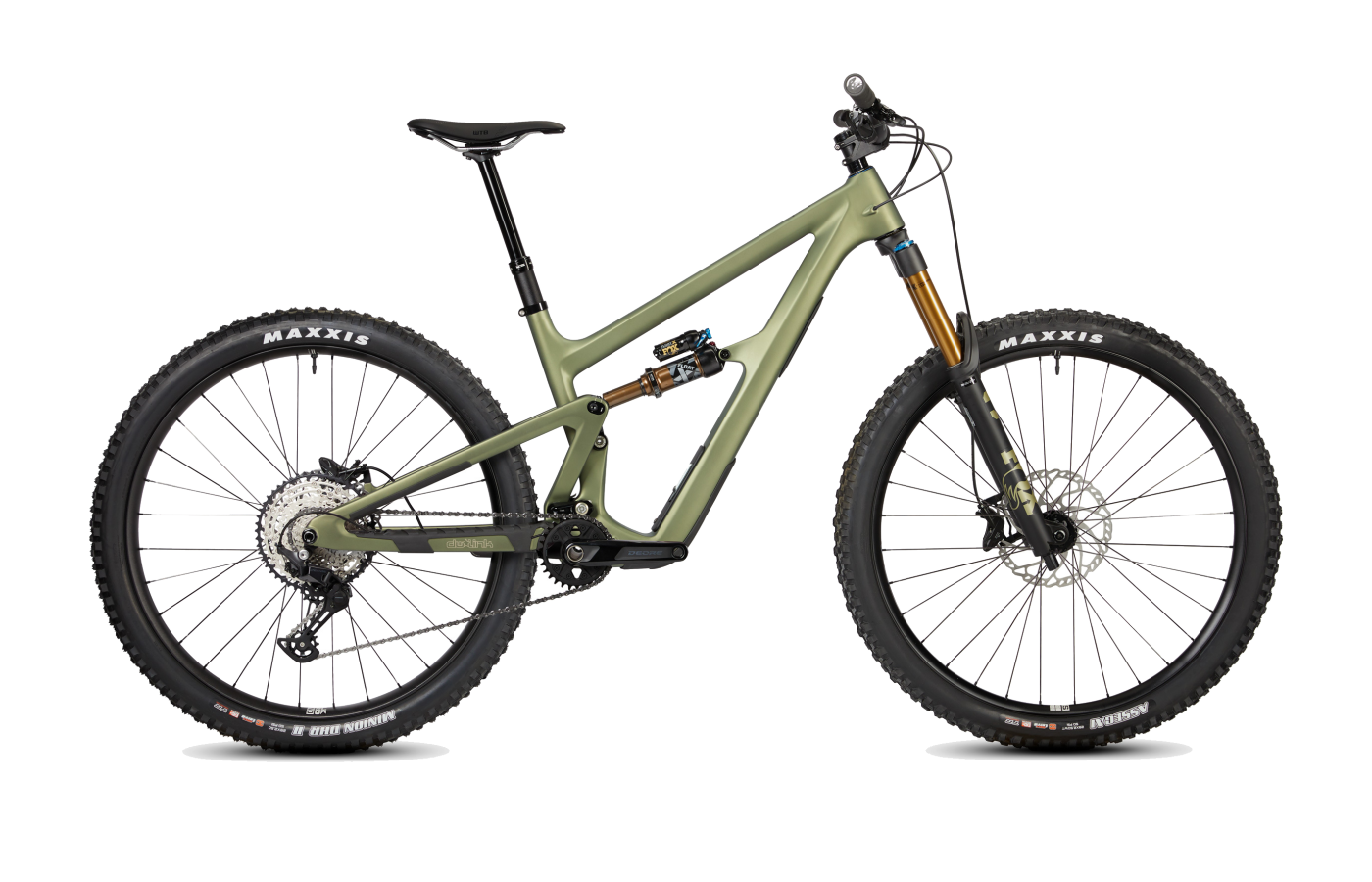
Ripmo
The Ripmo is the traction-first counter to both — DW-link suspension that climbs like a tractor and a plusher overall feel than the Sentinel without the proprietary lock-in of the Stumpjumper.
Compare →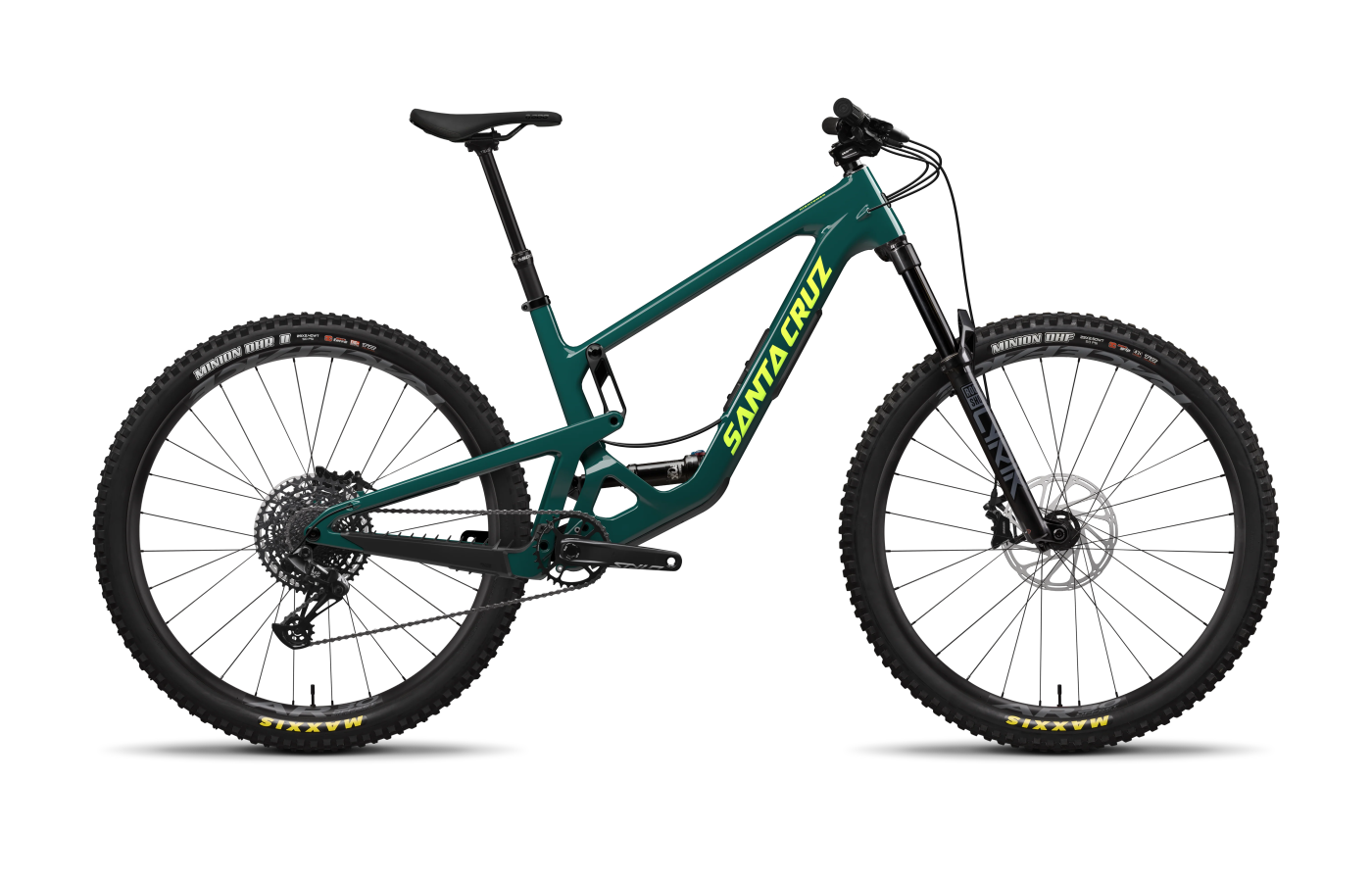
Hightower
Lower BB, lower-slung VPP feel, and Santa Cruz's lifetime bearing warranty. The Hightower V4 is the pick if the Sentinel feels too tall and the Stumpy feels too proprietary.
Compare →Spire
Transition's longer-travel Spire (170 mm rear) is the bike for riders who looked at the Sentinel V3 and wished it was still the V2 — the freight-train plow stance the new Sentinel deliberately moved away from.
Compare →