Stumpjumper Evo
vsFuel EX
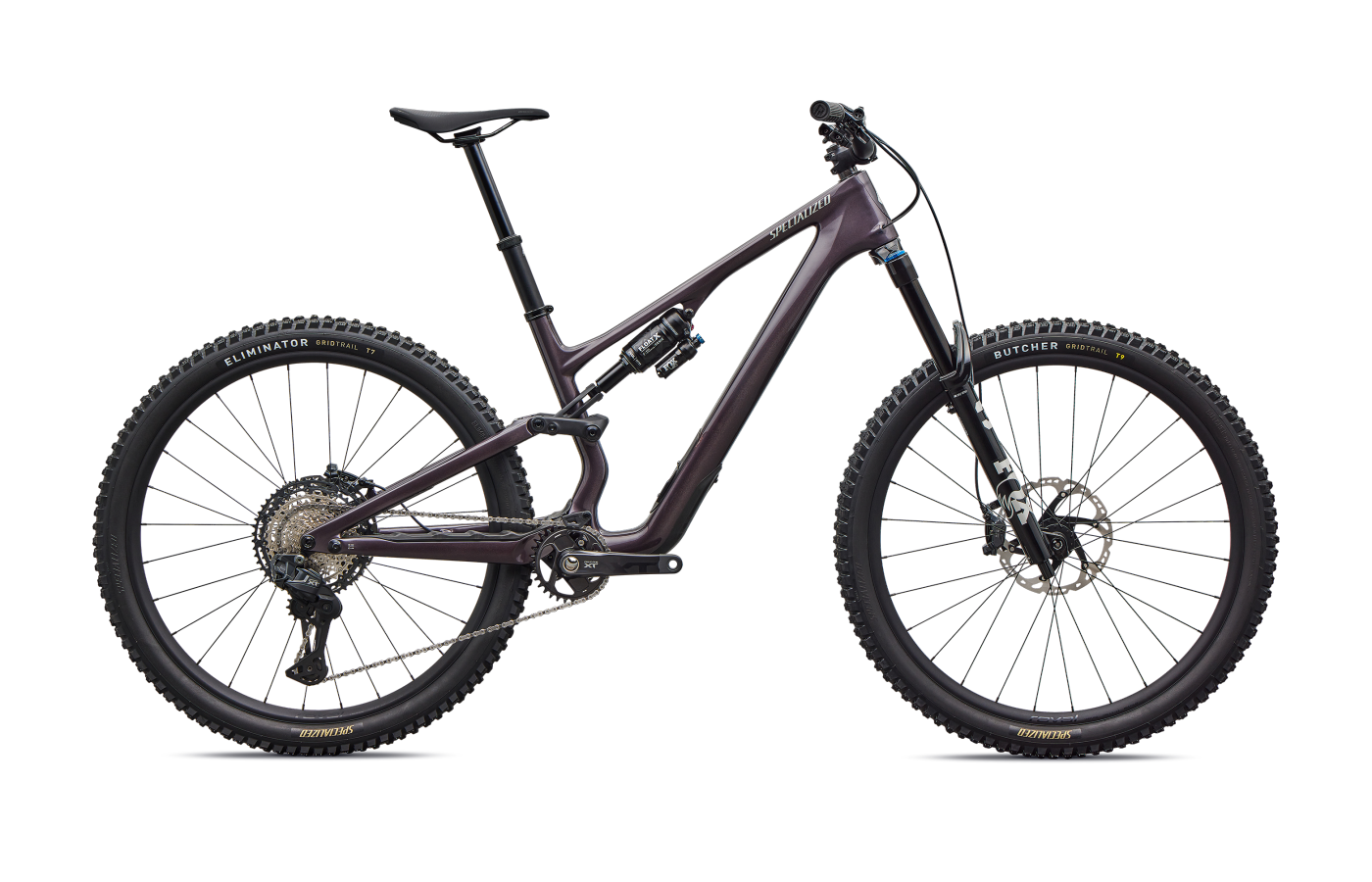
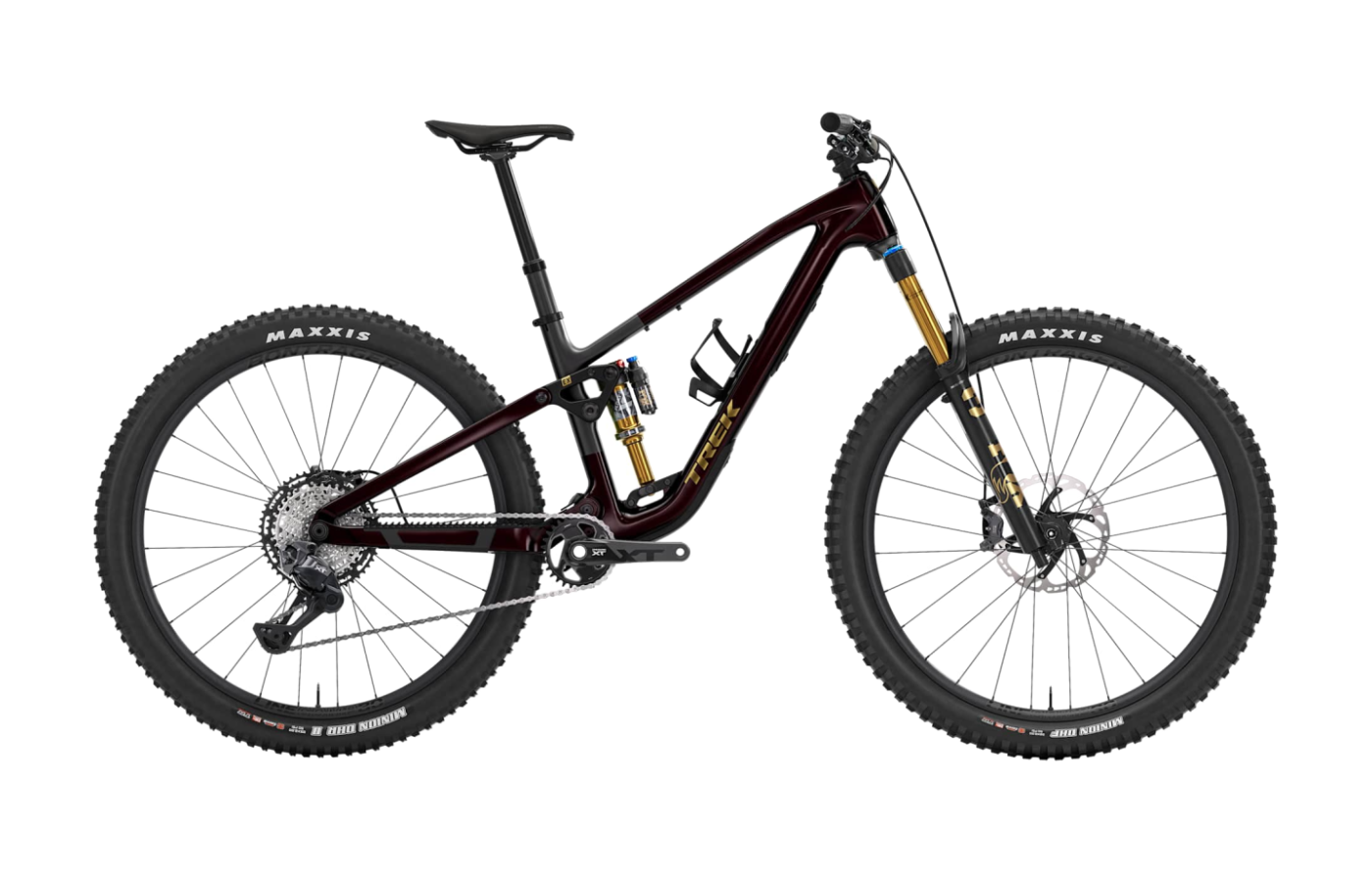
Same travel, opposite philosophies.
The Stumpjumper Evo is a flickable carbon trail bike with a 160 mm fork and proprietary GENIE shock. The Fuel EX is a heavyweight modular platform you can rebuild as enduro.
Stumpjumper Evo
- Lighter for the travel — 14.48 kg on the carbon Expert vs 15.08 kg on the comparable Fuel EX 9.8.
- GENIE shock delivers coil-like initial stroke and near-unbottomable end-stroke ramp.
- More aggressive fork — 160 mm Fox 36 stock (vs 150 mm on the Trek) tilts the Evo toward enduro terrain.
- Carbon frames are wireless-only — no mechanical Shimano option above the alloy Comp.
- Proprietary GENIE shock concerns some buyers about long-term parts availability.
Fuel EX
- Modular platform — same frame becomes the 150 mm MX mullet or 160 mm LX enduro via swappable links.
- Anchored at speed — mass plus ABP suspension keeps the chassis level under heavy braking on rough descents.
- Standardized parts — ZS49/ZS56 headset, threaded BB, 34.9 mm seatpost, no proprietary suspension.
- Heavy — 15.08 kg on the carbon 9.8 XT Di2; 17 kg on the alloy 8 build.
- Conversion to MX or LX requires buying a new linkage and shock mount, not a flip-chip.
Editor’s analysis
Both run 145 mm of rear travel. Beyond that, they barely agree on what a trail bike is supposed to feel like.
Specialized went all-in on suspension trickery for the Stumpjumper Evo. The headline is the Fox-built GENIE shock, a dual-chamber air spring that runs supple through the first 70% of stroke and then walls off the larger air can to ramp hard at bottom-out. Reviewers describe the rear end as coil-like in the early stroke yet impossible to pack out — Flow Mountain Bike said they could not bottom it on hucks-to-flat. Pair that with a 160 mm Fox 36 up front (the Evo runs longer travel than the standard Stumpy), a FACT 11m carbon frame, and adjustable headset cups, and you get a trail bike that punches into enduro territory without leaving the mid-travel weight class.
Trek went the opposite direction. The Fuel EX Gen 7 is the same chassis as the Fuel MX (mullet, 150 mm) and Fuel LX (160 mm enduro) — one frame, three personalities, sold separately as link-and-shock-mount upgrade kits. As shipped, the EX gets 145 mm rear and a 150 mm fork. The 9.8 XT Di2 we picked weighs 15.08 kg in size M; the alloy 8 build pushes 17 kg. Reviewers consistently used words like "anchored," "Sherman tank," and "unshakeably planted." Trek's Active Braking Pivot keeps the rear active under braking, and the steep effective seat angle (78.6° on size S, 77.4° on L) keeps you locked over the bottom bracket on climbs.
On the trail, the gap is character, not capability. The Stumpjumper Evo is the lighter, livelier bike — the carbon Expert is roughly 600 g under the comparable Fuel EX, and the GENIE-plus-160 mm-fork combo rewards a rider who pumps, hops, and picks lines. The Fuel EX flatters a different style: pick a direction, plant the wheels, let weight and ABP do the work. Singletracks and Flow both noted the Trek climbs technical pitches better than its mass suggests, but lighter rivals clearly accelerate quicker out of corners.
Two more things worth flagging. First, Trek's modularity is real but expensive — converting EX to LX requires a new linkage, shock mount, and sometimes a fork rebuild, not a flip-chip. Second, all carbon Stumpjumper Evos are wireless-only; if you want mechanical Shimano, your only option on the Specialized side is the alloy Comp.
Where the builds differ.
Comparing our editor's-pick builds side-by-side. Winners highlighted row-by-row — lower price and weight, and the better-spec component, each mark a point.
Build variants & pricing
Both lineups span roughly $4k–$8.5k. The Fuel EX dips lower on the alloy end ($2.3k Gen 6 leftovers, $2.9k Gen 7) and tops out below the S-Works.
Prices are current US MSRP. The Stumpjumper Evo carbon builds are SRAM AXS / wireless-only — Shimano fans get exactly one option, the XT Di2 Expert shown here. Trek's lineup includes Gen 6 alloy carryovers under $3k that are not in the Stumpjumper Evo's range.
How they fit, how they steer.
Stumpjumper Evo at S3, Fuel EX at M — the fit-picked sizes for a 5'8" rider on each. Both run a 64.5° head angle, but the Trek's reach is 10 mm longer (460 vs 450 mm) and chainstays are 2 mm longer (437 vs 435 mm) — the Trek is the more stretched-out, planted cockpit.
Which size should I buy?
Specialized uses S-Sizing (S1–S6) so size is chosen by reach and wheelbase, not seat tube. Trek runs traditional S/M/L/XL/XXL.
→These are starting points. Flexibility, riding style, and preferred position all shift the answer — if you’re between sizes, a professional fit beats a chart.
What the magazines said.
Published reviews from trusted cycling outlets. Click through for the full write-up.
Which one should you buy?
If you want the lighter, more agile bike that already leans enduro, get the Stumpjumper Evo. If you want one frame that can become three different bikes — and you don't mind the weight — get the Fuel EX.
Stumpjumper Evo
If your trails reward pumping, popping, and picking surgical lines through rocks, the Evo's lighter chassis and GENIE shock are a real edge. The 160 mm fork pushes it into bike-park territory without dragging the rest of the bike along for the ride.
Fuel EX
If you ride blind, charge through chunder, and treat every descent like a mini-enduro stage, the Fuel EX's mass and ABP suspension feel calmer at speed than anything in this travel bracket. The platform modularity means it can grow into a real 160 mm enduro bike later.
Questions buyers actually ask.
Short answers to the things we get emailed about most often.
01Which is lighter?
The Stumpjumper Evo, by a meaningful margin. Tier-matched, the carbon 15 EVO Expert (Shimano XT Di2) weighs 14.48 kg in the medium-equivalent size, while the Fuel EX 9.8 XT Di2 comes in at 15.08 kg in size M — about 600 g.
Drop down to the alloy builds and the gap widens dramatically. The alloy 15 EVO Comp Alloy is 16.55 kg; the alloy Fuel EX 8 is 16.89 kg, and reviewers measured production samples closer to 17 kg. For long pedaling days, the Evo's the easier bike to live with.
02Which has more travel?
Both run 145 mm of rear travel. The fork is where they diverge — the Stumpjumper Evo ships with a 160 mm Fox 36 on sizes S2–S6 (150 mm on S1), while the Fuel EX runs a 150 mm fork stock.
That 10 mm fork difference matters. The Evo runs slacker dynamic geometry, sits the rider further back, and absorbs bigger hits up front. If you want the Trek to match, you'll need to step up to the Fuel LX (160 mm front and rear) — a separate model that uses the same frame but a different linkage and shock mount.
03How does the GENIE shock actually work?
Specialized partnered with Fox to build a dual-chamber air spring. For the first ~70% of stroke, the shock breathes into a large outer air sleeve, giving a supple, almost coil-like initial feel. Past that point, an internal "GENIE band" closes off the outer chamber, drastically shrinking the air volume and producing a sharp end-stroke ramp.
The result, per Flow Mountain Bike: "never able to hit full travel despite all of my awful line choices and ugly hucks-to-flat." Some reviewers found the stock setup a touch too soft mid-stroke for aggressive riding, but Specialized ships extra GENIE bands that let you firm up the outer chamber's volume — up to four bands, each adding mid-stroke support.
04Can I convert the Fuel EX into a longer-travel bike?
Yes — that's the platform pitch. The same frame ships as the Fuel EX (145 mm), Fuel MX (150 mm mullet), and Fuel LX (160 mm enduro). To convert, you swap the rocker link and the lower shock mount.
It is not a flip-chip job. MBR and Flow noted the conversion requires buying additional hardware (rough numbers from the AU market: ~$240 for the link and ~$56 for the mount), and depending on which direction you go, you may also need a new fork or fork internals plus a different shock. Real, but more involved than a 30-second trailside swap.
05What about climbing efficiency?
Both punch above their travel. The Stumpjumper Evo uses anti-squat around 105–108% at sag and a 77° effective seat angle (76.5° on S4–S6) to keep the rider centered. Reviewers praised "all-out grip" on technical climbs thanks to the GENIE's supple initial stroke, though some noted the active rear can feel "wallowing" on smooth, sustained efforts — the two-position climb switch helps there.
The Fuel EX is steeper-seated (~78.6° effective on Small, 77.4° on Large) and uses a flatter anti-squat curve plus Trek's ABP. MBR found the climb-mode switch unnecessary; the bike pedals well in open mode. The catch is mass — the Trek climbs efficiently for what it weighs, but the Evo simply weighs less.
06Which has better tire clearance?
Both clear modern wide trail rubber. The Fuel EX's recorded clearance is 63.5 mm (~2.5"), and it ships with 29x2.5 Maxxis Minion DHF/DHR II on the M-and-up builds.
The Stumpjumper Evo ships 29x2.4 Butcher/Eliminator stock — also 2.5"-class compatible. Neither bike is the limiting factor; tire choice and casing weight matter more for trail character than the frame's max clearance.
07Are the carbon Stumpjumper Evos really wireless-only?
Yes. Specialized removed cable routing for mechanical drivetrains from the FACT 11m carbon frame. All five carbon Evo builds run SRAM AXS or Shimano XT Di2 — wireless or wired-electronic. If you want mechanical Shimano, the alloy 15 EVO Alloy Comp is your only option on the Stumpjumper side.
The Fuel EX has no such restriction. Both alloy and carbon Trek frames retain mechanical routing, and the lineup includes mechanical XT, mechanical Deore, and mechanical SRAM Eagle 90 builds across the price ladder.
08What about long-term frame warranty?
Both frames carry a lifetime warranty to the original owner against manufacturing defects. Specialized adds lifetime pivot bearing replacement on the Stumpjumper Evo, which is unusual at this price point.
Trek's lifetime warranty is partly transferable to a second owner (per Flow Mountain Bike), which is a tangible resale-value advantage on the used market. Both brands offer crash-replacement pricing on damaged frames.
Similar bikes
If your priorities don’t map cleanly onto either of these, one of these adjacent bikes probably fits better.
Spectral
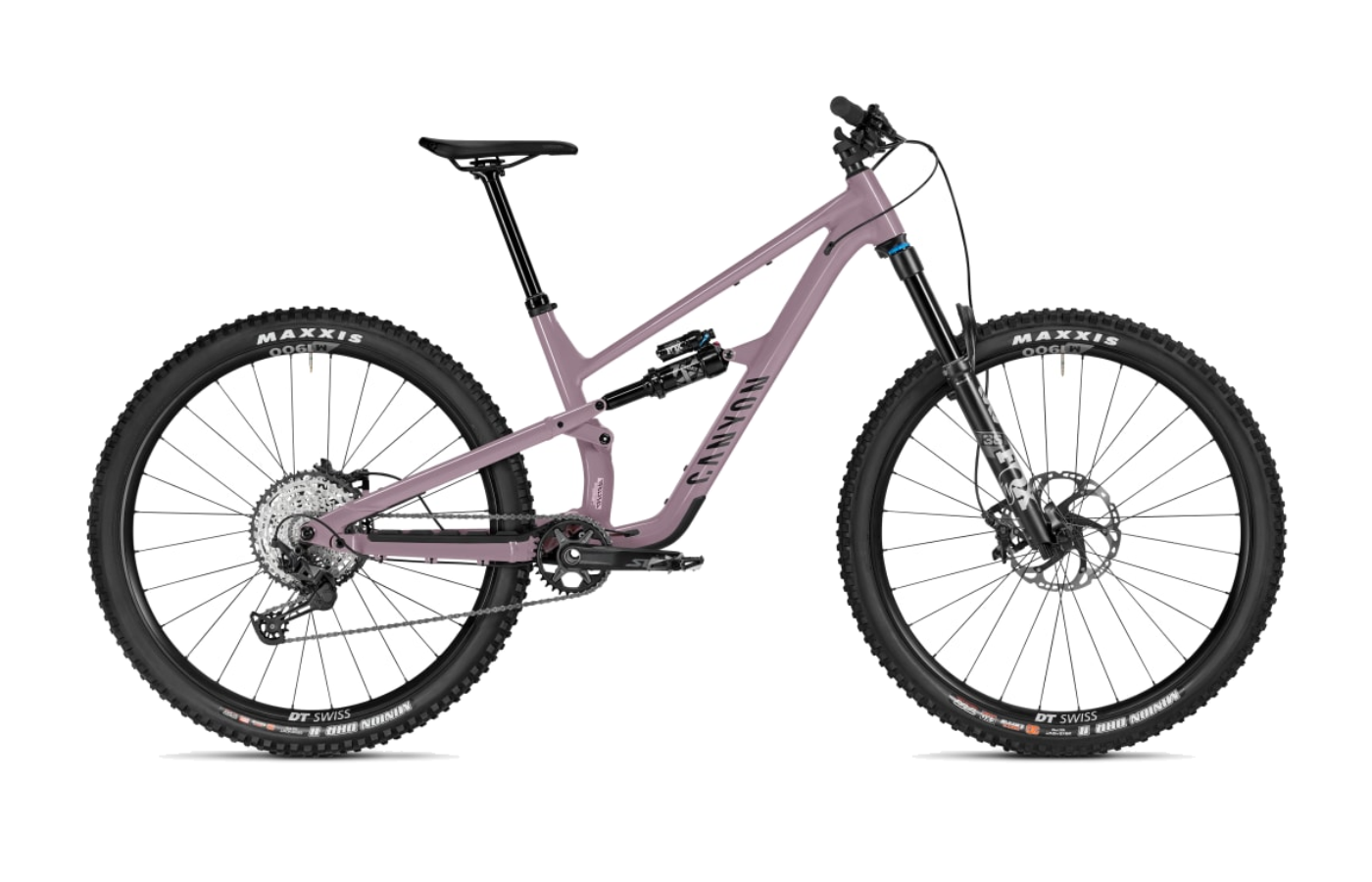
The lighter, perkier alternative — Canyon's direct-to-consumer pricing buys you a sub-15 kg trail bike that accelerates harder than either of these. Trade-off: no dealer, no demo, and less suspension sophistication than the Trek's ABP setup.
Compare →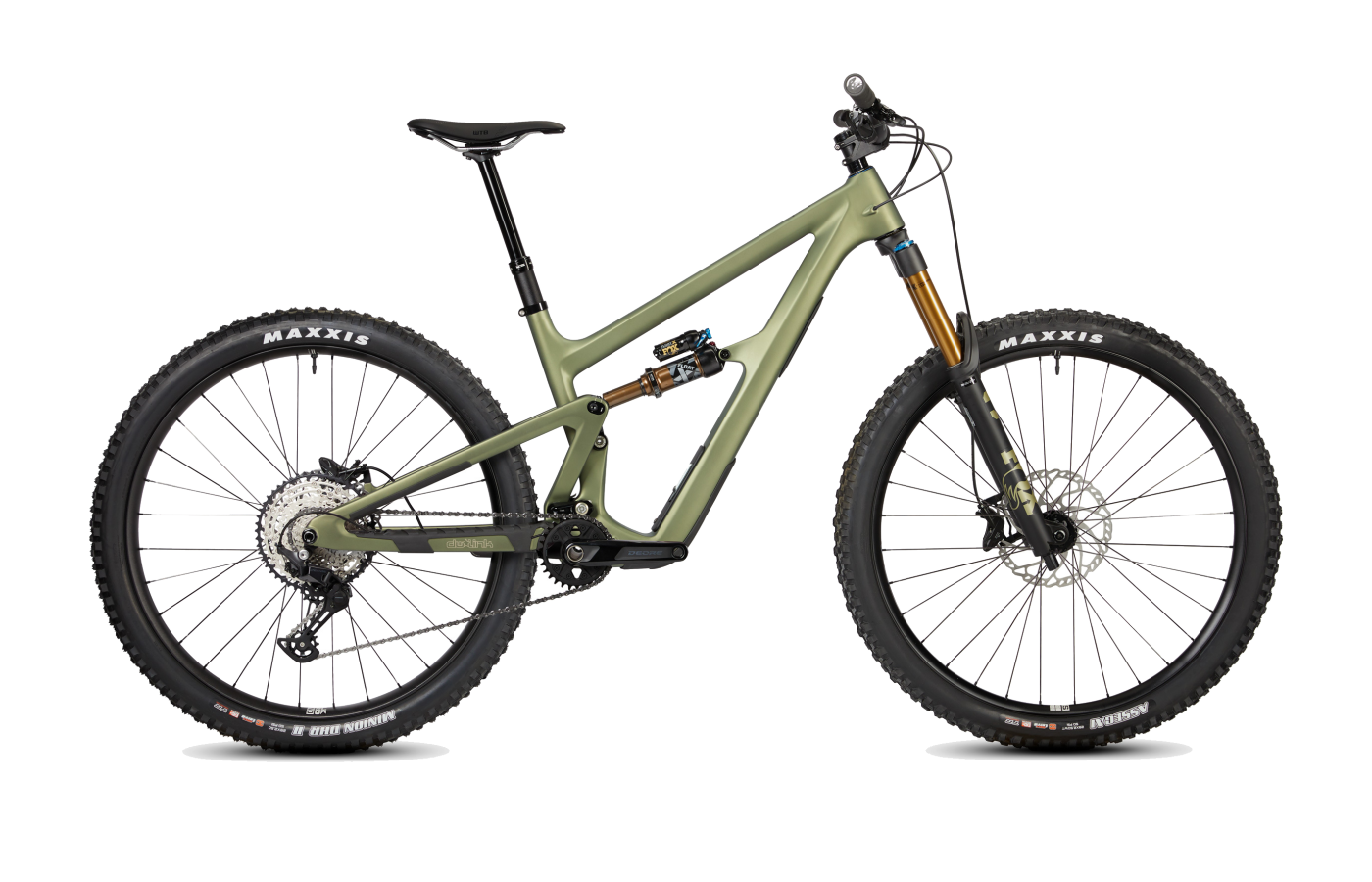
Ripmo
Ibis's DW-link gives the Ripmo a firmer pedaling platform than the Stumpjumper Evo's GENIE shock — closer in character to the Trek but lighter. The pick if you want a do-everything trail bike that pedals like a 130 mm bike and descends like a 160.
Compare →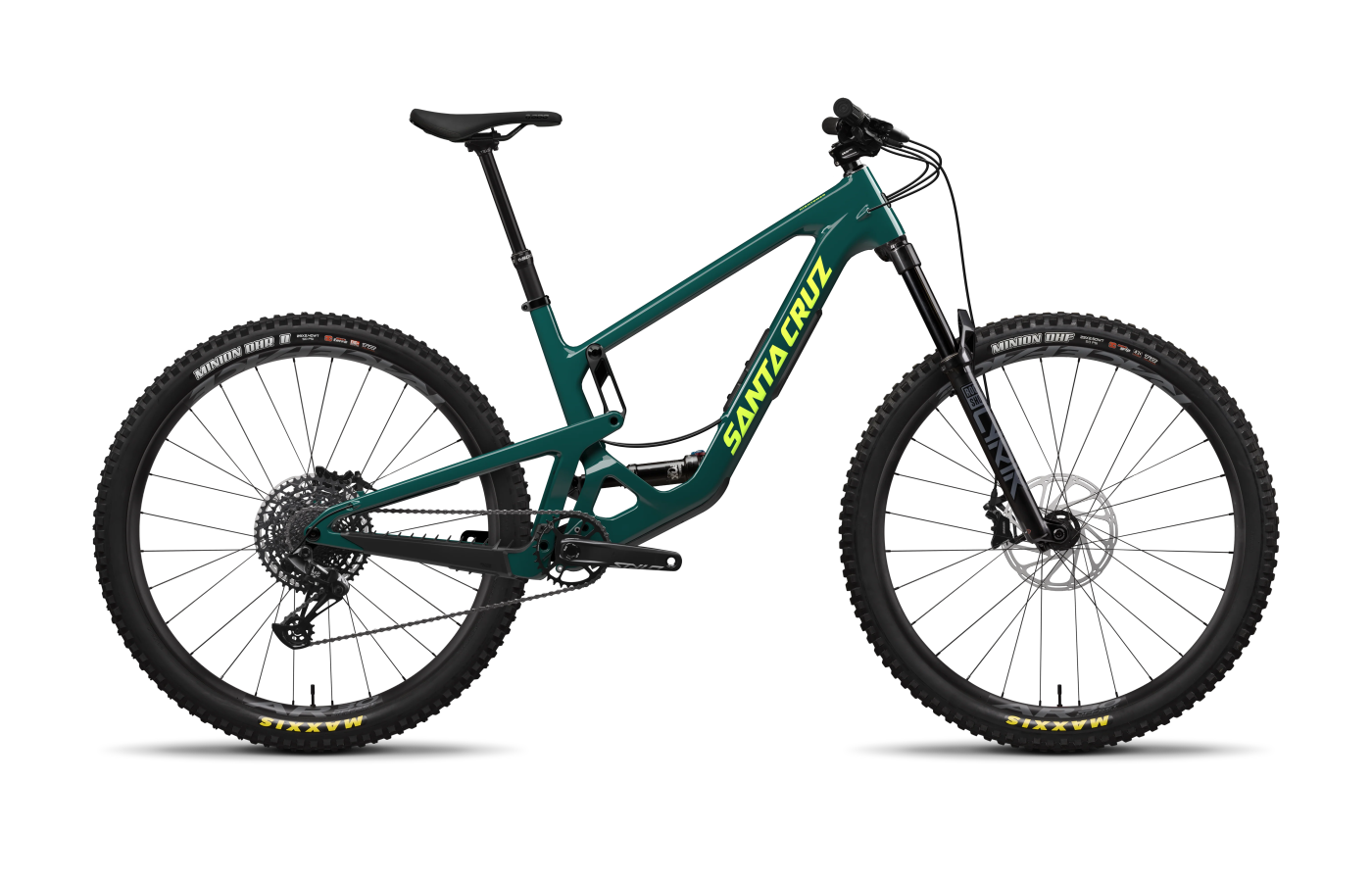
Hightower
Santa Cruz's VPP linkage trades efficiency for traction — plusher than the Trek through technical climbs, but lacks the Stumpjumper Evo's bottom-out composure on big hits. A more traditional trail-bike feel than either of these two.
Compare →