Stumpjumper
vsSmuggler
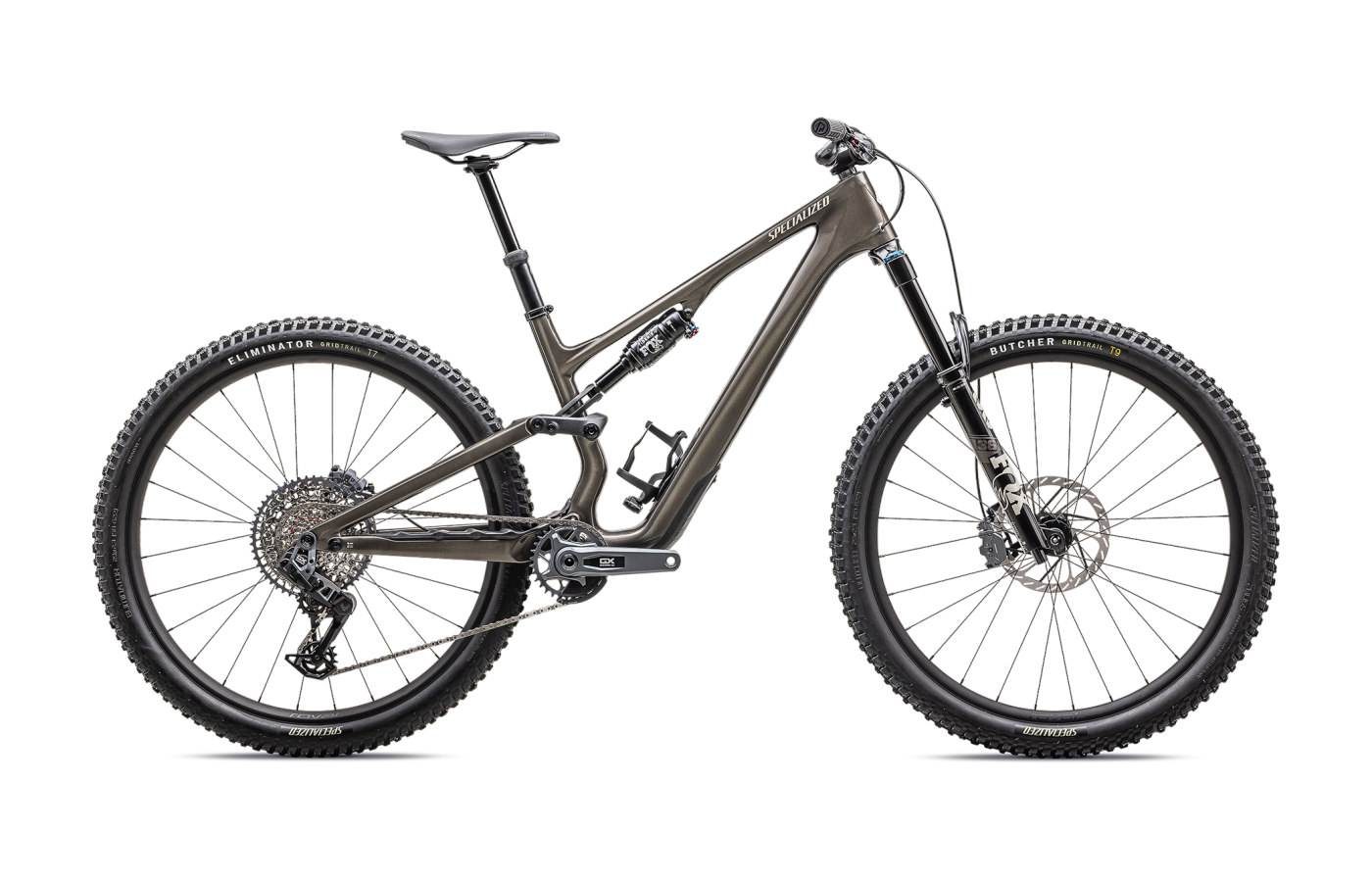
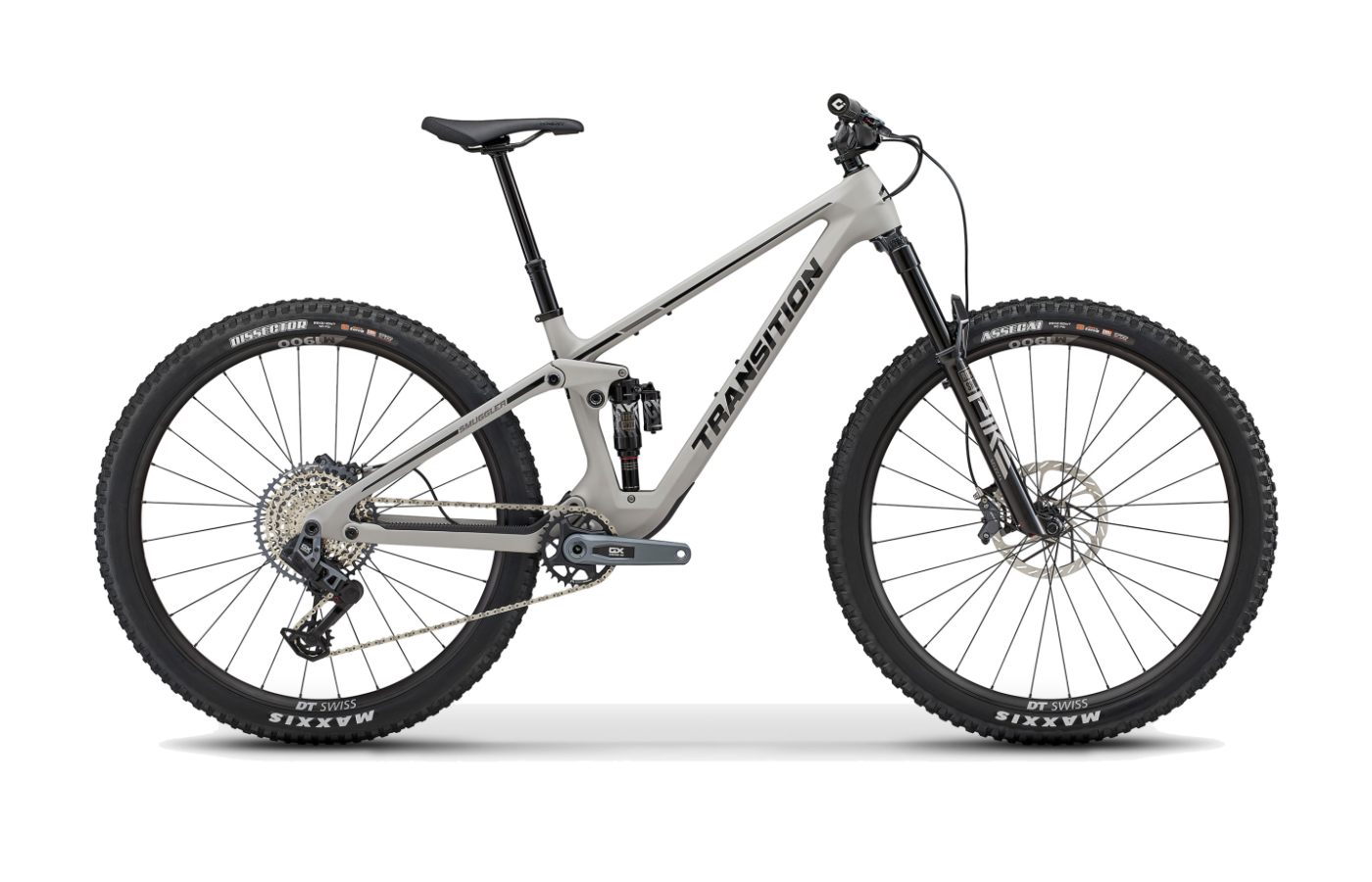
Two trail bikes, two attitudes.
The Stumpjumper 15 is the adjustable do-everything platform built around a proprietary GENIE shock. The Smuggler V3 is a stout, poppy 130 mm charger with a single message: smash.
Stumpjumper
- GENIE shock delivers coil-like small-bump compliance with deeply progressive end-stroke — supple and bottomless in one package.
- Adjustable everything — headset cups (63°/64.5°/65.5°), flip chip, mullet-compatible. One frame, many bikes.
- SWAT 4.0 storage and a lifetime frame + pivot bearing warranty — long-haul ownership costs stay reasonable.
- Proprietary GENIE shock raises long-term serviceability questions — fewer aftermarket replacements.
- Carbon frames are wireless-only — no mechanical drivetrain option on the Expert and up.
Smuggler
- Poppy, energetic ride — the 27% progressive GiddyUp linkage rewards an active rider who pumps and jumps.
- Sharper seated climbing — a steep 78.6° seat tube (size MD) keeps the rider centered on technical ascents.
- Stout, simple chassis — size-specific chainstays, threaded BB, UDH hanger, no proprietary shock to worry about.
- No internal storage, no flip chip, no headset-cup adjustment — what you see is what you ride.
- Reviewers consistently flag bearing wear and the 'Loam Cupboard' bottom-bracket opening as long-term maintenance pain points.
Editor’s analysis
This isn't a question of which trail bike is better. It's a question of what kind of trail rider you are — the tinkerer who wants one bike for everything, or the rider who already knows the answer is to pop, pump, and send.
On paper they sit in the same trail bracket — carbon front triangles, modern slack-and-steep geometry, mid-travel rear ends. But the Specialized Stumpjumper 15 brings 145 mm of rear travel, a 150 mm Fox 36 fork, an adjustable headset cup, a flip chip, and Specialized's GENIE air shock that runs supple in the first 70% and ramps hard at the end. The Transition Smuggler is a tighter weapon: 130 mm rear, 140 mm Pike up front, no flip chip, no internal storage, no adjustable head tube. One bike asks you to set it up. The other asks you to ride it.
The Stumpjumper's GENIE shock is the headline. Reviewers describe it as 'coil-like' and 'glued' through small chatter, then progressive enough that Flow Mountain Bike couldn't bottom it out 'despite all of my awful line choices and ugly hucks-to-flat.' Pair that with adjustable HTA from 63° to 65.5° and the Stumpjumper genuinely shape-shifts — mile-muncher one weekend, bike-park ripper the next. The downside is that out of the box, multiple reviewers found the stock setup a touch soft, and the Fox 36 needed volume spacers to keep up with the GENIE's plushness.
The Specialized Stumpjumper rewards riders who like dialing in. The Transition Smuggler rewards riders who are already dialed. Its 27% progressive GiddyUp linkage is poppy and supportive — NSMB called it the 'littlest sledgehammer.' Steep 78° seat tube, low 35 mm BB drop, size-specific chainstays — it carves corners and launches off lips with a directness the Stumpjumper, in stock trim, doesn't quite match. The cost is composure in the truly rough: when speeds climb and chatter gets long, the 130 mm rear runs out of travel where the Stumpjumper still has 15 mm in reserve.
Put another way: the Specialized Stumpjumper is the bike you buy when you want one trail bike that can be everything from a downcountry tourer to a mini-enduro. The Transition Smuggler is the bike you buy when you've decided your trail bike should be light, poppy, and unapologetically aggressive — and you're done shopping for shocks.
Where the builds differ.
Comparing our editor's-pick builds side-by-side. Winners highlighted row-by-row — lower price and weight, and the better-spec component, each mark a point.
Build variants & pricing
The Stumpjumper spans nine builds from $2,999 to $11,999. The Smuggler runs five builds from $3,499 to $7,799 and tops out at X0 AXS — no S-Works equivalent.
Prices are current US MSRP. The Smuggler tops out at $7,799 (Carbon XO AXS) where the Stumpjumper continues to $11,999 (S-Works 15 LTD); if a flagship build matters, only the Stumpjumper offers one. We compare both at the GX AXS tier — the Stumpjumper 15 Expert ($5,999) and Smuggler Carbon GX AXS ($6,699) — to keep drivetrains and wheel materials as close as possible.
How they fit, how they steer.
Stumpjumper at S3, Smuggler at MD — the fit-picked sizes for a 5'8" rider on each platform. The Smuggler runs 10 mm longer in reach (460 vs 450 mm), 11 mm lower in stack (616 vs 627 mm), with a half-degree steeper HTA (65° vs 64.5°) and a notably steeper seat tube (78.6° vs 77°) — it's the sharper, more forward-biased fit.
Which size should I buy?
Size recommendations based on stack, reach, and effective top tube. The Stumpjumper's six-size S-spread (S1–S6) gives more granular options at both ends; the Smuggler covers SM through XXL.
→These are starting points. Flexibility, riding style, and preferred position all shift the answer — if you’re between sizes, a professional fit beats a chart.
What the magazines said.
Published reviews from trusted cycling outlets. Click through for the full write-up.
Which one should you buy?
If you want one trail bike that can be tuned for anything from XC days to bike park, get the Stumpjumper. If you want a poppy, aggressive 130 mm bike that's already dialed, get the Smuggler.
Stumpjumper
If your trails are varied — long climbs, technical descents, the occasional bike-park lap — and you like a bike that can be tuned for the day, the Specialized Stumpjumper is the most capable single-bike answer in this comparison. The GENIE shock and adjustable geometry give it a wider operating range than almost anything in the trail category.
Smuggler
If you ride hard, jump everything, and prefer a bike that pops and carves rather than floats, the Transition Smuggler will feel inevitable. It rewards an active style and punches above its 130 mm travel — but the rough, fast stuff is where it shows its limits.
Questions buyers actually ask.
Short answers to the things we get emailed about most often.
01Which descends harder?
The Specialized Stumpjumper, by a clear margin. It runs 145 mm of rear travel and a 150 mm fork against the Smuggler's 130/140, sits half a degree slacker at the head tube (64.5° vs 65°) at the compared sizes, and the GENIE shock's progressive end-stroke resists bottom-outs that would overwhelm the Smuggler's 27% leverage curve.
That said, the Smuggler is famously a 'mini-Sentinel' — reviewers regularly send it down trails meant for longer-travel bikes. The Stumpjumper has the larger raw envelope; the Smuggler asks you to ride more actively to access its capability.
02Which climbs better?
The Smuggler, on technical seated climbs. Its 78.6° seat tube angle (size MD) is 1.6° steeper than the Stumpjumper S3's 77°, and reviewers consistently describe its climbing position as 'perfectly sorted' — front wheel weighted, rider centered.
The Stumpjumper isn't a slouch — its supple GENIE first-stroke generates excellent rear-wheel traction on rooty, technical climbs, and a two-position climb switch firms things up when needed. But on long sustained climbs, some reviewers found the active suspension can wallow at high seat heights, and the slacker seat tube requires more conscious weight shift.
Net: Smuggler is the sharper climber on technical singletrack; Stumpjumper is the more comfortable climber on long fire-road grinds (with the climb switch flipped).
03How much travel does each bike actually have?
Stumpjumper 15: 145 mm rear / 150 mm front (140 mm front on size S1; 160 mm front on the 15 trim with Öhlins coil).
Transition Smuggler V3: 130 mm rear / 140 mm front. Transition warrants the frame for 140 mm rear via removing a shock spacer, and many owners over-fork to 150 mm using a Fox 36 or RockShox Lyrik to push the platform closer to mid-travel territory.
If you're choosing between them in stock trim, the Stumpjumper has 15 mm more rear travel and 10 mm more fork — meaningful in the rough, less so on flow trails.
04What about long-term durability?
Stumpjumper: Robust frame construction, threaded BB, SWAT downtube storage with good weather sealing, lifetime frame and pivot bearing warranty. The main long-term question mark is the proprietary GENIE shock — Specialized says it uses mostly standard Fox internals, but reviewers noted lingering skepticism about parts availability years down the road.
Smuggler: Stout carbon layup, threaded BB, SRAM UDH hanger, lifetime frame warranty. The well-documented issue is bearing life — Pinkbike reported their first set lasted only 2–3 months of dry riding, and multiple outlets flagged the 'Loam Cupboard' opening near the BB as a debris funnel. Plan on more frequent pivot service than competitors.
Both are buy-it-for-life frames if you stay current on maintenance; the Smuggler asks for more of it.
05Can the carbon frames run mechanical shifting?
Stumpjumper carbon: No. The carbon frames are wireless-only — Specialized removed the routing for mechanical derailleurs. If you want mechanical, you're looking at the alloy builds (15 Alloy, 15 Comp Alloy, or the $2,999 entry 15 Alloy), which retain cable routing and ship with Shimano SLX or Deore.
Smuggler carbon: Yes. Three of the five Smuggler builds use mechanical shifting — Carbon Eagle 90, Carbon Deore, and Alloy Deore — and the carbon frame's tube-in-tube routing accommodates either. Only the GX AXS and X0 AXS builds are wireless.
06Which is better for jumps and bike-park days?
Both work, but they get there differently.
The Smuggler has the more naturally poppy character — its progressive linkage and lower 35 mm BB drop give it predictable lift off lips, and reviewers repeatedly call it 'one of the most intuitive-feeling jumping bikes' for its travel.
The Stumpjumper can match it but requires setup. Multiple reviewers added GENIE volume bands to firm up mid-stroke for pumping and jumping, and the adjustable headset cups let you slacken the bike to 63° for park days. With those tweaks, the Stumpjumper becomes a credible bike-park tool — a Smuggler is a credible bike-park tool out of the box.
07What's a fair price gap between the two editor's picks?
Our editor's picks land at $5,999 for the Stumpjumper 15 Expert and $6,699 for the Smuggler Carbon GX AXS — a $700 gap.
The Stumpjumper Expert undercuts on price largely because Specialized's scale and frame manufacturing let them spec FACT 11m carbon and a Fox 36 Performance Elite at $5,999. The Smuggler is the more boutique build — smaller production runs, the 'Transition tax' that reviewers (Pinkbike, MBR) routinely note. Both ship with SRAM GX AXS Transmission and 30 mm internal-width alloy wheels at the comparison tier.
08Tire clearance — how aggressive can I go?
Both ship with 2.3–2.5" tires and have room for somewhat larger.
Stumpjumper 15: ships with 2.3" front and rear (Butcher / Eliminator). The frame officially clears 2.6" and is mullet-compatible (29" front / 27.5" rear comes stock on S1–S2).
Smuggler V3: ships with a 2.5" Maxxis Assegai front and 2.4" Dissector rear — already running aggressive rubber out of the box. Most owners stick at this width; the frame has room but reviewers don't recommend going larger.
Neither bike is a plus-tire platform — for 2.8"+, look elsewhere.
Similar bikes
If your priorities don’t map cleanly onto either of these, one of these adjacent bikes probably fits better.
Hightower
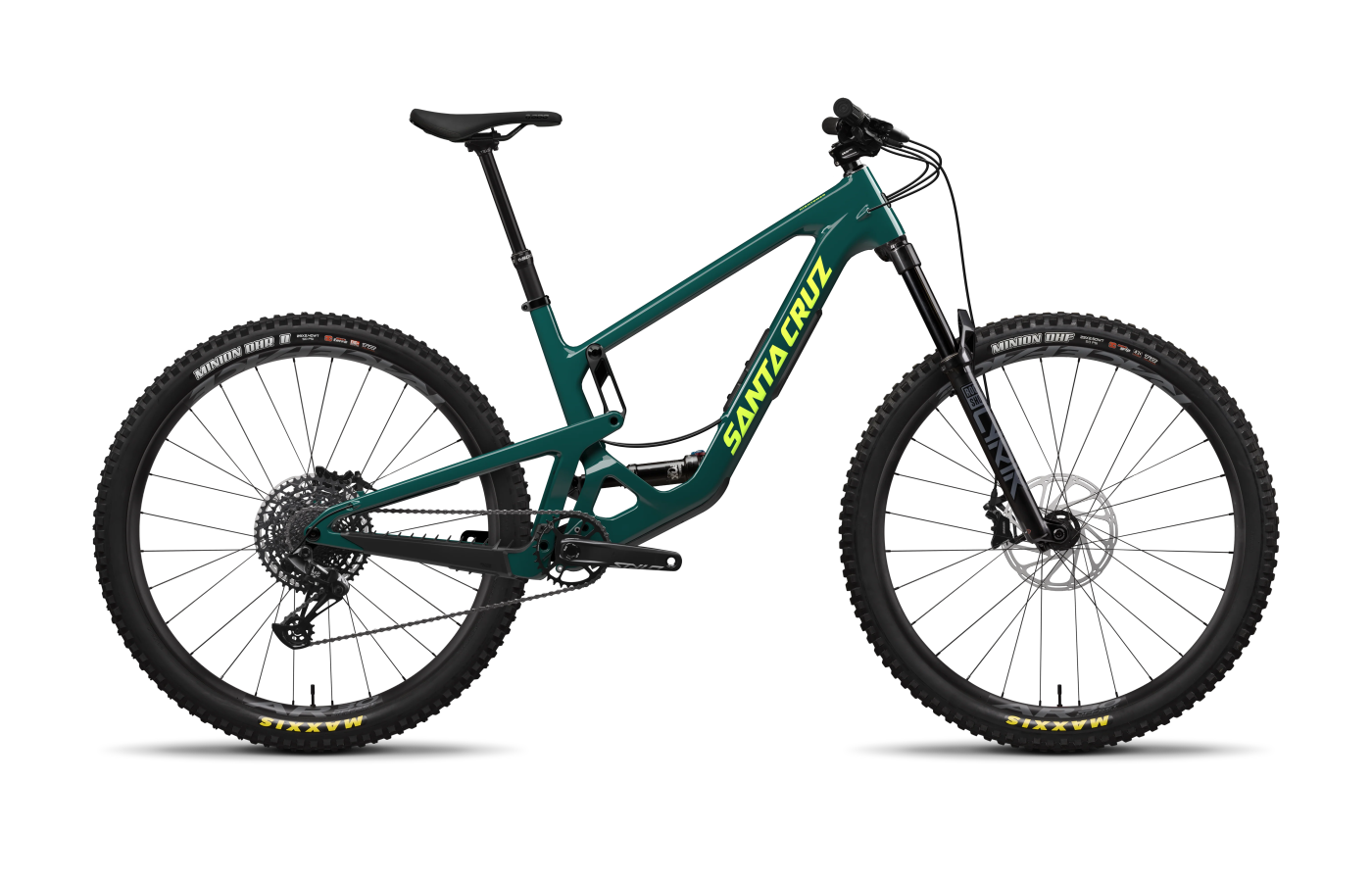
The Santa Cruz Hightower hits the same 145 mm trail-bike spot as the Stumpjumper without the proprietary shock — VPP linkage, conventional damper, easier long-term parts story. If you want the Stumpjumper's envelope but not its GENIE.
Compare →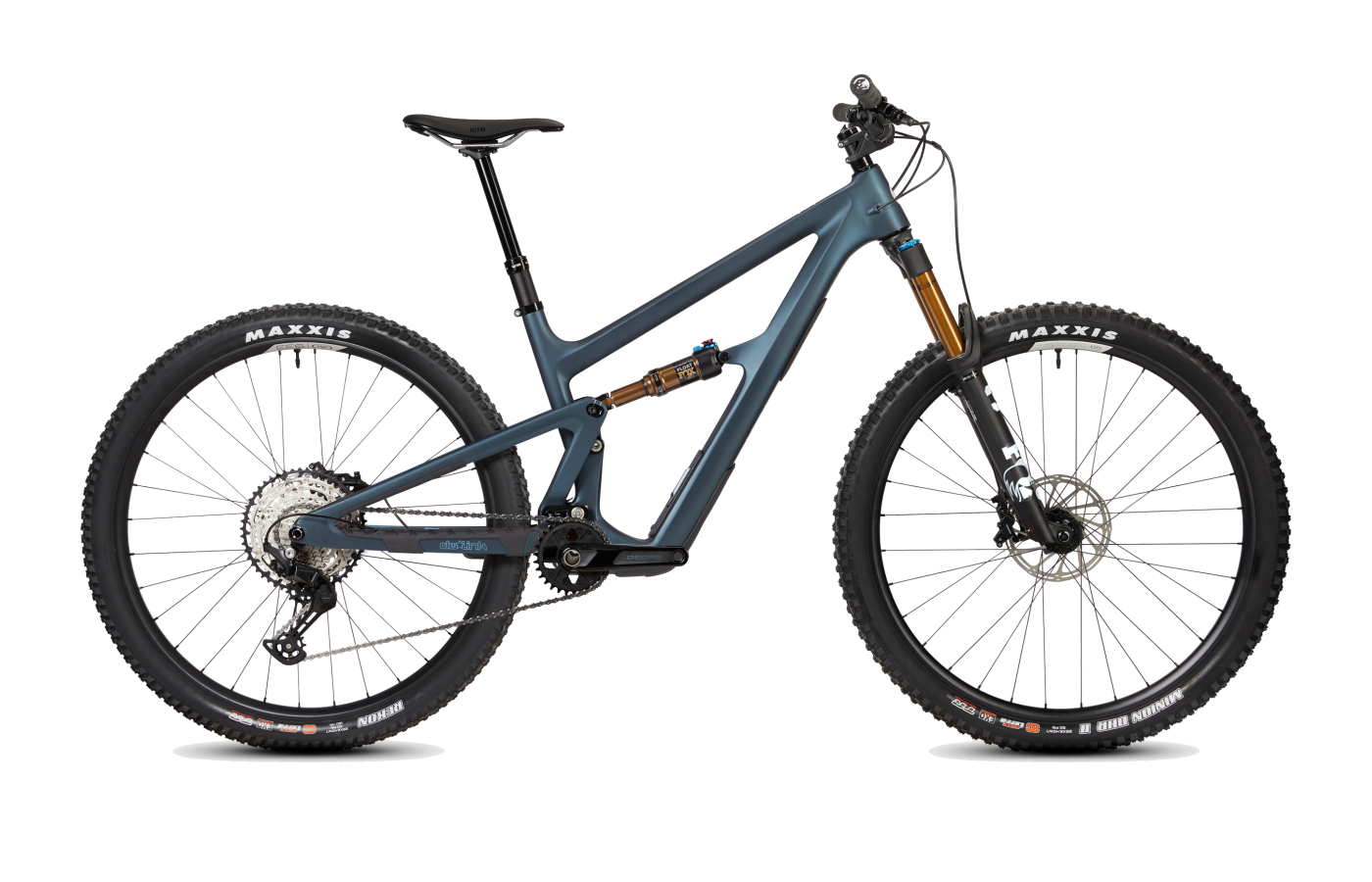
Ripley
The Ibis Ripley is the lighter, more XC-leaning answer to the Smuggler — 120 mm rear, sharper climbing, less plowability. Reviewers cross-shop these two constantly; the Ripley wins on efficiency, the Smuggler wins on descending.
Compare →Jeffsy
The YT Jeffsy is the value play — 145 mm rear, 150 mm front, similar travel envelope to the Stumpjumper at direct-to-consumer pricing. The catch is no dealer network and no demos — best if you already know your fit.
Compare →