Stumpjumper
vsFuel EX
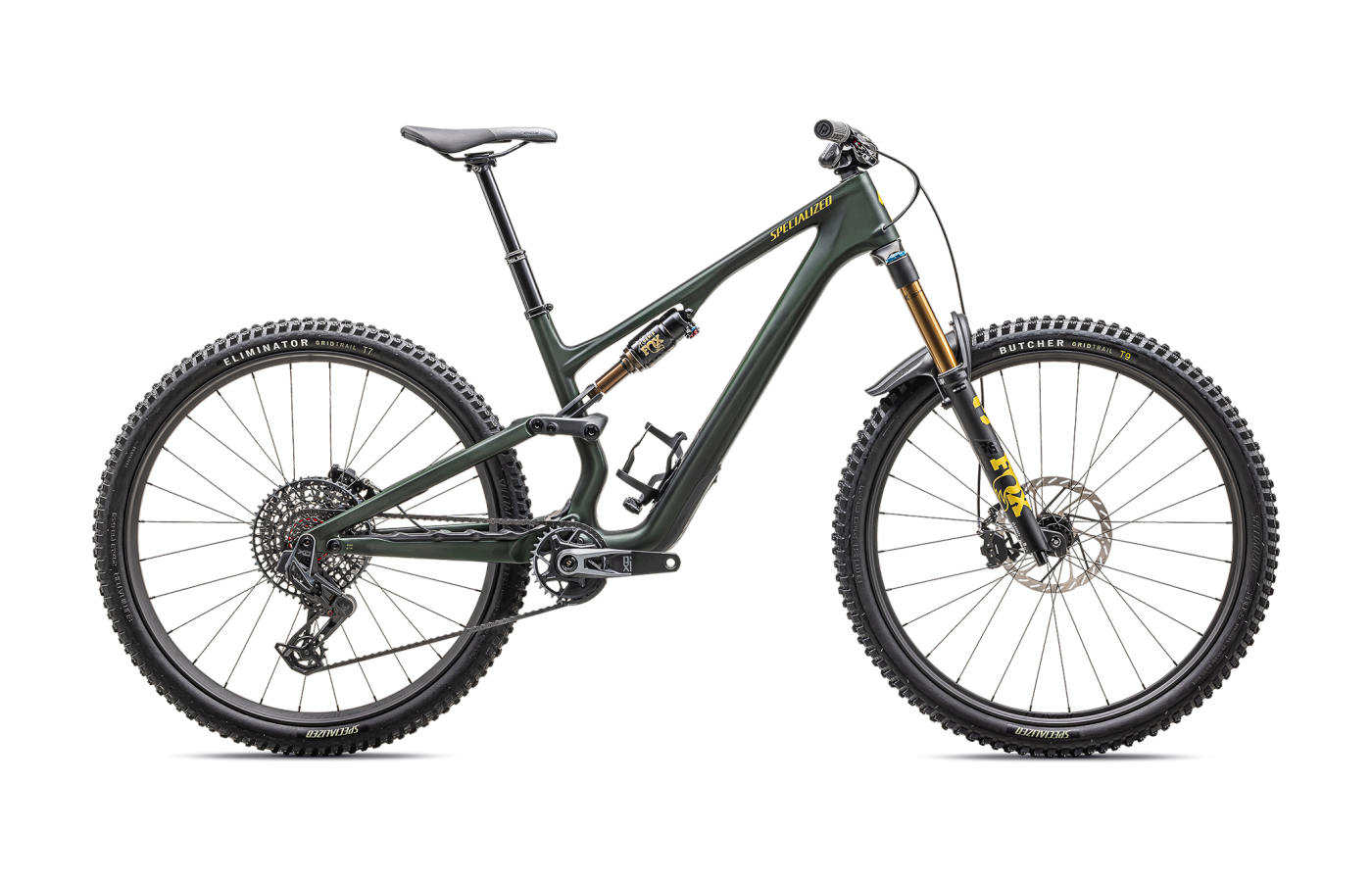
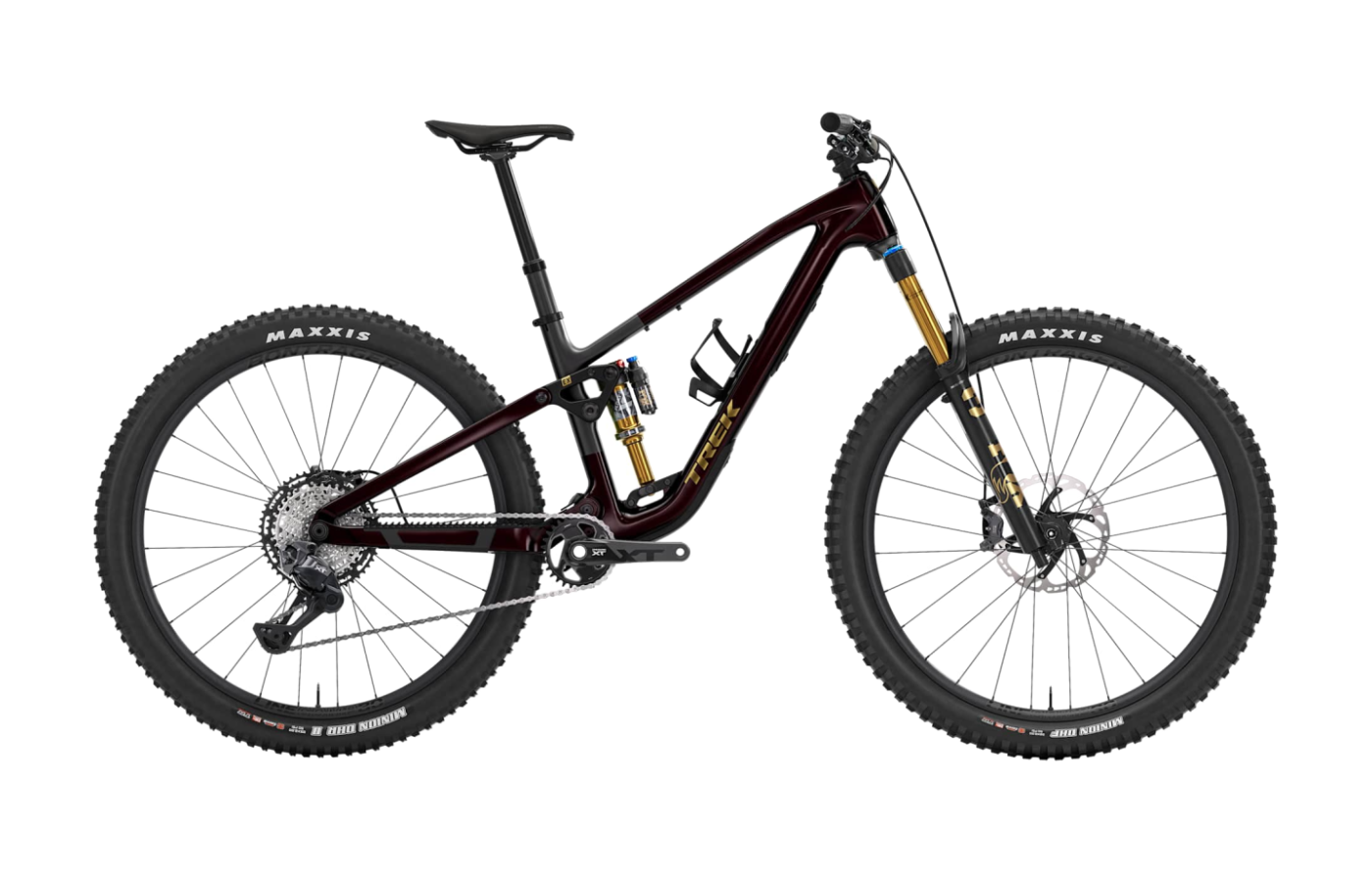
Two 145 mm trail bikes, two trail philosophies.
The Stumpjumper 15 leans on the GENIE shock and a light carbon chassis to feel like a scalpel. The Fuel EX is a modular platform that trades grams for anchored, tank-like composure.
Stumpjumper
- GENIE shock progression — coil-supple in the first 70%, wall of ramp at bottom-out. Testers say they couldn't fully bottom it.
- Lighter carbon builds — 13.99 kg on the 15 Pro, noticeably sprightlier on long climbs and flat traverses than the Fuel EX.
- Three-position HTA adjustment via swappable headset cups (63°, 64.5°, 65.5°) plus a flip chip — no parts order needed.
- Proprietary GENIE shock — serviceable with standard Fox internals plus one seal, but long-term parts availability is a real question.
- Carbon frames are wireless-only; if you want mechanical shifting, you're forced onto the alloy chassis.
Fuel EX
- Anchored, composed descender — the added mass plus ABP rear pivot make it feel planted well above its 145 mm travel bracket.
- Modular platform — same frame becomes the 150 mm mullet Fuel MX or the 160 mm Fuel LX via a linkage and shock-mount swap.
- Sharper value at mid-tier — MSRP cut vs. Gen 6; the 9.8 XT Di2 at $6,499 is a full-Factory 36 / Float X carbon build.
- Significantly heavier than the Stumpjumper at every matching tier — more effort to accelerate, less fun on long flat days.
- Modularity isn't a flip chip — converting between EX, MX, and LX requires buying hardware and often a different shock or fork.
Editor’s analysis
Same travel on paper. Almost the same geometry. Two very different bikes on the trail — which is why the shock, the frame weight, and the platform philosophy matter more here than any number in the geo chart.
On paper, the Specialized Stumpjumper and Trek Fuel EX are separated by almost nothing. Both run 145 mm of rear travel, 150 mm up front, 64.5-degree head angles, and reach figures within 10 mm of each other at the fit-picked sizes. They're aimed at the same rider — the one buying one trail bike for climbs, technical singletrack, and the occasional bike-park day.
The Stumpjumper's differentiator is the GENIE rear shock. Co-developed with Fox, it uses a dual-chamber air spring that stays coil-supple for the first 70% of travel before ramping hard into a wall of progression that's near-impossible to bottom out. Combined with a carbon frame that comes in at 13.99 kg on the 15 Pro build, the Stumpjumper feels sprightly and tour-worthy — the bike testers routinely call "do-it-all" without qualifiers.
The Trek Fuel EX picks a different lane: mass as a feature. The 9.8 XT Di2 is 15.08 kg, and the alloy builds climb past 17 kg. Reviewers reached repeatedly for the same metaphor — "Sherman tank," "unshakeably anchored" — and meant it as a compliment. That weight plus Trek's ABP rear pivot keeps the bike glued to the ground under heavy braking on rowdy descents. The flip side: it's slower to accelerate out of corners, and long flat traverses are less fun.
The platform story also diverges. Trek sells the Fuel EX frame as three bikes in one — a linkage and shock-mount swap converts it to the 150 mm mullet MX or the 160 mm LX. The Stumpjumper 15 is a single bike with a flip chip and headset-cup HTA adjustment (63°, 64.5°, 65.5°) for fine-tuning on the fly. If you want to future-proof into an enduro rig, the Trek is the more flexible frame. If you want one well-sorted bike out of the box, the Stumpjumper is.
Where the builds differ.
Comparing our editor's-pick builds side-by-side. Winners highlighted row-by-row — lower price and weight, and the better-spec component, each mark a point.
Build variants & pricing
The Stumpjumper lineup starts cheaper on alloy and climbs higher on carbon. The Fuel EX spans the same range with more carbon options in the middle.
Prices are current US MSRP. The editor's-pick builds compare Specialized's one-down electronic tier (X0 AXS Transmission on carbon) against Trek's one-down electronic tier (XT Di2 on carbon). Trek's 9.8 XT Di2 lands $1,500 cheaper than the 15 Pro — a real platform price difference, not a tier mismatch.
How they fit, how they steer.
Stumpjumper S3 vs. Fuel EX M — the fit-picked sizes for each bike. Head angles match at 64.5°. The Fuel EX runs 10 mm more reach and a 12 mm longer wheelbase, but stack is within 3 mm. The bigger story is the Stumpjumper's much steeper actual seat angle (77° vs 72.6°), which translates to different climbing postures on long grinds.
Which size should I buy?
Specialized uses its six-step S-Sizing (S1–S6) tied to reach, while Trek runs a traditional S–XXL with no M/L. Between S3 and M, fit overlap is tight; riders on the tall edge of M may prefer S4.
→These are starting points. Flexibility, riding style, and preferred position all shift the answer — if you’re between sizes, a professional fit beats a chart.
What the magazines said.
Published reviews from trusted cycling outlets. Click through for the full write-up.
Which one should you buy?
If you want a lightweight, high-traction trail bike that rewards an active riding style, get the Stumpjumper. If you want a composed, anchored descender that doubles as a mullet or enduro frame, get the Fuel EX.
Stumpjumper
If your riding is long, varied, and tech-heavy — chunky climbs where rear-wheel grip is king, flowy singletrack you like to pop off every root — the Stumpjumper's combination of GENIE suspension and a light carbon chassis makes it the more versatile tool. It rewards riders who work the trail rather than plow through it.
Fuel EX
If you value descending composure over climb speed, ride steep or rowdy terrain regularly, or want a frame that can later become a 160 mm enduro bike with a linkage swap, the Fuel EX is the sharper answer. The weight is a feature on the way down, not a bug.
Questions buyers actually ask.
Short answers to the things we get emailed about most often.
01Which climbs better?
The Stumpjumper, in most conditions. The Pro build is about 14.0 kg vs. ~15.1 kg for the Fuel EX 9.8 XT Di2 — that's roughly 1 kg that you'll feel on every long fire-road grind, and the GENIE shock's initial suppleness gives it a traction advantage on technical, root-laden climbs.
The Fuel EX counters with a much steeper effective seat tube angle (reviewers cite ~78.3° on the Medium). That puts you in a locked-in position for sustained, seated grinds — Trek's climbing posture is genuinely excellent. But on a gram-for-gram basis, the lighter Stumpjumper wins the uphill stopwatch for most riders.
02Which descends better?
The Fuel EX, if "better" means more composed and anchored on rough, high-speed terrain. Reviewers compared the feel to "strapping two kilos of roofing lead" to a DH bike — the bike stays glued to the ground in a way the lighter Stumpjumper doesn't.
The Stumpjumper descends differently, not worse. The GENIE shock's deep-stroke progression means you can huck-to-flat and not bottom out, and the lighter chassis makes it more playful — easier to loft over roots and pop off corners. On steep, committed terrain the Fuel EX feels safer; on flowy, poppy terrain the Stumpjumper is more fun.
03What's the travel on each bike?
Both are 145 mm rear / 150 mm front on the editor's-pick builds.
The Stumpjumper 15 is a single 145 mm platform, with the S1 size getting a shorter 140 mm fork. The Fuel EX, by contrast, is one frame that can be reconfigured to 145 mm (EX), 150 mm mullet (MX), or 160 mm (LX) via a swap of rocker link and shock mount — Trek charges extra for the link and mount, plus potentially a different shock or fork depending on which direction you're going.
04How does the GENIE shock actually work?
The GENIE is a Fox Float with a second, outer air chamber that stays connected to the main positive chamber for the first 70% of the 145 mm stroke — giving it a large effective volume and a coil-like, supple feel off the top.
At roughly 70% travel, a "GENIE band" closes off the outer chamber. Air volume drops sharply and the spring curve ramps hard. The result: traction and small-bump compliance like a coil, but bottom-out control closer to a coil with a big piggyback reservoir. You can also add up to four additional bands to firm up the mid-stroke for harder-charging riders.
05Are the carbon frames compatible with mechanical drivetrains?
The Stumpjumper 15 carbon frames are wireless-only — Specialized didn't include internal cable routing for mechanical shifting. If you want Shimano mechanical or any cable-pull drivetrain, you're forced onto the alloy Stumpjumper.
The Fuel EX retains cable routing across the entire lineup, carbon and alloy, and you'll find mechanical Shimano XT and Deore builds in the range. If mechanical compatibility matters, Trek is the less restrictive platform.
06How adjustable is the geometry on each bike?
Stumpjumper 15: three-position head angle via swappable headset cups (63°, 64.5°, 65.5°) plus a flip chip at the Horst link for bottom-bracket height. No tools-in-garage barrier to either adjustment.
Fuel EX Gen 7: a flip chip on the rocker link toggles suspension progression between 16.4% and 21.3% — useful for tuning air vs. coil behavior. Bigger geometry changes (mullet, longer travel) require buying the MX or LX hardware rather than flipping a chip.
07Which has better stock tire spec?
The Stumpjumper generally wins out of the box. Most Stumpjumper builds ship with Specialized's Butcher / Eliminator T9 / T7 combo in GRID TRAIL or GRID GRAVITY casing — a high-grip, reasonably durable setup that matches the bike's capability.
The Fuel EX 9.8 XT Di2 runs Maxxis Minion DHF / DHR II in EXO+ casing, which is also a strong stock choice. But lower-tier Fuel EX builds drop to Bontrager Brevard or Gunnison rubber, which reviewers consistently flag as too light-duty for the bike's descending bias — plan on an upgrade.
08What about internal frame storage?
Both have it. Specialized's SWAT 4.0 is the benchmark — a flush, rattle-free downtube door with good weather sealing and generous capacity. Trek's internal storage on the Gen 7 frame is newly revised and reviewers rate access as improved over the prior generation, though the SWAT opening still wins on ergonomics.
Either will fit a tube, tools, and a snack. Neither is a reason to pick one bike over the other.
Similar bikes
If your priorities don’t map cleanly onto either of these, one of these adjacent bikes probably fits better.
Spectral
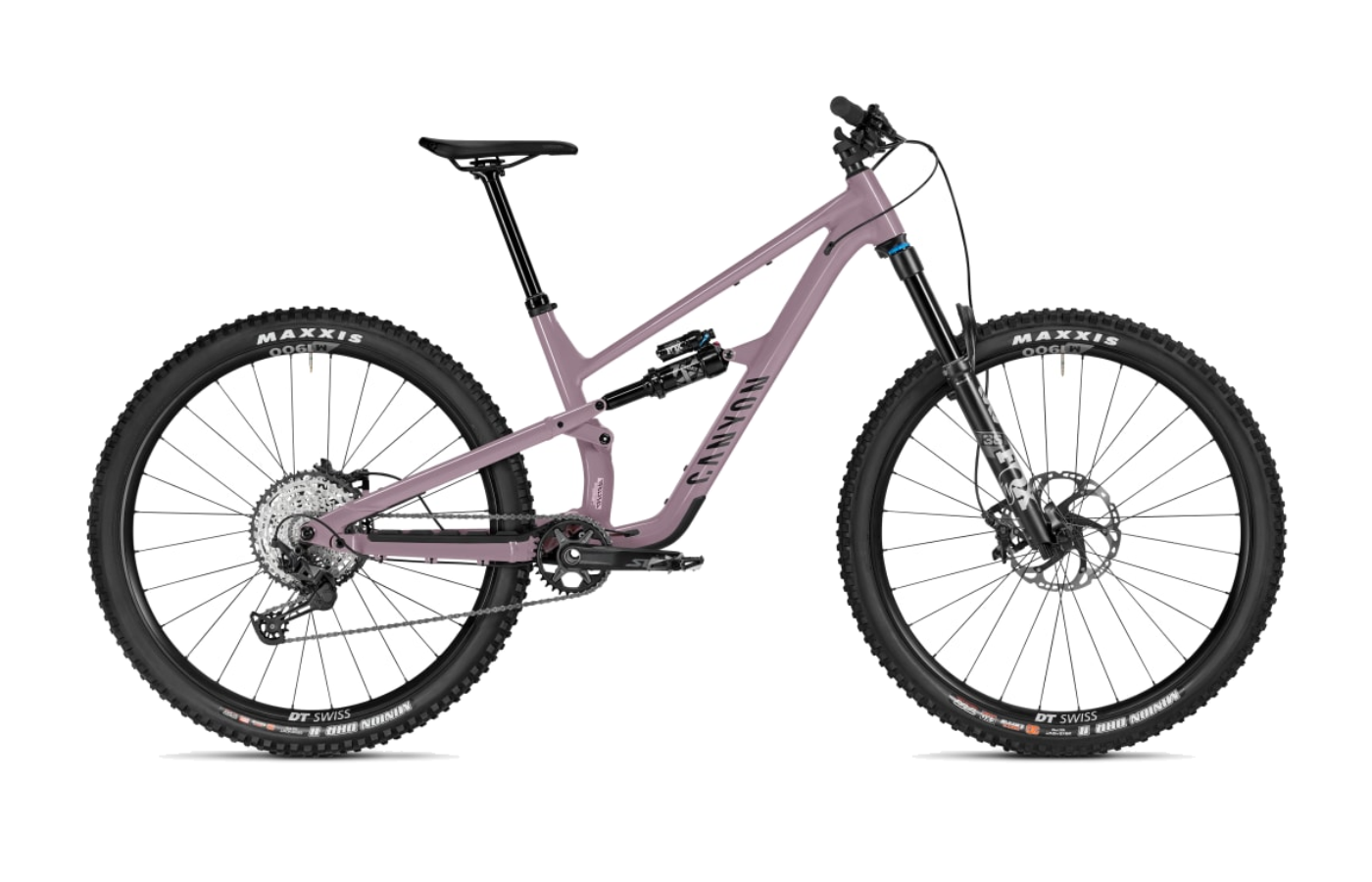
The peppier, lighter alternative — similar 145 mm-class travel with less mass and a sharper direct-to-consumer price. Give up the GENIE shock's magic and the modular Fuel platform; get a more conventional, flickable trail bike.
Compare →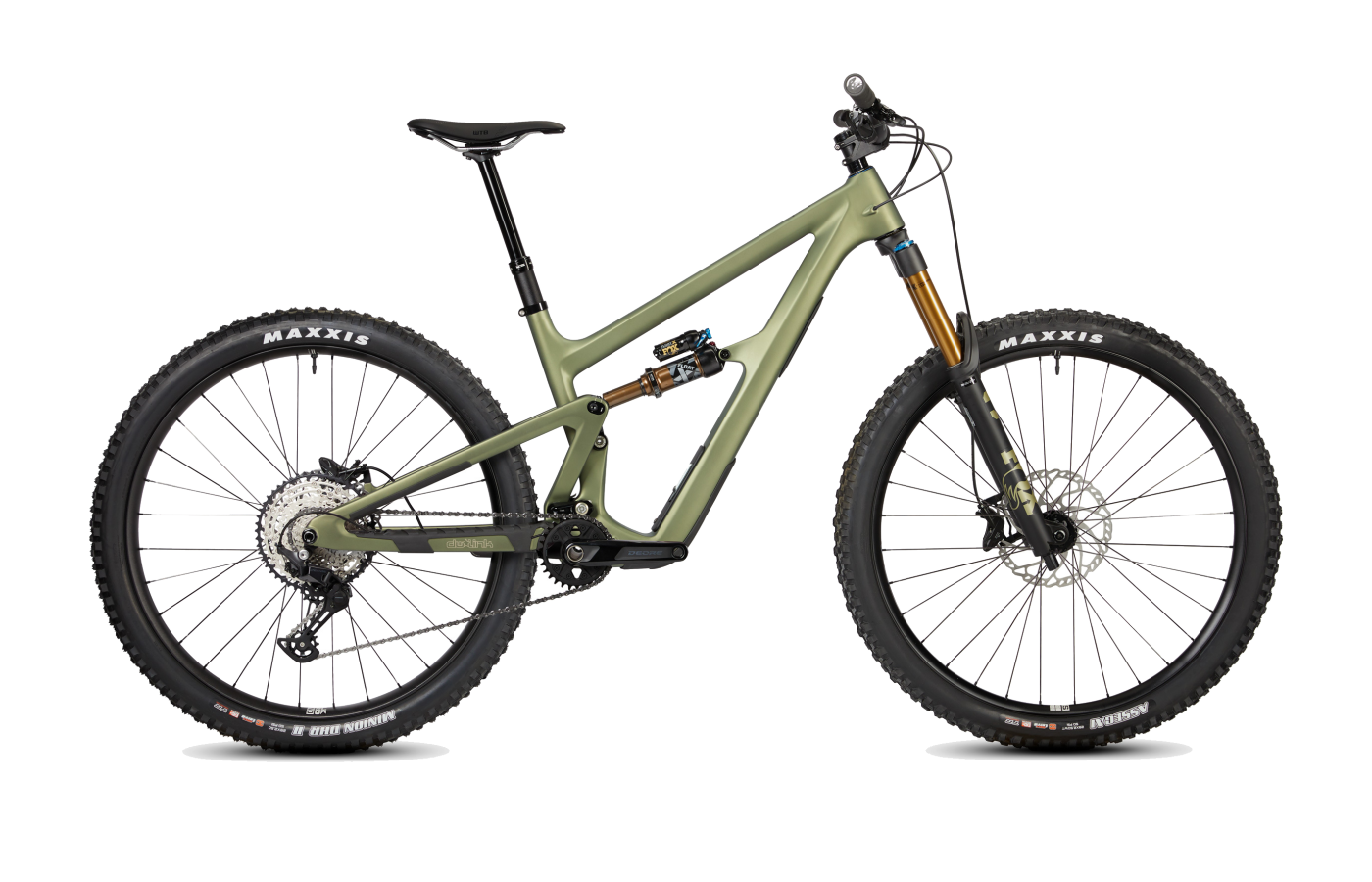
Ripmo
DW-Link efficiency for riders who want a more traditional climbing platform. More aggressive geometry than either of these — the pick if you're leaning enduro-ish and want proven long-term suspension tech, not proprietary hardware.
Compare →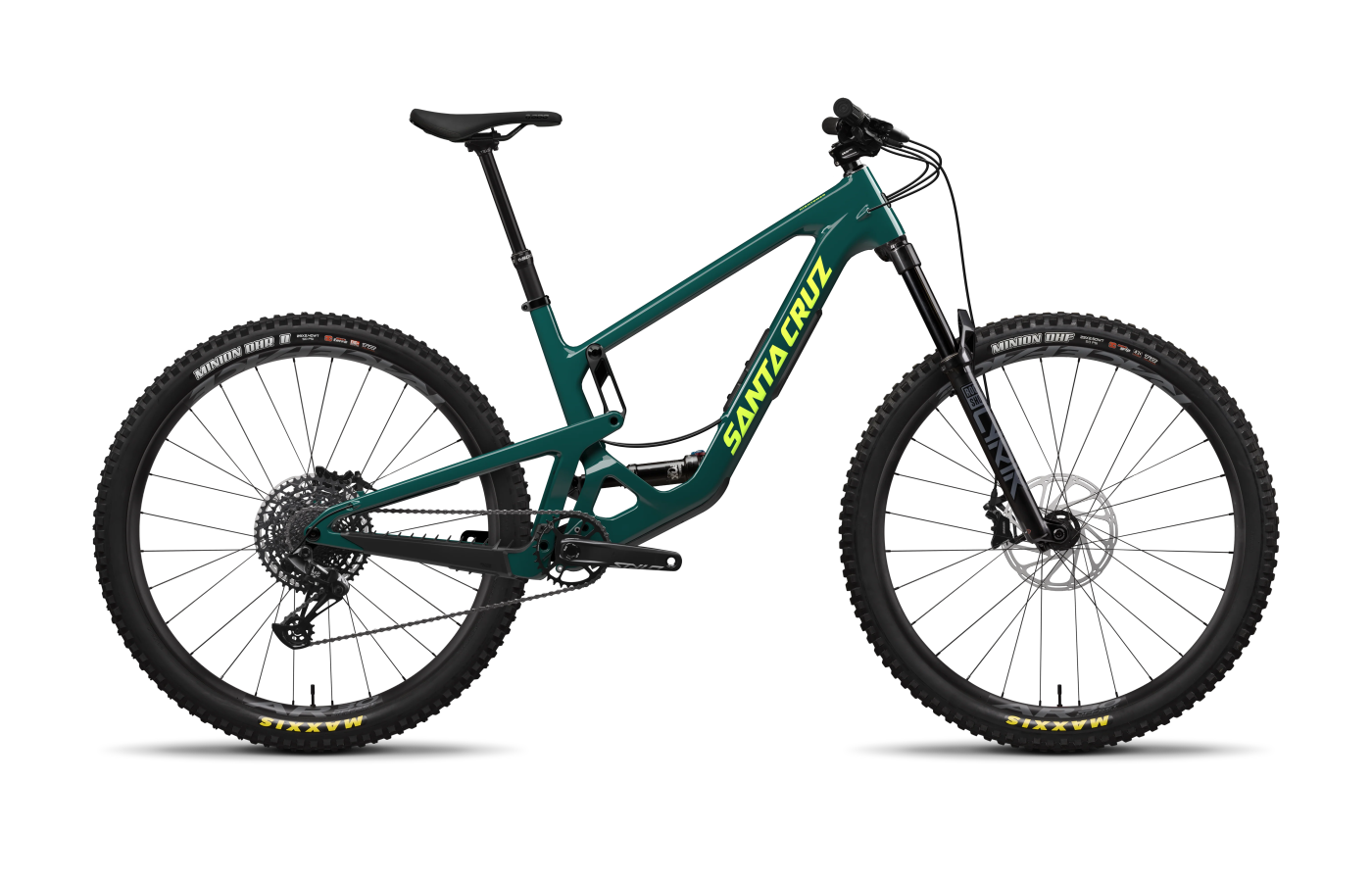
Hightower
Santa Cruz's plush VPP feel at similar premium pricing. Closer in character to the Stumpjumper than the Fuel EX — the pick if you want boutique-brand carbon trail-bike pedigree without the GENIE shock's proprietary baggage.
Compare →