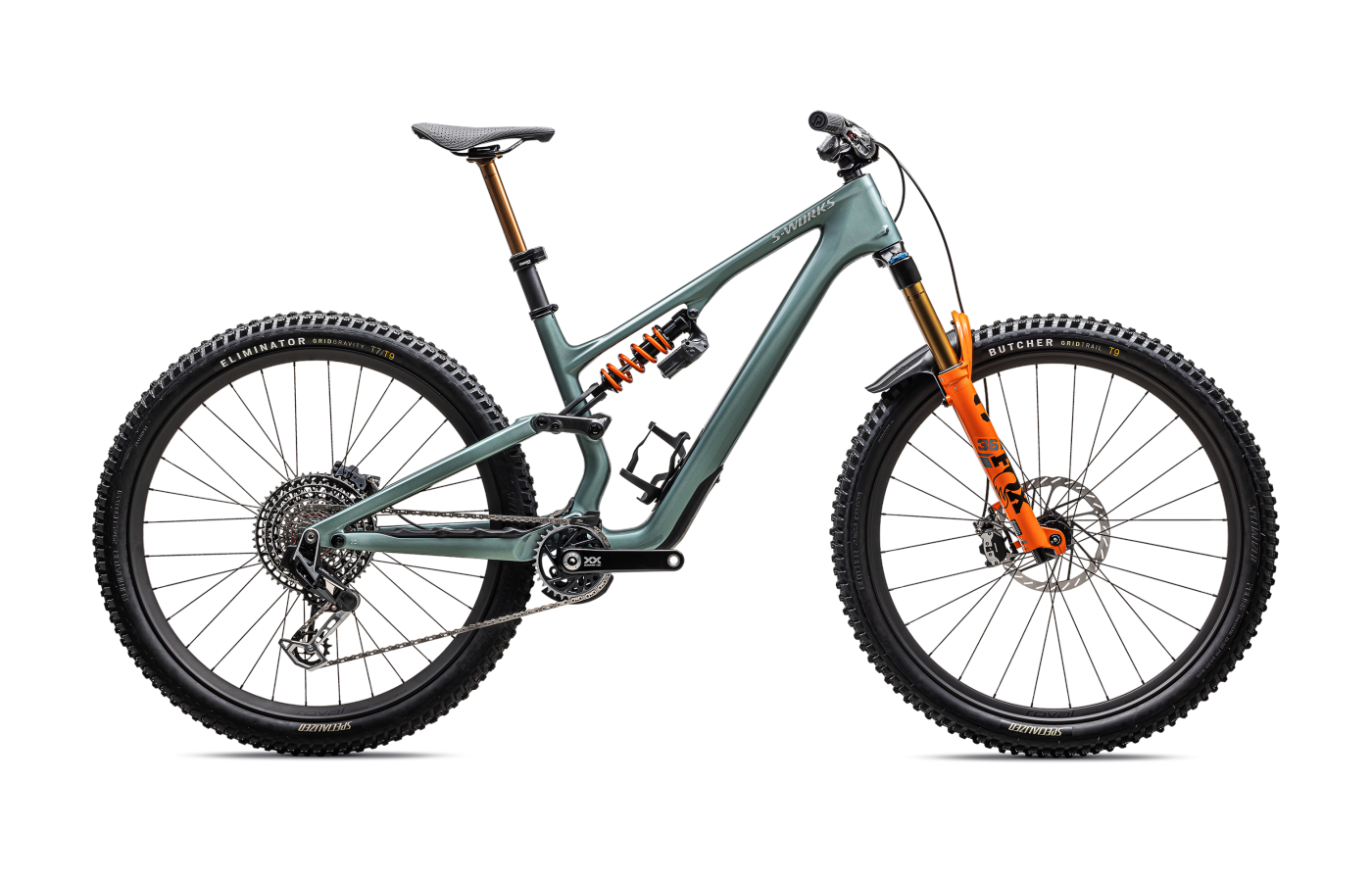
Specialized StumpjumpervsTrek Remedy
Drop into a section of high-frequency braking bumps and the Specialized Stumpjumper 15 stays glued to the ground, its GENIE shock erasing the chatter with eerie composure. Meanwhile, the Trek Remedy behaves like a oversized BMX bike, encouraging you to skip over the mess entirely by hopping off every root in sight. These bikes offer a stark choice between the high-traction precision of a modern 29er and the playful, whippy energy of a dedicated 27.5-inch chassis.

Overview
Specialized and Trek have taken their flagship trail names in different directions over the last several years. The Stumpjumper 15 is a high-tech consolidation of Specialized's trail line, merging the standard and EVO models into a 145mm travel platform that uses the sophisticated GENIE air spring to behave like a much bigger bike. It is built for the rider who wants a single machine that can climb efficiently but still handle bike-park laps without blowing through its travel. In contrast, the Remedy remains a testament to the fun-first philosophy of 27.5-inch wheels. During its 2019-2022 run, Trek resisted the industry-wide move to 29-inch wheels for this model, focusing instead on agility and maneuverability. While the Stumpjumper 15 emphasizes technical innovation and wide-ranging geometry adjustments, the Remedy relies on its shorter wheelbase and the clever RE:aktiv suspension to stay engaging on tight, twisty terrain. Specialized has aimed for a "quiver killer," while Trek built a specialist tool for those who prioritize jibbing over raw speed. Material and component choices also mark their generations. The carbon Stumpjumper 15 is a wireless-only affair, designed exclusively for electronic drivetrains like SRAM Transmission, which results in a remarkably clean cockpit. The Remedy, available in both OCLV carbon and Alpha aluminum, is far more mechanical-friendly and features the Straight Shot downtube for added stiffness. If you want the latest in internal storage and on-trail adjustability, the Specialized wins out, but the Trek offers a classic, simplified feel that is increasingly hard to find in long-travel bikes.
Ride and handling
The ride quality of the Stumpjumper 15 is dominated by the GENIE shock's dual-personality air spring. In the first 70% of its stroke, the suspension is incredibly supple, providing what testers call a "coil-like" feel that generates immense traction on technical climbs and loose corners. This allows the rear wheel to track fluidly through root-laced sections where the Remedy might feel a bit more nervous. When you hit a big drop or a high-G berm, the Specialized's air volume suddenly shrinks, providing a massive ramp-up in progression that prevents the harsh bottom-outs that plagued earlier iterations of the platform. The Remedy handles with a degree of nimbleness that the 29-inch Specialized can't quite match. Its smaller wheels make it lightning-fast when initiating turns or slashing the rear end through a tight berm. You sit "on top" of the Remedy, which contributes to its "twinkle-toed" demeanor, making it the better tool for clearing trail obstacles and popping off side-hits. However, this agility comes at the expense of high-speed stability. In chunky rock gardens, the Remedy can feel a bit squirrely, requiring more rider input to hold a line compared to the Specialized, which settles into a more stable, grounded character as speeds increase. Climbing on the Specialized is a refined experience thanks to its 76.5-degree seat tube angle, which puts you in a central, powerful position. The anti-squat is tuned to keep the bike from wallowing, meaning it pedals with surprising pep for a 145mm bike. The Remedy is also a capable climber, benefiting from the RE:aktiv shock which offers a firm pedaling platform that automatically opens up on impacts. However, its 74.5-degree seat angle feels a bit slack on the steepest pitches, making it slightly harder to keep the front wheel weighted compared to the more modern positioning on the Specialized. Specialized's handling is further refined by a lower bottom bracket (337mm in S4) and longer wheelbase, giving it a "point-and-plow" capability when things get rowdy. The Remedy prefers a more calculated approach; it rewards finesse and creative line choices. While the Trek feels more "spirited" on mellow flow trails, the Specialized is the one that builds confidence when you're hurtling down a technical descent at the limit of your comfort zone.
Specifications
Braking power is a major point of differentiation across these builds. Specialized equips the Stumpjumper 15 with SRAM Maven brakes, which reviewers have described as "ridiculously powerful." On a trail bike, these can almost feel like too much, requiring a delicate touch to avoid skidding on loose hardpack. The Remedy builds often featured underpowered SRAM Guides or older Shimano XT four-pistons; aggressive riders on the Trek will likely find themselves upgrading rotors or calipers to match the bike's 160mm fork capabilities. Wheelsets on the higher-end builds show a significant quality gap. The Stumpjumper 15 Pro and S-Works models use Roval Traverse carbon rims on DT Swiss or Industry Nine hubs, which are praised for being durable and precisely damped. The Remedy 9.8 also included carbon wheels during its run, but reviewers noted that the stock Bontrager tires were often too flimsy for the bike's aggressive potential. If you're buying a lower-tier Stumpjumper Alloy, be prepared for heavier wheels that can feel a bit "jangly" compared to the refined carbon hoops on the S-Works 15 LTD. Specialized’s SWAT 4.0 storage system is another area where the new bike outshines the older Trek. The integrated downtube door is larger and better sealed than previous versions, allowing you to ditch the hydration pack entirely for shorter rides. Trek’s Remedy focused on frame stiffness with its Straight Shot downtube, which necessitated the Knock Block steering stop. This limits the steering radius—a frustrating quirk for many when trying to manhandle the bike into a car or navigating extremely tight, slow-speed switchbacks.
| Stumpjumper | Remedy | |
|---|---|---|
| FRAMESET | ||
| Frame | Specialized M5 Alloy chassis and rear-end, Trail Geometry, SWAT™ Door integration, head tube angle adjustment, threaded BB, internal cable routing, 12x148mm dropouts, sealed cartridge bearing pivots, SRAM UDH compatible, 145mm travel | — |
| Fork | RockShox Psylo Silver, Motion Control Damper, 15x110mm axle, 44mm offset (S1: 140mm travel; S2–S6: 150mm travel) | — |
| Rear shock | X-Fusion 02 Pro RL, Ride Dynamics Trail Tune, rebound adjust, lockout (S1: 210x52.5mm; S2–S6: 210x55mm) | — |
| GROUPSET | ||
| Shift levers | Shimano Deore M6100, 12-speed | — |
| Front derailleur | — | — |
| Rear derailleur | Shimano Deore M6100, 12-speed, Shadow Plus | — |
| Cassette | Shimano Deore M6100, 12-speed w/ Hyperglide+, 10-51T | — |
| Chain | Shimano Deore M6100, 12-speed | — |
| Crankset | Shimano Deore M6120, 30T ring, 55mm chainline (S1–S3: 165mm; S4–S6: 170mm) | — |
| Bottom bracket | BSA, 73mm, threaded | — |
| Front brake | Shimano BR-MT420, 4-piston hydraulic disc | — |
| Rear brake | Shimano BR-MT420, 4-piston hydraulic disc | — |
| WHEELSET | ||
| Front wheel | Specialized Alloy, Tubeless Ready, 29mm internal width, 28h (Front: 29"); Alloy, sealed cartridge bearings, 15x110mm thru-axle, 28h; Stainless, 14g | — |
| Rear wheel | Specialized Alloy, Tubeless Ready, 29mm internal width, 28h (Rear: S1–S2: 27.5"; S3–S6: 29"); Alloy, sealed cartridge bearings, 12x148mm thru-axle, 28h; Stainless, 14g | — |
| Front tire | Butcher, GRID TRAIL casing, GRIPTON® T9 compound, 2Bliss Ready, 29x2.3" | — |
| Rear tire | Eliminator, GRID TRAIL casing, GRIPTON® T7 compound, 2Bliss Ready (S1–S2: 27.5x2.3"; S3–S6: 29x2.3") | — |
| COCKPIT | ||
| Stem | Alloy Trail Stem, 35mm bar bore | — |
| Handlebars | Specialized 6000-series alloy, 6° upsweep, 8° backsweep (S1–S2: 780mm width, 20mm rise; S3–S4: 800mm width, 30mm rise; S5–S6: 800mm width, 40mm rise) | — |
| Saddle | Bridge, steel rails (S1–S2: 155mm; S3–S6: 143mm) | — |
| Seatpost | TranzX dropper, remote SLR LE lever, 34.9mm (S1: 125mm; S2: 150mm; S3: 170mm; S4–S6: 200mm) | — |
| Grips/Tape | Specialized Trail Grips | — |
Geometry and fit comparison
The geometry delta between these two bikes illustrates the rapid evolution of mountain bike sizing. An S4 Stumpjumper 15 features a 475mm reach and a 640mm stack, providing a roomy, modern cockpit for riders between 5'10" and 6'2". The size Large (19.5) Remedy is significantly more compact, with a 455mm reach in its low setting. This 20mm difference is massive in practice, making the Specialized feel more stable and less cramped when you're standing up to tackle a steep, technical descent. Handling geometry shows that Specialized has embraced extreme adjustability while Trek kept things balanced. The Stumpjumper 15 allows you to adjust the head tube angle from 63 to 65.5 degrees via headset cups, letting you transform it from a nimble trail bike into a slack enduro sled. The Remedy sits at a relatively conservative 65.5 degrees in its low mode. Combined with the 27.5-inch wheels, the Trek is much easier to manual and loft over trail features, but it lacks the self-centering steering stability that the Specialized's 130mm of trail provides at high speeds. Seat tube design also favors the Specialized for freedom of movement. The S4 Stumpjumper has a very short 425mm seat tube, allowing for a 200mm dropper post that gets the saddle completely out of the way on steep tracks. The Remedy's seat tube is taller (470mm on a Large) and has limited insertion depth due to a kink in the frame, which often limits riders to 150mm posts. This means you’ll feel the saddle between your legs more often on the Trek when the terrain gets vertical.
| FIT GEO | Stumpjumper | Remedy | |
|---|---|---|---|
| Stack | 608 | — | — |
| Reach | 400 | — | — |
| Top tube | 541 | — | — |
| Headtube length | 95 | — | — |
| Standover height | 738 | — | — |
| Seat tube length | 385 | — | — |
| HANDLING | Stumpjumper | Remedy | |
|---|---|---|---|
| Headtube angle | 64.5 | — | — |
| Seat tube angle | 78 | — | — |
| BB height | 334 | — | — |
| BB drop | 41 | — | — |
| Trail | 129 | — | — |
| Offset | 44 | — | — |
| Front center | 720 | — | — |
| Wheelbase | 1149 | — | — |
| Chainstay length | 430 | — | — |
Who each one is for
Specialized Stumpjumper
The Stumpjumper 15 is for the rider who wants a high-tech tool that erases line-choice errors and prioritizes ground-hugging traction. If your weekend involves technical climbs followed by high-speed, root-choked descents where you'd normally want an enduro bike, this chassis manages the bulk of that work without the weight penalty. It suits those who appreciate integrated features like internal storage and wireless-only drivetrain precision.
Trek Remedy
The Remedy is for the rider who treats the entire trail like a playground. If you value a "whippy" sensation and would rather boost every side-hit and jib every stump than hunt for a straight-line KOM, the 27.5-inch wheels and snappy geometry are built for your style. It's the right choice for someone who frequents tight, twisty woodland trails where a 29er feels like too much bike to throw around.