Sentinel
vsSpire
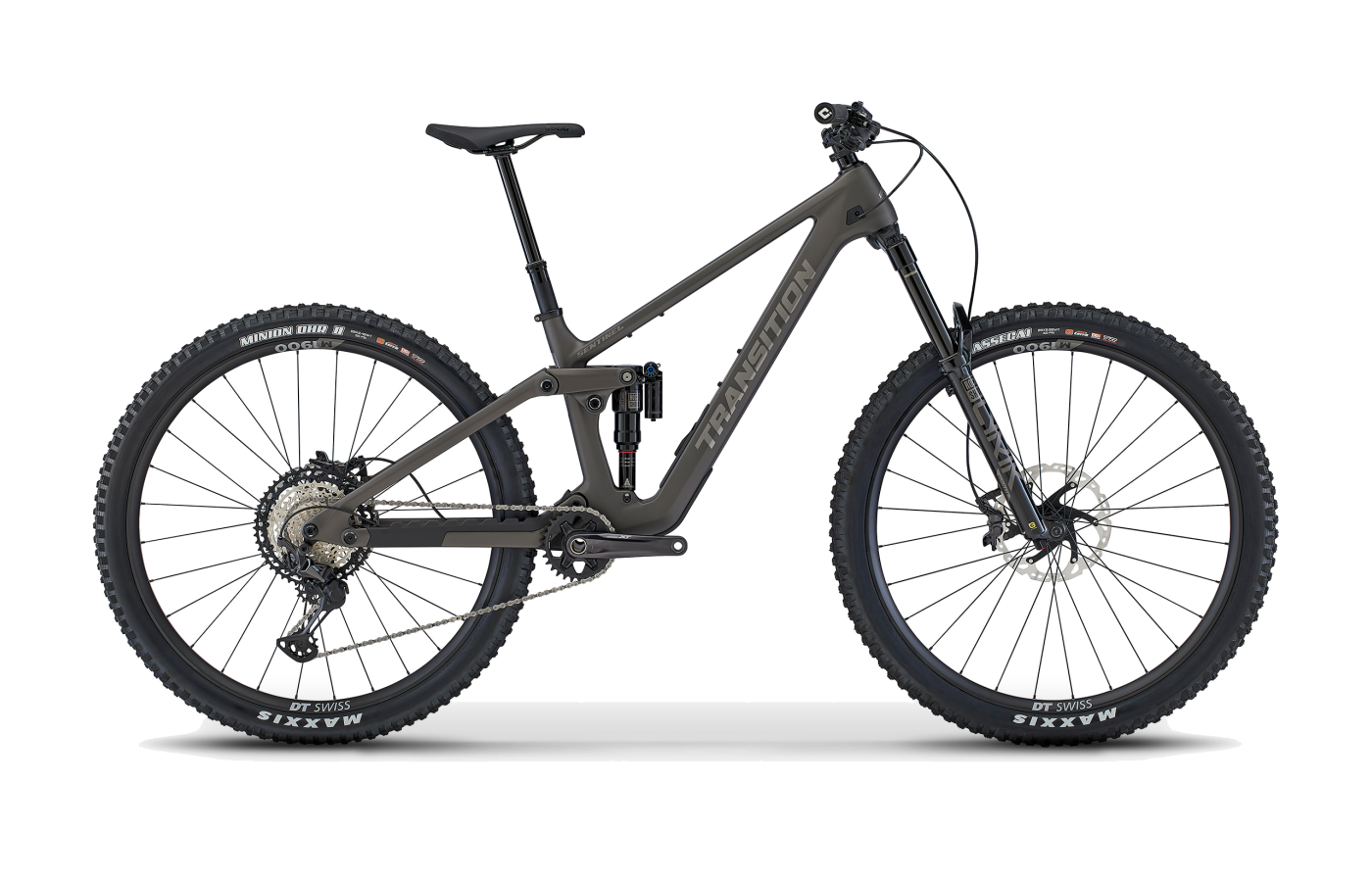
Same family, two different appetites for gravity.
The Sentinel is the sporty 150 mm trail bike that wants to play. The Spire is the 170 mm bruiser that only really wakes up above 30 km/h.
Sentinel
- Sportier, more energetic ride — supportive mid-stroke and 'BMX-ish' pop reward an active rider on rolling singletrack.
- Wider build range — nine builds from $3,499 alloy Deore to a $9,999 Carbon XTR Di2 flagship.
- Climbs and pedals lighter — 32.9 lb (Carbon XT, MD) and 78.9 deg seat angle keep the front planted on technical ascents.
- Stock Super Deluxe Ultimate shock tune is widely criticized as too lightly damped — budget for a re-tune if you ride aggressively.
- Higher 350 mm bottom bracket trades cornering grip for pedal clearance — less locked-in than the Spire in fast berms.
Spire
- Composed at speed — 170 mm of GiddyUp travel and a 1287 mm wheelbase (LG) make near-vertical descents feel approachable.
- Slacker, more planted geometry — 63 deg head angle and lower BB (343 mm low setting) settle the bike into high-lean corners.
- Burlier stock cockpit and suspension — ZEB Ultimate fork, Vivid Ultimate shock, Burgtec bar/stem on the Carbon Eagle 90 build are park-ready out of the box.
- Heavier and slower at lower speeds — feels portly on flat or mellow trails where the Sentinel stays engaging.
- Only three builds, none under $4,199 and none above $7,699 — no entry-level or flagship option.
Editor’s analysis
Both ride on Transition's GiddyUp linkage and the same 'Engineered to Party' ethos — but one is a poppy do-everything trail bike, the other is a near-DH chassis you have to pedal up first.
On paper they look like neighbors: Transition Sentinel at 160/150 mm, Transition Spire at 170/170 mm, both 29ers, both four-bar GiddyUp, both with size-specific chainstays. Spend a single ride on each and the gap opens fast — these are not two trims of the same idea. The Sentinel V3 is the sportier evolution Transition pitched as a 'long-travel Smuggler'; the Spire is closer to the brand's 'nimble bruiser' enduro flagship, sitting one rung below the dedicated Patrol mullet and the TR-11 DH bike.
Geometry tells the story. Both bikes have a 64 vs 63 degree head angle (Sentinel steeper by a full degree), and the Sentinel's 480 mm reach in Large pairs with a 1273 mm wheelbase against the Spire's 485 mm reach and 1287 mm wheelbase. That's only a 14 mm wheelbase difference, but combined with the slacker front and a notably lower bottom bracket on the Spire (about 343 mm low / 350 mm high vs the Sentinel's 350 mm), the Spire feels longer and more planted in steeps while the Sentinel snaps through tight singletrack. Reviewers consistently flag the Sentinel's higher BB as a desert-friendly pedal-clearance win that costs you a little 'locked-in' feel in fast berms.
Suspension behavior diverges in the same direction. Reviewers describe the Sentinel as firmer and 'BMX-ish', sitting higher in its travel and rewarding pumps and pops — at the cost of a harsher feel on square-edged hits, and with a stock Super Deluxe Ultimate tune that several testers (Blister, Pinkbike, NSMB) called 'bizarrely light' and worth re-tuning. The Spire is 'gooier' off the top, pitter-patters small chatter, and once speeds climb above the 30 km/h zone it turns into the bike that lets you 'run it out' on lines you'd brake for on the Sentinel. The trade-off: at low speeds the Spire feels portly and over-biked, where the Sentinel still feels engaging.
Weight and price reinforce the split. A size-MD Carbon XT Sentinel weighs about 32.9 lb / 14.92 kg; the equivalent Carbon Eagle 90 Spire is roughly 34.9 lb / 15.84 kg. Sentinel pricing starts at $3,499 and tops out at $9,999 with a flagship XTR Di2 build; the Spire's three-build range runs $4,199 to $7,699 and skips the very top tiers entirely. If you want a quiver-of-one trail bike with deep build options, the Sentinel is the obvious answer. If your rides start with a fire-road grind to a black-diamond plunge, the Spire's extra travel and slacker front exist for exactly that reason.
Where the builds differ.
Comparing our editor's-pick builds side-by-side. Winners highlighted row-by-row — lower price and weight, and the better-spec component, each mark a point.
Build variants & pricing
Sentinel spans nine builds from $3,499 to $9,999. Spire holds three builds in the $4,199–$7,699 band — no entry-level alloy Deore, no XTR/XX SL flagship.
Prices are current US MSRP. We've tier-matched both editor's picks to the Carbon Eagle 90 build so the spec table compares like-for-like SRAM Eagle 90 mechanical drivetrains and RockShox suspension, with the Spire stepping up to a ZEB/Vivid combo befitting its enduro intent.
How they fit, how they steer.
Both at size MD — the fit-picked size for a 5'8" rider on each bike. Stack is essentially identical (621 vs 619 mm), but the Spire is a degree slacker (63 vs 64), 5 mm longer in reach, and 4 mm longer in chainstay — it sits more planted at the cost of low-speed agility.
Which size should I buy?
Size recommendations based on stack, reach, and effective top tube. Both ranges run XS through XXL with closely matched reach increments, so most riders will end up on the same size letter on either bike.
→These are starting points. Flexibility, riding style, and preferred position all shift the answer — if you’re between sizes, a professional fit beats a chart.
What the magazines said.
Published reviews from trusted cycling outlets. Click through for the full write-up.
Which one should you buy?
If you want one bike for everything from Tuesday-night trail loops to occasional bike park days, get the Sentinel. If your typical ride ends in a black-diamond plunge, get the Spire.
Sentinel
If you want a sporty, energetic 150 mm bike that handles desert chunk, mellow flow, and the occasional bike park day, the Sentinel V3 is the platform that does the most things well. The Carbon Eagle 90 build at $6,699 is the value sweet spot — full Lyrik/Super Deluxe Ultimate suspension and a frame that scales up to a $9,999 XTR Di2 flagship if you ever want to go further.
Spire
If most of your descents are steep, fast, and consequence-heavy — bike park laps, shuttled enduro, or self-pedaled black-diamond missions — the Spire's extra 20 mm of travel and slacker front end give you margin the Sentinel can't. The Carbon Eagle 90 build pairs a ZEB Ultimate fork and Vivid Ultimate shock for park-ready composure right out of the box.
Questions buyers actually ask.
Short answers to the things we get emailed about most often.
01Which is better for an everyday trail rider?
The Sentinel V3, by a clear margin. With 150 mm of rear travel, a 64-degree head angle, and a 350 mm bottom bracket, it stays engaging on mellow singletrack where the Spire feels portly and over-biked. Reviewers consistently describe the Sentinel as 'sporty' and 'BMX-ish,' meaning it rewards pumps, pops, and active line choices on terrain that isn't fall-line steep.
The Spire, by contrast, 'never truly feels alive until you reach cruising speed' — it's the better bike only once you start dropping into things you'd brake for on the Sentinel.
02How much travel does each have?
Sentinel V3: 160 mm front (Fox 36 or RockShox Lyrik) and 150 mm rear. The frame is also long-stroke compatible — swap to a 65 mm stroke shock and you can run it at 160 mm rear.
Spire: 170 mm front (RockShox ZEB on most builds) and 170 mm rear. That extra 20 mm of rear travel plus a stouter 38 mm-stanchion fork is the meaningful spec difference — it's not just a slacker Sentinel, it's a bigger chassis.
03How different is the geometry, really?
Bigger than the spec sheet suggests. Both bikes use 29-inch wheels, similar reach (480 mm Sentinel vs 485 mm Spire in size LG), and similar size-specific chainstay logic (442–448 mm Sentinel, 446–452 mm Spire). The differences that matter:
Head angle: Sentinel 64 deg, Spire 63 deg (or 62.5 in the low flip-chip setting). A full degree slackens the front end noticeably.
Wheelbase: 1273 mm Sentinel LG vs 1287 mm Spire LG — only 14 mm, but combined with the slacker front it adds up.
Bottom bracket: Sentinel sits at about 350 mm; Spire drops to about 343 mm in its low setting. The Spire feels more locked into corners; the Sentinel has better pedal clearance for chunky climbs.
04Which one is heavier?
The Spire, by roughly 2 lb across comparable builds. The Sentinel Carbon XT (size MD) weighs 32.9 lb / 14.92 kg, and the Carbon Eagle 90 Spire weighs around 34.9 lb / 15.84 kg in MD with similar suspension and drivetrain. Alloy versions on both sides add another 1.5–2 lb. That extra weight on the Spire is structural — it has a stouter fork, a longer-travel rear shock, and burlier tires standard.
05Is the Spire too much bike for my local trails?
If your local rides are mostly mellow XC, flow trails, or moderate technical singletrack — yes, probably. Multiple reviewers note the Spire 'penalizes you a hair' on flat ground and feels 'over-biked' below about 30 km/h. It only earns its cost on steep, sustained, fast descents.
If your weekly riding includes lift-served bike park laps, shuttle days, or true black-diamond descents you have to pedal to the top of, the Spire pays back the weight and slackness. Otherwise, the Sentinel is the more honest answer.
06What about the stock shock tune complaint on the Sentinel?
It's a real and consistent critique. Blister, Pinkbike, and NSMB all flagged the stock RockShox Super Deluxe Ultimate as having 'bizarrely light' compression damping that lets the bike blow through its mid-stroke on square-edged hits. Several reviewers said a re-tune or shock swap was 'transformative.'
If you're a heavier or more aggressive rider, budget roughly $200–300 for a custom re-tune from a place like Push or Vorsprung. Lighter riders or those on flowier terrain often don't notice. The Spire's stock Vivid Ultimate (on the Carbon Eagle 90) doesn't draw the same complaints.
07Can I run either as a mullet (mixed wheels)?
Sentinel: Yes, by design. The V3 has a flip-chip specifically for mixed-wheel use, and Transition recommends the 'High' chip setting with a 27.5-inch rear wheel — it lowers the BB about 6 mm and slackens the head angle by 0.4 degrees. Reviewers from Blister and Awesome MTB consistently called this the bike's 'Goldilocks' setup.
Spire: Also yes, via flip-chip — though the 'Low' setting at 62.5 deg is the more frequently praised configuration for the Spire's intended steep-and-fast use case. The XS Spire ships dual 27.5 by default; everything S and up is 29 or convertible.
08What's the warranty situation?
Both come with Transition's lifetime frame warranty to the original owner against manufacturing defects. Transition also extends crash-replacement pricing to second-hand owners — a relatively rare and reviewer-praised policy. Bearing kits and small replacement parts are sold directly from transitionbikes.com, which reviewers consistently call out as 'no-nonsense' customer support.
Similar bikes
If your priorities don’t map cleanly onto either of these, one of these adjacent bikes probably fits better.
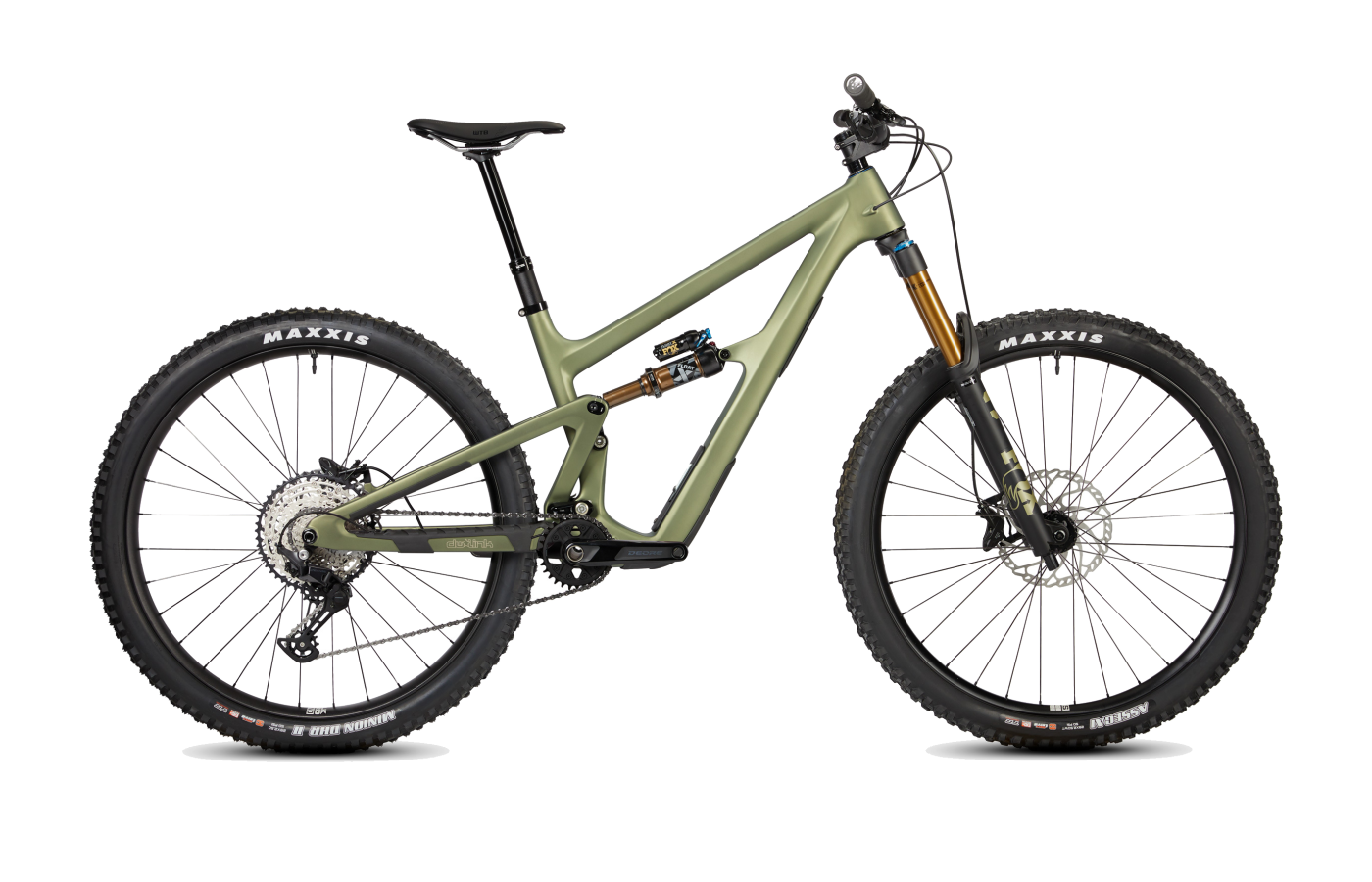
Ripmo
The Ripmo is the Sentinel's most direct rival — similar travel and head angle, but with DW-link 'tractor' climbing traction that many testers prefer to the GiddyUp linkage on long fire-road grinds.
Compare →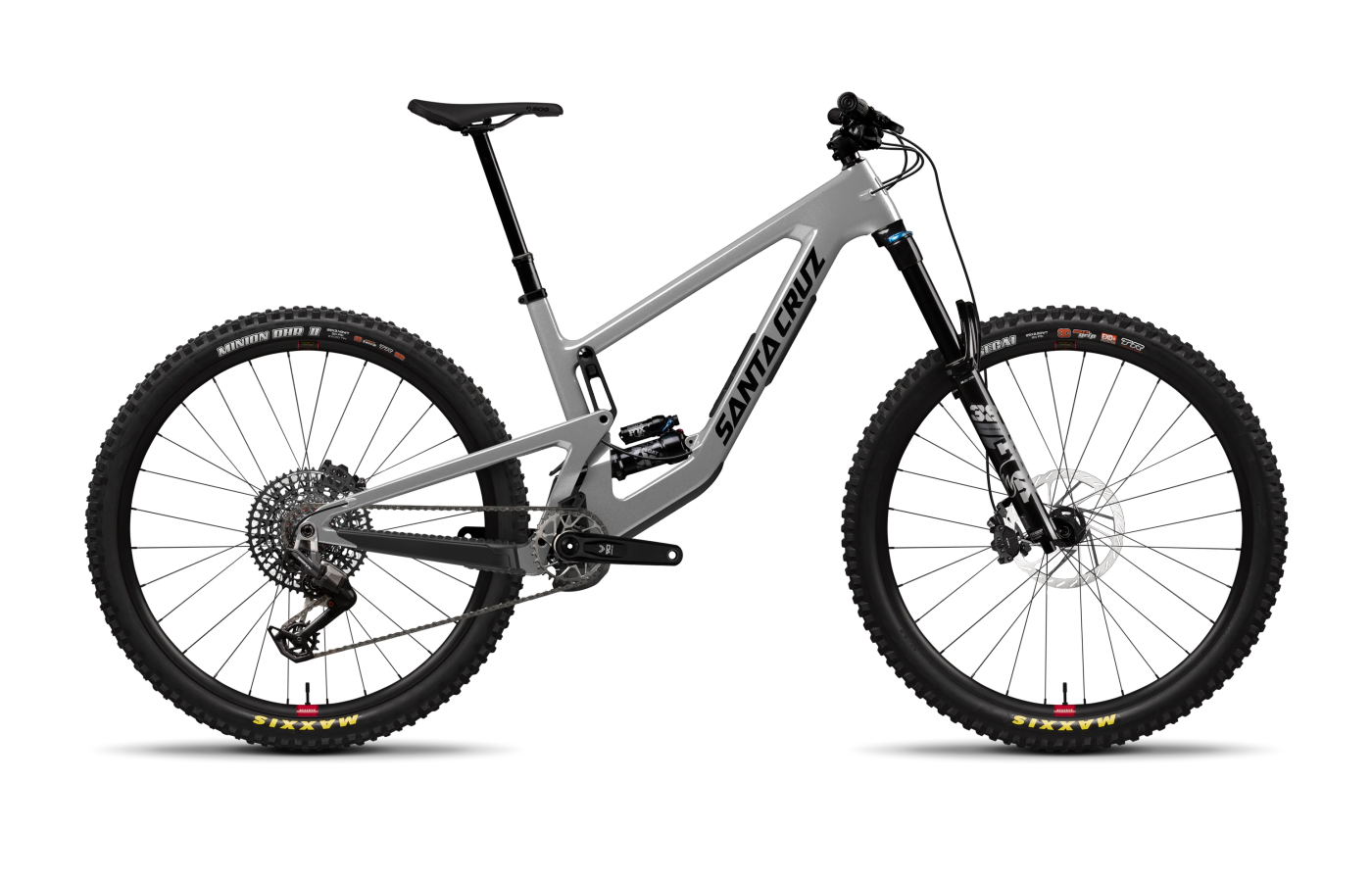
Megatower
Santa Cruz's 170 mm 29er is the Spire's closest spiritual rival — slightly more damped and 'muted' on chunky terrain than the Spire's livelier, more communicative chassis.
Compare →Patrol
If you want the Spire's aggressive intent in a factory mullet, the Patrol delivers the same 'Engineered to Party' DNA with the cornering agility of a 27.5-inch rear wheel.
Compare →