Checkmate
vsDomane
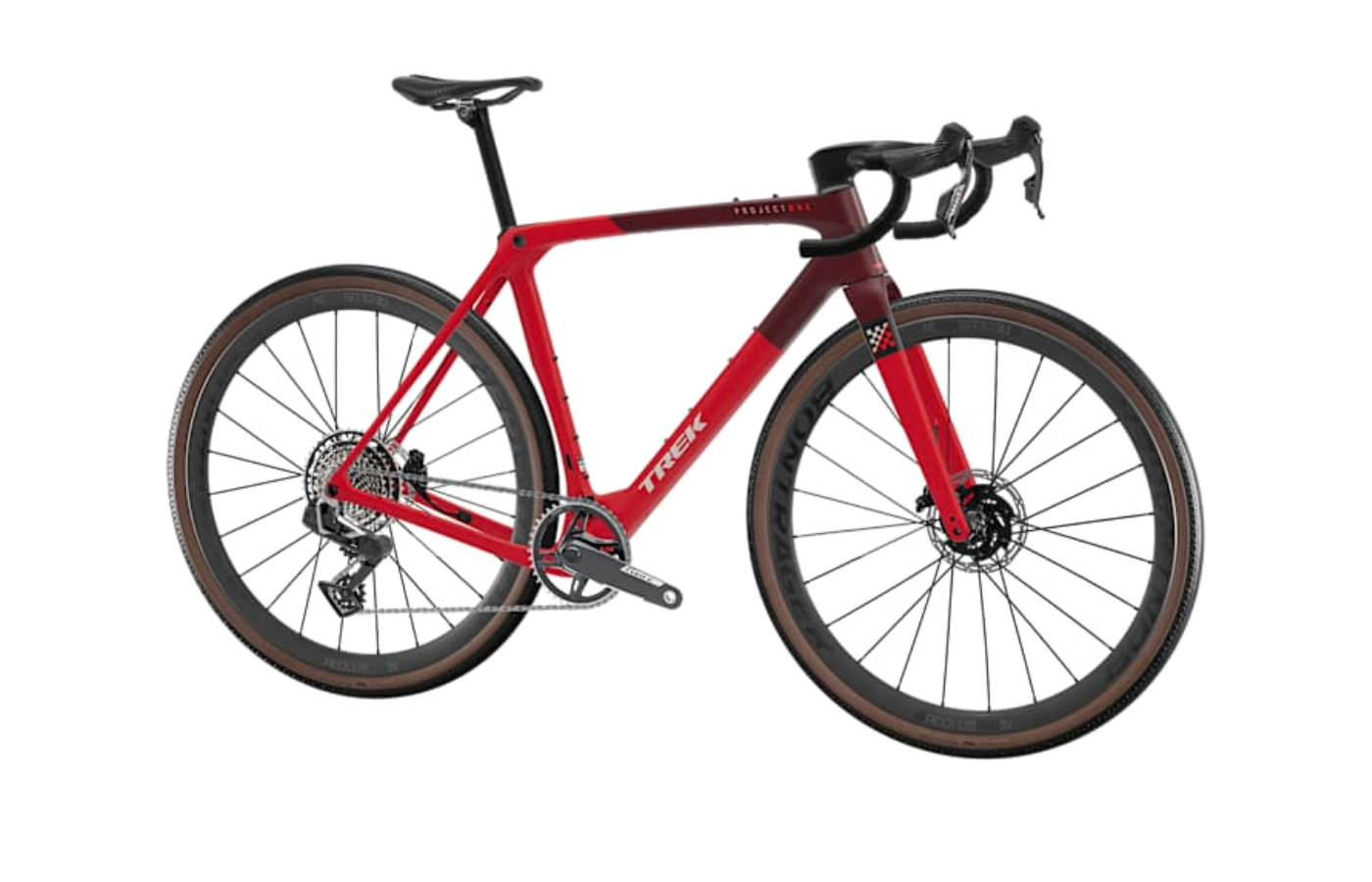
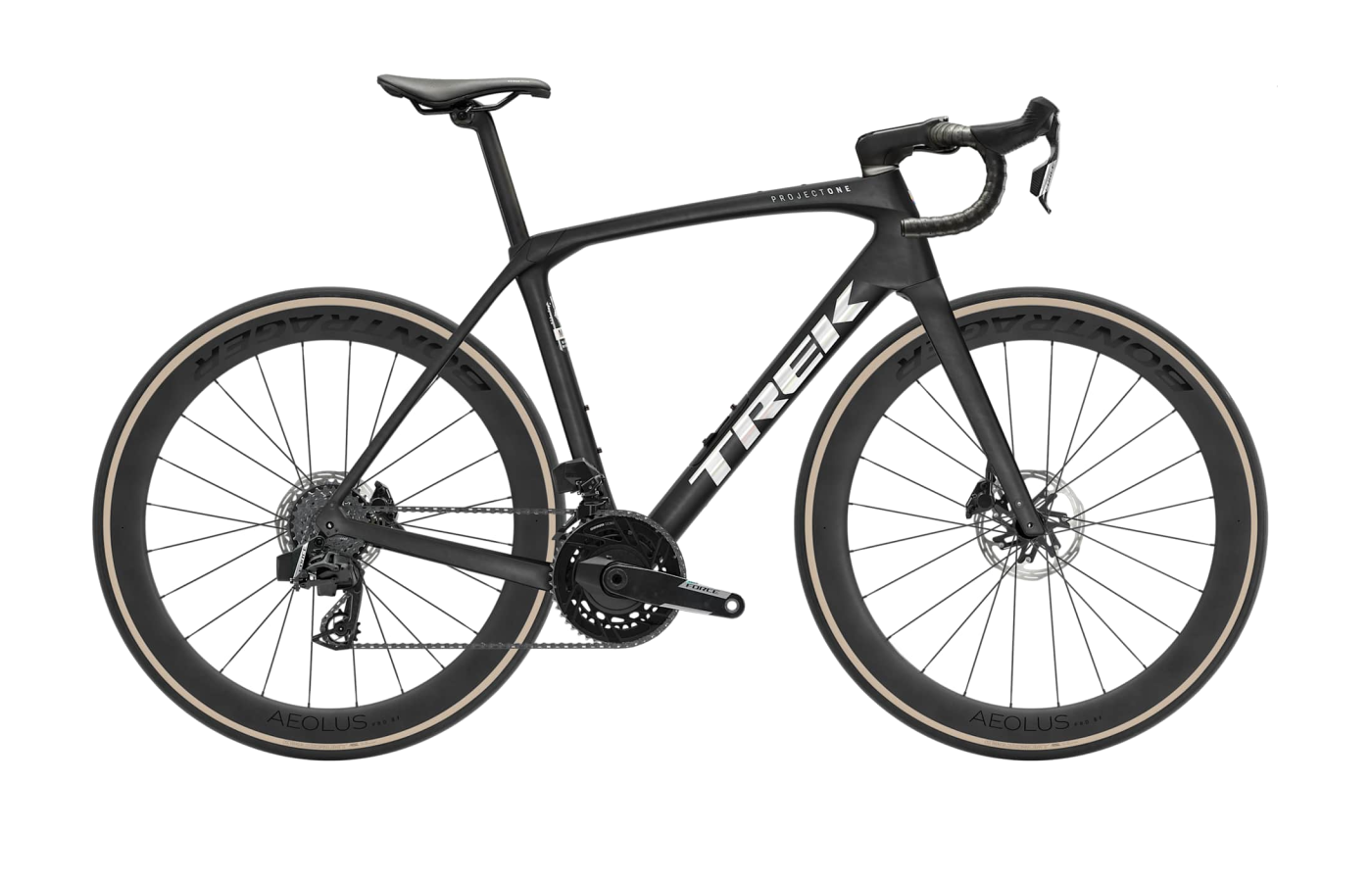
Same brand, same IsoSpeed — different missions.
The Checkmate is Trek's first dedicated gravel race bike. The Domane is the all-road endurance benchmark that asks for nothing back.
Checkmate
- Genuinely race-fast — Trek claims ~6 min faster over Unbound 200 at 200 W vs. the Checkpoint SLR.
- Class-light at 7.55 kg (ML, SLR 9 AXS, claimed) — climbs like a road bike with knobs.
- Refined IsoSpeed — rear-end compliance lets you stay seated and put down power on washboard.
- Hard-capped at 45 mm tires — not the bike for 50 mm Unbound builds or true singletrack.
- $8,199 floor and only two builds — no entry-level path into the platform.
Domane
- Astonishing rear comfort — the non-adjustable Gen 4 IsoSpeed neutralizes road buzz without bouncing under power.
- True all-road versatility — 38 mm clearance plus internal down-tube storage, fender mounts, and three bottle bosses.
- Full price ladder from $1,199 alloy Claris up to $12,499 Red AXS — every tier is on the menu.
- Documented seatpost-creak / slip issue on early Gen 4 frames; verify revised wedge hardware before buying.
- Stock Bontrager R3 tires drag the SL builds down — most reviewers swap immediately.
Editor’s analysis
Trek used to sell one bike for both of these riders. Now there are two — and the line between them is sharper than the model names suggest.
On paper, these are siblings: same 800 Series OCLV carbon, same rear IsoSpeed decoupler, same T47 threaded bottom bracket, both bolted together in the same Wisconsin factory. The Trek Checkmate even pulls its integrated Aero RSL cockpit straight from the Madone road-race bike. So the temptation is to call this a road-vs-gravel comparison and move on. The geometry numbers say it's more interesting than that.
The Trek Checkmate is the gravel race specialist — 45 mm tire clearance, no internal storage hatch (Trek's racers said external bags are faster in a crisis), and an 80 mm bottom-bracket drop that pins it to fast hardpack like a road bike with bigger tires. Reviewers consistently used the word "Madone-ification": one called it "the best endurance road bike there ever was." Trek claims it's nearly six minutes faster than the old Checkpoint over the Unbound 200 course at 200 watts. It's also stiff. The integrated cockpit is "bordering on unforgiving" in chunky terrain — the trade-off for that aero advantage.
The Trek Domane sits in the older, more catholic tradition: a 38 mm tire-clearance endurance road bike that happens to be a credible light-gravel rig. Geometry is taller and shorter (74 mm of stack difference between equivalent fit-picked sizes here), the rear IsoSpeed is now a single non-adjustable tune that Trek says matches the softest setting of Gen 3, and the frame shed roughly 300 g vs. its predecessor. Reviewers loved the rear compliance and the fully-internal storage hatch in the down tube. They were less kind to the stock Bontrager R3 tires ("slow, stiff, disappointing" was a common refrain) and to the seatpost wedge, which has a documented history of slipping until Trek's revised hardware lands.
Put another way: the Trek Checkmate is the bike you buy if your weekends are gravel races and high-tempo group rides on champagne dirt. The Trek Domane is the bike you buy if your weekends are 100-mile road centuries with a dirt detour, and you'd like the same bike to handle a wet commute in fenders. Same brand. Same factory. Different lives.
Where the builds differ.
Comparing our editor's-pick builds side-by-side. Winners highlighted row-by-row — lower price and weight, and the better-spec component, each mark a point.
Build variants & pricing
Both editor's picks land on SRAM Force AXS and 800 Series OCLV carbon — within $800 of each other. From there, the lineups diverge sharply.
Prices are current US MSRP. The Checkmate ships in just two builds (Force XPLR AXS and Red XPLR AXS), both 1x. The Domane spans ten builds from $1,199 Claris alloy to $12,499 Red AXS — if you want a sub-$5k carbon endurance bike with these bones, the Domane is the only one of the two that offers it.
How they fit, how they steer.
Fit-picked at Checkmate M and Domane 50. The Checkmate sits 14 mm lower in stack and 24 mm longer in reach — that's the gap between a gravel race tuck and an endurance road position. Both share an 80 mm BB drop, so neither is twitchy at speed.
Which size should I buy?
Both bikes run wide size ranges (Checkmate XS–XL, Domane 47–62), and frame stack/reach numbers differ enough that the size labels don't translate one-for-one.
→These are starting points. Flexibility, riding style, and preferred position all shift the answer — if you’re between sizes, a professional fit beats a chart.
What the magazines said.
Published reviews from trusted cycling outlets. Click through for the full write-up.
Which one should you buy?
If you race or want to: get the Checkmate. If you want one bike that does road centuries, light gravel, and a fendered commute: get the Domane.
Checkmate
If your calendar has number plates on it — Mid-South, Unbound, BWR, the local 100-mile gravel marathon — the Checkmate is the lightest, fastest gravel bike Trek has ever built. Just commit to the 45 mm tire ceiling before you buy.
Domane
If you want one bike for hilly road centuries, the occasional dirt detour, and a rainy commute with fenders — and you value rear-end comfort over outright race speed — this is still the benchmark. Just plan to upgrade the stock tires.
Questions buyers actually ask.
Short answers to the things we get emailed about most often.
01What's the maximum tire clearance on each?
Trek Checkmate: 45 mm officially, and reviewers confirmed that's a hard ceiling — testers tried 50 mm Maxxis Ramblers and 2.1" Thunderbirds and both rubbed the chainstays. Don't push it; running over-spec rubber will abrade the carbon.
Trek Domane: 38 mm officially, with measured clearance up to 40–41 mm depending on tire shape. Several long-term reviewers fit a true 40 mm tire without issue.
Neither is a chunky-singletrack bike. If you want 50 mm+ for elite gravel racing, look elsewhere — the new Cervélo Áspero-5 or a Salsa Cutthroat get into MTB-tire territory.
02Both have IsoSpeed — does it work the same way?
Same idea, different tunes. Both decouple the seat tube from the top tube so the D-shaped seatpost can flex vertically over bumps without losing power transfer.
On the Trek Domane Gen 4, IsoSpeed is non-adjustable and tuned to match the softest setting of the Gen 3 system — Trek's data showed most riders preferred maximum compliance. On the Trek Checkmate, the hardware is more prominent and exposed, which reviewers noted makes it easier to service. Both decouplers are rear-only; neither bike has a front IsoSpeed.
03Which is faster on pavement?
The Trek Checkmate, surprisingly. Multiple reviewers noted it "rips on pavement" and one called it "the best road bike with bigger tires that has ever existed," thanks to the Madone-derived aero tube shapes and the integrated Aero RSL cockpit. Cyclist Magazine even argued the Checkmate is a better value than the Domane for pure tarmac riding — top-spec Checkmate is roughly £1,270 cheaper than a similarly-equipped Domane SLR while being lighter.
The Trek Domane fights back on broken pavement and long days, where the upright fit and tall stack reduce fatigue. It's faster on the flats once you swap the heavy stock wheels and tires.
04Why does the Checkmate have no internal storage when the Domane does?
Trek's gravel-race team specifically asked for it removed. According to Bicycling, the Checkmate's racers told Trek that external frame bags are faster to access during a mid-race crisis (flat, mechanical, fueling) than fishing tools out of an internal hatch. Removing the hatch also saves weight — part of how the Checkmate comes in roughly 1.5 lb lighter than the outgoing Checkpoint SLR.
The Trek Domane keeps the hatch because endurance riders value the convenience for tools, CO2, a phone, and a wallet on long unsupported rides. Cycling News called it a "genuinely excellent" feature.
05Is the Domane's seatpost-creak issue resolved?
Mostly. Multiple long-term reviews of early Gen 4 frames (2023) reported a creaking, slipping seatpost — one tester said theirs dropped nearly 2 cm during a ride. The culprit is the IsoSpeed wedge that clamps the D-shaped post.
Trek released revised hardware (Revision 2 and then Revision 4 wedges) to address it, and reviewers found the updated parts plus a generous coat of carbon paste resolved the issue. If you're buying used or new old stock, ask the dealer to confirm the latest wedge is installed. Riders over ~80 kg appear most affected.
06Can I put gravel tires on the Domane and skip the Checkmate?
Up to a point — yes. The Trek Domane clears 38 mm officially (40 mm in practice) and reviewers used it as a "certifiable all-road" bike on light gravel and pothole-strewn back roads. With 38 mm Bontrager Kwaremont tires and the rear IsoSpeed, it's plenty for fire-road exploring and shorter dirt events.
What you lose vs. the Trek Checkmate: roughly 7 mm of tire clearance, ~600 g of frame weight on equivalent SLR builds, the aggressive race fit, and the aero tube shapes. For a podium-chasing racer that gap matters. For most riders dabbling in gravel, the Domane is enough bike.
07What groupsets are available?
Trek Checkmate: SRAM-only, electronic-only, 1x-only — Force XPLR AXS on the SLR 7 ($8,199), Red XPLR AXS 13-speed on the SLR 9 ($11,999). Both include a power meter. No Shimano, no mechanical, no 2x.
Trek Domane: the full ladder. Shimano Claris (AL 2, $1,199), Tiagra (AL 4, $1,799), 105 mechanical (SL 5), 105 Di2 (SL 6), Ultegra Di2 (SL 7 and SLR 7), Force AXS (SLR 7 AXS), Dura-Ace Di2 (SLR 9), and Red AXS (SLR 9 AXS). All road-style 2x cranksets.
If you want Shimano or mechanical shifting, the Domane is your only choice between these two.
08What warranty do they come with?
Both frames carry Trek's lifetime frame warranty to the original owner against manufacturing defects. Trek also covers Bontrager carbon wheels for life on the original purchaser. Crash-replacement pricing is available through Trek dealers for damage outside the warranty (typically a steep discount on a replacement frameset).
Given the documented Domane seatpost-wedge revisions, keep your purchase paperwork and ask the dealer to register the bike — that's how warranty hardware revisions get routed to you.
Similar bikes
If your priorities don’t map cleanly onto either of these, one of these adjacent bikes probably fits better.
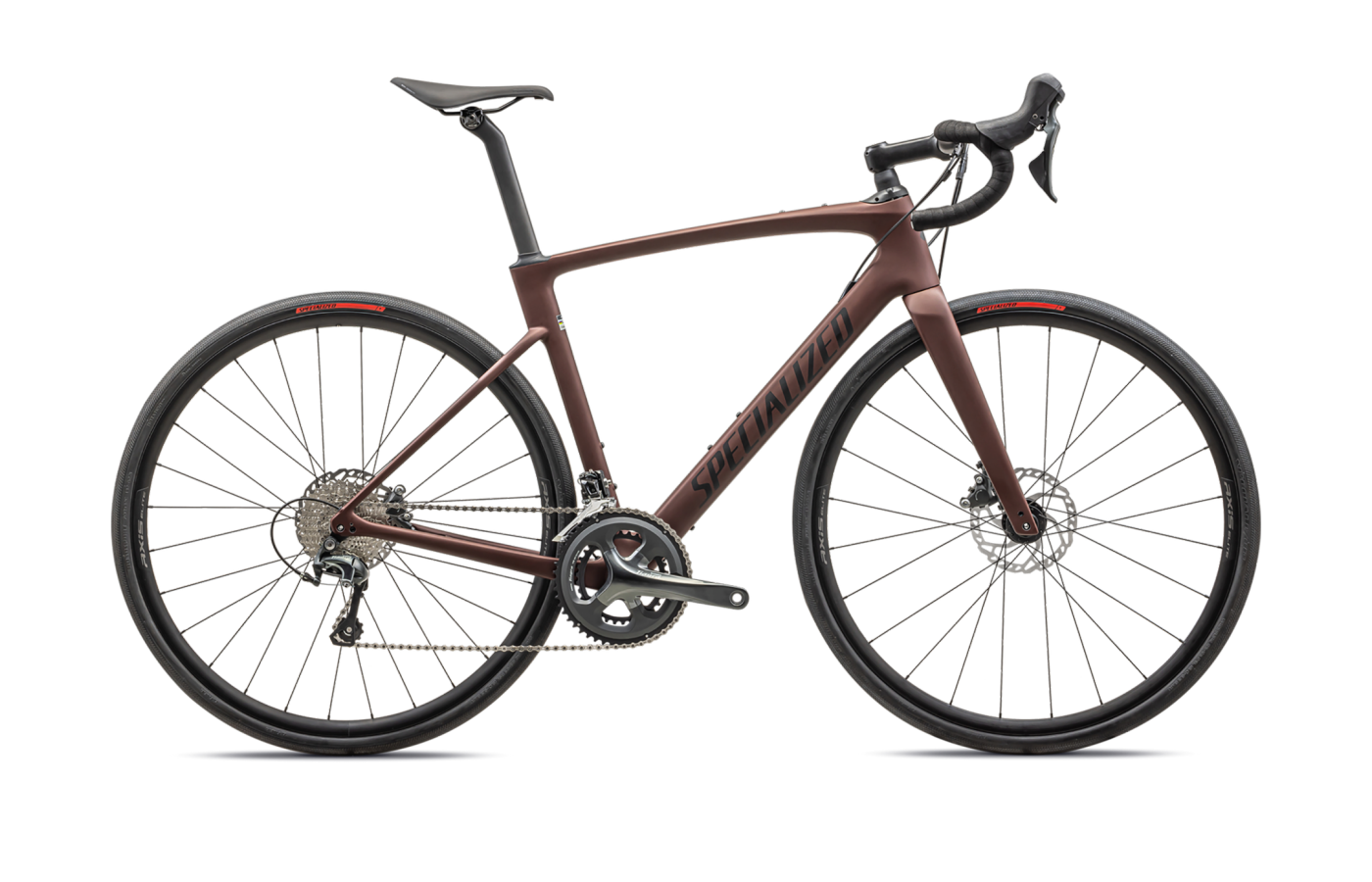
Roubaix
The Domane's most direct rival — same all-road brief, similar 38-40 mm tire clearance, but Specialized's Future Shock cartridge in the head tube handles front-end compliance instead of relying on tires alone. If the Domane's front end feels harsh to you, this is the test ride to take next.
Compare →
Grail
A direct alternative to the Checkmate at a meaningfully lower entry price, with integrated frame storage the Checkmate doesn't offer and Canyon's split-clamp aero cockpit. The catch: direct-to-consumer means no demos and no local shop — best if you're confident on fit.
Compare →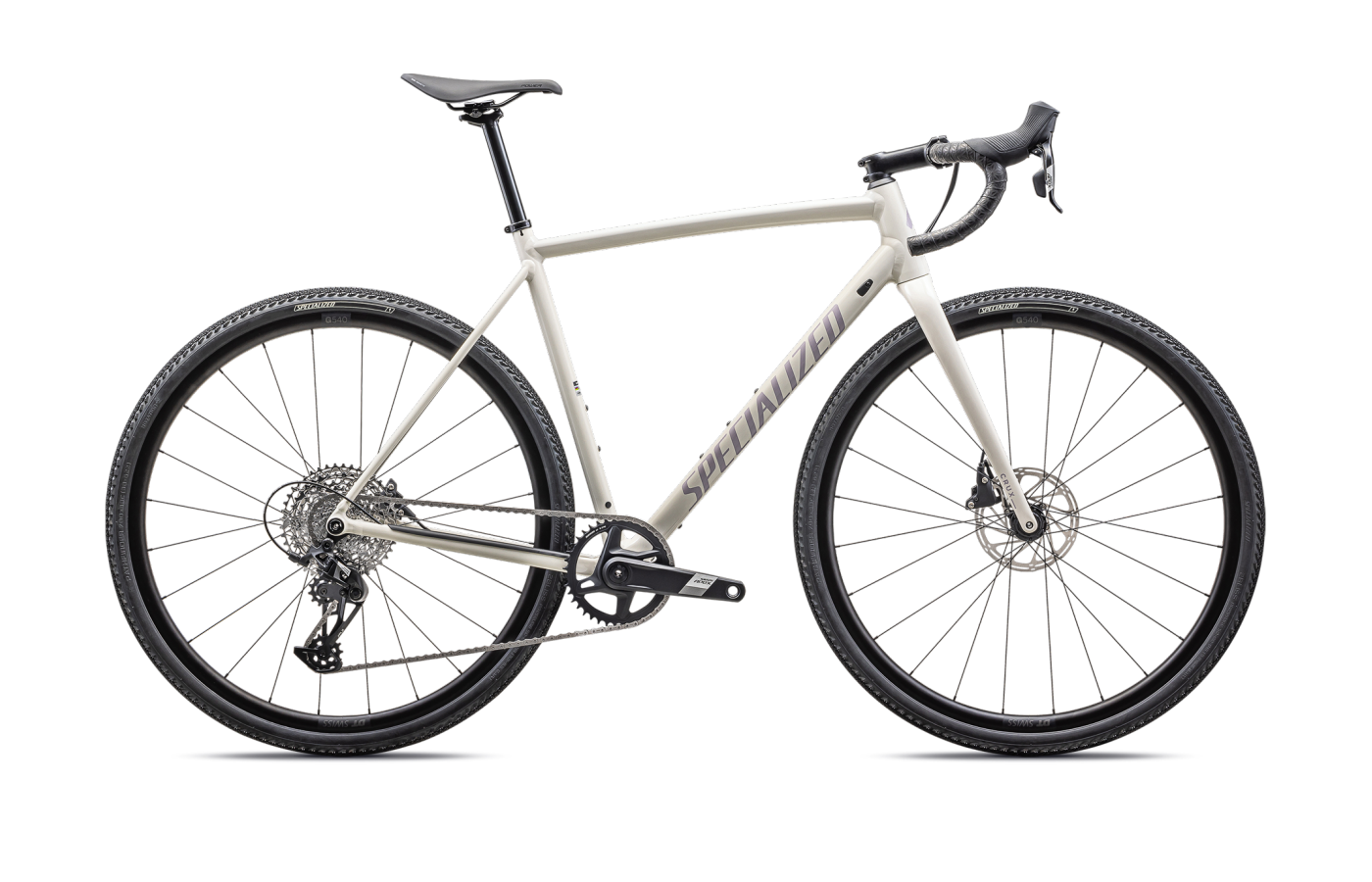
Crux
The anti-Checkmate. Same gravel-race brief but with a featherweight, traditional-tube frame instead of aero shaping — the Crux is one of the lightest production gravel bikes ever made. Pick this if grams matter more than watts.
Compare →