Domane
vsEmonda ALR
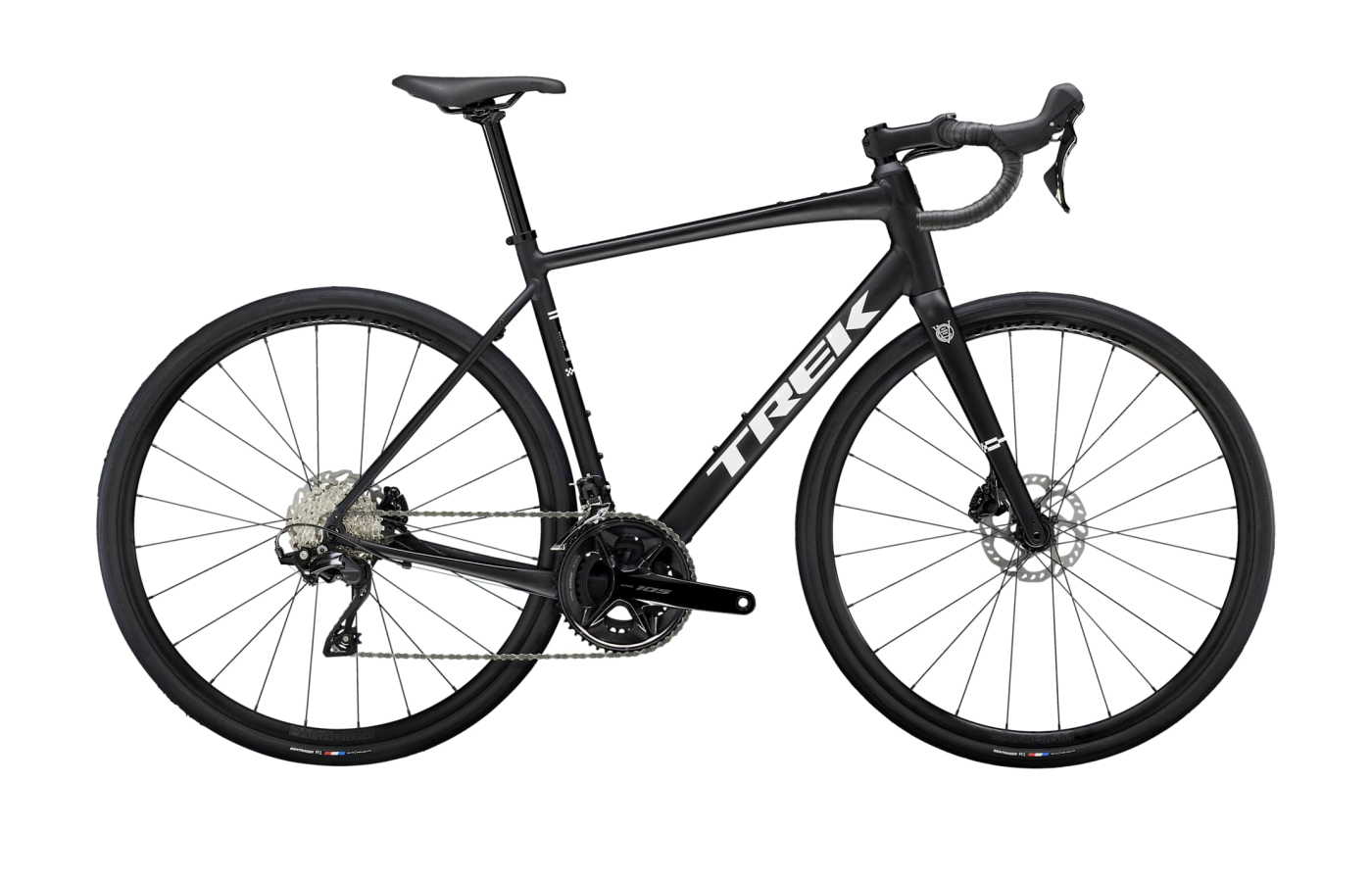
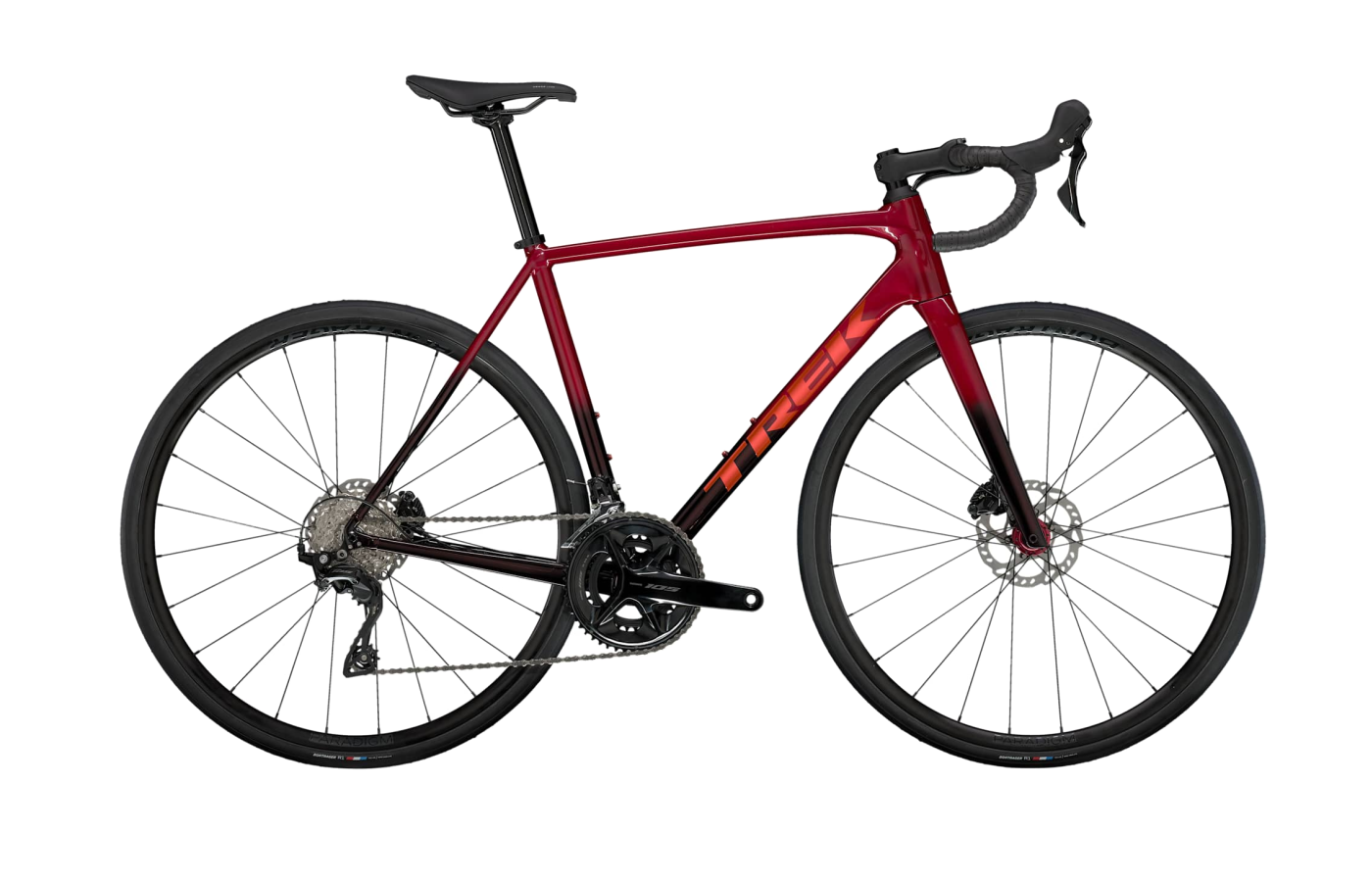
Same brand, opposite missions.
The Domane is Trek's all-day endurance platform built around rear IsoSpeed and 38 mm tires. The Emonda ALR is its alloy crit racer — pro geometry, half the price.
Domane
- Rear IsoSpeed compliance — reviewers describe it as "astonishingly comfortable" on broken tarmac and pothole carpets.
- 38 mm tire clearance with fender mounts and internal downtube storage — a true all-road bike, not just a comfortable road bike.
- Wide build range from a $1,199 Claris alloy to a $12,499 Red AXS SLR — pick your budget, pick your spec.
- Heavy in stock form — most reviewers say the Paradigm wheels and R3 tires need replacing to wake the bike up.
- Long-running seatpost-creak issue tied to the IsoSpeed wedge; Trek has shipped multiple revisions to fix it.
Emonda ALR
- Pro-grade H1.5 geometry lifted directly from the carbon Emonda SLR — same race position, third the price.
- 1,257 g claimed frame — only 34 g heavier than the carbon Emonda SL, with the same fork.
- No proprietary parts — 27.2 mm round seatpost, 1-1/8" steerer, 31.8 mm bar clamp. Easy to upgrade, easy to live with.
- One build, one price — no Di2, no electronic, no carbon-wheel option from the factory.
- Conservative 28 mm official tire clearance and zero fender mounts. Strictly a fair-weather race bike.
Editor’s analysis
Both wear the Trek badge, both run 105, both have T47 bottom brackets and routed-through-the-headset cables. Almost everything else is a fight.
The Trek Domane is the brand's endurance flagship and it spans almost the entire road price ladder — $1,199 alloy AL 2 at the bottom, $12,499 SLR 9 AXS at the top. Gen 4 sheds the front IsoSpeed decoupler, keeps a non-adjustable rear, drops about 300 g of frame weight, and pushes official tire clearance to 38 mm. It's pitched as a do-everything platform: long fondos, light gravel, year-round commuting, with internal downtube storage and full fender mounts.
The Trek Emonda ALR sells one build, in one trim, for $2,499. It's built from Trek's 300 Series Alpha aluminum with Invisible Weld Technology, paired to the same carbon fork and H1.5 race geometry as the carbon Emonda SL. The frameset is a claimed 1,257 g — only 34 g heavier than the carbon version — so the platform punches well above its weight, both literally and on price.
Geometry tells the rest of the story. At a 5'8" rider's fit-picked sizes, the Domane (size 50) sits at 546 mm stack and 368 mm reach. The Emonda ALR (size 54cm) is 5 mm lower in stack but 18 mm longer in reach, with a 73° head tube angle versus the Domane's 71.1° and 4 mm less trail. Chainstays are 10 mm shorter on the Emonda. The Domane is tuned for stability and all-day comfort; the Emonda is tuned to flick.
Put another way: the Domane is the bike you buy when you want one road bike that can also do the bad pavement. The Trek Emonda ALR is the bike you buy when you already have something for long days and want a stiff, cheap, race-capable second tool — or when you're a privateer racer who refuses to risk a $5,000 carbon frame in the bunch.
Where the builds differ.
Comparing our editor's-pick builds side-by-side. Winners highlighted row-by-row — lower price and weight, and the better-spec component, each mark a point.
Build variants & pricing
The Domane spans $1,199–$12,499 across ten builds; the Emonda ALR is sold as a single $2,499 105 build.
Editor's picks pair the Domane AL 5 ($2,099, alloy, mechanical 105) with the Emonda ALR 5 ($2,499, alloy, mechanical 105) — the only apples-to-apples comparison Trek offers between these two platforms. Step up to carbon and Di2 on the Domane and the price gap balloons; the Emonda ALR has no equivalent rung.
How they fit, how they steer.
Fit-picked for a 5'8" rider on each bike — size 50 on the Domane, size 54cm on the Emonda ALR. The Emonda sits 5 mm lower in stack, 18 mm longer in reach, with a steeper 73° head tube and 4 mm less trail. Chainstays are 10 mm shorter and the wheelbase is 15 mm tighter — it's built to flick.
Which size should I buy?
Trek's two sizing conventions don't align directly — the Domane uses cm-style 47/50/52 labels while the Emonda ALR appends "cm" to the same numbers. Pick by stack and reach, not the label.
→These are starting points. Flexibility, riding style, and preferred position all shift the answer — if you’re between sizes, a professional fit beats a chart.
What the magazines said.
Published reviews from trusted cycling outlets. Click through for the full write-up.
Which one should you buy?
If you want one bike for long days, mixed surfaces, and year-round riding, get the Domane. If you want a stiff, light, race-position alloy bike for a third the cost of carbon, get the Emonda ALR.
Domane
If your weekends are long, your roads are imperfect, and you'd rather the bike disappear underneath you than demand your full attention — the Domane is still the benchmark. The 38 mm clearance, fender mounts, and rear IsoSpeed make it a credible year-round bike from a single platform.
Emonda ALR
If you want a carbon-killer for criteriums, KOM hunts, and town-sign sprints without the expense or anxiety of a $5,000 frame, this is the cheapest way into the Trek race platform. The H1.5 geometry is borrowed straight from the SLR and it doesn't pretend to be anything other than a race bike.
Questions buyers actually ask.
Short answers to the things we get emailed about most often.
01Which is faster on flat roads?
Frame-for-frame, the Trek Domane carries speed slightly better thanks to its newer Kammtail tube shaping and deeper-rim Bontrager Aeolus options on the SLR/SL builds. The Emonda ALR also uses Kammtail shaping but Trek hasn't published wind-tunnel numbers and the stock Paradigm SL alloy wheels are shallow.
In the matched mid-range builds (Domane AL 5 vs Emonda ALR 5), both run the same alloy Paradigm SL wheels and similar tires — the difference flattens out and the Emonda's lighter, stiffer frame and more aerodynamic rider position likely win out.
02Which climbs better?
The Emonda ALR, comfortably. Trek positions the Emonda explicitly as its lightweight climbing platform, and the alloy frame is a claimed 1,257 g — only 34 g heavier than the carbon Emonda SL.
The Domane's lightest stock build (SLR 9 Gen 4 with Dura-Ace Di2) hits 7.34 kg, but the alloy AL 5 — its tier-match against the Emonda ALR 5 — comes in at 9.85 kg, nearly 700 g heavier than the 9.17 kg Emonda ALR 5. Pair that with the Emonda's race-position geometry and steeper seat tube and it climbs noticeably better in the trims most riders are actually choosing between.
03What's the maximum tire clearance?
Trek Domane: 38 mm officially, with several reviewers fitting 40–41 mm. Combined with full fender mounts, that makes it a credible light-gravel and year-round bike.
Trek Emonda ALR: 28 mm officially. Some reviewers have squeezed 30 mm in, but there are no fender mounts and Trek does not condone wider rubber. If you want to run anything bigger, you're on the wrong platform.
04Are both available with electronic shifting?
Only the Domane. Trek offers Di2 on the SL 6 (105 Di2, $5,099) all the way up to Dura-Ace Di2 and SRAM RED AXS on the SLR builds.
The Emonda ALR is sold in a single trim — Shimano 105 R7120 mechanical, 12-speed — for $2,499. There's no Di2 ALR build. If you want electronic shifting on the Emonda platform, you have to step up to the carbon Emonda SL or SLR.
05How serviceable are the cable routings?
Both bikes route cables through the upper headset bearing, which looks clean but adds real maintenance complexity. Reviewers of both platforms have flagged that replacing a single shift cable can run ~$200 in labor at a shop, versus roughly $25 for an externally routed bike.
The upper headset bearing also sits closer to the elements without secondary lip seals — expect more frequent bearing replacements than on a traditional bike, especially if you ride in the wet.
06What about the Domane's seatpost creak?
It's real and it's well-documented. Multiple long-term reviewers reported a creaking or slipping seatpost on Gen 4 Domanes, traced to the IsoSpeed wedge/tongue interface. Trek has shipped at least two hardware revisions (Revision 2 and Revision 4 wedges) to address it.
If you're buying new, the dealer should be on the latest revision; if you're buying used, ask about the wedge. The Emonda ALR has no IsoSpeed and no equivalent issue — its 27.2 mm round seatpost is as conventional as it gets.
07Are the stock tires worth keeping?
Almost universally, no. Both bikes ship with Bontrager R1 Hard-Case Lite wire-bead tires (or R3 on higher Domane trims), and reviewers describe them as "sluggish," "dead," and "wooden." One Emonda ALR tester dropped 320 g of rotating weight by swapping to high-end rubber.
Budget another $80–150 for tires you'll actually like. It's the single most impactful upgrade on either bike.
08Which gives you more room to grow?
The Emonda ALR is the easier upgrade platform. No proprietary parts: a 27.2 mm round seatpost, a 1-1/8" steerer, and a 31.8 mm bar clamp mean any aftermarket cockpit, wheelset, or post bolts on. Reviewers consistently treat it as a frameset with a starter spec.
The Domane, especially the SLR carbon trims, uses Trek's RCS Pro stem and proprietary IsoSpeed seatpost — upgrades exist but are mostly Bontrager-branded and pricier. The AL 5, being conventional alloy, is more upgrade-friendly than its carbon siblings.
Similar bikes
If your priorities don’t map cleanly onto either of these, one of these adjacent bikes probably fits better.
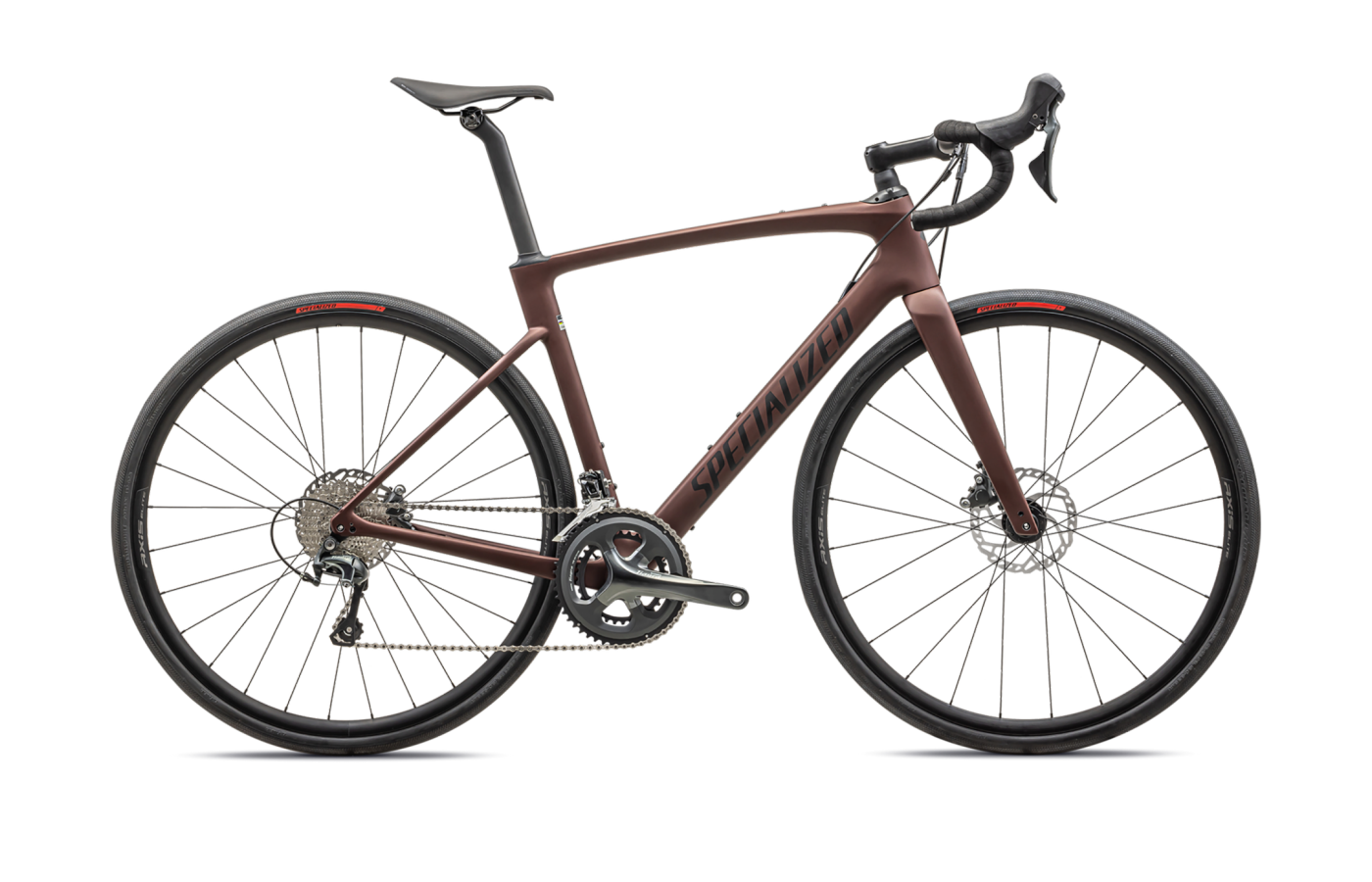
Roubaix
The Domane's natural rival in the endurance category — Specialized's Future Shock front-end suspension takes the opposite engineering bet from Trek's rear IsoSpeed. Same brief, different end of the bike.
Compare →Allez Sprint
The Emonda ALR's archrival in premium alloy — stiffer, more aggressive, and slightly pricier, with 32 mm tire clearance versus the Trek's conservative 28. The crit-racer's other obvious answer.
Compare →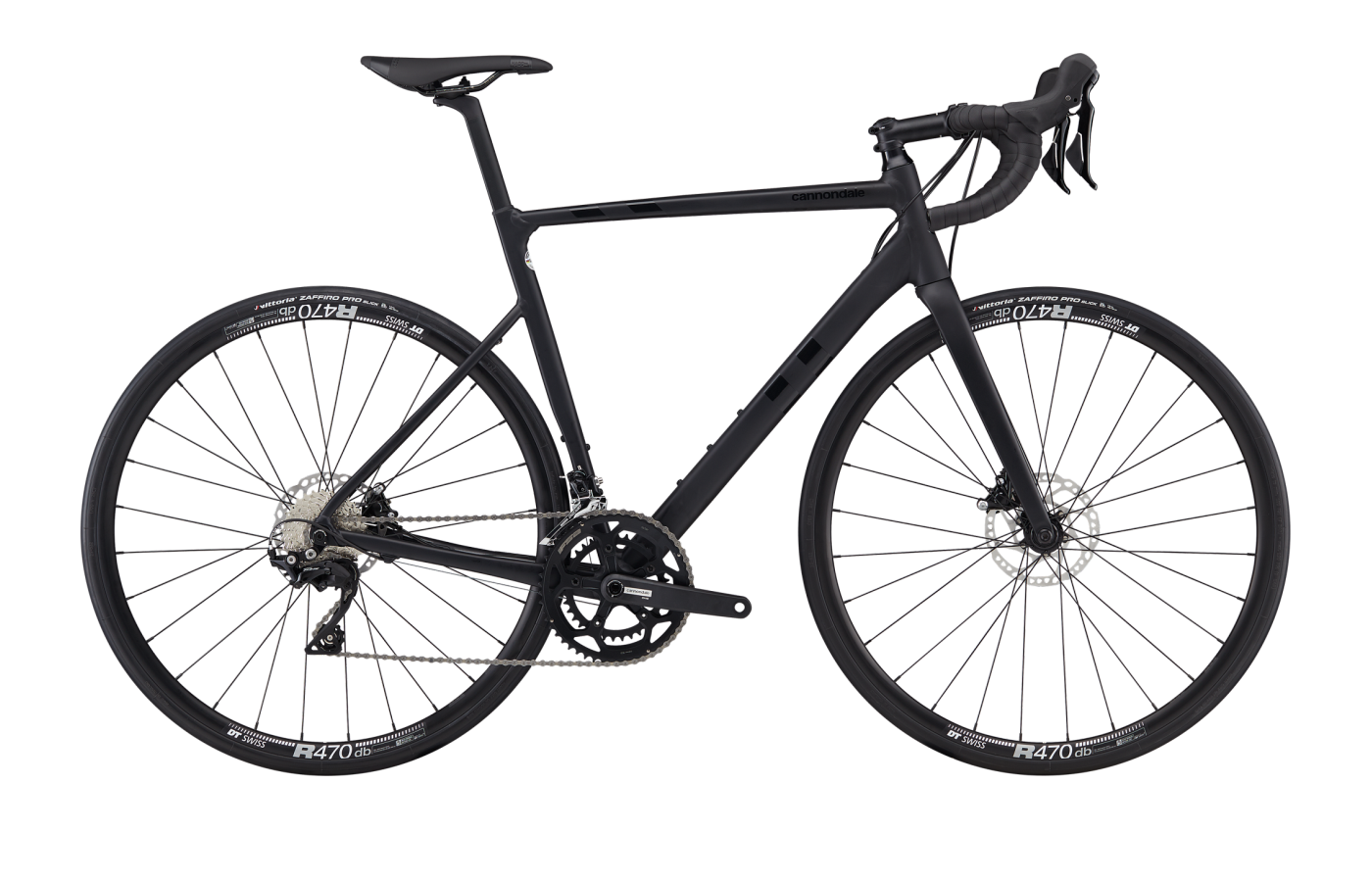
CAAD13
Cannondale's long-running alloy benchmark — priced almost identically to the Emonda ALR with a slightly more balanced ride and more generous tire clearance. The third name on every alloy-race shortlist.
Compare →