Filante SLR
vsVerticale SLR
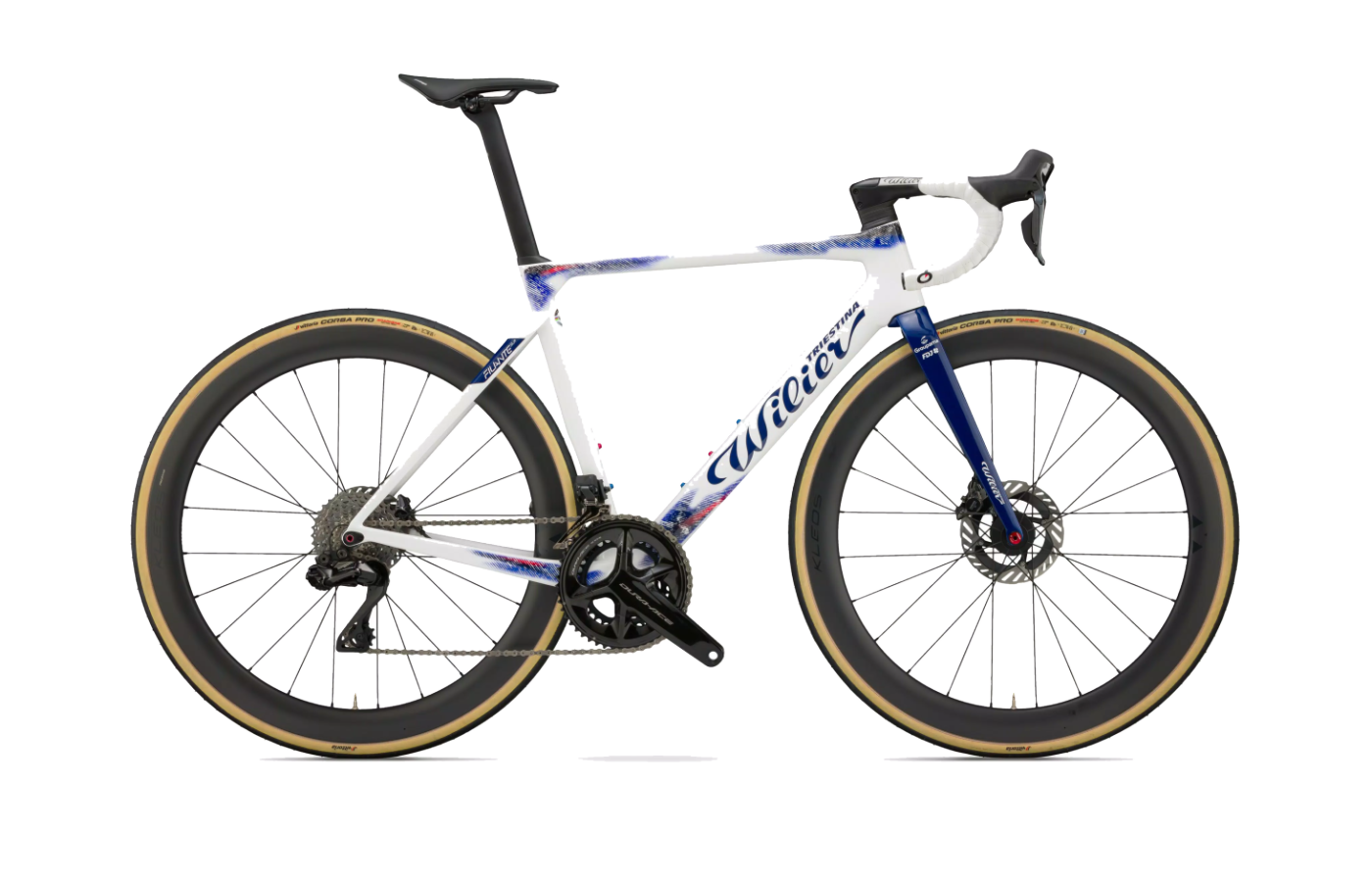
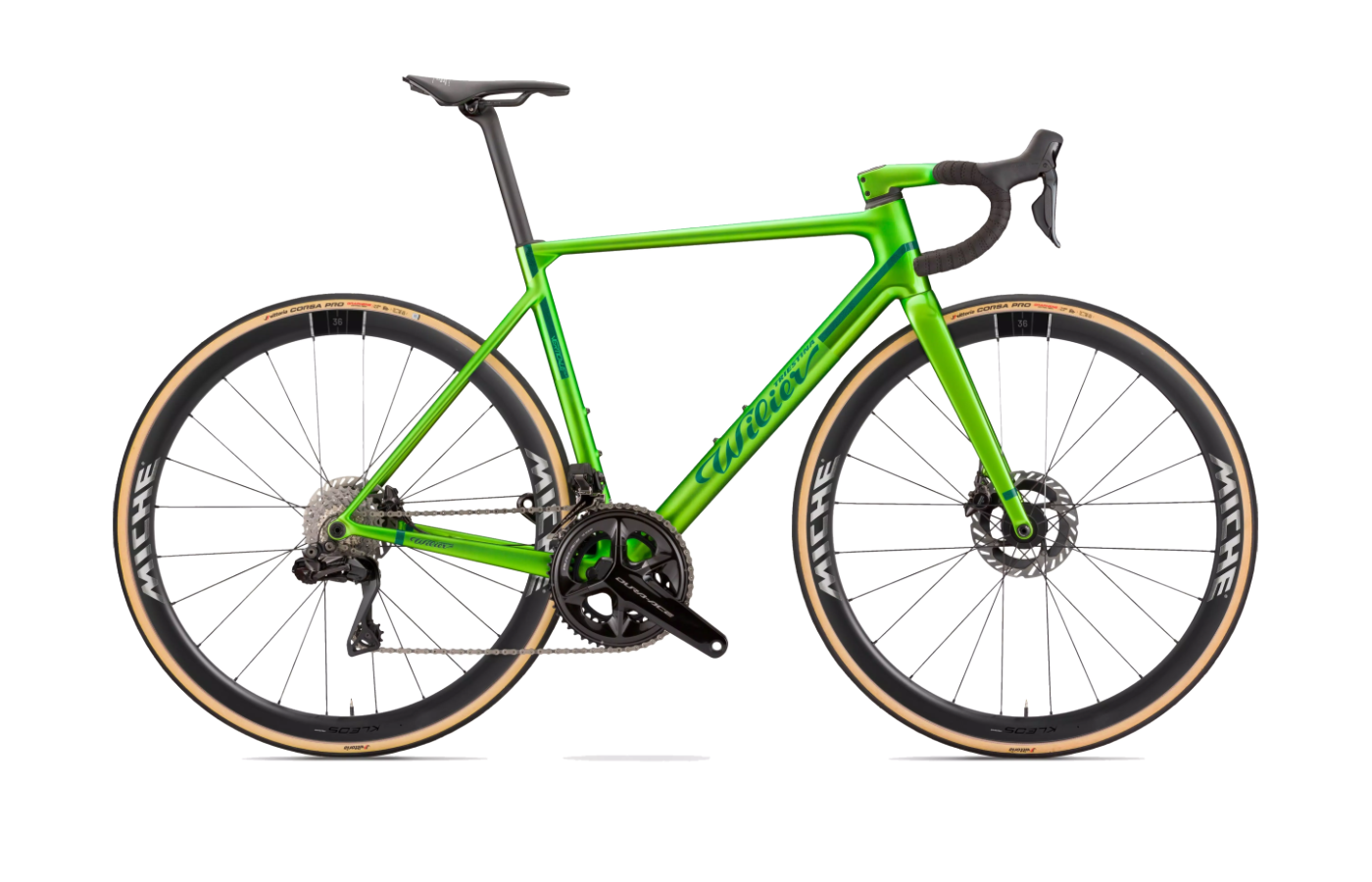
Same factory, opposite missions.
The Filante SLR is Wilier's wind-tunnel weapon for flat-out speed. The Verticale SLR is its featherweight built to dance up double-digit grades.
Filante SLR
- Composed at speed — a near-1 m wheelbase and 72.5° HTA in size M make it stable above 35 km/h, not twitchy.
- Real aero gains — 4.5% drag reduction with rider over the prior gen, plus 3–4 W from the Aerokit bottles.
- 30 mm tire clearance — wider rubber than most pure aero rivals, and Vittoria Corsa Pro 28s come stock.
- Heavier than the Verticale by roughly 600 g at equivalent build, and you'll feel it on the steep stuff.
- Aerokit bottles are fiddly to dock and don't stand upright on a table — a real day-to-day annoyance.
Verticale SLR
- Featherweight chassis — builds land in the 6.6–6.8 kg range, with the Campagnolo flagship at a claimed 6.57 kg.
- Flighty acceleration — the high-modulus T1100/M46JB layup gives the bike a "pulsating surge forward" with every stroke.
- Surprisingly compliant — a 22 mm-wide seatpost and 30 mm Vittoria Corsa Pro tires soak up bad pavement better than you'd expect from a sub-700 g frame.
- Limited on the flats — no aero shaping means it gives back time once the road levels out.
- Stock Miche Kleos RD 36 wheels are roughly 1,400 g and a common first upgrade at this price.
Editor’s analysis
Wilier sells two flagships because one bike can't do both jobs — and they've stopped pretending it can.
The Filante SLR (ID2) and Verticale SLR sit at the top of the Wilier road hierarchy, both ridden by Groupama-FDJ at the WorldTour, both built on premium Toray and HUS MOD carbon, both starting around twelve grand. On paper they look like sibling rivalries. In practice they're chasing different physics.
The Wilier Filante SLR is the aero refinement play. Hus Mod carbon laced with liquid-crystal polymer for vibration damping, a 4.5% drag reduction over the previous generation with rider on board, the proprietary Aerokit bottles claiming 3–4 watts at 40–50 km/h, an 870 g claimed frame. Cycling News' wind-tunnel testing put it third among top-tier aero bikes — fast, but not the fastest. The character that comes back from every reviewer is the same word: composed. The 990 mm wheelbase and 72.5° head angle in size M make it stable above 35 km/h rather than twitchy. Road.cc called it "deeply reassuring." It's a grown-up aero bike that rewards steady high-power efforts.
The Wilier Verticale SLR goes the other way. Toray T800/T1100/M46JB layup, a frameset weight that drops roughly 10% versus the outgoing Zero SLR, complete builds in the 6.6–6.8 kg range. No Kammtail tubes, no integrated bottle system, no aero pretensions — instead, a 22 mm-wide seatpost that flexes for compliance, a 30 mm-flare V-Bar cockpit for leverage out of the saddle, and a chassis that reviewers describe as "flighty" and "pulsating forward" with every pedal stroke. The penalty is on the flat: BikeRadar and Cycling News both flagged it as "limited" or "slightly less impressive" once the road levels out.
Pricing is nearly identical tier-for-tier, so the choice is honest: do most of your watts go into wind, or into gravity? If you ride flat and rolling and chase average speed, the Filante. If your weekends end with a major pass and a technical descent, the Verticale. Wilier won't sell you a bike that splits the difference — and to their credit, they're not trying to.
Where the builds differ.
Comparing our editor's-pick builds side-by-side. Winners highlighted row-by-row — lower price and weight, and the better-spec component, each mark a point.
Build variants & pricing
Both lineups are premium-only — nothing under $10.5k on either side, with flagship Campagnolo or SRAM Red builds pushing $15k+.
Prices are current US MSRP. Wilier offers the same drivetrain choices (Shimano Dura-Ace, SRAM Red AXS, Campagnolo Super Record) on both platforms at near-identical price tiers — the choice is genuinely about frame character, not spec.
How they fit, how they steer.
Both at size M — the fit-picked size for a 5'8" rider on each bike. The Filante sits 3 mm lower (538 vs 541 mm stack), is 1 mm longer in reach, and runs a 0.5° steeper head tube — small numbers that reinforce its tucked-aero intent.
Which size should I buy?
Size recommendations based on stack, reach, and effective top tube. Both run a six-size range from XS to XXL with closely matched mid-size geometry.
→These are starting points. Flexibility, riding style, and preferred position all shift the answer — if you’re between sizes, a professional fit beats a chart.
What the magazines said.
Published reviews from trusted cycling outlets. Click through for the full write-up.
Which one should you buy?
If your fast rides are flat or rolling, get the Wilier Filante SLR. If they end at the top of a mountain, get the Wilier Verticale SLR.
Filante SLR
If your local roads are flat or rolling and you measure success in average speed, the Wilier Filante SLR is the tool. The composed handling above 35 km/h means you can hold an aero tuck for hours without the white-knuckle fatigue of a more reactive aero rig.
Verticale SLR
If your weekend is a success only when you've crested a major pass, the Wilier Verticale SLR is the bike. Sub-7 kg builds, flighty acceleration on steep pitches, and a descent character composed enough to actually use the speed you earn going up.
Questions buyers actually ask.
Short answers to the things we get emailed about most often.
01Which is faster on flat roads?
The Wilier Filante SLR, by a meaningful margin. Wilier claims a 4.5% drag reduction with a rider over the previous Filante, and Cycling News' independent wind-tunnel testing placed it third among top-tier aero bikes — saving 24.5 watts versus a baseline alloy bike with rider.
The Verticale SLR has no aero shaping at all — no Kammtail tubes, no integrated bottle system, shallow 36 mm wheels. BikeRadar and Cycling News both flagged it as "limited" or "slightly less impressive" on flat terrain compared to aero-allrounders. On a 40 km flat ride, you'd give back real time.
02Which climbs better?
The Wilier Verticale SLR, clearly. Complete builds land in the 6.6–6.8 kg range, with the Campagnolo Super Record build at a claimed 6.57 kg — under the UCI minimum. The Filante's lightest builds are around 7.2–7.3 kg in size L, so figure roughly 600 g of difference at equivalent spec.
The Verticale also feels lighter than the scale suggests. Reviewers describe a "pulsating surge forward" with every pedal stroke — the high-modulus T1100/M46JB layup translates into immediate acceleration on steep pitches that the heavier Filante can't match.
03What's the maximum tire clearance?
Filante SLR (ID2): 30 mm currently spec'd, with Wilier officially rating the frame for up to 34 mm. Stock tires are Vittoria Corsa Pro 28s.
Verticale SLR: 32 mm officially. Stock tires are also Vittoria Corsa Pro 28s, though reviewers noted the 30 mm version measures closer to 31–32 mm on the Miche Kleos RD 36 rims.
Neither is a gravel bike — the Filante in particular is built around aero shaping that doesn't accommodate much more rubber.
04Are the integrated cockpits interchangeable between the two bikes?
No. The Filante uses the F Bar ID2 integrated carbon cockpit (custom-made, with a 3 cm flare from hoods to drops) and the Verticale uses the V Bar integrated carbon cockpit (with a 30 mm drop flare and a Garmin/Wahoo computer mount molded in). Both are proprietary, custom-sized at order, and not cross-compatible.
Wilier does offer free handlebar size swaps at the point of purchase on the Verticale — useful for dialing fit without buying a second bar. The Filante's customization options were noted by Road.cc as more limited, especially on XL frames where buyers are restricted to a 110 mm stem.
05Does the Aerokit bottle system actually work?
Wilier claims 3–4 watts saved at race speeds (40–50 km/h) from the Aerokit bottles and cages alone, and Cycling News' wind-tunnel data showed the Filante performing slightly better with bottles than without — likely because the bottles smooth airflow between the rider's legs.
The trade-off is real. Reviewers across the board noted that the bottles can't stand upright on a table, are fiddly to dock, sometimes rattle in their cages, and have narrow openings that make them awkward to fill with hydration powders. Worth the watts if you race; annoying if you don't.
06Why are the wheels the same brand on both bikes?
Miche is Wilier's in-house component brand — same parent group — so both flagships ship with Miche Kleos wheels. The Filante gets the deeper Kleos RD 50 (50 mm), the Verticale gets the shallower Kleos RD 36 (36 mm) suited to climbing.
The wheels are a recurring critique on both bikes. Reviewers noted the Kleos RD 50 has a 21 mm internal width and ~1,500 g weight that feels dated for 2026, and the Kleos RD 36 is similarly heavy at ~1,400 g with an underwhelming feel. Most agree the wheels are the obvious first upgrade on either platform.
07Geometry-wise, which is more aggressive?
Both share a stack-to-reach ratio around 1.42 in size M, so the basic riding position is similar. The differences are small but consistent: the Filante's M is 3 mm lower (538 vs 541 mm stack) and 1 mm longer in reach (388 vs 387 mm), with a 0.5° steeper head tube angle (72.5° vs 72°).
In practice, the Filante is slightly more committed to a tucked aero position. Wheelbases are identical at 990 mm in size M, so neither is the obvious crit-bike pick — both are stable, race-oriented all-rounders.
08Can I get either with a power meter included?
Yes on the Filante's flagship — the SRAM Red AXS E1 build at $15,500 ships with a Quarq spider power meter included. The Dura-Ace and Ultegra builds do not.
On the Verticale it's more mixed: the SRAM Red AXS E1 ($15,300) and the Dura-Ace Di2 + Powermeter build ($15,300) include power meters; the standard Dura-Ace builds at $14,500 do not. Reviewers including BikeRadar and Cycling News flagged this as a value gap versus Specialized, Canyon, or Giant flagships at similar prices that include dual-sided power meters as standard.
Similar bikes
If your priorities don’t map cleanly onto either of these, one of these adjacent bikes probably fits better.
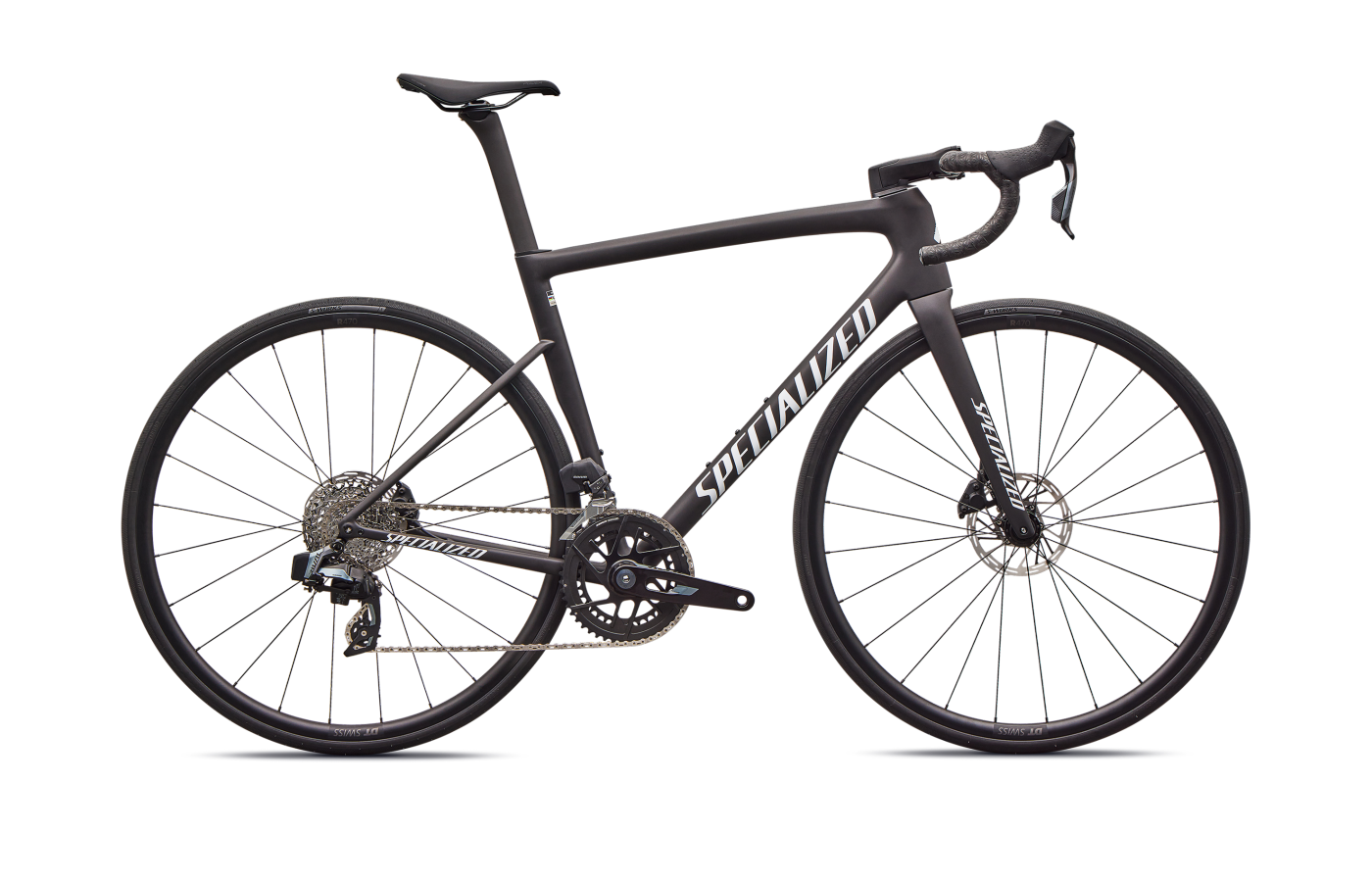
Tarmac
The benchmark all-rounder that splits the difference between these two — lighter than the Filante, more aerodynamic than the Verticale. If you don't want to commit to one Wilier's specialty, the Tarmac is the bike that refuses to pick a lane.
Compare →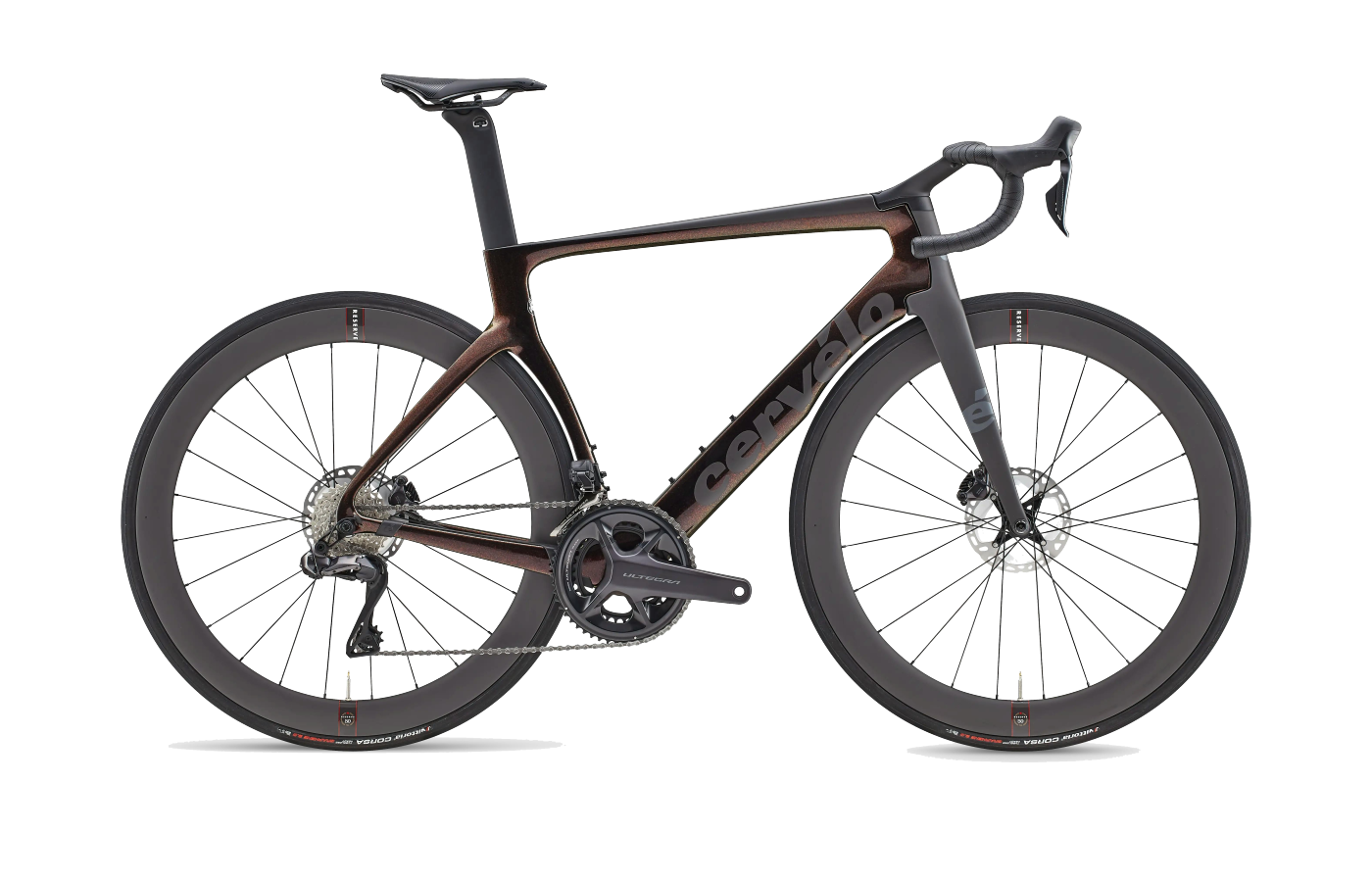
S5
For the Filante shopper who wants to double down on aero. The Cervélo S5 is a more polarizing, more committed wind-tunnel design — sharper steering, deeper integration, and measurably faster than the Filante in third-party testing.
Compare →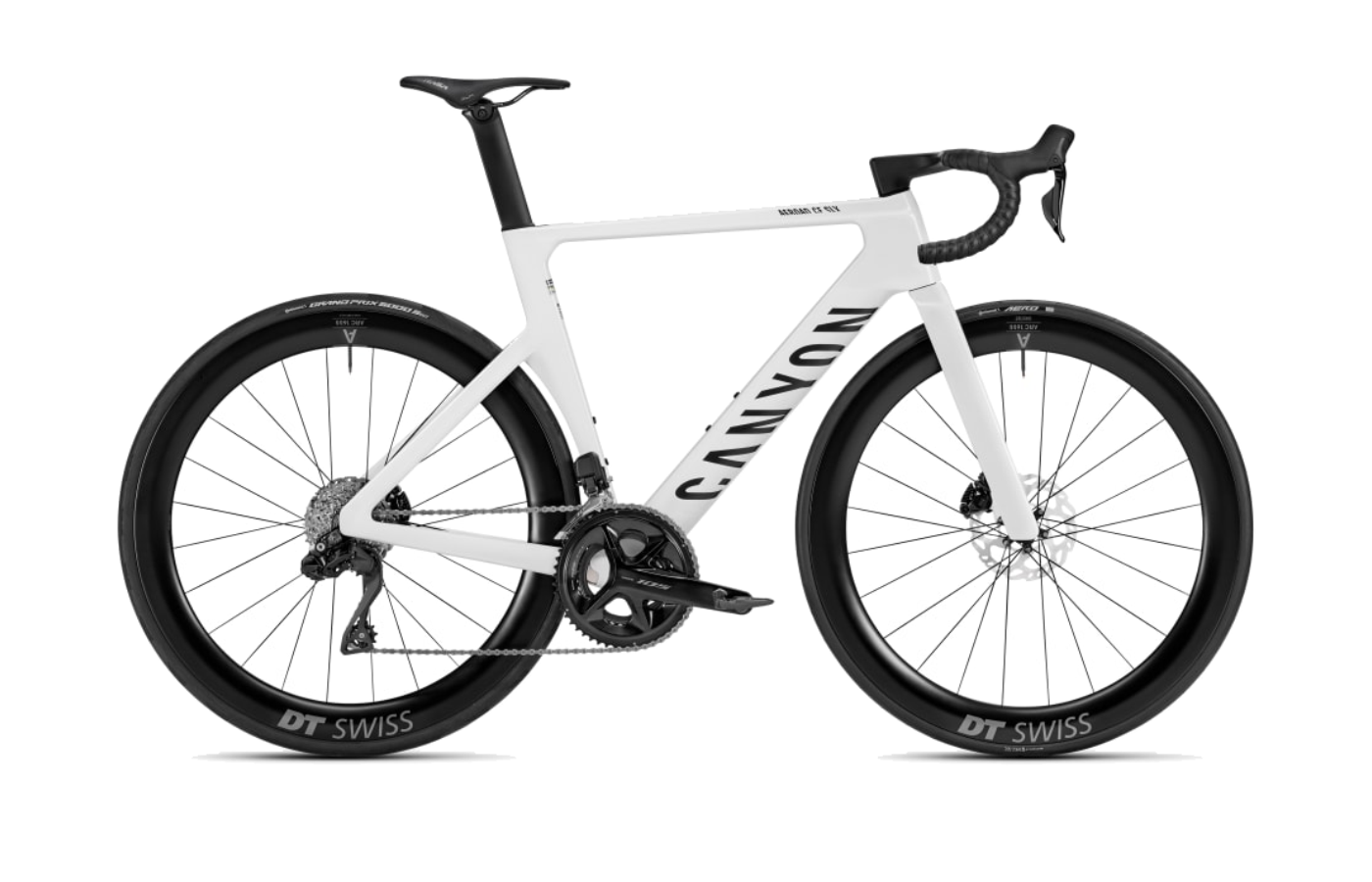
Aeroad
The direct-to-consumer aero answer at significantly less money than the Filante. The Canyon Aeroad gets you most of the way to S5-level aero numbers without the Italian heritage tax — assuming you're confident in your fit and don't need a local dealer.
Compare →