ASR
vsSB120
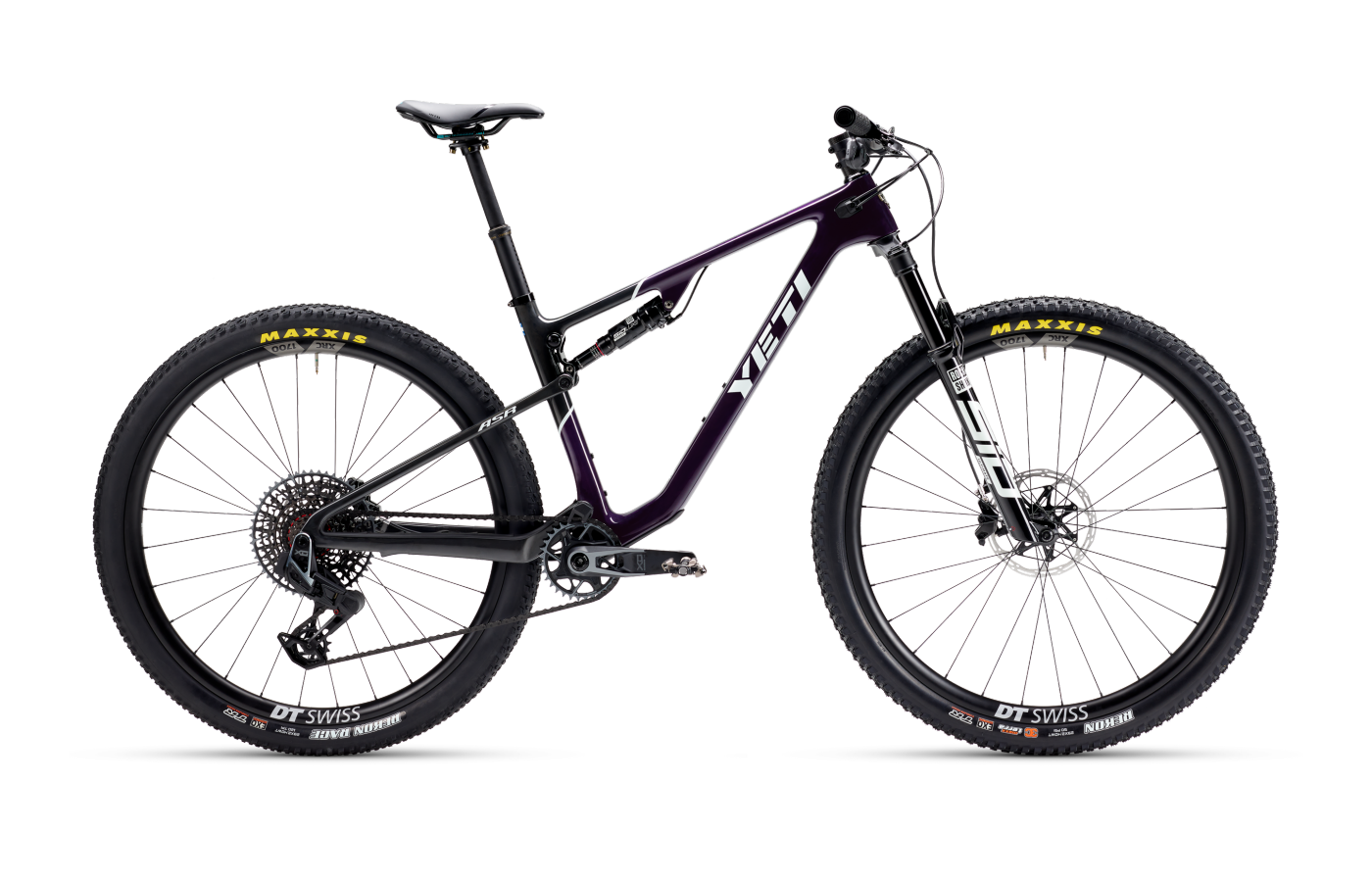
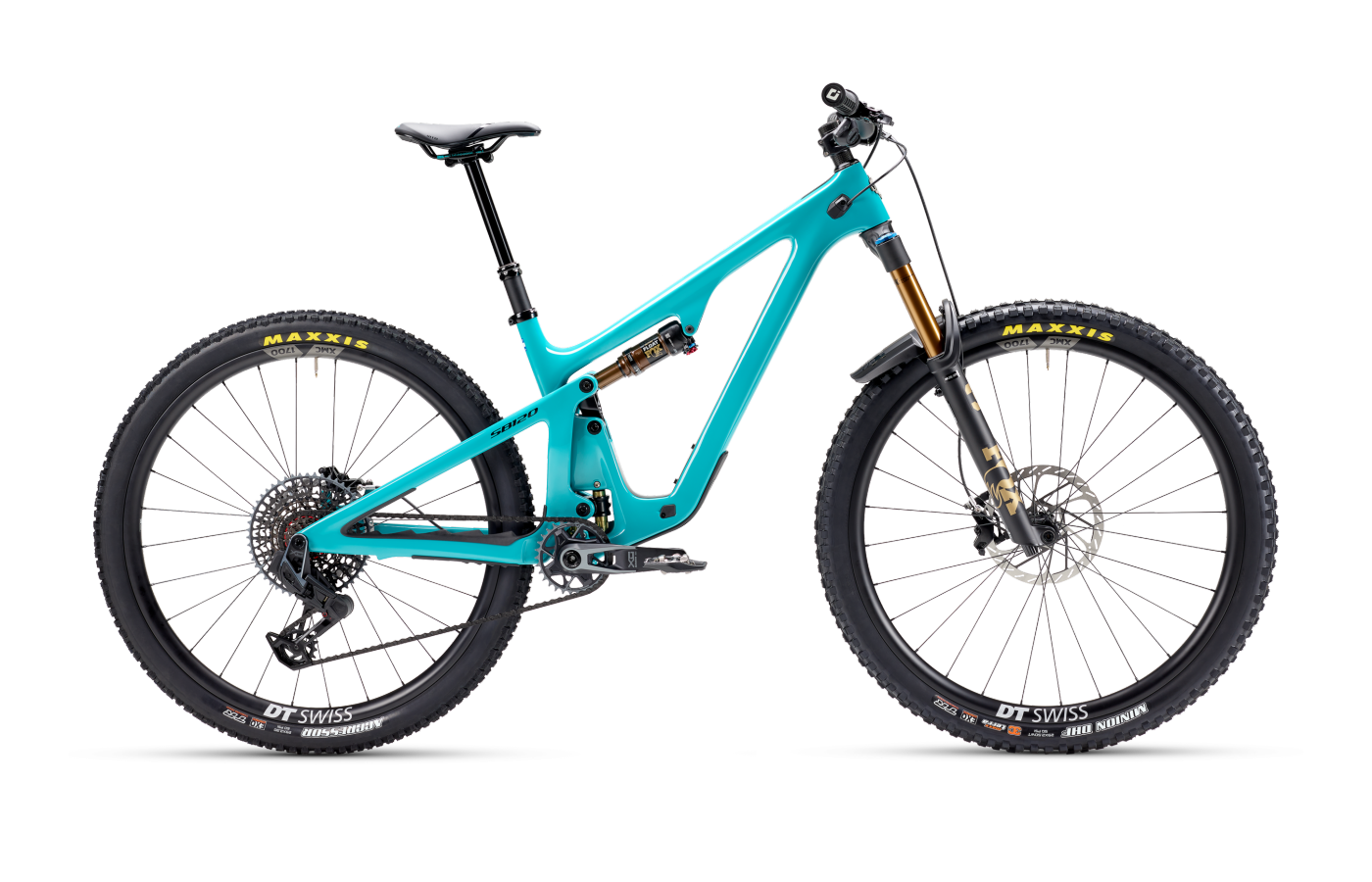
Two Yetis, two totally different arguments.
The ASR is a 23 lb World Cup weapon. The SB120 is a 29 lb short-travel sledgehammer. Same brand, same HTA, very different jobs.
ASR
- Featherweight race frame — the TURQ frame comes in as low as 1,448 g, among the lightest full-suspension chassis on the market.
- High-traction climbing — 30% recommended sag keeps the rear wheel planted on rooty, technical ascents where stiffer XC bikes skip.
- Modern XC geometry — 66.5° HTA and a 120 mm fork turn a race bike into something you can actually descend on.
- The 40 mm-stroke SIDLuxe shock gets overwhelmed on black-graded descents and demands precise setup.
- Active suspension in Open mode means you'll reach for the TwistLoc lockout on every smooth climb.
SB120
- Switch Infinity composure — the V2 linkage makes 120 mm of travel feel closer to 140, especially on square-edge hits.
- Stiffer, stouter chassis — reviewers consistently describe it as carvy and planted where the ASR goes twangy.
- Trail-bike component spec — 140 mm fork, Maxxis Minion DHF 2.5, 780 mm bars built for actual descending.
- 29–30 lb total weight makes it heavy for the 120 mm category — a Rocky Mountain Element can be 4 lb lighter.
- Stock SRAM G2 brakes are nearly universally flagged as underpowered for the frame's capability.
Editor’s analysis
This isn't an incremental 5 mm travel bump — it's a philosophical split between chase the stopwatch and own the descent.
On paper, the Yeti ASR and Yeti SB120 look like neighbors: carbon full-suspension 29ers, nearly identical 66.5° head angles, the same Maxxis Rekon rubber at the back. Spend five minutes on the spec sheet and the illusion falls apart. The ASR carries 115 mm of rear travel, a 120 mm fork, and a flex-stay single-pivot with no Switch Infinity in sight. The SB120 runs 120 mm out back, a 140 mm fork, and Yeti's full Switch Infinity V2 linkage. Frame weight diverges by roughly 500 g. Complete bike weight diverges by 5+ lbs.
The Yeti ASR is what happens when Yeti decides to build a World Cup XC bike again after a decade away. Flex-stay suspension, 30% recommended sag for traction on rooty climbs, a 55 mm stem, 740 mm bars — this is a race tool. Reviewers at GearJunkie called it the "lightest and fastest mountain bike" they'd ridden; Blister specifically flagged that upgrading the T3's stock alloy DT Swiss XM1700 wheels to carbon XRC 1200s saved 1.28 lb of unsprung weight and made the bike "faster everywhere." The frame can do a light trail day, but the whole package is tuned around the race course.
The Yeti SB120 is the other half of the equation: a short-travel trail bike that refuses to pretend it's XC. 140 mm fork, 29 lb total weight, Maxxis Minion DHF 2.5 up front — none of this exists on a race bike. The Switch Infinity V2 linkage gives it what reviewers consistently call a "sentient" rear end, composed on square-edge hits in a way flex-stay bikes aren't. NSMB's 13-month long-term test at Downieville didn't break it. Every review mentions the SRAM G2 brakes are the wrong brakes for what the frame can do — that tells you where this bike wants to go.
Put simply: the Yeti ASR is the bike you buy when the lap time is the point. The Yeti SB120 is the bike you buy when the descent is the point and you still want to climb back up without suffering. Same brand, same HTA, completely different weekend.
Where the builds differ.
Comparing our editor's-pick builds side-by-side. Winners highlighted row-by-row — lower price and weight, and the better-spec component, each mark a point.
Build variants & pricing
Both platforms span ~$8k, built around the same six-tier ladder: C2 and C3 on C/Series carbon, T2 through T5 on TURQ carbon.
Prices are current US MSRP. The ASR T3 and SB120 T3 are the natural comparison point — same TURQ frame tier, same X0 Eagle AXS Transmission, within $300 of each other. Alloy DT Swiss wheels on both T3 builds are a point of reviewer frustration given the price.
How they fit, how they steer.
Both at size M — the fit-picked size for a 5'8" rider on each bike. 66.5° HTA on the ASR vs. 66.2° on the SB120. The SB120 sits ~18 mm taller in stack with 8 mm more reach and a 0.7° steeper seat tube — roomier cockpit, more upright climbing posture.
Which size should I buy?
Size recommendations based on stack, reach, and effective top tube. Both ranges overlap closely; the SB120 extends further at the large end with an XXL option.
→These are starting points. Flexibility, riding style, and preferred position all shift the answer — if you’re between sizes, a professional fit beats a chart.
What the magazines said.
Published reviews from trusted cycling outlets. Click through for the full write-up.
Which one should you buy?
If you want the lightest, fastest XC race bike Yeti has ever built, get the ASR. If you want a composed, carvy trail bike that happens to pedal uphill well, get the SB120.
ASR
If your weekends involve a number plate, a heart-rate monitor, and a lockout lever you're going to flick a hundred times a lap — this is the bike. Featherweight, high-traction, and finally modern in geometry. Upgrade the wheels, skip the C-series if you can.
SB120
If you value ride quality, high-speed composure, and a chassis that holds a line through chunk over a stopwatch PR — this is the bike. The Switch Infinity system punches above its 120 mm travel, and the 140 mm fork gives it real descending credibility. Budget for better brakes day one.
Questions buyers actually ask.
Short answers to the things we get emailed about most often.
01Which bike climbs faster?
The Yeti ASR, by a wide margin. The TURQ frame starts at 1,448 g vs. the SB120's heavier Switch Infinity chassis, and the complete-bike weight gap is roughly 5–6 lb depending on build (the ASR T3 is ~23.9 lb; the SB120 T3 is ~28.9 lb). On a 30-minute climb that's worth real seconds for a rider of typical weight.
The trade-off: the ASR is most efficient with the three-position remote lockout engaged on smooth ground. Yeti specs 30% rear sag, which makes it exceptionally active — great for traction on rooty climbs, less efficient when you're mashing on fire road.
02Which descends better?
The Yeti SB120. The 140 mm fork (vs. 120 mm on the ASR), the heavier and stouter chassis, and the Switch Infinity V2 linkage all add up to a bike that reviewers describe as composed, carvy, and planted where the ASR is noted to start feeling "twangy" on black-graded tracks.
That said, the ASR is a legitimately capable descender for an XC bike — 66.5° HTA with a 120 mm fork is modern geometry, and reviewers repeatedly said it "punches above its weight class." But the SB120 is a purpose-built short-travel trail bike, and it shows on anything rougher than blue-square terrain.
03What's the actual travel difference?
Yeti ASR: 115 mm rear / 120 mm front. Yeti SB120: 120 mm rear / 140 mm front.
The 5 mm rear-travel spread is barely relevant on its own. What matters is the 20 mm more fork travel on the SB120, plus the difference in shock: the ASR runs a 40 mm-stroke RockShox SIDLuxe tuned for race bikes; the SB120 runs a Fox Factory Float DPS with more air volume and a more forgiving setup window.
04Do both use Switch Infinity suspension?
No — this is the biggest design split between the two. The SB120 uses Yeti's Switch Infinity V2 linkage system, the brand's signature twin-rail design.
The ASR dropped Switch Infinity entirely in favor of a flex-stay single-pivot — no Kashima-coated sliders, no floating link. Yeti made the call to save weight and simplify maintenance on the race bike. It's a return to the original 2003 ASR's flex-pivot philosophy.
05How much do the editor's-pick builds weigh?
Per Yeti's published specs: the ASR T3 X0 AXS Transmission comes in at roughly 23.9 lb / 10.85 kg (size M, without pedals). The SB120 T3 X0 AXS Transmission is roughly 28.9 lb / 13.1 kg.
That's a genuine 5 lb gap between otherwise-matched drivetrains — almost entirely frame, fork, and wheel/tire spec, not drivetrain or cockpit.
06Do I need to upgrade the wheels?
On the ASR, most reviewers say yes if you're racing. The T3 and T2 ship with alloy DT Swiss XM-series wheels that weigh close to 2 kg per pair — Blister found the carbon XRC 1200 upgrade saved 1.28 lb of unsprung weight and made the bike "faster everywhere." Expect to spend ~$2,000 to get there.
On the SB120, the alloy DT Swiss XM1700/XMC1700 wheels are better suited to the bike's trail mission — durable, appropriate weight for the category. Most owners leave them alone and upgrade brakes instead.
07Which has better brakes out of the box?
Neither is great for the frame's potential. ASR builds ship with SRAM Level 2-piston brakes on many builds — fine for XC racing, wrong for aggressive trail use. SB120 builds ship with SRAM G2 RSC, which virtually every long-form review calls underpowered for the bike's descending capability.
If you ride aggressive terrain on either bike, budget for a brake upgrade (SRAM Code or Shimano XT 4-piston) and larger rotors.
08What's the warranty situation?
Yeti backs the frame on both bikes with a lifetime warranty to the original owner against manufacturing defects. The Switch Infinity link on the SB120 also carries a lifetime warranty, which matters given reviewer concerns about long-term maintenance on the Kashima-sliding system in dusty or wet conditions.
Crash-replacement pricing is available through Yeti dealers on both models.
Similar bikes
If your priorities don’t map cleanly onto either of these, one of these adjacent bikes probably fits better.
Blur
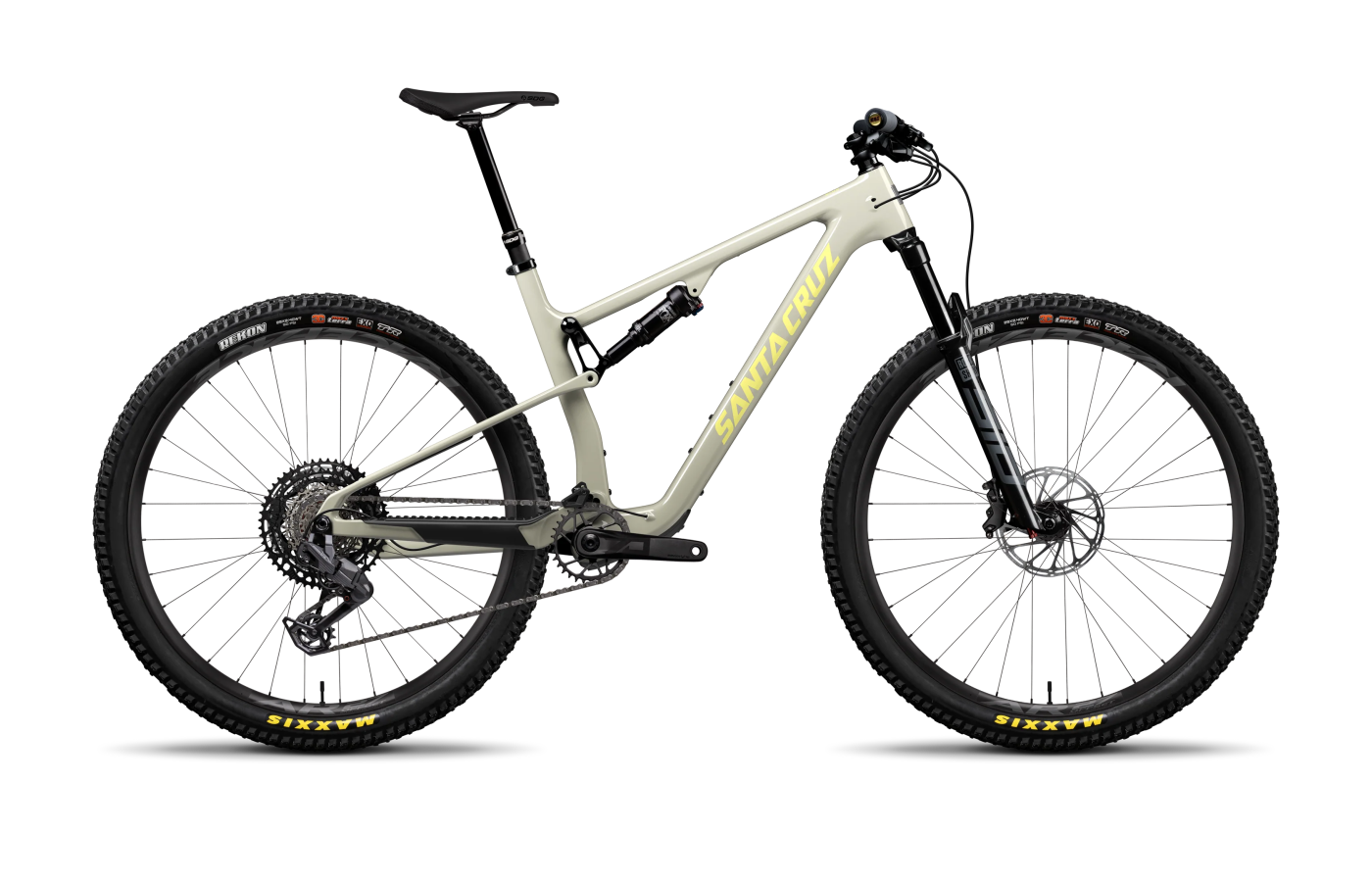
The Santa Cruz Blur is the most direct rival to the ASR — same flex-stay philosophy, similar XC race pedigree, but with a firmer, more traditional pedaling platform for riders who'd rather feel the sprint than the suspension.
Compare →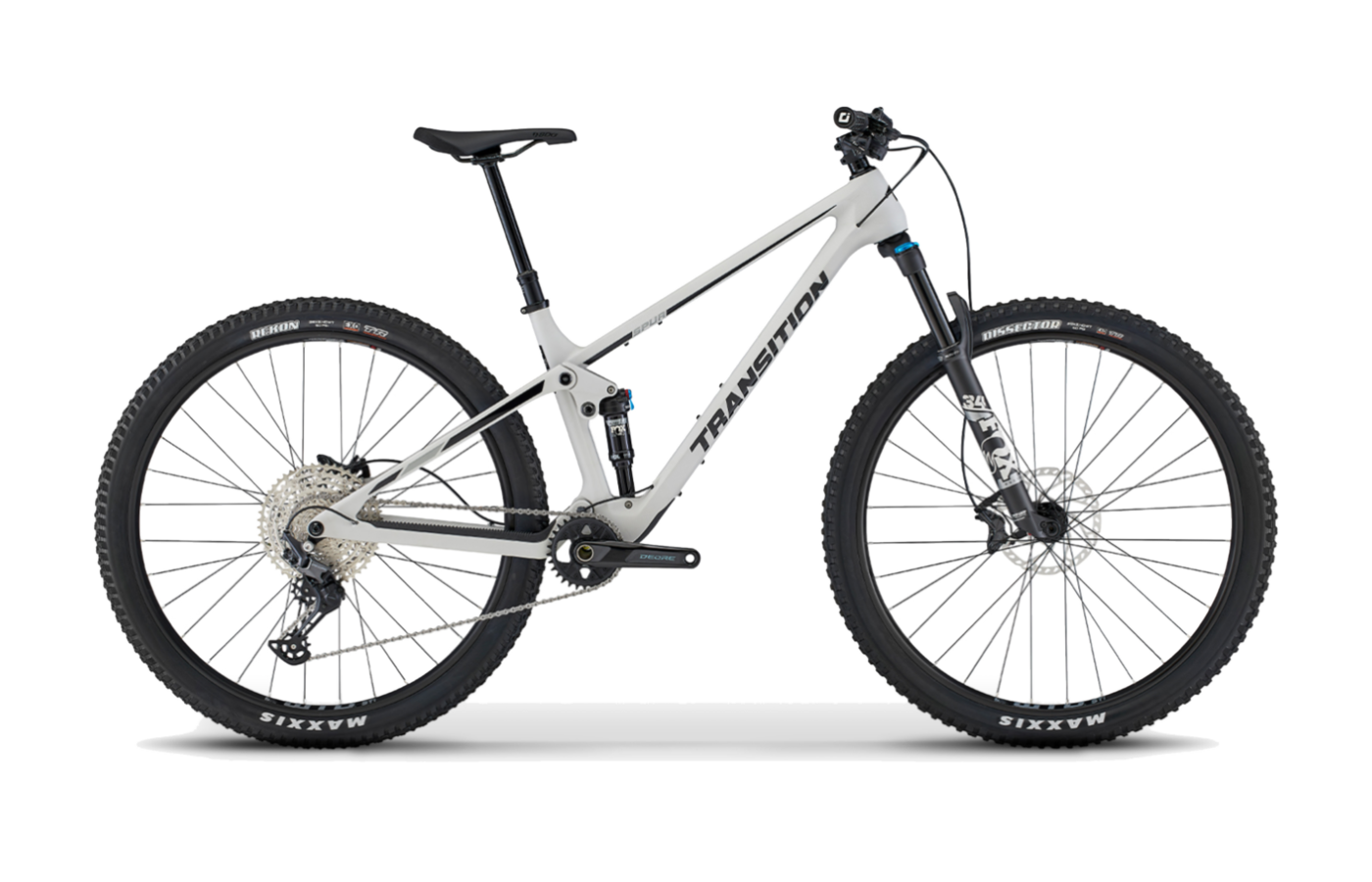
Spur
The Transition Spur sits dead center between these two Yetis — more descending capability than the ASR without the weight and Switch Infinity complexity of the SB120. If you want one bike that splits the difference, this is it.
Compare →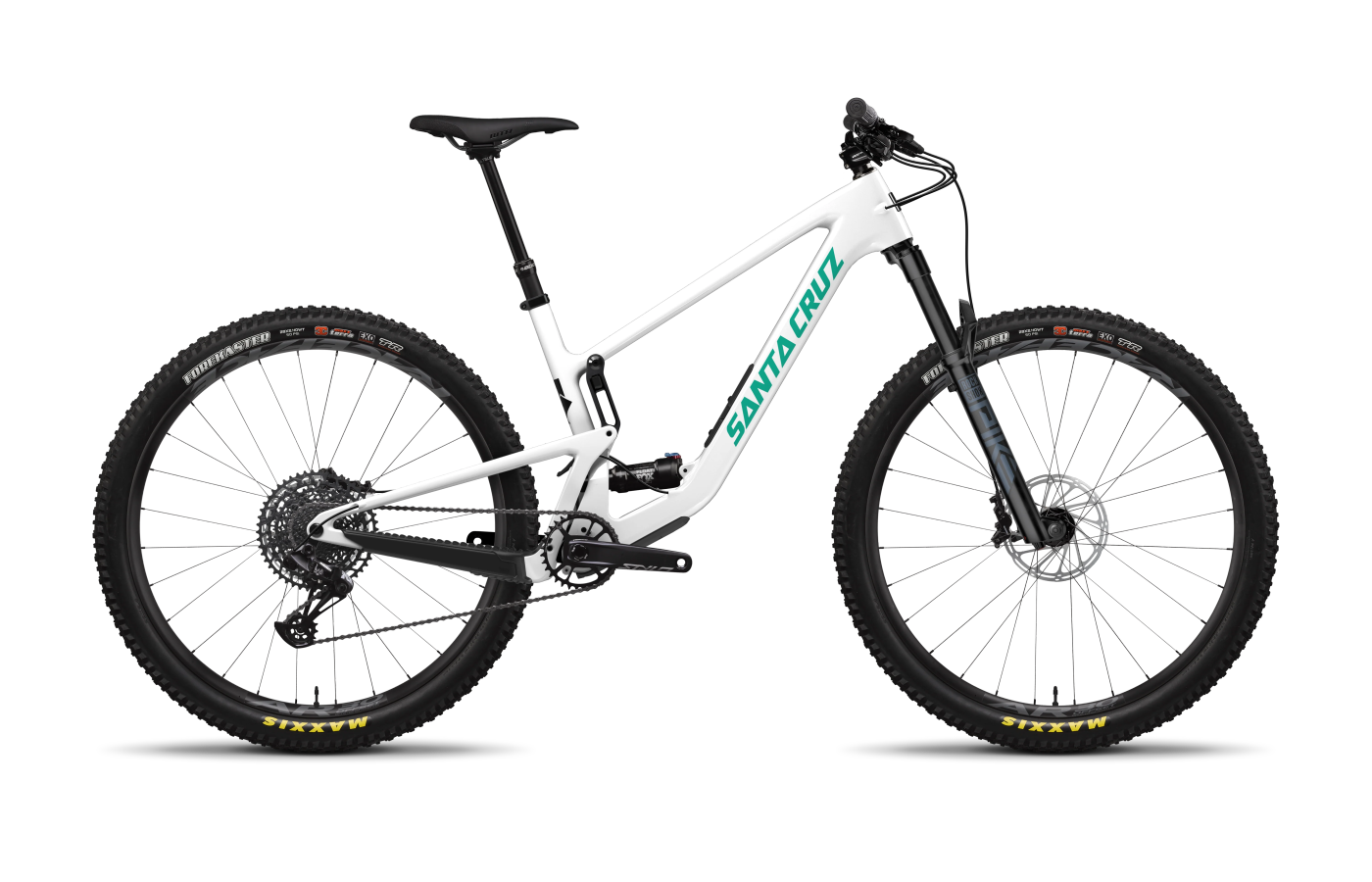
Tallboy
The Santa Cruz Tallboy is the slacker, more gravity-focused alternative to the SB120 — longer, lower, and happier pointing down than either Yeti. If the SB120's 66.2° head angle still feels too quick, this is the next step.
Compare →