SB140
vsSB160
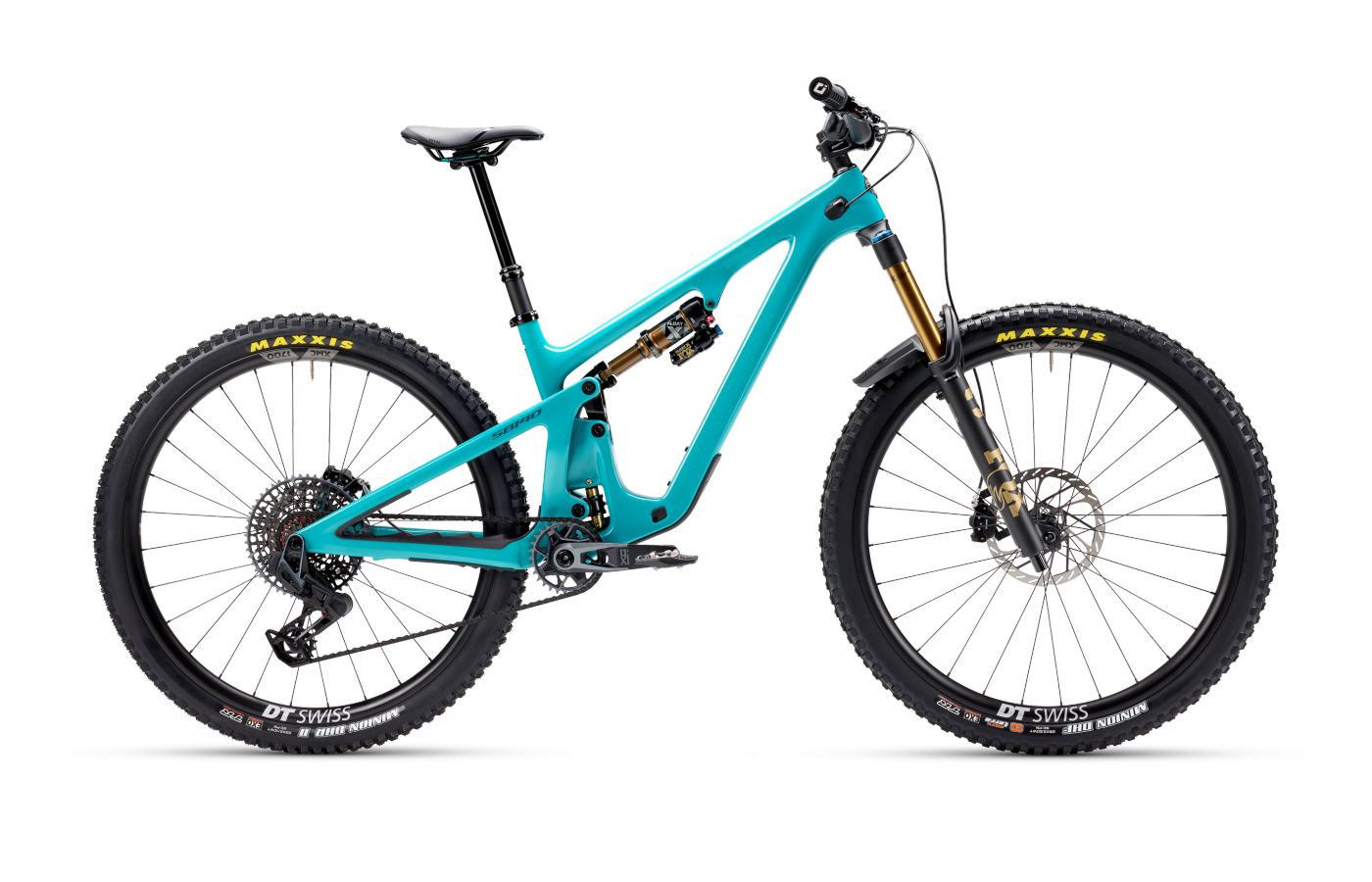
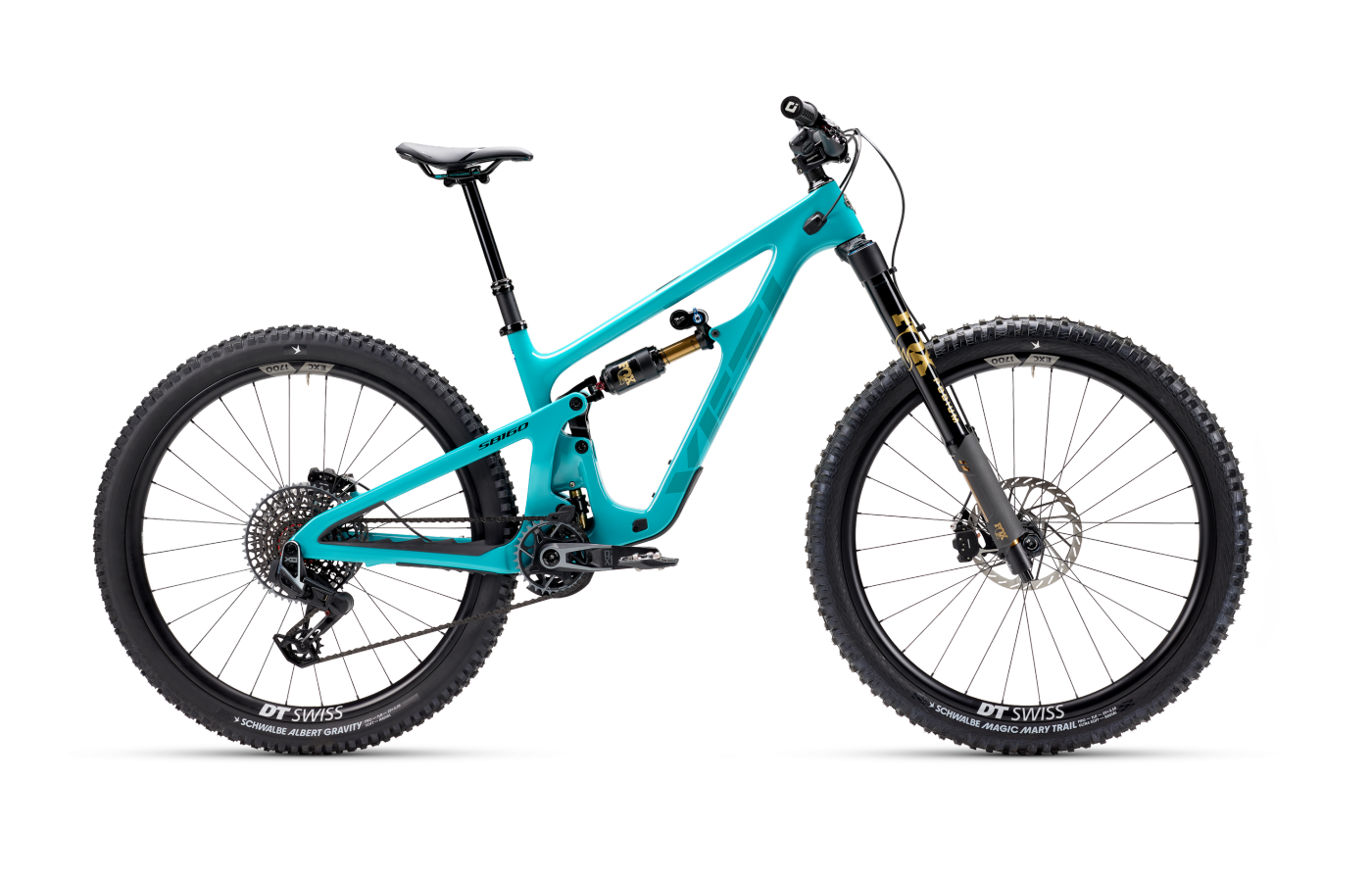
Same silhouette, two very different jobs.
The SB140 is the do-everything trail bike with a 160 mm fork and 65-degree head angle. The SB160 is a 170/160 enduro race weapon built for speed once the trail points down.
SB140
- Pedals like a 120 mm bike — high anti-squat from Switch Infinity V2 means the lockout lever stays untouched on long fire-road grinds.
- Punches above its travel — reviewers repeatedly say 140 mm rear feels closer to 150 to 160 mm in big hits, without a harsh bottom-out.
- Engaging at every speed — poppy, lively, generates speed out of corners; doesn't need race-pace commitment to feel fun.
- 65-degree head angle and 619.8 mm Medium stack feel low — most reviewers swap to a 35 to 38 mm rise bar.
- Premium pricing for spec — even the $9,300 T3 ships with alloy DT Swiss XMC1700 wheels.
SB160
- Composed at full pelt — 64-degree head angle and 1244.6 mm Medium wheelbase make rock gardens go quiet at race speed.
- Climbs like a much shorter-travel bike — the 77.5-degree seat tube and supportive linkage "melt away" big climbs (GearJunkie's review).
- DH-certified frame with 170 mm Fox 38 (or Podium) — built to take EWS-level abuse without flinching.
- Sluggish if you're not pushing — multiple reviewers note it only "comes alive" at speed.
- Same low-stack complaint as the SB140, plus a 34+ lb weight that makes mellow rides feel over-gunned.
Editor’s analysis
This isn't 20 mm of travel splitting hairs. It's a choice between a trail bike that punches up and an enduro race bike that calms the chaos.
On paper, the Yeti SB140 and SB160 share the same Switch Infinity V2 platform, the same TURQ carbon front triangle on the upper builds, and a similar 77 to 77.5-degree seat tube angle. Both are mid-priced for Yeti — entry $6,200 vs. $6,400 — and both top out above $11,000. Look closer and the design briefs split: the SB140 packs 140 mm rear and a 160 mm Fox 36 to be a quiver-killer trail bike; the SB160 runs 160 mm rear and a 170 mm Fox 38 (or Podium) to win EWS rounds.
The SB140 is the rarer animal of the two: a real trail bike that hits surprisingly hard. Reviewers consistently describe it as a "scalpel" that "punches well above its weight," generating speed out of corners like a Tesla Model Plaid (Awesome MTB's words, not ours). It climbs with a high-anti-squat, "flexible tank track" feel that earns it KOMs on home trails. The 65-degree head angle and 619.8 mm stack on a Medium make it nimble and engaging at any pace, not just race pace.
The SB160 picks its lane and sharpens it. A degree slacker at the head (64 deg), a 23 mm longer wheelbase on a Medium (1244.6 mm vs 1221.7 mm), 38-stanchion fork, and DH-certified frame — all of it in service of speed once the trail goes vertical. Reviewers are explicit that it can feel "sluggish" or "ponderous" at slow speeds and only "comes alive" when you commit. NSMB called it a scalpel rather than a mallet — the elf, not the orc, of the enduro category.
Put another way: the SB140 is the bike you buy when you own one mountain bike. The SB160 is the bike you buy when you already have a trail bike and want a second one for race weekends and lift-served laps.
Where the builds differ.
Comparing our editor's-pick builds side-by-side. Winners highlighted row-by-row — lower price and weight, and the better-spec component, each mark a point.
Build variants & pricing
Both ranges span roughly $5k, with a C-series carbon entry around $6.2k to $6.4k and a TURQ flagship north of $11k. Tier-for-tier, the SB160 runs about $1,000 to $2,500 more than the equivalent SB140.
Prices are current US MSRP. Both bikes share the same six-build naming convention (C2, C3, T1, T2, T3, T4) plus a Team Issue range-topper on the SB160 only. The C-series frames use the older V1 Switch Infinity link; only the TURQ builds get the upgraded V2 hardware.
How they fit, how they steer.
Both compared at size M. Identical 619.8 mm stack, but the SB160 stretches reach by 5 mm (464.8 vs 459.7), slackens the head one degree (64 vs 65), and adds 23 mm of wheelbase — the difference between agility and high-speed planted-ness.
Which size should I buy?
Yeti uses the same five-size run (S to XXL) for both bikes, with size-specific chainstays. Sizing carries over cleanly between the two.
→These are starting points. Flexibility, riding style, and preferred position all shift the answer — if you’re between sizes, a professional fit beats a chart.
What the magazines said.
Published reviews from trusted cycling outlets. Click through for the full write-up.
Which one should you buy?
If you ride one bike on everything from technical singletrack to the occasional bike-park lap, get the SB140. If your weekends are about uplift days and EWS-style descents, get the SB160.
SB140
If you spend most of your time on undulating, technical singletrack and want a bike that climbs efficiently but punches above its travel on the way down — this is the smarter buy. The SB160's extra travel goes unused on terrain like that.
SB160
If you spend serious time on lift-served, race-stage, or long-shuttle terrain and want a bike that turns rock gardens into background noise, the SB160 is the sharper tool. Just commit — it doesn't reward tentative riding.
Questions buyers actually ask.
Short answers to the things we get emailed about most often.
01How much travel difference is there really?
The SB140 has 140 mm rear and a 160 mm fork in current spec — every modern build ships with the Fox 36 at 160 mm, so the trail/Lunch Ride distinction has effectively merged.
The SB160 has 160 mm rear and a 170 mm fork (Fox 38 or Podium). So the actual delta is 20 mm rear and 10 mm front — meaningful, but smaller than the model names suggest.
02Which one climbs better?
The SB140, but not by as much as you'd expect. Both bikes share the Switch Infinity V2 platform and similar steep seat tubes (77 deg on the SB140, 77.5 deg on the SB160). The SB140 wins on weight — claimed 30.13 lb on the T4 vs. 34.46 lb on the equivalent SB160 T4 — and on geometry, with a steeper 65-degree head angle that keeps the front wheel planted on technical pitches.
That said, reviewers consistently note the SB160 "climbs as well or better than any 160 mm bike" they've ridden. It's not a slug. It's just carrying ~4 lbs of extra bike up the hill.
03How much faster is the SB160 on descents?
Big margin once speeds get high. The SB160 has a 64-degree head angle (vs 65 on the SB140), a 1244.6 mm Medium wheelbase (vs 1221.7), 160 mm rear travel (vs 140), and a 38-stanchion fork (vs 36). Reviewers describe it as a "freight train" through rock gardens at full pelt.
On moderate flow trails or slower technical sections, the SB140 can actually feel faster because it's more responsive and rewards rider input. The SB160's advantage opens up specifically when terrain gets steep, fast, or both.
04Is the C-series carbon worth saving the money over TURQ?
Depends what you value. The C-series saves roughly $2,500 to $4,000 vs. the equivalent TURQ build but adds about 225 g of frame weight and — critically — uses the older V1 Switch Infinity link rather than the updated V2 with improved seals and bearings.
Reviewers are split: some call this "nickel-and-diming" $6,000+ customers; others note the kinematics are identical and the V1 link is fine if you stay on top of grease intervals. If you ride in wet climates or hate maintenance, the TURQ premium is worth it.
05Why do reviewers keep complaining about the bar height?
Both frames have a low stack height — 619.8 mm on a Medium, 624.8 mm on a Large — which puts the bars lower than most modern competitors. Combined with the slack head angles, several reviewers (Vital MTB, MBR, Awesome MTB) found themselves feeling "on top of" the bike rather than "in" it on steep descents.
The near-universal fix is swapping the stock 35 mm rise bar for a 38 mm or higher unit. Worth budgeting roughly $80 to $200 if you're tall or ride a lot of steep terrain.
06Do either of these have internal frame storage?
No. Neither the SB140 nor the SB160 has internal downtube storage, and neither has a flip-chip or other geometry adjustment. Multiple reviewers flagged this as a "previous-generation" omission, since direct competitors like the Specialized Stumpjumper 15 and Santa Cruz Hightower (newer generations) now offer both.
If a tool stash inside the frame matters to you, neither Yeti currently delivers.
07How is the warranty and long-term ownership?
Both come with Yeti's lifetime frame warranty to the original owner, which notably includes the Switch Infinity link itself — meaningful given the proprietary design.
Service access is mixed: the threaded BSA bottom bracket and bearings pressed into aluminum links (not the carbon frame) are big improvements over older Yetis. But the Switch Infinity grease ports require partial pivot disassembly to access fully — plan on roughly 20 to 30 minutes per service, or a shop visit.
08Can I run the SB140 with a longer fork to make it 'mini-SB160'?
Sort of. The SB140 already ships with a 160 mm Fox 36 in current spec, which is what previous "Lunch Ride" builds used. Going longer (170 mm) is mechanically possible on most modern Fox 36 chassis, but slackens the head angle further and stresses the head tube area beyond Yeti's official spec.
If you want a 170 mm fork and 160 mm rear travel, just buy the SB160 — the frame is engineered for it, including DH certification and a beefier fork interface.
Similar bikes
If your priorities don’t map cleanly onto either of these, one of these adjacent bikes probably fits better.
Hightower
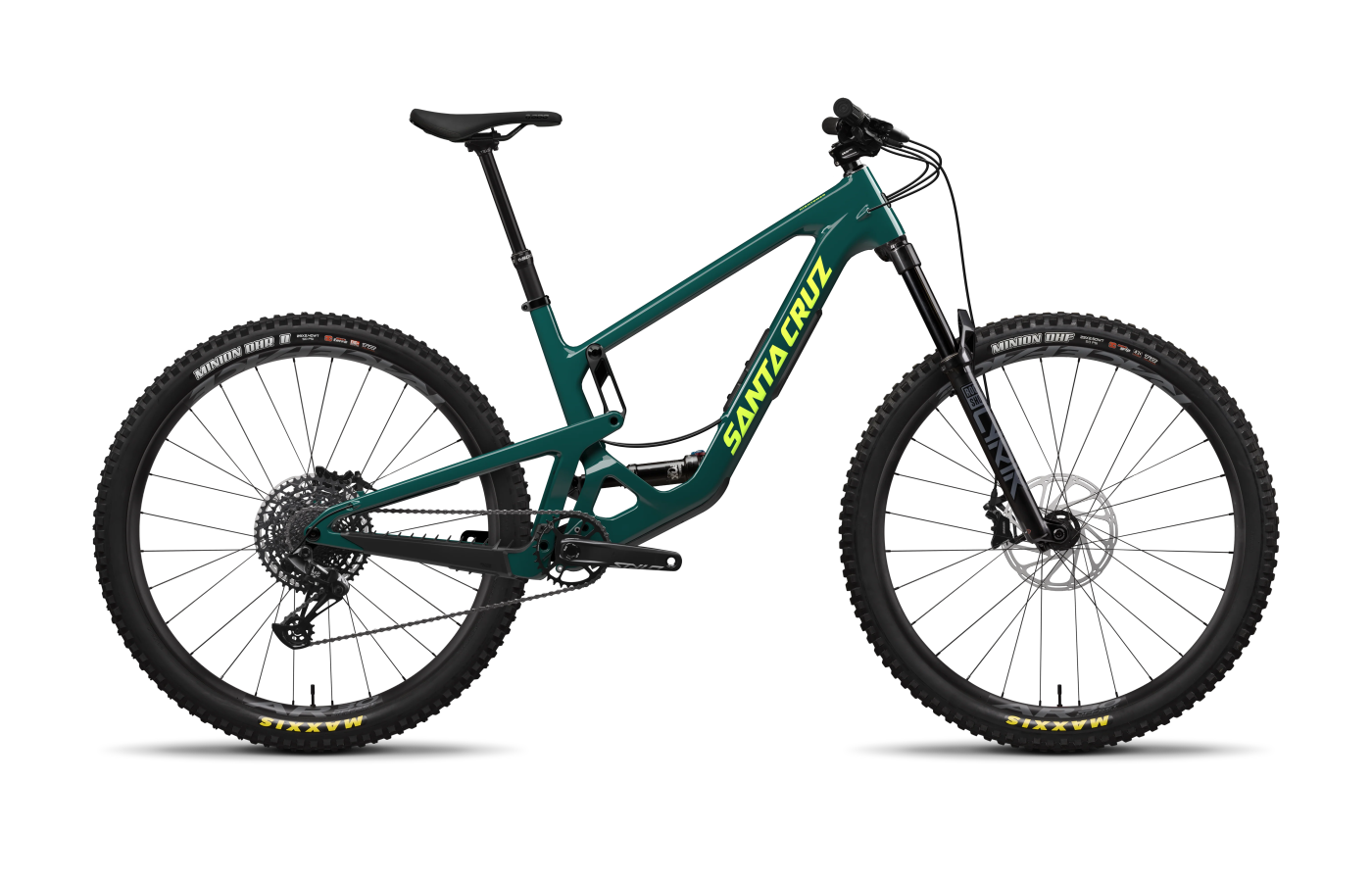
The SB140's most direct rival — a slightly more plush VPP feel and the internal frame storage Yeti still refuses to add. If the SB140 spec sheet bothers you, this is the comparison shop.
Compare →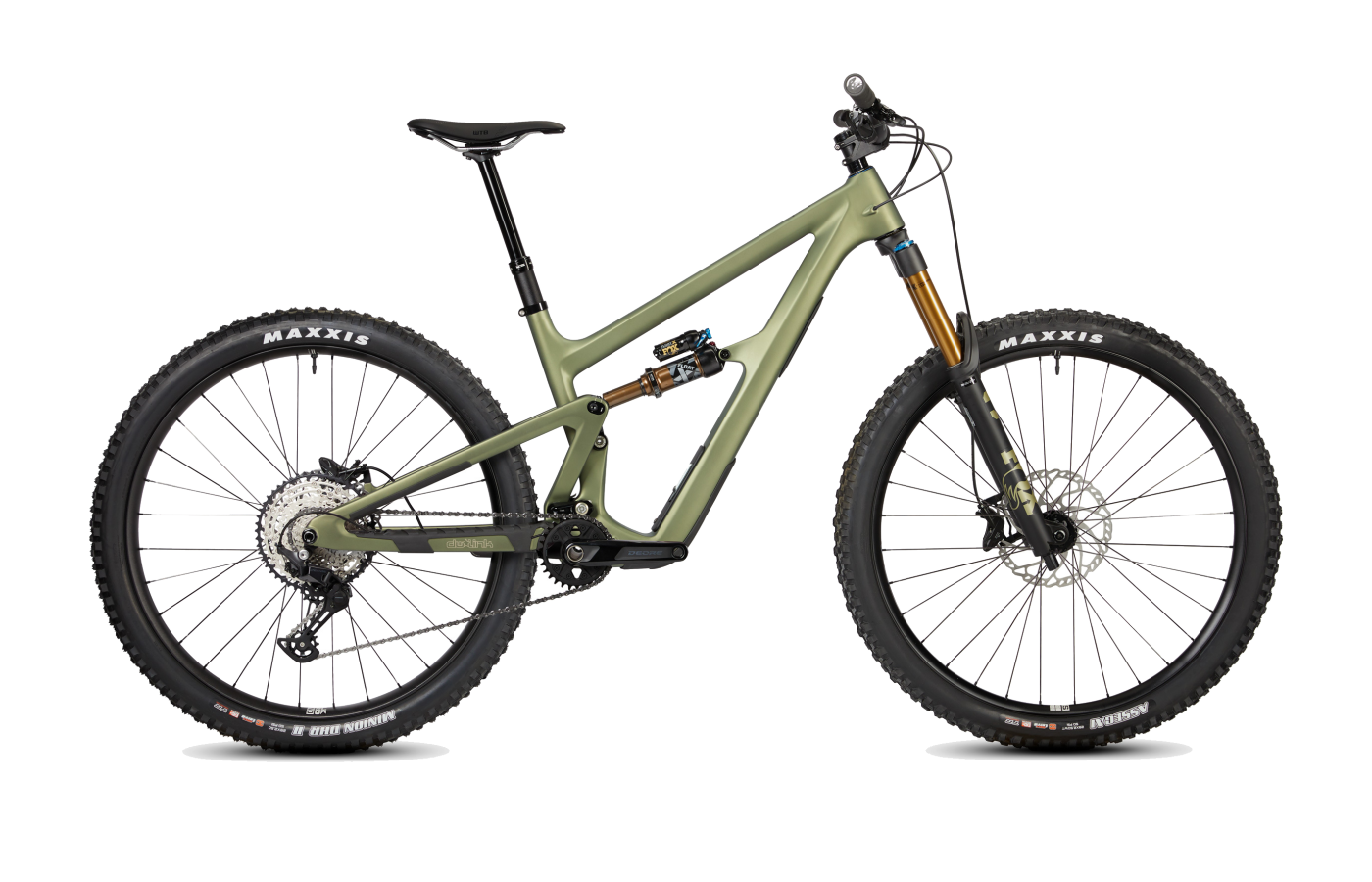
Ripmo
Often considered the benchmark for mid-travel versatility — more playful than the SB140 and a noticeably better parts-per-dollar ratio at every price tier. The value pick over either Yeti.
Compare →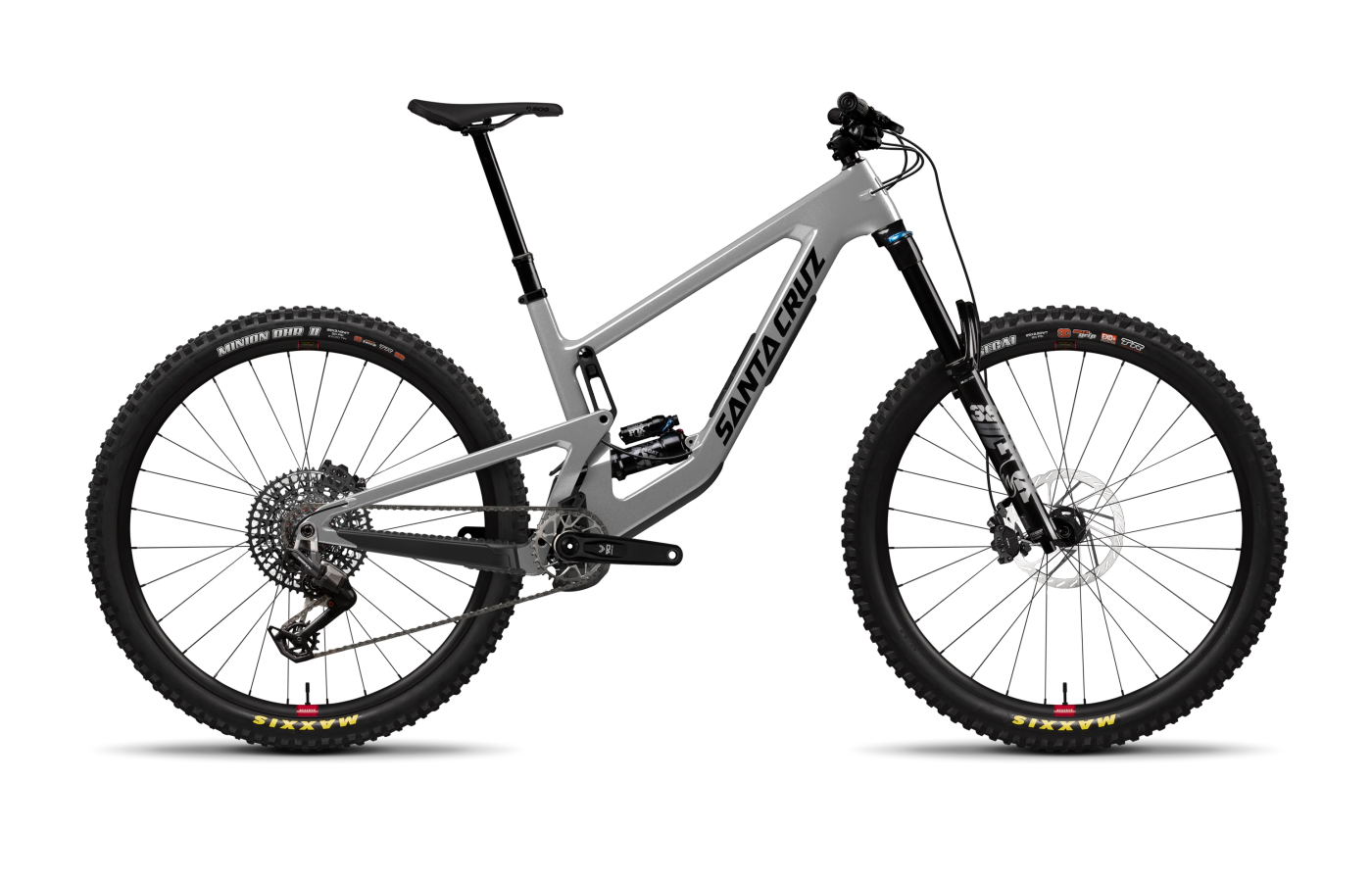
Megatower
The brawnier alternative to the SB160 — more "orc" than "elf," with a smash-everything attitude where the SB160 wants finesse. Pick this if you'd rather plow than place lines.
Compare →