SRAM Ochain 2026: Better Sealing, Lower Price, SRAM-and-Bosch-Only Compatibility
SRAM's first full revision of the Ochain cuts the price by $100 and doubles service life.
via Road.cc
SRAM's first major update to the Ochain anti-pedal-kickback spider cuts the price by $100, extends service intervals by a third, and introduces new sealing throughout — all while narrowing compatibility to SRAM-interface cranks and Bosch Gen 5 e-MTB motors. The Ochain R now retails for $350 and the fixed-travel Ochain N for $285, down from $450 and $350 respectively. Four models cover both standard mountain bikes and Bosch-powered e-MTBs, and each carries the 'B1' production code that distinguishes the updated line from legacy stock.
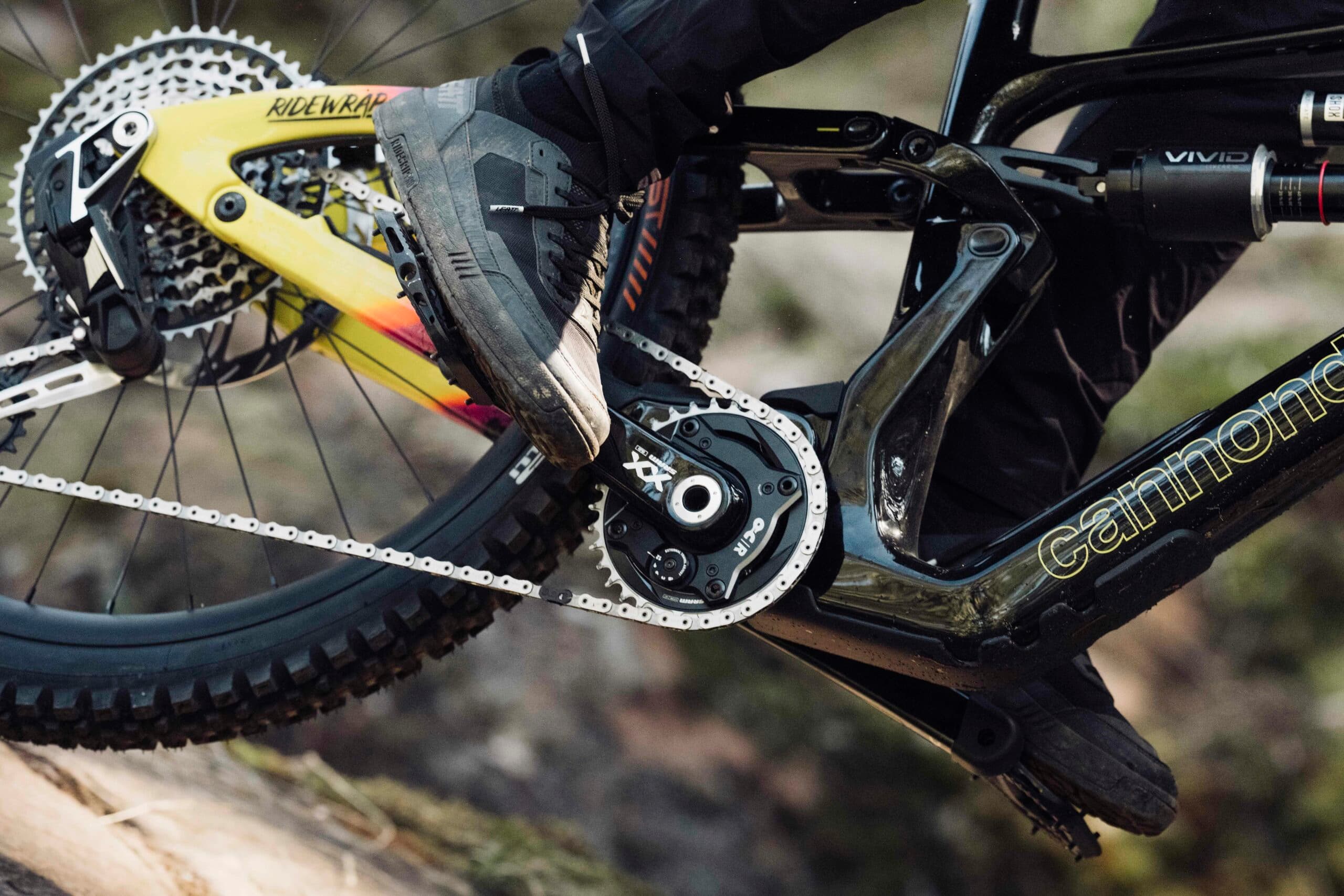
The Ochain is a spider that sits between your crank and chainring and allows the chainring to rotate backward by a preset number of degrees — typically 3°, 6°, 9°, or 12° on the adjustable models — before a set of springs and elastomers bring it back to the neutral position. When rear suspension compresses and chain tension spikes, or when the rear wheel briefly locks under braking and snaps back through the freehub, those forces travel up the drivetrain to the cranks. The Ochain absorbs that rotation before it reaches your feet, reducing the sensation of the chain tugging at the pedals and letting the rear wheel move more freely. The original system launched in 2020 and was developed by Italian engineer Fabrizio Dragoni; within a few seasons it had become effectively standard equipment on World Cup downhill bikes. SRAM acquired the brand in July 2025, and Dragoni's team continues development in Italy even as manufacturing has shifted to Taiwan.PinkBikeEnduro MTB
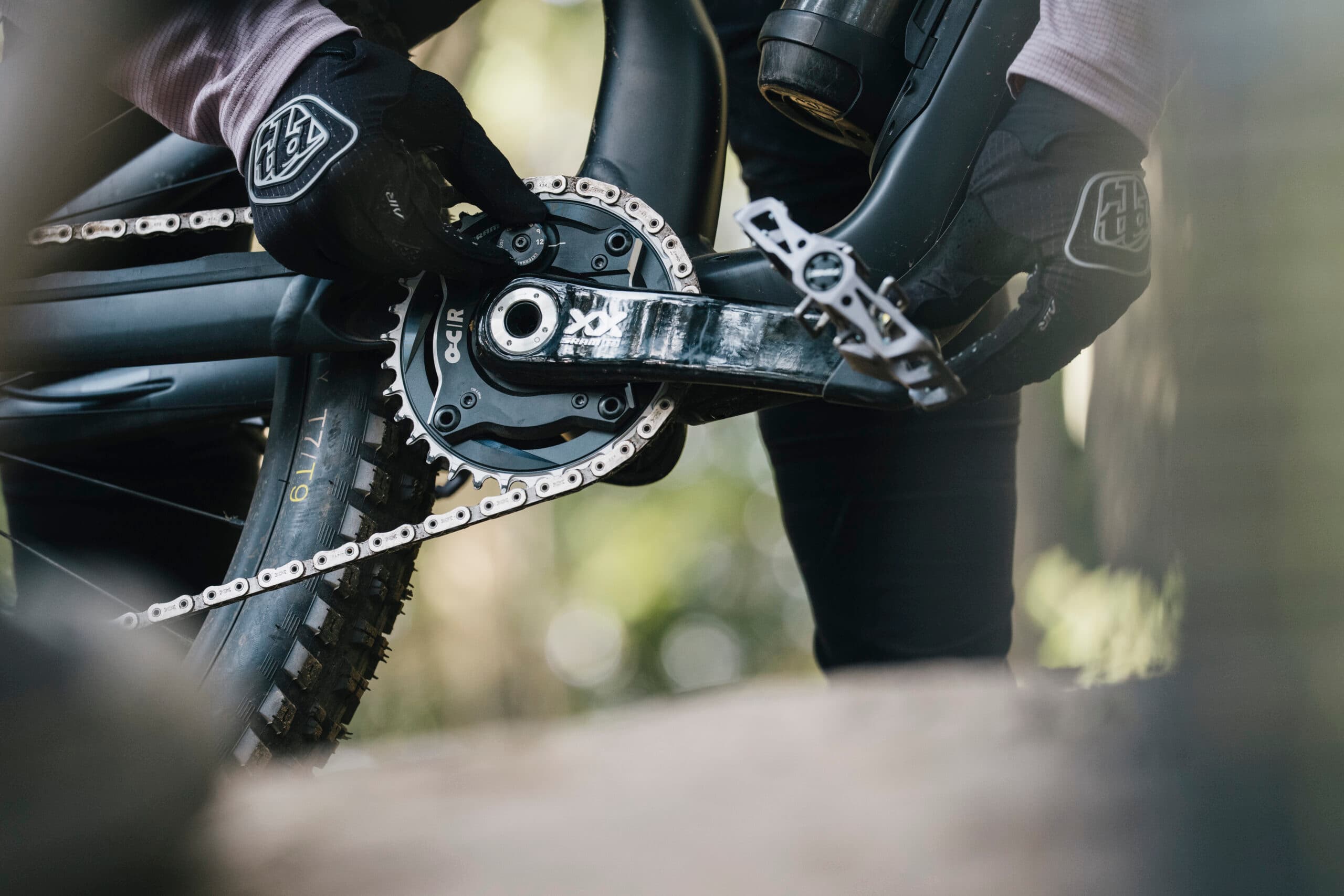
The core mechanical design is unchanged, but SRAM has addressed the two most common complaints about the original: durability and cost of ownership. New gasket materials and double-lip silicone seals are now used throughout, and SRAM says the system meets both ISO and SRAM internal fatigue-test standards. The practical result is a recommended elastomer-change interval of 100 hours — up from 75 — and a full rebuild interval of 200 hours, up from 150. A full service kit costs $50 (€50 in Europe); replacement elastomers alone are $22 (€25). Importantly, home mechanics can handle both services without special tools. SRAM also unified internal components across all four variants, so replacement parts should be more widely available at shops rather than requiring special orders.PinkBikeRoad.ccEnduro MTB
The lineup divides along two axes: standard MTB versus Bosch e-MTB, and externally adjustable versus fixed-travel. The Ochain R ($350) and Ochain S ($350) are the adjustable variants for regular bikes and Bosch CX Gen 5 motors respectively, with a trailside dial that steps through Lock, 3°, 6°, 9°, and 12° — note the change from the previous 4° increment to 3°. The base Ochain N ($285) and Ochain E ($285) are pre-set to 9° and require a chip swap to change travel; 6° and 12° chips are sold separately. A new External Travel Adjust Upgrade Kit ($90 / £90 / €100) allows N or E owners to retrofit the dial faceplate, though as Enduro MTB pointed out, adding the kit pushes the total cost above the R or S price point, so it makes most sense for riders who receive the N or E spec'd on a complete bike. All models are available with 32-, 34-, or 36-tooth 104 BCD chainrings sold separately; no 30T option exists, and the Ochain cannot be combined with a bash guard.PinkBikeRoad.ccBikeRumorEnduro MTB
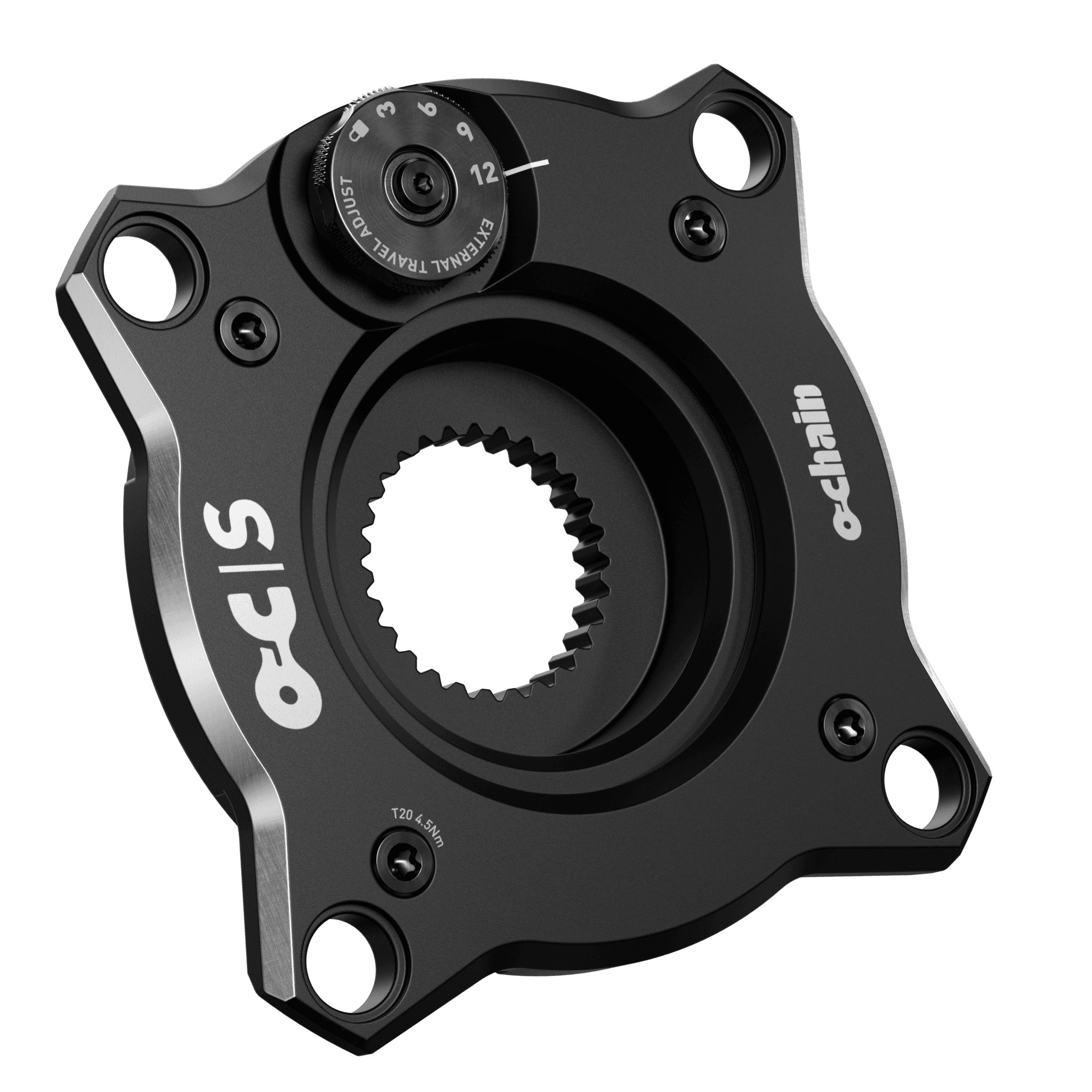
The compatibility change is the most consequential part of the update for existing Ochain users. The legacy system worked with a wide range of crank interfaces; the 2026 line supports only SRAM's 3-bolt and 8-bolt direct-mount patterns, plus the Bosch BDU38 CX Gen 5 motor interface. Riders running Shimano, e*thirteen, or other crank types cannot use the new system. For bike brands, however, the narrowed scope is actually an advantage: integration into SRAM's ecosystem makes it substantially easier to spec the Ochain directly from the factory on bikes that are already SRAM-equipped. Enduro MTB's four-month test across a Canyon Sender, Santa Cruz Nomad, and Pivot Firebird found that the optimal travel setting varies significantly by bike and intended use — the DH-focused Sender worked best at 9°–12° while the trail-oriented Firebird stayed at 3° to preserve pedaling responsiveness — reinforcing PinkBike's conclusion that the adjustable R model is worth the $65 premium over the N for riders who plan to experiment.PinkBikeRoad.ccEnduro MTB
The price drop and extended service intervals are a direct outcome of SRAM's manufacturing scale — the previous Ochain was built entirely in Italy; the B1 units are now made in Taiwan. At $350 for the Ochain R, the device is still more expensive than passive alternatives like STFU chain guides or the DT Swiss DEG freehub, but it is substantially more accessible than it was at $450. SRAM's broader strategy here is visible: by bringing Ochain under the same product ecosystem as AXS drivetrains and RockShox suspension, the company is positioning anti-pedal-kickback hardware as a standard spec item rather than a boutique aftermarket add-on — the same move it made with power meters when it acquired Quarq in 2011. Whether that means future Ochain versions will integrate more tightly with AXS electronics remains to be seen, but the B1 update is clearly a rationalization step designed to make the system easier to put on bikes at scale.PinkBikeBikeRumorEnduro MTB
Sources
Sources
4 sources
SRAM's Updated Ochain is More Durable and Less Expensive
Sram brings improved sealing to the ochain but its only available for sram and bosch interfaces
Ochain updates its products for 2026 and beyond
SRAM Ochain on Review – What is SRAM’s New Anti-Pedal Kickback System Capable of?