Argon 18
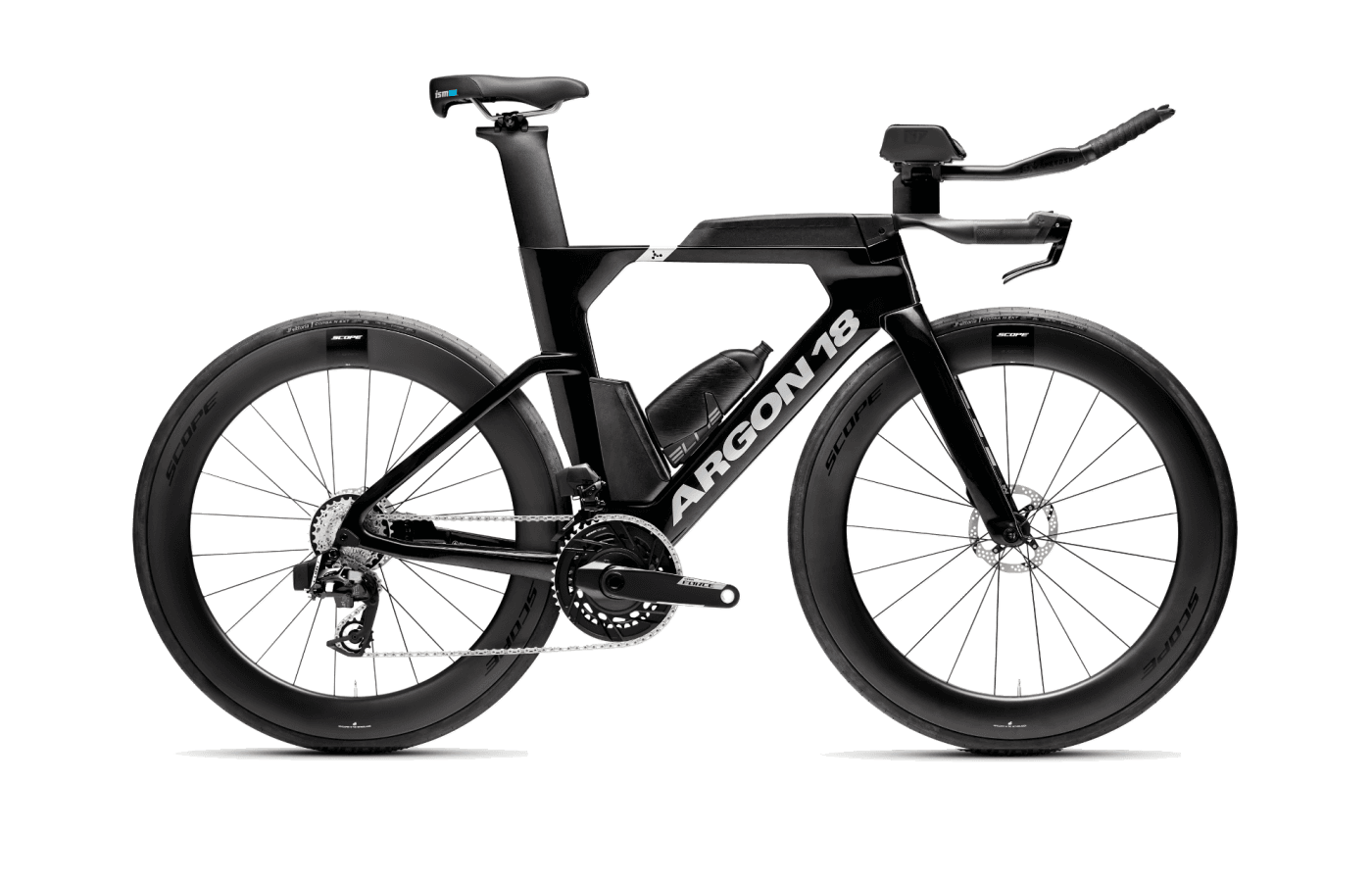
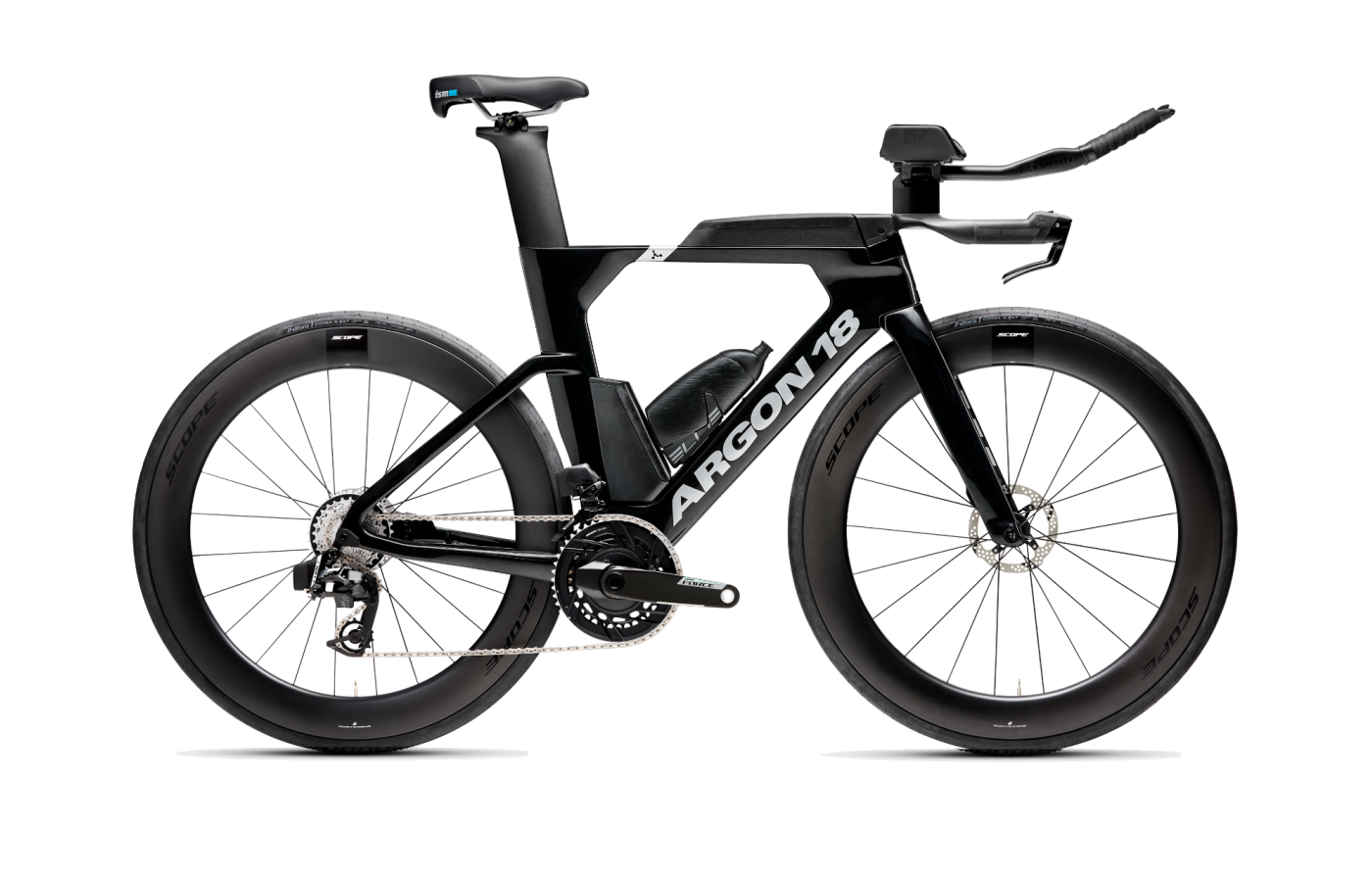
E-117SRAM Force AXS
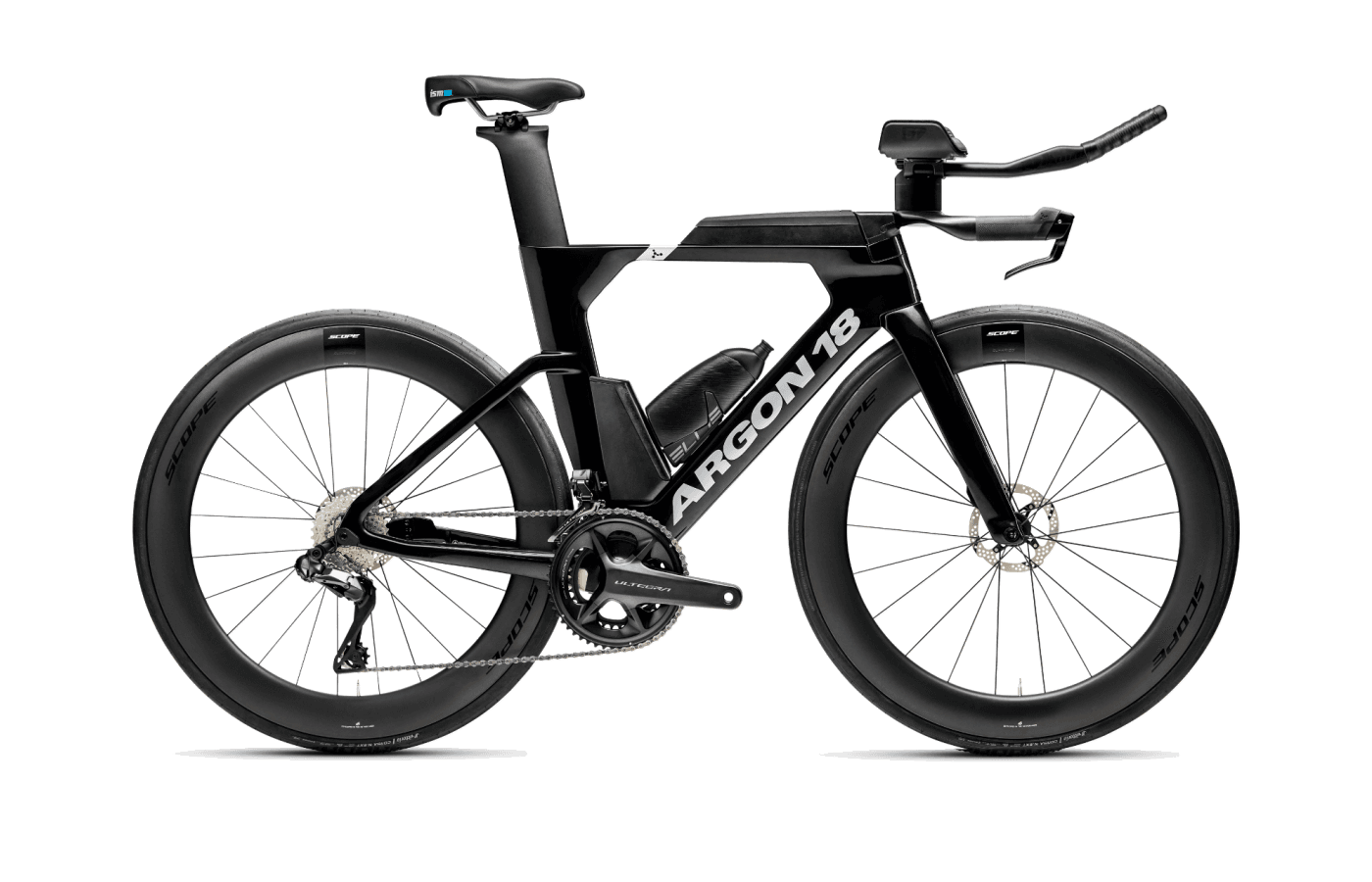
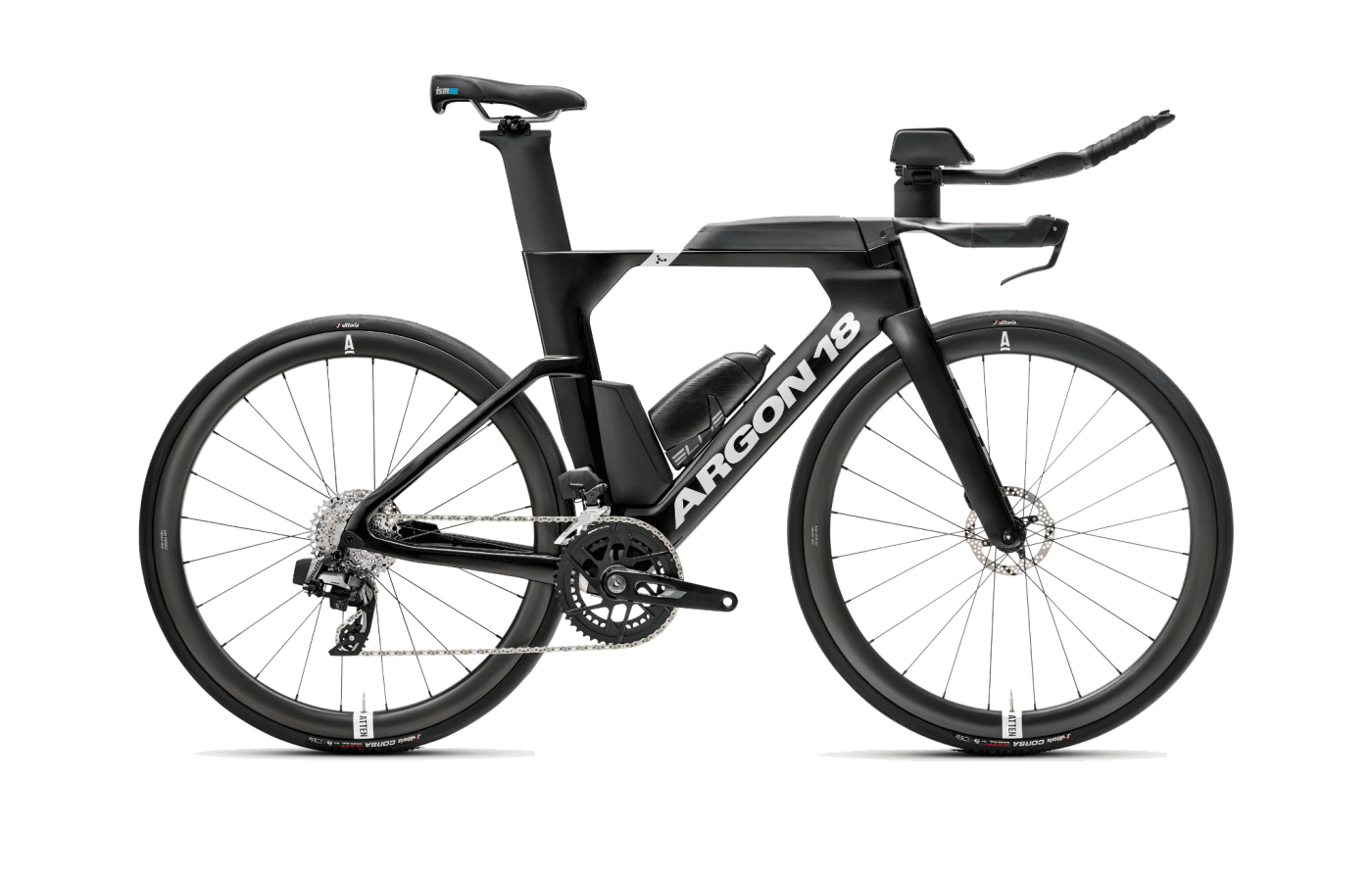
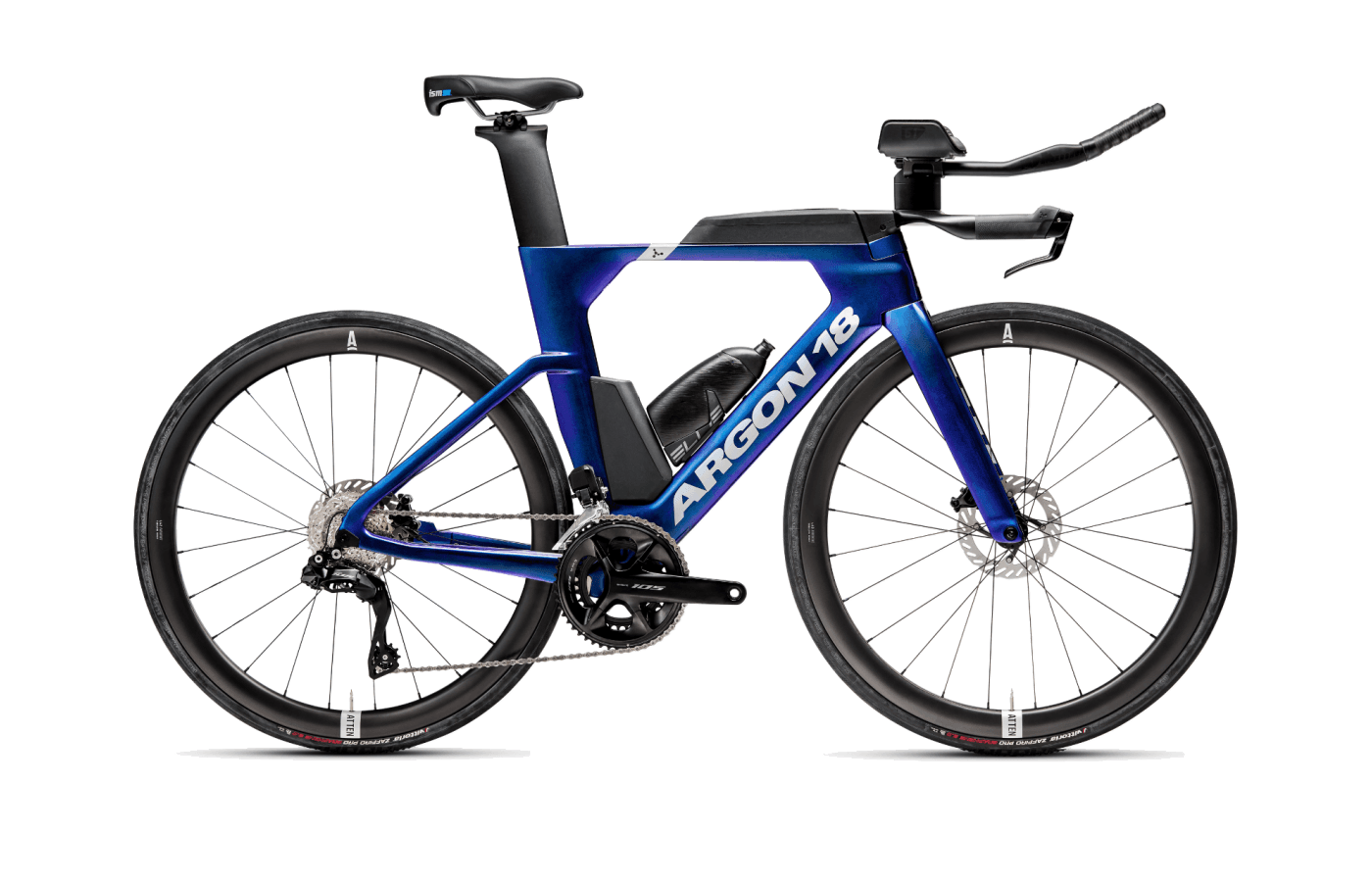
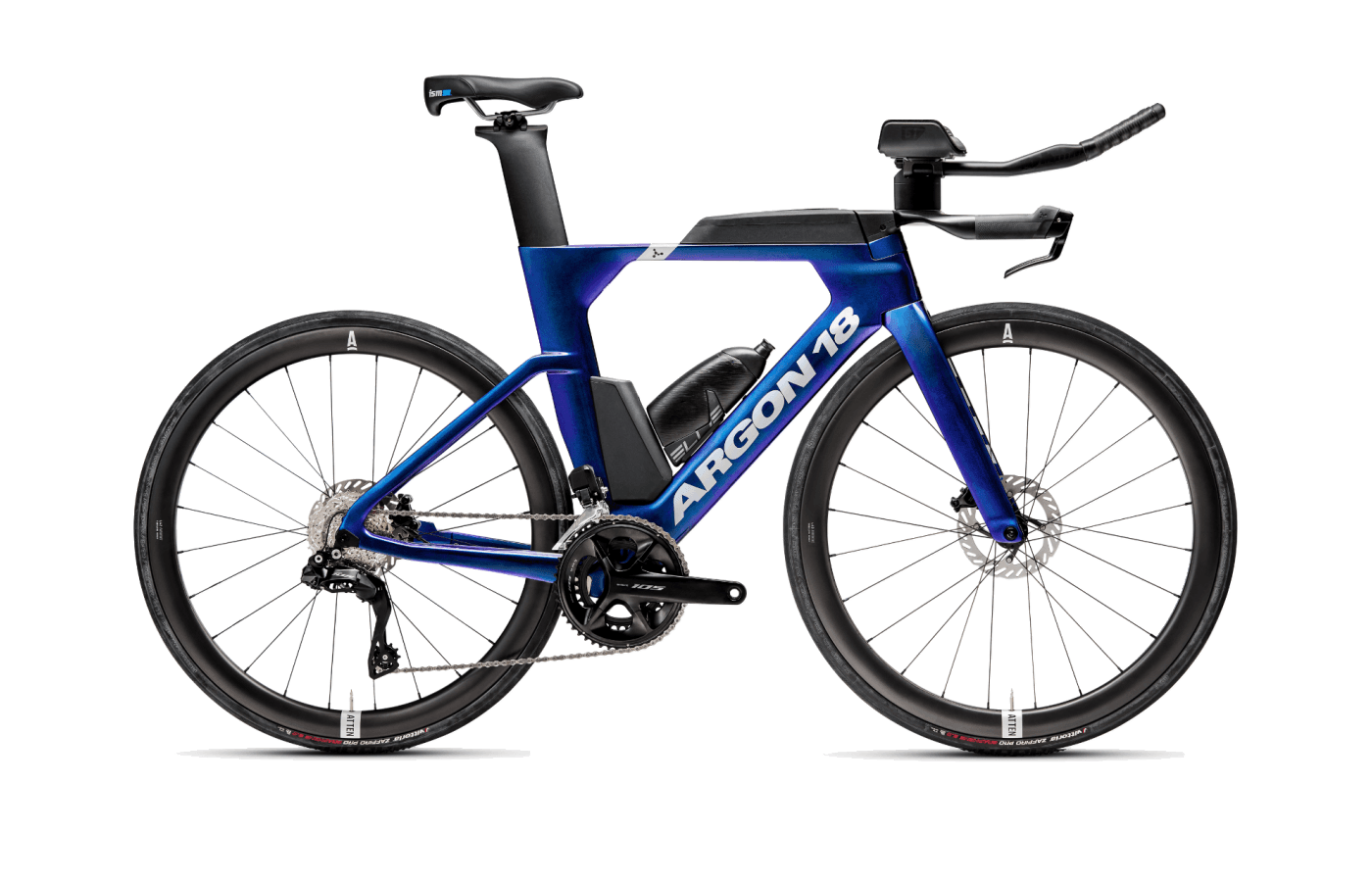
The 2025-on Argon 18 E-117 is a genuine redesign of the brand’s mid-tier triathlon platform, not a light update to the previous E-117 Tri Disc. The new bike keeps the core traits expected in this category—disc brakes, fully integrated cabling, and onboard storage—but the front-end architecture and fit system have been meaningfully revised. Argon 18 now offers the bike with two factory cockpit concepts: an open cockpit on the mechanical Shimano 105 build and a more integrated cockpit on the electronic builds. The frame also incorporates a toolbox/storage solution, reinforcing its role as a modern long-course triathlon bike rather than a stripped-down time trial specialist.
What distinguishes this generation is how clearly it is positioned between entry-level tri bikes and the brand’s more premium race platforms. The published arm-pad stack and reach ranges, removable 35 mm 3D cap, and lower base head-tube figures point to a broader and more contemporary fit envelope than the prior model. In market terms, the E-117 sits as a serious triathlon option for athletes who want integrated design and race-oriented fit adjustability without moving into flagship superbike pricing. It is aimed squarely at triathlon use, especially long-course racing, where storage integration, aero packaging, and position tuning matter as much as outright frame design.
Spec sheet.
Every component shipped with this build.
Geometry & fit.
6 sizes published.
The E-117’s geometry is unmistakably tri-focused. Across XS to XL, the seat tube angle is a steep 78 degrees and chainstay length is a short 413 mm, a combination that supports a forward pedaling position and keeps the rear end compact. Head tube angle is a consistent 72 degrees through the size range, paired with wheelbases from 976 mm in XS to 1038 mm in XL. That points to handling intended to be stable and predictable in the aerobars rather than especially quick or nervous, which is what most triathletes want over long distances.
The fit numbers show a bike built around an aggressive aero position but with meaningful adjustability. Frame reach runs from 405 mm in XS to 442 mm in XL, while stack spans 550 mm to 628 mm, with medium sitting at 576/425 and large at 602/430. A 70 mm BB drop across the range helps keep the rider planted, and the revised front end—combined with the removable 35 mm 3D cap and published pad stack/reach ranges—suggests more flexibility in dialing cockpit height and length than the previous generation. In practice, this should make the new E-117 easier to fit across a wider range of rider positions, from relatively conservative long-course setups to lower, more aggressive configurations.
Where the handlebar sits relative to the bottom bracket — the single most important fit pair.
01Fit geometry6 values
03Handling geometry6 values
Which size should I buy?
Slide your height to see the recommended size. GearWise's fit algorithm works from the published stack, reach, and ETT — the brand's own recommendation may differ.
→Calculated from GearWise's own stack / reach / ETT algorithm — the brand's size chart may recommend a different size, and a proper bike fit beats any calculator.
The lineup.
5 builds, ranging $4,399 – $10,199.
Argon 18 offers the E-117 in five builds spanning a wide price range, from the Shimano 105 model at $4,399 to the Shimano Ultegra Di2 build at $10,199. Between those endpoints sit Shimano 105 Di2 at $6,699, SRAM Rival AXS at $6,999, and SRAM Force AXS at $8,699. That spread gives the platform unusually broad coverage, from riders entering the dedicated tri-bike category to buyers looking for premium electronic shifting without stepping into a flagship superbike.
The lineup is structured around drivetrain level and cockpit execution. The mechanical 105 bike uses the open cockpit configuration, while the electronic builds move to the integrated cockpit setup, making the jump to Di2 or AXS about more than just shifting performance. In value terms, the 105 build is the clear access point to the frame platform, while 105 Di2 and Rival AXS are likely to be the volume options for riders who want electronic shifting at a more manageable price. Force AXS and Ultegra Di2 push the bike into a more premium bracket, appealing to athletes who want higher-end groupsets on the same redesigned chassis.