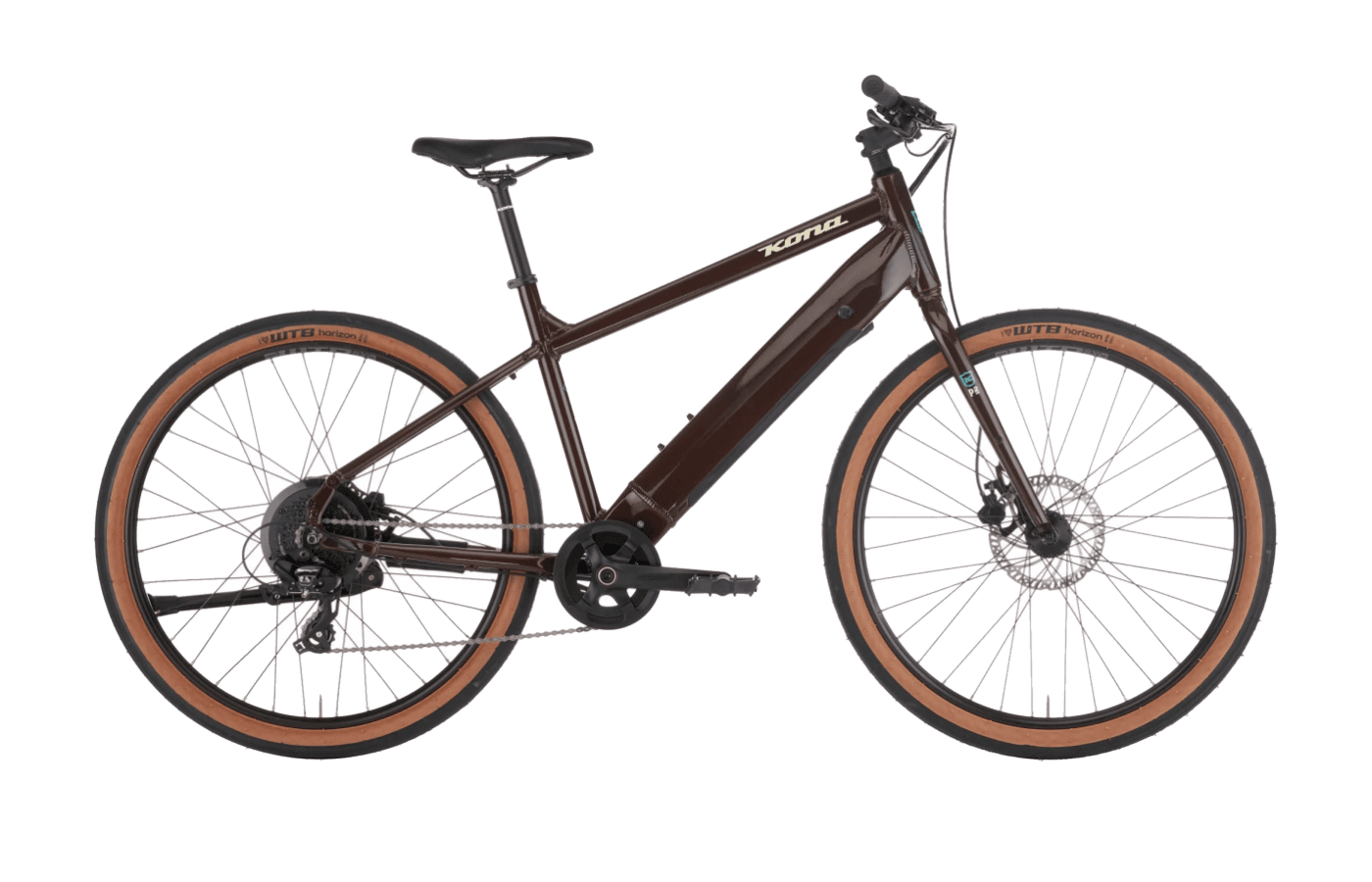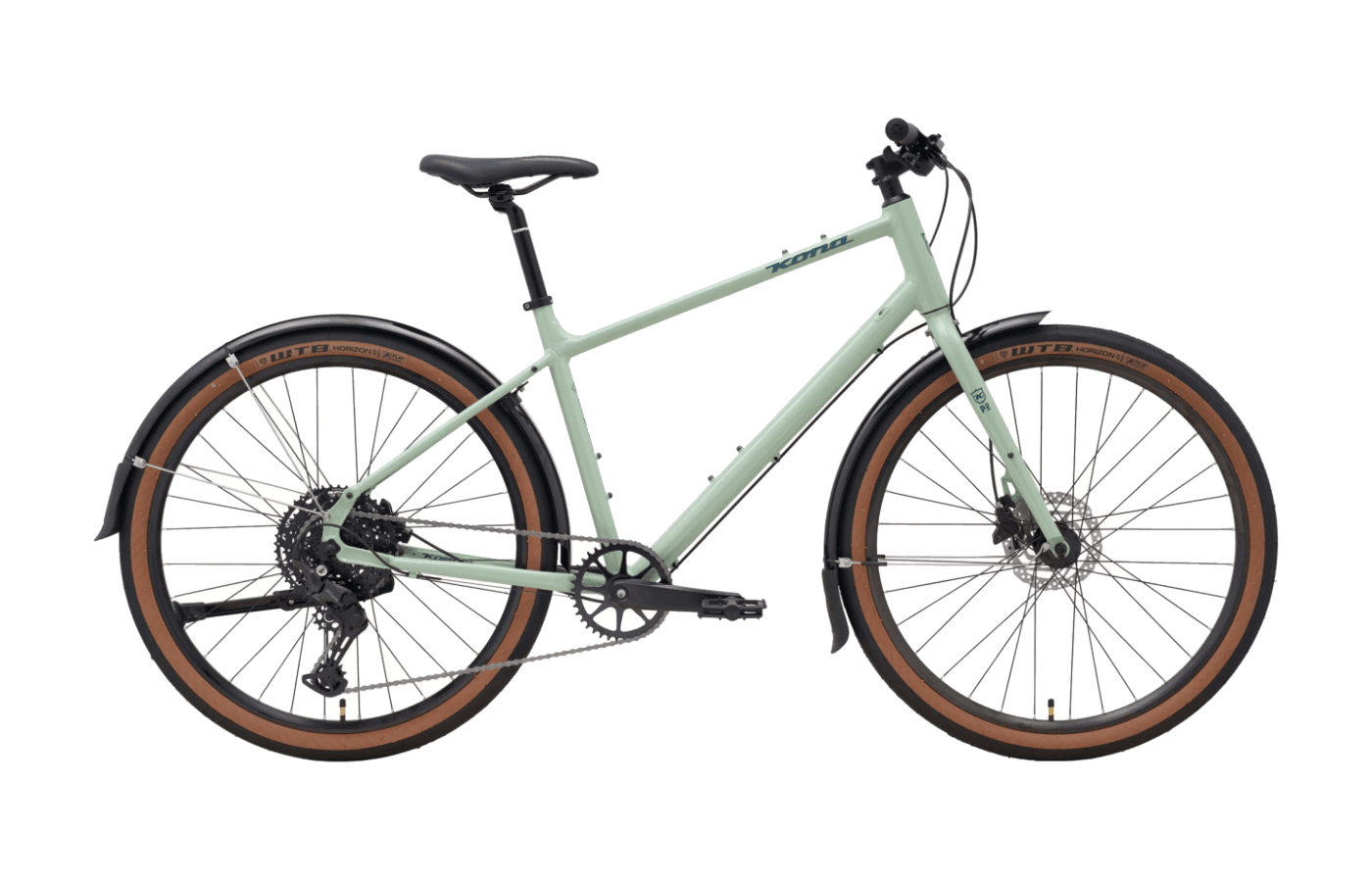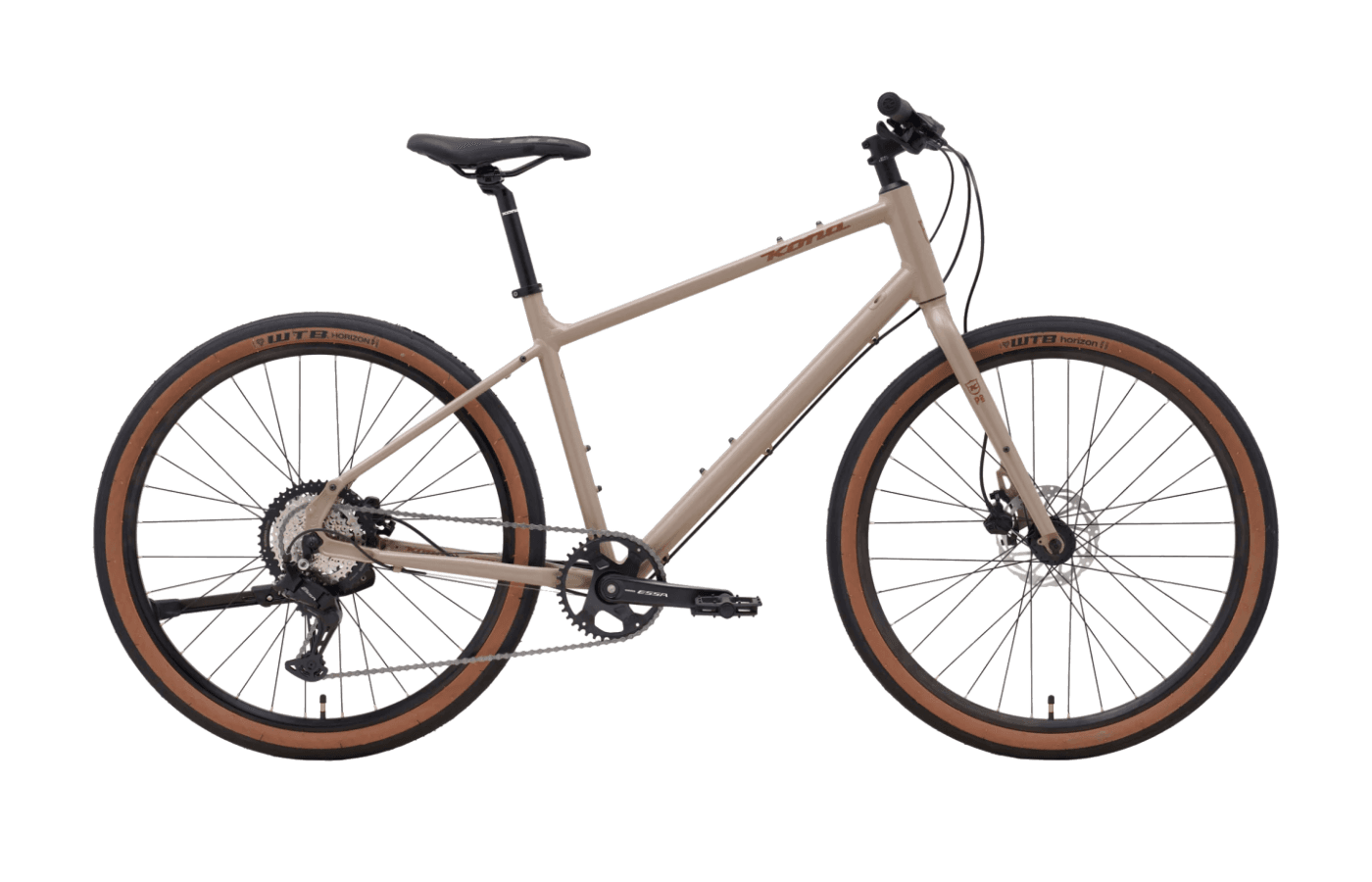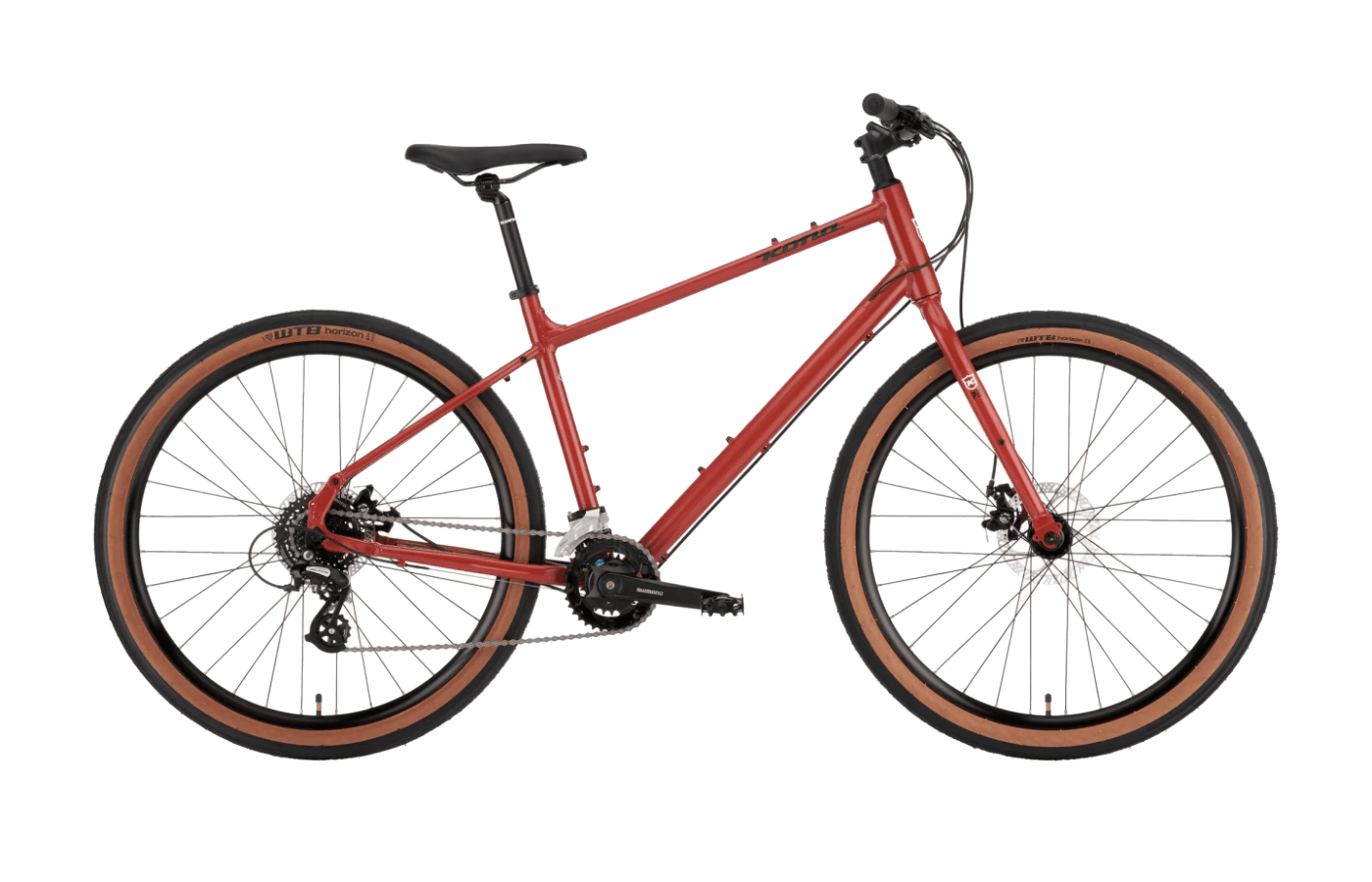
Kona
DewStandard
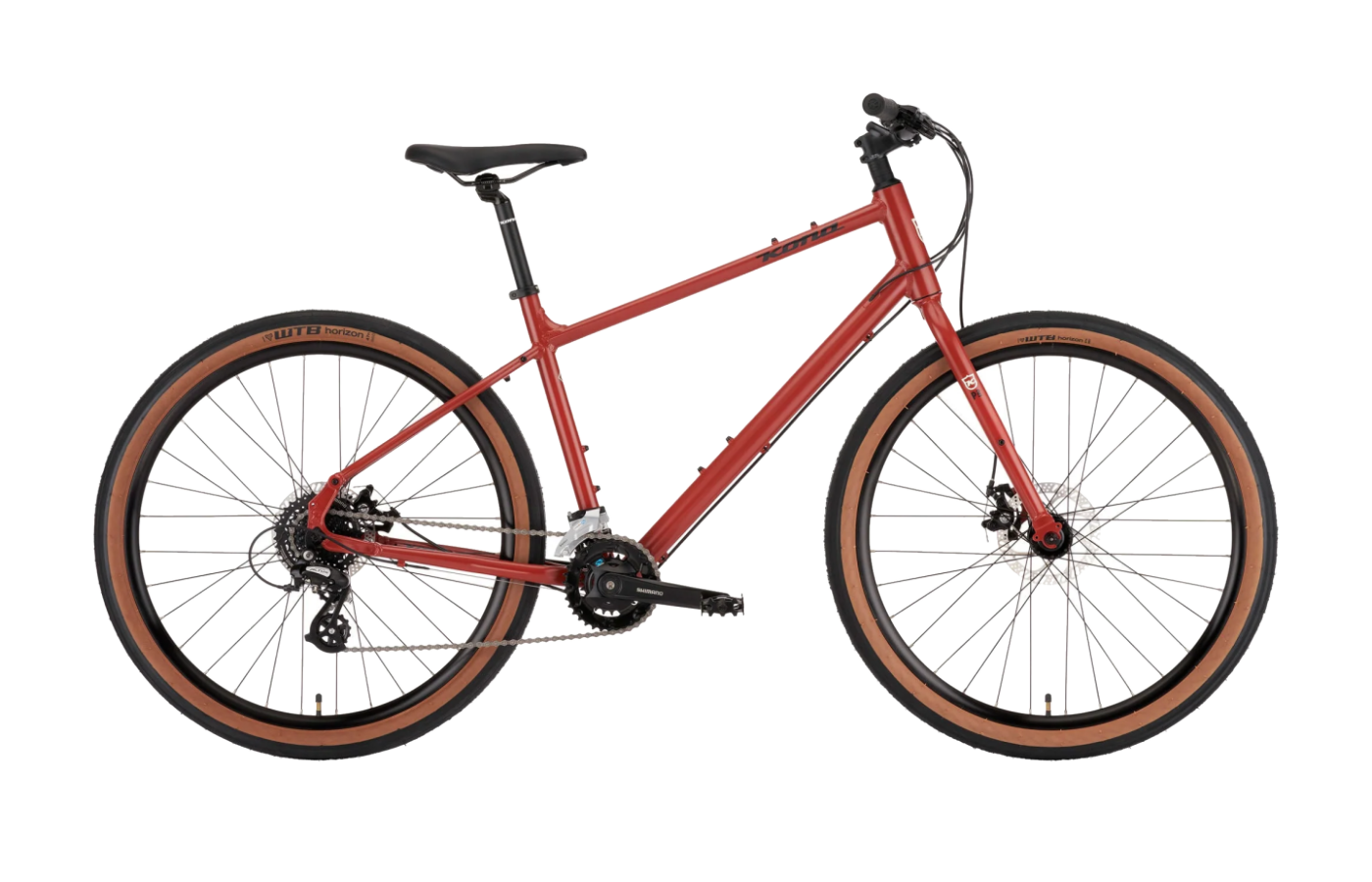
The 2020-2025 Kona Dew generation is a practical urban and fitness platform built around a consistent frame and fork package rather than frequent redesigns. Across this run, the defining elements stayed the same: 650b wheels with 47 mm tires, a rigid Project Two Disc fork, quick-release 100x9 front and 135x10 rear hubs, 450 mm chainstays, and a 70° head angle. Kona paired those numbers with a notably tall front end and compact city-bike proportions, giving the Dew a stable, upright character that suits commuting, utility riding, and casual fitness use more than aggressive road-style speed.
What makes this generation distinctive is how deliberately it avoids the twitchy feel of many flat-bar fitness bikes. The smaller-diameter 650b wheel and high-volume tire package adds comfort and surefootedness on broken pavement, curb cuts, and mixed urban surfaces, while the rigid fork keeps maintenance low. Over the years, Kona updated the component packages from earlier 2x8 mechanical-disc setups to later 1x8 hydraulic-disc builds, but the bike's role did not change: this is a straightforward, durable city bike for riders who value confidence, simplicity, and everyday versatility over low weight or high-end performance.
In the market, the Dew sits between a classic commuter and a comfort-oriented hybrid. It is less road-biased than many fitness bikes with 700c wheels, and less cargo- or accessory-specific than a dedicated utility bike. That positioning gives it broad appeal for urban riders who want a stable all-rounder with room for larger tires and a geometry that prioritizes control in traffic and comfort over longer daily use.
Spec sheet.
Every component shipped with this build.
No specs available yet.
The lineup.
4 builds, ranging $649 – $1,099.
Across this generation, the Dew was offered in multiple trims including DL, Standard, HD, and a Dew 2 variant. The key story is not a changing frame but changing equipment: earlier versions used 2x8 drivetrains with mechanical disc brakes, while later builds moved toward simpler 1x8 setups with hydraulic discs. That shift reflects a move toward lower-maintenance urban use, with hydraulic braking being the most meaningful functional upgrade for riders dealing with wet weather, stop-start traffic, and daily commuting.
Because the shared frame, fork, wheel size, and core geometry remained constant, the build differences matter mainly in braking feel, drivetrain simplicity, and likely overall durability rather than a change in ride character. The more basic builds make sense for riders who want the Dew platform at a lower entry point, while the better-equipped versions are the stronger value for frequent city use thanks to the move away from mechanical discs and toward cleaner, simpler 1x transmission layouts.