RaceMax
vsCrux
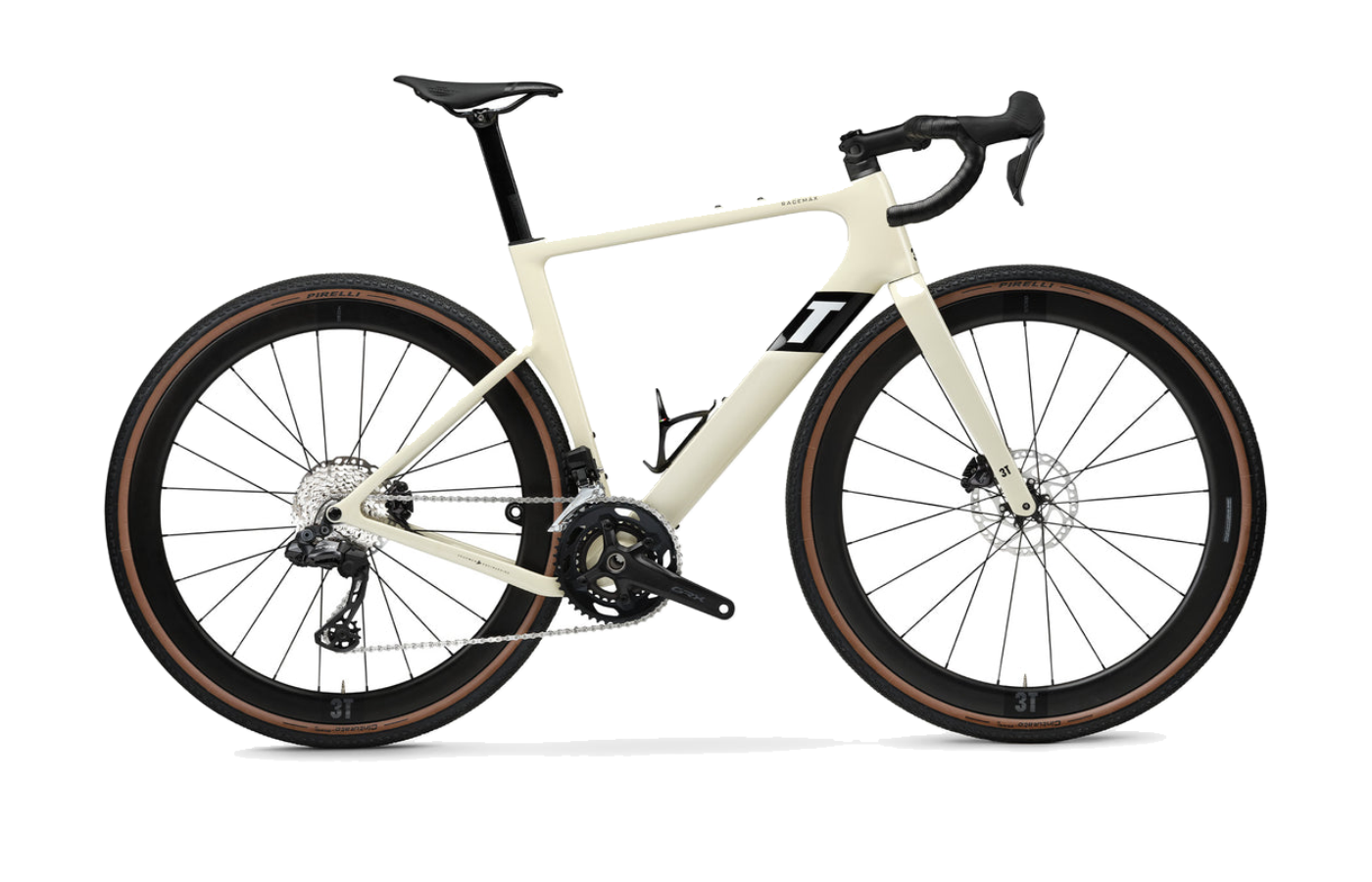
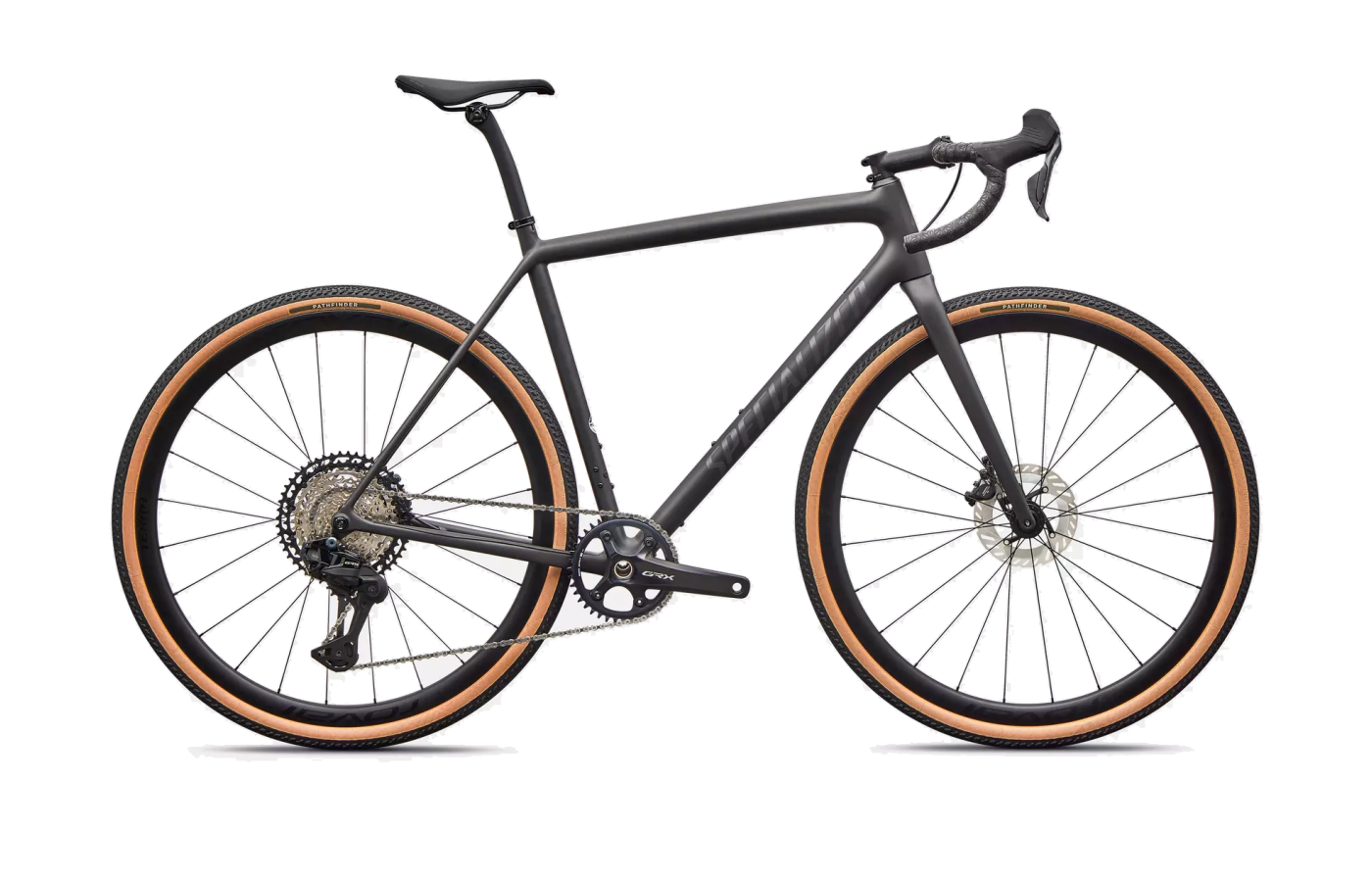
Two gravel racers, two opposite bets.
The 3T RaceMax bets on aerodynamics and integration. The Specialized Crux bets on weight and standards. Neither is wrong — they're built for different kinds of fast.
RaceMax
- Genuine aero shaping — 75 mm downtube, tight rear cutout, integrated cockpits. Reviewers consistently set gravel PRs on it.
- 2x drivetrain available on every build — the Crux is 1x-only, so if you want a front derailleur, the 3T is the only choice here.
- Short, tight rear end — 418 mm chainstays across all sizes make the RaceMax punch out of corners like a road bike.
- 42 mm max tire clearance — 5 mm narrower than the Crux, a real gap for chunky terrain.
- No build under ~$6,800 and proprietary cockpit/seatpost add friction for the home mechanic.
Crux
- Featherlight frame — 725 g S-Works frame, 6.94 kg complete. Reviewers compare it to the Aethos road bike.
- 47 mm tire clearance — genuinely capable on chunkier terrain without stepping up to a Diverge.
- Standard parts throughout — 27.2 mm seatpost, threaded BSA BB, round tubes. Cheap to maintain, easy to upgrade.
- 1x-only drivetrain, no mechanical option — if you want cables and a front derailleur, look elsewhere.
- Minimalist layup means limited integration and less aero shaping than the 3T on flat, windy parcours.
Editor’s analysis
One bike says the wind is the enemy. The other says gravity is. Pick your opponent.
The 3T RaceMax and Specialized Crux are both premium, race-oriented gravel bikes — and that's roughly where the agreement ends. Gerard Vroomen designed the RaceMax around a single question: how do you cheat the wind on a gravel bike? His answer is a 75 mm truncated-airfoil downtube, a tight rear wheel cutout that hugs the tire, integrated cockpits, and proprietary seatposts. The Crux answers a different question: how light can you make a race frame that still clears a 47 mm tire? Specialized's answer, borrowed wholesale from the Aethos road bike, is a 725 g S-Works FACT 12r frame with round tubes, a 27.2 mm seatpost, and a threaded BSA bottom bracket.
The on-paper gap is enormous. The Specialized Crux clears a 47 mm tire; the 3T RaceMax tops out at 42 mm — that's a meaningful chunk of mixed-terrain capability. The Crux S-Works weighs 6.94 kg (size 56), and reviewers have called it "the lightest gravel bike in the world" and "lighter than many road bikes out there." The 3T doesn't publish a complete-bike weight we can trust, but reviewers consistently describe the frame as stiff and heavy-feeling compared to the Aethos-lineage Crux — a deliberate trade for aero shape.
Pricing and range are just as split. The Specialized Crux ladder runs from $2,799.99 (alloy DSW Comp) up to $11,999.99 (S-Works Red XPLR 13-speed) — eight builds across nine thousand dollars. The 3T RaceMax starts at $6,799 (Integrale GRX Di2) and tops out at $9,199 (WPNT GRX Di2 2x12) — four builds, all premium, no budget entry. If you want to spend under $5,000 on either bike, you're buying a Crux.
Handling also splits the way the frames do. The RaceMax runs short 418 mm chainstays across all sizes and a lower trail figure — in size 58 that's 418 mm CS / 56 mm trail, versus the Crux's 425 mm / 62 mm. The 3T steers quicker and feels more road-bike-immediate; the Crux is more planted in loose corners and on descents. Neither is unstable, but they reward different riders. The RaceMax wants a skilled hand at speed on narrower tires; the Crux wants to be flicked around on a cyclocross course or shouldered over a log.
Where the builds differ.
Comparing our editor's-pick builds side-by-side. Winners highlighted row-by-row — lower price and weight, and the better-spec component, each mark a point.
Build variants & pricing
The Crux spans roughly $9k of range across alloy and carbon; the 3T is four builds clustered in the $6.8k–$9.2k bracket with no budget door.
Prices are current US MSRP. The Crux is the only platform here with a real sub-$5k entry; 3T doesn't sell an entry-level build on the RaceMax. Both top-tier builds ship with wireless electronic drivetrains — the 3T offers a 2x GRX Di2 option that the Crux does not.
How they fit, how they steer.
3T size 56, Crux size 54 — fit-picked sizes for a 5'8" rider on each bike. At those sizes the Crux has 6 mm longer reach, 8 mm more trail, and 7 mm longer chainstays — it's longer and more planted. The RaceMax is more compact and holds chainstays at 418 mm across the range, regardless of size.
Which size should I buy?
Size recommendations based on stack, reach, and effective top tube. The Crux runs a smaller 49 at the bottom of the range; the 3T extends down to a 51 (the XXS is an outlier in the table).
→These are starting points. Flexibility, riding style, and preferred position all shift the answer — if you’re between sizes, a professional fit beats a chart.
What the magazines said.
Published reviews from trusted cycling outlets. Click through for the full write-up.
Which one should you buy?
If you want one gravel bike that rewards watts on the flats and doesn't mind a stiff, integrated chassis, get the 3T RaceMax. If you want the lightest, most climb-happy gravel bike in the class with real 47 mm clearance, get the Specialized Crux.
RaceMax
If your rides are long, exposed, and spent in the wind — think flat mixed-terrain races, drop-bar ultras, or fast club rides on gravel — the RaceMax is the sharper tool. It rewards high-watt efforts on flat and rolling ground, and the 2x GRX Di2 option covers both road and gravel gearing on the same build.
Crux
If your gravel looks more like steep climbs and cyclocross-style punchiness than flat headwinds, the Crux is the one. It's the lightest frame in the category, clears a genuine 47 mm tire, and uses standard parts you can service anywhere. The 1x-only drivetrain is the main asterisk.
Questions buyers actually ask.
Short answers to the things we get emailed about most often.
01Which is faster on flat, windy gravel?
The 3T RaceMax. The whole frame is shaped around aerodynamics — the 75 mm truncated-airfoil downtube is sized specifically to shield water bottles from the wind, the rear wheel cutout is tight, and the Integrale builds ship with an integrated cockpit. Multiple reviewers (Bike Rumor, Bicycling, Feedthehabit) describe setting gravel PRs on it.
The Crux makes no aero claims. Its tubes are "nominally round," its seatpost is an exposed 27.2 mm, and its frame logic comes from a climbing bike. Above ~35 km/h on flat ground, the RaceMax will pull away.
Below ~25 km/h the aero gap is small enough you won't feel it.
02Which climbs better?
The Specialized Crux, clearly. The S-Works frame weighs 725 g and the complete bike comes in at 6.94 kg for a size 56 — reviewers repeatedly compare it to the Aethos road bike and call it "lighter than many road bikes out there." The Crux Expert (FACT 10r carbon) is 7.95 kg in size 56.
The 3T RaceMax doesn't publish a complete-bike weight, but the frame is noticeably heavier and stiffer, shaped for aero rather than grams. On sustained or steep climbs, the Crux is the livelier bike.
03What's the maximum tire clearance?
3T RaceMax: 42 mm, 700c. 3T's proprietary WAM/RAM measurement system is a real detail here — the brand publishes clearance relative to measured tire width, not labeled width, so a 42 mm tire on a wide rim actually fits.
Specialized Crux: 47 mm, 700c. That's a genuine 5 mm more real estate, enough to go from "fast gravel tire" to "chunky mixed-terrain tire" without a second bike.
Neither is a mountain bike. For anything rougher than hardpack or dry chunk, look at a Diverge or a dedicated hardtail.
04Can I run a 2x drivetrain?
On the 3T RaceMax, yes — three of the four stock builds are Shimano GRX Di2 2x12. This is a real differentiator if you value road-bike-style gearing for long tarmac transfers or want a closer gear step on rolling terrain.
On the Crux, no. The current generation is 1x-only; the frame doesn't have front-derailleur provisions. If you specifically want 2x, the Crux is off the table.
05How serviceable are the two bikes at home?
The Crux is the clear winner here. It uses a threaded BSA bottom bracket, a standard round 27.2 mm seatpost, and a conventional two-piece stem-and-bar cockpit. Everything is parts-bin compatible and most of it you can swap with a basic home toolkit.
The 3T RaceMax leans into proprietary integration: a custom Cane Creek headset, a 3T RaceMax aero seatpost with a Ritchey clamp, and (on the Integrale builds) a one-piece Aeroghiaia cockpit. It's cleaner looking and more aero, but changing stem length or bar width means buying a new integrated unit, and hose routing is more involved.
06Which is more stable on loose or technical descents?
The Crux. In the size 58 we compared, the Crux has 62 mm of trail, 425 mm chainstays, and a 1045 mm wheelbase — versus 56 mm / 418 mm / 1028 mm on the RaceMax. All three of those deltas point the same way: the Crux is more planted in loose corners and on fast descents.
The RaceMax steers quicker and feels more road-bike-immediate, which is great on pavement and smooth gravel but demands more attention on narrow, technical dirt.
07Which has the bigger build range?
The Crux, by a wide margin. It ships in alloy (DSW Comp) and multiple carbon tiers from ~$2,800 to ~$12,000, eight builds in total across the current lineup.
The 3T RaceMax has four builds, all carbon, all between ~$6,800 and ~$9,200. There is no entry-level door into the 3T — if your budget is under $5,000, the Crux is the only option on this page.
08Do either of these make sense as a do-it-all road + gravel bike?
The 3T RaceMax is the stronger quiver-killer argument. With a 2x GRX Di2 build, 700x30–40 mm tire options, and an aero shape, it functions as a fast road bike when you swap to narrower rubber. Multiple reviewers explicitly describe it as a "one-bike solution."
The Crux can also run narrow-ish tires (though reviewers note the stock Pathfinders feel slower on pavement than a true road tire), but its geometry and 1x drivetrain put it closer to a dedicated cyclocross/gravel weapon than a road-replacement bike.
Similar bikes
If your priorities don’t map cleanly onto either of these, one of these adjacent bikes probably fits better.
Aspero
Cervelo's take on aero gravel — dedicated race platform like the RaceMax, but built around standard parts instead of 3T's proprietary cockpit and seatpost. Usually a few hundred dollars cheaper for equivalent builds.
Compare →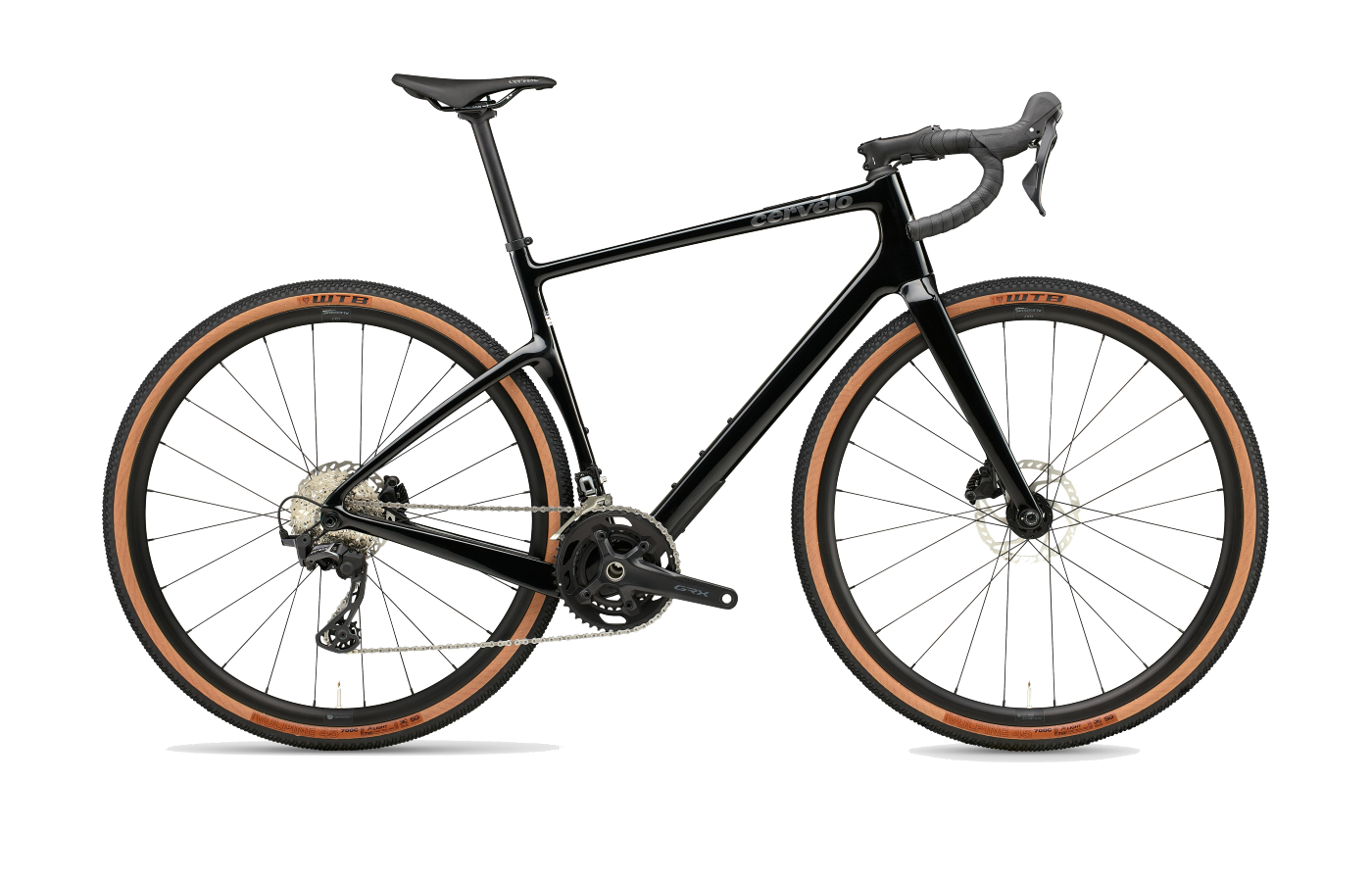
Aspero
Factor's aero-gravel flagship — more integrated than the Aspero, more aggressive geometry than the RaceMax. The spec sheet reads like the RaceMax turned up one more notch, with the price tag to match.
Compare →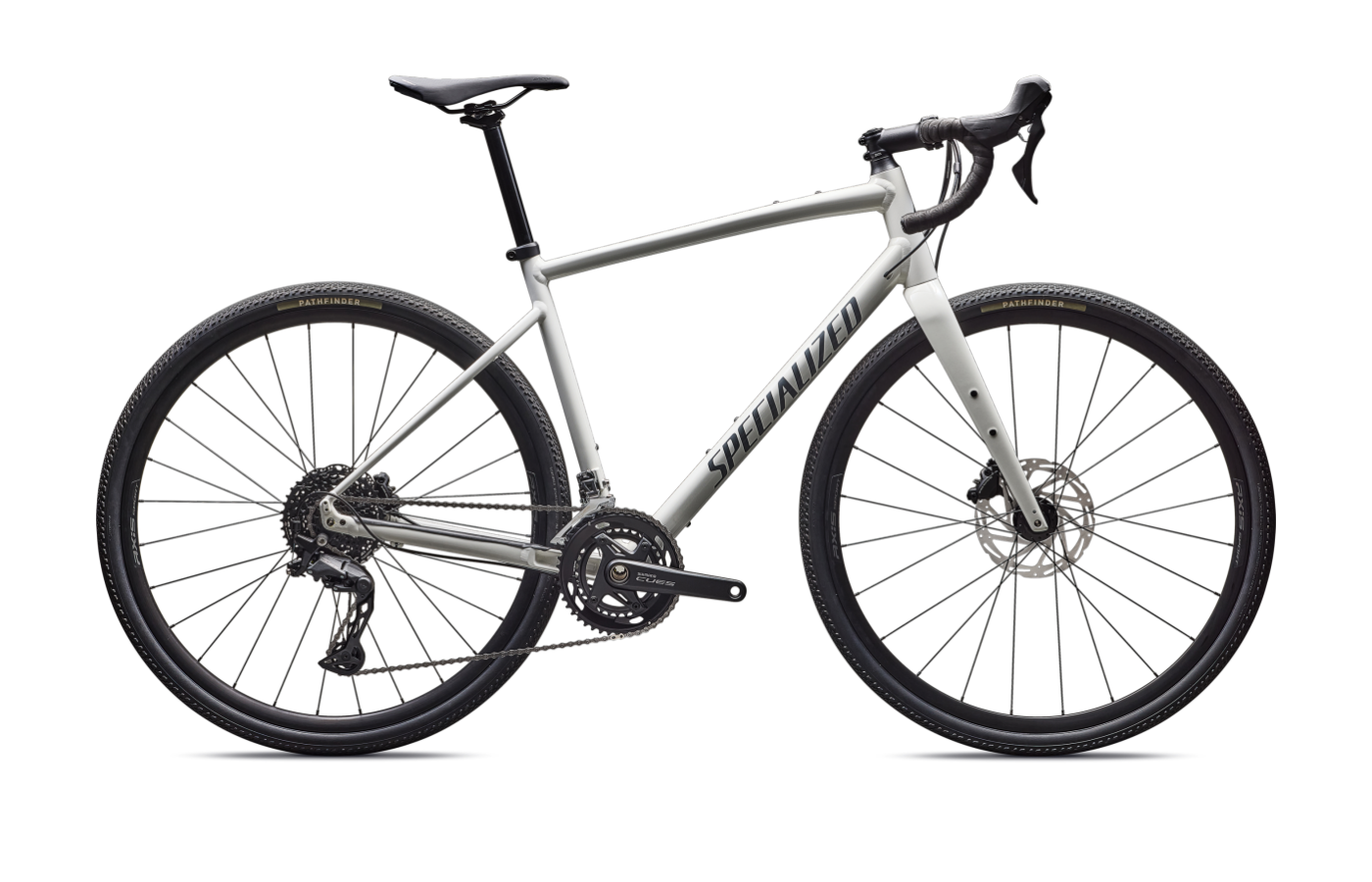
Diverge
Specialized's own answer if you looked at the Crux and decided you want comfort, Future Shock suspension, and downtube storage. Heavier and slower on flats, but dramatically more capable when the road gets ugly.
Compare →